



Global Sensitivity Analysis of Electromagnetic-Dynamic Coupling in Superconducting Electrodynamic Suspension System
-
摘要:
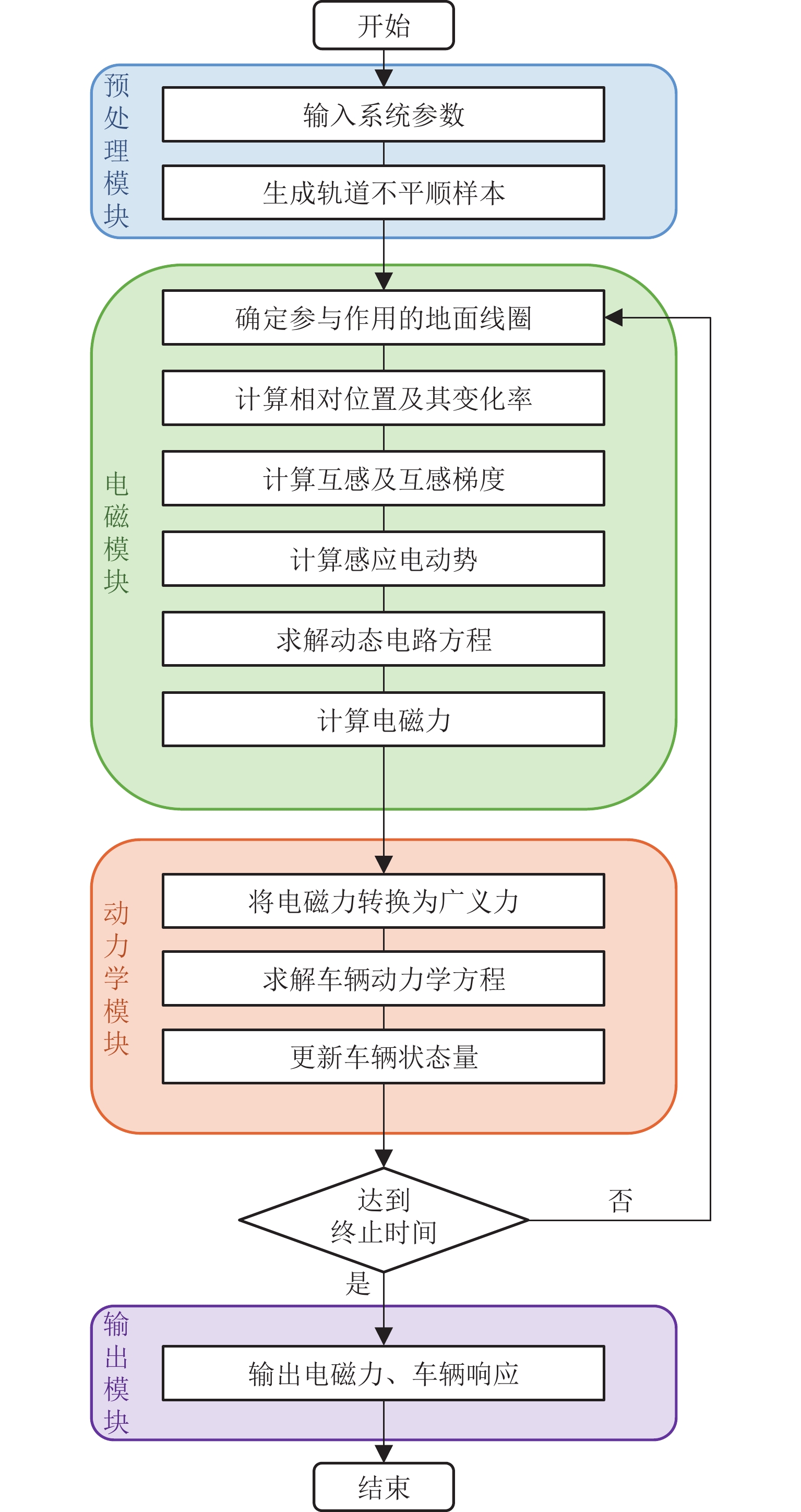
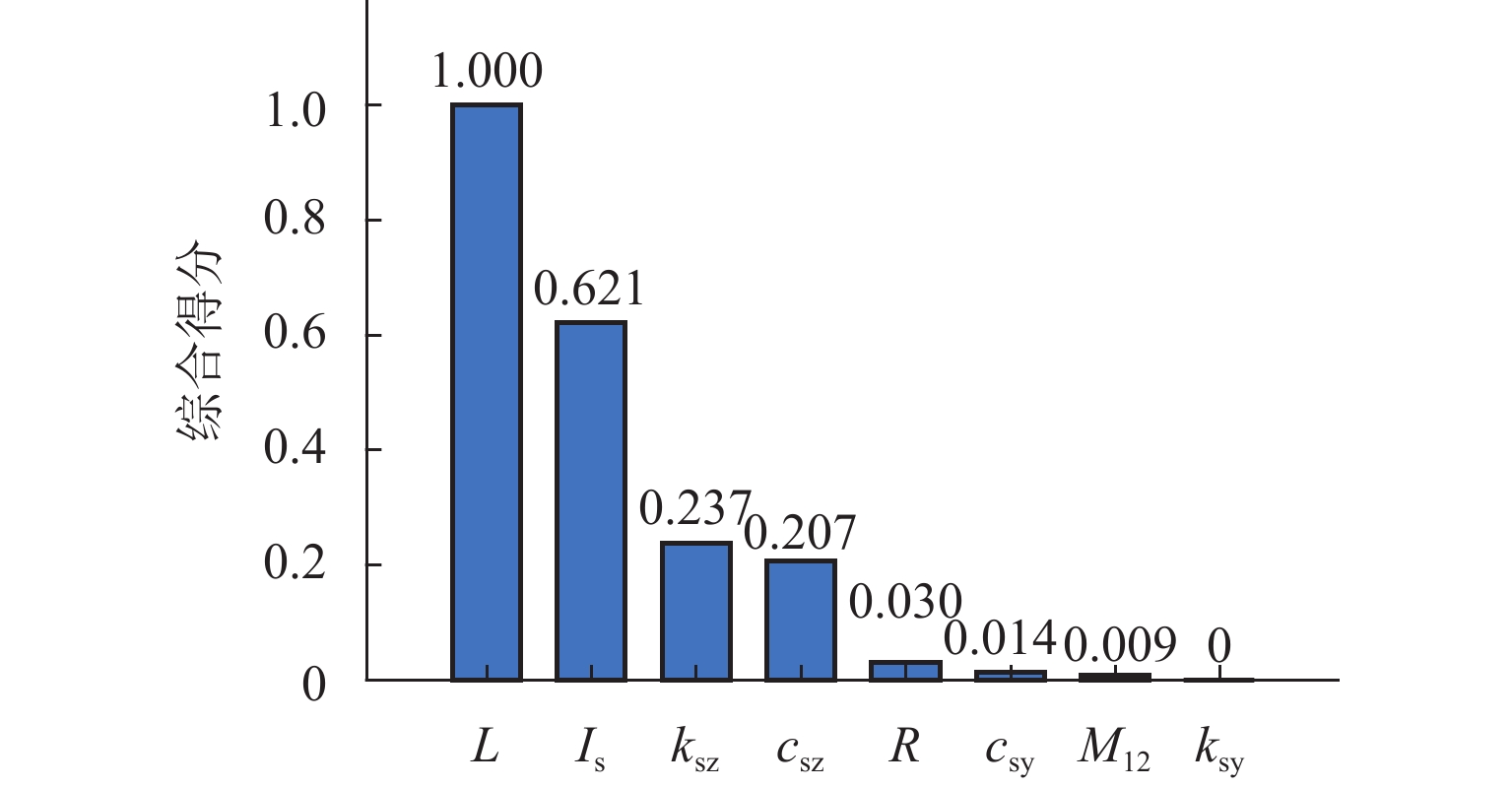
为分析多参数不确定性对超导电动悬浮系统动态性能的影响规律,建立考虑轨道不平顺激励的电磁-动力学耦合模型,并采用多项式混沌展开——Sobol全局灵敏度分析方法开展关键参数分析. 首先,基于动态电路理论计算地面8字形线圈感应电流和电磁力,并将电磁力转换为车辆动力学方程中的广义力,实现电磁力波动与车辆振动响应的耦合计算;其次,以地面线圈电气参数、车载超导磁体电流和二系悬挂参数为输入变量,以悬浮力峰峰值波动率、悬浮架垂向加速度均方根和车体垂向加速度均方根为输出指标,构建代理模型并计算全局灵敏度指数;最后,依据综合灵敏度排序构造参数调整方案,对关键参数分析结果进行验证. 结果表明:3个输出指标对应代理模型的决定系数均大于0.96,留一交叉验证预测系数均大于0.95,与直接采用蒙特卡洛抽样进行Sobol分析相比,所用方法可使原耦合模型调用次数减少约94.4%;地面线圈电感是影响系统垂向动态响应的主要参数,车载超导磁体电流的影响具有明显的参数交互特征;二系垂向刚度和阻尼对车辆振动响应也具有一定影响;综合调整方案可使悬浮力峰峰值波动率、悬浮架垂向加速度均方根和车体垂向加速度均方根分别降低约8.55%、11.96%和30.05%.
Abstract:To investigate the effects of uncertainty in multiple parameters on the dynamic performance of a superconducting electrodynamic suspension system, a coupled electromagnetic-dynamic model incorporating track irregularity excitation was developed. A polynomial chaos expansion-Sobol method was employed for global sensitivity analysis of key parameters. First, the induced currents in figure-eight-shaped ground coils and the resulting electromagnetic forces were calculated using dynamic circuit theory. The electromagnetic forces were then converted into generalized forces for the vehicle dynamic equations, enabling coupled calculations of electromagnetic force fluctuations and vehicle vibration responses. Then, the electrical parameters of the ground coils, the current of the on-board superconducting magnets, and the secondary suspension parameters were selected as input variables. The peak-to-peak levitation force ripple ratio, the RMS vertical acceleration of the levitation frame, and the RMS vertical acceleration of the carbody were selected as output indicators. Surrogate models were constructed, and global sensitivity indices were calculated. Finally, parameter adjustment schemes were developed based on the overall sensitivity rankings to validate the results of the key parameter analysis. The results show that the coefficients of determination for the three surrogate models are all greater than 0.96, and their leave-one-out cross-validation predictivity coefficients are all greater than 0.95. Compared with direct Monte Carlo-based Sobol analysis, the PCE-Sobol method reduces the number of original coupling model evaluations by approximately 94.4%. The ground coil inductance is a major parameter affecting the vertical dynamic responses of the system. The effect of the current in the on-board superconducting magnets is characterized by strong interactions with other parameters. The vertical stiffness and damping of the secondary suspension also affect vehicle vibration responses to some extent. The comprehensive adjustment scheme reduces the peak-to-peak levitation force ripple ratio, the RMS vertical acceleration of the levitation frame, and the RMS vertical acceleration of the carbody by approximately 8.55%, 11.96%, and 30.05%, respectively.
-
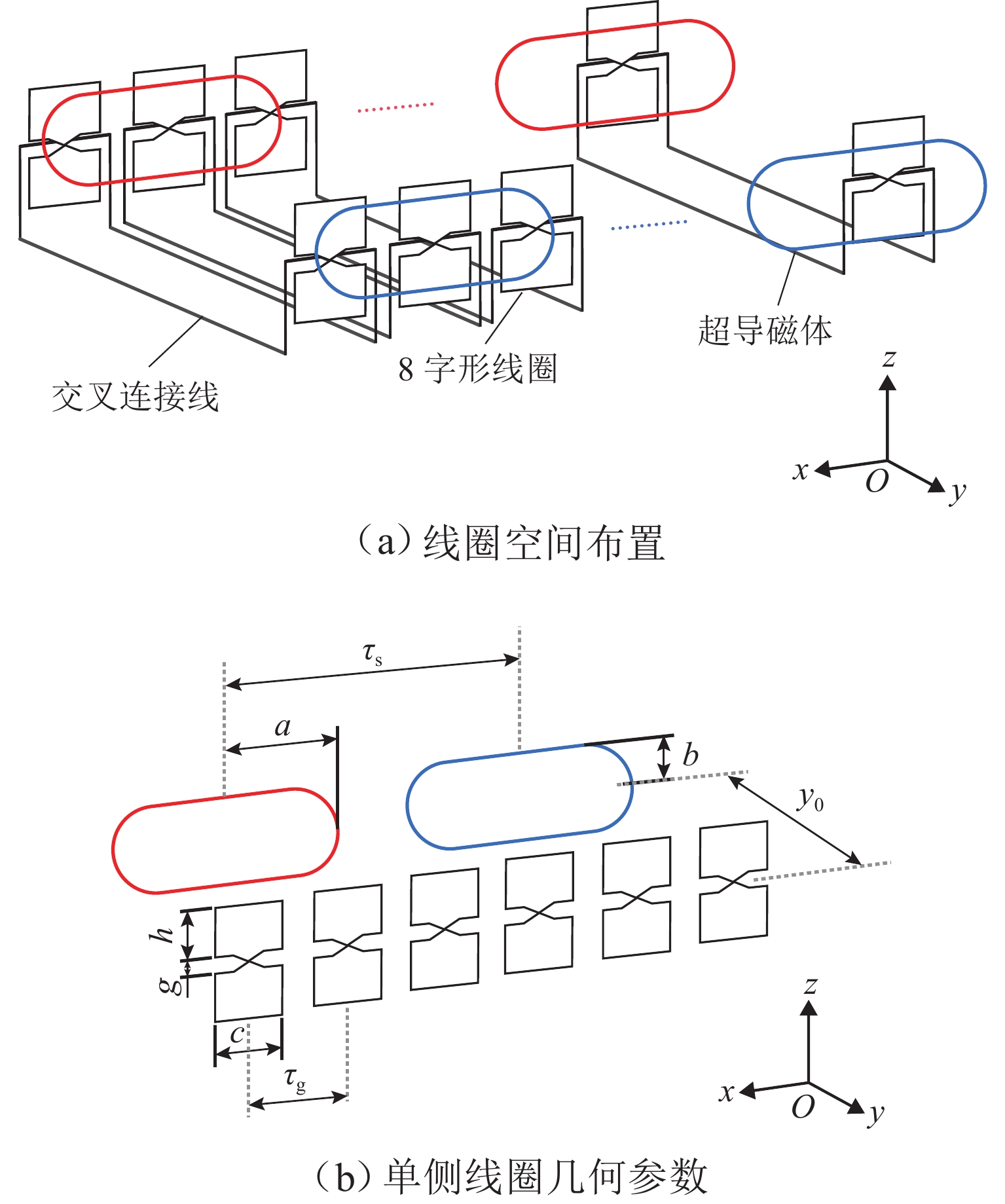
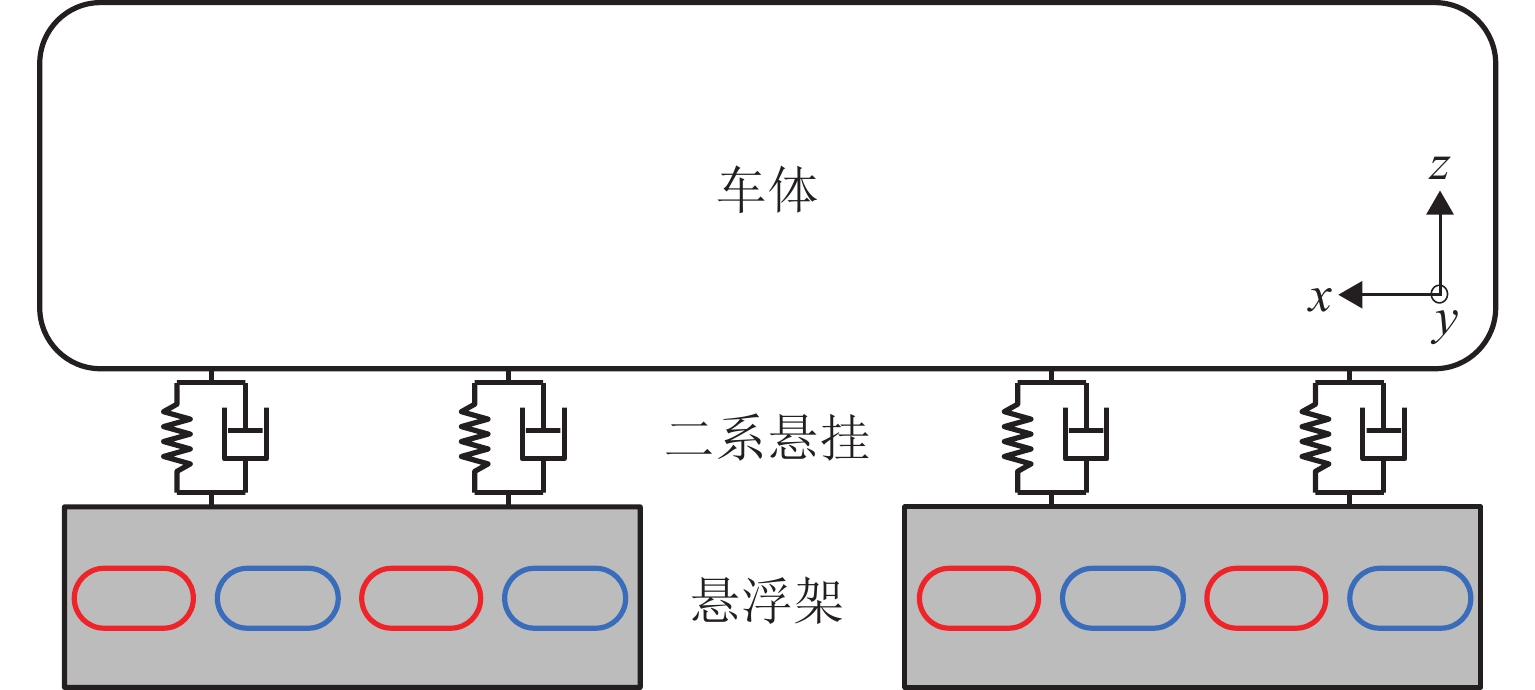
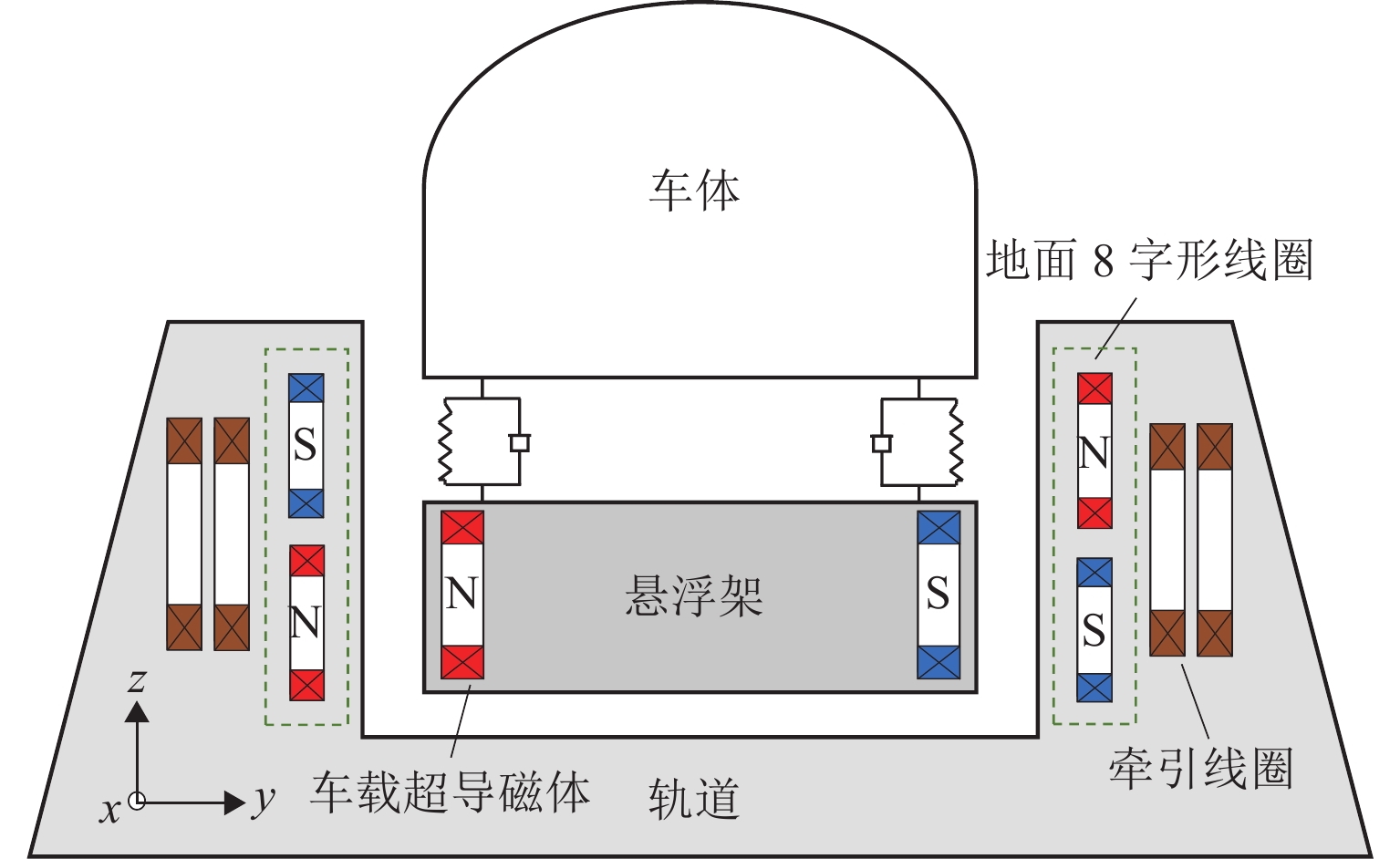
图 2 超导磁体与8字形线圈的位置关系示意图
Figure 2. Relative positions of superconducting magnet and figure-eight-shaped ground coil
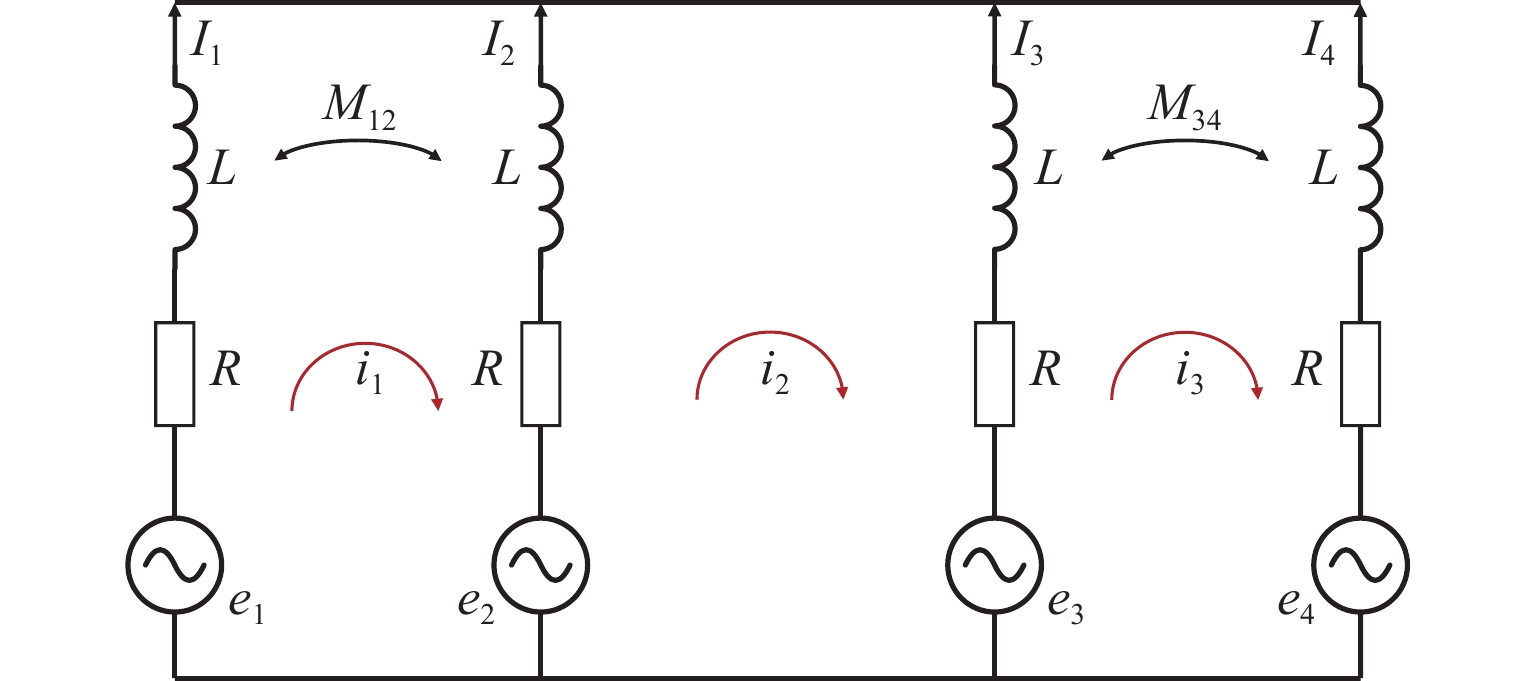
图 3 8字形线圈交叉连接等效电路图
Figure 3. Equivalent circuit of cross-connected figure-eight-shaped ground coils
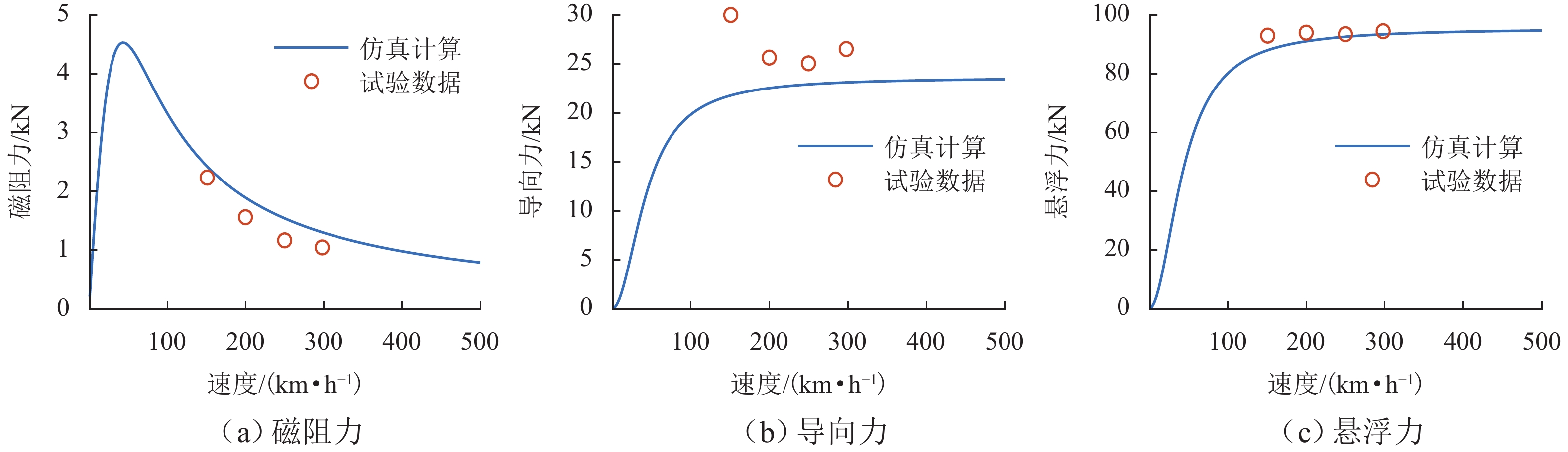
图 5 电磁力计算结果与试验数据对比
Figure 5. Comparison of calculated electromagnetic forces with experimental data
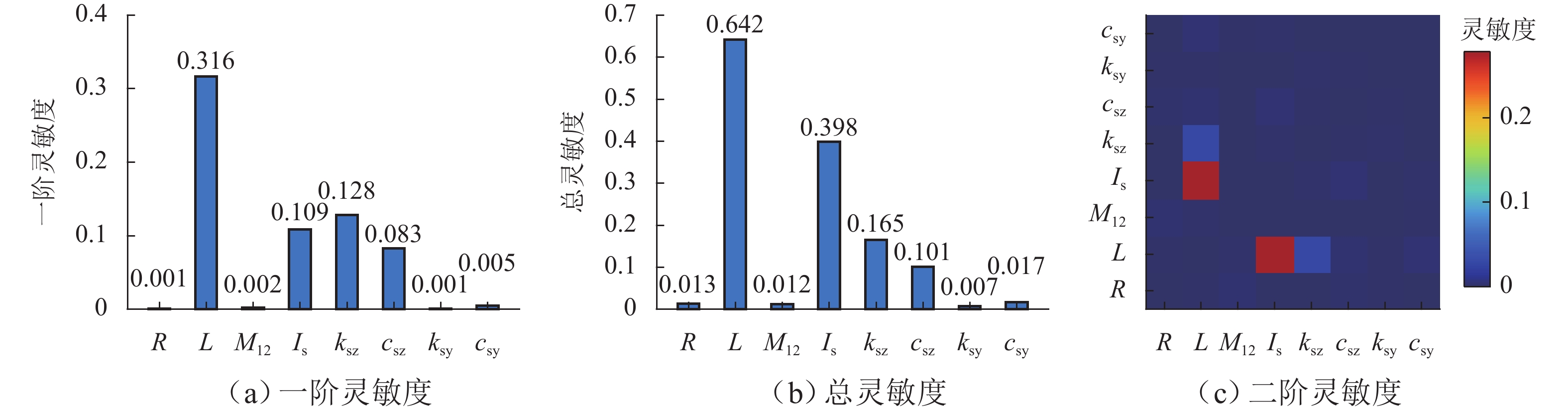
图 7 悬浮力峰峰值波动率的Sobol灵敏度分析结果
Figure 7. Sobol sensitivity indices for peak-to-peak levitation force ripple ratio
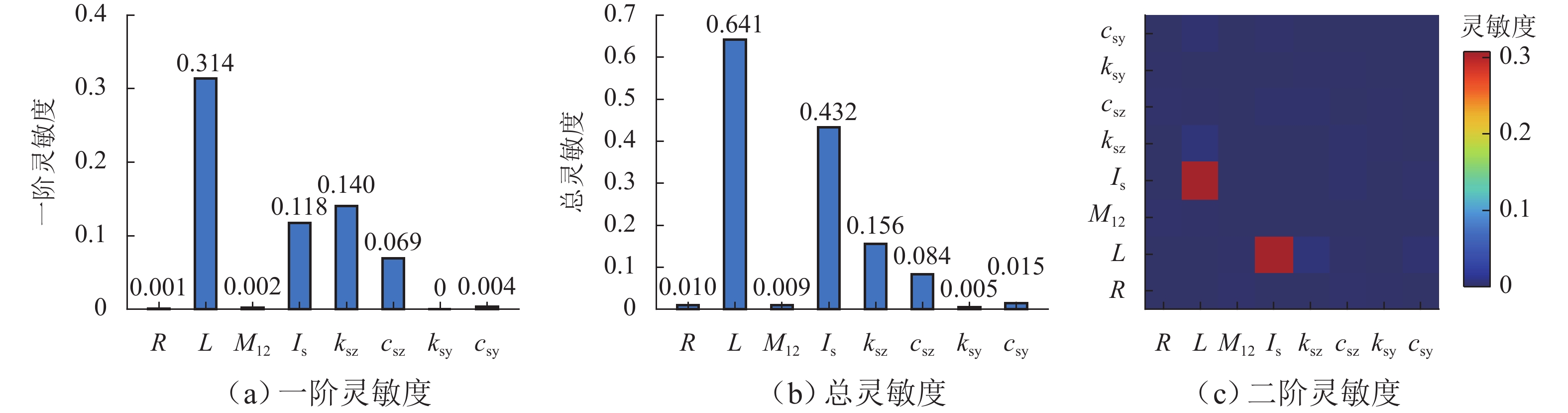
图 8 悬浮架垂向加速度均方根的Sobol灵敏度分析结果
Figure 8. Sobol sensitivity indices for RMS vertical acceleration of levitation frame
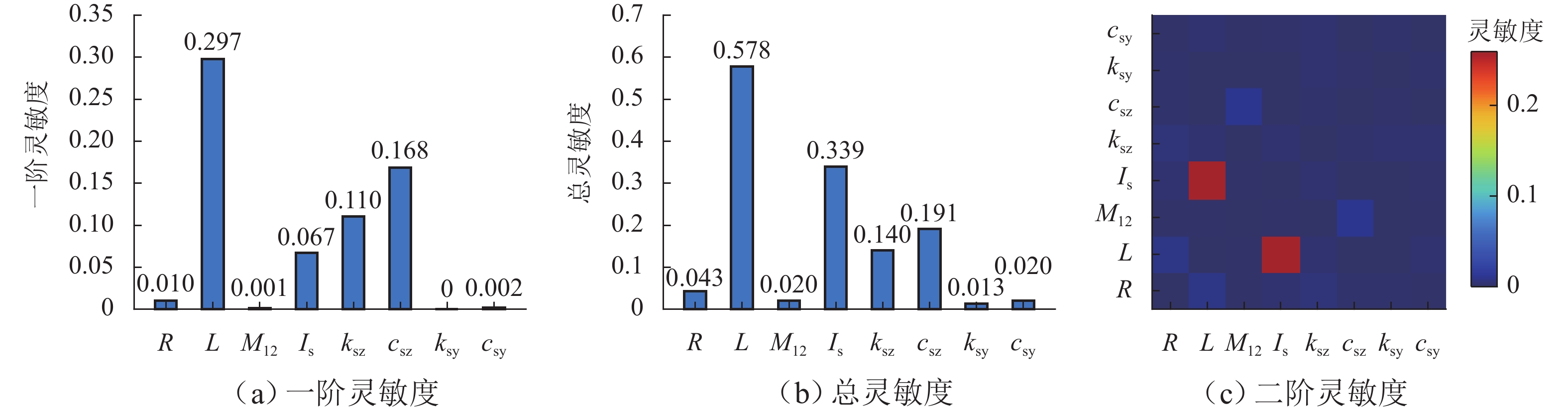
图 9 车体垂向加速度均方根的Sobol灵敏度分析结果
Figure 9. Sobol sensitivity indices for RMS vertical acceleration of carbody
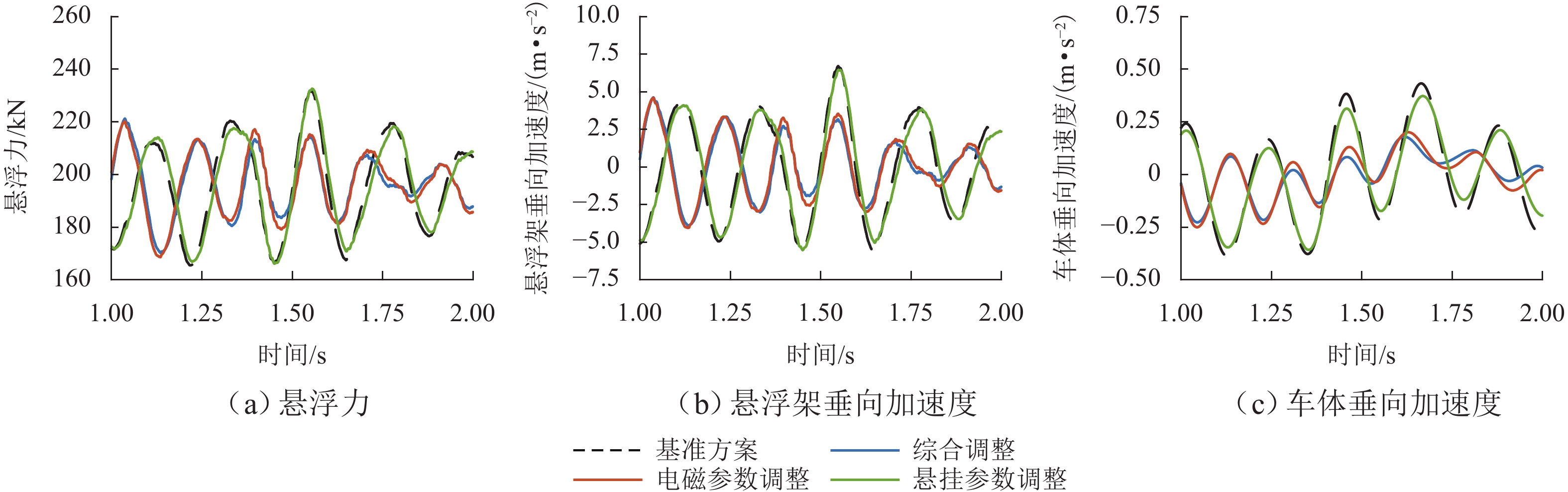
图 11 不同参数调整方案下时域响应对比
Figure 11. Comparison of time-domain responses under different parameter adjustment schemes
表 1 EDS系统线圈主要参数表
Table 1. Main coil parameters of EDS system
对象 符号 描述 数值 超导线圈 a 磁体半长/mm 535 b 磁体半高/mm 250 Is 超导线圈电流/A 500 Ns 超导线圈匝数/匝 1400 τs 超导线圈极距/mm 1350 8字形线圈 c 单环窗口长/mm 350 h 单环窗口高/mm 340 g 上下环路间距/mm 80 Ng 地面线圈匝数/匝 24 τg 地面线圈极距/mm 450 y0 名义单侧横向气隙/mm 185 R 单个环路电阻/mΩ 7.6 L 单个环路自感/mH 0.288 M12 上下环路互感/μH 19.4  下载: 导出CSV
表 2 PCE代理模型精度
Table 2. Accuracy of PCE surrogate models
输出指标 R2 $Q^2_{\mathrm{LOO}} $ 悬浮力峰峰值波动率 δFz 0.9887 0.9768 悬浮架垂向加速度均方根 abz,rms 0.9853 0.9717 车体垂向加速度均方根 acz,rms 0.9684 0.9527
下载: 导出CSV
表 3 关键参数调整方案设置
Table 3. Settings for key parameter adjustment schemes
方案 参数设置 基准方案 L=L0, Is=Is0,
ks,z=ks,z0, cs,z=cs,z0综合调整 L=0.85L0, Is=1.05Is0,
ks,z=0.8ks,z0, cs,z=1.2cs,z0电磁参数调整 L=0.85L0, Is=1.05Is0,
ks,z=ks,z0, cs,z=cs,z0悬挂参数调整 L=L0, Is=Is0,
ks,z=0.8ks,z0, cs,z=1.2cs,z0
下载: 导出CSV
表 4 不同方案下输出指标
Table 4. Output indicators under different schemes
方案 δFz/% abz,rms/(m·s−2) acz,rms/(m·s−2) 基准方案 7.492 2.662 0.200 综合调整 6.852 2.344 0.140 电磁参数调整 7.108 2.442 0.152 悬挂参数调整 7.286 2.565 0.178
下载: 导出CSV
-
[1] 刘士苋, 王磊, 王路忠, 等. 电动悬浮列车及车载超导磁体研究综述[J]. 西南交通大学学报, 2023, 58(4): 734-753. doi: 10.3969/j.issn.0258-2724.20220621Liu Shixian, Wang Lei, Wang Luzhong, et al. Review on electrodynamic suspension trains and on-board superconducting magnets[J]. Journal of Southwest Jiaotong University, 2023, 58(4): 734-753. doi: 10.3969/j.issn.0258-2724.20220621 [2] 于青松, 李凯, 胡浩, 等. 超导电动悬浮应用研究与技术展望[J]. 机车电传动, 2023(4): 1-8. doi: 10.13890/j.issn.1000-128X.2023.04.001Yu Qingsong, Li Kai, Hu Hao, et al. Research and technological prospects of applications for superconducting electrodynamic suspension[J]. Electric Drive for Locomotives, 2023(4): 1-8. doi: 10.13890/j.issn.1000-128X.2023.04.001 [3] 谭富星, 李凯, 于淼, 等. 超导电动悬浮试验线悬浮系统设计及验证[J]. 机车电传动, 2024(3): 13-18. doi: 10.13890/j.issn.1000-128X.2024.01.125Tan Fuxing, Li Kai, Yu Miao, et al. Design and verification of levitation system for superconducting electrodynamic suspension test line[J]. Electric Drive for Locomotives, 2024(3): 13-18. doi: 10.13890/j.issn.1000-128X.2024.01.125 [4] Lu L, Wu W, Yu X, et al. High-temperature superconducting non-insulation closed-loop coils for electro-dynamic suspension system[J]. Electronics, 2021, 10(16): 1980. doi: 10.3390/electronics10161980 [5] Fujimoto T, Aiba M, Suzuki H, et al. Characteristics of electromagnetic force of ground coil for levitation and guidance at the yamanashi maglev test line[J]. Quarterly Report of RTRI, 2000, 41(2): 63-67. doi: 10.2219/rtriqr.41.63 [6] 王志涛, 蔡尧, 龚天勇, 等. 基于场-路-运动耦合模型的超导电动悬浮列车特性研究[J]. 中国电机工程学报, 2019, 39(4): 1162-1170. doi: 10.13334/j.0258-8013.pcsee.180798Wang Zhitao, Cai Yao, Gong Tianyong, et al. Characteristic studies of the superconducting electrodynamic suspension train with a field-circuit-motion coupled model[J]. Proceedings of the CSEE, 2019, 39(4): 1162-1170. doi: 10.13334/j.0258-8013.pcsee.180798 [7] 王小农, 黄靖宇. 超导电动磁浮列车悬浮和导向特性[J]. 同济大学学报(自然科学版), 2022, 50(10): 1482-1489. doi: 10.11908/j.issn.0253-374x.21496Wang Xiaonong, Huang Jingyu. Levitation and guidance characteristics of superconducting electrodynamic maglev train[J]. Journal of Tongji University (Natural Science), 2022, 50(10): 1482-1489. doi: 10.11908/j.issn.0253-374x.21496 [8] Wang X N, Huang J Y. Research on electromagnetic relationship and passive electromagnetic damping characteristics of superconducting electrodynamic maglev train[J]. IEEE Transactions on Applied Superconductivity, 2022, 32(7): 3602618. [9] Gong T Y, Ma G T, Wang R C, et al. 3-D FEM modeling of the superconducting EDS train with cross-connected figure-eight-shaped suspension coils[J]. IEEE Transactions on Applied Superconductivity, 2021, 31(3): 3600213. doi: 10.1109/tasc.2021.3050180 [10] Liu K, Ma G T, Luo J, et al. Equivalent simulation and measurement for the electrodynamic suspension system based on the dynamic circuit theory[J]. IEEE Transactions on Instrumentation and Measurement, 2024, 73: 7509715. doi: 10.1109/tim.2024.3481585 [11] Gong T Y, Ma G T, Liu K, et al. An efficient 3-D FEM model for electromagnetic force and torque calculation in null-flux superconducting EDS trains[J]. IEEE Transactions on Transportation Electrification, 2025, 11(3): 7346-7356. doi: 10.1109/TTE.2025.3526652 [12] Fu X X, Huang J Y, Wang Y D, et al. Spatial Fourier-based modeling of multi-attitude superconducting EDS systems with end effects[J]. Superconductor Science and Technology, 2025, 38(10): 105024. doi: 10.1088/1361-6668/ae125f [13] Cai Y, Ma G T, Wang Y Y, et al. Semianalytical calculation of superconducting electrodynamic suspension train using figure-eight-shaped ground coil[J]. IEEE Transactions on Applied Superconductivity, 2020, 30(5): 3602509. doi: 10.1109/tasc.2020.2978423 [14] Ma G T, Yan Z Y. Vehicle-track coupled dynamics model for superconducting electrodynamic suspension train[J]. Vehicle System Dynamics, 2023, 61(12): 3202-3224. doi: 10.1080/00423114.2022.2161919 [15] Su Z H, Luo J, Feng P J, et al. Vertical-lateral coupled dynamic model for integrated propulsion, levitation and guidance superconducting EDS train[J]. IEEE Transactions on Intelligent Transportation Systems, 2024, 25(5): 4364-4380. doi: 10.1109/TITS.2023.3330421 [16] Feng P J, Ma G T, Su Z H, et al. Dynamic modeling and analysis of vehicle-track–bridge coupled system for superconducting EDS train[J]. IEEE Transactions on Transportation Electrification, 2025, 11(1): 4157-4168. doi: 10.1109/TTE.2024.3454111 [17] 周丹峰, 朱鹏翔, 谭亦秋, 等. 超导电动悬浮系统的垂向阻尼及其增强措施[J]. 国防科技大学学报, 2025, 47(5): 165-174. doi: 10.11887/j.issn.1001-2486.23080020Zhou Danfeng, Zhu Pengxiang, Tan Yiqiu, et al. Vertical damping of the superconducting electrodynamic suspension system and its improving measure[J]. Journal of National University of Defense Technology, 2025, 47(5): 165-174. doi: 10.11887/j.issn.1001-2486.23080020 [18] 陈杰, 赵春发, 宁晓芳, 等. 磁浮列车超导电动悬浮系统的阻尼线圈主动减振研究[J]. 振动工程学报, 2026, 39(2): 497-506. doi: 10.16385/j.cnki.issn.1004-4523.202402009Chen Jie, Zhao Chunfa, Ning Xiaofang, et al. Active vibration reduction of the superconducting electrodynamic suspension system for maglev train using damper coils[J]. Journal of Vibration Engineering, 2026, 39(2): 497-506. doi: 10.16385/j.cnki.issn.1004-4523.202402009 [19] 王艺宇, 胡道宇, 吕民东, 等. 阻尼线圈电流控制相序对超导电动悬浮系统振动抑制效果研究[J]. 中国电机工程学报, 2025, 45(22): 9016-9028. doi: 10.13334/j.0258-8013.pcsee.242029Wang Yiyu, Hu Daoyu, (lü/lv/lu/lyu) Mindong, et al. Research on vibration suppression effect of damper coil current control phase sequence in superconducting electrodynamic suspension system[J]. Proceedings of the CSEE, 2025, 45(22): 9016-9028. doi: 10.13334/j.0258-8013.pcsee.242029 [20] 赵春发, 李煜寒, 彭也也, 等. 超导电动悬浮列车明线气动特性及其对悬浮状态的影响[J]. 西南交通大学学报, 2025, 60(4): 793-802. doi: 10.3969/j.issn.0258-2724.20240470Zhao Chunfa, Li Yuhan, Peng Yeye, et al. Aerodynamic characteristics of open wire of superconducting maglev train and its influence on levitation state[J]. Journal of Southwest Jiaotong University, 2025, 60(4): 793-802. doi: 10.3969/j.issn.0258-2724.20240470 [21] 张榕欣, 蔡小培, 汤雪扬, 等. 超导电动磁浮道岔线形设计与侧向过岔速度优化[J]. 西南交通大学学报, 2025, 60(4): 893-903. doi: 10.3969/j.issn.0258-2724.20240421Zhang Rongxin, Cai Xiaopei, Tang Xueyang, et al. Alignment design of superconducting electrodynamic suspension turnouts and optimization of lateral crossing speed[J]. Journal of Southwest Jiaotong University, 2025, 60(4): 893-903. doi: 10.3969/j.issn.0258-2724.20240421 [22] Murai T, Iwamatsu M, Yoshioka H. Optimized design of 8-figure null-flux coils in EDS maglev[J]. IEEJ Transactions on Industry Applications, 2003, 123(1): 9-14. doi: 10.1541/ieejias.123.9 [23] Cui L B, Luo J, Su Z H, et al. Fast optimization of null-flux coils for superconducting electrodynamic suspension train with RSM and AMGA[J]. IEEE Transactions on Applied Superconductivity, 2022, 32(5): 3602308. doi: 10.1109/tasc.2022.3173292 [24] Luo J, Cui L B, Su Z H, et al. Design optimization of null-flux superconducting electrodynamic suspension for cost-saving and performance improvement[J]. IEEE/ASME Transactions on Mechatronics, 2023, 28(6): 3502-3512. doi: 10.1109/TMECH.2023.3270330 [25] Ning X F, Zhao C F, Yu Q S, et al. Suspension and guidance performance of a new superconducting EDS system using the 8-shaped ground coils with nonequal turns[J]. IEEE Transactions on Applied Superconductivity, 2024, 34(4): 3601511. doi: 10.1109/tasc.2024.3371469 [26] 王津, 葛琼璇, 赵鲁. 超导电动悬浮非对称系统多目标优化设计[J]. 西南交通大学学报, 2025, 60(4): 884-892. doi: 10.3969/j.issn.0258-2724.20240477Wang Jin, Ge Qiongxuan, Zhao Lu. Multi-objective asymmetric design for optimizing superconducting electrodynamic suspension system[J]. Journal of Southwest Jiaotong University, 2025, 60(4): 884-892. doi: 10.3969/j.issn.0258-2724.20240477 [27] Sudret B. Global sensitivity analysis using polynomial chaos expansions[J]. Reliability Engineering & System Safety, 2008, 93(7): 964-979. doi: 10.1016/j.ress.2007.04.002 [28] Loukrezis D, Diehl E, De Gersem H. Multivariate sensitivity-adaptive polynomial chaos expansion for high-dimensional surrogate modeling and uncertainty quantification[J]. Applied Mathematical Modelling, 2025, 137: 115746. doi: 10.1016/j.apm.2024.115746 [29] Song M K, Fujino Y. Dynamic analysis of guideway structures by considering ultra high-speed Maglev train-guideway interaction[J]. Structural Engineering and Mechanics, 2008, 29(4): 355-380. doi: 10.12989/sem.2008.29.4.355 [30] Suzuki E, Shirasaki J, Watanabe K, et al. Comparison of methods to reduce vibrations in superconducting maglev vehicles by primary suspension control[J]. Journal of Mechanical Systems for Transportation and Logistics, 2008, 1(1): 3-13. doi: 10.1299/jmtl.1.3 [31] Watanabe K, Yoshioka H, Watanabe E, et al. A study of the vibration control system for a superconducting maglev vehicle[J]. The Proceedings of the International Conference on Motion and Vibration Control, 2002, 6.2: 907-912. [32] Blatman G, Sudret B. Adaptive sparse polynomial chaos expansion based on least angle regression[J]. Journal of Computational Physics, 2011, 230(6): 2345-2367. doi: 10.1016/j.jcp.2010.12.021 [33] Saltelli A, Annoni P, Azzini I, et al. Variance based sensitivity analysis of model output. Design and estimator for the total sensitivity index[J]. Computer Physics Communications, 2010, 181(2): 259-270. doi: 10.1016/j.cpc.2009.09.018 [34] Azukizawa T. Persistent current analysis of superconducting coils in an electrodynamic suspension system[J]. Electrical Engineering in Japan, 1995, 115(2): 135-143. doi: 10.1002/eej.4391150213 [35] 肖乾, 程玉琦, 罗佳文, 等. 车辆/轨道耦合作用下高速列车车轮振动影响灵敏度分析[J]. 交通运输工程学报, 2021, 21(6): 160-169. doi: 10.19818/j.cnki.1671-1637.2021.06.012Xiao Qian, Cheng Yuqi, Luo Jiawen, et al. Sensitivity analysis of high-speed train wheel vibration influenced by vehicle-track coupling[J]. Journal of Traffic and Transportation Engineering, 2021, 21(6): 160-169. doi: 10.19818/j.cnki.1671-1637.2021.06.012 -

 下载:

 点击查看大图
计量
- 文章访问数: 7
- HTML全文浏览量: 6
- PDF下载量: 2
- 被引次数: 0