



Damage Mechanism of Heavy-Haul Locomotive Wheels on Long Heavy Downhill Slopes with Low Adhesion
-
摘要:
为探明重载列车制动通过低黏着长大下坡道时机车车轮的损伤机理,以两万吨重载组合列车的从控机车为对象,建立考虑纵向冲动的重载机车车轮损伤分析模型,主要包括两万吨重载组合列车纵向动力学模型、考虑防滑控制的机车车辆与轨道空间相互作用模型和车轮损伤预测模型;基于该模型分析电制动操纵工况下从控机车的车轮损伤分布,并进一步探究轨面黏着参数和防滑控制算法参数对从控机车车轮损伤的影响. 仿真结果表明:1) 车钩力会导致从控机车A节和B节通过低黏着区域时的车轮黏着性能及滑行特征不同,进而导致从控机车各个车轮的损伤值存在差异;正常黏着轨面条件下,车轮损伤以疲劳损伤为主,在不同接触斑的特性参数匹配下,车轮损伤会由疲劳损伤逐步转变为磨耗损伤. 2) 不同的防滑控制阈值在复杂轨面黏着和制动条件下对车轮损伤的影响存在差异;当电制动力卸载比例由0.4提高至1.0时,各个轮对的车轮损伤值最大降低了88.9%;当制动力的卸载斜率由5 kN/s提高至30 kN/s,各轮对的车轮损伤值最大降幅可达92.4%,而将恢复斜率由15 kN/s降低至1 kN/s时,该最大降幅为80.0%.
Abstract:To investigate the damage mechanism of locomotive wheels during the braking of heavy-haul trains on long heavy downhill slopes with low adhesion, a wheel damage analysis model for heavy-haul locomotives considering longitudinal impulses was established focusing on the slave control locomotive of a 20,000-ton heavy-haul combined train. This model mainly included a longitudinal dynamics model of the 20,000-ton heavy-haul combined train, a vehicle-track spatial interaction model considering anti-slip control, and a wheel damage prediction model. Based on this model, the wheel damage distribution of the slave control locomotive under electric braking conditions was analyzed, and the effects of rail surface adhesion parameters and anti-slip control algorithm parameters on the wheel damage of the slave control locomotive were further explored. Simulation results indicate that: 1) Coupler forces lead to different wheel adhesion performance and sliding characteristics between Section A and Section B of the slave control locomotive when passing through low-adhesion areas, which in turn results in differences in the damage values among individual wheels of the slave control locomotive. Under normal rail adhesion conditions, the wheel damage is predominantly fatigue damage; with characteristic parameter matchings of different contact patches, the wheel damage gradually transforms from fatigue damage to wear damage. 2) Different anti-slip control thresholds exhibit varying effects on wheel damage under complex rail adhesion and braking conditions. When the electric braking force reduction ratio increases from 0.4 to 1.0, the maximum wheel damage value of each wheelset decreases by 88.9%. When the braking force reduction slope increases from 5 kN/s to 30 kN/s, the maximum decrease in the wheel damage value of each wheelset reaches 92.4%, and when the recovery slope decreases from 15 kN/s to 1 kN/s, the maximum decrease is 80.0%.
-
Key words:
- heavy-haul locomotive /
- wheel damage /
- damage prediction /
- braking operation /
- anti-slip control /
- longitudinal impulse
-
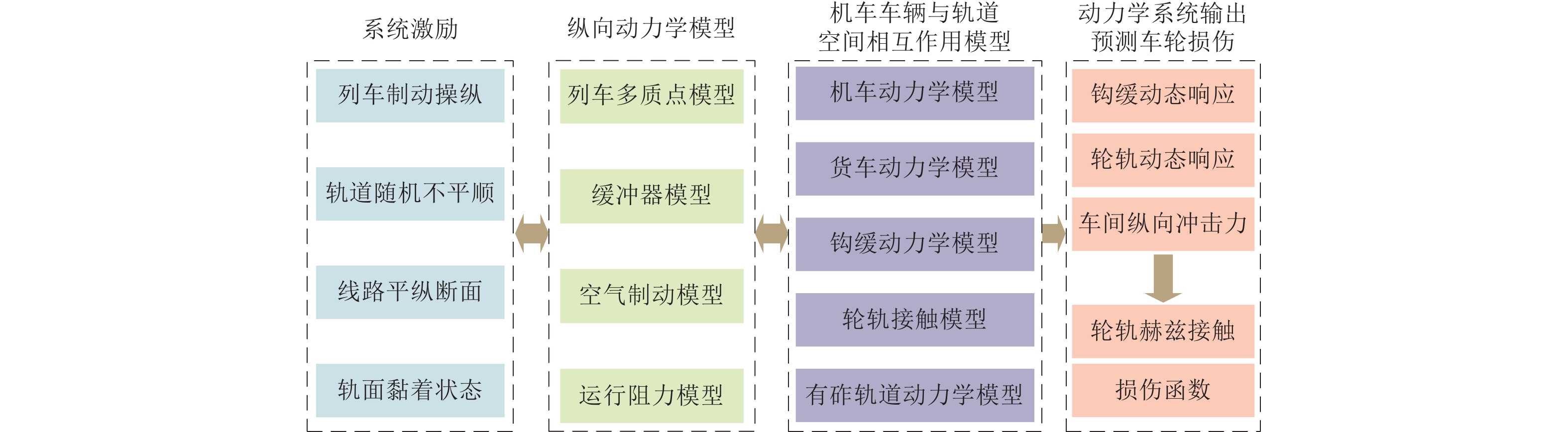
图 1 考虑列车制动操纵的重载机车车轮损伤预测模型框架
Figure 1. Framework of wheel damage prediction model for heavy-haul locomotives considering train braking operation
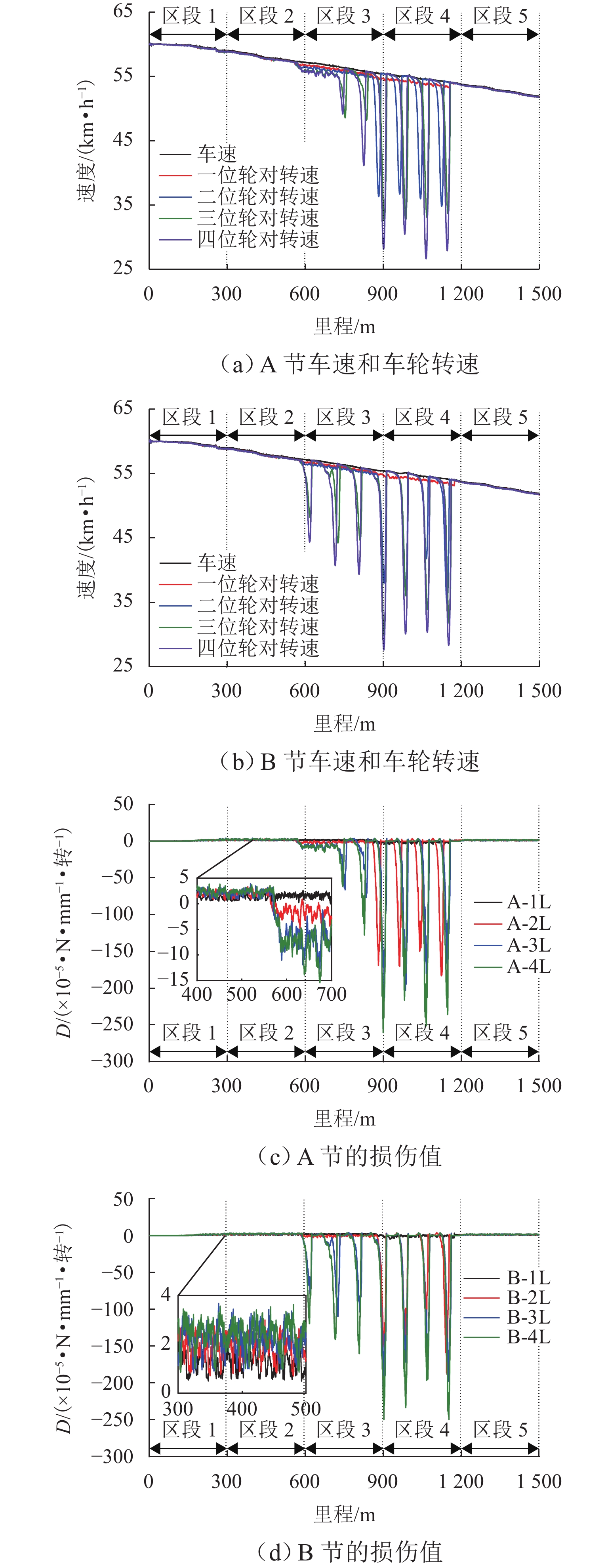
图 7 电制动工况下从控机车动态响应与车轮损伤
Figure 7. Dynamic response and wheel damage of slave control locomotive under electric braking condition

图 8 电制动工况下从控机车的轮轨动态相互作用
Figure 8. Wheel-rail dynamic interaction of slave control locomotive under electric braking condition
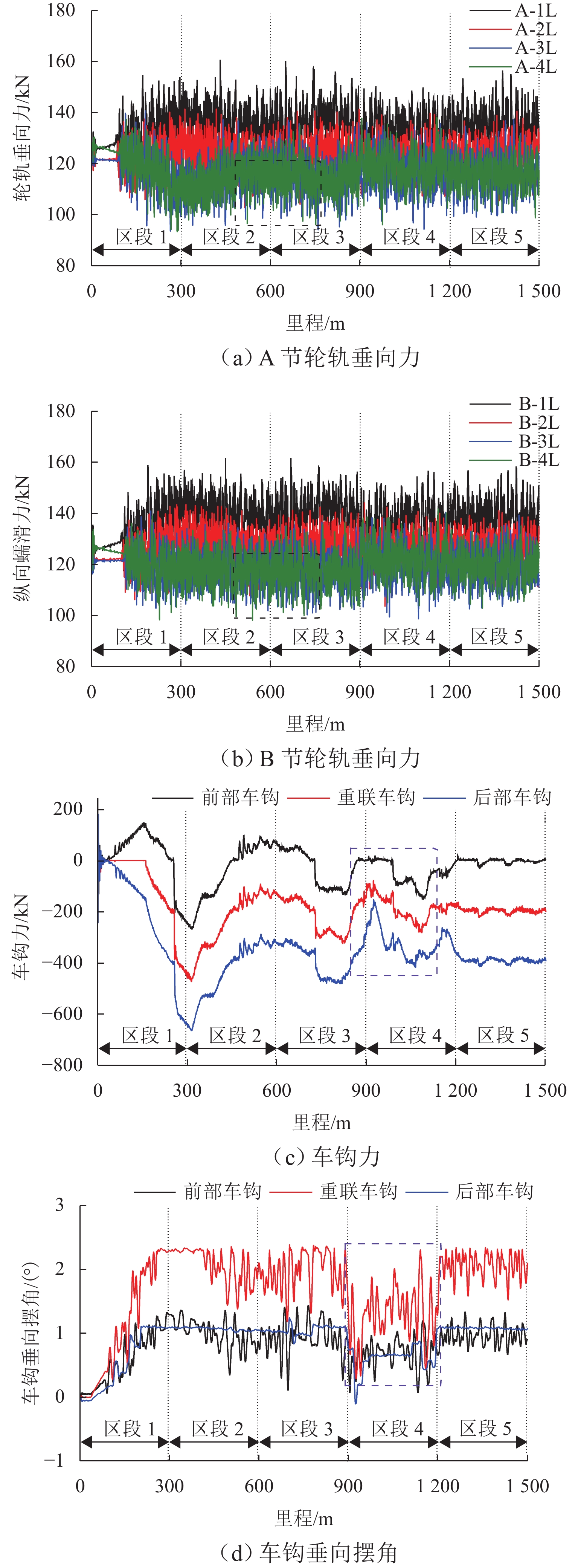
图 9 电制动工况下机车车钩动态响应
Figure 9. Dynamic response of locomotive coupler under electric braking condition
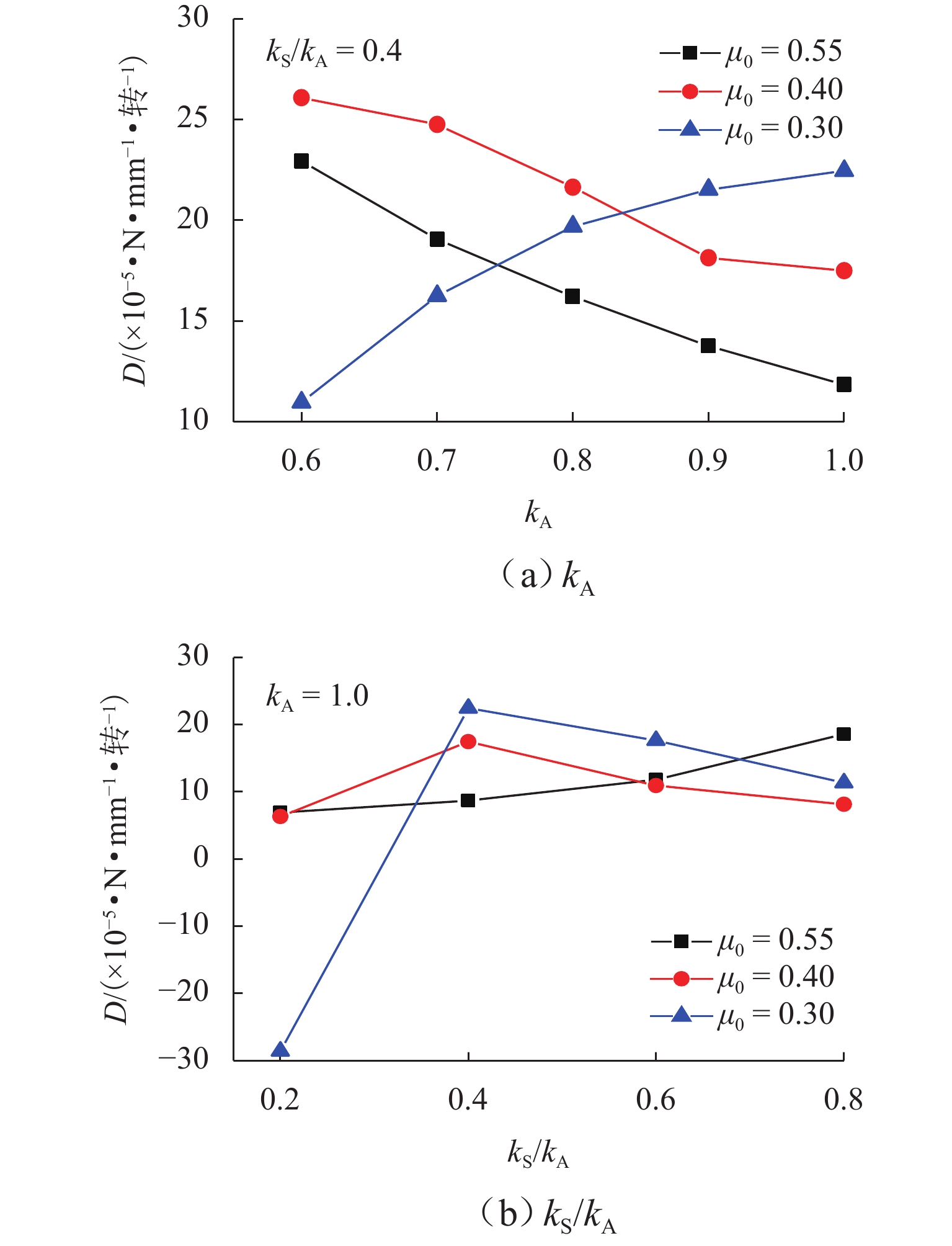
图 10 单一接触斑的特性参数变化对从控机车车轮损伤值总和的影响
Figure 10. Effect of characteristic parameter variation of single contact patch on total wheel damage value of slave control locomotive
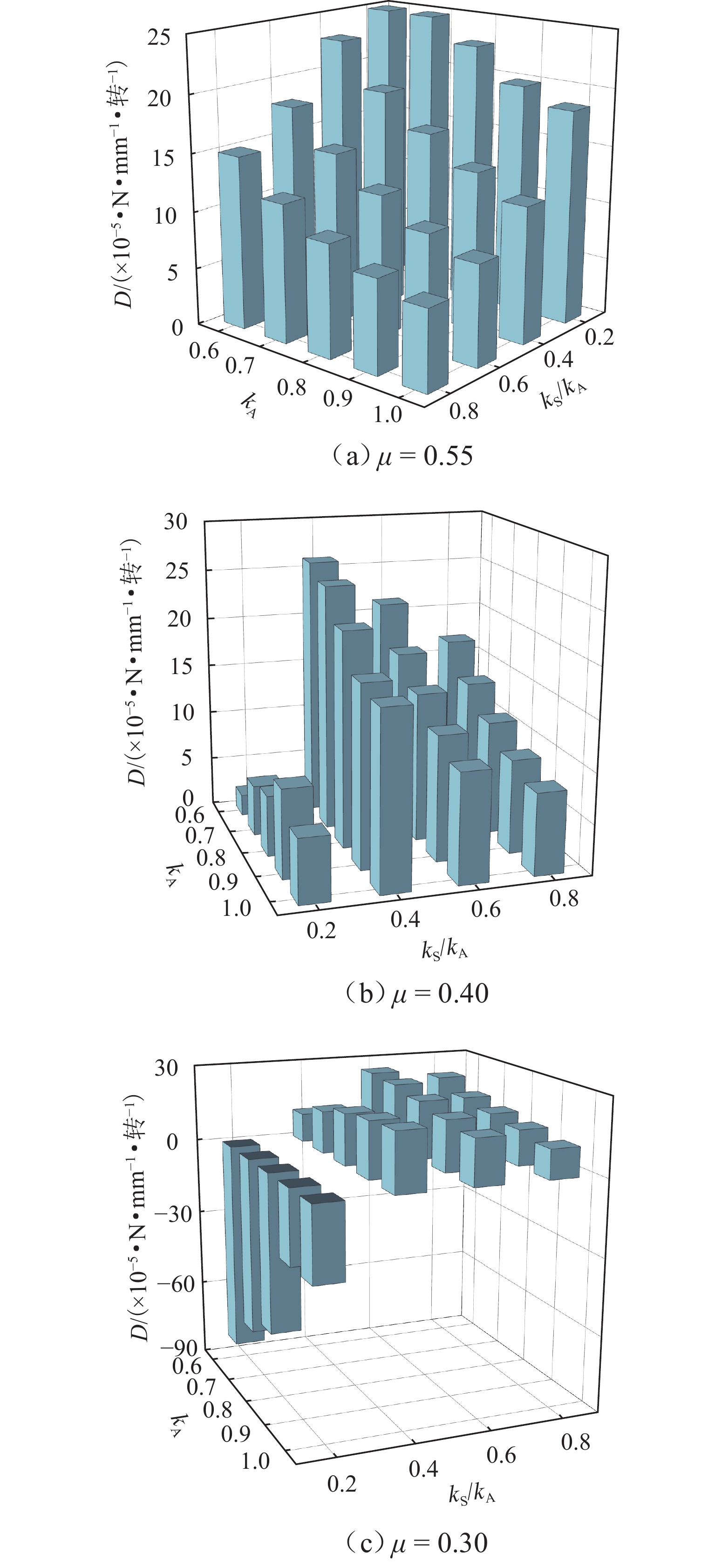
图 11 不同接触斑的特性参数匹配下的从控机车车轮损伤值总和
Figure 11. Total wheel damage value of slave control locomotive under characteristic parameter matchings of different contact patches
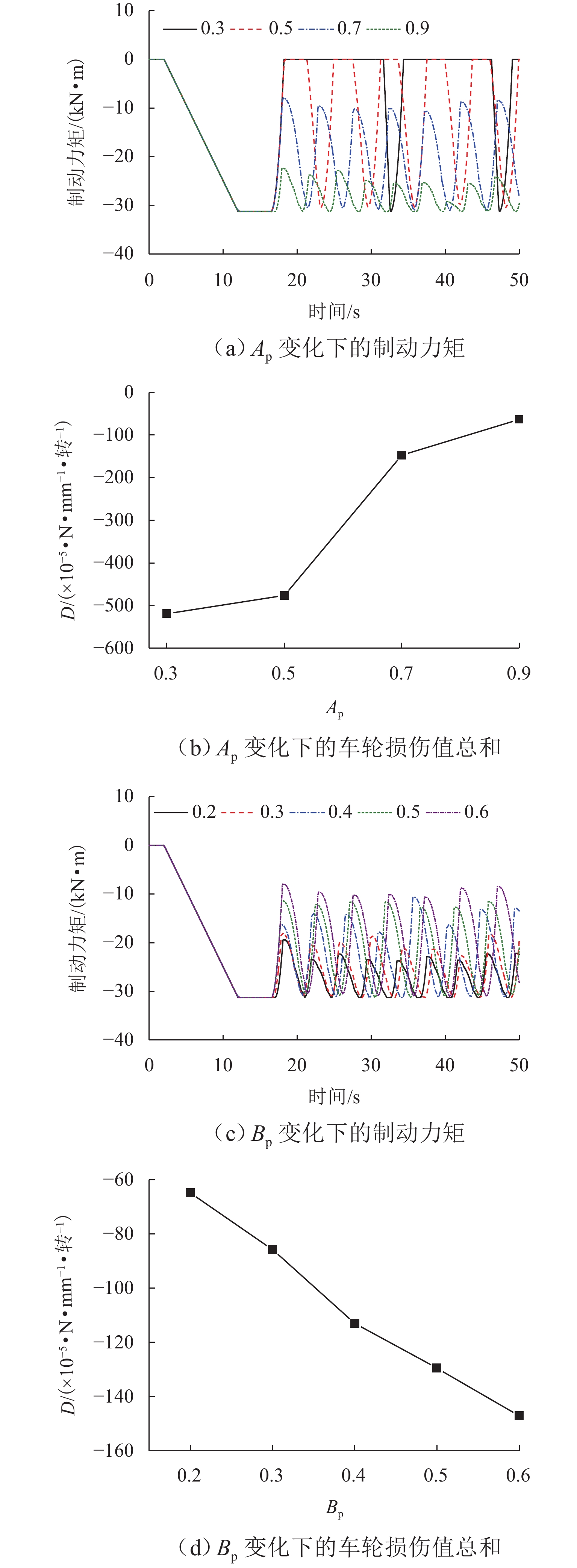
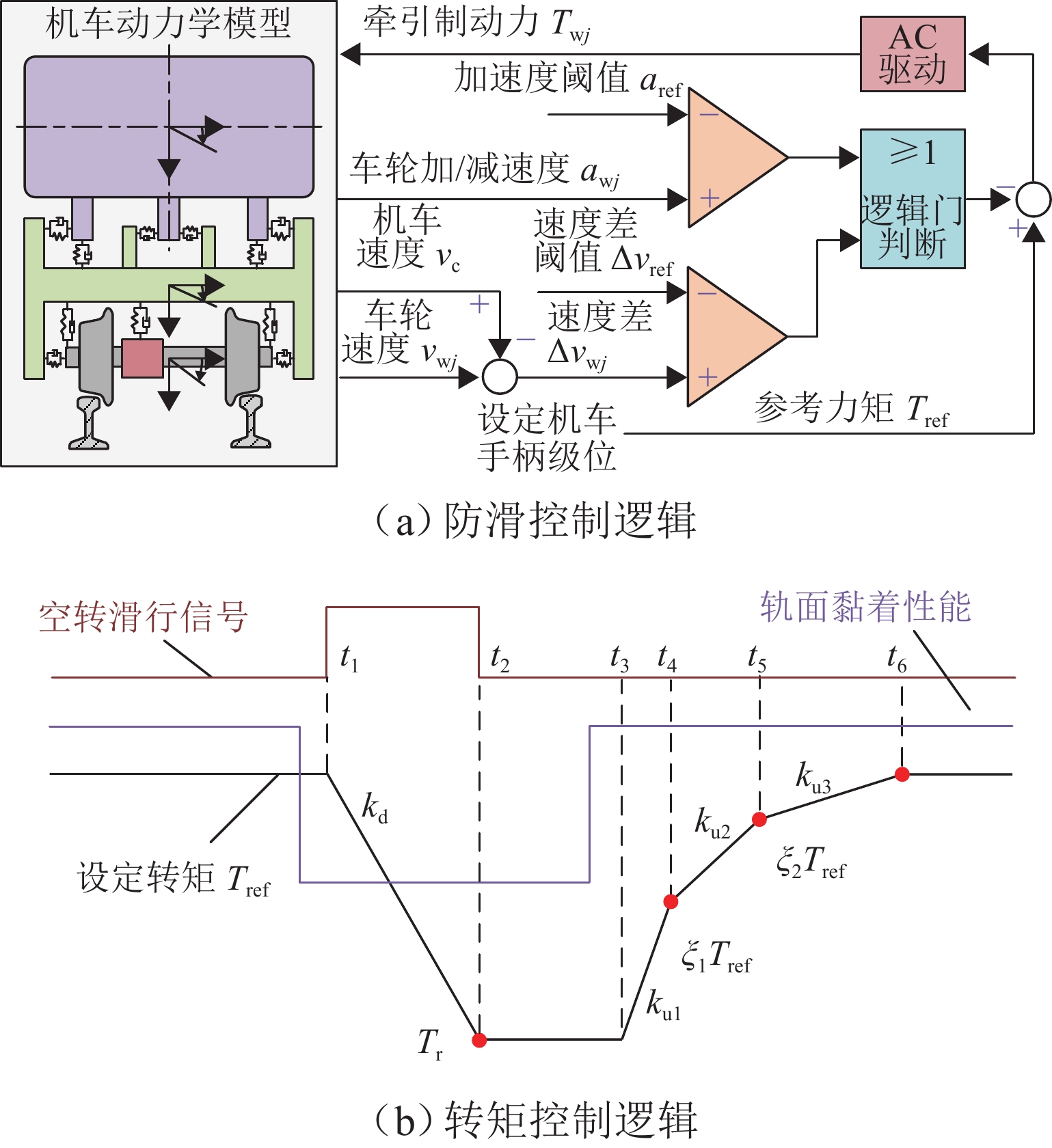
图 12 单一动摩擦系数的特性参数变化对从控机车的制动力矩和车轮损伤值总和的影响
Figure 12. Effect of characteristic parameter variation of single kinetic friction coefficient on braking torque and total wheel damage value of slave control locomotive
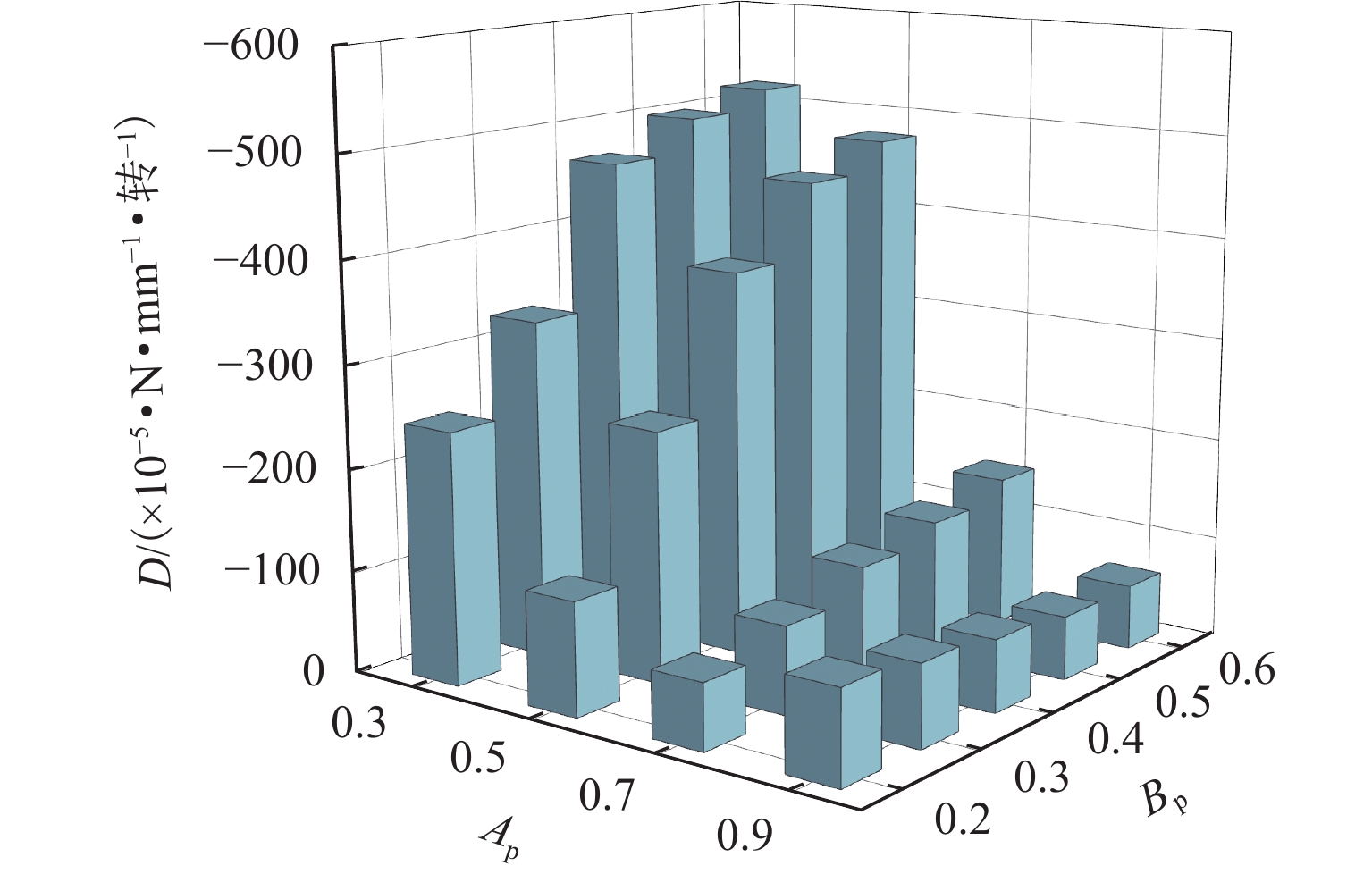
图 13 不同动摩擦系数的特性参数匹配下从控机车的车轮损伤值总和
Figure 13. Total wheel damage value of slave control locomotive under characteristic parameter matchings of different kinetic friction coefficients
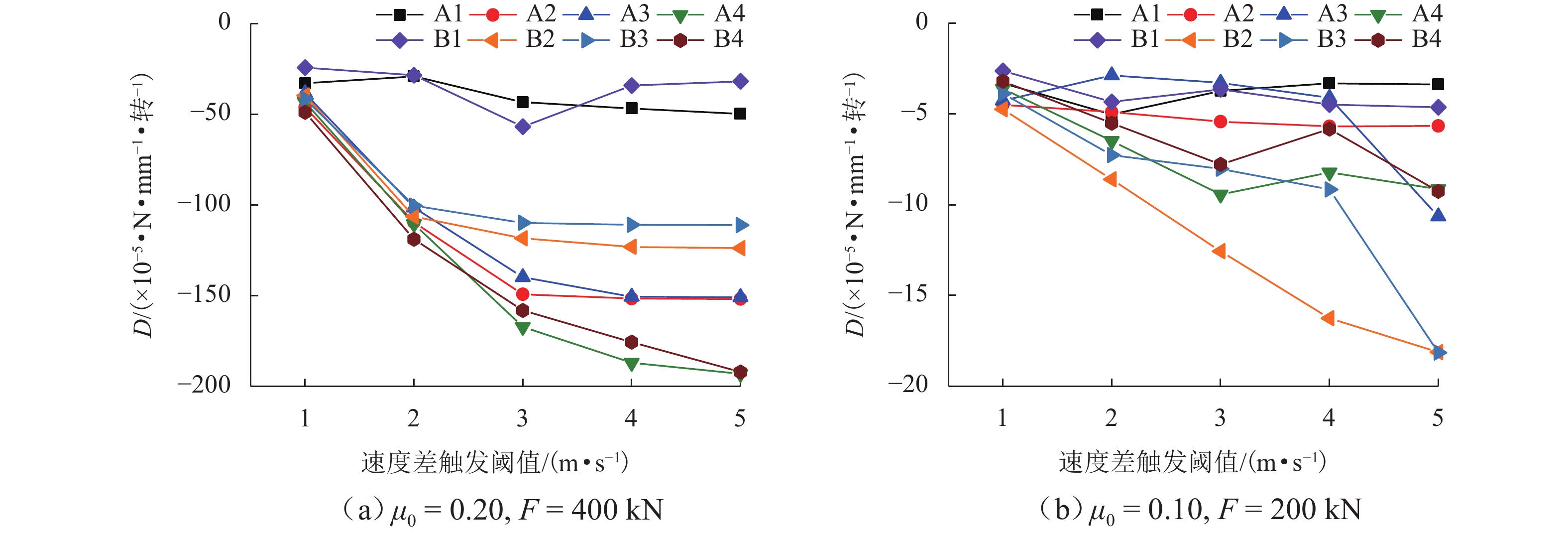
图 14 不同速度差触发阈值下的从控机车车轮损伤值
Figure 14. Wheel damage value of slave control locomotive under different speed difference trigger thresholds
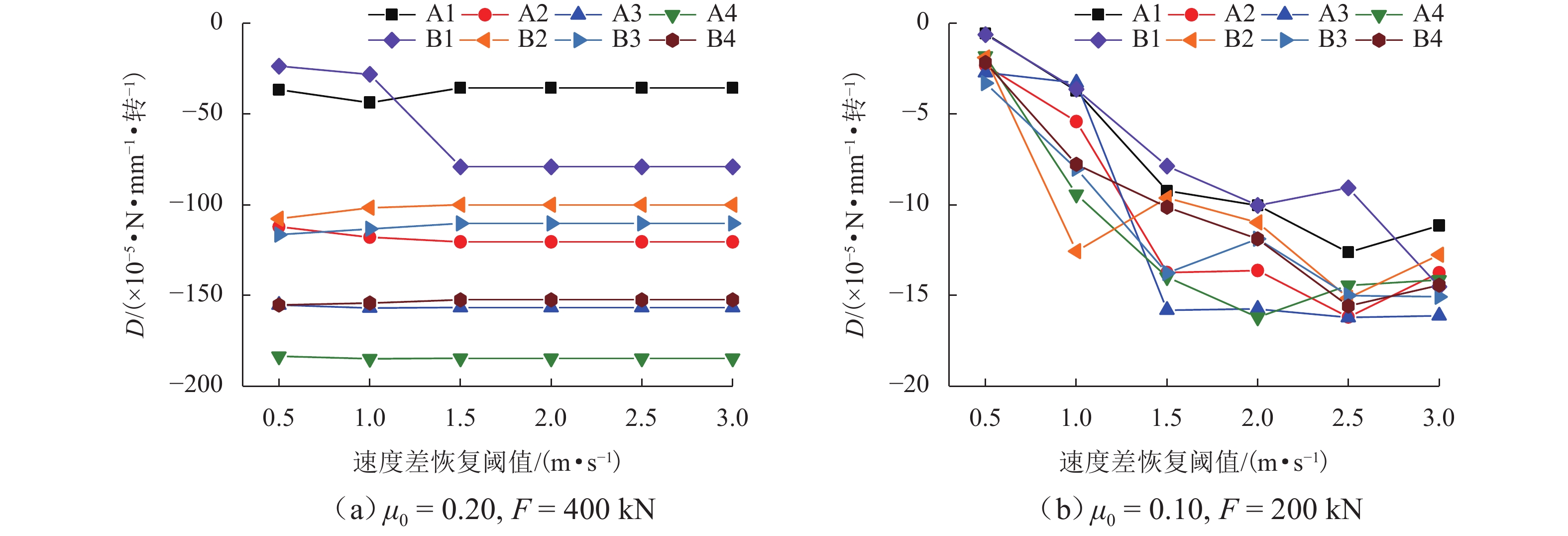
图 15 不同速度差恢复阈值下的从控机车车轮损伤值
Figure 15. Wheel damage value of slave control locomotive under different speed difference recovery thresholds
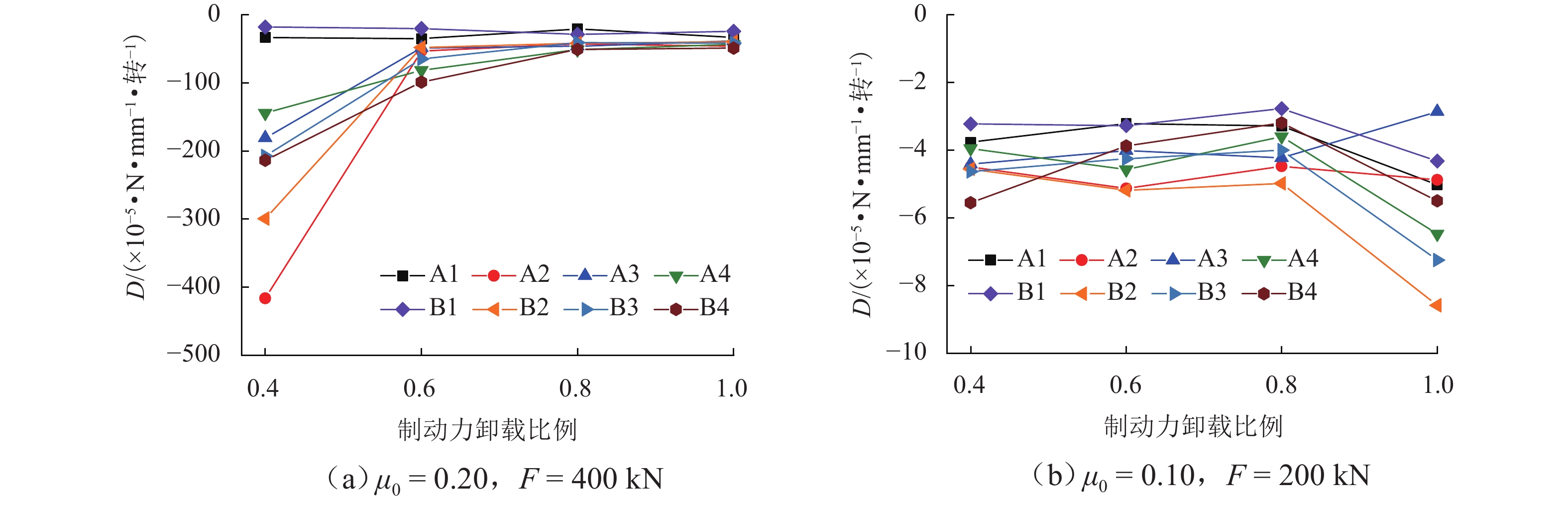
图 16 不同制动力卸载比例下的从控机车车轮损伤值
Figure 16. Wheel damage value of slave control locomotive under different braking force reduction ratios
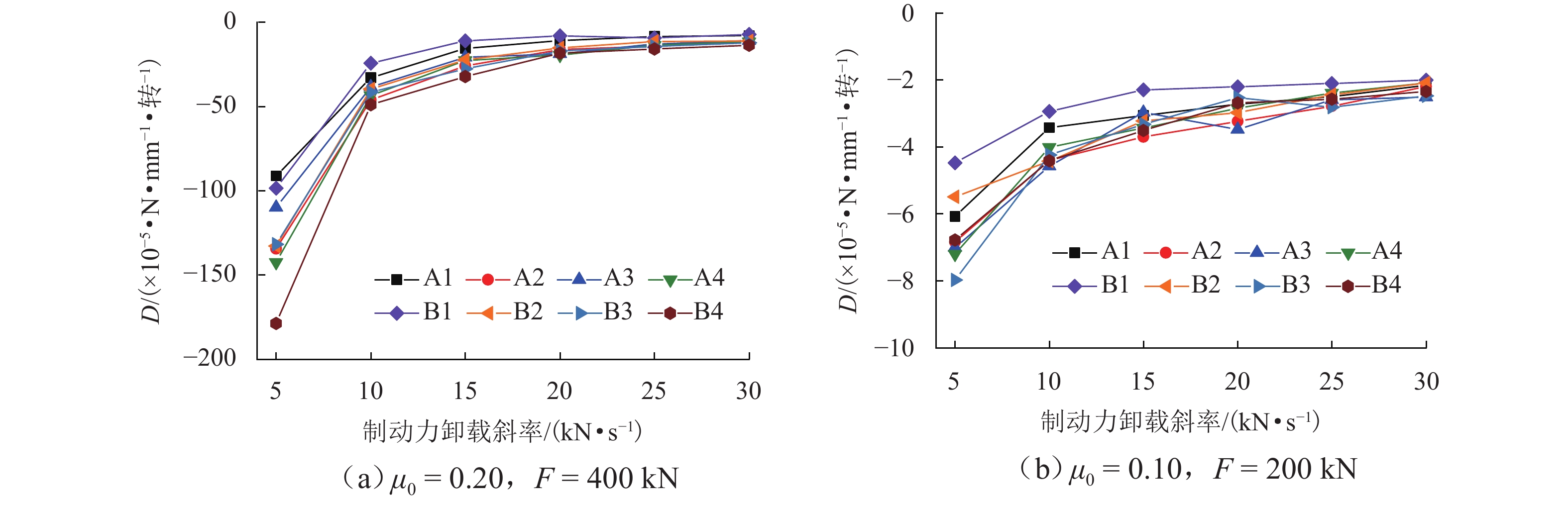
图 17 不同制动力卸载斜率下的从控机车车轮损伤值
Figure 17. Wheel damage value of slave control locomotive under different braking force reduction slopes
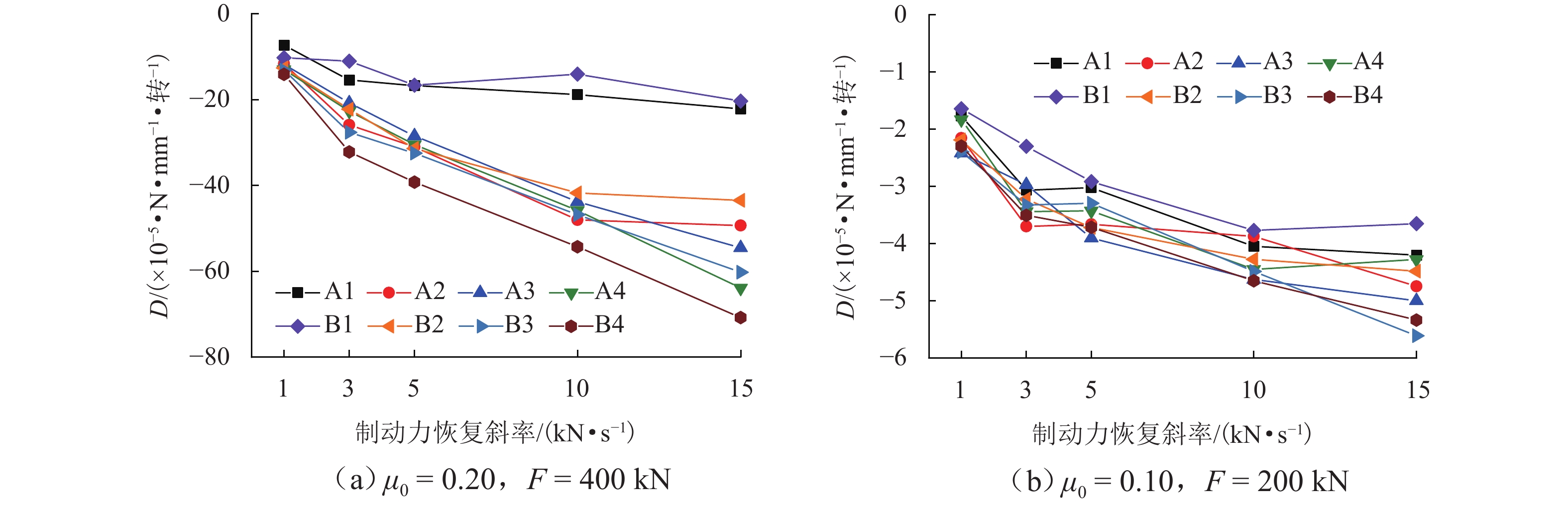
图 18 不同制动力恢复斜率下的从控机车车轮损伤值
Figure 18. Wheel damage value of slave control locomotive under different braking force recovery slopes
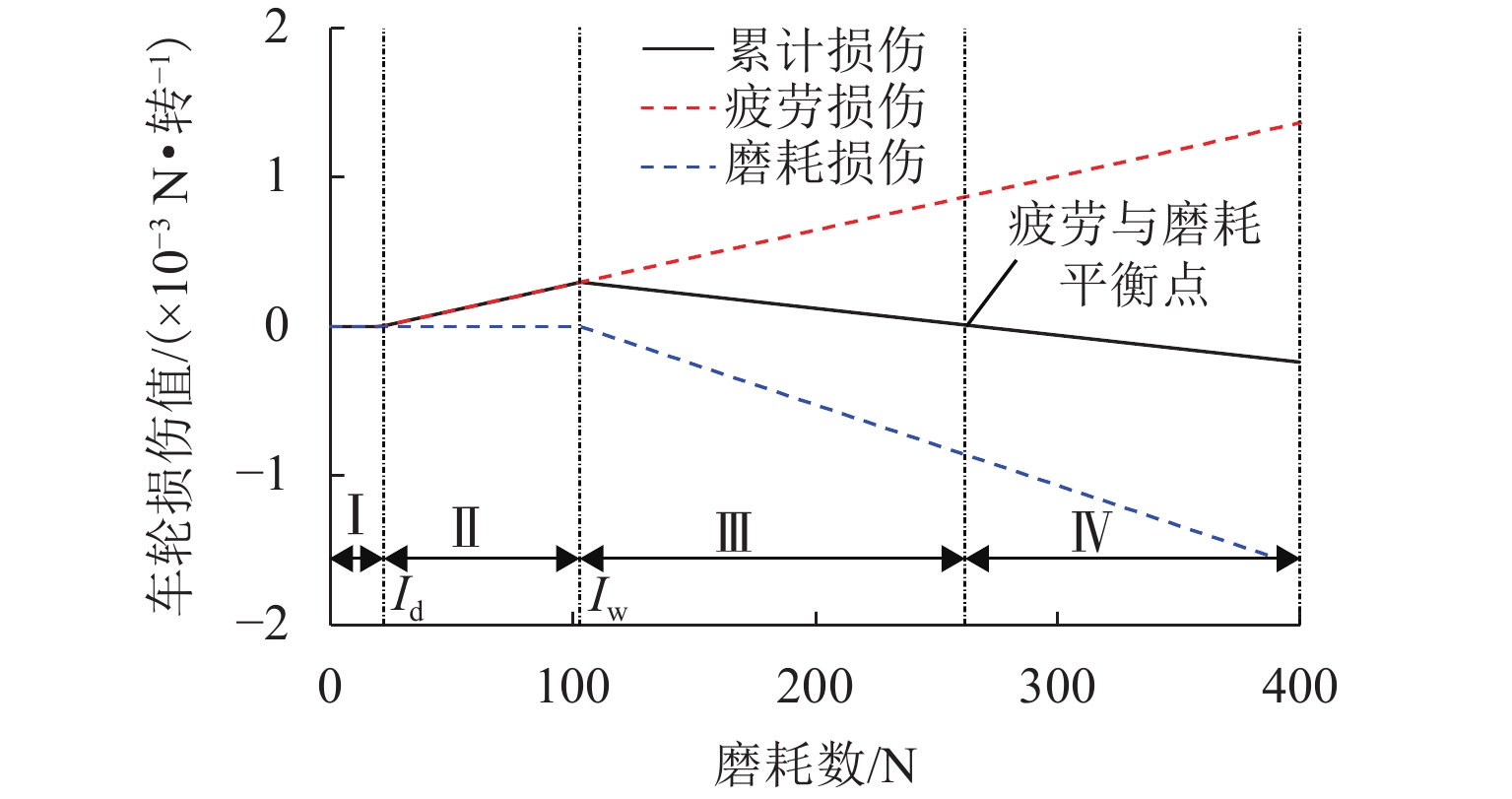
参数 萌生阈值/N 发展速率/(×10−6(转·N)−1) 疲劳损伤 磨耗损伤 疲劳损伤 磨耗损伤 R8E 20 100 3.6 −5.4 ER8 20.6 103 3.6 −5.4  下载: 导出CSV
-
[1] 申长宏, 陈清明, 蒲全卫, 等. HXD1型机车车轮踏面剥离问题研究[J]. 铁道机车车辆, 2019, 39(3): 78-82, 87. doi: 10.3969/j.issn.1008-7842.2019.03.18SHEN Changhong, CHEN Qingming, PU Quanwei, et al. Study on tread spalling issues about HXD1 locomotive[J]. Railway Locomotive & Car, 2019, 39(3): 78-82, 87. doi: 10.3969/j.issn.1008-7842.2019.03.18 [2] 沙永龙. HXD2C型机车轮对踏面剥离原因分析及对策[J]. 铁道机车与动车, 2019(6): 46-48, 5-6.SHA Yonglong. Cause analysis and countermeasure of wheel tread stripping in HXD2C locomotive[J]. Railway Locomotive and Motor Car, 2019(6): 46-48, 5-6. [3] 杨逸凡, 凌亮, 杨云帆, 等. 重载机车车轮擦伤下的轮轨动态响应[J]. 工程力学, 2020, 37(12): 213-219. doi: 10.6052/j.issn.1000-4750.2020.01.0033YANG Yifan, LING Liang, YANG Yunfan, et al. Wheel/rail dynamic responses due to the wheel flat of heavy-haul locomotives[J]. Engineering Mechanics, 2020, 37(12): 213-219. doi: 10.6052/j.issn.1000-4750.2020.01.0033 [4] DIRKS B, ENBLOM R. Prediction model for wheel profile wear and rolling contact fatigue[J]. Wear, 2011, 271(1/2): 210-217. doi: 10.1016/j.wear.2010.10.028 [5] LYU K K, WANG K Y, LING L, et al. Influence of wheel diameter difference on surface damage for heavy-haul locomotive wheels: Measurements and simulations[J]. International Journal of Fatigue, 2020, 132: 105343. doi: 10.1016/j.ijfatigue.2019.105343 [6] LYU K K, WANG K Y, LIU P F, et al. Analysis on the features and potential causes of wheel surface damage for heavy-haul locomotives[J]. Engineering Failure Analysis, 2020, 109: 104292. doi: 10.1016/j.engfailanal.2019.104292 [7] LIU Y F, JIANG T, ZHAO X, et al. On the wheel rolling contact fatigue of high power AC locomotives running in complicated environments[J]. Wear, 2019, 436: 202956. doi: 10.1016/j.wear.2019.202956 [8] WU Q, BERNAL E, SPIRYAGIN M, et al. Heavy haul rail/wheel wear and RCF assessments using 3D train models and a new wear map[J]. Wear, 2024, 538/539: 205226. [9] 肖乾, 石小牒, 陈道云, 等. 基于损伤函数及典型线路工况组合的动车组车轮损伤预测方法[J]. 机械工程学报, 2025, 61(10): 376-385.XIAO Qian, SHI Xiaodie, CHEN Daoyun, et al. Method for predicting wheel damage in high-speed trains based on damage functions and combinations of typical line operating conditions[J]. Journal of Mechanical Engineering, 2025, 61(10): 376-385. [10] 周素霞, 李光, 孙宇铎, 等. 重载机车不同轴序轮径差造成的踏面损伤规律[J]. 科学技术与工程, 2025, 25(2): 780-787.ZHOU Suxia, LI Guang, SUN Yuduo, et al. Tread damage law caused by different coaxial sequence wheel diameter difference in heavy-haul locomotive[J]. Science Technology and Engineering, 2025, 25(2): 780-787. [11] 曾东方, 鲁连涛, 张远彬, 等. 高速轮轨材料匹配的滚动接触磨损性能[J]. 机械工程学报, 2013, 49(13): 183-189.ZENG Dongfang, LU Liantao, ZHANG Yuanbin, et al. Rolling contact wear properties of matching of high-speed wheel/rail materials[J]. Journal of Mechanical Engineering, 2013, 49(13): 183-189. [12] SHI Z Y, NENCIONI L, MELI E, et al. Effect of material hardness ratio on wear and rolling contact fatigue: Development and validation of new laws[J]. Wear, 2023, 514: 204561. [13] 安志胜, 王晋斌. HXD2型机车轮缘润滑系统及其控制策略研究[J]. 电力机车与城轨车辆, 2023, 46(3): 47-49.AN Zhisheng, WANG Jinbin. Wheel flange lubrication system and its control stategy of HXD2 locomotive[J]. Electric Locomotives & Mass Transit Vehicles, 2023, 46(3): 47-49. [14] 吕凯凯. 大功率电力机车车轮踏面剥离产生机制的理论与试验研究[D]. 成都: 西南交通大学, 2020. [15] 何成刚, 王欣纪, 俞茹昕, 等. 湿热环境下车轮材料局部激光熔覆不锈钢粉末涂层磨损与损伤行为[J]. 中国表面工程, 2025, 38(3): 372-383.HE Chenggang, WANG Xinji, YU Ruxin, et al. Wear and damage behaviors of locally laser-cladded wheel materials in a humid hot environment using stainless steel powder[J]. China Surface Engineering, 2025, 38(3): 372-383. [16] 刘鹏. 重载机车电制动力对踏面剥离的影响研究[J]. 铁道机车车辆, 2019, 39(5): 73-76. doi: 10.3969/j.issn.1008-7842.2019.05.14LIU Peng. Research on influence of electric braking force on tread stripping of heavy haul locomotive[J]. Railway Locomotive & Car, 2019, 39(5): 73-76. doi: 10.3969/j.issn.1008-7842.2019.05.14 [17] LIU Y F, JIANG T, ZHAO X, et al. Effects of axle load transfer on wheel rolling contact fatigue of high-power AC locomotives with oblique traction rods[J]. International Journal of Fatigue, 2020, 139: 105748. doi: 10.1016/j.ijfatigue.2020.105748 [18] 郭欣茹, 杨云帆, 凌亮, 等. 防滑控制策略对机车车轮的损伤影响研究[J]. 机械工程学报, 2023, 59(22): 369-379. doi: 10.3901/JME.2023.22.369GUO Xinru, YANG Yunfan, LING Liang, et al. Effect of anti-slip control strategy on locomotive wheel tread damage[J]. Journal of Mechanical Engineering, 2023, 59(22): 369-379. doi: 10.3901/JME.2023.22.369 [19] 何静, 刘建华, 张昌凡. 重载机车轮轨黏着利用技术研究综述[J]. 铁道学报, 2018, 40(9): 30-39. doi: 10.3969/j.issn.1001-8360.2018.09.005HE Jing, LIU Jianhua, ZHANG Changfan. An overview on wheel-rail adhesion utilization of heavy-haul locomotive[J]. Journal of the China Railway Society, 2018, 40(9): 30-39. doi: 10.3969/j.issn.1001-8360.2018.09.005 [20] 林文立, 刘志刚, 方攸同. 地铁列车牵引传动再粘着优化控制策略[J]. 西南交通大学学报, 2012, 47(3): 465-470. doi: 10.3969/j.issn.0258-2724.2012.03.018LIN Wenli, LIU Zhigang, FANG Youtong. Re-adhesion optimization control strategy for metro traction[J]. Journal of Southwest Jiaotong University, 2012, 47(3): 465-470. doi: 10.3969/j.issn.0258-2724.2012.03.018 [21] KADOWAKI S, OHISHI K, MIYASHITA I, et al. Anti-slip/skid re-adhesion control of electric motor coach based on disturbance observer and sensor-less vector control[J]. EPE Journal, 2006, 16(2): 7-15. doi: 10.1080/09398368.2006.11463614 [22] 李宁洲, 冯晓云, 卫晓娟. 采用动态多子群GSA-RBF神经网络的机车黏着优化控制[J]. 铁道学报, 2014, 36(12): 27-34. doi: 10.3969/j.issn.1001-8360.2014.12.005LI Ningzhou, FENG Xiaoyun, WEI Xiaojuan. Optimized locomotive adhesion control based on dynamic multiple sub-group GSA-RBF neural network[J]. Journal of the China Railway Society, 2014, 36(12): 27-34. doi: 10.3969/j.issn.1001-8360.2014.12.005 [23] 王波, 罗世辉, 王晨, 等. 青藏线双源动车组黏着适应性研究[J]. 西南交通大学学报, 2025, 60(1): 214-224. doi: 10.3969/j.issn.0258-2724.20220843WANG Bo, LUO Shihui, WANG Chen, et al. Adhesion adaptability of dual-source-powered electric multiple unit on Qinghai—Xizang line[J]. Journal of Southwest Jiaotong University, 2025, 60(1): 214-224. doi: 10.3969/j.issn.0258-2724.20220843 [24] 马群, 易兴利, 姚远, 等. 大功率永磁直驱架悬式机车的重建黏着性能分析[J]. 西南交通大学学报, 2025, 60(4): 921-929. doi: 10.3969/j.issn.0258-2724.20240652MA Qun, YI Xingli, YAO Yuan, et al. Re-adhesion performance of high-power permanent-magnet direct-drive bogie-suspended locomotives[J]. Journal of Southwest Jiaotong University, 2025, 60(4): 921-929. doi: 10.3969/j.issn.0258-2724.20240652 [25] TIAN Y, LIU S, DANIEL W J T, et al. Investigation of the impact of locomotive creep control on wear under changing contact conditions[J]. Vehicle System Dynamics, 2015, 53(5): 692-709. doi: 10.1080/00423114.2015.1020815 [26] 张昌凡, 豆兵兵, 何静, 等. 基于轴重转移下的机车防空转仿真研究[J]. 机车电传动, 2017(2): 34-38. doi: 10.13890/j.issn.1000-128x.2017.02.008ZHANG Changfan, DOU Bingbing, HE Jing, et al. Study on locomotive anti-slip simulation based on axle load transfer[J]. Electric Drive for Locomotives, 2017(2): 34-38. doi: 10.13890/j.issn.1000-128x.2017.02.008 [27] 冯俞钧, 黄景春, 王会议, 等. 重载机车动态轴重转移补偿仿真研究[J]. 计算机仿真, 2018, 35(8): 115-118. doi: 10.3969/j.issn.1006-9348.2018.08.024FENG Yujun, HUANG Jingchun, WANG Huiyi, et al. Simulation researchon heavy load locomotive dynamic axle loadtransfer compensation[J]. Computer Simulation, 2018, 35(8): 115-118. doi: 10.3969/j.issn.1006-9348.2018.08.024 [28] CHEN Q H, GE X, CHEN S Q, et al. A nonlinear optimisation considering axle load transfer for enhancing adhesion utilisation of a locomotive with an oblique traction rod[J]. Vehicle System Dynamics, 2026, 64(2): 326-349. doi: 10.1080/00423114.2024.2432388 [29] 李中奇, 余剑烽, 周靓. 重载列车运行过程的滑模自抗扰控制方法[J]. 西南交通大学学报, 2026, 61(1): 197-206, 242.LI Zhongqi, YU Jianfeng, ZHOU Liang. Sliding mode active disturbance rejection control method for heavy-haul trains during operation[J]. Journal of Southwest Jiaotong University, 2026, 61(1): 197-206, 242. [30] LIU P F, ZHAI W M, WANG K Y. Establishment and verification of three-dimensional dynamic model for heavy-haul train–track coupled system[J]. Vehicle System Dynamics, 2016, 54(11): 1511-1537. doi: 10.1080/00423114.2016.1213862 [31] WU G S, SHEN L J, YAO Y, et al. Determination of the dynamic characteristics of locomotive drive systems under re-adhesion conditions using wheel slip controller[J]. Journal of Zhejiang University-Science A, 2023, 24(8): 722-734. doi: 10.1631/jzus.A2300158 [32] BURSTOW M C. Whole life rail model application and development for RSSB–continued development of an RCF damage parameter[R]. London: Rail Safety and Standards Board, 2004. [33] 王玉光, 卢纯, 赵鑫, 等. 高速动车组车轮滚动接触疲劳观测与模拟研究[J]. 机械工程学报, 2018, 54(4): 150-157. doi: 10.3901/JME.2018.04.150WANG Yuguang, LU Chun, ZHAO Xin, et al. Rolling contact fatigue of Chinese high speed wheels: observations and simulations[J]. Journal of Mechanical Engineering, 2018, 54(4): 150-157. doi: 10.3901/JME.2018.04.150 [34] POLACH O. Creep forces in simulations of traction vehicles running on adhesion limit[J]. Wear, 2005, 258(7/8): 992-1000. doi: 10.1016/j.wear.2004.03.046 [35] 罗仁, 石怀龙. 铁道车辆系统动力学及应用[M]. 成都: 西南交通大学出版社, 2018. [36] TUNNA J, SINCLAIR J, PEREZ J. The development of a wheel wear and rolling contact fatigue model[R]. London: Rail Safety and Standards Board, 2007. [37] YANG Y F, LING L, WANG J C, et al. A numerical study on tread wear and fatigue damage of railway wheels subjected to anti-slip control[J]. Friction, 2023, 11(8): 1470-1492. doi: 10.1007/s40544-022-0684-8 -

 下载:
下载:



 点击查看大图
计量
- 文章访问数: 240
- HTML全文浏览量: 170
- PDF下载量: 44
- 被引次数: 0