



Detection Method for Misrecognition and Missed Captures by License Plate Recognition Devices Based on Trip Chains and Neighbor Entropy
-
摘要:
在智能交通系统中,车牌识别数据极易受到字符误识别、车辆漏记录等隐性错误的干扰,且缺乏对这些错误进行主动识别的手段,本文旨在建立一种对车牌识别卡口设备异常状态进行主动、精准定位的检测方法,以提高数据的整体质量并为设备运维提供决策支持. 首先,利用车辆在连续路网卡口间形成的出行链路径数据界定设备的拓扑邻域关系,构建包括总熵、上游与下游邻居熵以及不对称熵在内的多维邻居熵特征指标;其次,通过捕捉隐性错误引起的邻域分布畸变与车辆通过数量波动,初步筛选出疑似存在错拍或漏拍的异常设备候选集;接着,引入时空约束规则进行交叉校验,利用物理速度极限条件判定错拍设备,并结合路网拓扑结构与频次方向一致性约束判定漏拍设备;最后,计算各卡口设备的异常置信度,输出最终的错拍设备与漏拍设备集合. 基于实际城市路网开展的多场景仿真实验表明:在错拍和漏拍概率不同、问题设备数量各异的多种复杂场景下,本文方法对漏拍设备的识别精确率超过0.8,对错拍设备的识别召回率达到1.0,且在错拍与漏拍并存的混合异常情况下仍能保持稳定且较好的识别表现.
Abstract:To address the vulnerability of license plate recognition (LPR) data in intelligent transportation systems (ITS) to implicit errors, such as character misrecognition and missed vehicle captures, and the lack of methods for proactively identifying these errors, this study aims to develop a detection method that can proactively and accurately identify LPR devices exhibiting abnormal behavior, thus improving overall data quality and providing decision support for equipment operation and maintenance. First, topological neighborhood relationships between devices were defined using path data derived from vehicle trip chains connecting consecutive LPR checkpoints in the road network, and multidimensional neighbor entropy feature indicators, including total entropy, upstream and downstream neighbor entropy, and asymmetric entropy, were constructed accordingly. Second, a candidate set of abnormal devices suspected of misrecognition or missed captures was initially identified by detecting distortions in neighborhood distributions and fluctuations in vehicle counts caused by implicit errors. Then, spatiotemporal constraints were introduced for cross-verification. Misrecognition devices were identified using physical speed limits, while missed capture devices were identified by incorporating road network topology and frequency-direction consistency constraints. Finally, anomaly confidence scores were calculated for each LPR device, and the final sets of misrecognition and missed capture devices were obtained. Multi-scenario simulation experiments conducted on an actual urban road network show that, across various complex scenarios with different misrecognition and missed capture probabilities and abnormal device counts, the precision of missed capture device identification exceeds 0.8, the recall of misrecognition device identification reaches 1.0, and stable and satisfactory identification performance is maintained under mixed anomaly conditions where both errors coexist.
-
Key words:
- license plate /
- misrecognition detection /
- missed capture detection /
- neighbor entropy /
- data quality
-
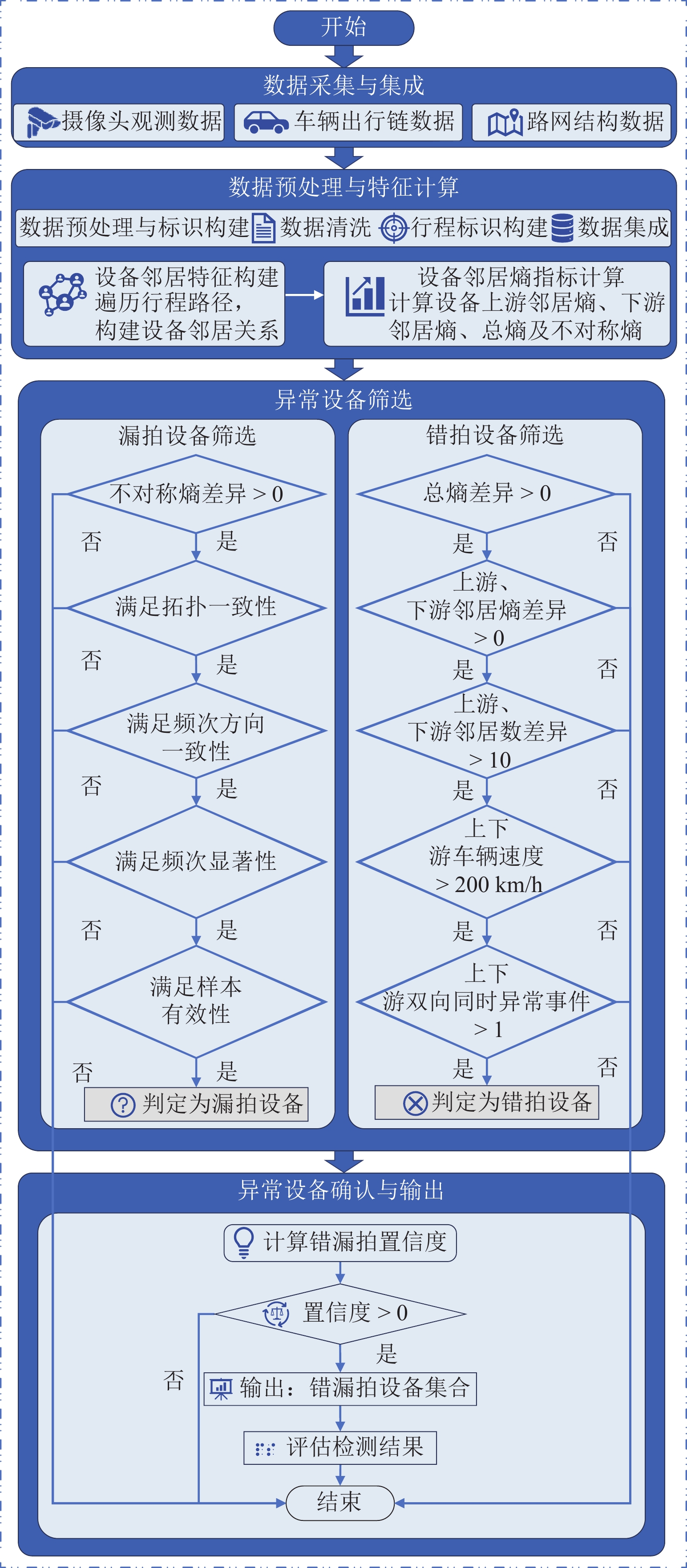
图 1 基于邻居熵的错拍漏拍检测方法流程
Figure 1. Flowchart of misrecognition and missed capture detection method based on neighbor entropy
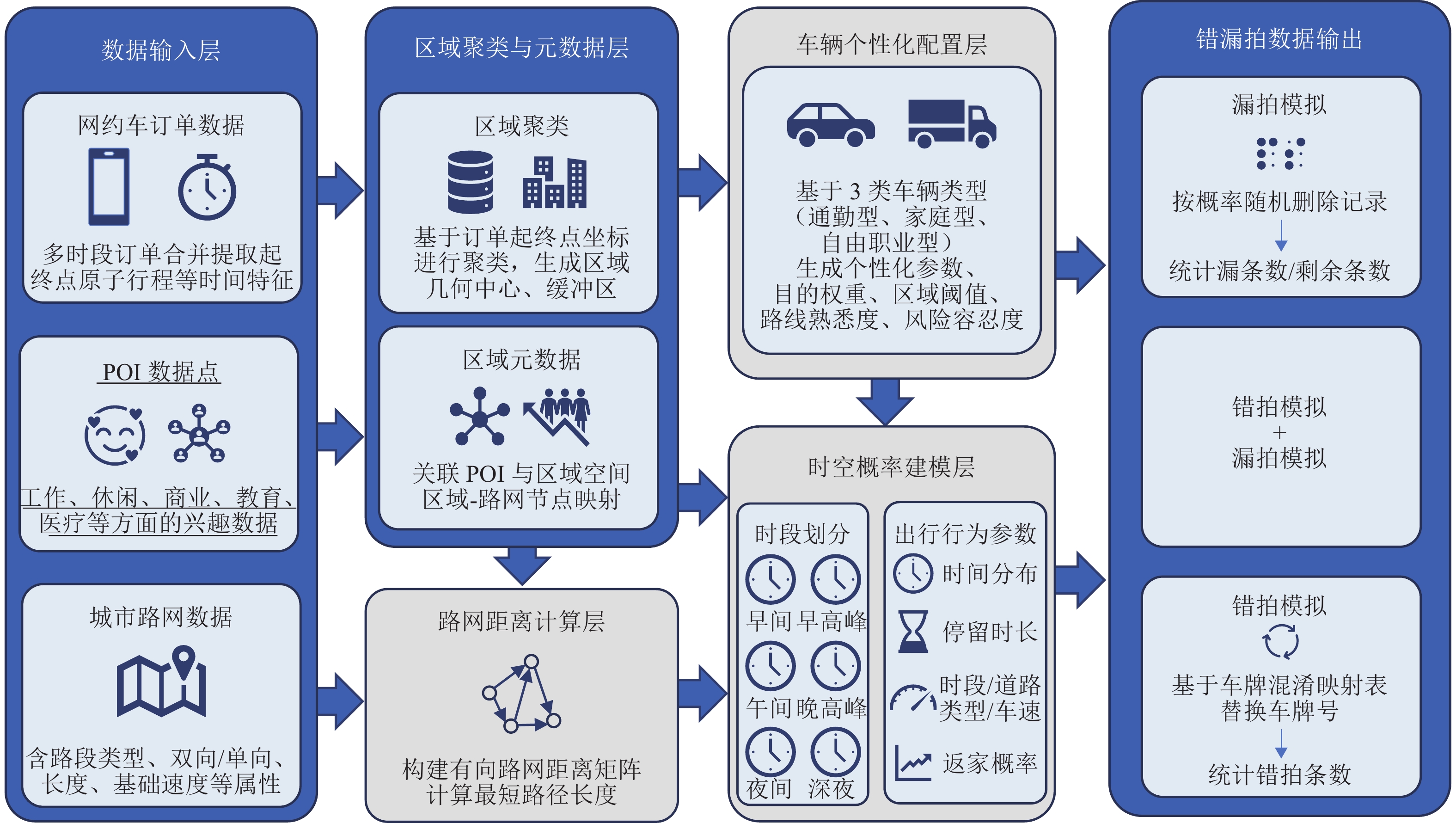
图 3 基于多源数据的车辆识别设备观测数据仿真模型
Figure 3. Simulation model for LPR device observations based on multi-source data
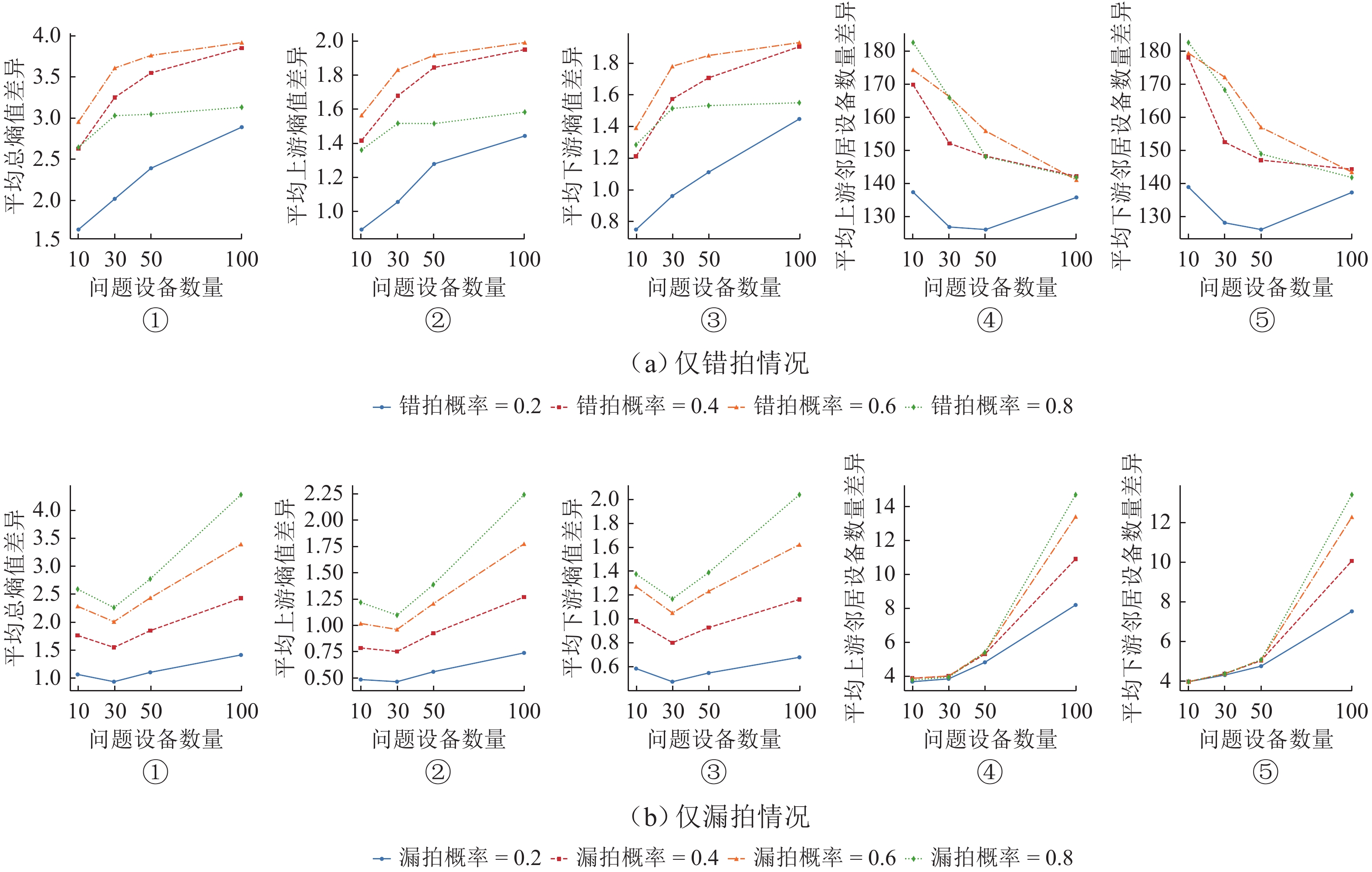
图 4 仅错拍/漏拍情况下问题设备熵值变化及邻居数量变化
Figure 4. Variations in entropy and neighbor count of abnormal devices under misrecognition-only conditions
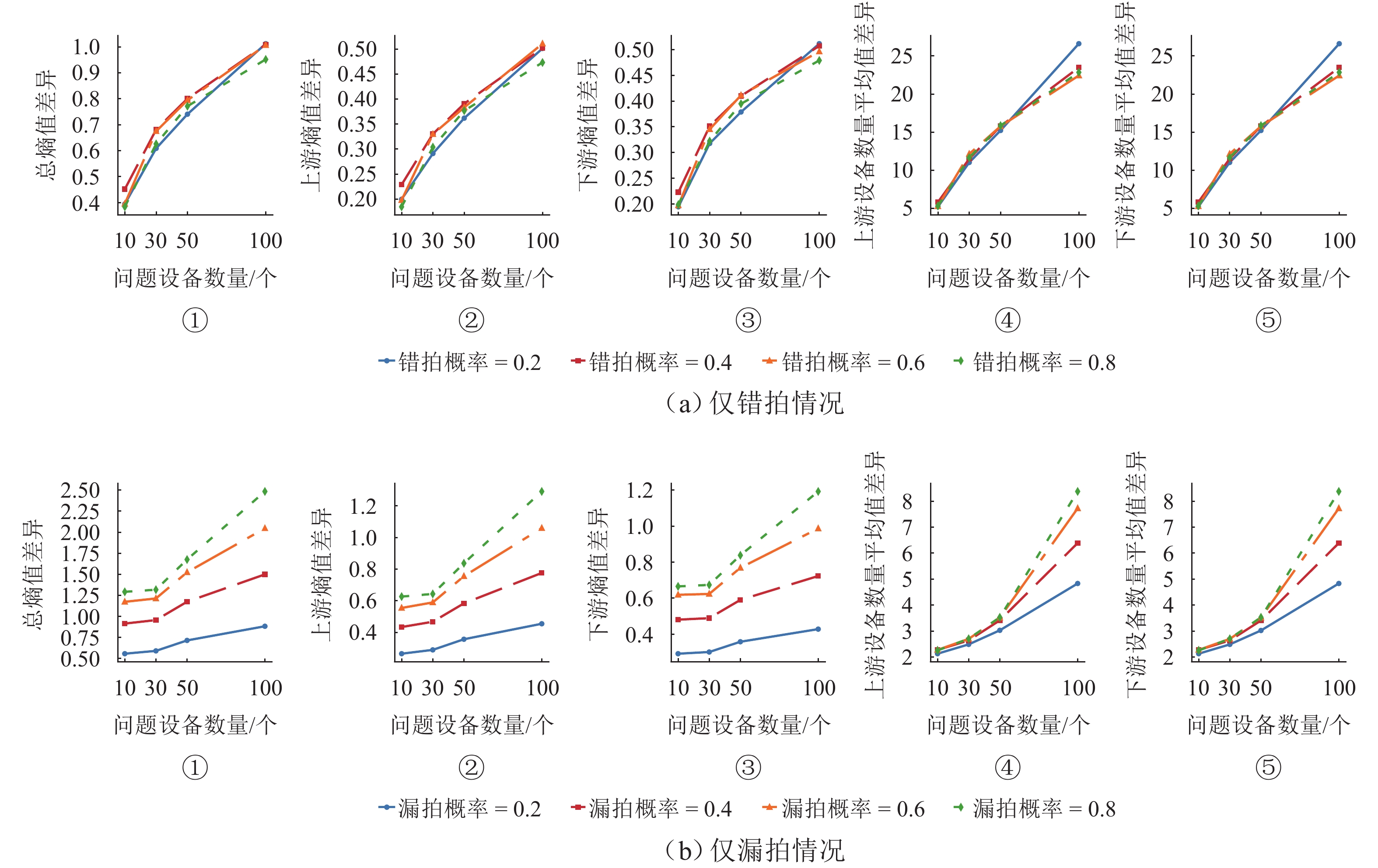
图 5 仅错拍/漏拍情况下问题设备熵值变化及邻居数量变化
Figure 5. Variations in entropy and neighbor count of abnormal devices under missed capture-only conditions
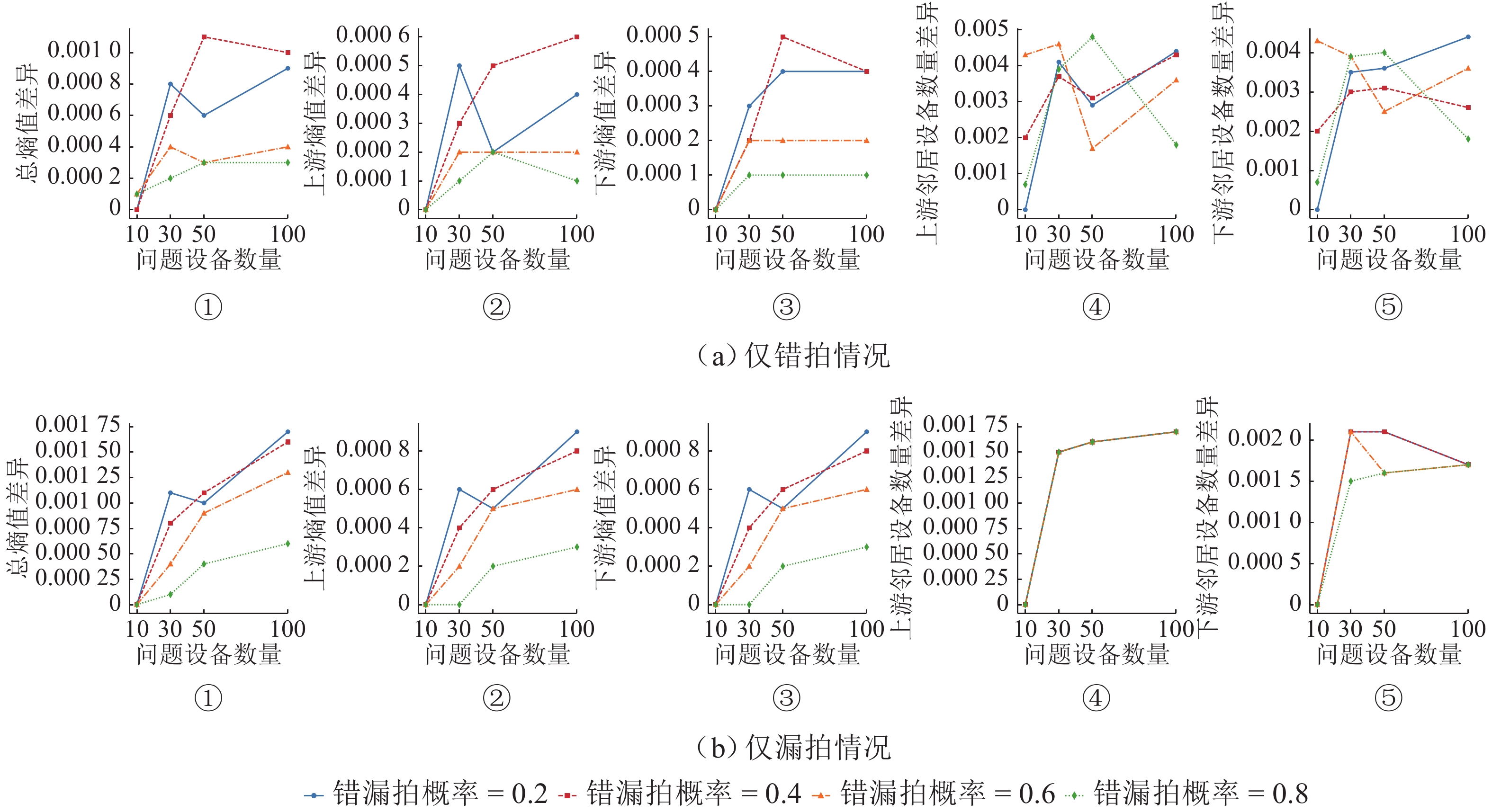
图 6 仅错拍/漏拍情况下问题设备其邻居设备熵值变化及邻居数量变化
Figure 6. Variations in entropy and neighbor count of devices neighboring abnormal devices under misrecognition-only conditions
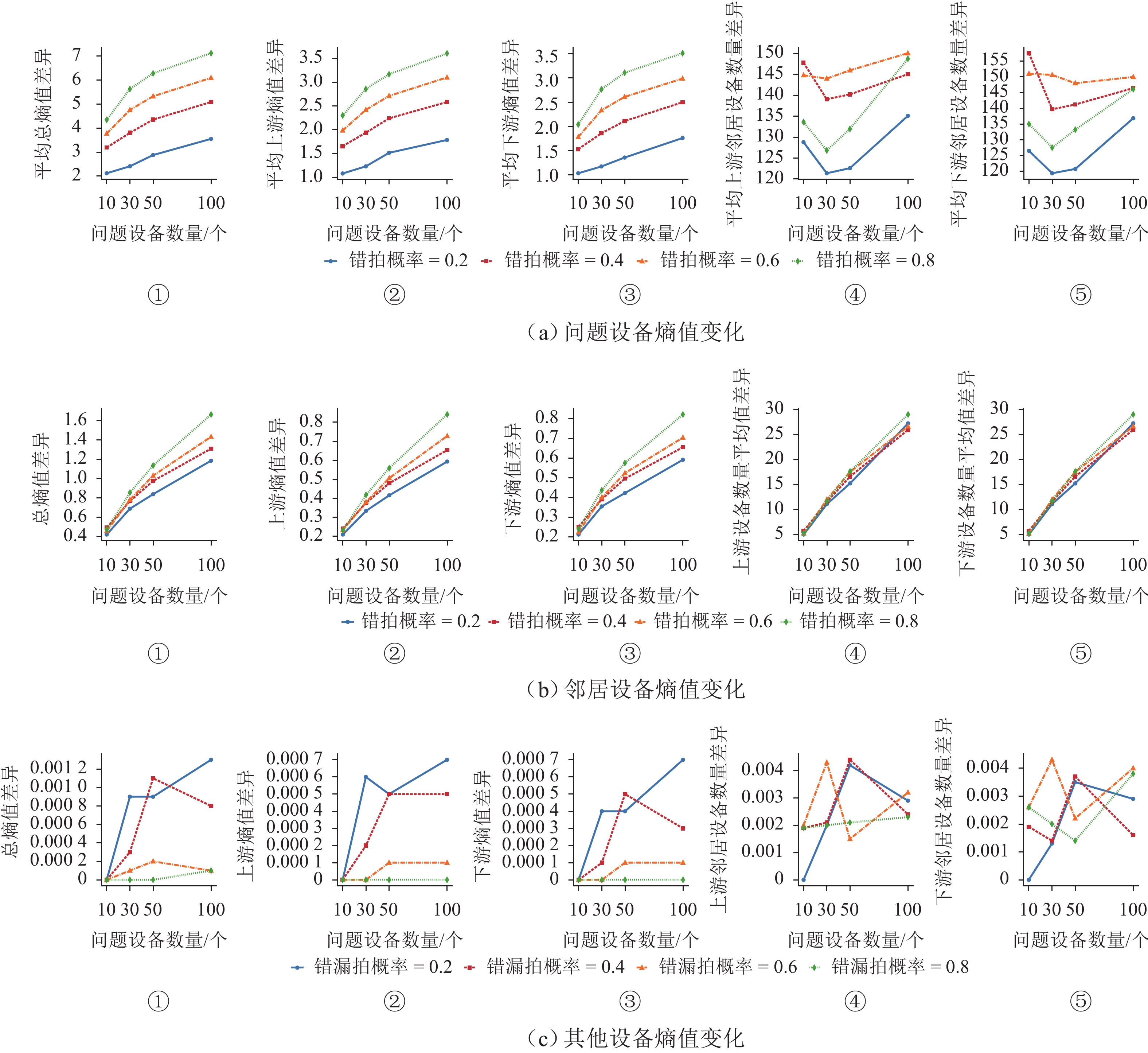
图 7 混合异常情况下熵值变化
Figure 7. Variations in entropy and neighbor count of devices neighboring abnormal devices under missed capture-only conditions
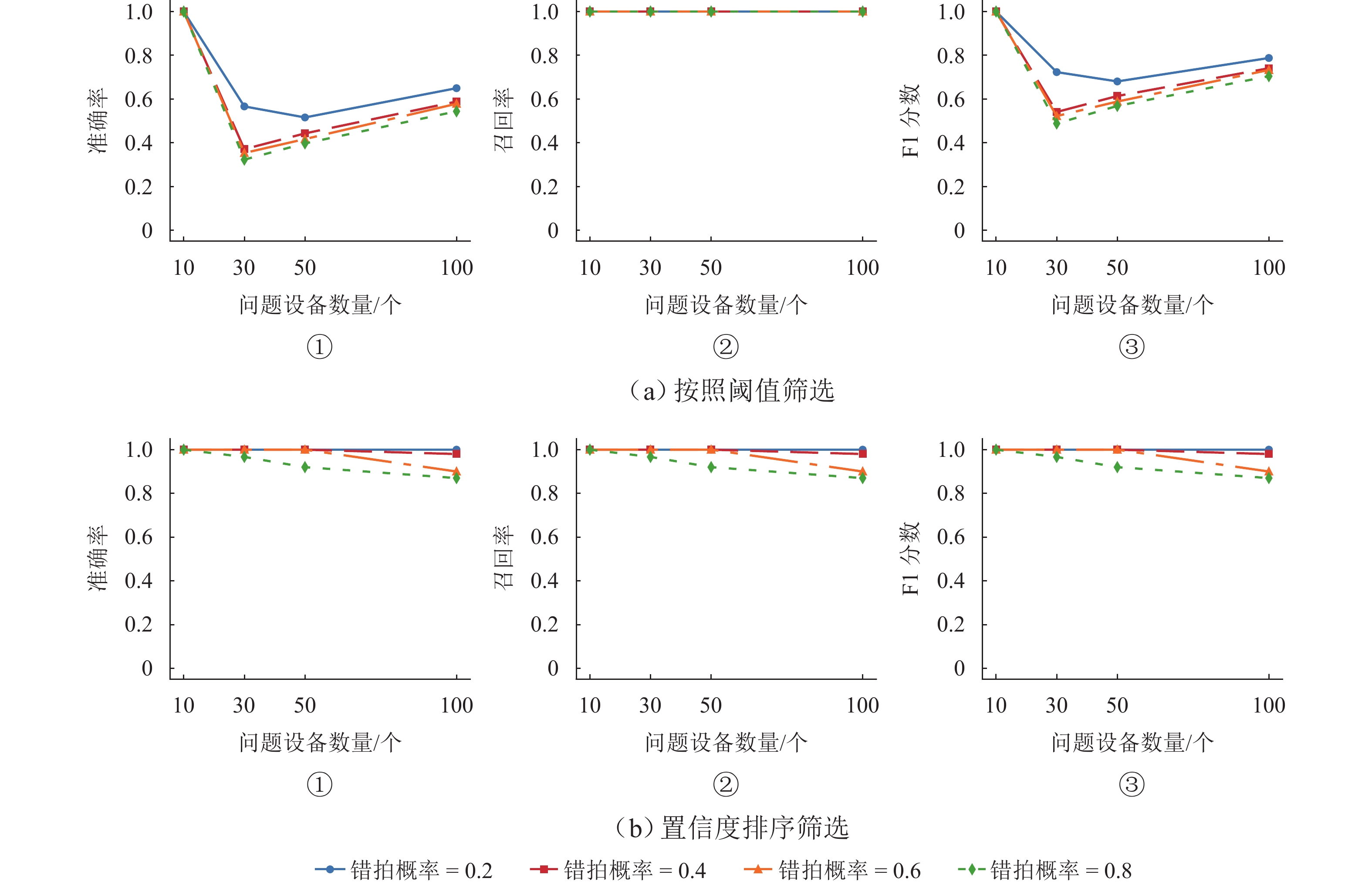
图 8 仅错拍情况下方法检测效果
Figure 8. Detection performance of method under misrecognition-only conditions
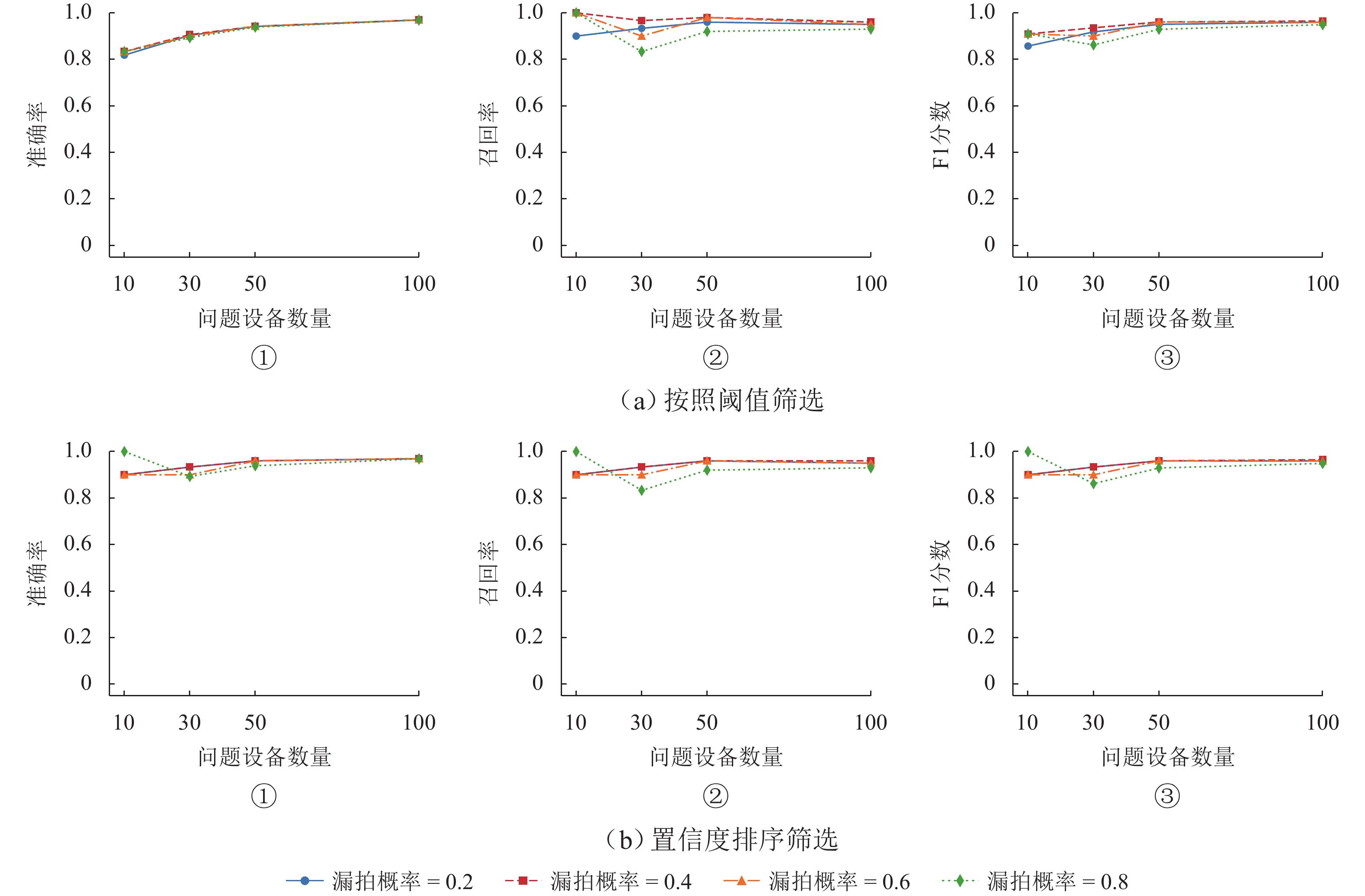
图 9 仅漏拍情况下方法检测效果
Figure 9. Detection performance of method under missed capture-only conditions
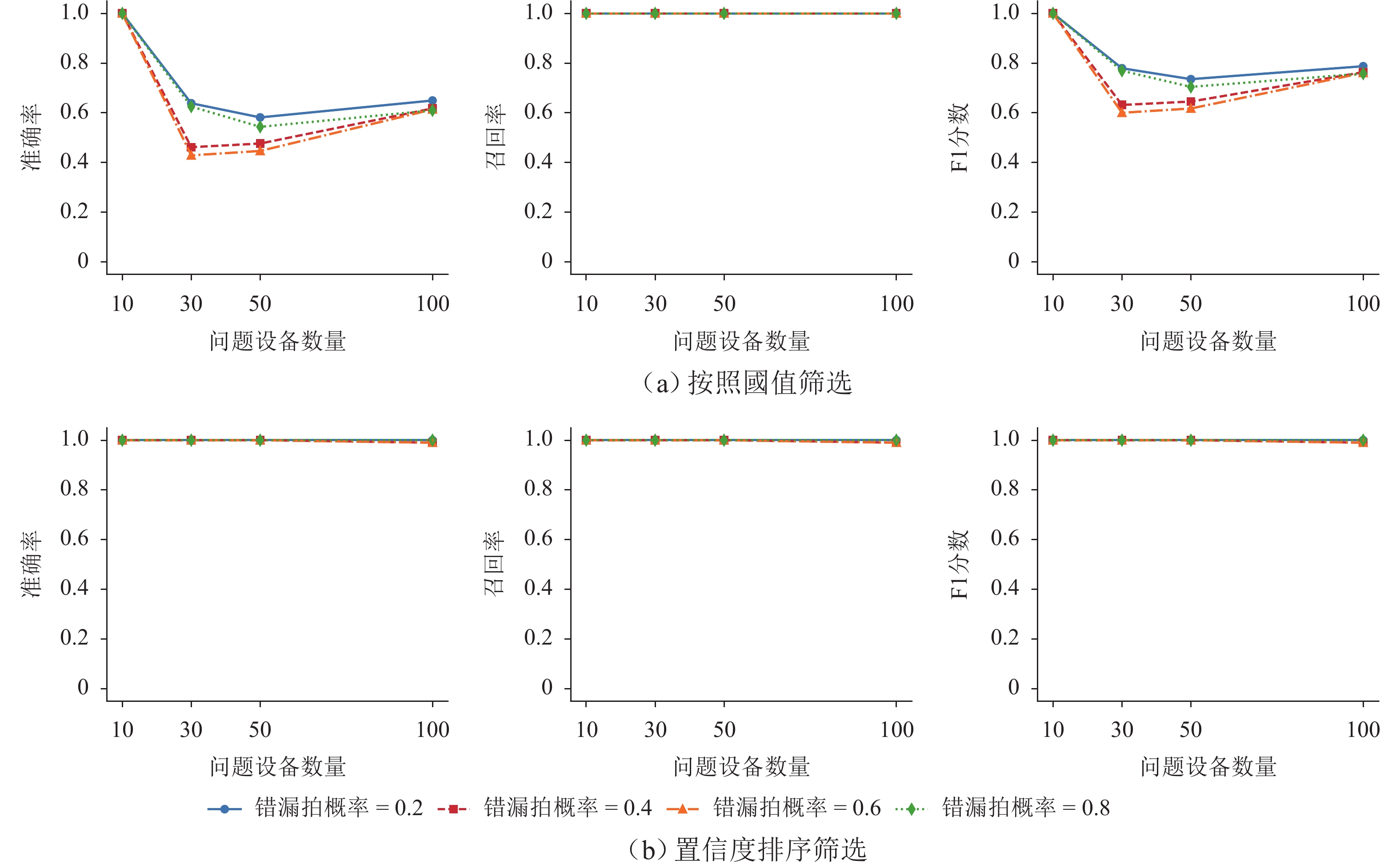
图 10 混合情况下方法检测效果
Figure 10. Detection performance of method under mixed anomaly conditions
表 1 车辆识别设备部分观测数据
Table 1. Partial observation data from LPR devices
Devices_ID Vehicle_ID Time Trip_ID 37241 V1001 2025-3-1 10:40:44 3872 37389 V1001 2025-3-1 10:40:48 3872 37314 V1001 2025-3-1 10:41:01 3872 37288 V1001 2025-3-1 10:41:08 3872 37239 V1001 2025-3-1 10:41:16 3872 37246 V1001 2025-3-1 10:41:32 3872  下载: 导出CSV
-
[1] 张洪斌, 黄山, 印月. 基于交通视频分析的自适应摄像控制系统[J]. 西南交通大学学报, 2018, 53(3): 646-653. doi: 10.3969/j.issn.0258-2724.2018.03.028Zhang Hongbin, Huang Shan, Yin Yue. Adaptive imaging control system based on traffic video analysis[J]. Journal of Southwest Jiaotong University, 2018, 53(3): 646-653. doi: 10.3969/j.issn.0258-2724.2018.03.028 [2] 艾毅, 柳红燕, 廖星国, 等. 面向地面违章停车的无人机自适应拍摄空间建模方法研究[J/OL]. 西南交通大学学报, 2025-10-27. https://link.cnki.net/urlid/51.1277.U.20251027.1513.002. [3] Yao W B, Zhang M L, Jin S, et al. Understanding vehicles commuting pattern based on license plate recognition data[J]. Transportation Research Part C: Emerging Technologies, 2021, 128: 103142. doi: 10.1016/j.trc.2021.103142 [4] 王福建, 洪侨波. 基于车牌识别数据的出行熵计算与分析[J]. 综合运输, 2024, 46(3): 114-120. doi: 10.20164/j.cnki.cn11-1197/u.2024.03.019Wang Fujian, Hong Qiaobo. Calculation and analysis of travel entropy based on license plate recognition data[J]. China Transportation Review, 2024, 46(3): 114-120. doi: 10.20164/j.cnki.cn11-1197/u.2024.03.019 [5] Han K, Huang T, Fan W B, et al. Macroscopic fundamental diagram with volume–delay relationship: Model derivation, empirical validation and invariance property[J]. Transportation Research Part C: Emerging Technologies, 2024, 166: 104739. doi: 10.1016/j.trc.2024.104739 [6] Hu C, Tang J J, Li Z T, et al. Estimating MFD model parameters from sparse license plate recognition data: The role of path reconstruction and regionalization[J]. Transportation Research Part C: Emerging Technologies, 2025, 171: 104982. doi: 10.1016/j.trc.2024.104982 [7] Luo L Z, Wu H, Liu J H, et al. A probabilistic approach for queue length estimation using license plate recognition data: Considering overtaking in multi-lane scenarios[J]. Transportation Research Part C: Emerging Technologies, 2025, 173: 105029. doi: 10.1016/j.trc.2025.105029 [8] Zhan X Y, Li R M, Ukkusuri S V. Lane-based real-time queue length estimation using license plate recognition data[J]. Transportation Research Part C: Emerging Technologies, 2015, 57: 85-102. doi: 10.1016/j.trc.2015.06.001 [9] Zhan X Y, Li R M, Ukkusuri S V. Link-based traffic state estimation and prediction for arterial networks using license-plate recognition data[J]. Transportation Research Part C: Emerging Technologies, 2020, 117: 102660. doi: 10.1016/j.trc.2020.102660 [10] Mo B C, Li R M, Zhan X Y. Speed profile estimation using license plate recognition data[J]. Transportation Research Part C: Emerging Technologies, 2017, 82: 358-378. doi: 10.1016/j.trc.2017.07.006 [11] 韩世民. 基于深度学习的高速公路测速设备车牌识别与速度估计[J]. 电子元器件与信息技术, 2024, 8(4): 103-106. doi: 10.19772/j.cnki.2096-4455.2024.4.031 [12] 王殿海, 王奕飞, 黄宇浪, 等. 车牌识别设备稀疏布局下的路段行程时间估计方法[J]. 交通运输系统工程与信息, 2025, 25(5): 83-90. doi: 10.16097/j.cnki.1009-6744.2025.05.007Wang Dianhai, Wang Yifei, Huang Yulang, et al. Estimating link travel time under sparse license plate recognition device coverage[J]. Journal of Transportation Systems Engineering and Information Technology, 2025, 25(5): 83-90. doi: 10.16097/j.cnki.1009-6744.2025.05.007 [13] Liu Z Y, Li R M, Wang X, et al. Effects of vehicle restriction policies: Analysis using license plate recognition data in Langfang, China[J]. Transportation Research Part A: Policy and Practice, 2018, 118: 89-103. doi: 10.1016/j.tra.2018.09.001 [14] Rao W M, Wu Y J, Xia J X, et al. Origin-destination pattern estimation based on trajectory reconstruction using automatic license plate recognition data[J]. Transportation Research Part C: Emerging Technologies, 2018, 95: 29-46. doi: 10.1016/j.trc.2018.07.002 [15] Liu Y H, Chen X Y, Hu R, et al. Vehicle trajectory reconstruction with sparse automatic license plate recognition data for urban road networks[J]. Transportmetrica A: Transport Science, 2025: 1-24. [16] Ding H X, Gao J Y, Yuan Y, et al. An end-to-end contrastive license plate detector[J]. IEEE Transactions on Intelligent Transportation Systems, 2024, 25(1): 503-516. doi: 10.1109/TITS.2023.3304816 [17] Liu K, Wu P H, Xia T, et al. Fusion-based rear license plate detection and recognition considering enlarged prints[J]. IEEE Transactions on Instrumentation and Measurement, 2024, 73: 5037511. doi: 10.1109/tim.2024.3476570 [18] Silva S M, Jung C R. A flexible approach for automatic license plate recognition in unconstrained scenarios[J]. IEEE Transactions on Intelligent Transportation Systems, 2022, 23(6): 5693-5703. doi: 10.1109/TITS.2021.3055946 [19] Tang Y, Zhang S M, Liu W J, et al. Ultra-lightweight automatic license plate recognition system for microcontrollers: a cost-effective and energy-efficient solution[J]. IEEE Transactions on Intelligent Transportation Systems, 2024, 25(12): 20419-20434. doi: 10.1109/TITS.2024.3480039 [20] 常绍辉, 林原, 黄艳, 等. 基于OpenHarmony的摄像机车牌识别技术研究[J]. 现代信息科技, 2026, 10(5): 119-124, 131. doi: 10.19850/j.cnki.2096-4706.2026.05.022Chang Shaohui, Lin Yuan, Huang Yan, et al. Research on license plate recognition network of cameras based on OpenHarmony[J]. Modern Information Technology, 2026, 10(5): 119-124,131. doi: 10.19850/j.cnki.2096-4706.2026.05.022 [21] Ke X, Zeng G X, Guo W Z. An ultra-fast automatic license plate recognition approach for unconstrained scenarios[J]. IEEE Transactions on Intelligent Transportation Systems, 2023, 24(5): 5172-5185. doi: 10.1109/TITS.2023.3237581 [22] Li J, Yan D J, He F Z, et al. A mixed-precision transformer accelerator with vector tiling systolic array for license plate recognition in unconstrained scenarios[J]. IEEE Transactions on Intelligent Transportation Systems, 2024, 25(12): 20280-20294. doi: 10.1109/TITS.2024.3457815 [23] Schirrmacher F, Lorch B, Maier A, et al. Benchmarking probabilistic deep learning methods for license plate recognition[J]. IEEE Transactions on Intelligent Transportation Systems, 2023, 24(9): 9203-9216. doi: 10.1109/TITS.2023.3278533 [24] Peng Z X, Gao Y L, Mu S Y, et al. Toward reliable license plate detection in varied contexts: overcoming the issue of undersized plate annotations[J]. IEEE Transactions on Intelligent Transportation Systems, 2024, 25(11): 18107-18121. doi: 10.1109/TITS.2024.3424663 [25] Jiang Y, Jiang F, Luo H Y, et al. An efficient and unified recognition method for multiple license plates in unconstrained scenarios[J]. IEEE Transactions on Intelligent Transportation Systems, 2023, 24(5): 5376-5389. doi: 10.1109/TITS.2023.3237743 [26] Ding H X, Gao J Y, Yuan Y, et al. FF-LPD: a real-time frame-by-frame license plate detector with knowledge distillation and feature propagation[J]. IEEE Transactions on Image Processing, 2024, 33: 3893-3906. doi: 10.1109/TIP.2024.3414269 [27] He C G, Wang D H, Cai Z Y, et al. A vehicle matching algorithm by maximizing travel time probability based on automatic license plate recognition data[J]. IEEE Transactions on Intelligent Transportation Systems, 2024, 25(8): 9103-9114. doi: 10.1109/TITS.2024.3358625 [28] Xu C, Wang Q, Zhang W Q, et al. Spatiotemporal ego-graph domain adaptation for traffic prediction with data missing[J]. IEEE Transactions on Intelligent Transportation Systems, 2024, 25(12): 20804-20819. doi: 10.1109/TITS.2024.3447549 [29] Chen P, Li F, Wei D L, et al. Spatiotemporal traffic data completion with truncated minimax-concave penalty[J]. Transportation Research Part C: Emerging Technologies, 2024, 164: 104657. doi: 10.1016/j.trc.2024.104657 [30] Nie T, Qin G Y, Wang Y P, et al. Correlating sparse sensing for large-scale traffic speed estimation: a Laplacian-enhanced low-rank tensor Kriging approach[J]. Transportation Research Part C: Emerging Technologies, 2023, 152: 104190. doi: 10.1016/j.trc.2023.104190 [31] Chen X Y, Lei M Y, Saunier N, et al. Low-rank autoregressive tensor completion for spatiotemporal traffic data imputation[J]. IEEE Transactions on Intelligent Transportation Systems, 2022, 23(8): 12301-12310. doi: 10.1109/TITS.2021.3113608 [32] Wang Y, Zhou B Y, Ren Q Y. Dynamic tucker decomposition for traffic data completion[C]//2024 IEEE 16th International Conference on Advanced Infocomm Technology (ICAIT). Enshi: IEEE, 2024: 88-93. [33] Li B Z, Zhao X L, Chen X Y, et al. Convolutional low-rank tensor representation for structural missing traffic data imputation[J]. IEEE Transactions on Intelligent Transportation Systems, 2024, 25(11): 18847-18860. doi: 10.1109/TITS.2024.3430039 [34] Wei X L, Zhang Y, Wang S F, et al. Self-attention graph convolution imputation network for spatio-temporal traffic data[J]. IEEE Transactions on Intelligent Transportation Systems, 2024, 25(12): 19549-19562. doi: 10.1109/TITS.2024.3461735 [35] Nie T, Qin G Y, Ma W, et al. Spatiotemporal implicit neural representation as a generalized traffic data learner[J]. Transportation Research Part C: Emerging Technologies, 2024, 169: 104890. doi: 10.1016/j.trc.2024.104890 [36] Deng L, Liu X Y, Zheng H F, et al. Graph-tensor FISTA-net: edge computing-aided deep learning for distributed traffic data recovery[J]. IEEE Transactions on Network Science and Engineering, 2025, 12(4): 2835-2847. doi: 10.1109/TNSE.2025.3554634 [37] Zhou W F, Shen G J, Zhang Y M, et al. Sequence-to-sequence traffic missing data imputation via self-supervised contrastive learning[J]. IEEE Transactions on Intelligent Transportation Systems, 2025, 26(7): 9948-9961. doi: 10.1109/TITS.2025.3564578 [38] Zeng Z Y, Feng J, Huang Z, et al. A flexible approach based on hybrid global low-rankness and smoothness regularization with nonlocal structure for traffic data imputation[J]. IEEE Transactions on Intelligent Transportation Systems, 2025, 26(6): 8864-8879. doi: 10.1109/TITS.2025.3541448 [39] Chen X Y, Cheng Z H, Cai H Q, et al. Laplacian convolutional representation for traffic time series imputation[J]. IEEE Transactions on Knowledge and Data Engineering, 2024, 36(11): 6490-6502. doi: 10.1109/TKDE.2024.3419698 [40] Wang Y, Zhang Y, Piao X L, et al. Traffic data reconstruction via adaptive spatial-temporal correlations[J]. IEEE Transactions on Intelligent Transportation Systems, 2019, 20(4): 1531-1543. doi: 10.1109/TITS.2018.2854968 [41] 张磊, 白云, 丁睿, 等. 成都市基于机理模型约束的车牌识别数据质量评估与运维实践[J]. 道路交通管理, 2026(3): 48-51.Zhang Lei, Bai Yun, Ding Rui, et al. Quality evaluation and operation practice of license plate recognition data in Chengdu based on mechanism model constraints[J]. 2026(3): 48-51. [42] 任园园, 靳遥, 郑雪莲, 等. 自动驾驶车辆博弈换道决策研究[J/OL]. 西南交通大学学报, 2025-09-22. https://link.cnki.net/urlid/51.1277.U.20250922.1322.002. [43] 覃文文, 普开蕊, 李武, 等. 山区双车道公路小客车跟驰风险状态转移模型[J/OL]. 西南交通大学学报, 2025-09-17. [44] 牛世峰, 董景钊, 常东风, 等. 考虑空间稳定性的公路单车事故严重程度影响因素分析[J/OL]. 西南交通大学学报, 2025-03-24. -

 下载:

 点击查看大图
计量
- 文章访问数: 4
- HTML全文浏览量: 3
- PDF下载量: 0
- 被引次数: 0