



Current Research Status and Perspectives of Artificial Intelligence-Based 4D Printing
-
摘要:
4D打印是将增材制造与智能材料融合的创新技术,其打印材料在特定外部激励下可实现自主变形,在生物医学、软体机器人等领域极具应用潜力,其核心目标是实现结构与功能的动态适配. 然而,该技术当前面临打印材料响应协同性差、变形行为预测难,结构设计计算成本高、逆向设计结果不唯一等问题,人工智能则为解决这些跨学科复杂问题提供了关键支撑,是推动4D打印智能化发展的核心动力. 本文系统综述人工智能在4D打印中的应用现状,重点阐述机器学习方法在4D打印材料、工艺、结构正向设计和逆向设计中的应用,分析神经符号人工智能在4D打印中的优势与应用潜力,并梳理了人工智能驱动4D打印的实际工程应用. 最后,本文总结了将人工智能应用到4D打印中仍面临的可解释性不足、泛化能力弱、结构疲劳与功能性疲劳相关研究不足等问题,并展望了未来的研究方向.
Abstract:4D printing is an innovative technology integrating additive manufacturing with smart materials. Under specific external stimuli, the printed materials can achieve autonomous deformation, which has great application potential in fields such as biomedicine and soft robotics. Its core goal is to realize the dynamic adaptation of structure and function. However, the technology currently faces problems such as poor response synergy of printed materials, difficulty in predicting deformation behavior, high computational costs of structural design, and non-uniqueness of inverse design results. Artificial intelligence provides key support for solving these interdisciplinary complex problems and is the core driving force to promote the intelligent development of 4D printing. The current application status of artificial intelligence in 4D printing was systematically reviewed. The applications of machine learning methods in 4D printing materials, processes, and the forward and inverse designs of structures were emphatically elaborated. The advantages and application potentials of neuro-symbolic artificial intelligence in 4D printing were analyzed, and the practical engineering applications of artificial intelligence-driven 4D printing were summarized. Finally, the remaining challenges in applying artificial intelligence to 4D printing, such as insufficient interpretability, weak generalization ability, and inadequate research on structural fatigue and functional fatigue, were summarized, and future research directions were prospected.
-
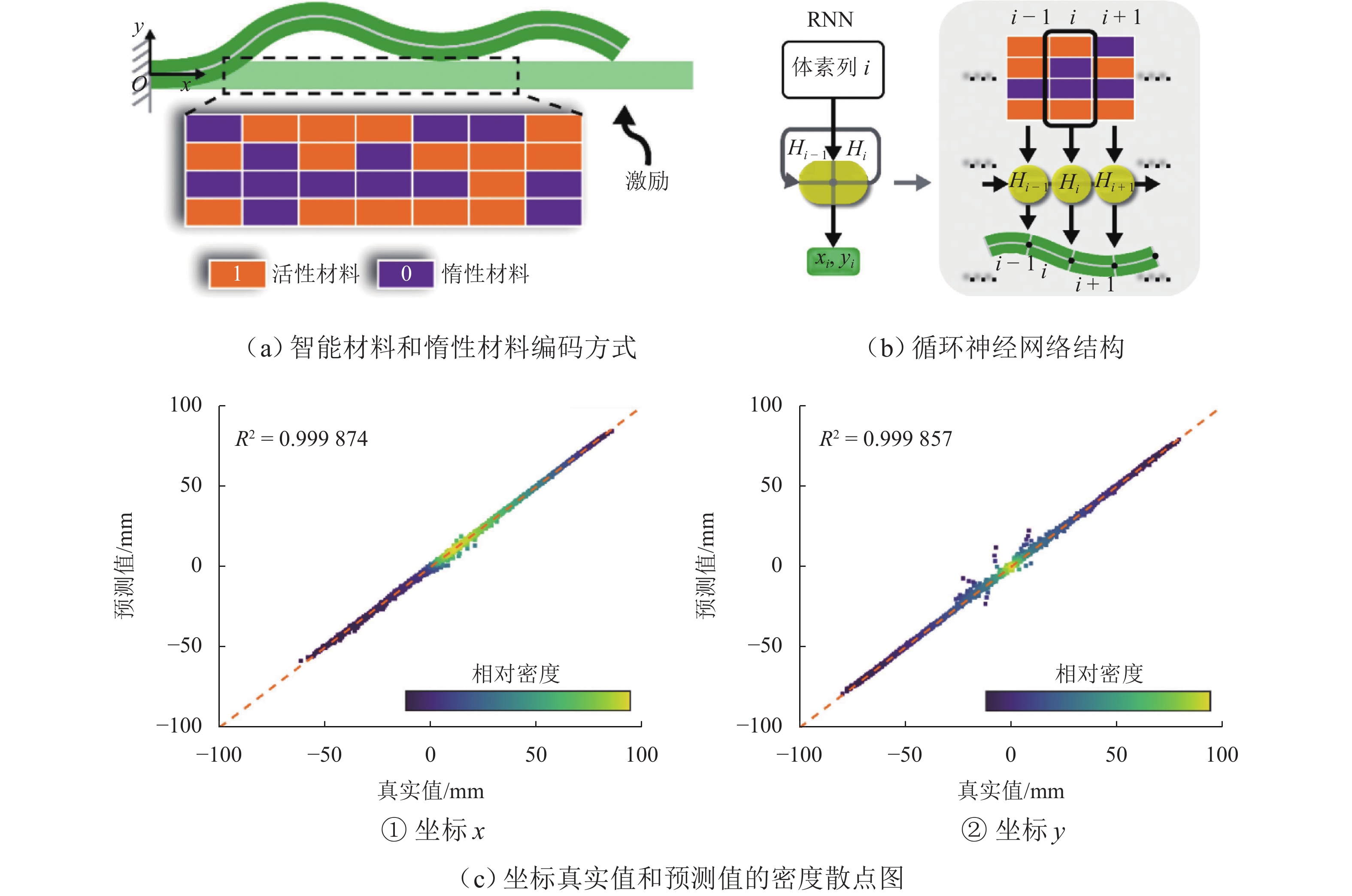
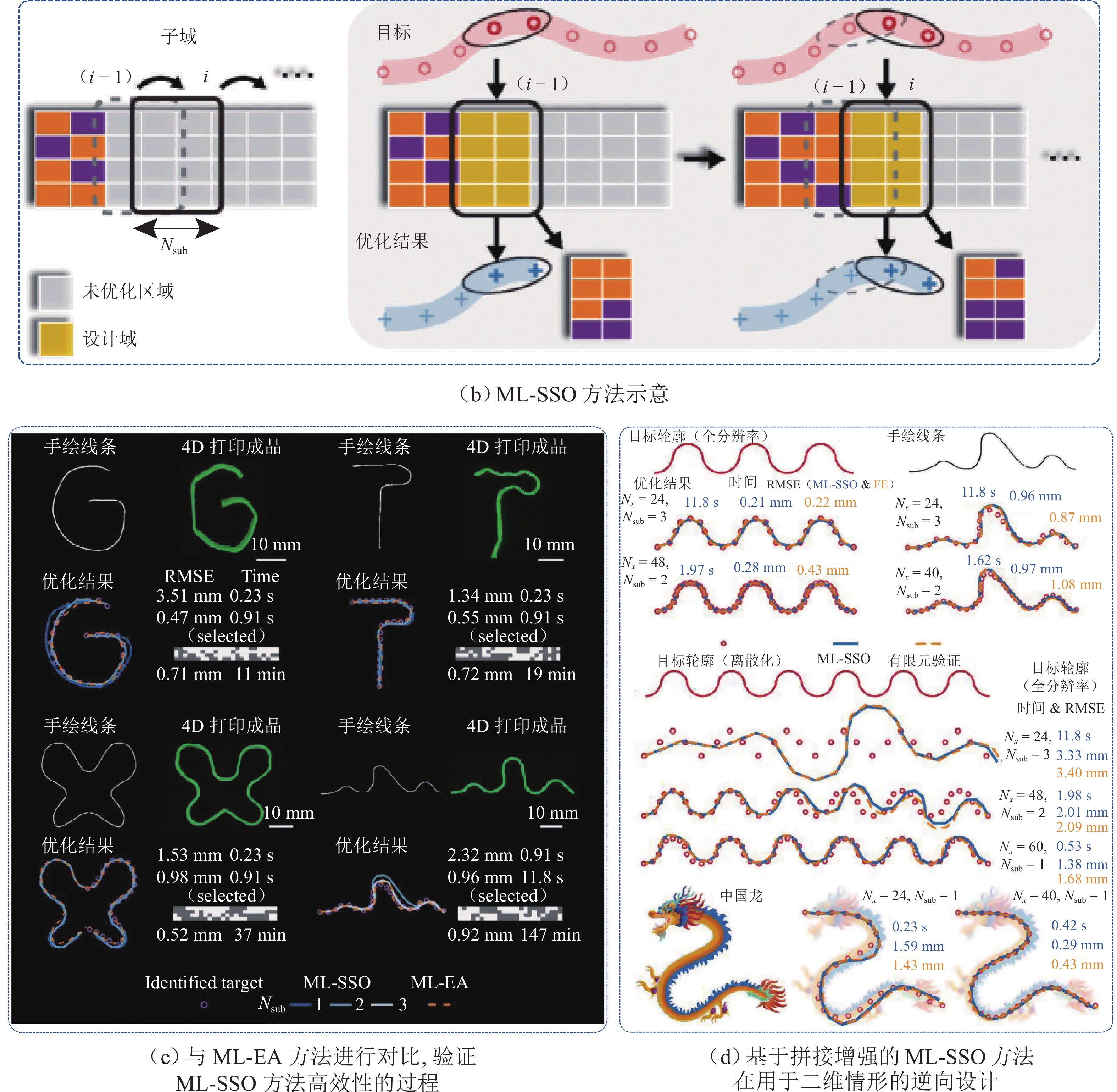
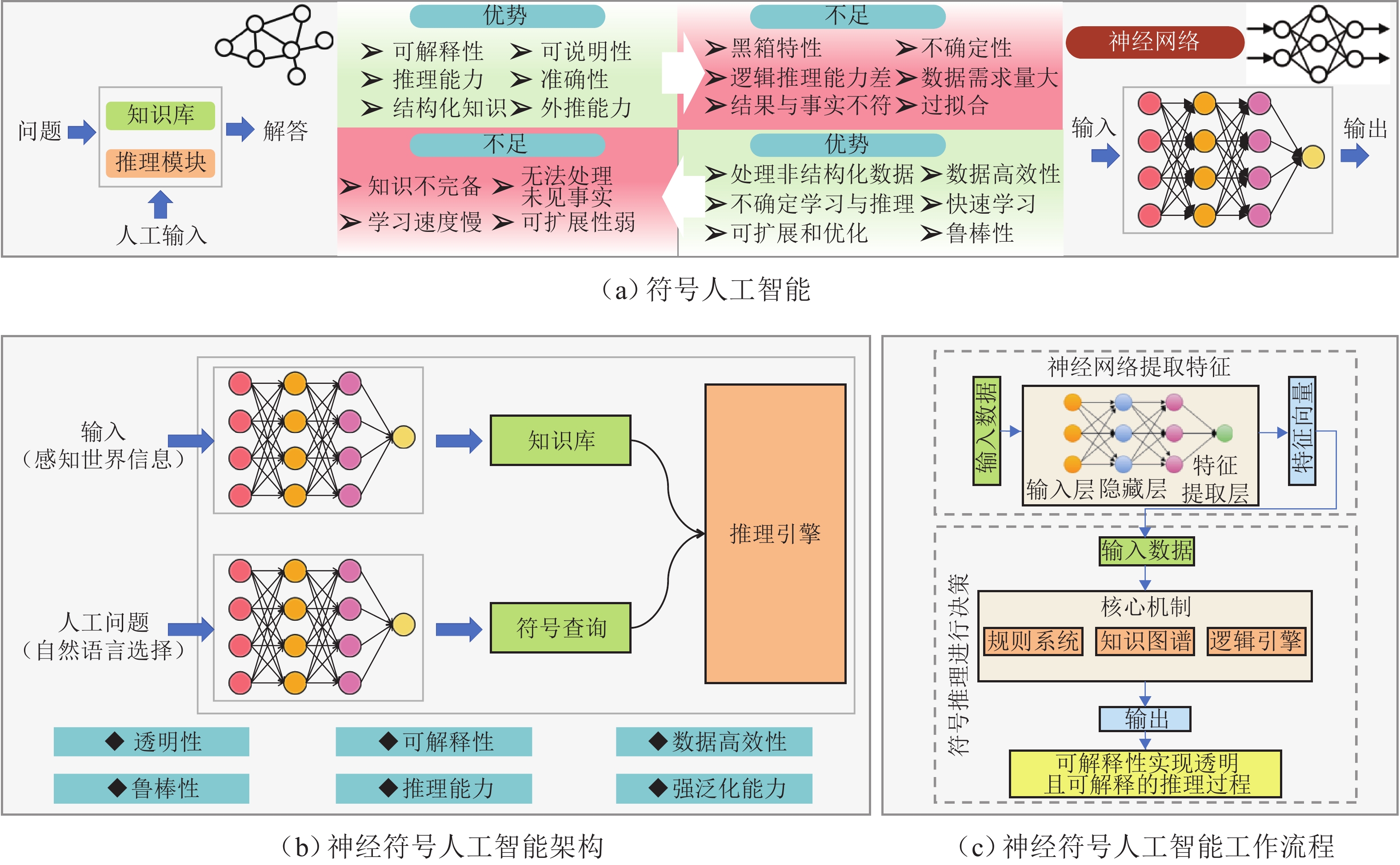
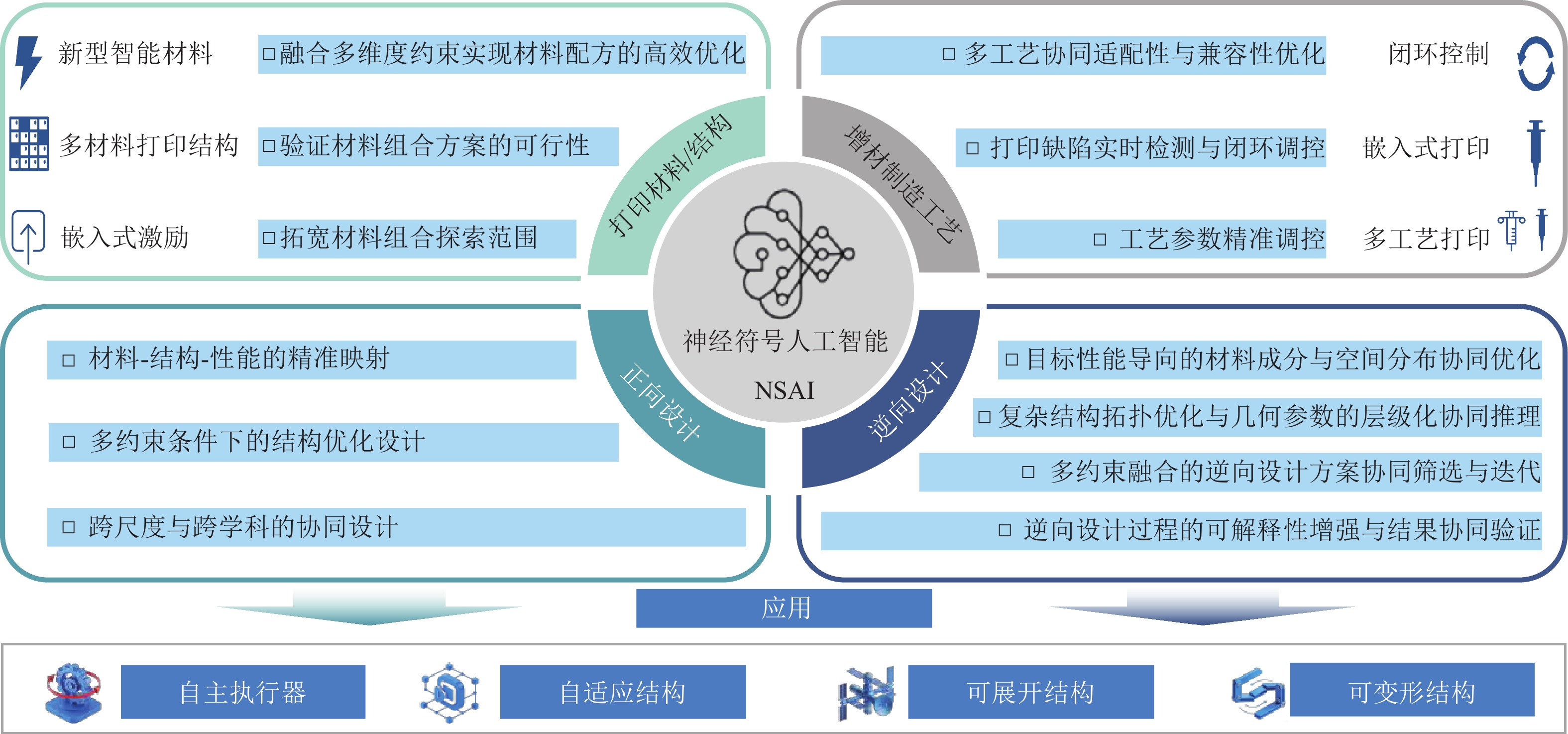
图 5 神经符号人工智能在4D打印领域的优势和应用潜力
Figure 5. Advantages and application potentials of neuro-symbolic artificial intelligence in 4D printing
表 1 4D打印中常用的机器学习方法、优化算法及开源代码链接
Table 1. Common machine learning methods, optimization algorithms, and open-source code links in 4D printing
方法 参考文献 开源代码链接 机器学
习方法循环神经网络 Sun 等[28,51] https://www.tensorflow.org/guide/keras/working_with_rnns https://blog.csdn.net/qq_73462282/article/details/132021992 https://zh.d2l.ai/chapter_recurrent-neural-networks/rnn.html 卷积神经网络 Zhang 和 Gu[22]、Jin 等[52-53] https://www.tensorflow.org/tutorials/images/cnn https://github.com/rwightman/pytorch-image-models https://blog.csdn.net/AI_dataloads/article/details/133250229 https://zh.d2l.ai/chapter_convolutional-neural-networks/index.html 残差网络 Jin 等[54-55]、Sun 等[56] https://blog.csdn.net/weixin_60737527/article/details/127520908 https://zh.d2l.ai/chapter_convolutional-modern/resnet.html 长短期记忆网络 Xu 等[57] https://github.com/kaikerochaalves/LSTM-long-short-term-memory https://zh.d2l.ai/chapter_recurrent-modern/lstm.html https://blog.csdn.net/weixin_42111770/article/details/80900575 物理信息神经网络 Zhang 和 Gu[58]、Khewle 与 Dayal[59] https://github.com/pzimbrod/pinn-for-am https://github.com/ZzYyPp47/pinn 优化
算法进化算法 Sun 等[28] https://blog.csdn.net/weixin_44378835/article/details/116674606 遗传算法 Jin 等[55]、Xu 等[57] https://www.cnblogs.com/ljbguanli/p/19091328 渐进式进化算法 Wang 等[24] http://www.ihpc.se.ritsumei.ac.jp/obidataset.html https://github.com/MengtaoWANG/Fast-reversedesign-of-4D-printing 梯度下降法 Sun 等[56] https://blog.csdn.net/weixin_43872709/article/details/108938376  下载: 导出CSV
-
[1] TIBBITS S. 4D printing: multi-material shape change[J]. Architectural Design, 2014, 84(1): 116-121. [2] BOUGZIME O, CRUZ C, ANDRÉ J C, et al. Neuro-symbolic artificial intelligence in accelerated design for 4D printing: Status, challenges, and perspectives[J]. Materials & Design, 2025, 252: 113737. doi: 10.1016/j.matdes.2025.113737 [3] HUANG W M, YANG B, AN L, et al. Water-driven programmable polyurethane shape memory polymer: Demonstration and mechanism[J]. Applied Physics Letters, 2005, 86(11): 114105. doi: 10.1063/1.1880448 [4] DING Z, YUAN C, PENG X R, et al. Direct 4D printing via active composite materials[J]. Science Advances, 2017, 3(4): e1602890. doi: 10.1126/sciadv.1602890 [5] MOHR R, KRATZ K, WEIGEL T, et al. Initiation of shape-memory effect by inductive heating of magnetic nanoparticles in thermoplastic polymers[J]. Proceedings of the National Academy of Sciences of the United States of America, 2006, 103(10): 3540-3545. doi: 10.1073/pnas.0600079103 [6] LIU Y J, LV H B, LAN X, et al. Review of electro-active shape-memory polymer composite[J]. Composites Science and Technology, 2009, 69(13): 2064-2068. doi: 10.1016/j.compscitech.2008.08.016 [7] NADGORNY M, XIAO Z Y, CHEN C, et al. Three-dimensional printing of pH-responsive and functional polymers on an affordable desktop printer[J]. ACS Applied Materials & Interfaces, 2016, 8(42): 28946-28954. doi: 10.1021/acsami.6b07388 [8] RASTOGI P, KANDASUBRAMANIAN B. Breakthrough in the printing tactics for stimuli-responsive materials: 4D printing[J]. Chemical Engineering Journal, 2019, 366: 264-304. doi: 10.1016/j.cej.2019.02.085 [9] MALLAKPOUR S, TABESH F, HUSSAIN C M. 3D and 4D printing: From innovation to evolution[J]. Advances in Colloid and Interface Science, 2021, 294: 102482. doi: 10.1016/j.cis.2021.102482 [10] HUANG X Y, PANAHI-SARMAD M, DONG K, et al. Tracing evolutions in electro-activated shape memory polymer composites with 4D printing strategies: a systematic review[J]. Composites Part A: Applied Science and Manufacturing, 2021, 147: 106444. doi: 10.1016/j.compositesa.2021.106444 [11] 刘小艳, 张亚玲, 耿呈祯, 等. 基于应变失配原理驱动的4D打印研究进展[J]. 复合材料学报, 2024, 41(2): 533-547. doi: 10.13801/j.cnki.fhclxb.20230724.002LIU Xiaoyan, ZHANG Yaling, GENG Chengzhen, et al. Research progress of 4D printing based on strain mismatch[J]. Acta Materiae Compositae Sinica, 2024, 41(2): 533-547. doi: 10.13801/j.cnki.fhclxb.20230724.002 [12] 陈花玲, 罗斌, 朱子才, 等. 4D打印: 智能材料与结构增材制造技术的研究进展[J]. 西安交通大学学报, 2018, 52(2): 1-12. doi: 10.7652/xjtuxb201802001CHEN Hualing, LUO Bin, ZHU Zicai, et al. 4D printing: progress in additive manufacturing technology of smart materials and structure[J]. Journal of Xi’an Jiaotong University, 2018, 52(2): 1-12. doi: 10.7652/xjtuxb201802001 [13] BODAGHI M, WANG L L, ZHANG F H, et al. 4D printing roadmap[J]. Smart Materials and Structures, 2024, 33(11): 113501. doi: 10.1088/1361-665X/ad5c22 [14] 王林林, 冷劲松, 杜善义. 4D打印形状记忆聚合物及其复合材料的研究现状和应用进展[J]. 哈尔滨工业大学学报, 2020, 52(6): 227-244. doi: 10.11918/202003059WANG Linlin, LENG Jinsong, DU Shanyi. 4D printing of shape memory polymers and their composites: research status and application progress[J]. Journal of Harbin Institute of Technology, 2020, 52(6): 227-244. doi: 10.11918/202003059 [15] 赵先锋, 汤朋飞, 史红艳. 4D打印复合软材料力学性能预测研究进展[J]. 复合材料学报, 2021, 38(6): 1651-1668. doi: 10.13801/j.cnki.fhclxb.20210106.001ZHAO Xianfeng, TANG Pengfei, SHI Hongyan. Research progress on prediction of mechanical properties of 4D printing soft composite[J]. Acta Materiae Compositae Sinica, 2021, 38(6): 1651-1668. doi: 10.13801/j.cnki.fhclxb.20210106.001 [16] 冯茹, 许雅惠, 韩慧, 等. 4D打印形状记忆高分子的打印方法、驱动原理、变形模式和应用[J]. 材料导报, 2021, 35(5): 5147-5157. doi: 10.11896/cldb.20020012FENG Ru, XU Yahui, HAN Hui, et al. Printing method, driving mechanism, deformation mode and application of 4D printing shape memory polymers[J]. Materials Reports, 2021, 35(5): 5147-5157. doi: 10.11896/cldb.20020012 [17] SUBASH A, KANDASUBRAMANIAN B. 4D printing of shape memory polymers[J]. European Polymer Journal, 2020, 134: 109771. doi: 10.1016/j.eurpolymj.2020.109771 [18] FU P, LI H M, GONG J, et al. 4D printing of polymers: techniques, materials, and prospects[J]. Progress in Polymer Science, 2022, 126: 101506. doi: 10.1016/j.progpolymsci.2022.101506 [19] SOSSOU G, DEMOLY F, BELKEBIR H, et al. Design for 4D printing: modeling and computation of smart materials distributions[J]. Materials & Design, 2019, 181: 108074. doi: 10.1016/j.matdes.2019.108074 [20] KUANG X, ROACH D J, WU J T, et al. Advances in 4D printing: materials and applications[J]. Advanced Functional Materials, 2019, 29(2): 1805290. doi: 10.1002/adfm.201805290 [21] LEANZA S, WU S, SUN X H, et al. Active materials for functional origami[J]. Advanced Materials, 2024, 36(9): 2302066. doi: 10.1002/adma.202302066 [22] ZHANG Z Z, GU G X. Finite-element-based deep-learning model for deformation behavior of digital materials[J]. Advanced Theory and Simulations, 2020, 3(7): 2000031. [23] BUTLER K T, DAVIES D W, CARTWRIGHT H, et al. Machine learning for molecular and materials science[J]. Nature, 2018, 559(7715): 547-555. doi: 10.1038/s41586-018-0337-2 [24] WANG M T, LIU Z Y, FURUKAWA H, et al. Fast reverse design of 4D-printed voxelized composite structures using deep learning and evolutionary algorithm[J]. Advanced Science, 2025, 12(12): 2407825. doi: 10.1002/advs.202407825 [25] LIU Y L, CUI Y T, ZHOU H H, et al. Machine learning-based methods for materials inverse design: a review[J]. Computers, Materials & Continua, 2025, 82(2): 1463-1492. [26] JEONG E H, CHOI J, PARK H B, et al. Data-driven printability modeling of hydrogels for precise direct ink writing based on rheological properties[J]. Advanced Science, 2026, 13(15): e07639. doi: 10.1002/advs.202507639 [27] CHEN J L, KONG Y Q, HUANG Q L. Analysis of surimi extrusion behavior during 3D printing by modified computational fluid dynamics (CFD) and quick prediction of printability using machine learning based on texture data[J]. Innovative Food Science & Emerging Technologies, 2024, 94: 103698. doi: 10.1016/j.ifset.2024.103698 [28] SUN X H, YUE L, YU L X, et al. Machine learning-evolutionary algorithm enabled design for 4D-printed active composite structures[J]. Advanced Functional Materials, 2022, 32(10): 2109805. [29] CHAI J Y, ZENG H, LI A M, et al. Deep learning in computer vision: a critical review of emerging techniques and application scenarios[J]. Machine Learning with Applications, 2021, 6: 100134. doi: 10.1016/j.mlwa.2021.100134 [30] SHETH A, ROY K. Neurosymbolic value-inspired artificial intelligence (why, what, and how)[J]. IEEE Intelligent Systems, 2024, 39(1): 5-11. doi: 10.1109/MIS.2023.3344353 [31] Garcez A S A, Besold T R, De Raedt L, et al. Neural-symbolic learning and reasoning: contributions and challenges[C]//AAAI Spring Symposia. California: AAAI press, 2015: 18-21. [32] BELLE V. Symbolic logic meets machine learning: a brief survey in infinite domains[C]//Scalable Uncertainty Management. Cham: Springer International Publishing, 2020: 3-16. [33] VON RUEDEN L, MAYER S, BECKH K, et al. Informed machine learning–a taxonomy and survey of integrating prior knowledge into learning systems[J]. IEEE Transactions on Knowledge and Data Engineering, 2023, 35(1): 614-633. doi: 10.1109/tkde.2021.3079836 [34] ZHANG J, CHEN B, ZHANG L X, et al. Neural, symbolic and neural-symbolic reasoning on knowledge graphs[J]. AI Open, 2021, 2: 14-35. doi: 10.1016/j.aiopen.2021.03.001 [35] MITCHELL A, LAFONT U, HOŁYŃSKA M, et al. Additive manufacturing: a review of 4D printing and future applications[J]. Additive Manufacturing, 2018, 24: 606-626. doi: 10.1016/j.addma.2018.10.038 [36] MOMENI F, M MEHDI HASSANI N S, LIU X, et al. A review of 4D printing[J]. Materials & Design, 2017, 122: 42-79. doi: 10.1016/j.matdes.2017.02.068 [37] CHAMPEAU M, HEINZE D A, VIANA T N, et al. 4D printing of hydrogels: a review[J]. Advanced Functional Materials, 2020, 30(31): 1910606. doi: 10.1002/adfm.201910606 [38] SUBESHAN B, BADDAM Y, ASMATULU E. Current progress of 4D-printing technology[J]. Progress in Additive Manufacturing, 2021, 6(3): 495-516. doi: 10.1007/s40964-021-00182-6 [39] ALI KOUKA M, ABBASSI F, HABIBI M, et al. 4D printing of shape memory polymers, blends, and composites and their advanced applications: a comprehensive literature review[J]. Advanced Engineering Materials, 2023, 25(4): 2200650. doi: 10.1002/adem.202200650 [40] LEE A Y, AN J, CHUA C K. Two-way 4D printing: a review on the reversibility of 3D-printed shape memory materials[J]. Engineering, 2017, 3(5): 663-67. doi: 10.1016/J.ENG.2017.05.014 [41] RODRIGUEZ-MORALES J A, DUAN H, GU J P, et al. Insight into constitutive theories of 4D printed polymer materials: a review[J]. Smart Materials and Structures, 2024, 33(7): 073005. doi: 10.1088/1361-665X/ad523c [42] DING A X, TANG F, ALSBERG E. 4D printing: a comprehensive review of technologies, materials, stimuli, design, and emerging applications[J]. Chemical Reviews, 2025, 125(7): 3663-3771. doi: 10.1021/acs.chemrev.4c00070 [43] PEI E, LOH G H. Technological considerations for 4D printing: an overview[J]. Progress in Additive Manufacturing, 2018, 3(1/2): 95-107. doi: 10.1007/s40964-018-0047-1 [44] LYU Z Y, WANG J L, CHEN Y F. 4D printing: interdisciplinary integration of smart materials, structural design, and new functionality[J]. International Journal of Extreme Manufacturing, 2023, 5(3): 032011. doi: 10.1088/2631-7990/ace090 [45] MIAO S D, CASTRO N, NOWICKI M, et al. 4D printing of polymeric materials for tissue and organ regeneration[J]. Materials Today, 2017, 20(10): 577-591. doi: 10.1016/j.mattod.2017.06.005 [46] RYAN K R, DOWN M P, BANKS C E. Future of additive manufacturing: overview of 4D and 3D printed smart and advanced materials and their applications[J]. Chemical Engineering Journal, 2021, 403: 126162. doi: 10.1016/j.cej.2020.126162 [47] JIN D D, CHEN Q Y, HUANG T Y, et al. Four-dimensional direct laser writing of reconfigurable compound micromachines[J]. Materials Today, 2020, 32: 19-25. doi: 10.1016/j.mattod.2019.06.002 [48] SAMAL B B, JENA A, VARSHNEY S K, et al. FDM 4D printing: a low-cost approach of shape programming and assessing the shape memory properties using angle measurement methods in hot water actuation testing apparatus[J]. Materials Today: Proceedings, 2024, 101: 7-14. doi: 10.1016/j.matpr.2023.02.038 [49] TEZERJANI S M D, YAZDI M S, HOSSEINZADEH M H. The effect of 3D printing parameters on the shape memory properties of 4D printed polylactic acid circular disks: an experimental investigation and parameters optimization[J]. Materials Today Communications, 2022, 33: 104262. doi: 10.1016/j.mtcomm.2022.104262 [50] PENG X, LIU G A, WANG J, et al. Controllable deformation design for 4D-printed active composite structure: optimization, simulation, and experimental verification[J]. Composites Science and Technology, 2023, 243: 110265. doi: 10.1016/j.compscitech.2023.110265 [51] SUN X H, YU L X, YUE L, et al. Machine learning and sequential subdomain optimization for ultrafast inverse design of 4D-printed active composite structures[J]. Journal of the Mechanics and Physics of Solids, 2024, 186: 105561. doi: 10.1016/j.jmps.2024.105561 [52] JIN Z Q, ZHANG Z Z, OTT J, et al. Precise localization and semantic segmentation detection of printing conditions in fused filament fabrication technologies using machine learning[J]. Additive Manufacturing, 2021, 37: 101696. doi: 10.1016/j.addma.2020.101696 [53] JIN Z Q, ZHANG Z Z, GU G X. Autonomous in-situ correction of fused deposition modeling printers using computer vision and deep learning[J]. Manufacturing Letters, 2019, 22: 11-15. doi: 10.1016/j.mfglet.2019.09.005 [54] JIN L C, YU S Y, CHENG J X, et al. Machine learning driven forward prediction and inverse design for 4D printed hierarchical architecture with arbitrary shapes[J]. Applied Materials Today, 2024, 40: 102373. doi: 10.1016/j.apmt.2024.102373 [55] JIN L C, ZHAI X Y, JIANG J C, et al. Optimizing stimuli-based 4D printed structures: a paradigm shift in programmable material response[C]//Sensors and Smart Structures Technologies for Civil, Mechanical, and Aerospace Systems 2024. Long Beach: [s.n.], 2024: 52. [56] SUN X H, YUE L, YU L X, et al. Machine learning-enabled forward prediction and inverse design of 4D-printed active plates[J]. Nature Communications, 2024, 15: 5509. doi: 10.1038/s41467-024-49775-z [57] XU Z T, ZHANG S L, SUN X H, et al. Machine learning-assisted inverse design of 3D shape morphing in liquid crystal elastomer composite strips[J]. Advanced Functional Materials, 2025: e26924. [58] ZHANG Z Z, GU G X. Physics-informed deep learning for digital materials[J]. Theoretical and Applied Mechanics Letters, 2021, 11(1): 100220. doi: 10.1016/j.taml.2021.100220 [59] KHEWLE S, DAYAL P. Photoactivated nano-compatibilized two-phase polymer blends: an approach for determining mechanical behavior[J]. The Journal of Physical Chemistry B, 2025, 129(27): 7022-7033. doi: 10.1021/acs.jpcb.5c02717 [60] CHOI W, ADVINCULA R C, WU H F, et al. Artificial intelligence and machine learning in the design and additive manufacturing of responsive composites[J]. MRS Communications, 2023, 13(5): 714-724. doi: 10.1557/s43579-023-00473-9 [61] GAO L, SONG S Q, LIN J P, et al. AI-assisted design of advanced polymeric materials: challenges and solutions[J]. Advanced Materials, 2026, 38(7): e16857. doi: 10.1002/adma.202516857 [62] HAMEL C M, ROACH D J, LONG K N, et al. Machine-learning based design of active composite structures for 4D printing[J]. Smart Materials and Structures, 2019, 28(6): 065005. doi: 10.1088/1361-665X/ab1439 [63] ZOLFAGHARIAN A, DURRAN L, GHARAIE S, et al. 4D printing soft robots guided by machine learning and finite element models[J]. Sensors and Actuators A: Physical, 2021, 328: 112774. doi: 10.1016/j.sna.2021.112774 [64] ZHAO B W, ZHANG M J, DONG L, et al. Design of grayscale digital light processing 3D printing block by machine learning and evolutionary algorithm[J]. Composites Communications, 2022, 36: 101395. doi: 10.1016/j.coco.2022.101395 [65] MALASHIN I, MASICH I, TYNCHENKO V, et al. Machine learning in 3D and 4D printing of polymer composites: a review[J]. Polymers, 2024, 16(22): 3125. doi: 10.3390/polym16223125 [66] SURYAVANSHI P, WANG J W, DUGGAL I, et al. Four-dimensional printed construct from temperature-responsive self-folding feedstock for pharmaceutical applications with machine learning modeling[J]. Pharmaceutics, 2023, 15(4): 1266. doi: 10.3390/pharmaceutics15041266 [67] BOZTEPE C, YÜCEER M, KÜNKÜL A, et al. Prediction of the deswelling behaviors of pH- and temperature-responsive poly (NIPAAm-co-AAc) IPN hydrogel by artificial intelligence techniques[J]. Research on Chemical Intermediates, 2020, 46(1): 409-428. doi: 10.1007/s11164-019-03957-3 [68] POLTUE T, ZHANG C, DEMOLY F, et al. Iterative data curation for machine learning-based inverse design of active composite plates for four-dimensional printing[J]. Advanced Intelligent Systems, 2026, 8(2): e202500916. doi: 10.1002/aisy.202500916 [69] RAISSI M, PERDIKARIS P, KARNIADAKIS G E. Physics-informed neural networks: a deep learning framework for solving forward and inverse problems involving nonlinear partial differential equations[J]. Journal of Computational Physics, 2019, 378: 686-707. doi: 10.1016/j.jcp.2018.10.045 [70] HERZOG T, BRANDT M, TRINCHI A, et al. Process monitoring and machine learning for defect detection in laser-based metal additive manufacturing[J]. Journal of Intelligent Manufacturing, 2024, 35(4): 1407-1437. doi: 10.1007/s10845-023-02119-y [71] DIMASSI S, DEMOLY F, CRUZ C, et al. An ontology-based framework to formalize and represent 4D printing knowledge in design[J]. Computers in Industry, 2021, 126: 103374. doi: 10.1016/j.compind.2020.103374 [72] NAWAZ U, ANEES-UR-RAHAMAN M, SAEED Z. A review of neuro-symbolic AI integrating reasoning and learning for advanced cognitive systems[J]. Intelligent Systems with Applications, 2025, 26: 200541. doi: 10.1016/j.iswa.2025.200541 [73] SHAKARIAN P, BARAL C, SIMARI G I, et al. New ideas in neuro symbolic reasoning and learning[M]//Neuro Symbolic Reasoning and Learning. Cham: Springer, 2023: 1-2. [74] BESOLD T R, D’AVILA GARCEZ A, JIMENEZ-RUIZ E, et al. Neural-symbolic learning and reasoning: 18th international conference, NeSy 2024, Barcelona, Spain, September 9–12, 2024, Proceedings, Part I[M]. Cham: Springer Nature Switzerland, 2024. [75] DEMOLY F, DUNN M L, WOOD K L, et al. The status, barriers, challenges, and future in design for 4D printing[J]. Materials & Design, 2021, 212: 110193. doi: 10.1016/j.matdes.2021.110193 [76] HAMILTON K, NAYAK A, BOŽIĆ B, et al. Is neuro-symbolic AI meeting its promises in natural language processing? a structured review[J]. Semantic Web, 2024, 15(4): 1265-1306. doi: 10.3233/sw-223228 [77] MISHRA A, JATTI V S. Neurosymbolic artificial intelligence (NSAI) based algorithm for predicting the impact strength of additive manufactured polylactic acid (PLA) specimens[J]. Engineering Research Express, 2023, 5(3): 035017. doi: 10.1088/2631-8695/ace610 [78] GU G X, CHEN C T, RICHMOND D J, et al. Bioinspired hierarchical composite design using machine learning: simulation, additive manufacturing, and experiment[J]. Materials Horizons, 2018, 5(5): 939-945. doi: 10.1039/C8MH00653A [79] NG W L, GOH G L, GOH G D, et al. Progress and opportunities for machine learning in materials and processes of additive manufacturing[J]. Advanced Materials, 2024, 36(34): 2310006. doi: 10.1002/adma.202310006 [80] CADIOU T, DEMOLY F, GOMES S. A hybrid additive manufacturing platform based on fused filament fabrication and direct ink writing techniques for multi-material 3D printing[J]. The International Journal of Advanced Manufacturing Technology, 2021, 114(11/12): 3551-3562. doi: 10.1007/s00170-021-06891-0 [81] MONDAL S, SHUBHRA GOSWAMI S. Machine learning techniques for quality assurance in additive manufacturing processes[J]. International Journal of AI for Materials and Design, 2024, 1(2): 21. doi: 10.36922/ijamd.3455 [82] BENYAHIA K, SERIKET H, PROD’HON R, et al. A computational design approach for multi-material 4D printing based on interlocking blocks assembly[J]. Additive Manufacturing, 2022, 58: 102993. doi: 10.1016/j.addma.2022.102993 [83] BADREDDINE S, D’AVILA GARCEZ A, SERAFINI L, et al. Logic tensor networks[J]. Artificial Intelligence, 2022, 303: 103649. doi: 10.1016/j.artint.2021.103649 [84] HERSCHE M, ZEQIRI M, BENINI L, et al. A neuro-vector-symbolic architecture for solving Raven’s progressive matrices[J]. Nature Machine Intelligence, 2023, 5(4): 363-375. doi: 10.1038/s42256-023-00630-8 [85] YANG Z Z, YU C H, BUEHLER M J. Deep learning model to predict complex stress and strain fields in hierarchical composites[J]. Science Advances, 2021, 7(15): eabd7416. doi: 10.1126/sciadv.abd7416 [86] BONFANTI S, HIEMER S, ZULKARNAIN R, et al. Computational design of mechanical metamaterials[J]. Nature Computational Science, 2024, 4(8): 574-583. doi: 10.1038/s43588-024-00672-x [87] ZHOU J X, WATANABE I, KAMBAYASHI K. Computational design of mechanical metamaterials through misaligned periodic microstructure[J]. Materials & Design, 2025, 253: 113819. doi: 10.1016/j.matdes.2025.113819 [88] HASSAN M, MOHANTY A K, WANG T, et al. Current status and future outlook of 4D printing of polymers and composites-a prospective[J]. Composites Part C: Open Access, 2025, 17: 100602. doi: 10.1016/j.jcomc.2025.100602 [89] FORTE A E, HANAKATA P Z, JIN L S, et al. Inverse design of inflatable soft membranes through machine learning[J]. Advanced Functional Materials, 2022, 32(16): 2111610. doi: 10.1002/adfm.202111610 [90] CARRICO J D, HERMANS T, KIM K J, et al. 3D-printing and machine learning control of soft ionic polymer-metal composite actuators[J]. Scientific Reports, 2019, 9: 17482. doi: 10.1038/s41598-019-53570-y [91] EBER P, SILLMANN Y M, GUASTALDI F P S. Beyond 3D printing: how AI is shaping the future of craniomaxillofacial bone tissue engineering[J]. ACS Biomaterials Science & Engineering, 2025, 11(6): 3095-3098. doi: 10.1021/acsbiomaterials.5c00420 [92] GELMI A, SCHUTT C E. Stimuli-responsive biomaterials: scaffolds for stem cell control[J]. Advanced Healthcare Materials, 2021, 10: 2001125. doi: 10.1002/adhm.202001125 [93] EJEROMEDOGHENE O, KUMI M, AKOR E, et al. The application of machine learning in 3D/4D printed stimuli-responsive hydrogels[J]. Advances in Colloid and Interface Science, 2025, 336: 103360. doi: 10.1016/j.cis.2024.103360 [94] WEI X F, TIAN T, JIA S S, et al. Microfluidic distance readout sweet hydrogel integrated paper-based analytical device (μDiSH-PAD) for visual quantitative point-of-care testing[J]. Analytical Chemistry, 2016, 88(4): 2345-2352. doi: 10.1021/acs.analchem.5b04294 [95] SUN X H, ZHAO R R, QI H J. Perspective: machine learning in design for 3D/4D printing[J]. Journal of Applied Mechanics, 2024, 91(3): 030801. doi: 10.1115/1.4063684 [96] DU Y, MUKHERJEE T, LI R S, et al. A review of deep learning in metal additive manufacturing: Impact on process, structure, and properties[J]. Progress in Materials Science, 2026, 157: 101587. doi: 10.1016/j.pmatsci.2025.101587 [97] JIANG L F, HU Y N, LI H, et al. A cGAN-based fatigue life prediction of 316 austenitic stainless steel in high-temperature and high-pressure water environments[J]. International Journal of Fatigue, 2025, 190: 108633. doi: 10.1016/j.ijfatigue.2024.108633 [98] DENG X W, HU Y N, WANG Z Y, et al. Fatigue life prediction of induction-hardened S38C axle by a machine learning model integrating gradient physical information[J]. International Journal of Fatigue, 2025, 201: 109140. doi: 10.1016/j.ijfatigue.2025.109140 [99] JIANG L F, LUO H L, LIU Y X, et al. Physics-informed transformer model for multiaxial ratchetting-fatigue life prediction of SUS301L stainless steel butt-welded joint[J]. International Journal of Fatigue, 2026, 204: 109367. doi: 10.1016/j.ijfatigue.2025.109367 [100] YANG J Y, KANG G Z, LIU Y J, et al. A novel method of multiaxial fatigue life prediction based on deep learning[J]. International Journal of Fatigue, 2021, 151: 106356. doi: 10.1016/j.ijfatigue.2021.106356 [101] YANG J Y, KANG G Z, KAN Q H. A novel deep learning approach of multiaxial fatigue life-prediction with a self-attention mechanism characterizing the effects of loading history and varying temperature[J]. International Journal of Fatigue, 2022, 162: 106851. doi: 10.1016/j.ijfatigue.2022.106851 [102] YANG J Y, KANG G Z, KAN Q H. Rate-dependent multiaxial life prediction for polyamide-6 considering ratchetting: Semi-empirical and physics-informed machine learning models[J]. International Journal of Fatigue, 2022, 163: 107086. doi: 10.1016/j.ijfatigue.2022.107086 [103] TAO K, YU J H, ZHANG J Y, et al. Deep-learning enabled active biomimetic multifunctional hydrogel electronic skin[J]. ACS Nano, 2023, 17(16): 16160-16173. doi: 10.1021/acsnano.3c05253 [104] SUN Z J, WANG S Y, ZHAO Y L, et al. Discriminating soft actuators’ thermal stimuli and mechanical deformation by hydrogel sensors and machine learning[J]. Advanced Intelligent Systems, 2022, 4(9): 2200089. doi: 10.1002/aisy.202200089 [105] MILAZZO M, LIBONATI F. The synergistic role of additive manufacturing and artificial intelligence for the design of new advanced intelligent systems[J]. Advanced Intelligent Systems, 2022, 4(6): 2100278. doi: 10.1002/aisy.202100278 [106] CHIU Y H, HUANG Y T, CHEN M C, et al. Inverse design of face-like 3D surfaces via bi-material 4D printing and shape morphing[J]. Virtual and Physical Prototyping, 2025, 20: e2507099. doi: 10.1080/17452759.2025.2507099 [107] TENG X X, ZHANG M, MUJUMDAR A S, et al. 4D printed deformation labels with machine learning for monitoring and preservation of respiring climacteric fruits[J]. Nature Communications, 2025, 16: 11525. doi: 10.1038/s41467-025-66554-6 -

 下载:
下载:

 点击查看大图
计量
- 文章访问数: 513
- HTML全文浏览量: 273
- PDF下载量: 96
- 被引次数: 0