



Derailment Risk Influence of Rear-End Collision of Short Electric Multiple Units with Tight-Lock Couplers
-
摘要:
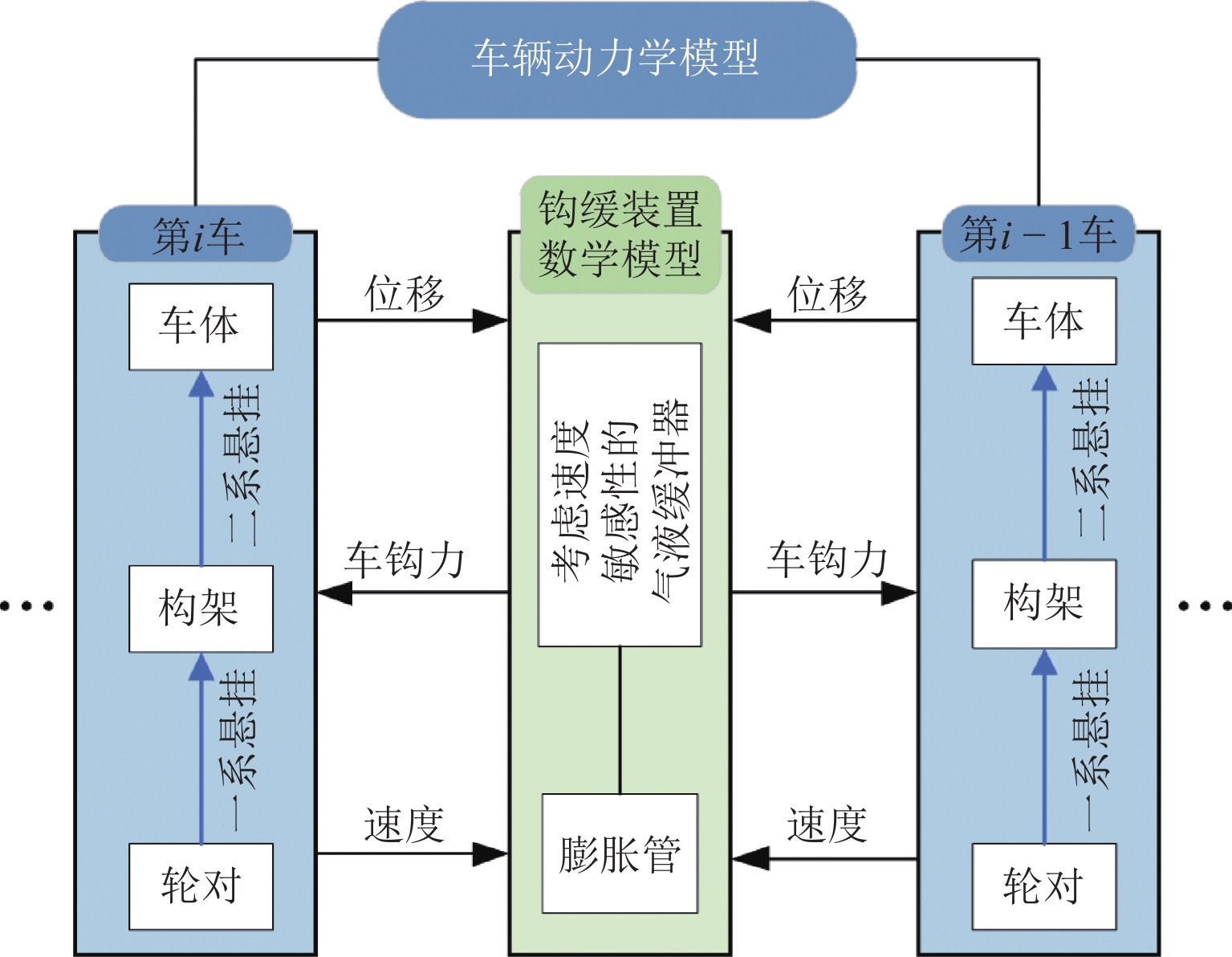
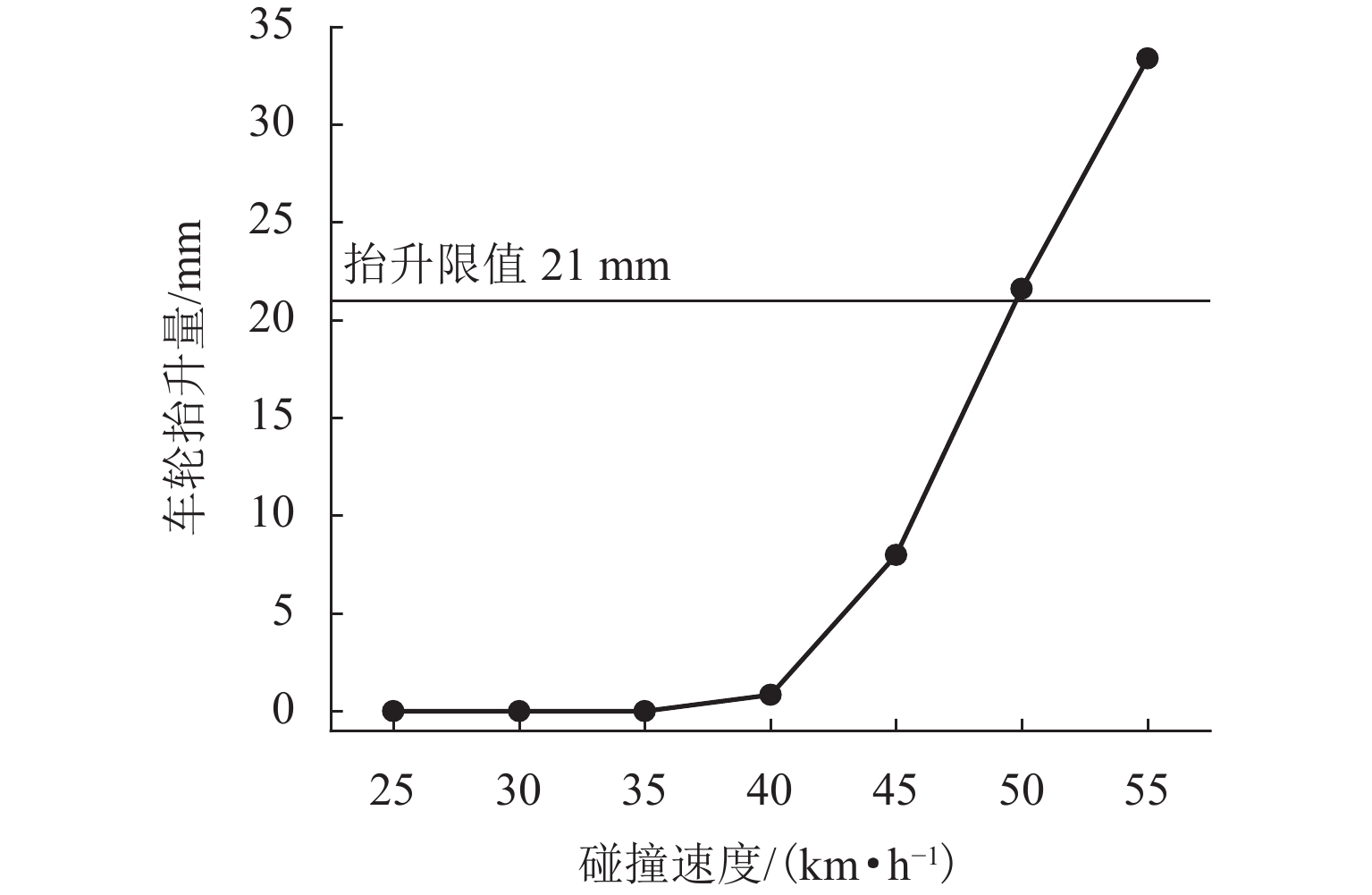
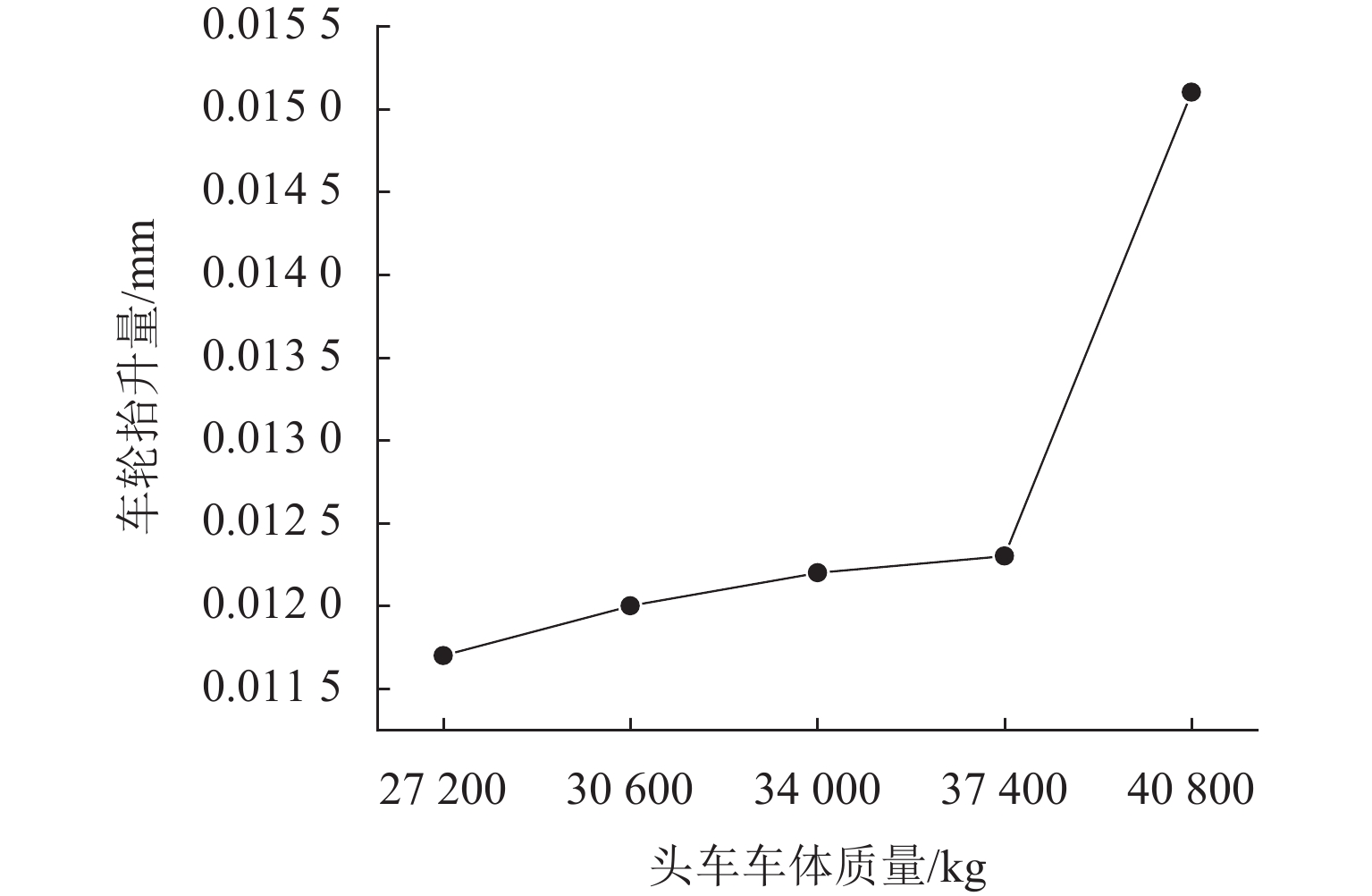
为了探究车辆参数对动车组追尾碰撞脱轨风险的影响规律,本文创新性地提出了一种速度敏感型密接式车钩数学模型,并将其集成到车辆动力学模型中,再相邻车辆耦合组成列车碰撞动力学模型;使用该模型模拟两同型短编动车组在直线轨道条件下追尾碰撞,获得不同参数情况下车辆的动态响应;通过脱轨系数、轮重减载率、轮轨接触力及车轮抬升量等脱轨指标评估追尾碰撞脱轨风险,探讨了碰撞速度、头车车体质量和防爬装置稳态合力对脱轨指标的影响规律. 研究结果表明:短编动车组在直线轨道追尾碰撞时,各碰撞条件下车轮抬升量和轮重减载率最大值出现在主动列车头车第三位轮对右轮处,脱轨系数和轮轨接触力最大值出现在头车第二位轮对右轮处;相同初始条件下脱轨指标随着碰撞速度的增大而增大,当碰撞速度由25 km/h增大至55 km/h,车轮抬升量由0.01 mm陡增至33.40 mm,车轮垂向力最大值由83.8 kN增大到159.0 kN,增大89.7%;轮重减载率峰值随着头车车体质量的增大先减小后增大,防爬装置稳态力最小时,车轮抬升量比极值高83.6%.
Abstract:In order to investigate the influence law of vehicle parameters on derailment risk of rear-end collisions of electric multiple units, a mathematical model of a speed-sensitive tight-lock coupler was innovatively proposed and integrated into the vehicle dynamics model. The train collision dynamics model was established through the coupling of adjacent vehicles. Rear-end collisions of two identical short electric multiple units were simulated on straight tracks to obtain the dynamic responses of the vehicles under different parameters. Finally, the derailment risk of rear-end collisions was evaluated by using the derailment coefficient, wheel load reduction rate, wheel–rail contact force, wheel lift, and other derailment indices. The influence law of collision speed, leading car body mass, and anti-climber steady-state force on the derailment indices was investigated. The results show that under various collision conditions, the maximum values of wheel lift and wheel load reduction rate are observed at the right wheel of the third wheelset on the leading car of the active train during rear-end collisions of short electric multiple units on straight tracks. The maximum values of derailment coefficient and wheel–rail contact force are observed at the right wheel of the second wheelset on the leading car under the same conditions. Derailment indices increase with higher collision speed under identical initial conditions. The wheel lift increases from 0.01 mm to 33.40 mm when the collision speed increases from 25 km/h to 55 km/h. The maximum vertical wheel force increases from 83.8 kN to 159.0 kN, an increase of 89.7%, under the same conditions. The peak value of the wheel load reduction rate firstly decreases and then increases with the increase in the leading car body mass. The wheel lift increases by 83.6% compared with its maximum when the anti-climber steady-state force is minimized.
-
Key words:
- rolling stock /
- collision /
- vehicle dynamics /
- derailment risk /
- dynamic behavior
-
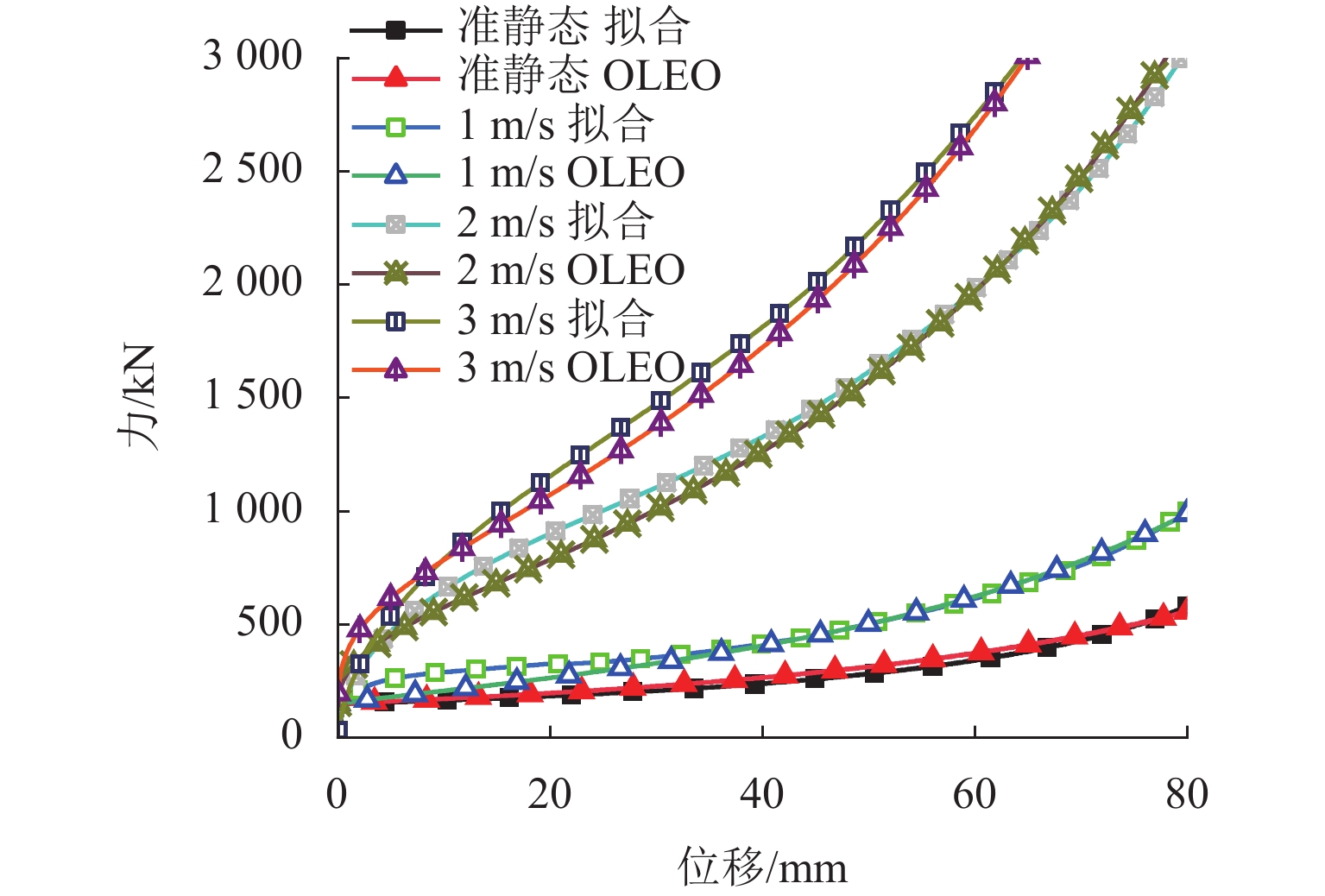
图 3 缓冲器外特性曲线和拟合曲线对比
Figure 3. Comparison of external characteristic curves and fitting curves for buffer
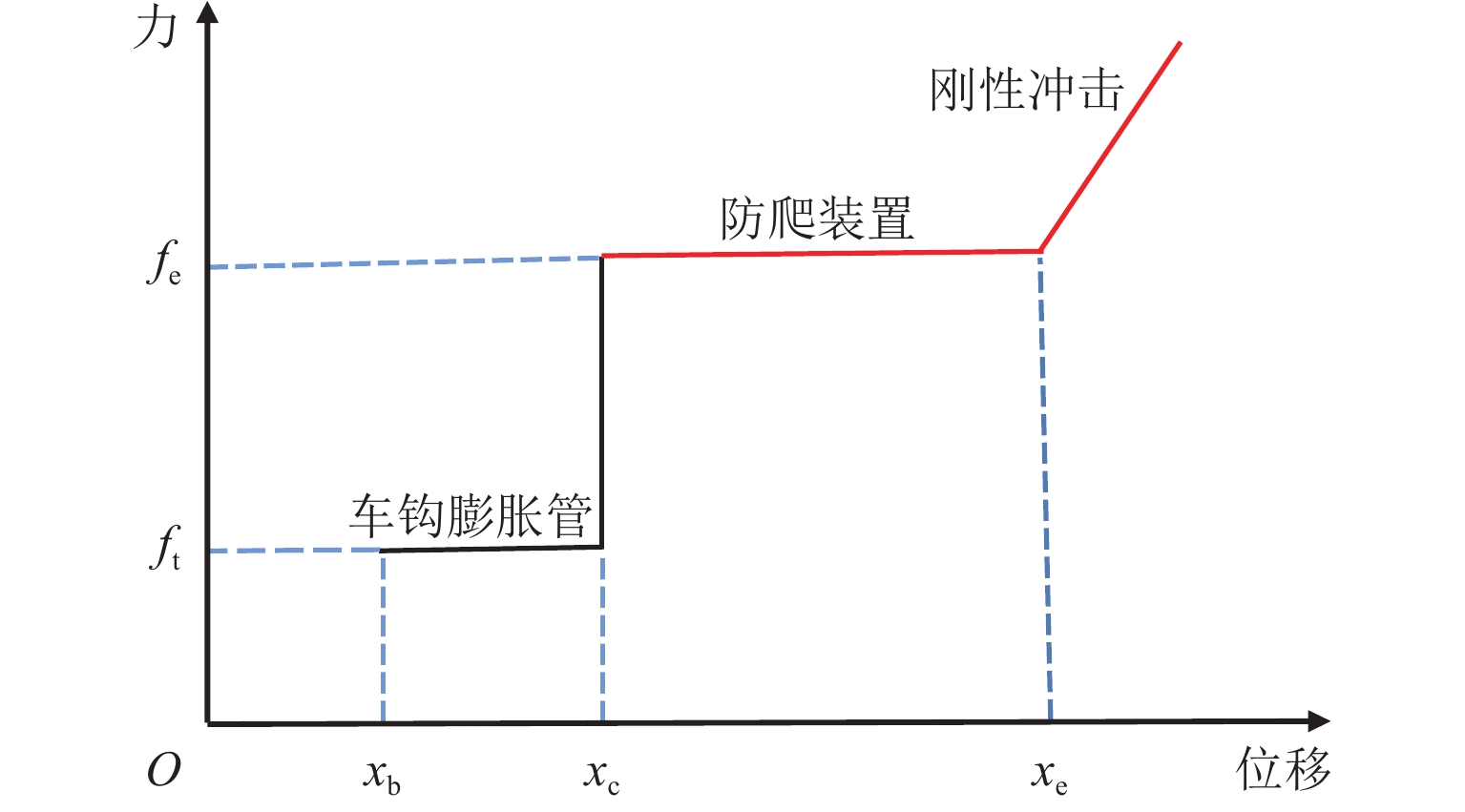
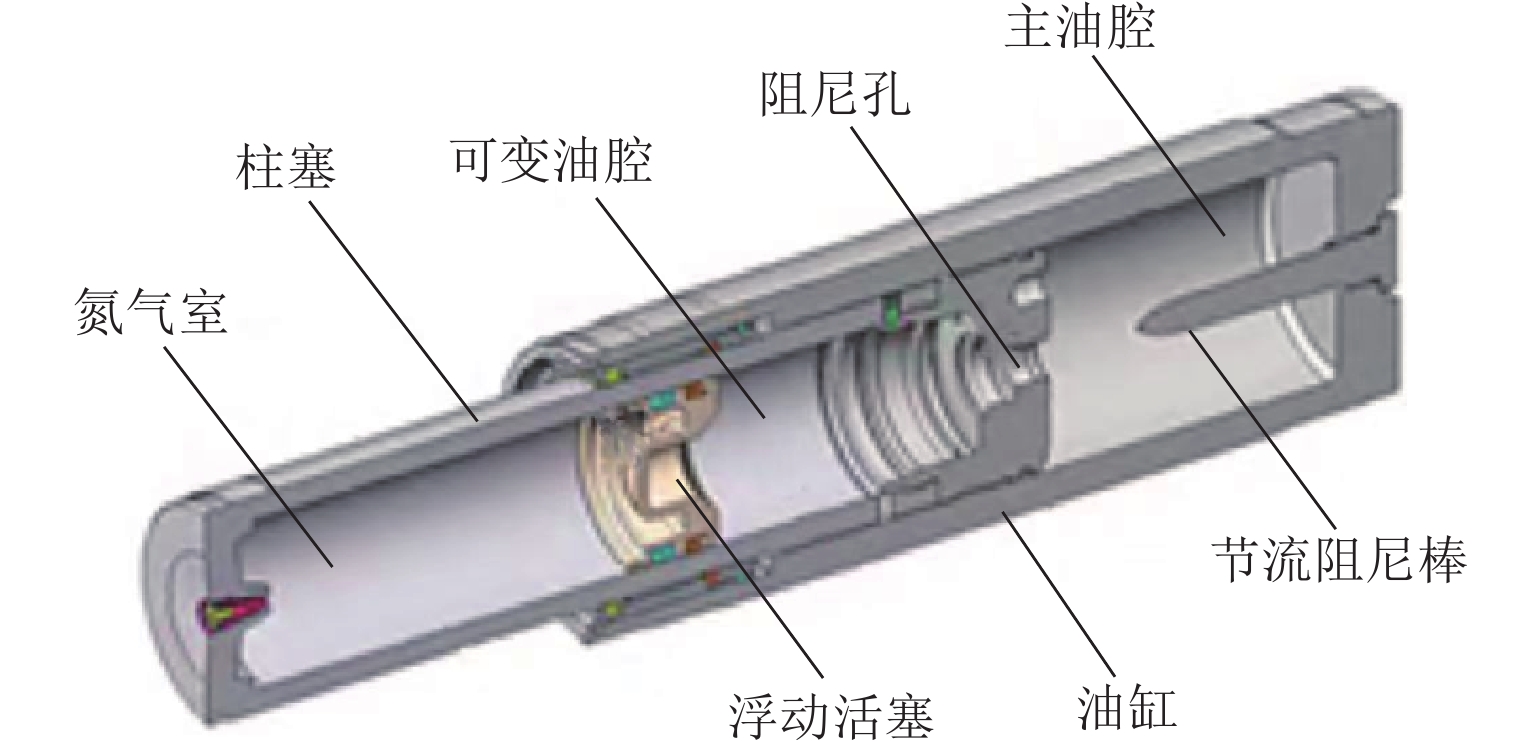
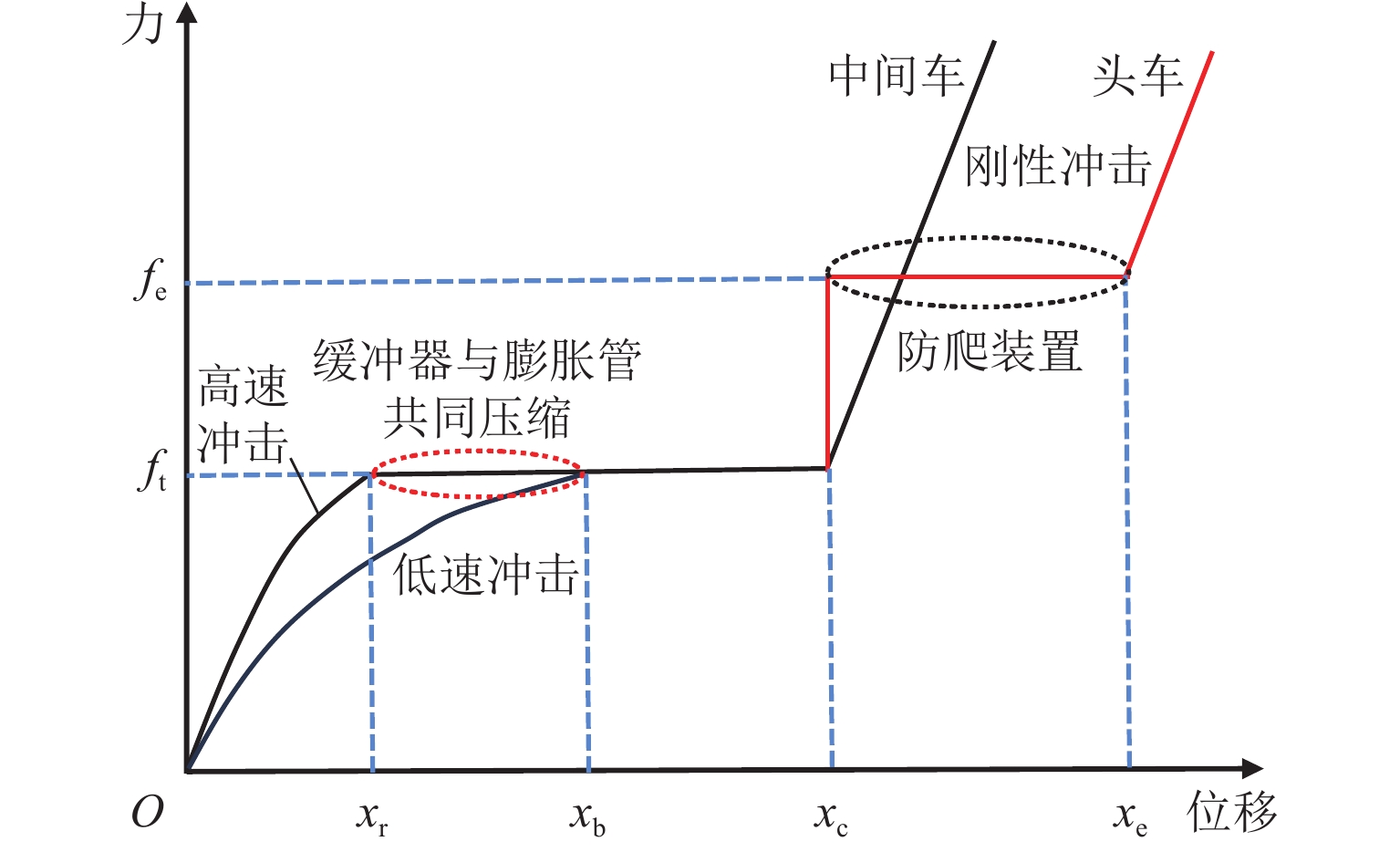
图 4 车端吸能结构的压缩特性
Figure 4. Compression characteristic of energy absorption structure in vehicle ends

图 6 短编动车组的车辆和碰撞界面编号
Figure 6. Vehicle and collision interface numbers of short electric multiple unit
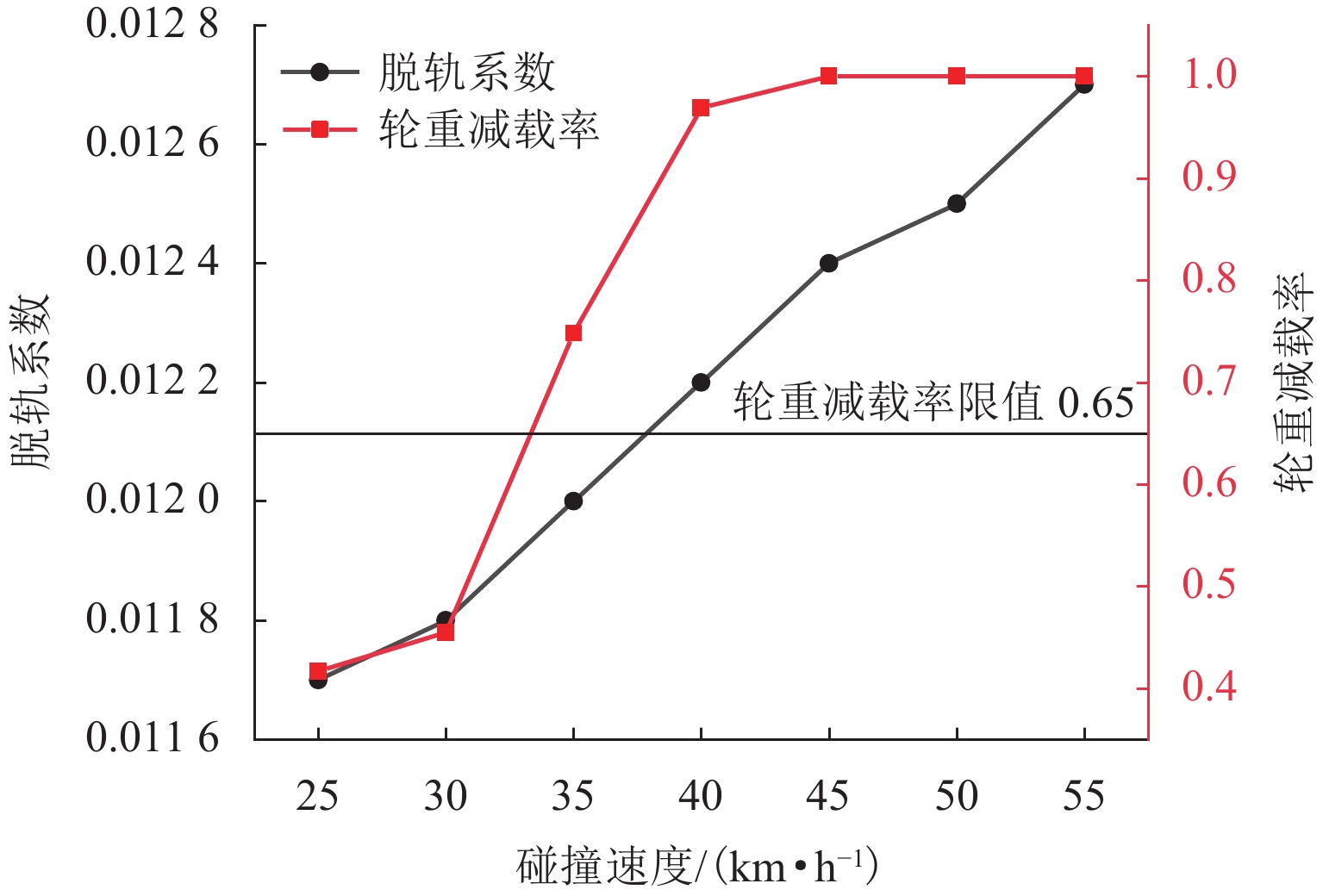
图 7 不同速度下脱轨系数和轮重减载率
Figure 7. Derailment coefficient and wheel load reduction rate at different speeds
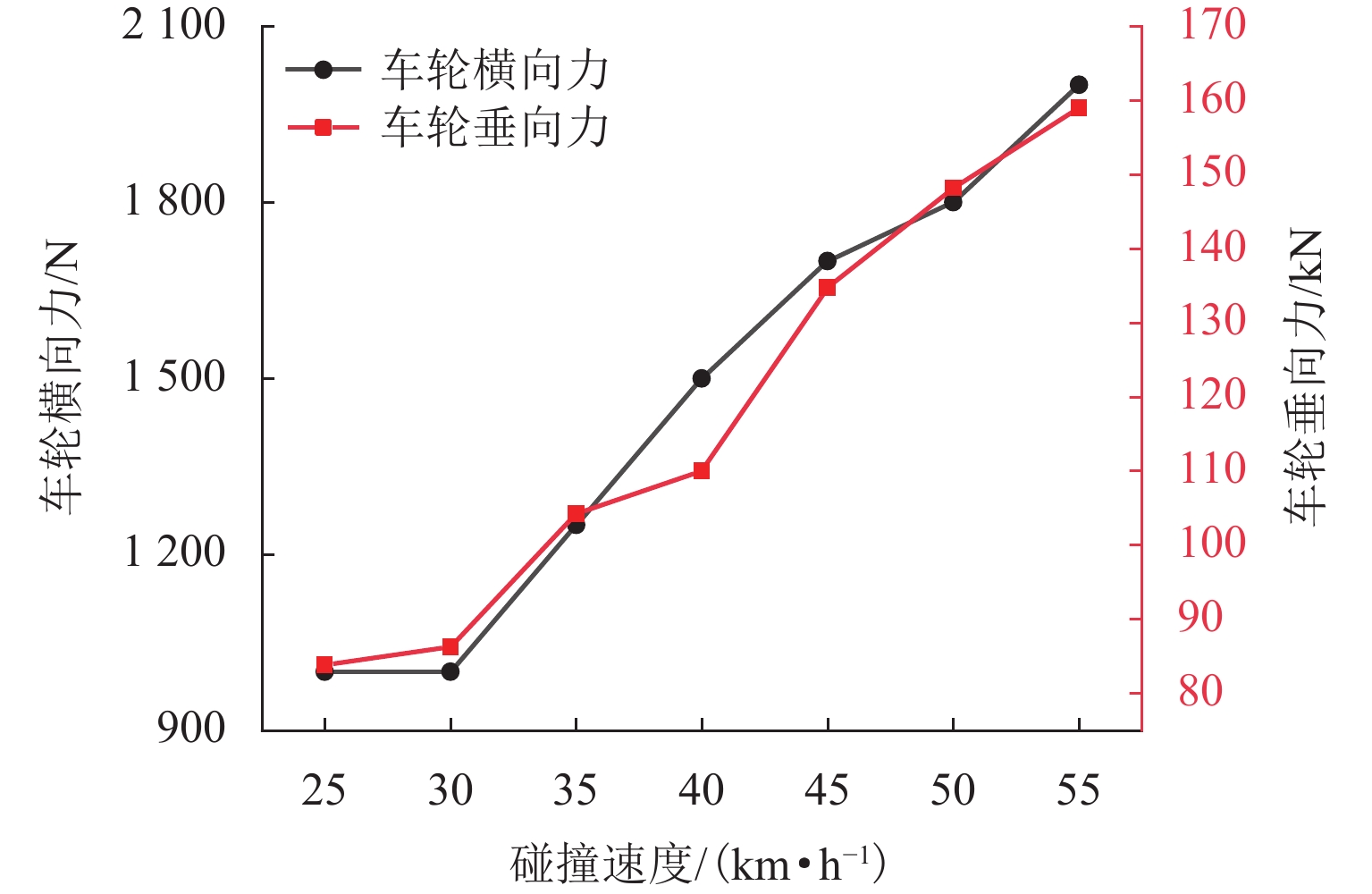
图 8 不同速度下W2右轮轮轨接触力
Figure 8. Wheel–rail contact forces of right wheel of W2 at different speeds
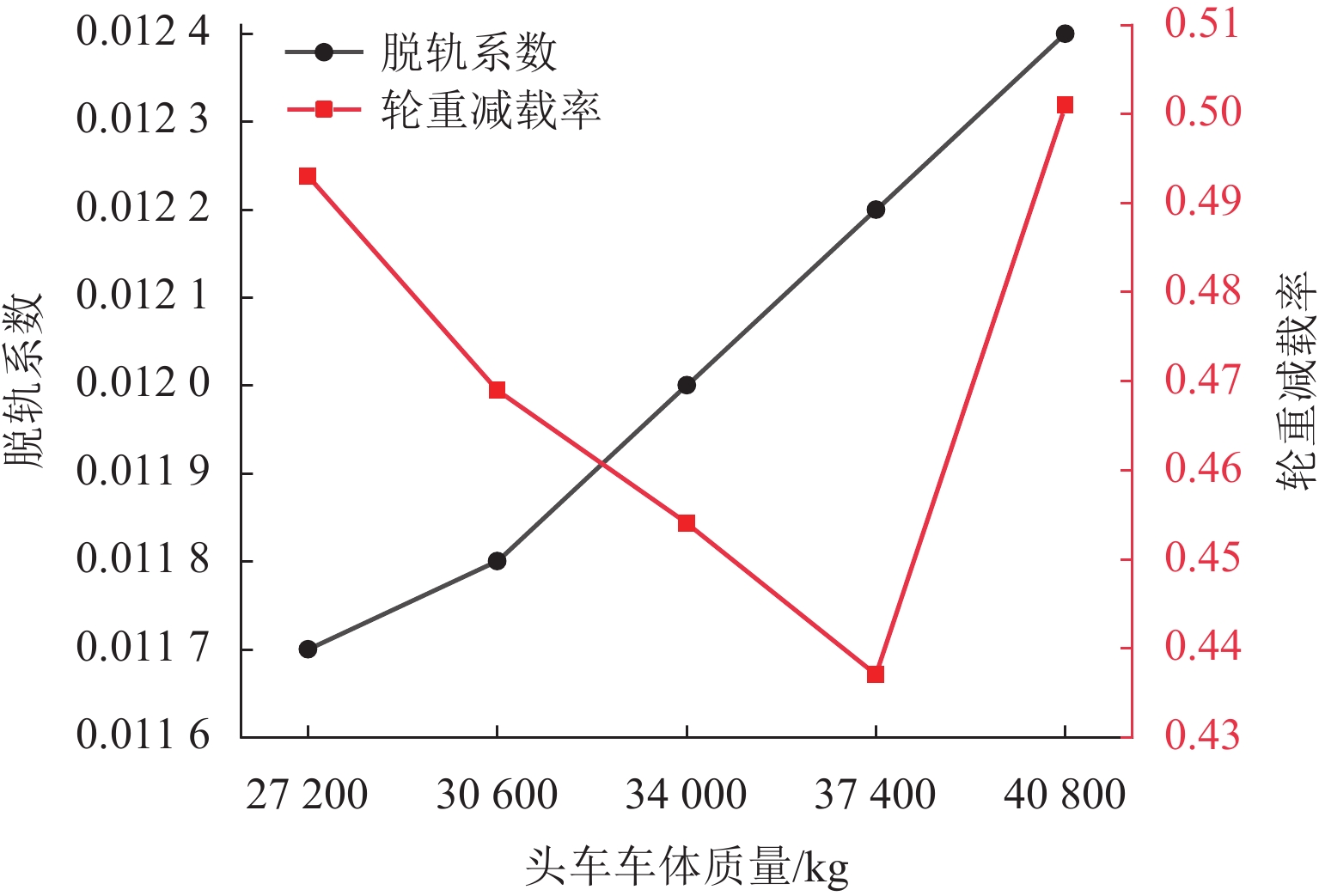
图 10 不同质量下脱轨系数和轮重减载率
Figure 10. Derailment coefficient and wheel load reduction rate under different masses
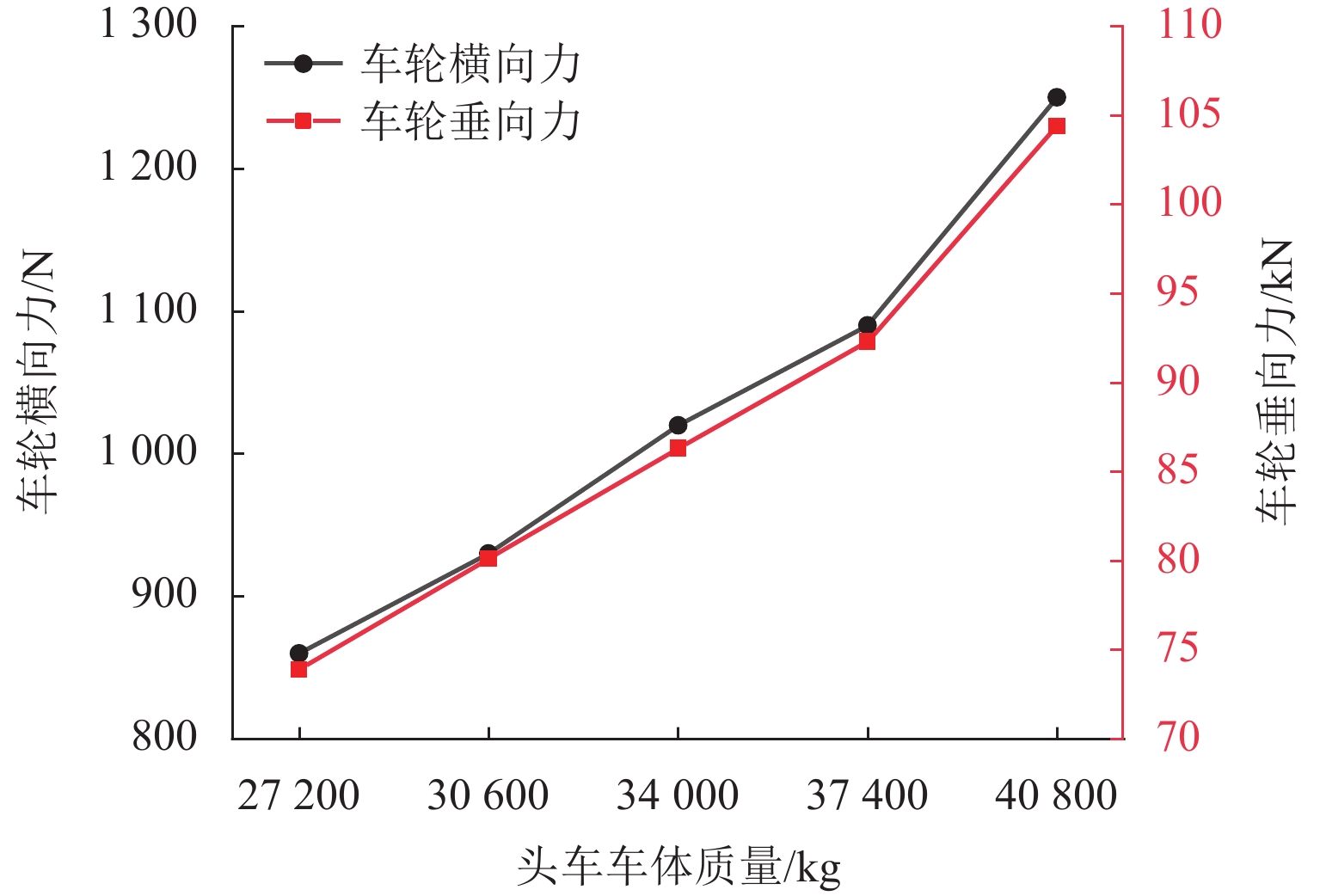
图 11 不同质量下W2右轮轮轨接触力
Figure 11. Wheel–rail contact forces of right wheel of W2 under different masses
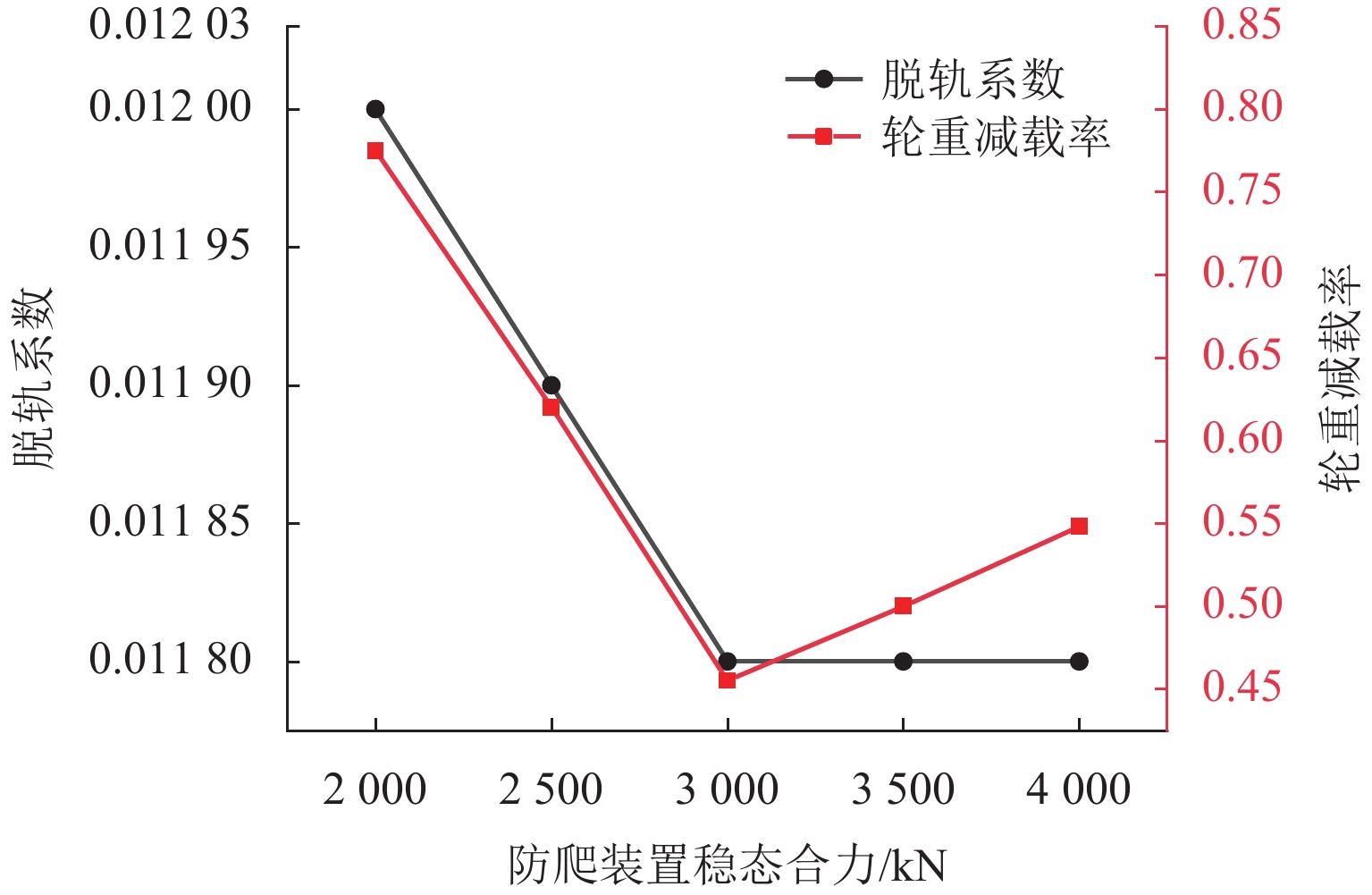
图 13 不同稳态合力下脱轨系数和轮重减载率
Figure 13. Derailment coefficient and wheel load reduction rate under different steady-state resultant forces
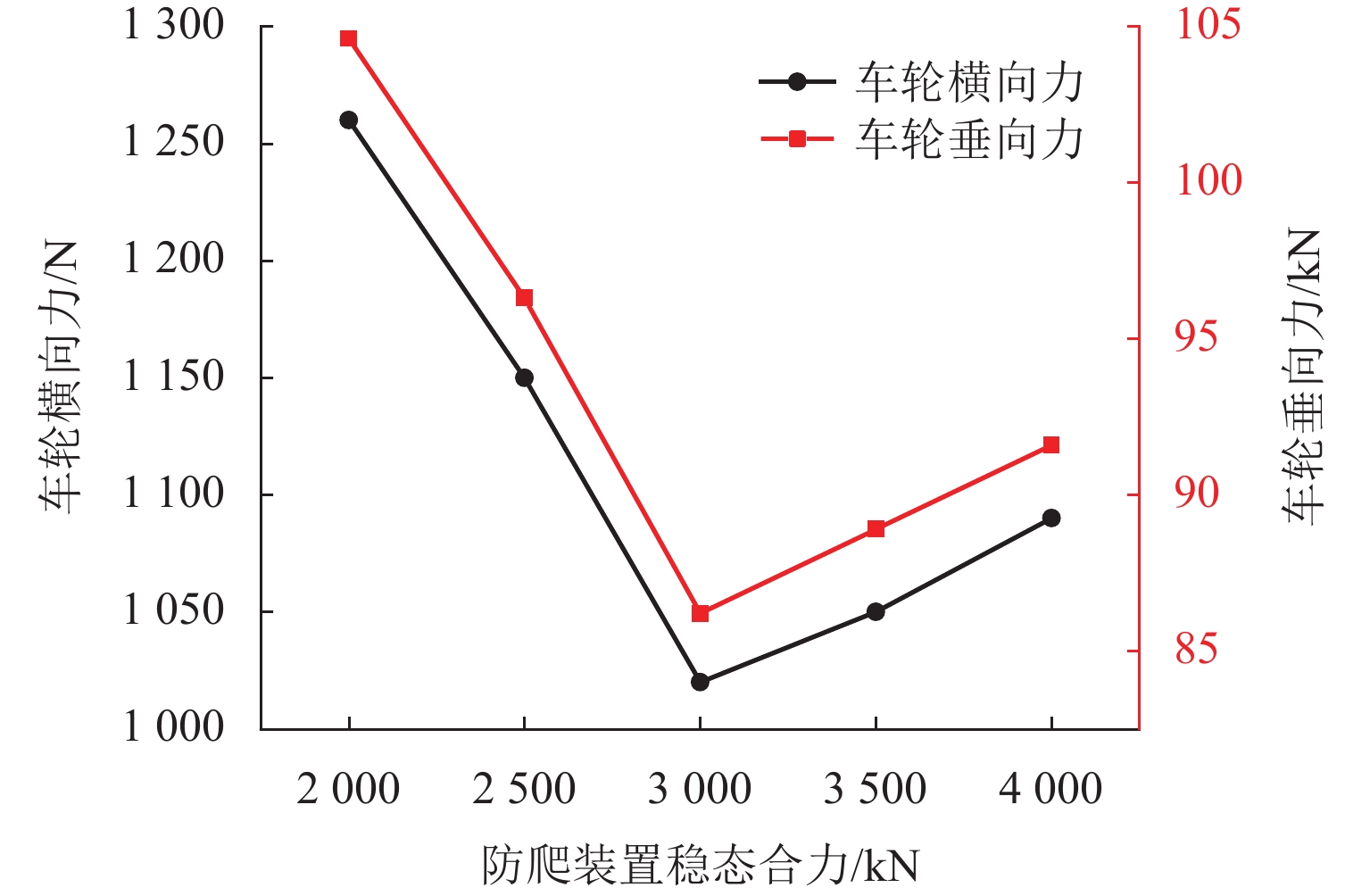
图 14 不同稳态合力下W2右轮轮轨接触力
Figure 14. Wheel–rail contact forces of right wheel of W2 under different steady-state resultant forces
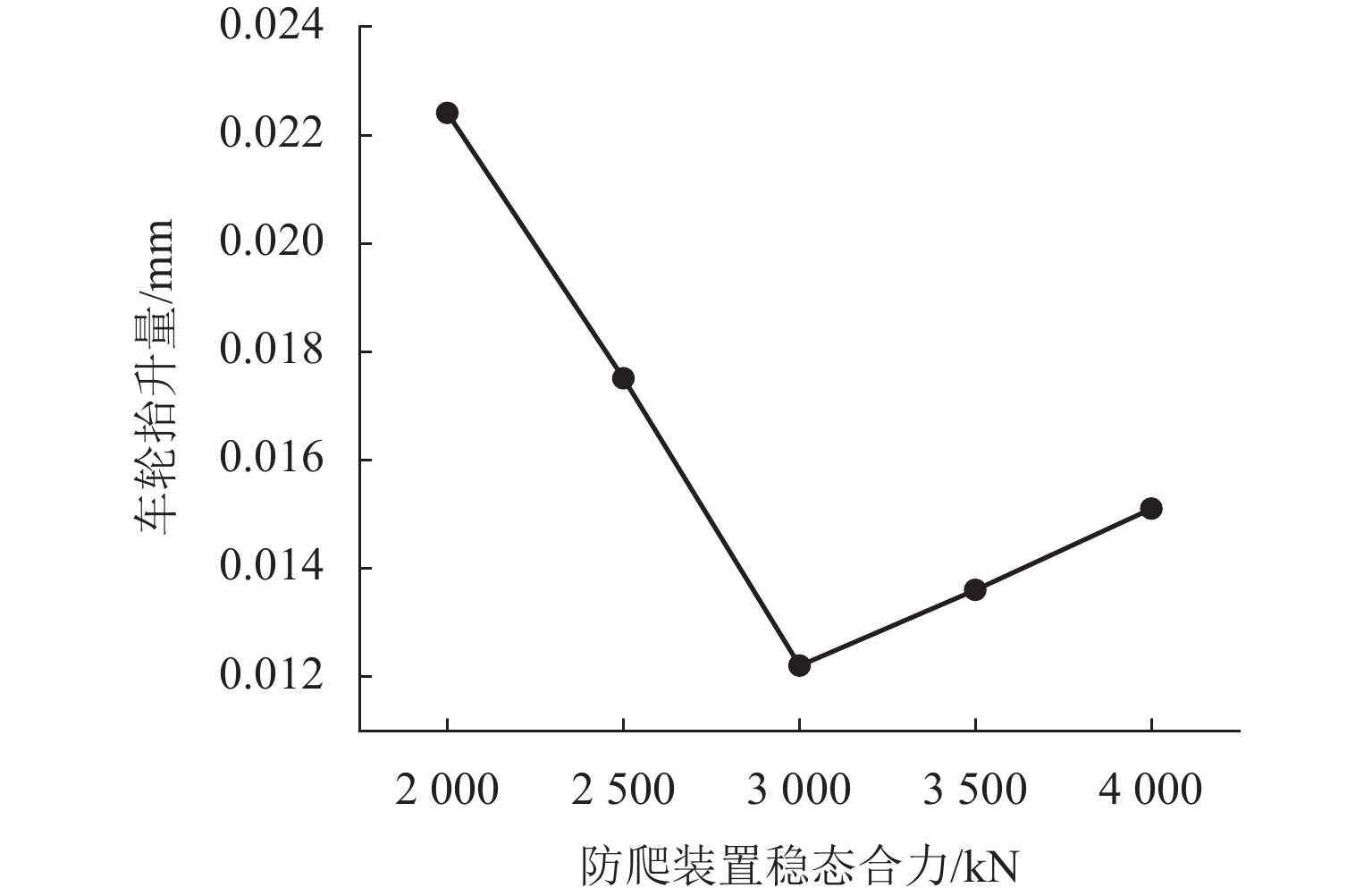
图 15 不同稳态合力下W3右轮车轮抬升量
Figure 15. Wheel lift of right wheel of W3 under different steady-state resultant forces
表 1 修正模型拟合参数
Table 1. Fitting parameters of modified model
参数 数值 f0/kN 150 L0/mm 192 m −2.43 v0/(m•s−1) 0.0047 q 4.2 p 0.25  下载: 导出CSV
表 2 不同速度下修正模型的拟合度
Table 2. Fitting degree of modified model at different speeds
速度/(m•s−1) R2 0.001 0.9612 1 0.9711 2 0.9911 3 0.9948
下载: 导出CSV
表 3 数学模型参数
Table 3. Parameters of mathematical model
装置 参数 数值 车钩缓冲装置 膨胀管行程/mm 200 膨胀管稳态力/kN 1500 气液缓冲器行程/mm 100 吸能装置 防爬装置行程/mm 300 车体压溃时接触刚度/(MN•m−1) 100
下载: 导出CSV
参数 数值 轮对质量/kg 1400 构架质量/kg 3000 车体质量/kg 34000 一系垂向刚度/(MN•m−1) 0.55 一系垂向阻尼/( kN•s m−1) 6 二系纵向刚度/(MN•m−1) 0.15 二系横向刚度/(MN•m−1) 0.15 二系垂向刚度/(MN•m−1) 0.40 二系横向阻尼/( kN•s m−1) 60 二系垂向阻尼/( kN•s m−1) 80
下载: 导出CSV
表 5 头车车体质量范围
Table 5. Range of leading car body mass
百分比/% 80 90 100 110 120 车体质量/kg 27200 30600 34000 37400 40800
下载: 导出CSV
-
[1] 陈搏. 城际铁路4/8编组列车混行信号系统适配方案研究[J]. 铁道通信信号, 2023, 59(12): 67-71.Chen Bo. Research on adaptation scheme of signal system for four-car/eight-car formation EMUs mixed operation of intercity railway[J]. Railway Signalling & Communication, 2023, 59(12): 67-71. [2] 许娇, 吴启凡, 王红伟, 等. 城市轨道交通列车碰撞动力学参数对爬车行为的影响[J]. 城市轨道交通研究, 2024, 27(3): 74-80. doi: 10.16037/j.1007-869x.2024.03.014Xu Jiao, Wu Qifan, Wang Hongwei, et al. Effects of crash dynamic parameters of urban rail transit train on climbing behavior[J]. Urban Mass Transit, 2024, 27(3): 74-80. doi: 10.16037/j.1007-869x.2024.03.014 [3] 丁叁叁. 中国高速列车被动安全技术研究进展及思考[J]. 中南大学学报(自然科学版), 2022, 53(5): 1547-1558.Ding Sansan. Advances and prospect on passive safety technology for Chinese high-speed trains[J]. Journal of Central South University (Science and Technology), 2022, 53(5): 1547-1558. [4] 朱涛, 肖守讷, 杨超, 等. 机车车辆被动安全性研究综述[J]. 铁道学报, 2017, 39(5): 22-32.Zhu Tao, Xiao Shoune, Yang Chao, et al. State-of-the-art development of passive safety of rolling stocks[J]. Journal of the China Railway Society, 2017, 39(5): 22-32. [5] 田红旗, 卢执中. 列车撞击动力学建模研究[J]. 铁道车辆, 1997(4): 10-13. doi: 10.20213/j.cnki.tdcl.1997.04.004Tian Hongqi, Lu Zhizhong. High speed trains modelling study on train impact dynamics[J]. Rolling Stock, 1997(4): 10-13. doi: 10.20213/j.cnki.tdcl.1997.04.004 [6] Koo J S, Choi S Y. Theoretical development of a simplified wheelset model to evaluate collision-induced derailments of rolling stock[J]. Journal of Sound and Vibration, 2012, 331(13): 3172-3198. doi: 10.1016/j.jsv.2012.02.014 [7] Zhou H C, Zhang J M, Hecht M. Three-dimensional derailment analysis of crashed freight trains[J]. Vehicle System Dynamics, 2014, 52(3): 341-361. doi: 10.1080/00423114.2014.881512 [8] 熊力, 沈立伟, 高国燕, 等. 新型高速动车组碰撞仿真分析[J]. 铁道车辆, 2023, 61(6): 16-22.Xiong Li, Shen Liwei, Gao Guoyan, et al. Simulation analysis of the collision of the new type high-speed multiple unit[J]. Rolling Stock, 2023, 61(6): 16-22. [9] 杨超, 李强, 肖守讷. 三维碰撞车辆移动轨道建模与研究[J]. 机械工程学报, 2018, 54(6): 55-61.Yang Chao, Li Qiang, Xiao Shoune. Modelling and investigations of 3D colliding vehicles and moving tracks[J]. Journal of Mechanical Engineering, 2018, 54(6): 55-61. [10] 杨超, 李强, 王曦, 等. 基于车辆-移动轨道耦合模型的列车碰撞爬车行为[J]. 西南交通大学学报, 2019, 54(6): 1298-1304.Yang Chao, Li Qiang, Wang Xi, et al. Overriding behavior in train collisions based on moving vehicle-track coupled model[J]. Journal of Southwest Jiaotong University, 2019, 54(6): 1298-1304. [11] Matsuura A. Simulation for analysing direct derailment limit of running vehicle on oscillating tracks[J]. Doboku Gakkai Ronbunshu, 1998, 1998(591): 19-28. [12] 吴克明, 傅茂海, 赵卫, 等. 地铁列车连挂碰撞仿真及吸能特性分析[J]. 机车电传动, 2014(5): 59-62.Wu Keming, Fu Maohai, Zhao Wei, et al. Simulation of metro vehicle coupling collision and analysis of energy absorption property[J]. Electric Drive for Locomotives, 2014(5): 59-62. [13] Yao S G, Zhu H F, Yan K B, et al. The derailment behaviour and mechanism of a subway train under frontal oblique collisions[J]. International Journal of Crashworthiness, 2021, 26(2): 133-146. [14] 吕锐娟. 地铁列车钩缓装置的碰撞特性及其对列车脱轨行为的影响[D]. 成都: 西南交通大学, 2021: 32-49. [15] 吴启凡. 列车碰撞动力学仿真平台开发及钩缓参数对碰撞性能的影响[D]. 成都: 西南交通大学, 2021: 62-65. [16] 朱涛, 张敬科, 吴启凡, 等. 车钩缓冲装置对轨道列车碰撞安全性的影响综述[J]. 交通运输工程学报, 2021, 21(1): 233-249.Zhu Tao, Zhang Jingke, Wu Qifan, et al. Review on influence of coupler and draft gear on safety of railway train collision[J]. Journal of Traffic and Transportation Engineering, 2021, 21(1): 233-249. [17] 丁浩谞, 郭力荣, 李宗治, 等. 考虑车端接触与车钩失稳的高速列车三维碰撞动力学模型[J]. 西南交通大学学报, 2026, 61(1): 243-252.Ding Haoxu, Guo Lirong, Li Zongzhi, et al. Three-Dimensional Collision Dynamics Model of High-Speed Train Considering Vehicle-End Contact and Coupler Instability[J]. Journal of Southwest Jiaotong University, 2026, 61(1): 243-252. [18] 车全伟, 许平, 王晋乐, 等. 气液-压溃组合式缓冲装置冲击吸能特性实验研究[J]. 铁道学报, 2020, 42(4): 43-51.Che Quanwei, Xu Ping, Wang Jinle, et al. Study on experiments of impact energy absorption characteristics of gas-liquid expanding buffer device[J]. Journal of the China Railway Society, 2020, 42(4): 43-51. [19] Yao S G, Tan B W, Xu P, et al. Experimental and theoretical study on impact characteristic of multiple unit coupler[J]. Thin-Walled Structures, 2019, 145: 106350. [20] 帅纲要, 常明, 何华. 城轨车辆车钩缓冲器的配置与能量吸收[J]. 电力机车与城轨车辆, 2009, 32(5): 17-21.Shuai Gangyao, Chang Ming, He Hua. Coupler and buffer configuration and energy absorption of mass transit vehicles[J]. Electric Locomotives & Mass Transit Vehicles, 2009, 32(5): 17-21. [21] 孙树磊, 李芾, 黄运华, 等. 重载货车摩擦缓冲器动力学模型研究[J]. 铁道学报, 2015, 37(8): 17-23.Sun Shulei, Li Fu, Huang Yunhua, et al. Study on dynamic model of friction draft gear of heavy freight wagon[J]. Journal of the China Railway Society, 2015, 37(8): 17-23. [22] 杨超. 列车碰撞动力学关键问题研究[D]. 成都: 西南交通大学, 2016: 116. [23] 翟婉明. 车辆-轨道耦合动力学[M]. 4版. 北京: 科学出版社, 2015: 514. [24] GB/T 5599—2019: 机车车辆动力学性能评定及试验鉴定规范[S]. [25] GB/T 44511—2024: 城市轨道交通车辆耐撞性要求及验证[S]. -

 下载:
下载:

 点击查看大图
计量
- 文章访问数: 1
- HTML全文浏览量: 0
- PDF下载量: 0
- 被引次数: 0