



Dynamic Characteristics and Parameter Selection of Two-Span Continuous Beam Bridges Under Superconducting Electrodynamic Suspension Train Loads
-
摘要:
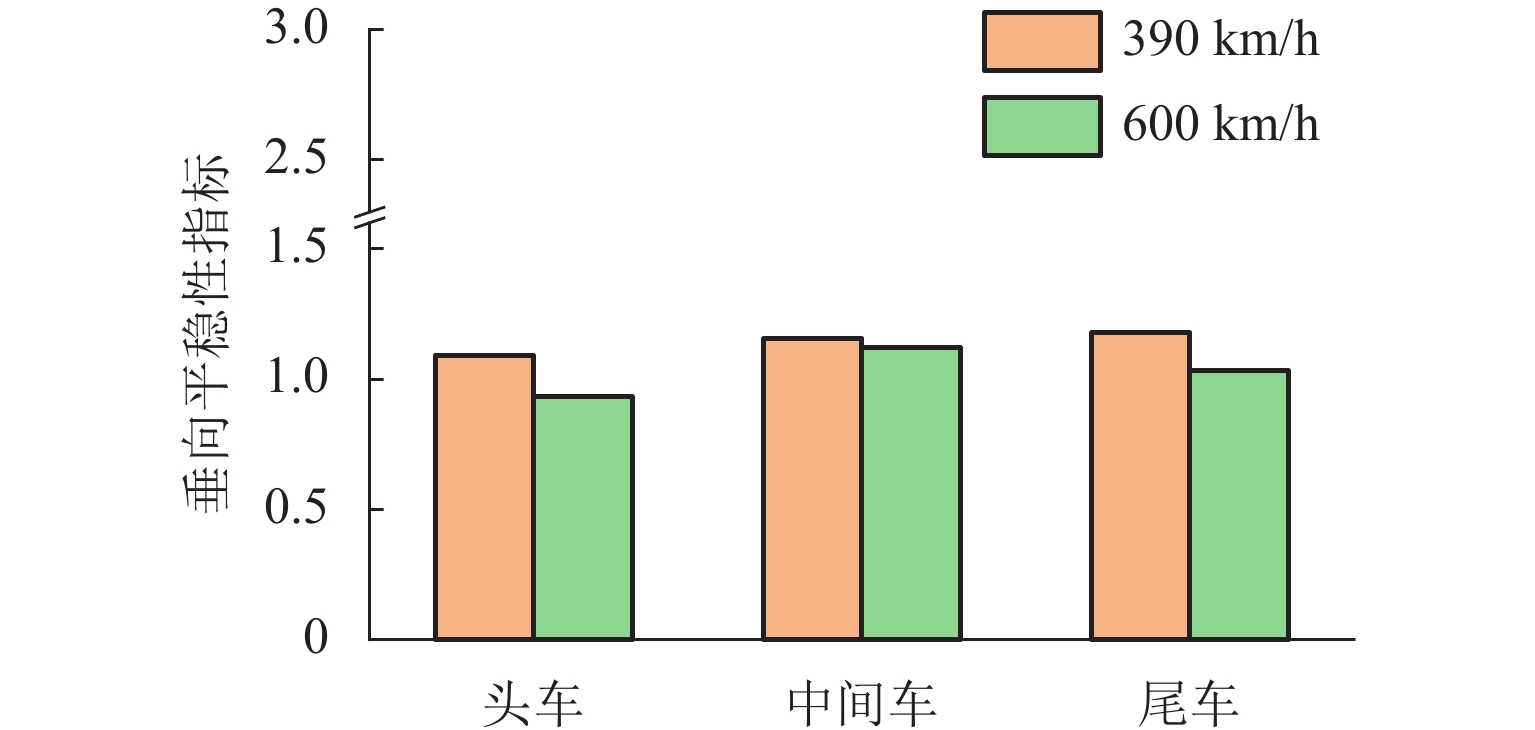
针对超导电动悬浮列车与连续梁桥耦合动力作用研究相对不足的问题,建立超导电动悬浮列车-双跨连续梁桥耦合动力学模型,分析桥梁跨径与列车编组对连续梁动力响应的影响规律,并基于动力系数开展连续梁桥的参数选取,在此基础上计算车桥耦合振动响应. 研究结果表明:桥梁动力响应受列车编组的影响程度取决于桥梁跨径与车辆定距的比值,比值接近1.5时,桥梁抑振效应明显,比值高于1.5时,虽存在一阶共振,但超谐共振响应小且对编组数量不敏感,比值低于1.5时,共振能量随编组增加显著累积,车桥匹配性差;基于动力系数限值的参数分析表明,双跨连续梁在超谐共振控制方面略优于同等跨径简支梁;在0~600 km/h速度范围内,连续梁允许采用更低的基频下限,意味着在满足动力学安全的前提下可降低结构刚度需求,提高经济性;在选定桥梁参数下的车桥耦合振动分析中,列车垂向平稳性指标均稳定在“优”级限值范围内,其中,中间车因满足抑振匹配条件,共振速度下动力响应变化极小.
Abstract:To address the relatively limited research on the coupled dynamic interaction between superconducting electrodynamic suspension trains and continuous beam bridges, a coupled dynamic model of a superconducting electrodynamic suspension train and a two-span continuous beam bridge was established. The effects of bridge span and train marshalling on the dynamic response of the continuous beam were analyzed, and the parameters of the continuous beam bridge were selected based on the dynamic amplification factor. On this basis, the coupled vibration responses of the train-bridge system were calculated. The results indicate that the influence of train marshalling on the dynamic response of the bridge depends on the ratio of the bridge span to the vehicle spacing. When the ratio approaches 1.5, a significant vibration suppression effect of the bridge is observed. When the ratio is higher than 1.5, although primary resonance occurs, the superharmonic resonance response is small and insensitive to the number of train marshalling. When the ratio is lower than 1.5, the resonance energy accumulates significantly with the increase in train marshalling, resulting in poor train-bridge matching. Parametric analysis based on the limit of the dynamic amplification factor shows that the two-span continuous beam is slightly superior to a simply supported beam with the same span in terms of superharmonic resonance control. Within the speed range of 0–600 km/h, the continuous beam allows for a lower limit of the fundamental frequency, indicating that structural stiffness requirements can be reduced while satisfying dynamic safety, thereby improving economic efficiency. In the coupled train-bridge vibration analysis under the selected bridge parameters, the Sperling ride index of all vehicles consistently remains within the “excellent” limit. Notably, because the intermediate vehicles satisfy the vibration suppression matching conditions, the change in dynamic response at the resonance speed is minimal.
-
Key words:
- continuous beam /
- magnetic levitation train /
- dynamics /
- train-bridge coupling
-
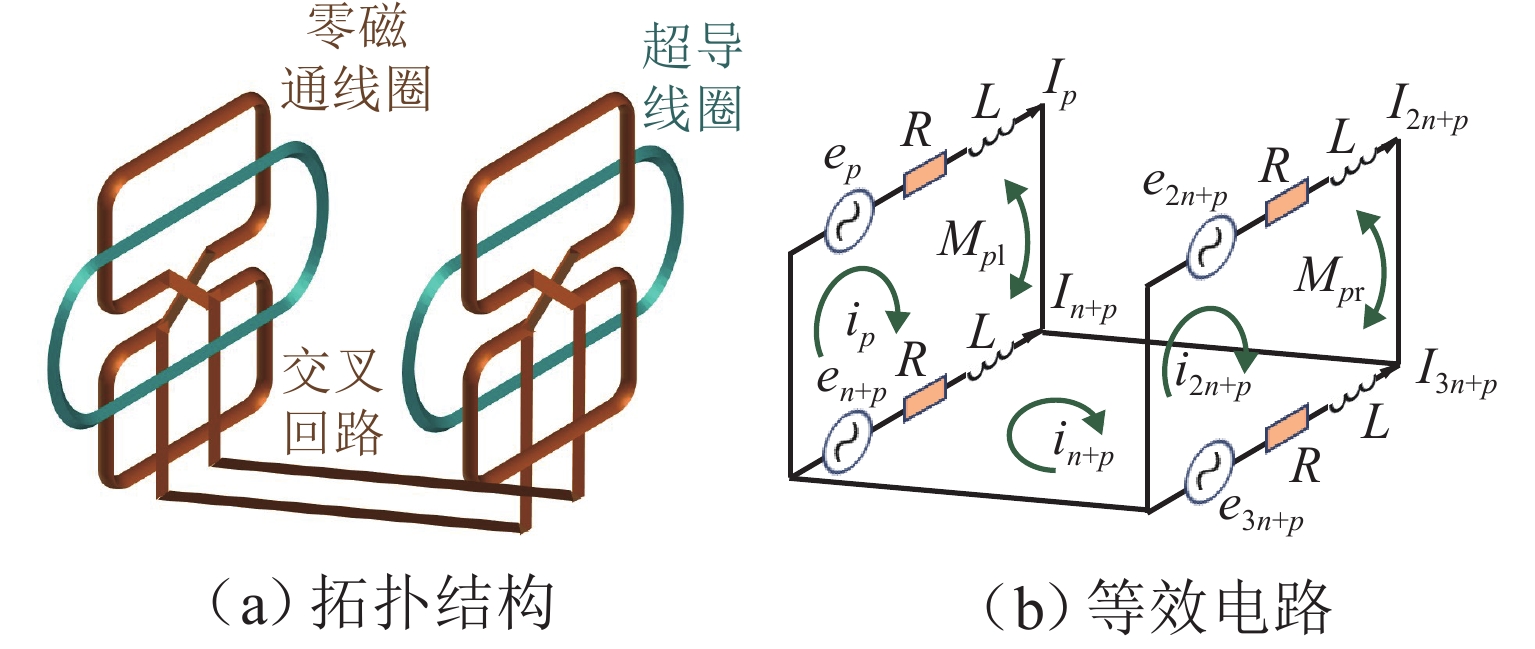
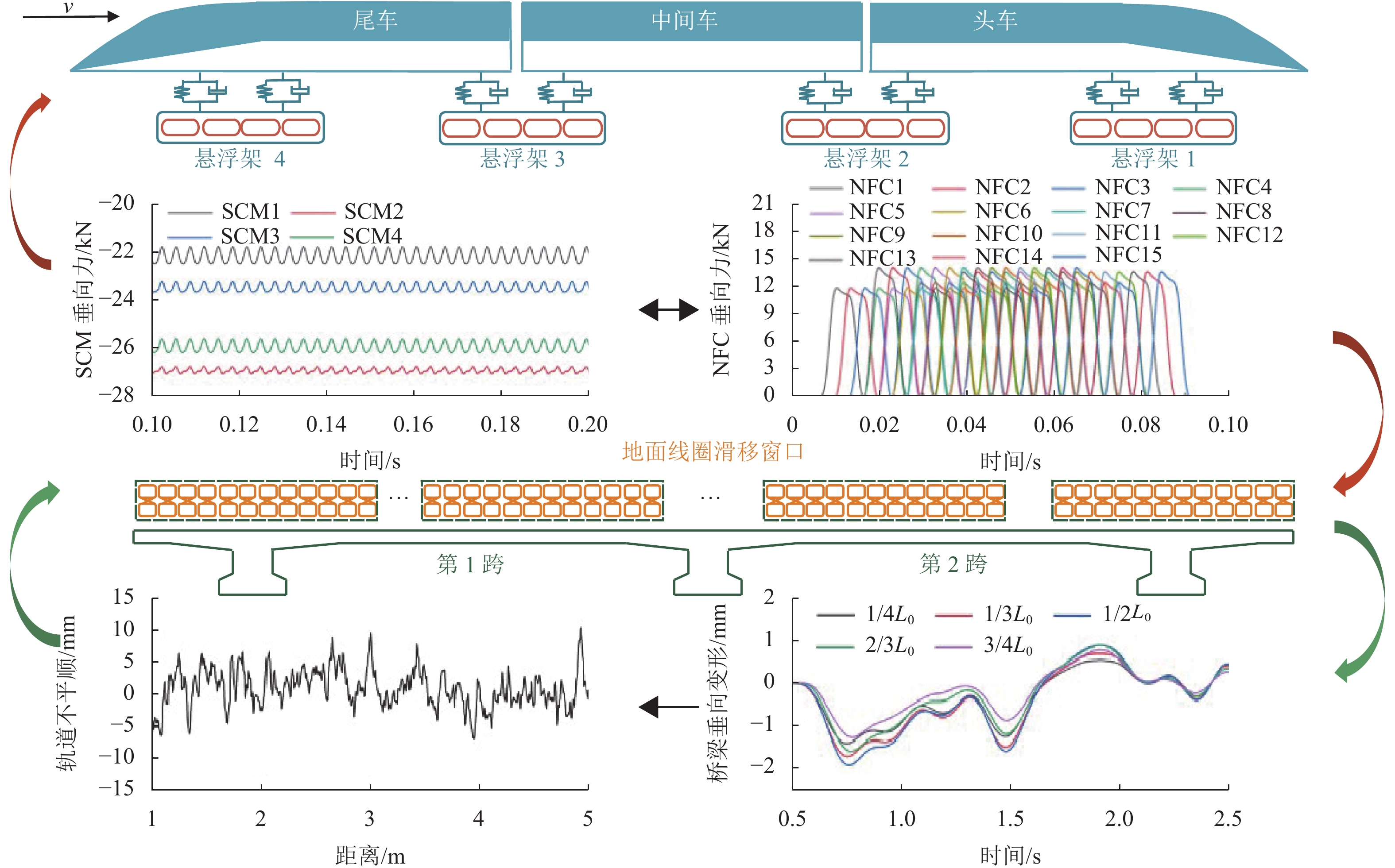
图 1 超导电动悬浮系统拓扑结构及等效电路
Figure 1. Topological structure and equivalent circuit of superconducting electrodynamic suspension system
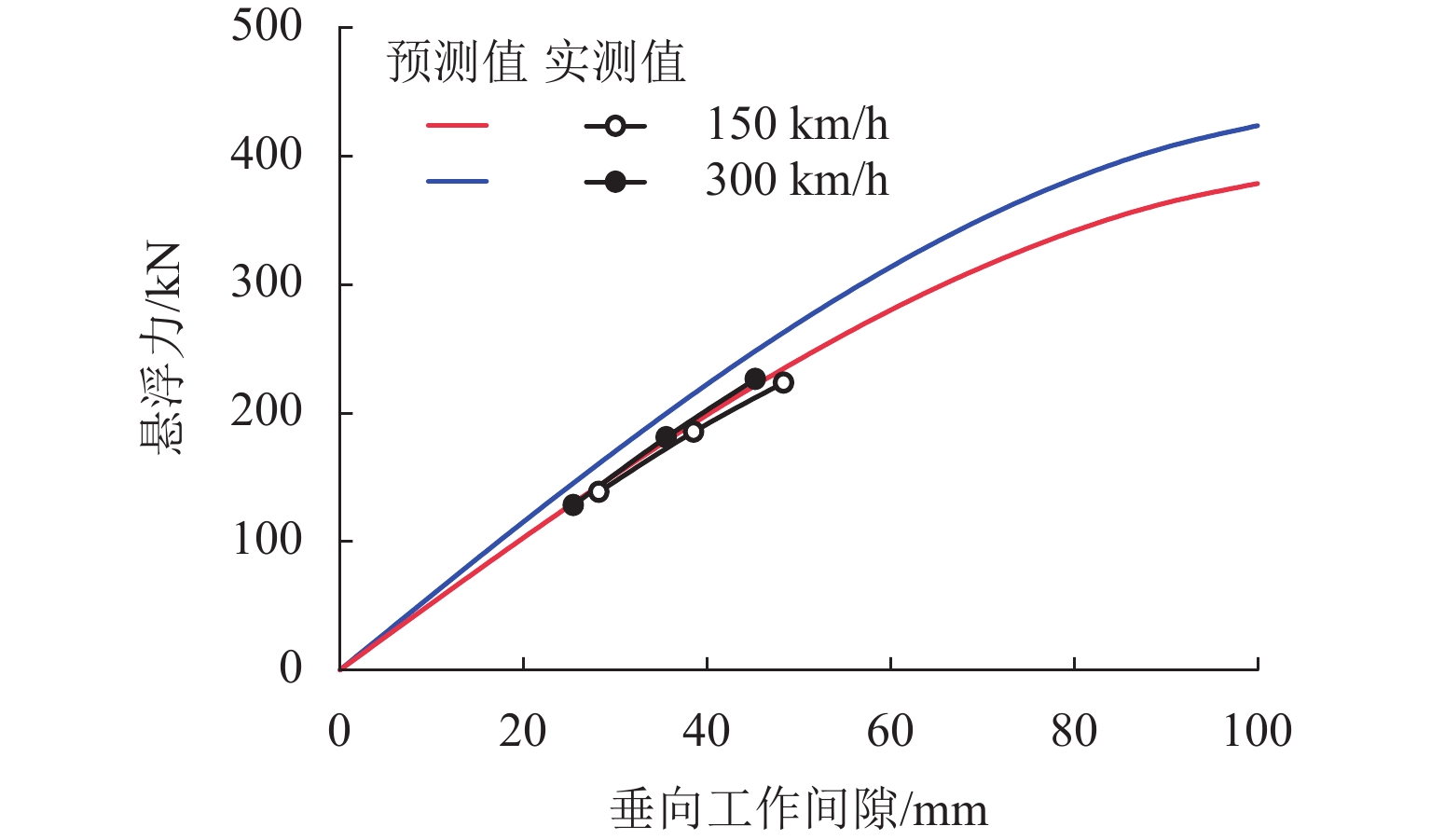
图 2 悬浮力数值模拟预测值与文献实测值对比
Figure 2. Comparison of numerically predicted values of levitation force and measured values from literature
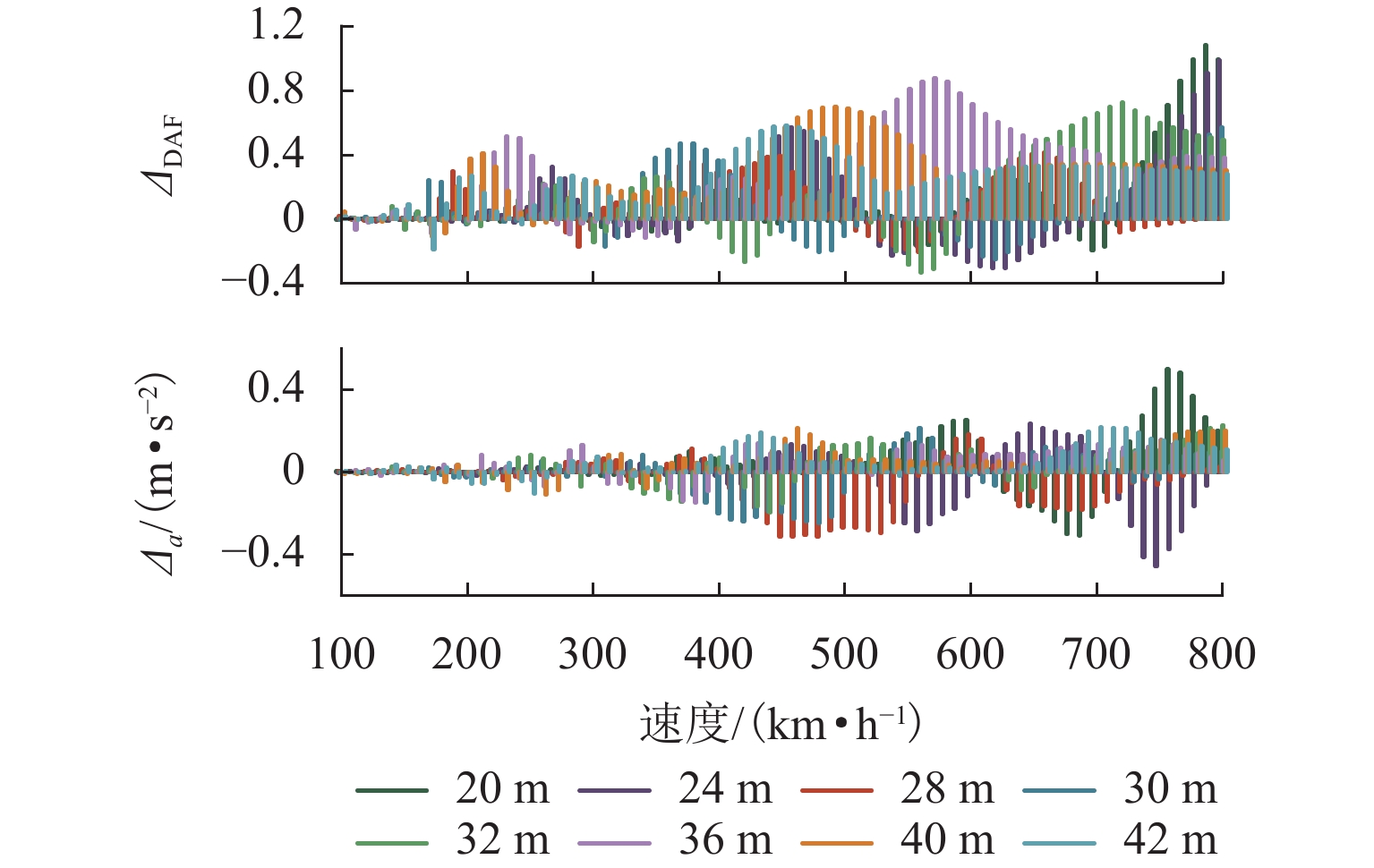
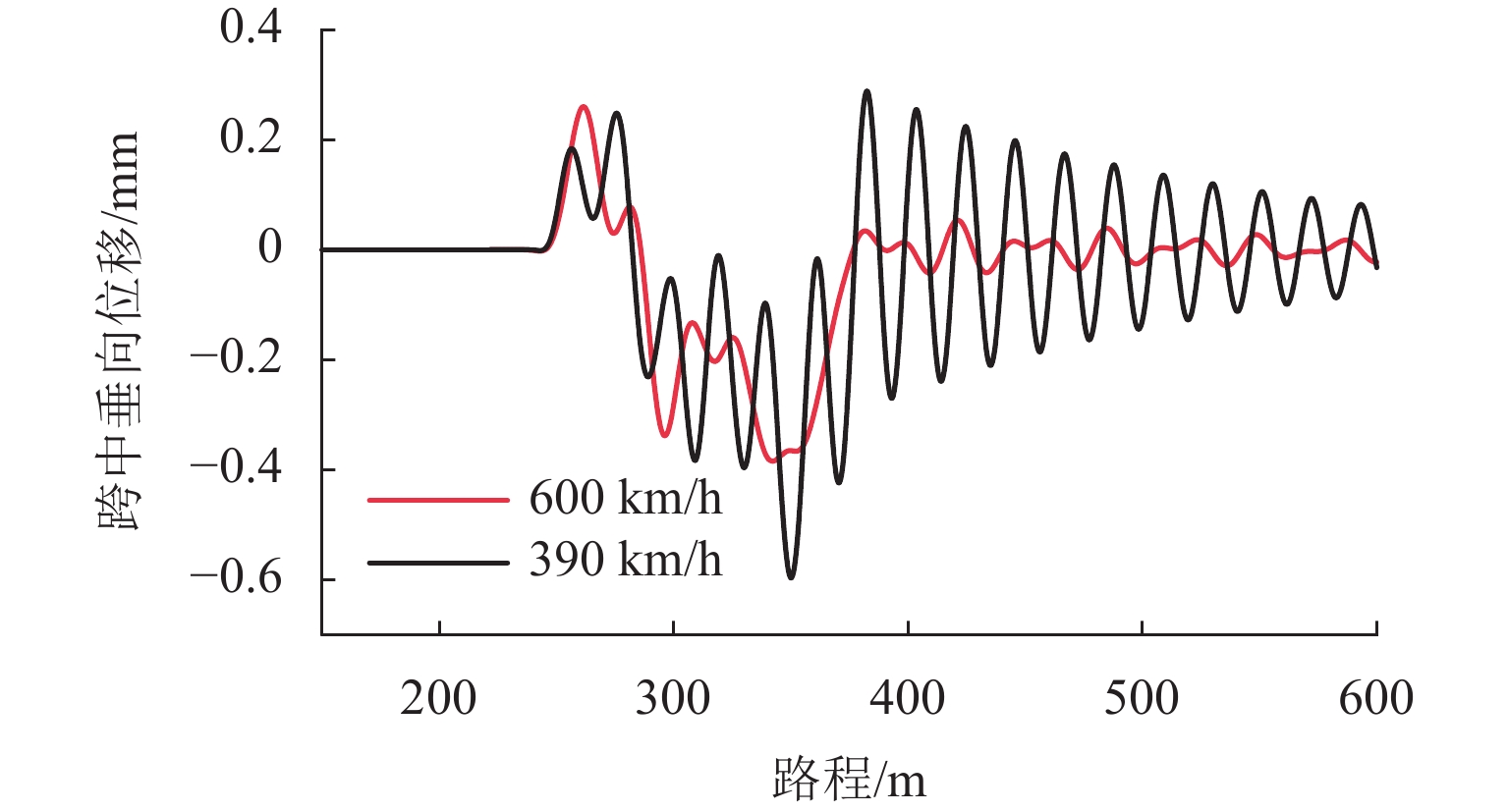
图 5 先行跨与后行跨动力响应差值对比
Figure 5. Comparison of dynamic response differences between leading span and trailing span
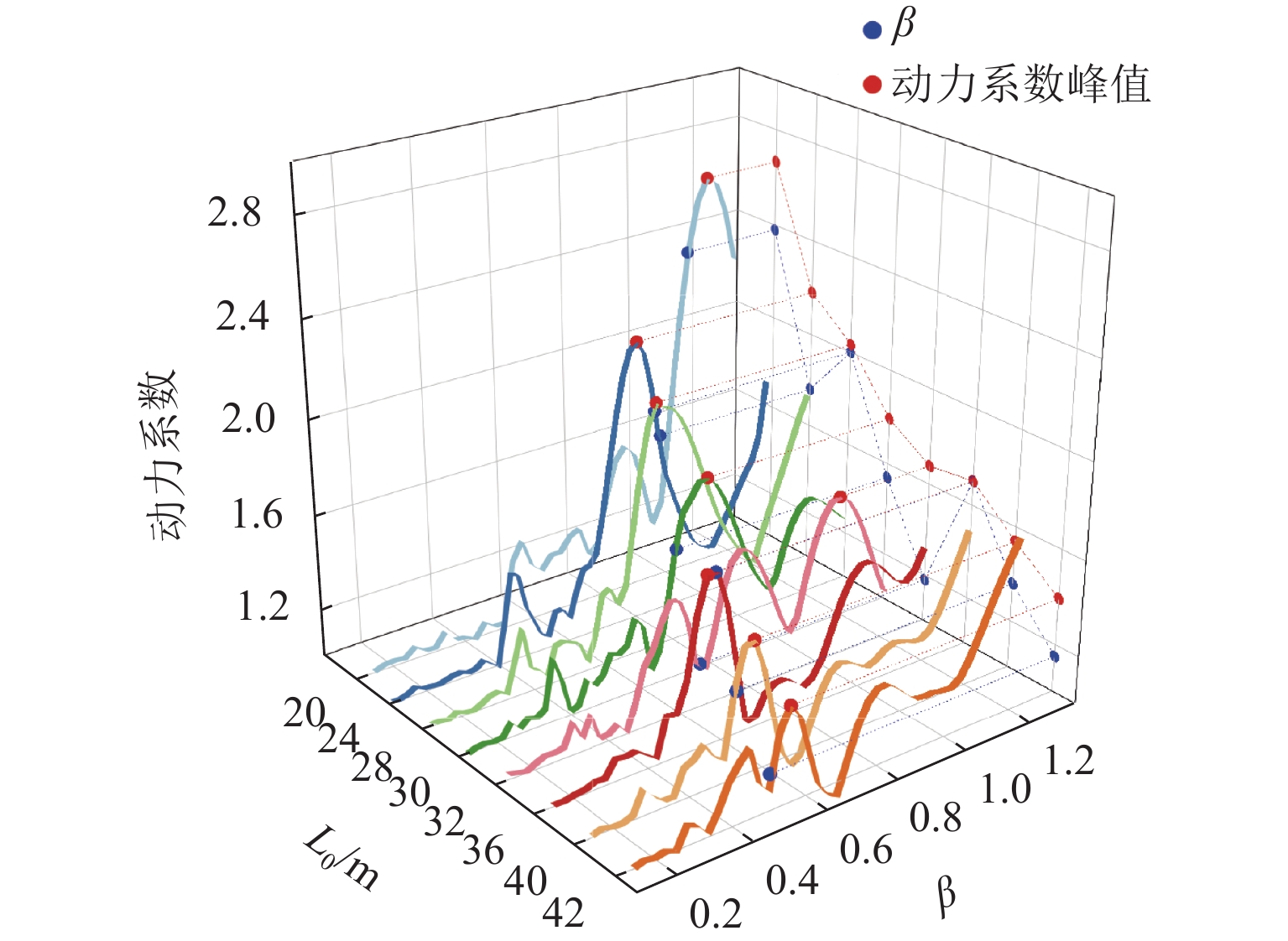
图 6 不同跨径下动力系数随β变化规律
Figure 6. Variation of dynamic amplification factor with β under different spans
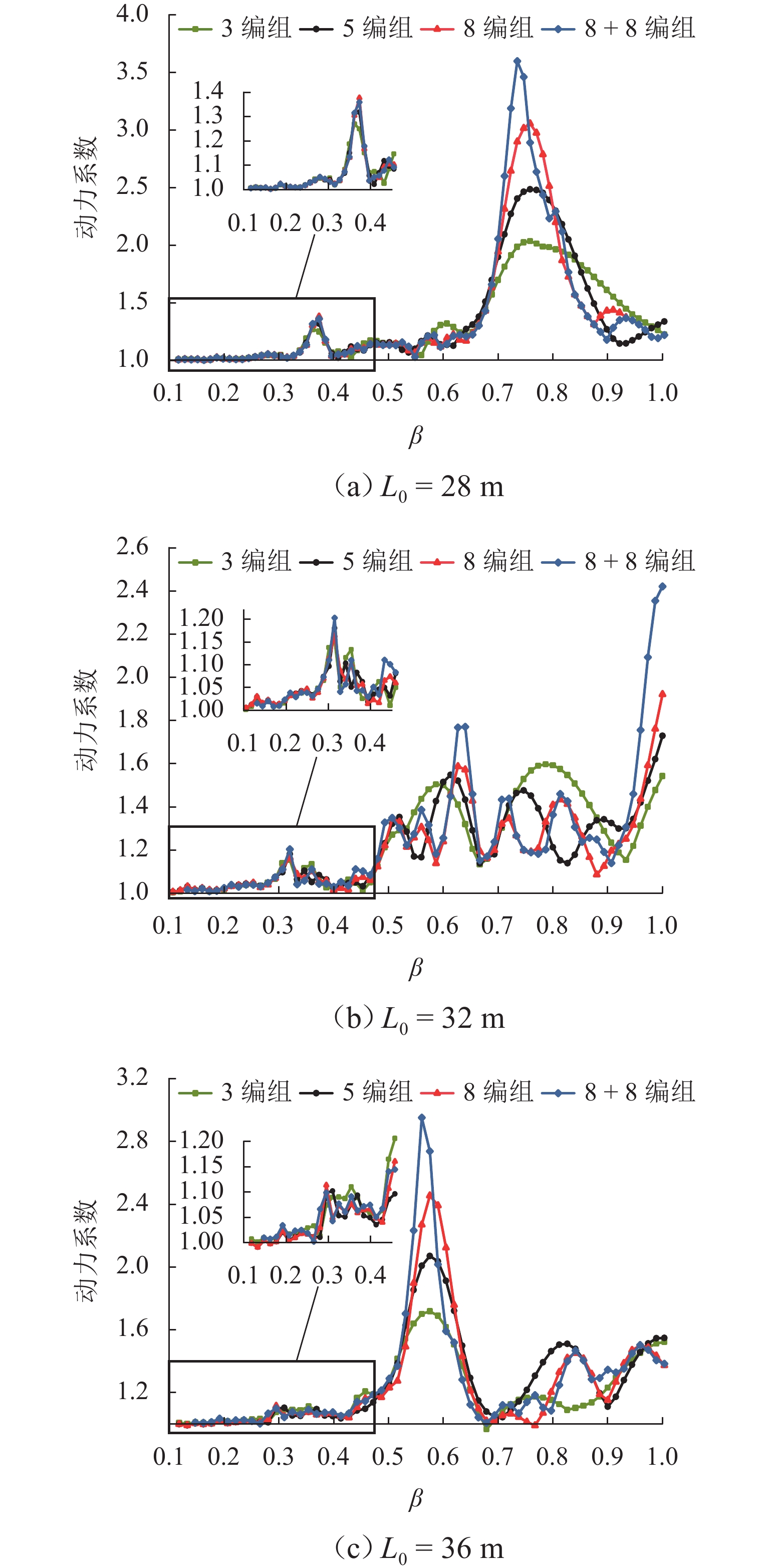
图 7 不同编组下的桥梁动力响应
Figure 7. Dynamic responses of bridge under different train marshalling
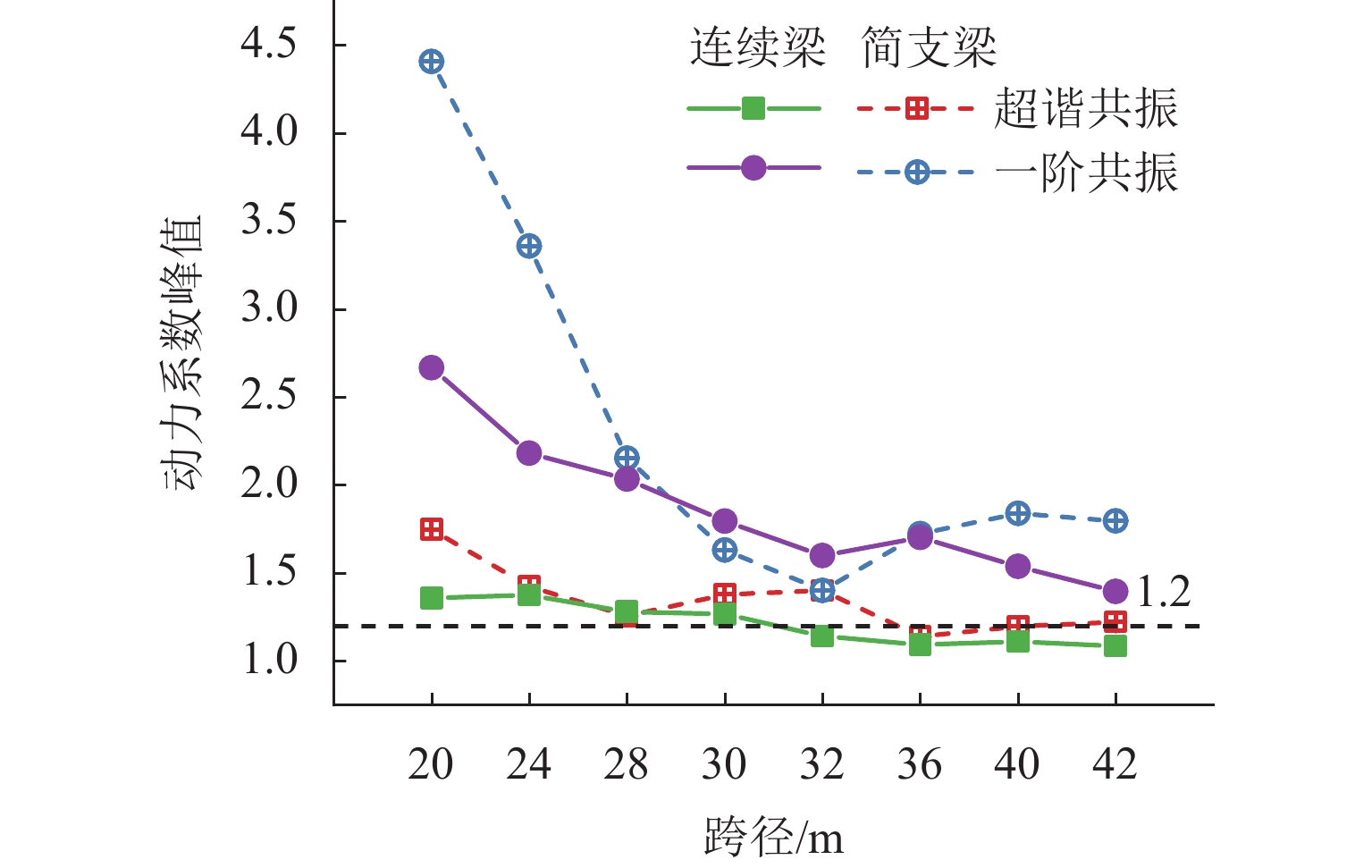
图 8 连续梁、简支梁共振对应动力系数峰值
Figure 8. Peak values of dynamic amplification factor corresponding to resonance for continuous beam and simply supported beam
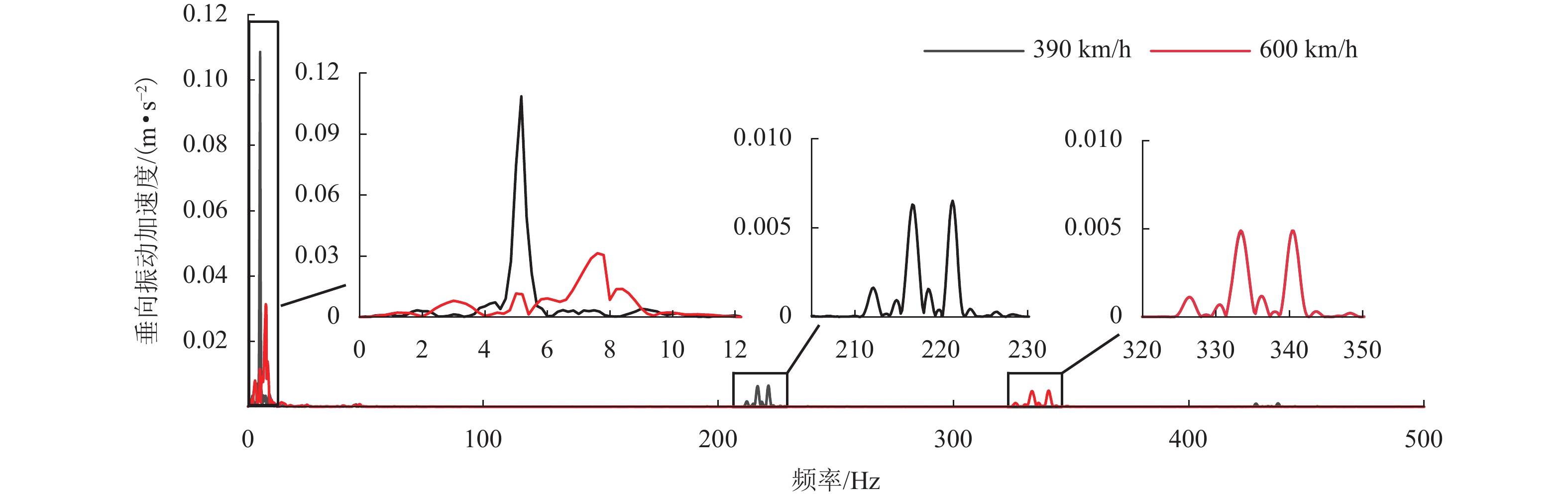
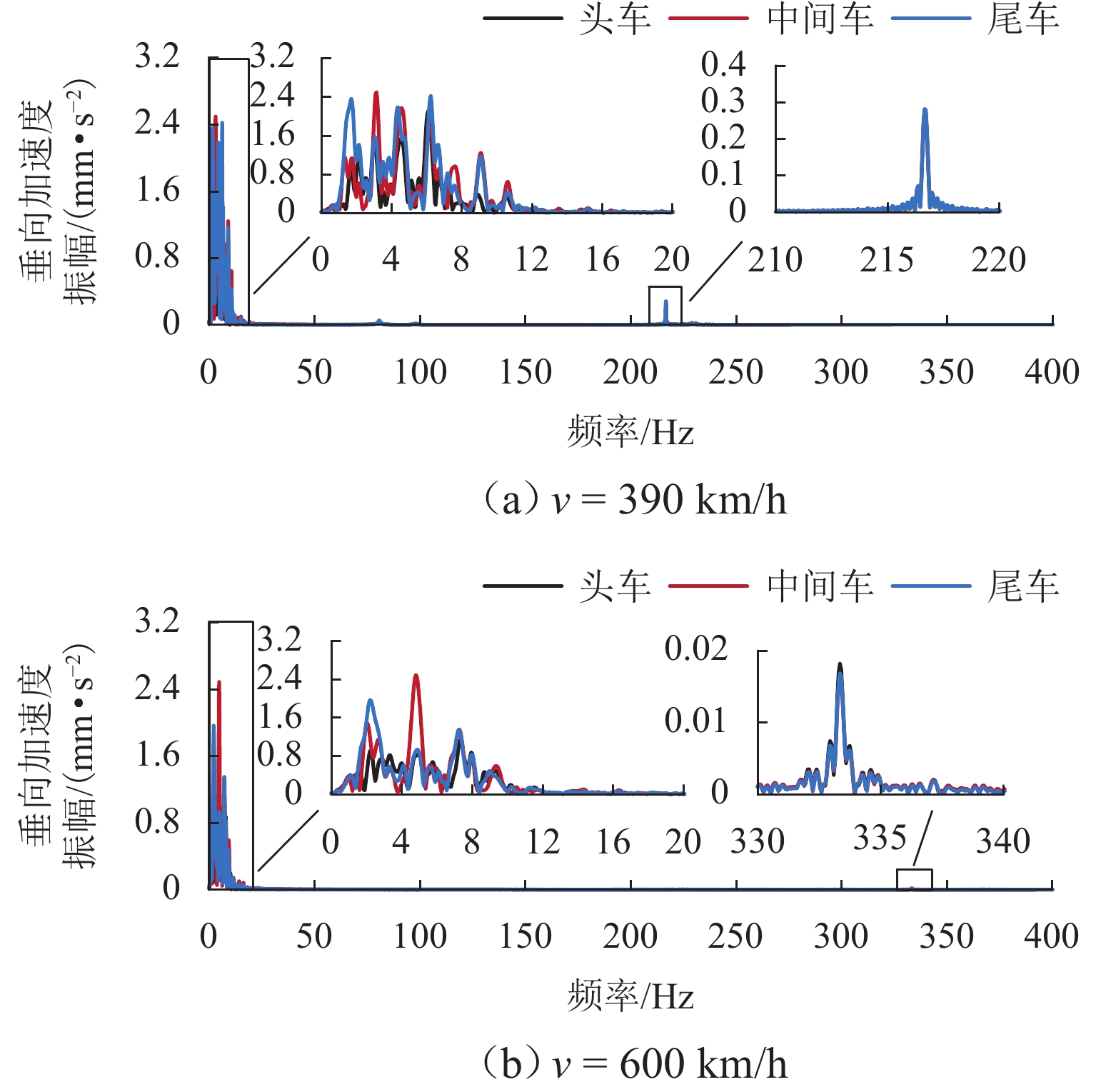
图 10 连续梁跨中加速度频域响应
Figure 10. Frequency-domain acceleration response at mid-span of continuous beam
表 1 桥梁跨径及侧壁梁单元长度
Table 1. Bridge span and side wall element length
跨径/m 20 24 28 30 侧壁梁长度/m 10 8、12 14 10 跨径/m 32 36 40 42 侧壁梁长度/m 8 6、12 8、10 14  下载: 导出CSV
表 2 桥梁材料属性
Table 2. Material properties of bridge
参数名称 弹性模量/Pa 密度/(kg•m−3) 阻尼比 数值 3.45 × 10¹⁰ 2.5 × 10³ 0.02
下载: 导出CSV
表 3 超导电动悬浮列车参数
Table 3. Parameters of superconducting electrodynamic suspension train
参数名称 头、尾车车体质量/t 中间车车体质量/t 悬浮架质量/t 头、尾车悬浮架定距/m 中间车悬浮架定距/m 超导线圈极距/m 超导线圈磁动势/ kA 额定悬浮间隙/mm 数值 22、22 19.5 7.8 21、21 24 1.5 750 45
下载: 导出CSV
表 4 超导电动磁浮列车垂向模态及频率
Table 4. Vertical modal and frequencies of superconducting electrodynamic maglev train
模态 头尾车点头、中间车浮沉 三车体
点头三车体
浮沉头尾车浮沉、中间车点头 构架点头 构架浮沉 超导磁体框架浮沉 超导磁体框架点头 振动频率/Hz 1.06、2.12 1.22、2.24 1.28 1.99 6.33、7.00、8.28 7.51 7.73、7.91、7.95 8.09、8.30、8.44
下载: 导出CSV
表 5 桥梁基频下限
Table 5. Lower limits of fundamental frequency of bridge
Hz 速度 600 km/h 范围内动力
系数峰值连续梁基频下限 简支梁基频下限 32 m 36 m 40 m 42 m 36 m 40 m 1.2 10.99 9.53 9.79 9.75 10.47 10.45 1.3 9.99 9.20 8.12 7.60 9.99 9.85 1.4 9.62 8.99 7.95 3.61 9.53 9.51 1.5 9.21 8.78 7.69 3.51 9.23 9.26 1.6 5.16 8.56 5.21 3.41 8.96 9.02 1.7 3.87 3.86 3.58 3.31 8.59 8.74 1.8 3.82 3.66 3.51 3.18 8.40 1.9 3.77 3.59 3.43 2.0 3.72 3.51 3.34
下载: 导出CSV
-
[1] Uno M. Chuo shinkansen project using superconducting maglev system[J]. Japan Railway & Transport Review, 2016, 68: 14-25. [2] 刘士苋, 王磊, 王路忠, 等. 电动悬浮列车及车载超导磁体研究综述[J]. 西南交通大学学报, 2023, 58(4): 734-753.Liu Shixian, Wang Lei, Wang Luzhong, et al. Review on electrodynamic suspension trains and on-board superconducting magnets[J]. Journal of Southwest Jiaotong University, 2023, 58(4): 734-753. [3] 于青松, 李凯, 胡浩, 等. 超导电动悬浮应用研究与技术展望[J]. 机车电传动, 2023(4): 1-8. doi: 10.13890/j.issn.1000-128X.2023.04.001Yu Qingsong, Li Kai, Hu Hao, et al. Research and technological prospects of applications for superconducting electrodynamic suspension[J]. Electric Drive for Locomotives, 2023(4): 1-8. doi: 10.13890/j.issn.1000-128X.2023.04.001 [4] 赵春发, 李煜寒, 彭也也, 等. 超导电动悬浮列车明线气动特性及其对悬浮状态的影响[J]. 西南交通大学学报, 2025, 60(4): 790, 793-802.Zhao Chunfa, Li Yuhan, Peng Yeye, et al. Aerodynamic characteristics of open wire of superconducting maglev train and its influence on levitation state[J]. Journal of Southwest Jiaotong University[J], 2025, 60(4): 790, 793-802. [5] 张榕欣, 蔡小培, 汤雪扬, 等. 超导电动磁浮道岔线形设计与侧向过岔速度优化[J]. 西南交通大学学报, 2025, 60(4): 893-903. doi: 10.3969/j.issn.0258-2724.20240421Zhang Rongxin, Cai Xiaopei, Tang Xueyang, et al. Alignment design of superconducting electrodynamic suspension turnouts and optimization of lateral crossing speed[J]. Journal of Southwest Jiaotong University, 2025, 60(4): 893-903. doi: 10.3969/j.issn.0258-2724.20240421 [6] Zhai W, Han Z, Chen Z, et al. Train–track–bridge dynamic interaction: a state-of-the-art review[J]. Vehicle System Dynamics, 2019, 57(7): 984-1027. doi: 10.1080/00423114.2019.1605085 [7] 赵春发, 冯洋, 翟婉明. 面向列车稳定舒适运行的磁浮交通车线动力学参数匹配设计[J]. 前瞻科技, 2023, 2(4): 49-60.Zhao Chunfa, Feng Yang, Zhai Wanming. Matching design of train and line dynamics parameters of maglev transportation oriented toward stable and comfortable train running[J]. Science and Technology, 2023, 2(4): 49-60. [8] 熊嘉阳, 邓自刚. 高速磁悬浮轨道交通研究进展[J]. 交通运输工程学报, 2021, 21(1): 177-198.Xiong Jiayang, Deng Zigang. Research progress of high-speed maglev rail transit[J]. Journal of Traffic and Transportation Engineering, 2021, 21(1): 177-198. [9] 马光同, 杨文姣, 王志涛, 等. 超导磁浮交通研究进展[J]. 华南理工大学学报(自然科学版), 2019, 47(7): 68-74, 82.Ma Guangtong, Yang Wenjiao, Wang Zhitao, et al. Research development of superconducting maglev transportation[J]. Journal of South China University of Technology (Natural Science Edition), 2019, 47(7): 68-74, 82. [10] 邓自刚, 刘宗鑫, 李海涛, 等. 磁悬浮列车发展现状与展望[J]. 西南交通大学学报, 2022, 57(3): 455-474, 530.Deng Zigang, Liu Zongxin, Li Haitao, et al. Development status and prospect of maglev train[J]. Journal of Southwest Jiaotong University, 2022, 57(3): 455-474, 530. [11] 周丹峰, 朱鹏翔, 屈鸣鹤, 等. 桥梁参数对磁浮系统车-桥耦合稳定性的影响[J]. 西南交通大学学报, 2025, 60(4): 823-832. doi: 10.3969/j.issn.0258-2724.20240381Zhou Danfeng, Zhu Pengxiang, Qu Minghe, et al. Influence of bridge parameters on vehicle-bridge coupling stability of maglev system[J]. Journal of Southwest Jiaotong University, 2025, 60(4): 823-832. doi: 10.3969/j.issn.0258-2724.20240381 [12] NAGASHIMA K. Research and development concerning superconducting maglev and research on applying its technology to the conventional railway system[J]. Quarterly Report of RTRI, 2015, 56(2): 86-90. [13] Takahashi K. A preliminary study of vehicle dynamics in a long train set formation for superconducting Maglev System[C]//2008 International Symposium on Power Electronics, Electrical Drives, Automation and Motion. Ischia: IEEE, 2008: 1013-1016. [14] Fujiwara S, Fujimoto T. Characteristics of the combined levitation and guidance system using ground coils on the side wall of the guideway[C]//Proceedings of 11th International Conference on Magnetically Levitated Systems and Linear Drives (Maglev’89), Yokohama: [s.n.], 1989: 241-244. [15] Sogabe M, Matsumoto N, Tanabe M, et al. Response prediction and vibration reduction of dynamic interaction between superconducting maglev vehicles and guideway structures[J]. Journal of Japan Society of Civil Engineers, 2003, 731: 119-134. [16] Uno M, Nagaosa T, Fujino Y, et al. Field measurement result and future prediction of ground vibration levels along the ultra high speed railway[J]. Journal of Japan Society of Civil Engineers, Ser. A1 (Structural Engineering & Earthquake Engineering (SE/EE)), 2012, 68(1): 151-166. [17] Mun J, Lee C, Lee C, et al. An experimental study on the dynamic resistance of HTS coil during quasi-persistent current operation under external harmonic magnetic field[J]. IEEE Transactions on Applied Superconductivity, 2024, 34(5): 8200505. doi: 10.1109/tasc.2024.3374263 [18] Mun J, Lee C, Choi J, et al. Analysis for AC loss by electromagnetic disturbance in HTS magnet for maglev train[J]. IEEE Transactions on Applied Superconductivity, 2023, 33(5): 5901305. doi: 10.1109/tasc.2023.3253827 [19] Mun J, Lee C, Lee C, et al. Thermal and electromagnetic performance evaluation of REBCO magnet with solid nitrogen thermal battery for maglev train[J]. IEEE Transactions on Applied Superconductivity, 2021, 31(5): 3601405. doi: 10.1109/tasc.2021.3060692 [20] Feng P J, Ma G T, Su Z H, et al. Dynamic modeling and analysis of vehicle–track–bridge coupled system for superconducting EDS train[J]. IEEE Transactions on Transportation Electrification, 2024, 11(1): 4157-4168. [21] Liu Z X, Li H T, Huang H, et al. Vertical resonance simulation of superconducting electrodynamic suspension train/bridge coupled system[J]. IEEE Transactions on Applied Superconductivity, 2023, 33(6): 3601509. doi: 10.1109/tasc.2023.3257881 [22] Ning X F, Zhao C F, Yu Q S, et al. Suspension and guidance performance of a new superconducting EDS system using the 8-shaped ground coils with nonequal turns[J]. IEEE Transactions on Applied Superconductivity, 2024, 34(4): 3601511. doi: 10.1109/tasc.2024.3371469 [23] 刘晶波, 杜修力. 结构动力学[M]. 北京: 机械工业出版社, 2005. [24] 姚佐球. 各种支承连续梁的振动频率方程[J]. 华南理工大学学报(自然科学版), 1991, 19(4): 63-69.Yao Zuoqiu. The frequency equations of the vibration of the continuous beams with a variety of supports[J]. Journal of South China University of Technology (Natural Science Edition), 1991, 19(4): 63-69. [25] 叶茂, 谭平, 任珉, 等. 中间带弹性支承各种边界条件连续梁模态分析[J]. 工程力学, 2010, 27(9): 80-85.Ye Mao, Tan Ping, Ren Min, et al. Modal analysis of multi-span beams with intermediate flexible constraints and different boundary conditions[J]. Engineering Mechanics, 2010, 27(9): 80-85. [26] Ning X F, Zhao C F, Yu Q S, et al. Vibration attenuation research on superconducting EDS with active electromagnetic damping coils based on refined magnetic-electric-mechanical interaction model[J]. Mechanical Systems and Signal Processing, 2025, 224: 112081. doi: 10.1016/j.ymssp.2024.112081 [27] 程泽农. 基于随机车桥理论的铁路常用跨度梁动力系数研究[D]. 北京: 北京交通大学, 2022. -

 下载:
下载:
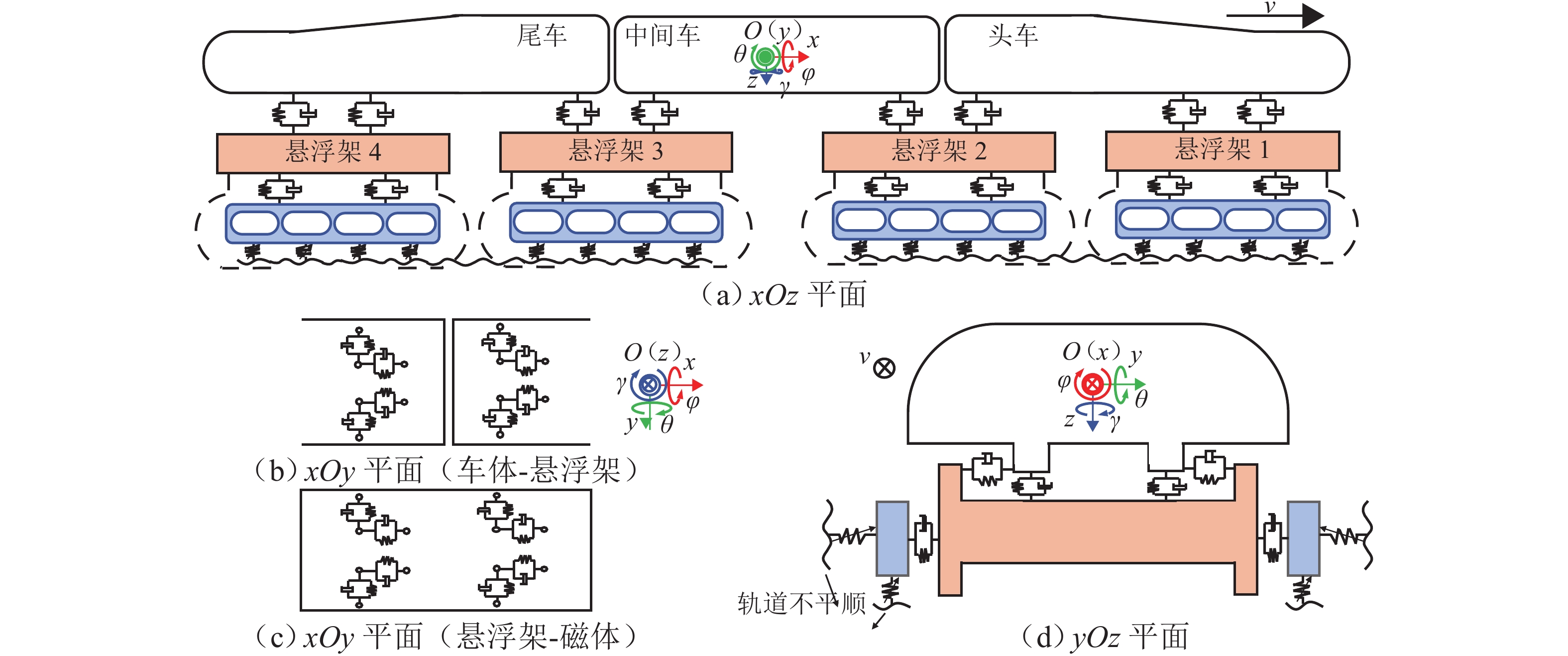

 点击查看大图
计量
- 文章访问数: 151
- HTML全文浏览量: 93
- PDF下载量: 74
- 被引次数: 0