



Analysis of Characteristic Parameters of Seismic Design Spectrum in Yunnan Region Based on Pseudo Acceleration Spectrum
-
摘要:
为研究规范设计谱在长周期段大阻尼反超小阻尼的问题,基于考虑结构真实惯性力的伪加速度反应谱理论,通过收集云南地区自2007年以来震级大于4.5级的强震记录,建立根据场地类别划分标准、震级大小、震中距和设计地震分组的分类体系,并采用全局和邻域变异的差分进化算法标定得到各类别下的标定参数平均值,在此基础上获取各因素对特征周期、放大系数谱平台值和衰减指数的影响,最终提出针对云南地区的参数建议取值. 研究结果表明:场地类别和震中距均与特征周期$ {T}_{\text{g}} $存在正相关性,根据标定结果对不同场地类别下的设计地震分组提出建议值,较规范建议值平均增大0.05 s;震中距和震级对放大系数谱平台值$ {\beta }_{\max } $的影响较弱,未展示出明确规律性,$ {\beta }_{\max } $的标定结果较规范取值偏大,综合考虑统计结果与工程安全冗余,建议云南地区$ {\beta }_{\max } $取值范围为2.575~2.675;阻尼比是影响衰减指数
γ 的最主要因素,γ 与阻尼比$ \xi $之间的线性关系式量化了阻尼比对谱形衰减段的影响,为合理考虑阻尼效应提供了依据.Abstract:To investigate the issue that the response spectrum for structures with high damping exceeds that with low damping in the long-period range in code design spectra, strong earthquake records with magnitudes greater than 4.5 in the Yunnan region since 2007 were collected based on the pseudo acceleration response spectrum theory considering the true inertial forces of structures. A classification system based on the site category classification standard, magnitude, epicentral distance, and design earthquake group was established. A differential evolution algorithm with global and neighborhood mutation was employed to calibrate and obtain the average values of the calibration parameters under each category. On this basis, the effects of various factors on the characteristic period, the plateau value of the amplification factor spectrum, and the decay index were obtained, and the recommended parameter values for the Yunnan region were ultimately proposed. The results indicate that both site category and epicentral distance have a positive correlation with the characteristic period $ {T}_{\text{g}} $. The recommended values for design earthquake groups under different site categories proposed based on the calibration results are increased by 0.05 s on average compared with the code recommended values. Epicentral distance and magnitude have a weak effect on the plateau value of the amplification factor spectrum $ {\beta }_{\max } $, and no clear regularity is shown. The calibration result of $ {\beta }_{\max } $is larger than the code value. Considering the statistical results and engineering safety redundancy comprehensively, it is suggested that the value range of $ {\beta }_{\max } $ in the Yunnan region be set to 2.575–2.675. The damping ratio is the most dominant factor affecting the decay index
γ . The linear relationship betweenγ and the damping ratio $ \xi $ quantifies the effect of the damping ratio on the spectral decay segment, providing a basis for reasonably considering the damping effect. -
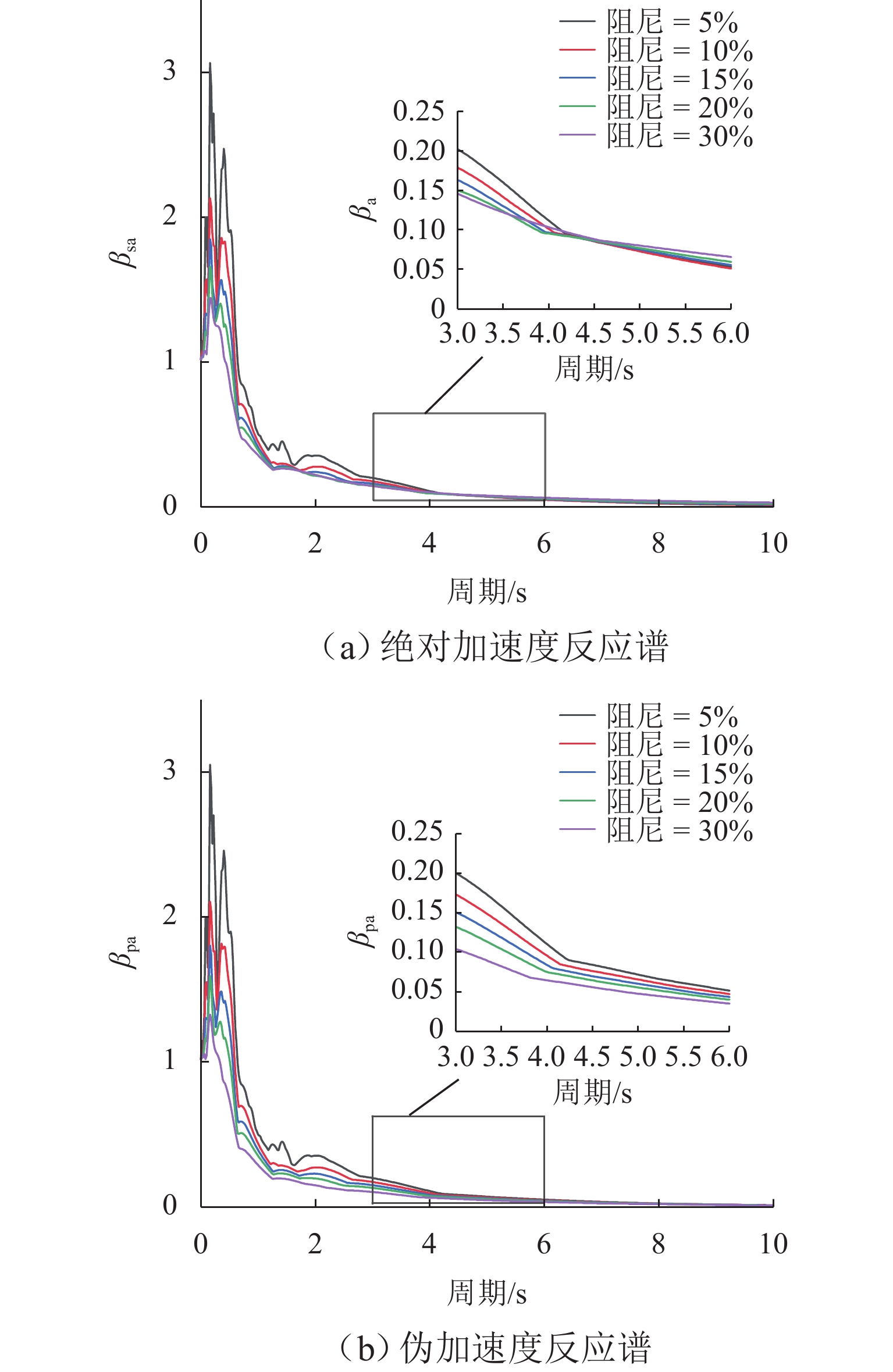
图 1 景谷地震53JYP台站强震记录加速度反应谱
Figure 1. Acceleration response spectrum of strong earthquake record at 53JYP station of Jinggu Earthquake
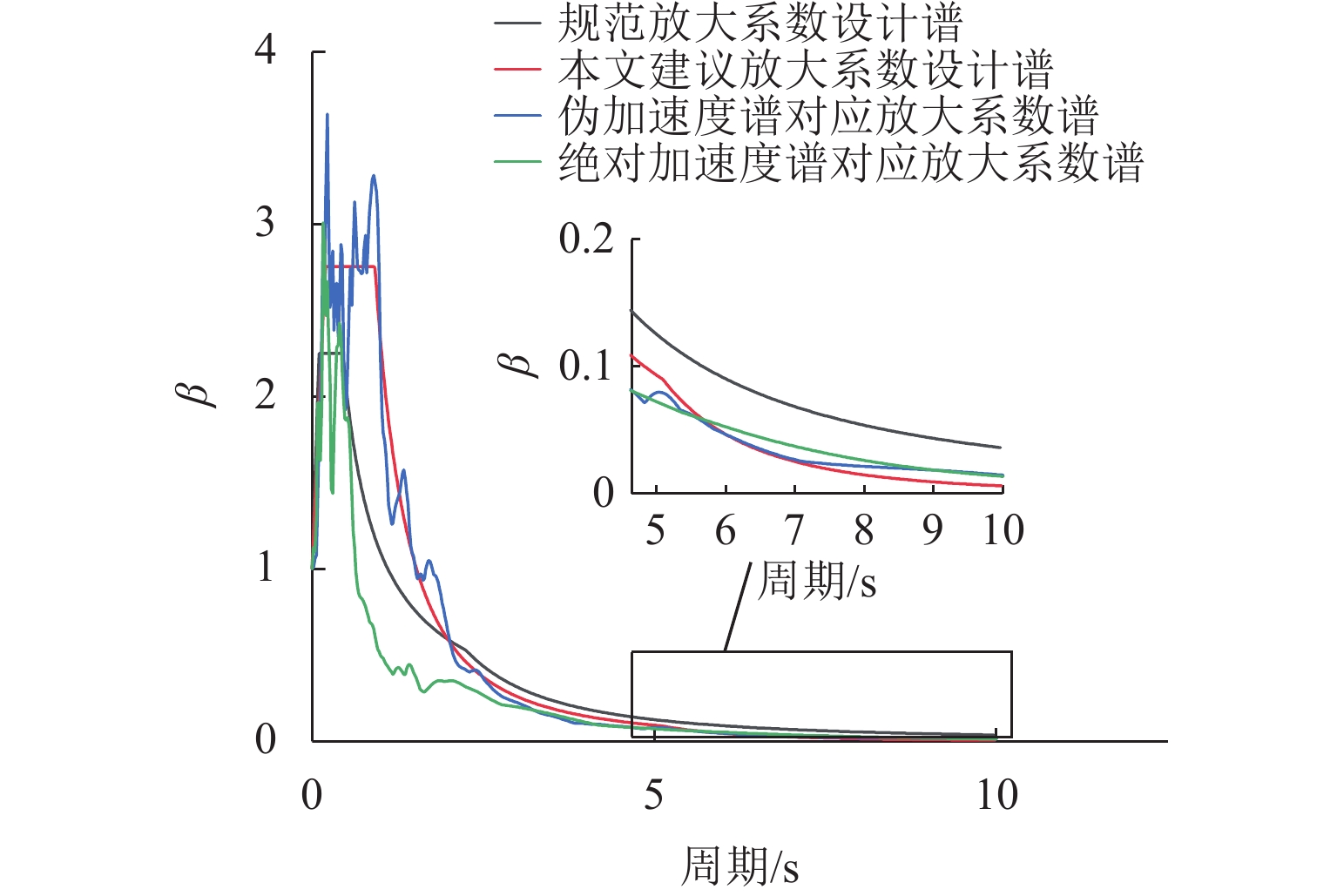
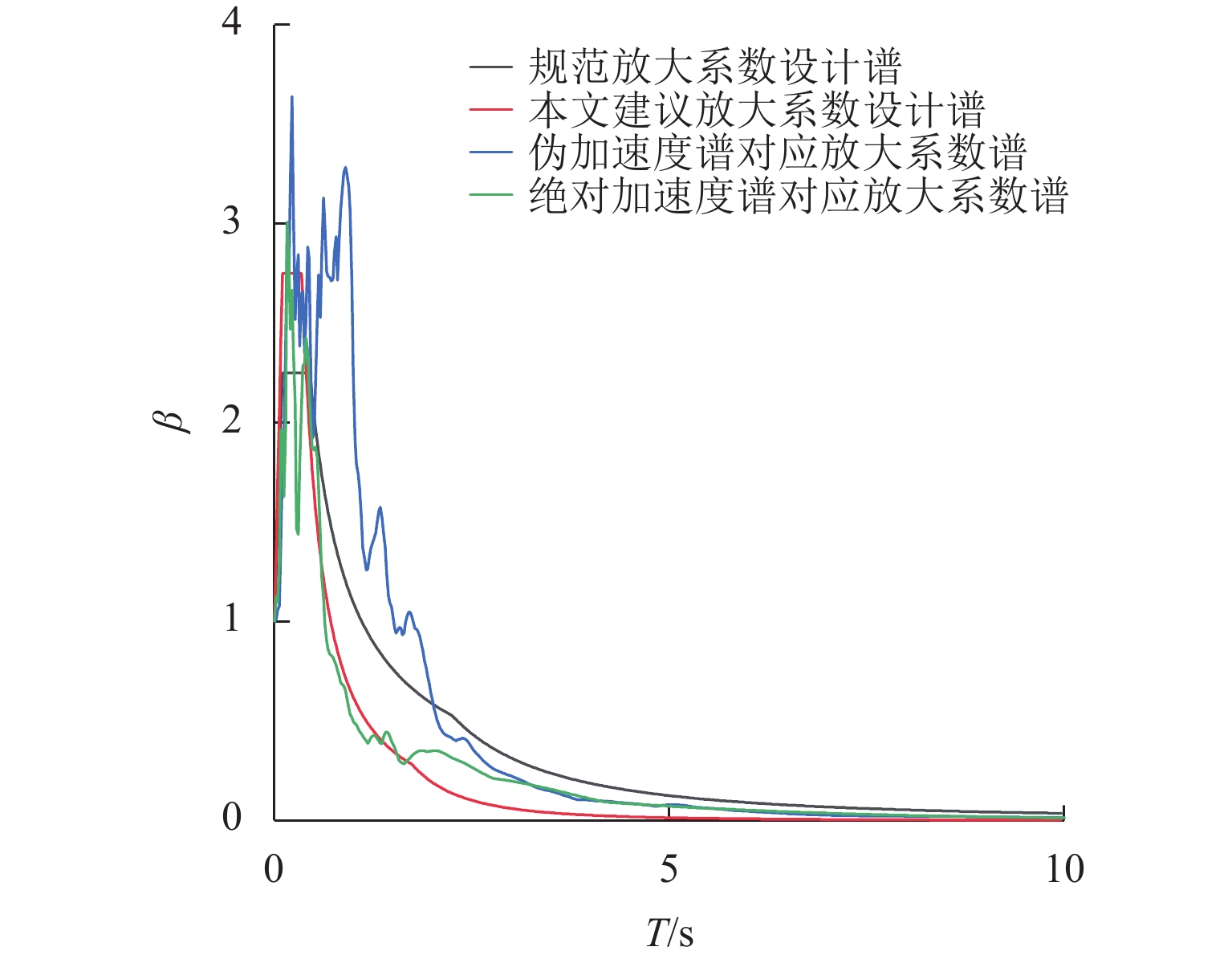
图 5 GLDE标定谱与规范设计谱和反应谱对比
Figure 5. Comparison of GLDE calibration spectrum with code design spectrum and response spectrum
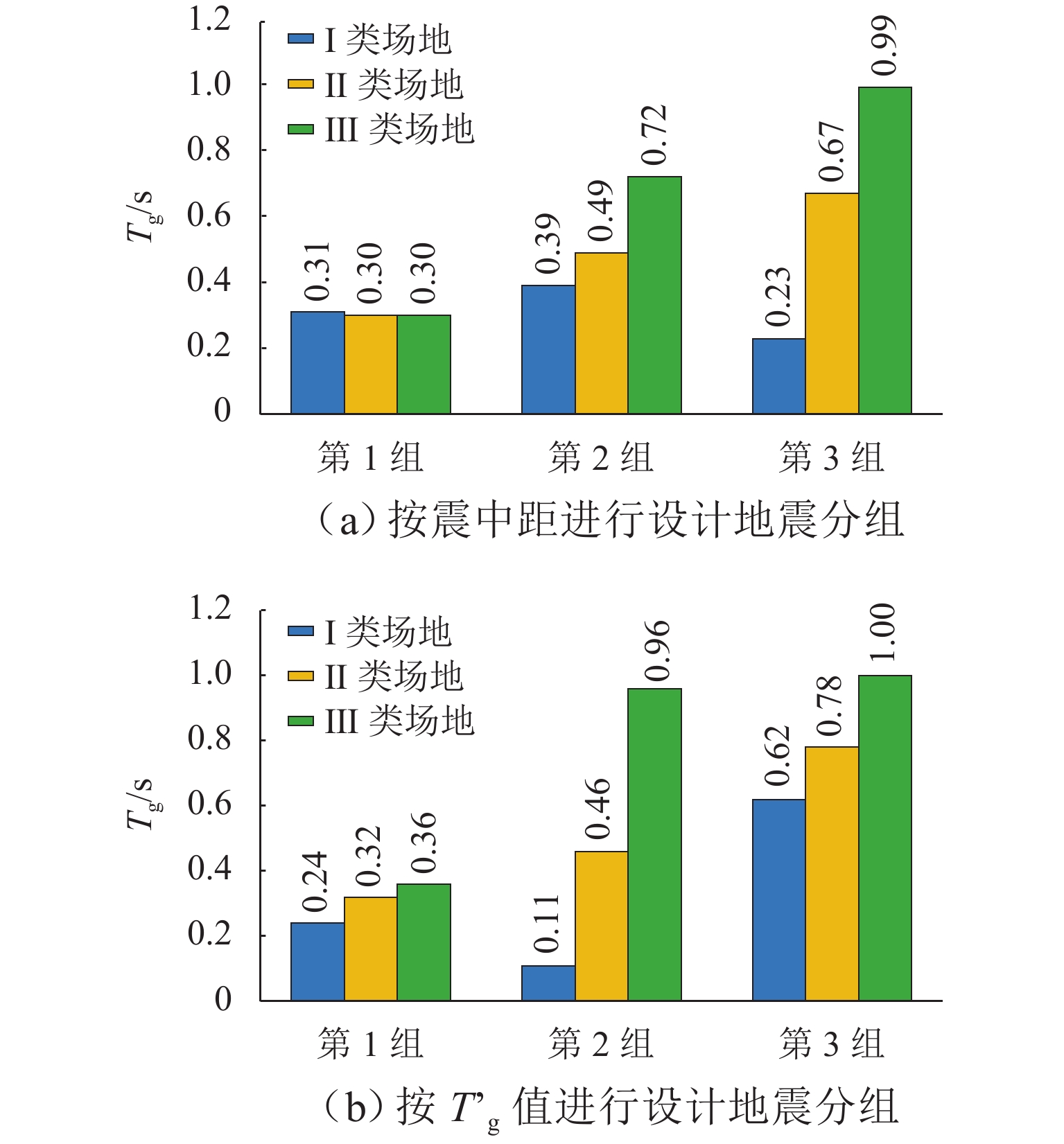
图 6 特征周期-设计地震分组交互效应分析
Figure 6. Analysis of interaction effect between characteristic period and design earthquake group
表 1 不同场地类别特征周期统计结果
Table 1. Statistical results of characteristic period for different site categories
场地类别 Ⅰ类 Ⅱ类 Ⅲ类 特征周期/s 0.30(48条) 0.51(181条) 0.83(18条) 注:括号内为该类别下的强震记录数量,余同.  下载: 导出CSV
表 2 不同震级区间特征周期$ {T}_{\text{g}} $统计结果
Table 2. Statistical results of characteristic period $ {T}_{\text{g}} $ for different magnitude intervals
震级 4.5~5.5级 5.5~6.5级 6.5~7.5级 $ {T}_{\rm g} $/s 0.36(21条) 0.53(157条) 0.45(69条)
下载: 导出CSV
表 3 不同震中距分组特征周期$ {T}_{\rm g} $统计结果
Table 3. Statistical results of characteristic period $ {T}_{\rm g} $ (s) for different epicentral distance groups
震中距/km 0~30 30~50 50~100 >100 $ {T}_{\rm g} $/s 0.32(36条) 0.39(44条) 0.48(84条) 0.64(83条)
下载: 导出CSV
表 4 不同场地类别地震记录按Tg’分区表
Table 4. Zoning table of earthquake records for different site categories according to Tg’
地震分组 Ⅰ类 Ⅱ类 Ⅲ类 Ⅳ类 第1组 ≤0.30 ≤0.40 ≤0.50 ≤0.70 第2组 (0.30,0.35) (0.40,0. 45) (0.50,0. 65) (0.70,0. 90) 第3组 ≥0.35 ≥0.45 ≥0.65 ≥0.90
下载: 导出CSV
表 5 $ {T}_{\text{g}} $建议值
Table 5. Recommended values of characteristic period $ {T}_{\text{g}} $
地震分组 Ⅰ类 Ⅱ类 Ⅲ类 第1组 0.25 0.35 0.40 第2组 0.35 0.45 0.80 第3组 0.55 0.75 0.95
下载: 导出CSV
表 6 不同场地类别$ {\beta }_{\max } $统计结果
Table 6. Statistical results of $ {\beta }_{\max } $ for different site categories
场地类别 Ⅰ类 Ⅱ类 Ⅲ类 $ {\beta }_{{\mathrm{max}}} $ 2.96 2.93 2.76
下载: 导出CSV
表 7 不同震级分组$ {\beta }_{\max } $统计结果
Table 7. Statistical results of $ {\beta }_{\max } $ for different magnitude groups
震级区间 4.5~5.5 5.5~6.5 6.5~7.5 $ {\beta }_{\max } $ 3.08 2.89 2.95
下载: 导出CSV
表 8 不同震中距分组$ {\beta }_{\max } $统计结果
Table 8. Statistical results of $ {\beta }_{\max } $ for different epicentral distance groups
震中距/km 0~30 30~50 50~100 >100 $ {\beta }_{\max } $ 2.05 2.13 2.24 2.26
下载: 导出CSV
表 9 不同场地类别下按震中距进行设计地震分组$ {\beta }_{\max } $统计结果
Table 9. Statistical results of design earthquake group $ {\beta }_{\max } $ according to epicentral distance under different site categories
地震分组 Ⅰ类 Ⅱ类 Ⅲ类 第1组(0~50 km) 2.73 2.75 2.41 第2组(50~100 km) 2.90 3.00 2.99 第3组(>100 km) 3.33 3.03 2.80
下载: 导出CSV
表 10 不同场地类别下按阻尼比分组γ统计结果
Table 10. Statistical results of γ according to damping ratio groups under different site categories
阻尼比/% Ⅰ类 Ⅱ类 Ⅲ类 5 1.40 1.39 1.37 10 1.39 1.33 1.34 15 1.37 1.29 1.31 20 1.31 1.26 1.19 30 1.24 1.20 1.10
下载: 导出CSV
表 11 不同震级分组下按阻尼比分组γ统计结果
Table 11. Statistical results of γ according to damping ratio groups under different magnitude groups
阻尼比/% 4.5~5.5级 5.5~6.5级 6.5~7.5级 5 1.60 1.38 1.36 10 1.61 1.33 1.30 15 1.63 1.28 1.27 20 1.54 1.24 1.24 30 1.45 1.17 1.19
下载: 导出CSV
表 12 不同震中距分组下按阻尼比分组γ统计结果
Table 12. Statistical results of γ according to damping ratio groups under different epicentral distance groups
阻尼比/% 0~30 km 30~50 km 50~100 km >100 km 5 1.44 1.53 1.34 1.34 10 1.40 1.47 1.27 1.33 15 1.37 1.44 1.23 1.31 20 1.29 1.38 1.18 1.27 30 1.18 1.31 1.13 1.21
下载: 导出CSV
-
[1] GB 50011—2001建筑抗震设计规范[S]. [2] 魏琏, 王广军. 地震作用[M]. 北京: 地震出版社, 1991: 19-23. [3] 徐龙军. 统一抗震设计谱理论及其应用[D]. 哈尔滨: 哈尔滨工业大学, 2006. [4] GB 50011—2010 建筑抗震设计规范[S]. [5] 徐平辉, 倪取佳. 广东地方标准与《抗规》反应谱的对比及长周期结构影响分析[J]. 建筑结构, 2023, 53(22): 104-111. doi: 10.19701/j.jzjg.20222031Xu Pinghui, Ni Qujia. Comparison of response spectra between Guangdong local standards and seismic code and analysis of their effects on long-period structures[J]. Building Structure, 2023, 53(22): 104-111. doi: 10.19701/j.jzjg.20222031 [6] Chopra A K. Dynamics of structures: theory and applications to earthquake engineering[M] . 4th ed. Englewood Cliffs: Prentice-Hall Inc. , 2012: 197-245. [7] 方小丹, 魏琏, 周靖. 长周期结构地震反应的特点与反应谱[J]. 建筑结构学报, 2014, 35(3): 16-23. doi: 10.14006/j.jzjgxb.2014.03.004Fang Xiaodan, Wei Lian, Zhou Jing. Characteristics of earthquake response for long-period structures and response spectrum[J]. Journal of Building Structures, 2014, 35(3): 16-23. doi: 10.14006/j.jzjgxb.2014.03.004 [8] 张敦元, 白羽, 高静. 对我国现行抗震规范反应谱若干概念的探讨[J]. 建筑结构学报, 2016, 37(4): 110-118. doi: 10.14006/j.jzjgxb.2016.04.015Zhang Dunyuan, Bai Yu, Gao Jing. Probe into several important concepts in Chinese current seismic response spectra[J]. Journal of Building Structures, 2016, 37(4): 110-118. doi: 10.14006/j.jzjgxb.2016.04.015 [9] 王亚勇, 戴国莹. 《建筑抗震设计规范》的发展沿革和最新修订[J]. 建筑结构学报, 2010, 31(6): 7-16.Wang Yayong, Dai Guoying. Evolution and present updation of ‘Code for seismic design of buildings’[J]. Journal of Building Structures, 2010, 31(6): 7-16. [10] Newmark N M, Hall W J. Seismic design criteria for nuclear reactor facilities[C]//Proceedings of the 4th World Conference on Earthquake Engineering. Santiago: World Conference on Earthquake Engineering, 1969. [11] 杨向东. 设计地震反应谱的双参数标定方法及其应用[J]. 地震研究, 1993, 16(2): 178-186.Yang Xiangdong. The double-parameter calibrating method of seismic respone spectrum and its application[J]. Journal of Seismological Research, 1993, 16(2): 178-186. [12] 郭晓云, 薄景山, 巴文辉, 等. 最小二乘法分段拟合标定反应谱方法[J]. 世界地震工程, 2012, 28(3): 29-33. doi: 10.3969/j.issn.1007-6069.2012.03.007Guo Xiaoyun, Bo Jingshan, Ba Wenhui, et al. Sectional least square fitting method for calibrating seismic design response spectrum[J]. World Earthquake Engineering, 2012, 28(3): 29-33. doi: 10.3969/j.issn.1007-6069.2012.03.007 [13] 夏江, 陈清军. 基于遗传算法的设计地震反应谱标定方法[J]. 力学季刊, 2006, 27(2): 317-322. doi: 10.3969/j.issn.0254-0053.2006.02.021Xia Jiang, Chen Qingjun. Calibrating method of seismic response spectrum based on genetic algorithm[J]. Chinese Quarterly of Mechanics, 2006, 27(2): 317-322. doi: 10.3969/j.issn.0254-0053.2006.02.021 [14] 赵培培, 王振宇, 薄景山. 利用差分进化算法标定设计反应谱[J]. 地震工程与工程振动, 2017, 37(5): 45-50. doi: 10.13197/j.eeev.2017.05.45.zhaopp.005Zhao Peipei, Wang Zhenyu, Bo Jingshan. Utilizing differential evolution to calibrate seismic design response spectrum[J]. Earthquake Engineering and Engineering Vibration, 2017, 37(5): 45-50. doi: 10.13197/j.eeev.2017.05.45.zhaopp.005 [15] Shi Y, He H J, Huang W Q, et al. Investigating properties of vertical design spectra in Japan by applying differential evolution to KiK-net data[J]. Soil Dynamics and Earthquake Engineering, 2020, 136: 106245. doi: 10.1016/j.soildyn.2020.106245 [16] 牛洁, 薄景山, 王福昌, 等. 基于Nelder-Mead单纯形算法的设计反应谱标定方法[J]. 地震工程与工程振动, 2021, 41(5): 165-175.Niu Jie, Bo Jingshan, Wang Fuchang, et al. Calibration method for seismic design response spectrum based on the Nelder-Mead simplex algorithm[J]. Earthquake Engineering and Engineering Dynamics, 2021, 41(5): 165-175. [17] 李雪玉, 薄景山, 王福昌, 等. 基于带压缩因子粒子群算法标定设计反应谱[J]. 地震工程与工程振动, 2021, 41(2): 175-180. doi: 10.13197/j.eeev.2021.02.175.lixy.017Li Xueyu, Bo Jingshan, Wang Fuchang, et al. A response spectrum calibration method based on particle swarm optimization with compression factor[J]. Earthquake Engineering and Engineering Dynamics, 2021, 41(2): 175-180. doi: 10.13197/j.eeev.2021.02.175.lixy.017 [18] 张潇男, 王海云, 李强. 土耳其7.8级地震对中国抗震设计反应谱修订的启示[J]. 工程力学, 2025, 42(10): 233-243. doi: 10.6052/j.issn.1000-4750.2023.05.0337Zhang Xiaonan, Wang Haiyun, Li Qiang. Enlightenment of Turkey m7.8 earthquake on the revision of seismic design response spectrum in China[J]. Engineering Mechanics, 2025, 42(10): 233-243. doi: 10.6052/j.issn.1000-4750.2023.05.0337 [19] 齐文浩, 陈方晓, 李林芳, 等. 基于黑龙江经验场地模型的地震动放大效应研究[J]. 世界地震工程, 2024, 40(4): 142-150.Qi Wenhao, Chen Fangxiao, Li Linfang, et al. Research on earthquake ground motion amplification effect based on the empirical site model in Heilongjiang Province[J]. World Earthquake Engineering, 2024, 40(4): 142-150. [20] 谭景阳, 胡进军. 基于改进差分进化算法的设计反应谱高稳定性标定方法研究[J]. 土木工程学报, 2022(5): 16-25, 66.Tan Jingyang, Hu Jinjun. Study on high stability calibration method of design response spectrum based on improved differential evolution algorithm[J]. China Civil Engineering Journal, 2022(5): 16-25,66. [21] Das S, Abraham A, Chakraborty U K, et al. Differential evolution using a neighborhood-based mutation operator[J]. IEEE Transactions on Evolutionary Computation, 2009, 13(3): 526-553. doi: 10.1109/TEVC.2008.2009457 [22] Chakraborty U K, Das S, Konar A. Differential evolution with local neighborhood [C]//2006 IEEE Congress on Evolutionary Computation. New York: IEEE, 2006. [23] GB 18306—2015 中国地震动参数区划图[S] . [24] 赵培培. 设计反应谱拟合方法研究及特征参数统计[D]. 哈尔滨: 中国地震局工程力学研究所, 2017. [25] 张东方. 基于云南省强震记录的结构设计反应谱研究及工程分析[D]. 昆明: 昆明理工大学, 2018. [26] 陈学良, 陈科霖, 兰景岩, 等. 线性法修正HVSR的场地效应研究[J]. 西南交通大学学报, 2025(2): 290-298. doi: 10.3969/j.issn.0258-2724.20230094Chen Xueliang, Chen Kelin, Lan Jingyan, et al. Site effects of linear method and modified horizontal-to-vertical spectral ratio[J]. Journal of Southwest Jiaotong University, 2025(2): 290-298. doi: 10.3969/j.issn.0258-2724.20230094 [27] ATC3-06 Tentative Provisions for the Development of Seismic Regulations for Buildings[S]. [28] GB 18306—2015《中国地震动参数区划图》宣贯教材[S]. [29] 蒲武川, 黄斌, KABANDO E K. 脉冲型近场地震波反应谱的阻尼调整系数分析[J]. 西南交通大学学报, 2017, 52(2): 272-279, 378.Pu Wuchuan, Huang Bin, K Kabando E. Damping modification factors for response spectra of pulse-like near-fault ground motions[J]. Journal of Southwest Jiaotong University, 2017, 52(2): 272-279,378. -

 下载:
下载:
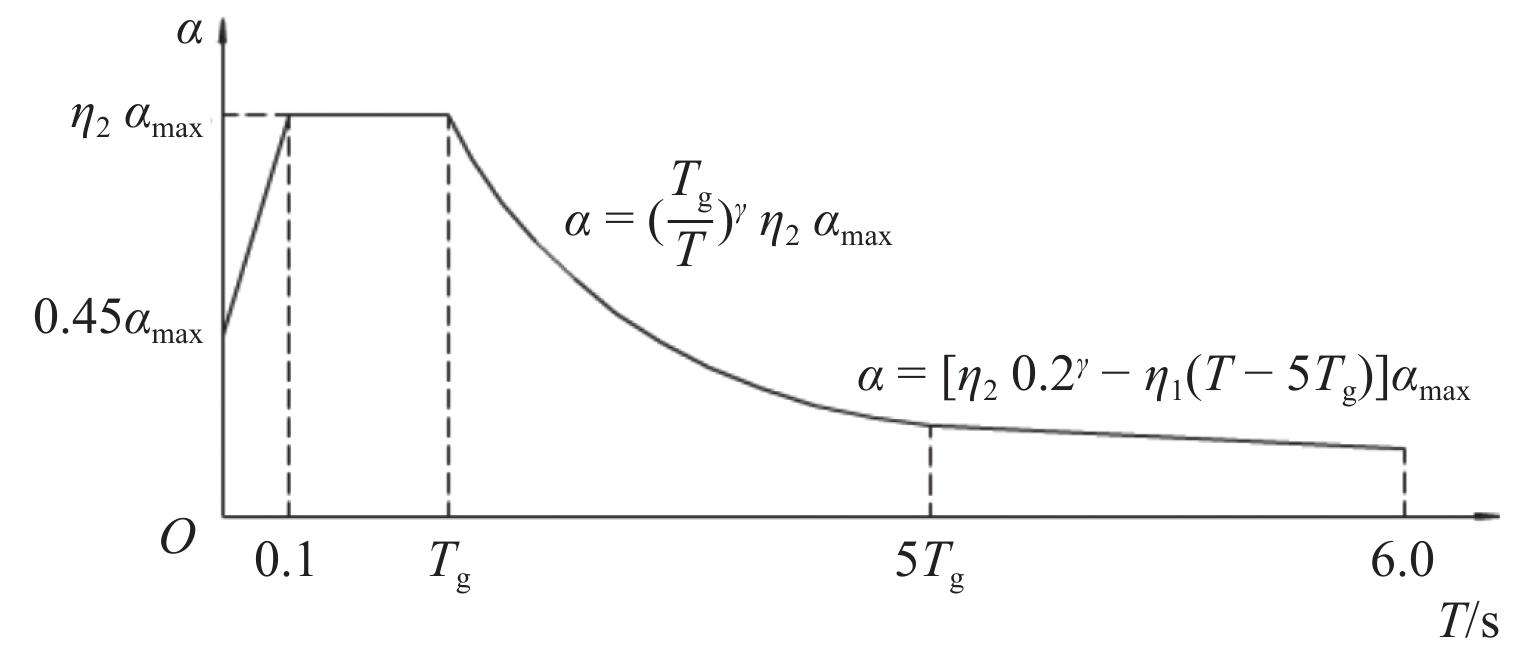

 点击查看大图
计量
- 文章访问数: 94
- HTML全文浏览量: 88
- PDF下载量: 31
- 被引次数: 0