



Analysis of Influence of Boundary Conditions on Ultra-High-Speed Maglev Model Vehicle System in Low-Vacuum Pipeline
-
摘要:
当磁浮车辆超高速运行时,轨道不平顺、空气阻力等边界条件将会显著影响车辆运行安全性与稳定性. 本文基于多态耦合轨道交通动模试验平台,建立考虑超导钉扎悬浮与导向力特性、空气阻力及轨道不平顺等条件的超高速磁浮模型车系统动力学模型,模拟在1.6 km试验线上实现最高速度(1 500 km/h)的牵引-惰行-制动工况;基于该动力学模型,仿真分析模型车系统在不同轨道不平顺幅值倍数、不同速度、不同限位间隙下运行的振动响应情况. 研究结果表明:低真空环境下,轨道不平顺幅值为0.15 mm时,最高速度工况下,动子在运行过程中呈左右摆动的振动形式,杜瓦垂向位移最大值达4.88 mm;随着模型车系统运行速度增大,系统振动增强,各动力学指标幅值呈上升趋势;横向限位间隙增大有利于减弱模型车系统横向振动,垂向限位间隙增大会加剧模型车系统垂向振动.
Abstract:When maglev vehicles operate at an ultra-high speed, boundary conditions such as track irregularity and air resistance significantly affect the operational safety and stability of the vehicles. Based on the polymorphic coupled dynamic simulation test platform for rail transit, a dynamic model of an ultra-high-speed maglev model vehicle system was established, which considered conditions including superconducting pinning suspension and guiding force characteristics, air resistance, and track irregularity. The traction, coasting, and braking conditions achieving a maximum speed of
1500 km/h on a 1.6 km test line were simulated. Based on the dynamic model, the vibration responses of the model vehicle system operating under different multiples of track irregularity amplitude, speeds, and limit clearances were simulated and analyzed. The results indicate that under a low-vacuum environment, when the track irregularity amplitude is 0.15 mm, and the maximum speed is 1,500 km/h, the mover exhibits a left-and-right swing vibration form during operation, and the maximum vertical displacement of the Dewar reaches 4.88 mm. As the operating speed of the model vehicle system increases, the system vibration strengthens, and the amplitudes of various dynamic indicators show an upward trend; an increase in the lateral limit clearance is beneficial to weaken the lateral vibration of the model vehicle system, while an increase in the vertical limit clearance intensifies the vertical vibration of the model vehicle system. The research results can provide a theoretical reference for the design of the ultra-high-speed maglev dynamic simulation test platform. -
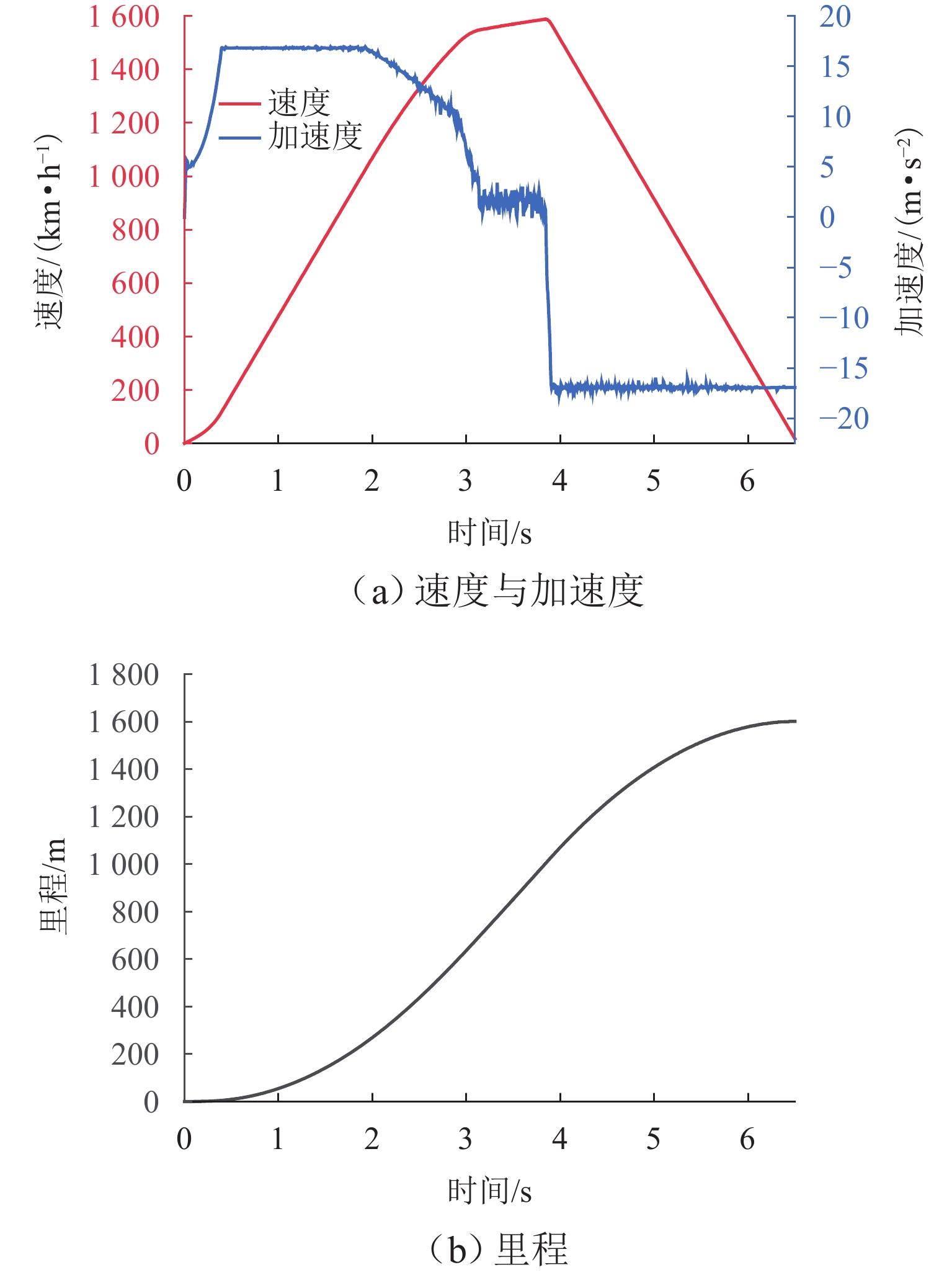
图 2 动子运行里程、速度和加速度随运行时间变化示意
Figure 2. Variation schematic of operating mileage, speed, and acceleration of mover with running time
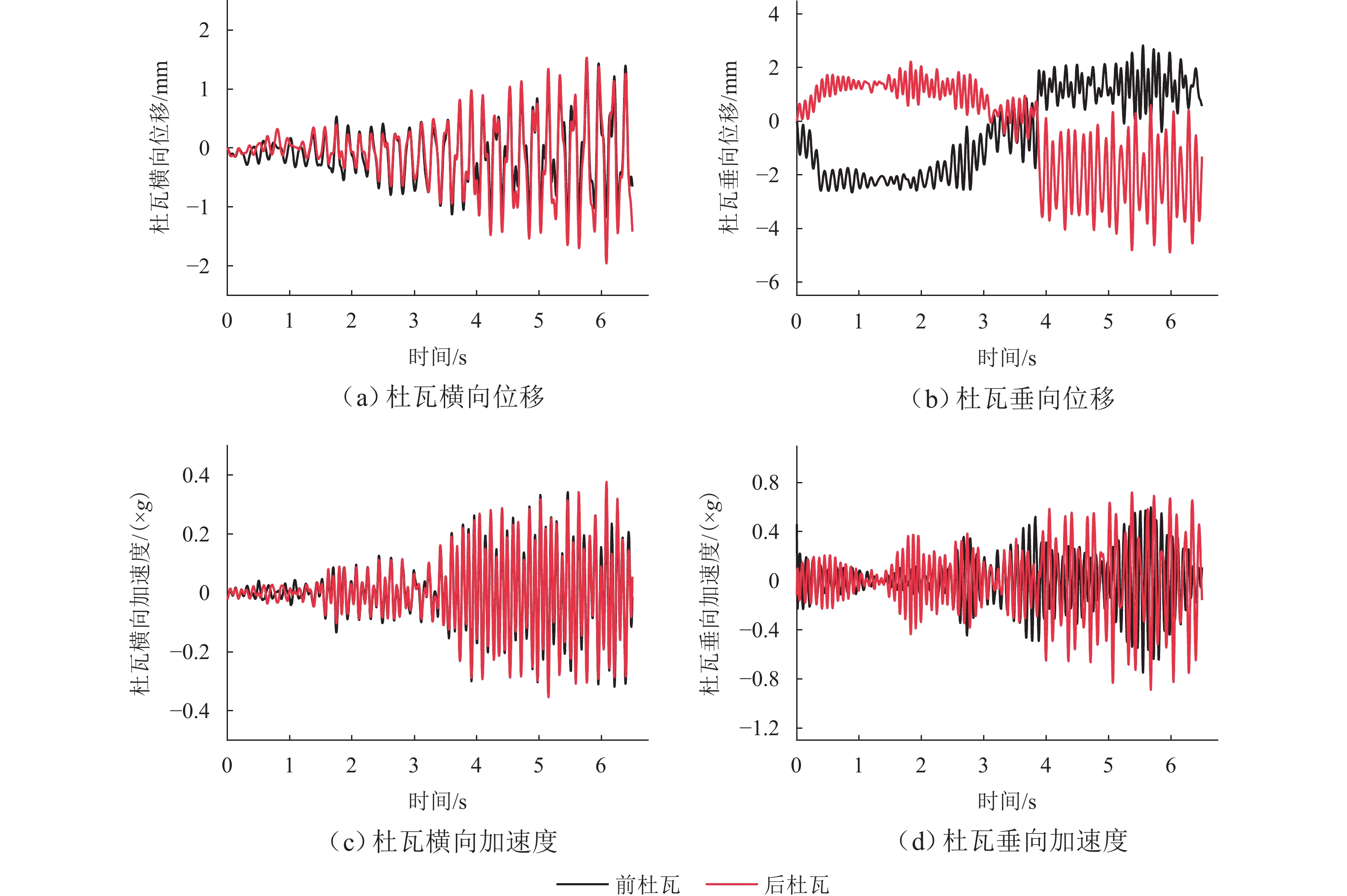
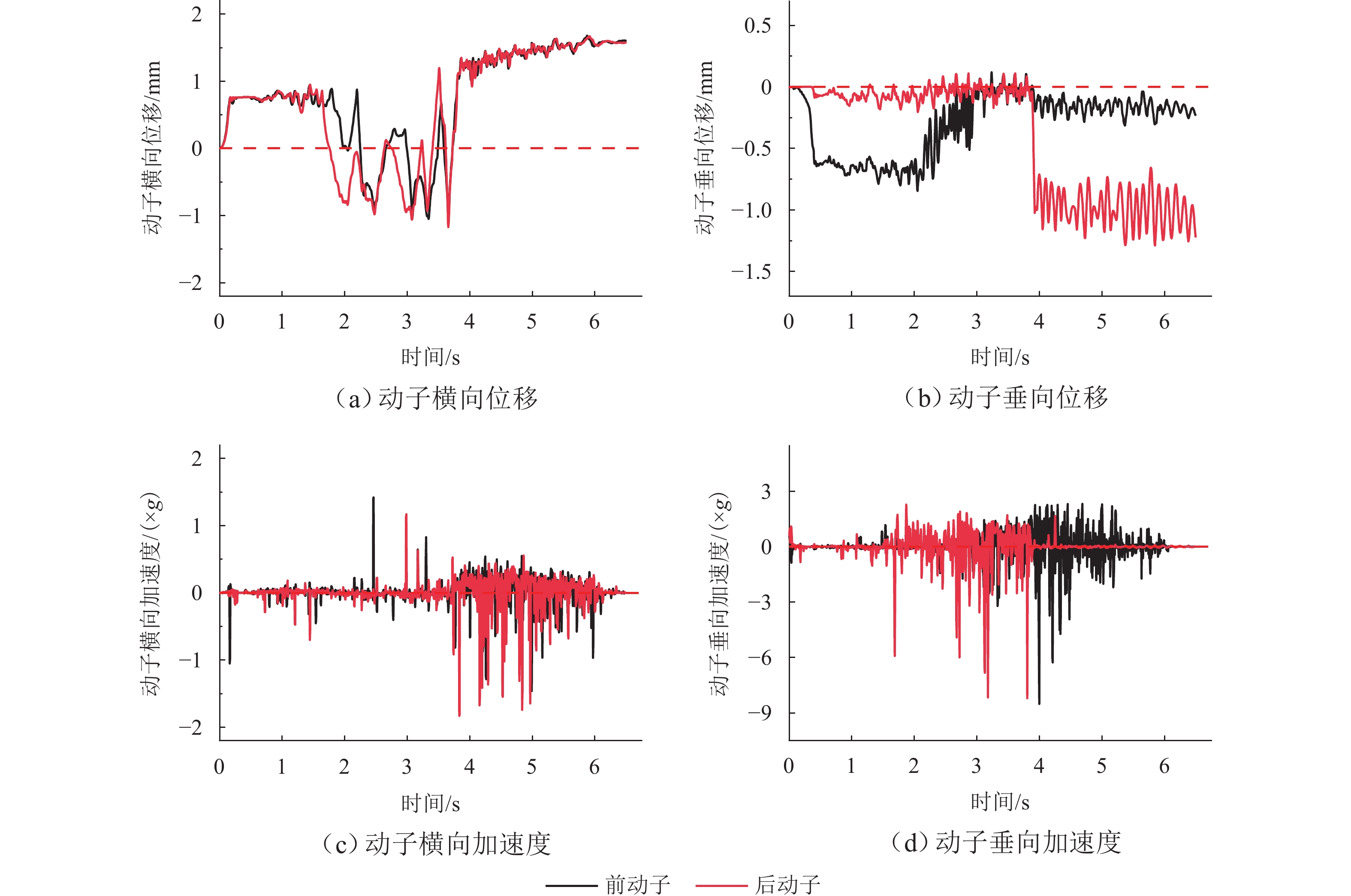
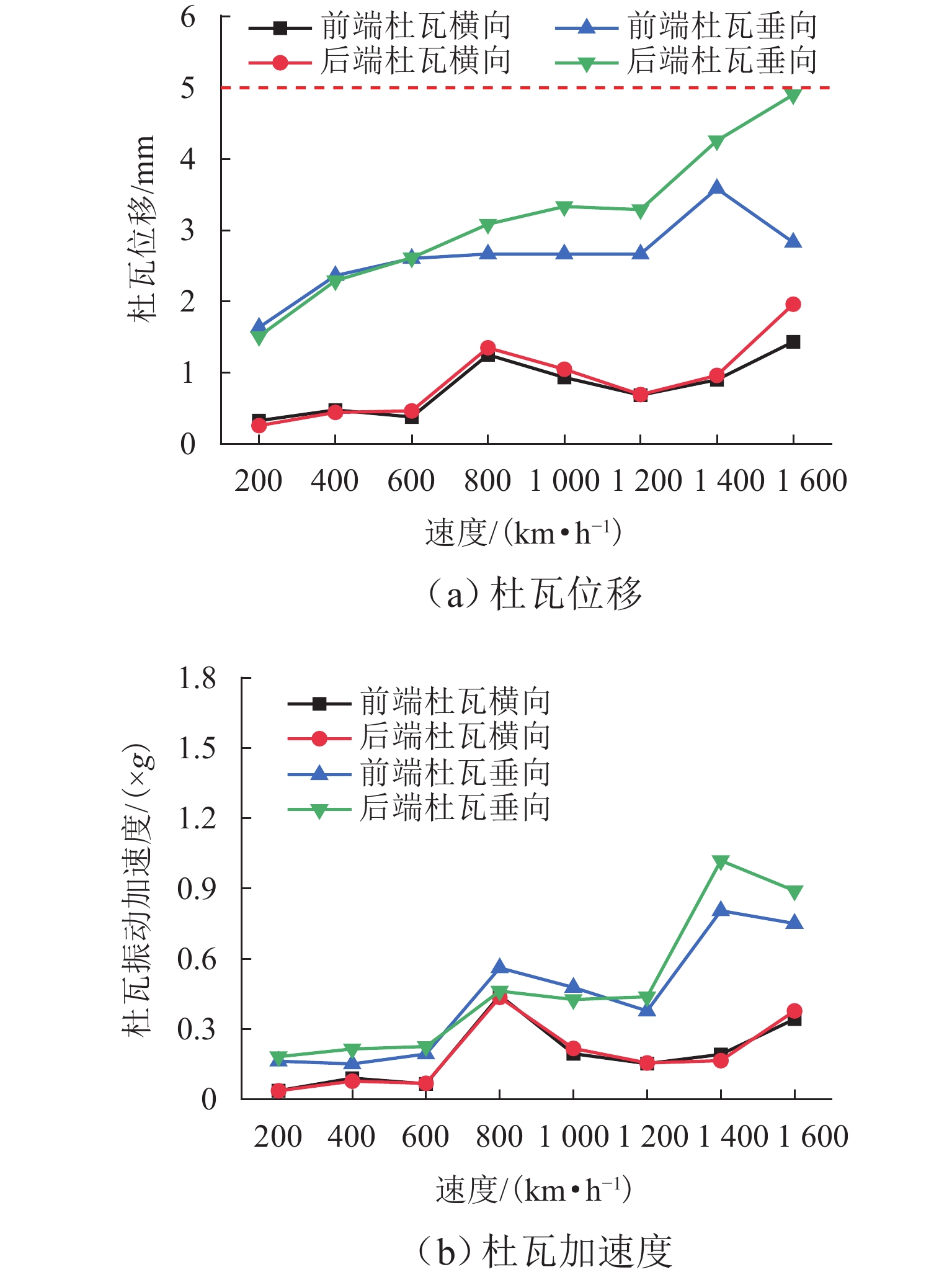
图 8 杜瓦动力学响应(运行速度:1 500 km/h)
Figure 8. Dynamic response of Dewar(run speed: 1 500 km/h)
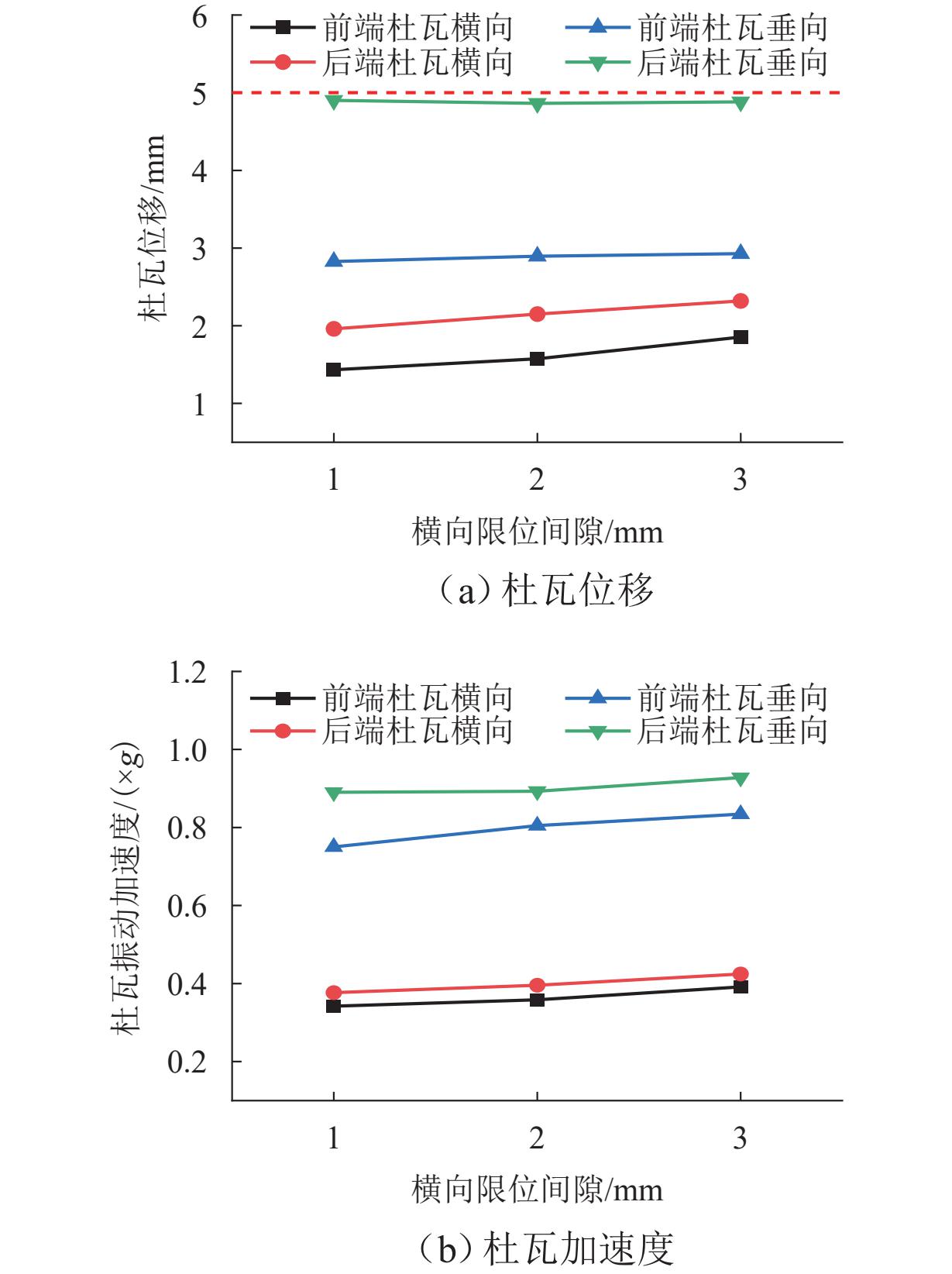
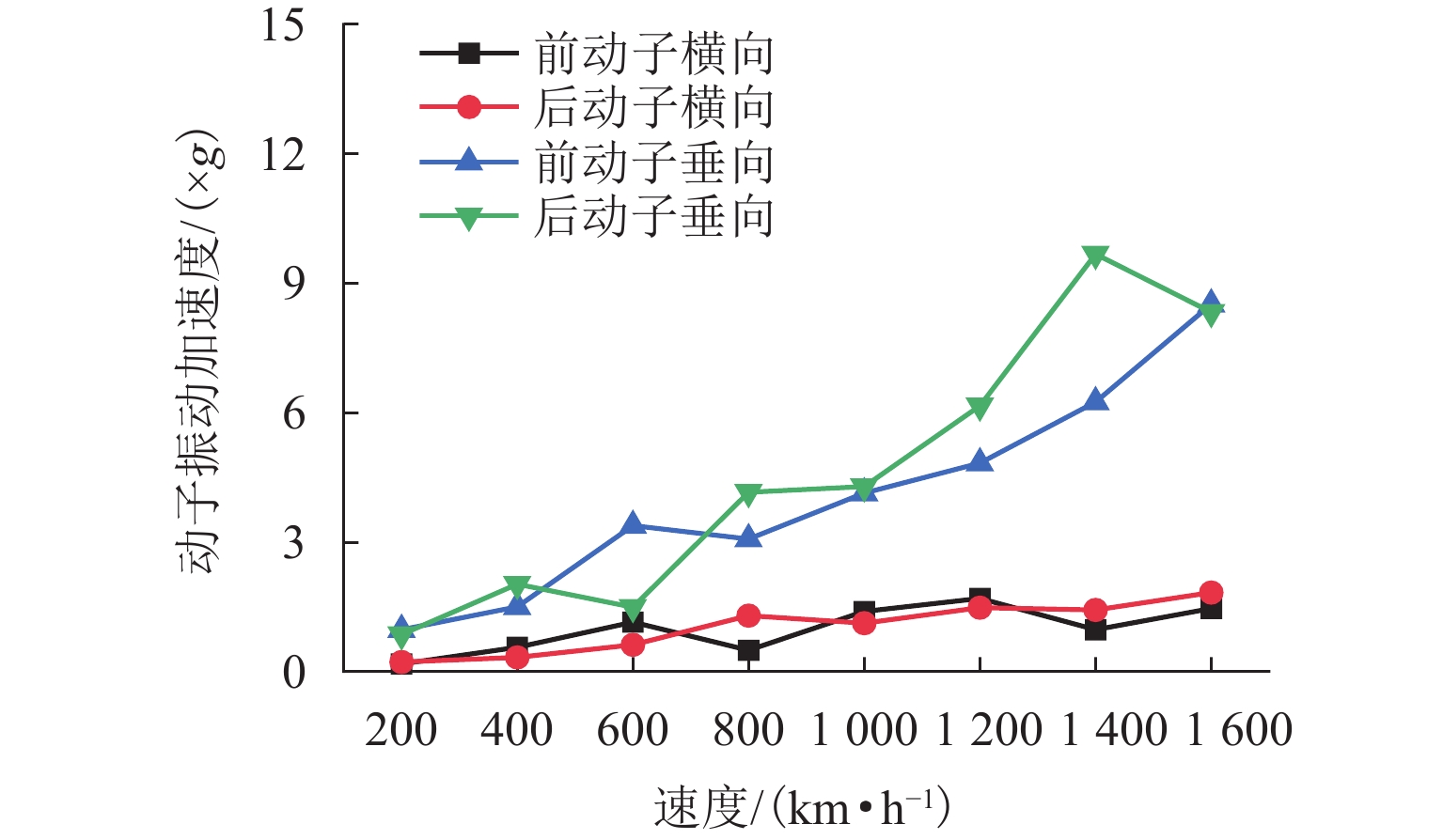
图 15 不同横向间隙下杜瓦动力学响应
Figure 15. Dynamic response of Dewar under different lateral clearances
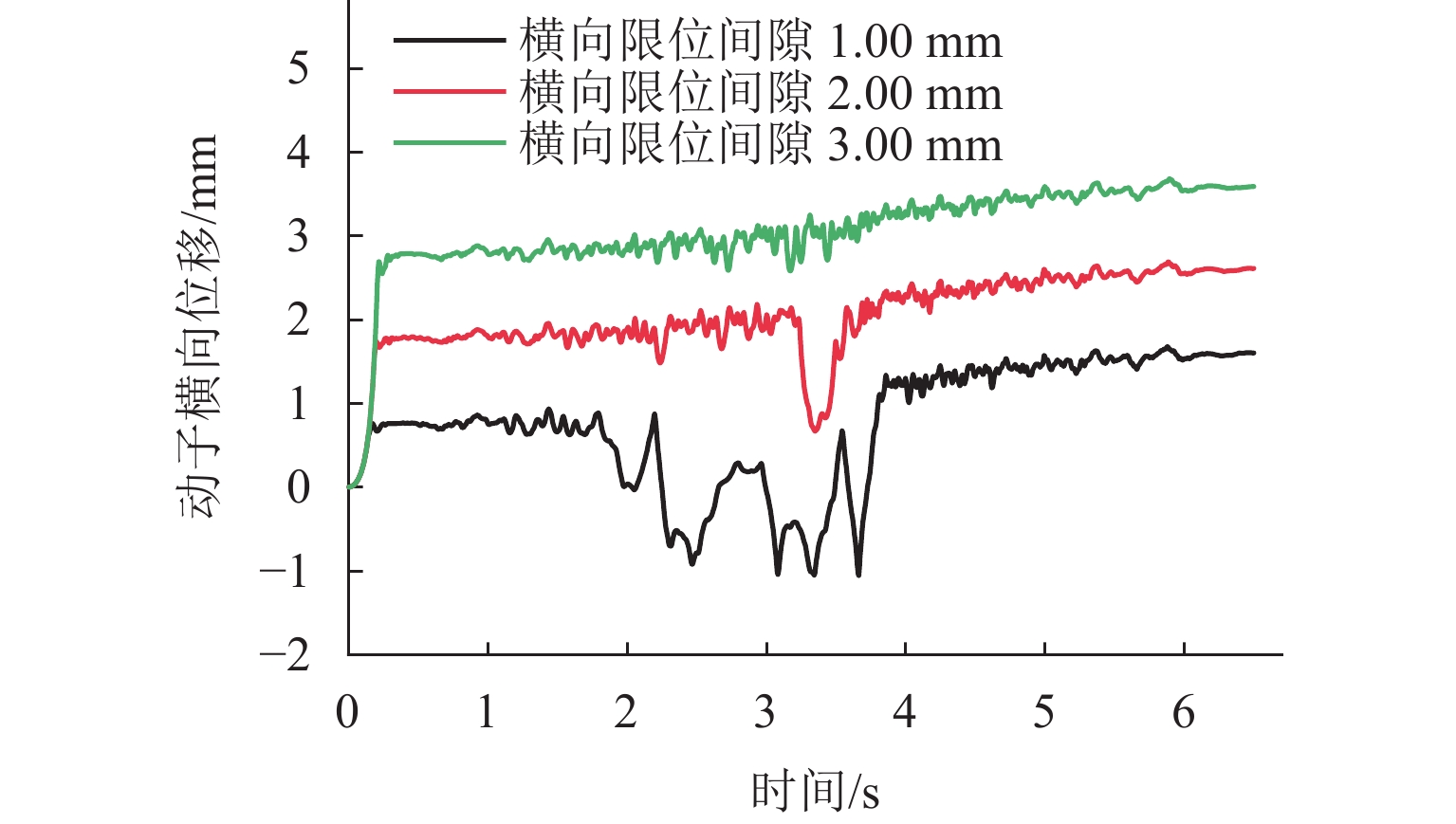
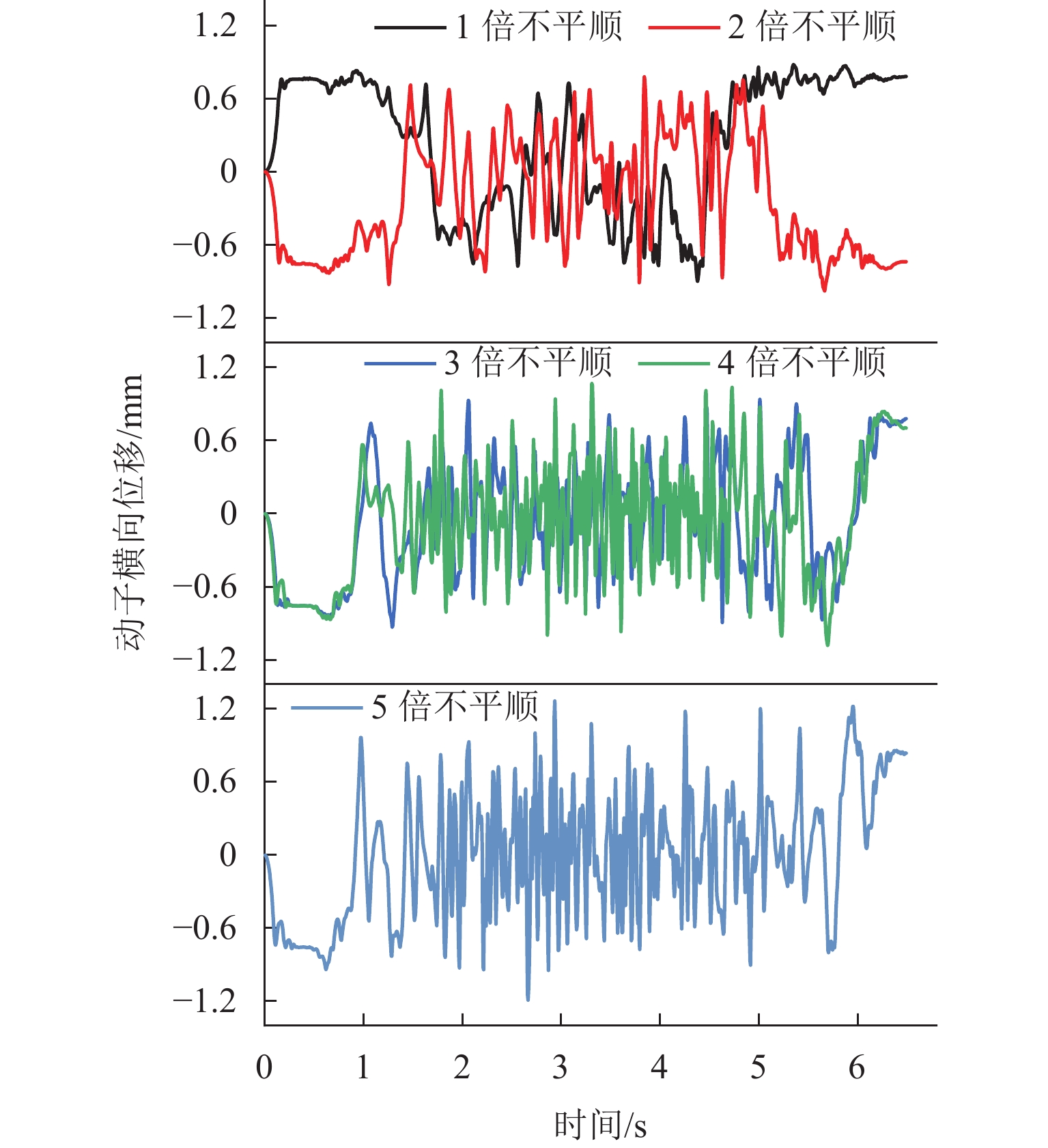
图 16 不同横向间隙下动子横向位移
Figure 16. Lateral displacement of mover under different lateral clearances
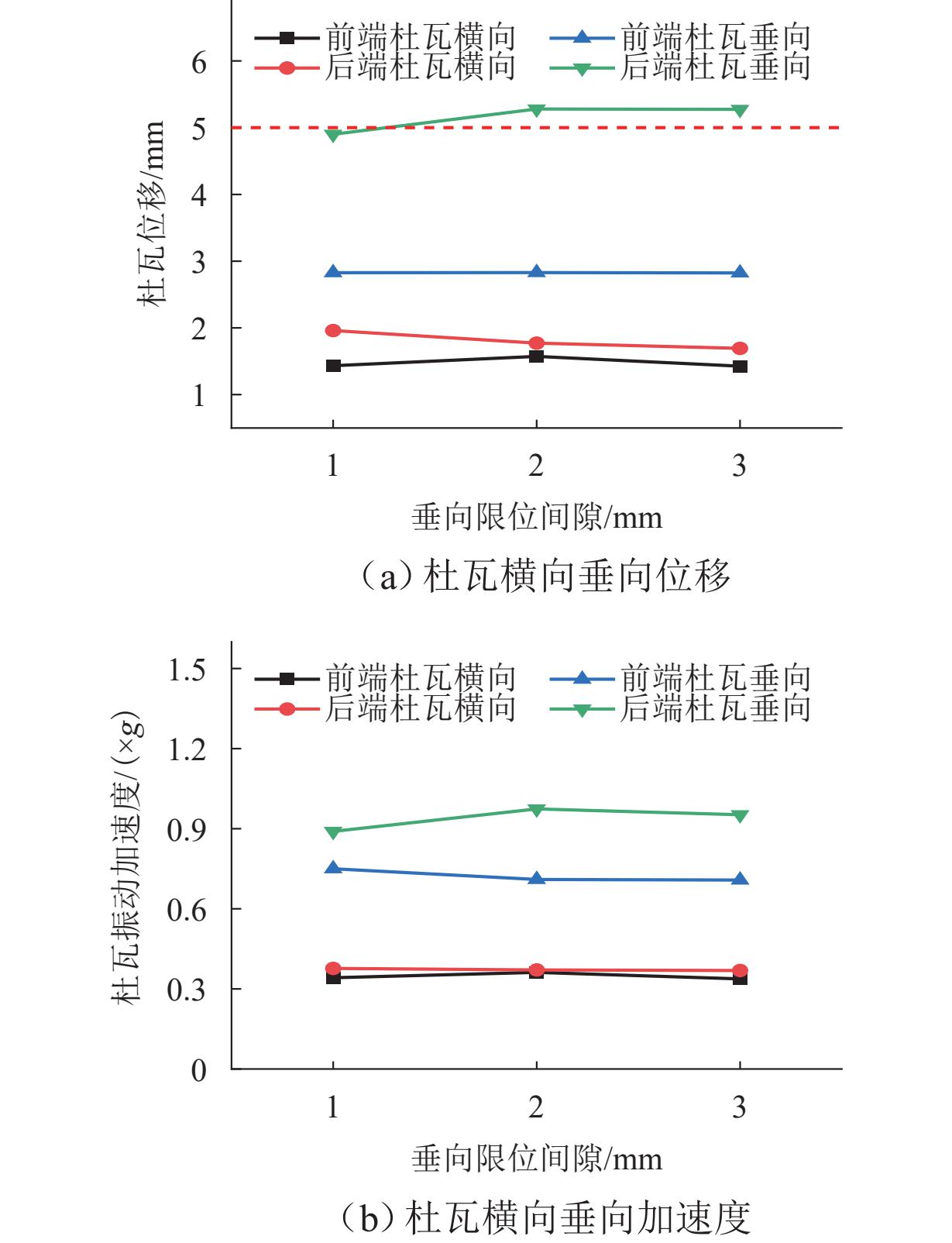
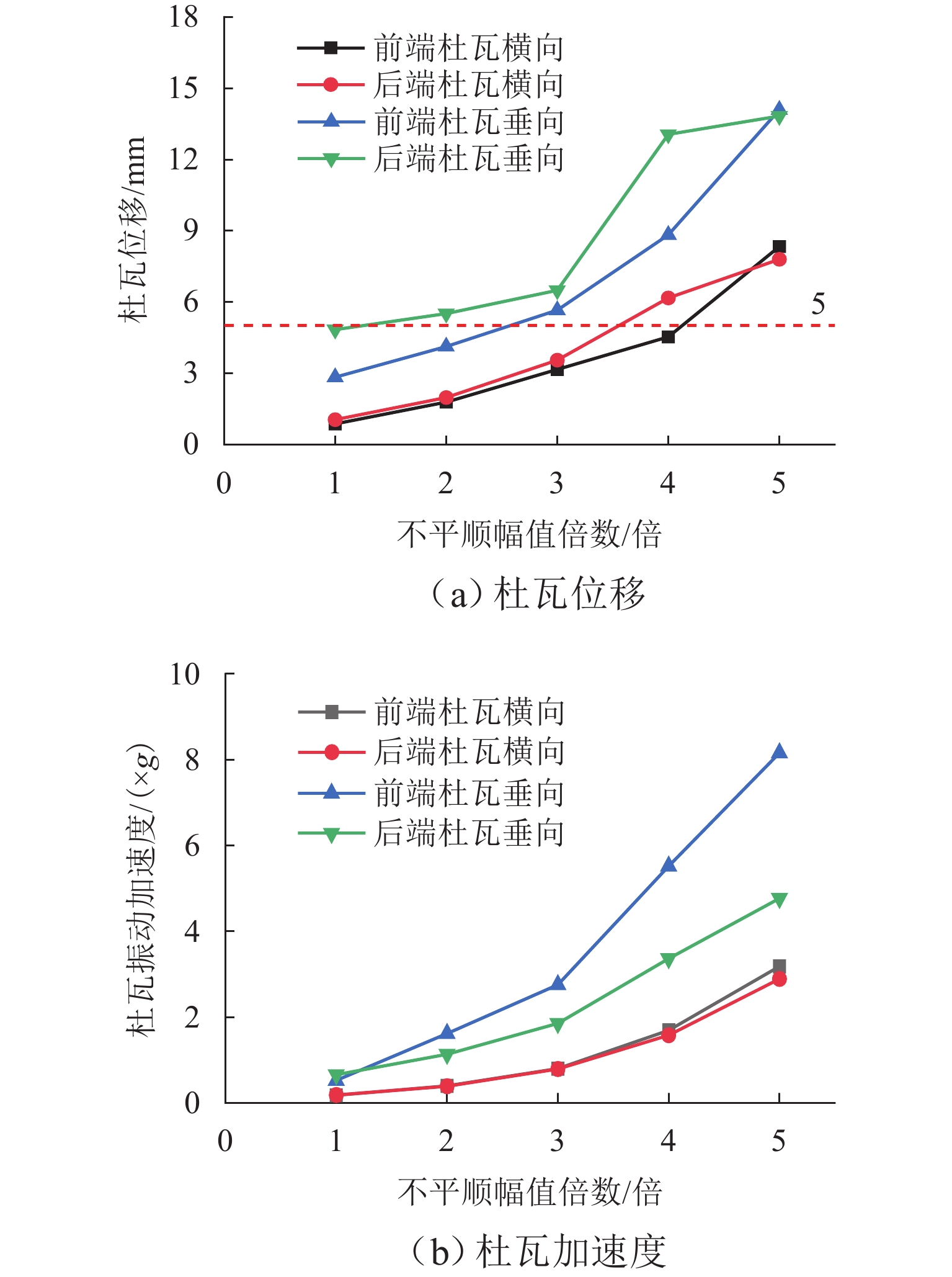
图 17 不同垂向间隙下杜瓦动力学响应
Figure 17. Dynamic response of Dewar under different vertical clearances
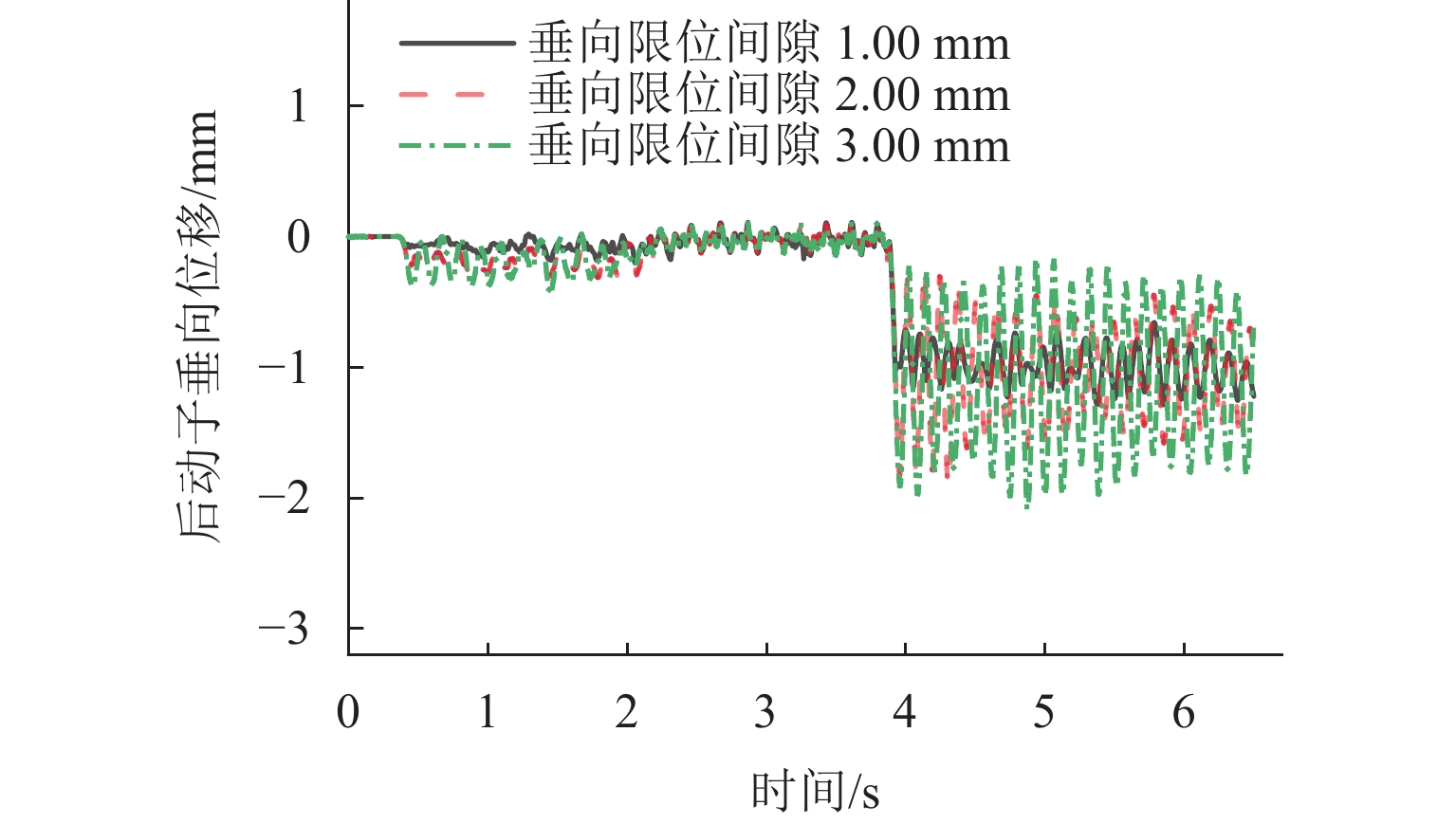
图 18 不同垂向间隙下动子垂向位移
Figure 18. Vertical displacement of mover under different vertical clearances
表 1 动力学评价指标
Table 1. Dynamic evaluation indicators
参数 数值 杜瓦横向位移/mm ±5 杜瓦垂向位移/mm ±5 杜瓦横向加速度/(×g) ±5 杜瓦垂向加速度/(×g) ±5  下载: 导出CSV
表 2 大气环境动力学响应
Table 2. Dynamic response in atmospheric environment
最高
速度/
(km·h−1)杜瓦横
向位移
幅值/mm杜瓦垂
向位移
幅值/mm杜瓦横
向加速度
幅值/(×g)杜瓦垂
向加速度
幅值/(×g)400 0.79 2.15 0.13 0.23 700 1.54 7.45 0.49 0.82
下载: 导出CSV
-
[1] 张可新, 龚增进, 王峰, 等. 我国400 km/h高速铁路综合试验综述[J]. 中国铁路, 2025(6): 10-14. doi: 10.19549/j.issn.1001-683x.2024.08.23.001Zhang Kexin, Gong Zengjin, Wang Feng, et al. Overview of comprehensive tests on 400 km/h HSR in China[J]. China Railway, 2025(6): 10-14. doi: 10.19549/j.issn.1001-683x.2024.08.23.001 [2] 王镠莹, 温宏宇. 铁路新技术发展趋势研究及对我国的建议[J]. 中国铁路, 2020(1): 59-64.Wang Liuying, Wen Hongyu. Research on the development trend of new railway technology and suggestions to China[J]. Chinese Railways, 2020(1): 59-64. [3] 沈志云. 关于我国发展真空管道高速交通的思考[J]. 西南交通大学学报, 2005, 40(2): 133-137.Shen Zhiyun. On developing high-speed evacuated tube transportation in China[J]. Journal of Southwest Jiaotong University, 2005, 40(2): 133-137. [4] 杨国伟, 魏宇杰, 赵桂林, 等. 高速列车的关键力学问题[J]. 力学进展, 2015, 45(1): 217-460.Yang Guowei, Wei Yujie, Zhao Guilin, et al. Research progress on the mechanics of high speed rails[J]. Advances in Mechanics, 2015, 45(1): 217-460. [5] Thornton R D. Efficient and affordable maglev opportunities in the United States[J]. Proceedings of the IEEE, 2009, 97(11): 1901-1921. doi: 10.1109/JPROC.2009.2030251 [6] 翟婉明, 赵春发. 现代轨道交通工程科技前沿与挑战[J]. 西南交通大学学报, 2016, 51(2): 209-226. doi: 10.3969/j.issn.0258-2724.2016.02.001Zhai Wanming, Zhao Chunfa. Frontiers and challenges of sciences and technologies in modern railway engineering[J]. Journal of Southwest Jiaotong University, 2016, 51(2): 209-226. doi: 10.3969/j.issn.0258-2724.2016.02.001 [7] 张卫华, 邓自刚, 毕海权, 等. 低真空超高速轨道交通研究进展与思考[J]. 机车电传动, 2025(1): 1-13. doi: 10.13890/j.issn.1000-128X.2025.01.109Zhang Weihua, Deng Zigang, Bi Haiquan, et al. Research review and reflections on ultra-high-speed rail transit in low-vacuum environments[J]. Electric Drive for Locomotives, 2025(1): 1-13. doi: 10.13890/j.issn.1000-128X.2025.01.109 [8] 徐飞, 罗世辉, 邓自刚. 磁悬浮轨道交通关键技术及全速度域应用研究[J]. 铁道学报, 2019, 41(3): 40-49. doi: 10.3969/j.issn.1001-8360.2019.03.006Xu Fei, Luo Shihui, Deng Zigang. Study on key technologies and whole speed range application of maglev rail transport[J]. Journal of the China Railway Society, 2019, 41(3): 40-49. doi: 10.3969/j.issn.1001-8360.2019.03.006 [9] 邓自刚, 李海涛. 高温超导磁悬浮车研究进展[J]. 中国材料进展, 2017, 36(5): 329-334. doi: 10.7502/j.issn.1674-3962.2017.05.02Deng Zigang, Li Haitao. Recent development of high-temperature superconducting maglev[J]. Materials China, 2017, 36(5): 329-334. doi: 10.7502/j.issn.1674-3962.2017.05.02 [10] Hansen I A. Hyperloop transport technology assessment and system analysis[J]. Transportation Planning and Technology, 2020, 43(8): 803-820. doi: 10.1080/03081060.2020.1828935 [11] Gkoumas K. Hyperloop academic research: a systematic review and a taxonomy of issues[J]. Applied Sciences, 2021, 11: 5951. doi: 10.3390/app11135951 [12] Hedhly W, Amin O, Shihada B, et al. Hyperloop communications: challenges, advances, and approaches[J]. IEEE Open Journal of the Communications Society, 2021, 2: 2413-2435. doi: 10.1109/OJCOMS.2021.3121313 [13] 熊嘉阳, 邓自刚. 高速磁悬浮轨道交通研究进展[J]. 交通运输工程学报, 2021, 21(1): 177-198. doi: 10.3969/j.issn.1674-3024.2022.04.046Xiong Jiayang, Deng Zigang. Research progress of high-speed maglev rail transit[J]. Journal of Traffic and Transportation Engineering, 2021, 21(1): 177-198. doi: 10.3969/j.issn.1674-3024.2022.04.046 [14] 于馨凝, 姜欣彤, 张军, 等. 典型磁悬浮技术在磁浮飞行风洞中的应用分析[J]. 实验流体力学, 2023, 37(3): 27-36.Yu Xinning, Jiang Xintong, Zhang Jun, et al. Application of typical magnetic suspension system in maglev flight wind tunnel[J]. Journal of Experiments in Fluid Mechanics, 2023, 37(3): 27-36. [15] 寇杰, 符澄, 高兴龙, 等. 真空管道列车流固耦合研究进展及关键技术分析[J]. 实验流体力学, 2023, 37(3): 37-49. doi: 10.11729/syltlx20220143Kou Jie, Fu Cheng, Gao Xinglong, et al. Progress on fluid-solid coupling of vacuum pipeline train and analysis of key technology[J]. Journal of Experiments in Fluid Mechanics, 2023, 37(3): 37-49. doi: 10.11729/syltlx20220143 [16] 张银龙, 王潇飞, 张琨, 等. 不同阻塞比下真空管道磁浮交通气动热特性[J]. 真空科学与技术学报, 2022, 42(5): 394-403.Zhang Yinlong, Wang Xiaofei, Zhang Kun, et al. Aerothermal characteristics of maglev transportation in evacuated tube with different blocking ratios[J]. Chinese Journal of Vacuum Science and Technology, 2022, 42(5): 394-403. [17] 陈雨成, 秦斌, 梁习锋. 真空管道磁悬浮列车气动特性及激波效应三维研究[J]. 铁道科学与工程学报, 2023, 20(2): 412-422. doi: 10.19713/j.cnki.43-1423/u.T20220373Chen Yucheng, Qin Bin, Liang Xifeng. Three-dimensional study on aerodynamics characteristics and shock wave effects of the vacuum tube train[J]. Journal of Railway Science and Engineering, 2023, 20(2): 412-422. doi: 10.19713/j.cnki.43-1423/u.T20220373 [18] 邓自刚, 张勇, 王博, 等. 真空管道运输系统发展现状及展望[J]. 西南交通大学学报, 2019, 54(5): 1063-1072. doi: 10.3969/j.issn.0258-2724.20180204Deng Zigang, Zhang Yong, Wang Bo, et al. Present situation and prospect of evacuated tube transportation system[J]. Journal of Southwest Jiaotong University, 2019, 54(5): 1063-1072. doi: 10.3969/j.issn.0258-2724.20180204 [19] Ha H E, Park J, Park K S. Advanced numerical analysis for vibration characteristics and ride comfort of ultra-high-speed maglev train[J]. Microsystem Technologies, 2020, 26(1): 183-193. doi: 10.1007/s00542-019-04540-x [20] Song M K, Fujino Y. Dynamic analysis of guideway structures by considering ultra high-speed Maglev train-guideway interaction[J]. Structural Engineering and Mechanics, 2008, 29(4): 355-380. doi: 10.12989/sem.2008.29.4.355 [21] 寇龙. 基于Halbach永磁轨道的高温超导磁悬浮二维磁-轨作用力模型与振动特性研究[D]. 成都: 西南交通大学, 2021. [22] Chiu W S, Smith R G, Wormley D N. Influence of vehicle and distributed guideway parameters on high speed vehicle-guideway dynamic interactions[J]. Journal of Dynamic Systems, Measurement, and Control, 1971, 93(1): 25-34. doi: 10.1115/1.3426456 [23] 王友彪, 宣言, 张俊博. 低真空管道交通系统列车气动阻力研究[J]. 中国铁路, 2023(7): 53-59. doi: 10.19549/j.issn.1001-683x.2023.02.13.001Wang Youbiao, Xuan Yan, Zhang Junbo. Train aerodynamic resistance in transportation system of low vacuum tube[J]. China Railway, 2023(7): 53-59. doi: 10.19549/j.issn.1001-683x.2023.02.13.001 [24] 邓自刚, 胡啸, 王潇飞, 等. 真空管道磁浮交通试验平台建设及管内气动特性研究进展[J]. 机械工程学报, 2025, 61(2): 181-197.Deng Zigang, Hu Xiao, Wang Xiaofei, et al. Development of evacuated tube maglev transport test platform and research progress on aerodynamic characteristics inside the tube[J]. Journal of Mechanical Engineering, 2025, 61(2): 181-197. [25] 陈大伟, 刘加利, 姚拴宝, 等. 低真空管道超高速磁浮列车气动问题系统配置初探[J]. 实验流体力学, 2023, 37(3): 19-26. doi: 10.11729/syltlx20220136Chen Dawei, Liu Jiali, Yao Shuanbao, et al. Preliminary study on system configuration of ultra high-speed maglev train aerodynamic problem in the low vacuum tube[J]. Journal of Experiments in Fluid Mechanics, 2023, 37(3): 19-26. doi: 10.11729/syltlx20220136 -

 下载:
下载:

 点击查看大图
计量
- 文章访问数: 281
- HTML全文浏览量: 236
- PDF下载量: 86
- 被引次数: 0