



Study on Friction Behavior of Ultra-High Strength Steel CP780 in Cold Stamping and Forming
-
摘要:
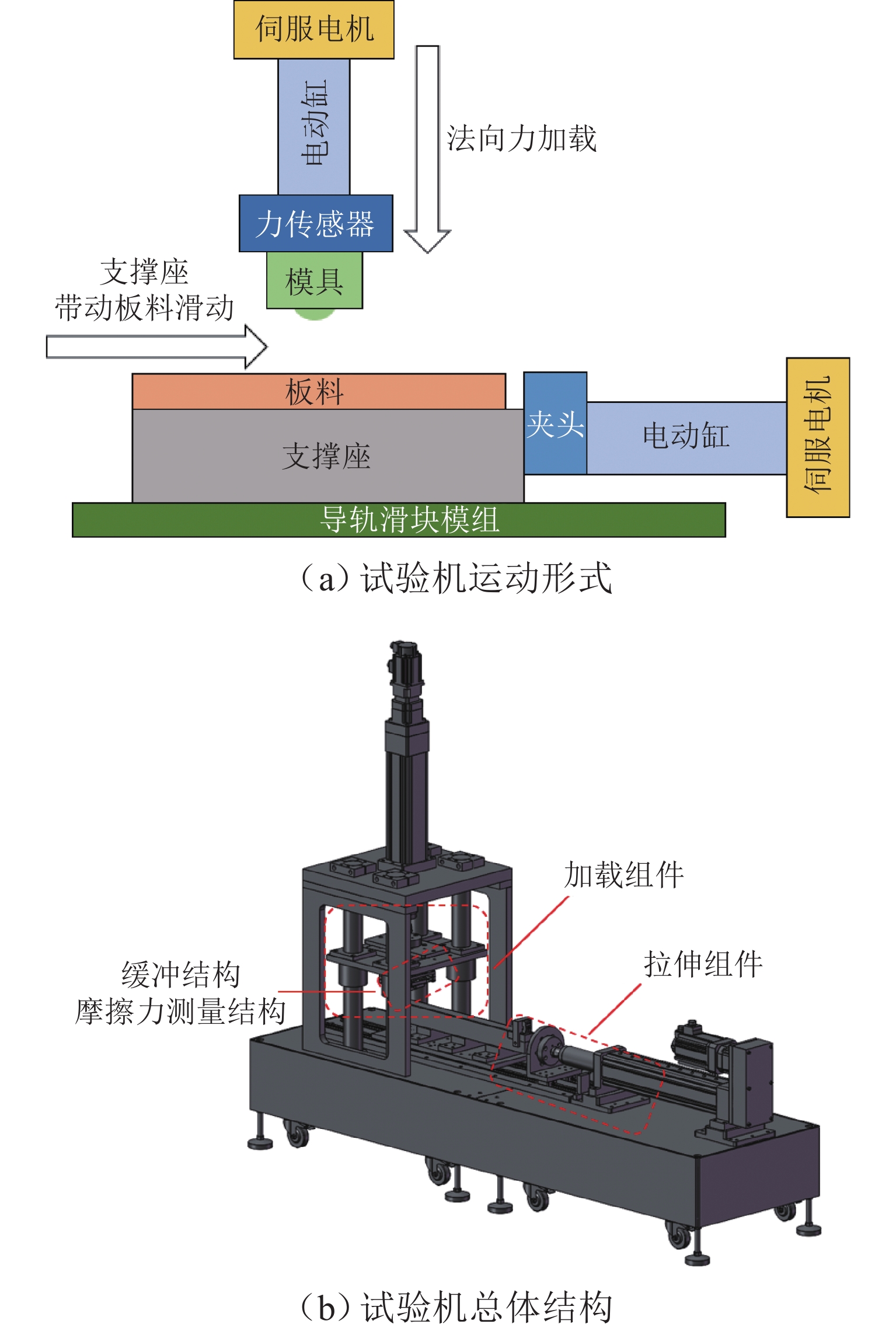
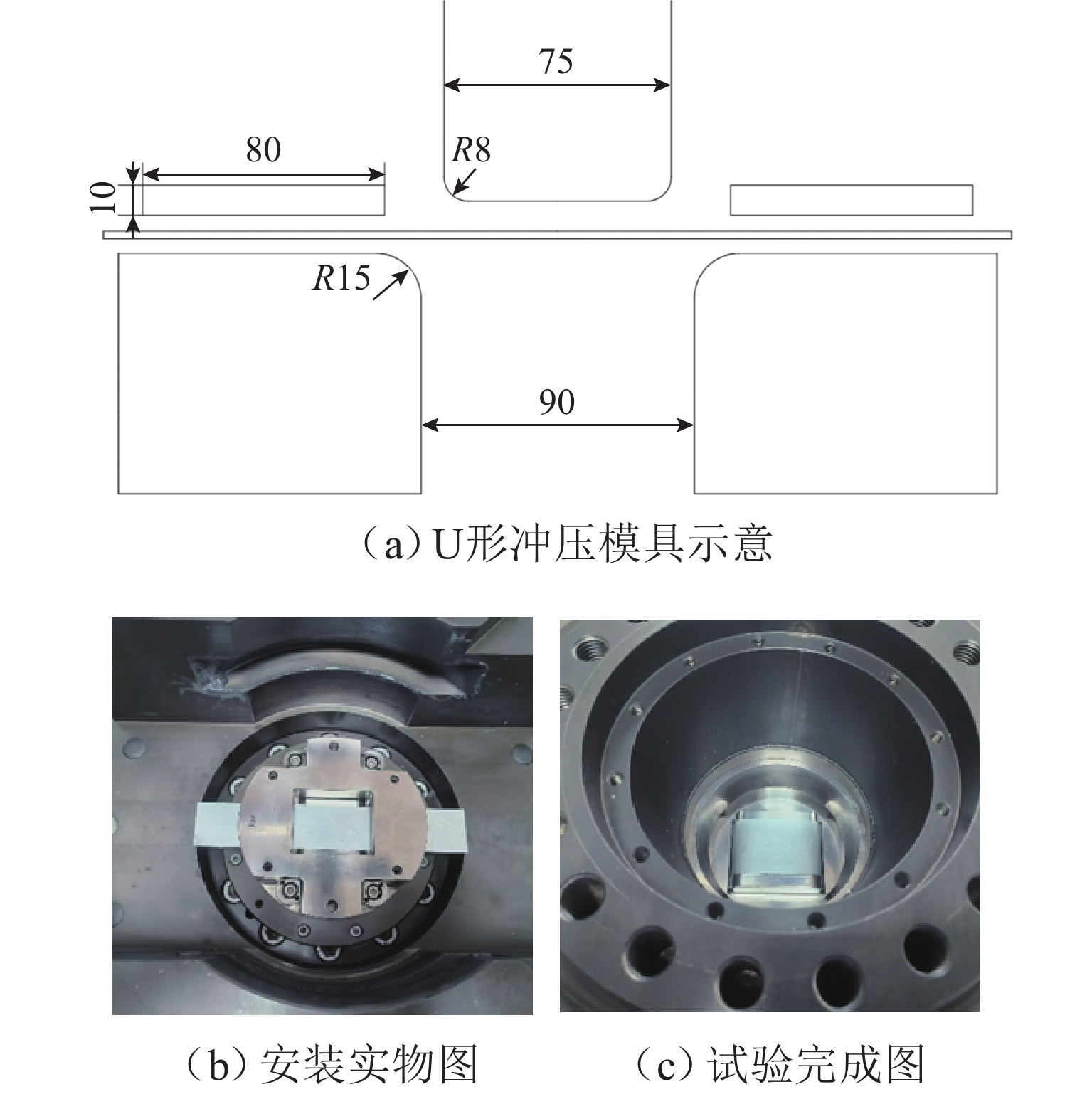
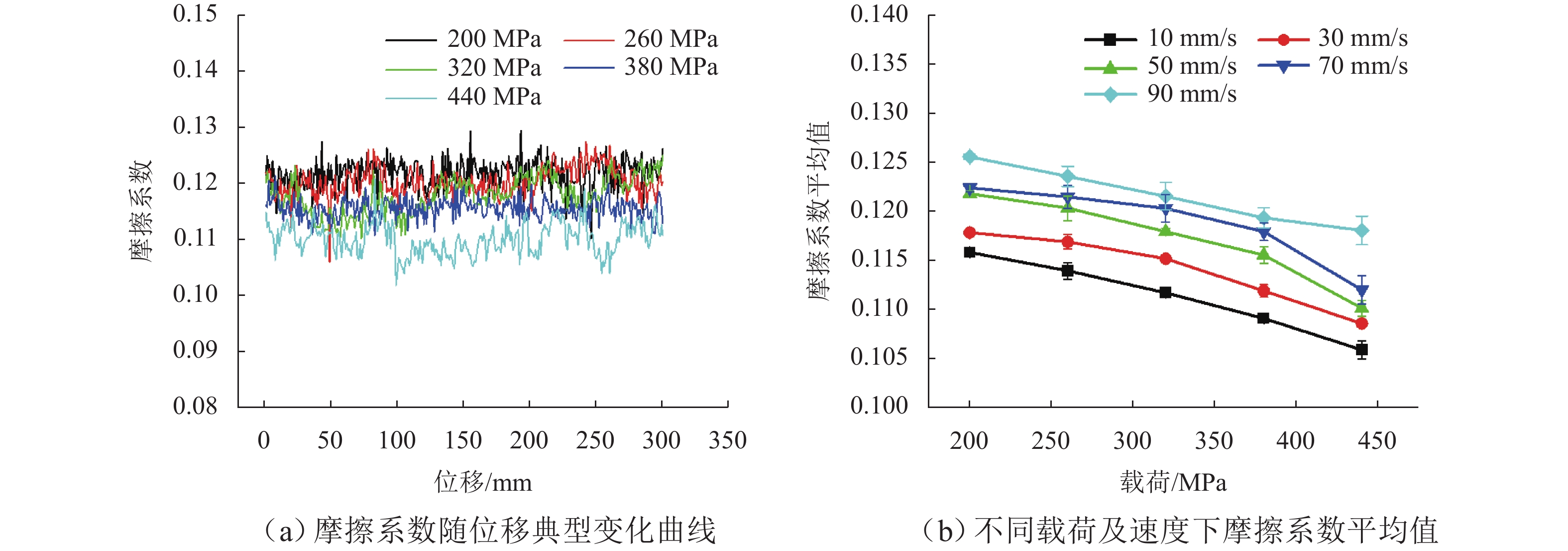
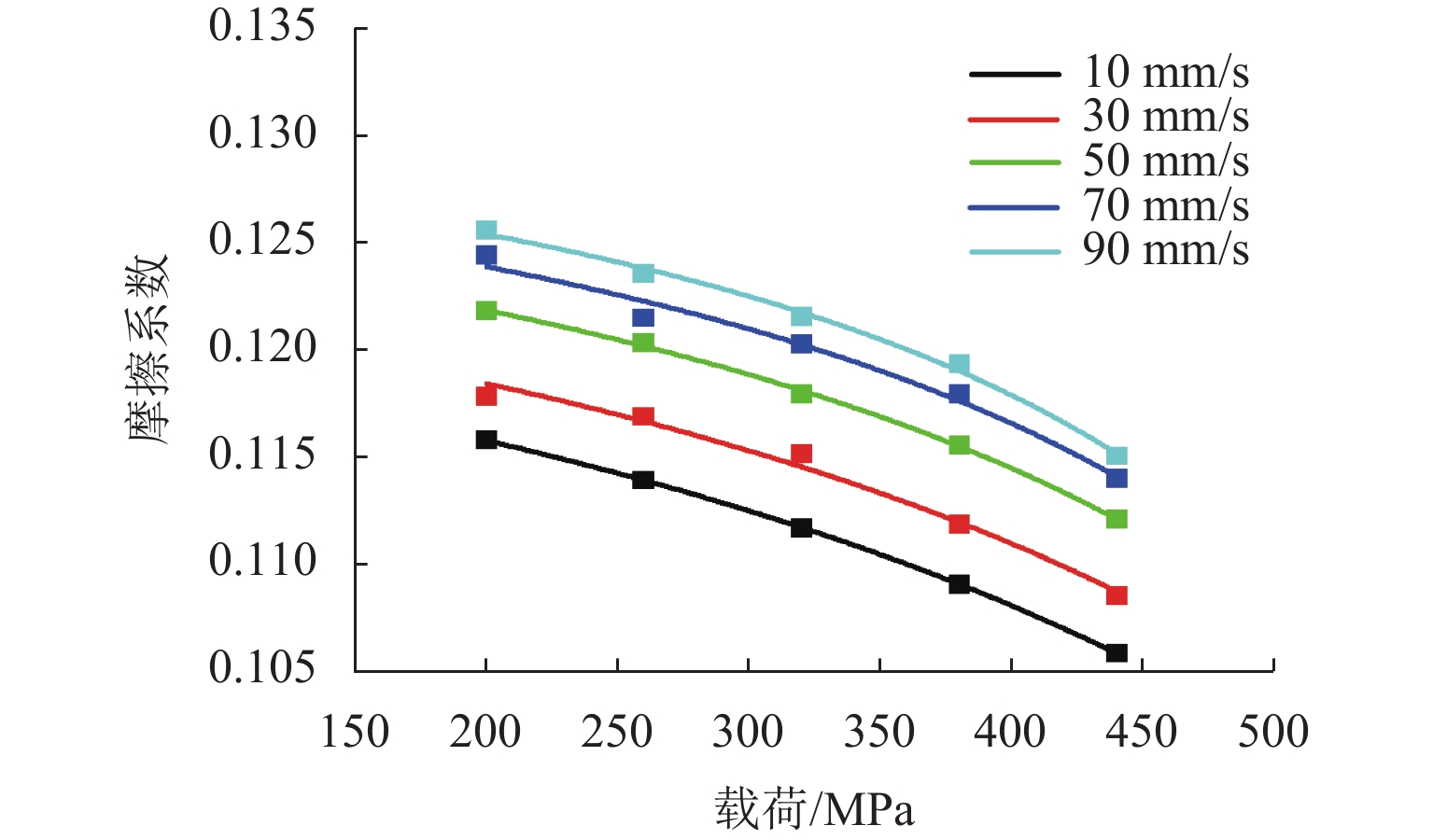
针对传统摩擦模型在预测超高强度钢成形过程数值模拟精度较低问题,本文基于自主研发的超高强度钢冲压摩擦试验机,研究滑动速度和法向载荷对CP780超高强度钢摩擦行为的影响;建立滑动速度与法向载荷相关的超高强度钢冲压成形动态摩擦系数模型;通过U形弯曲试验与仿真模拟相结合验证模型的有效性. 研究结果表明:CP780板料摩擦系数其随着滑动速度的增大而增大,随着载荷的增大而减小;在低载低速条件下,CP780板料的磨损机制主要为犁削效应;在高速高载条件下,其磨损机制主要为犁削效应和部分黏着效应;通过U形弯曲试验的回弹测试值与数值模拟结果比较得到,动态摩擦模型预测的回弹角
α 误差为1.509%,回弹角β 误差为0.348%;而传统恒定摩擦系数回弹角α 的误差最高达到了12.483%,回弹角β 误差最高达到了4.994%. 本文建立的动态摩擦模型在回弹角度预测方面更为精准,能够大大提高成形件数值模拟的精度.Abstract:To address the low accuracy of numerical simulation in traditional friction models during the prediction of the forming process of ultra-high strength steel, the influence of sliding speed and normal load on the friction behavior of ultra-high strength steel CP780 was investigated using a self-developed stamping friction testing machine for ultra-high strength steel. A dynamic friction coefficient model related to sliding speed and normal load for ultra-high strength steel stamping and forming was established, and the proposed model was verified by integrating U-bending experiments with numerical simulations. Research findings indicate that the friction coefficient of CP780 sheet materials increases with increasing sliding speed and decreases with increasing load. Under conditions of low load and low speed, the wear mechanism of CP780 sheet materials is primarily dominated by ploughing effects; under conditions of high speed and high load, the wear mechanism involves both ploughing effects and partial adhesive effects. A comparison of rebound test values from U-bending experiments with numerical simulation results reveals that the error in the rebound angle
α predicted by the dynamic friction model is 1.509%, and the error in the predicted rebound angleβ is 0.348%. In contrast, the error in the rebound angleα predicted by the traditional constant friction coefficient model is as high as 12.483%, and the error in the predicted rebound angleβ is as high as 4.994%. The dynamic friction model developed in this study demonstrates greater precision in predicting rebound angles and significantly enhances the accuracy of numerical simulations for formed parts. -
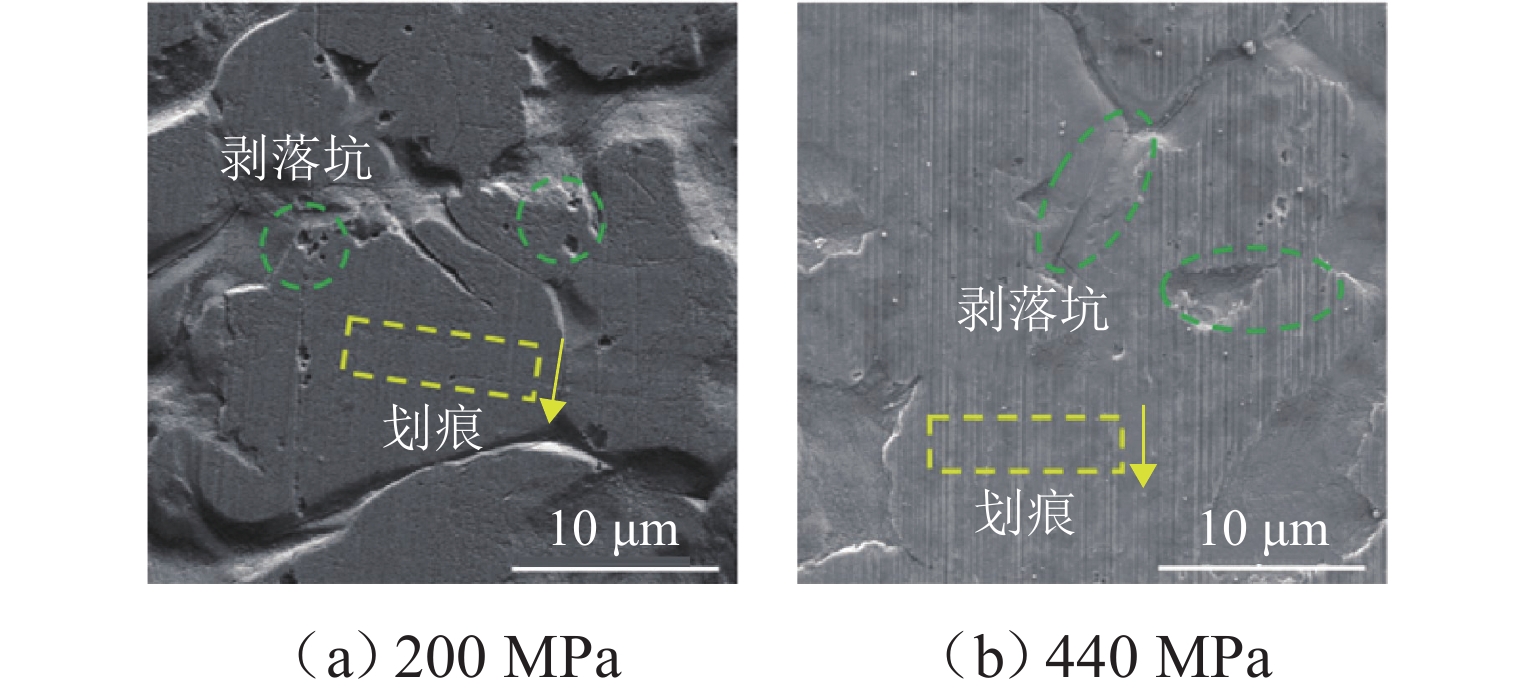
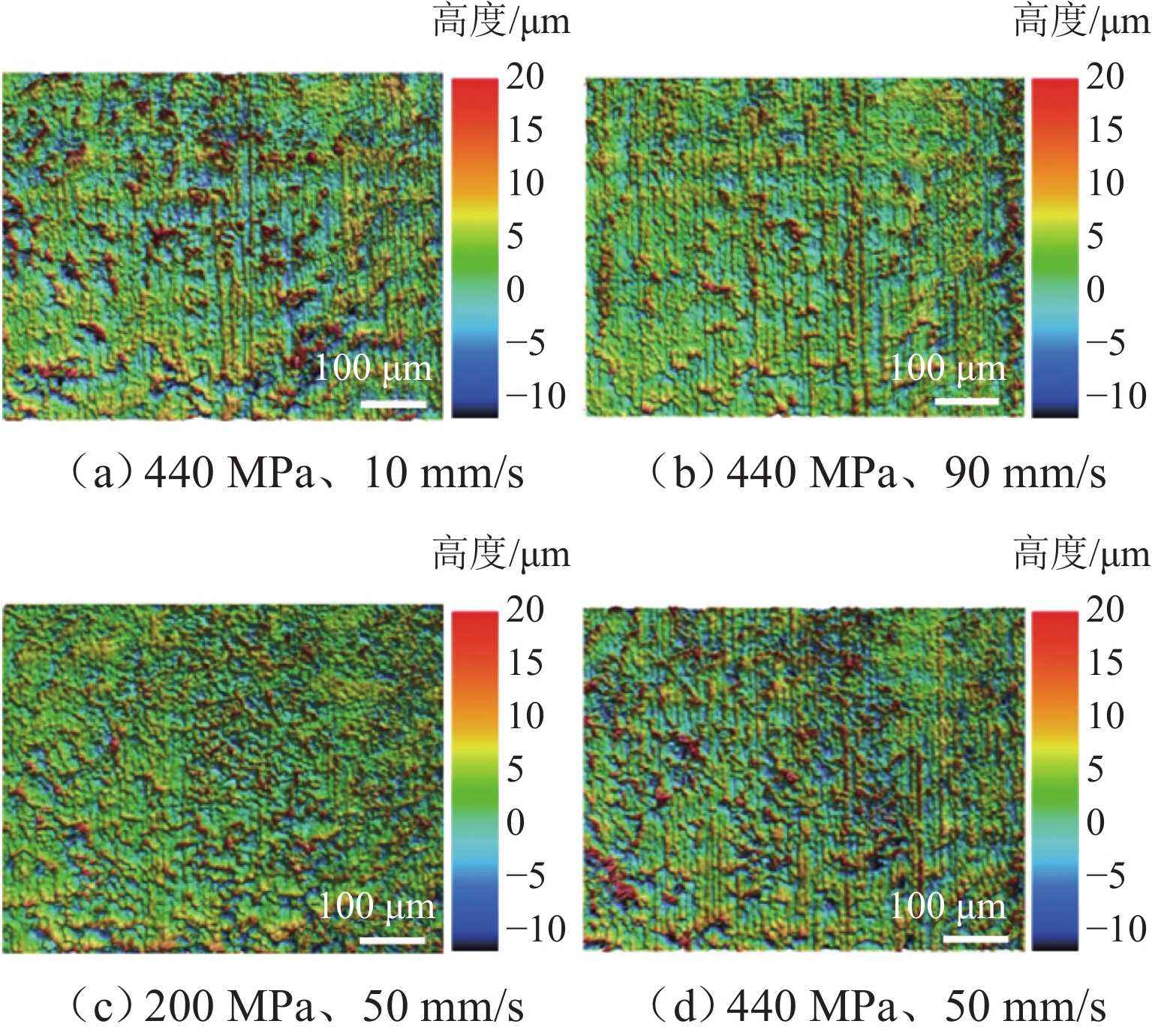
图 5 CP780在滑动速度50 mm/s下的典型表面形貌
Figure 5. Typical surface morphology of CP780 at a sliding speed of 50 mm/s
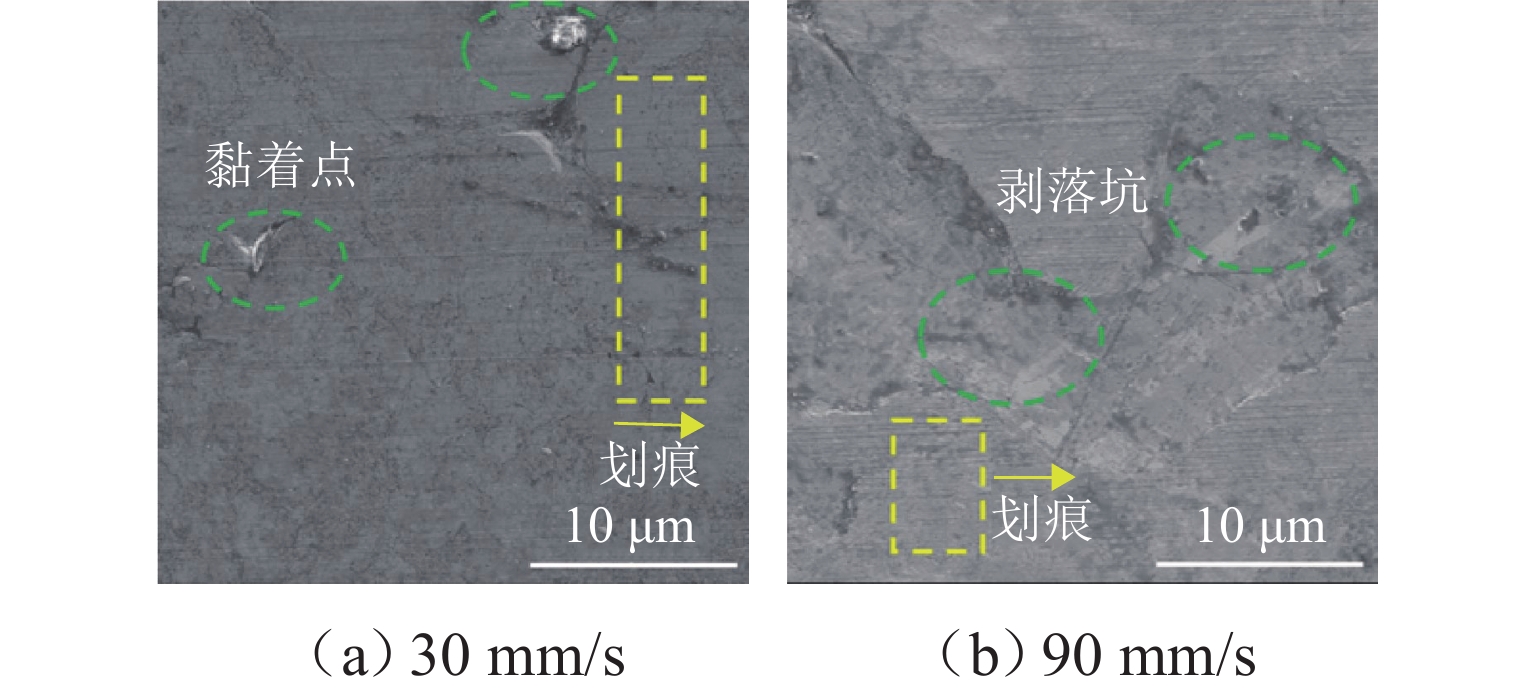
图 6 CP780在法向载荷320 MPa下的典型表面形貌
Figure 6. Typical surface morphology of CP780 under normal load of 320 MPa
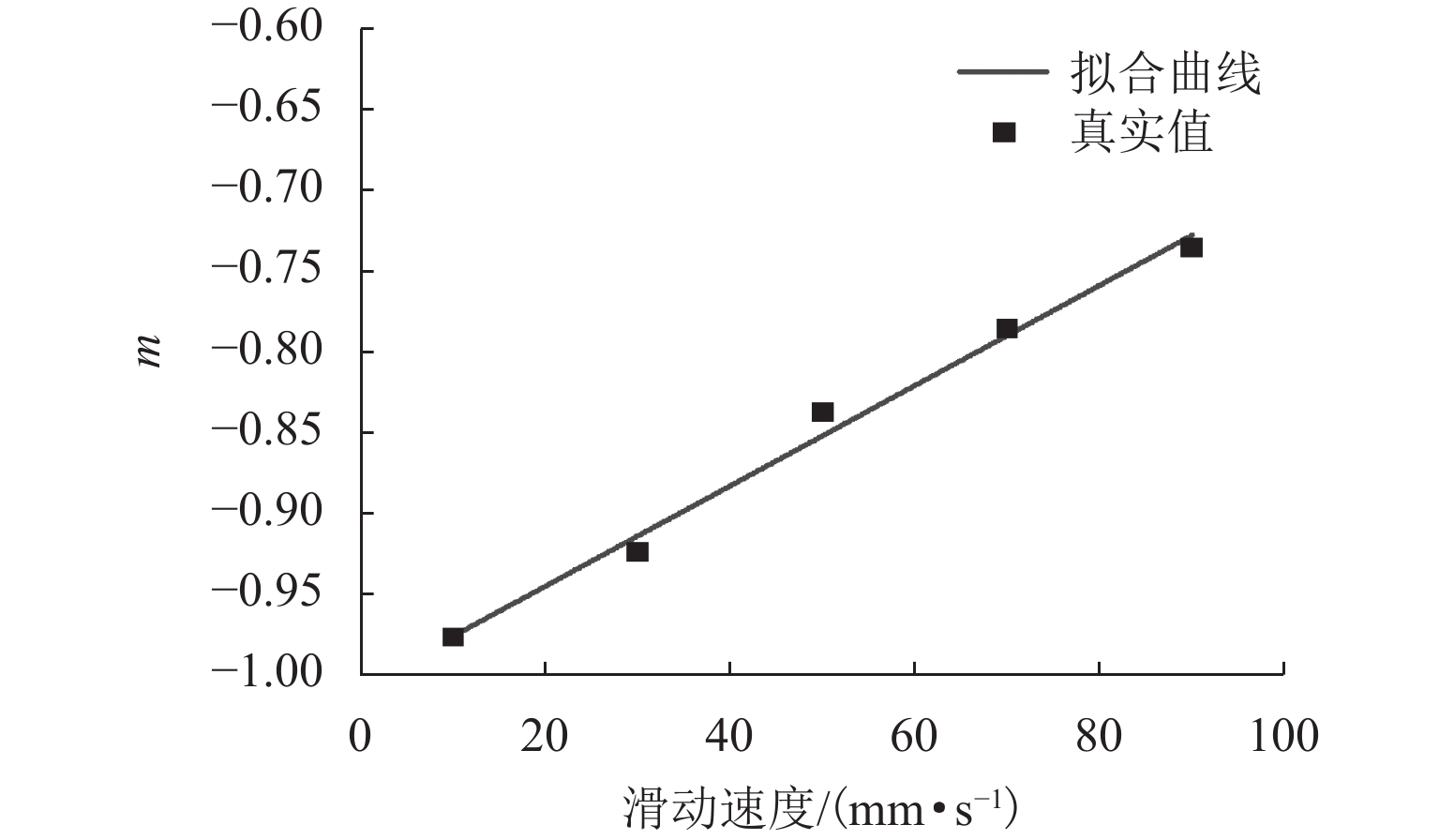
图 9 参数m关于滑动速度的拟合曲线
Figure 9. Fitting curve of parameter m with respect to sliding speed
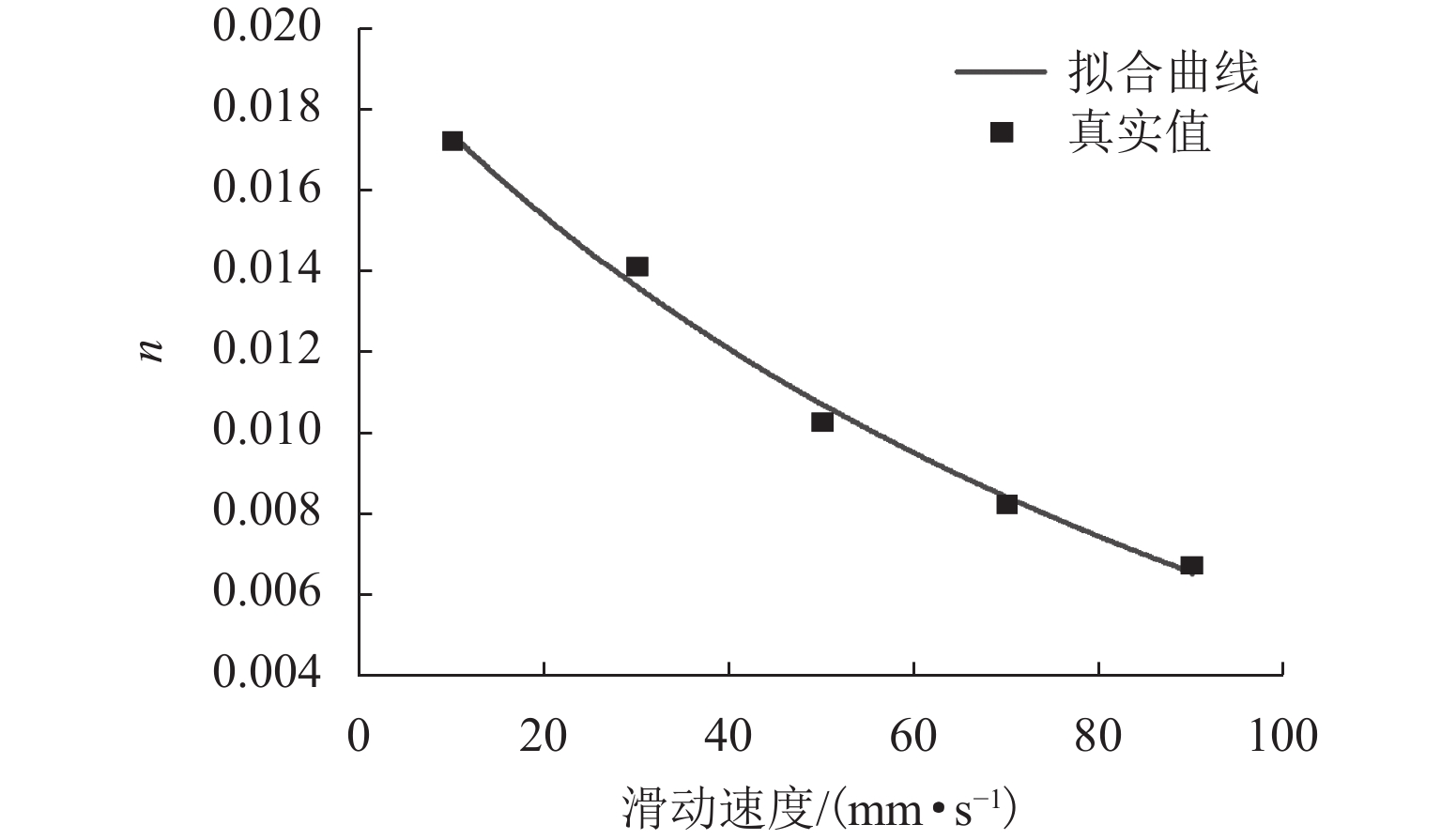
图 10 参数n关于滑动速度的拟合曲线
Figure 10. Fitting curve of parameter n with respect to sliding speed
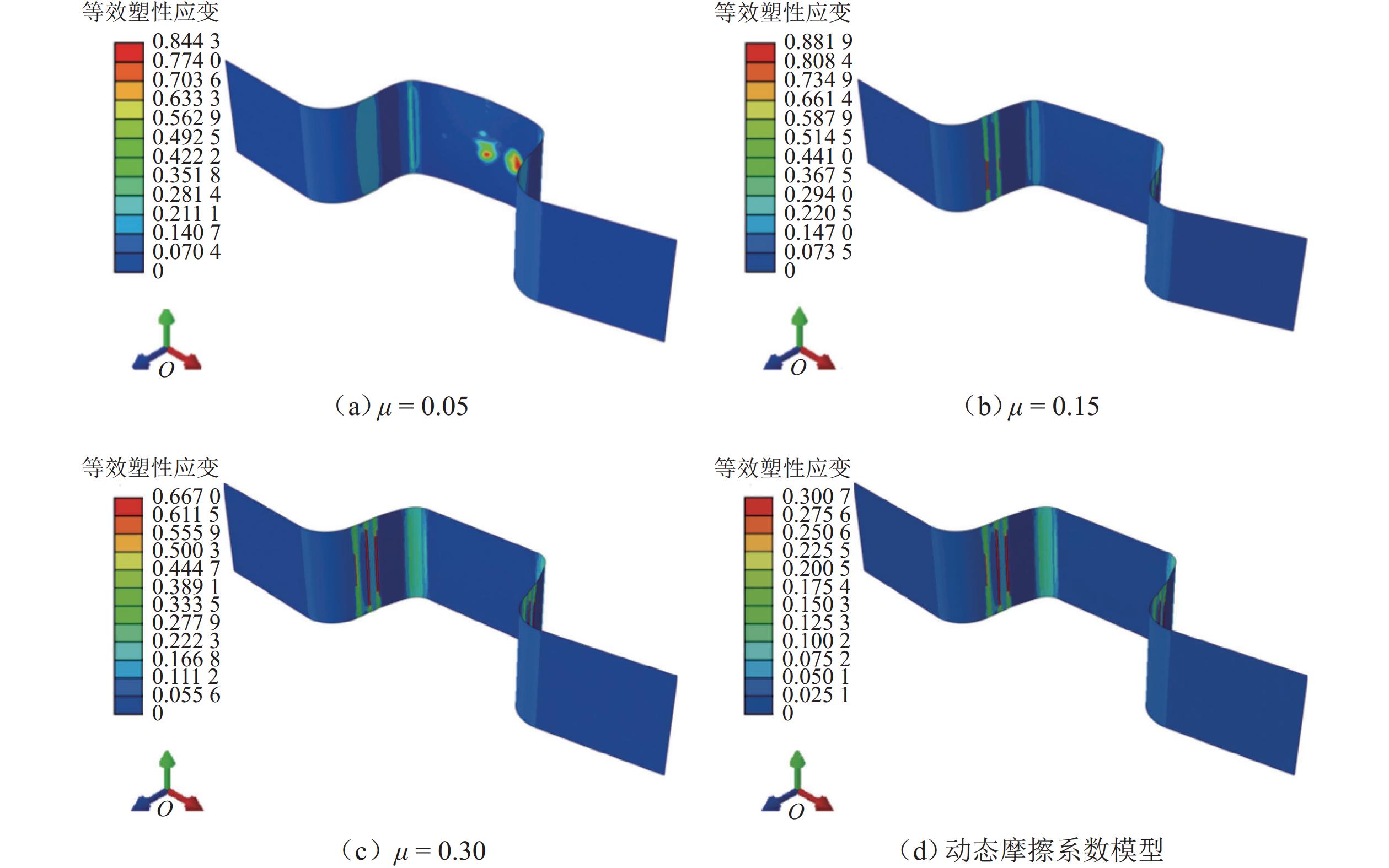
图 13 不同摩擦系数的回弹预测有限元模拟结果
Figure 13. Finite element simulation results of rebound prediction with different friction coefficients
表 1 试验参数
Table 1. Experimental parameters
速度/(mm·s−1) 10 30 50 70 90 载荷/MPa 200 260 320 380 440  下载: 导出CSV
表 2 不同工艺参数下的表面粗糙度
Table 2. Surface roughness under different process parameters
载荷/MPa 速度/(mm·s−1) Sa/µm Sa 方差 Sz/µm Sz 方差 440 10 0.806 0.056 14.07 2.354 440 90 0.895 0.062 27.62 1.462 200 50 1.087 0.102 27.01 2.154 440 50 0.828 0.023 23.01 1.765
下载: 导出CSV
表 3 反函数模型拟合结果
Table 3. Fitting results of inverse function model
速度/(mm·s−1) m n k 拟合优度 10 − 0.97681 0.01725 0.138 0.999 30 − 0.92321 0.01412 0.138 0.981 50 − 0.83718 0.01027 0.138 0.998 70 − 0.78548 0.00826 0.138 0.978 90 − 0.73503 0.00673 0.138 0.994
下载: 导出CSV
表 4 预测值与测量值之间的误差
Table 4. Error between predicted and measured values
编号 载荷/MPa 速度/(mm·s−1) µExp µFit 误差/% 1 300 20 0.1138 0.1124 −1.26 2 300 40 0.1169 0.1182 1.08 3 300 60 0.1194 0.1207 1.04 4 250 30 0.1172 0.1181 0.72 5 300 30 0.1155 0.1159 0.30 6 350 30 0.1135 0.1141 0.52 注:µExp为平板滑动摩擦试验的摩擦系数试验值,µFit为动态摩擦模型的拟合值.
下载: 导出CSV
表 5 不同摩擦系数下的回弹角预测误差
Table 5. Prediction errors of rebound angle at different friction coefficients
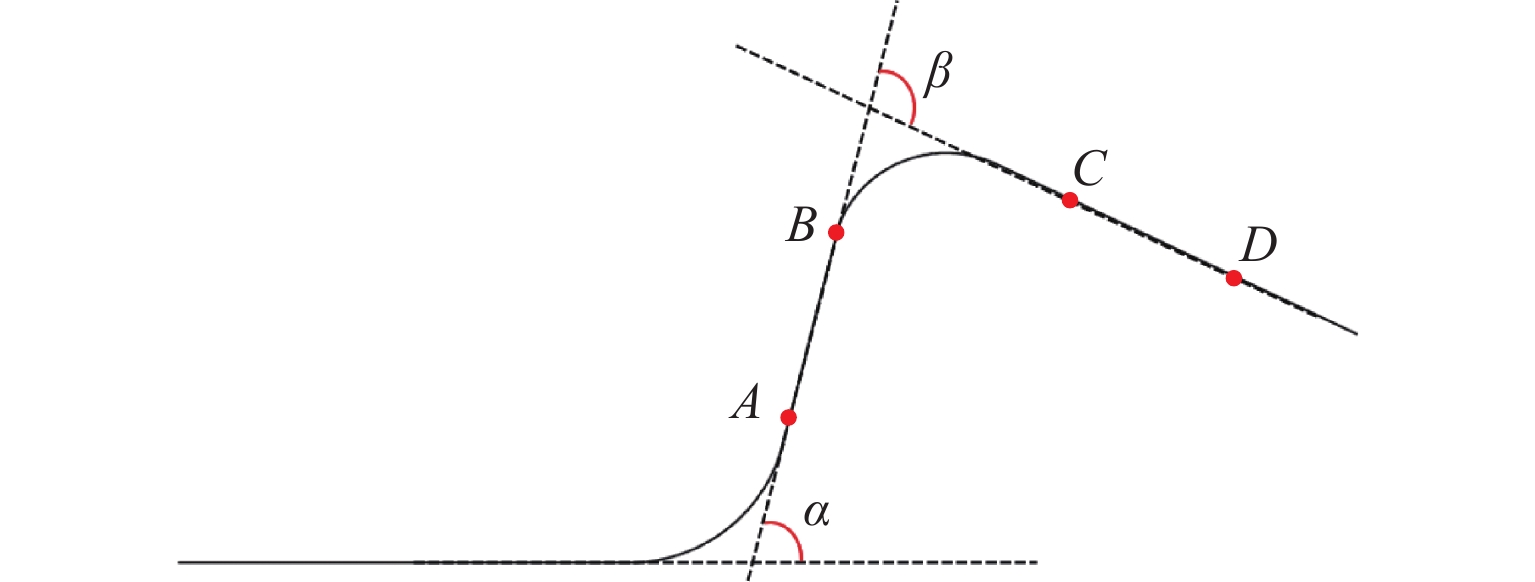
压边力/kN 摩擦系数 α/(°) α 的误差/% β/(°) β 的误差/% 50 试验值 71.8 0 86.1 0 动态模型 72.9 1.509 86.4 0.348 0.05 80.9 12.483 90.4 4.994 0.15 77.6 8.078 88.5 2.787 0.30 75.5 5.153 83.8 2.671
下载: 导出CSV
-
[1] LEE K, MOON C, LEE M G. A review on friction and lubrication in automotive metal forming: experiment and modeling[J]. International Journal of Automotive Technology, 2021, 22(6): 1743-1761. doi: 10.1007/s12239-021-0150-z [2] 李贵, 龙小裕, 梁中凯, 等. 先进高强度镀锌钢板冲压成形摩擦及表面损伤研究进展[J]. 塑性工程学报, 2018, 25(4): 11-20.LI Gui, LONG Xiaoyu, LIANG Zhongkai, et al. Research progress of friction and surface damage in stamping forming of galvanized advanced high strength steel sheet[J]. Journal of Plasticity Engineering, 2018, 25(4): 11-20. [3] 李贵, 龙小裕, 杨朋, 等. 板料冲压成形摩擦研究现状及发展趋势[J]. 锻压技术, 2018, 43(4): 1-8. doi: 10.13330/j.issn.1000-3940.2018.04.001LI Gui, LONG Xiaoyu, YANG Peng, et al. Research status and development trend of friction in stamping of sheet metal[J]. Forging & Stamping Technology, 2018, 43(4): 1-8. doi: 10.13330/j.issn.1000-3940.2018.04.001 [4] 唐远寿, 司宇, 徐正萌, 等. 超高强度钢在汽车轻量化中的应用及研究进展[J]. 金属热处理, 2023, 48(10): 247-254. doi: 10.13251/j.issn.0254-6051.2023.10.038TANG Yuanshou, SI Yu, XU Zhengmeng, et al. Application and research progress of ultra-high strength steel in automotive lightweight[J]. Heat Treatment of Metals, 2023, 48(10): 247-254. doi: 10.13251/j.issn.0254-6051.2023.10.038 [5] 雷先华, 文涛, 鲁仕豪, 等. 汽车轻量化研究现状及发展趋势探讨[J]. 汽车工艺师, 2024(6): 6-8, 19.LEI Xianhua, WEN Tao, LU Shihao, et al. Research status and development trend of automobile lightweight[J]. Auto Manufacturing Engineer, 2024(6): 6-8, 19. [6] 李万里, 凌黎明. 新能源汽车制造技术的研究与创新[J]. 储能科学与技术, 2025, 14(1): 283-285. doi: 10.19799/j.cnki.2095-4239.2024.1249LI Wanli, LING Liming. Research and innovation in manufacturing technology of new energy vehicles[J]. Energy Storage Science and Technology, 2025, 14(1): 283-285. doi: 10.19799/j.cnki.2095-4239.2024.1249 [7] 王武荣, 韦习成. 冲压成形中的摩擦学[M]. 北京: 科学出版社, 2020. [8] 闫卓奇, 侯泽然, 郭楠, 等. 摩擦因数对超薄316L不锈钢双极板热冲压数值模拟的影响[J]. 塑性工程学报, 2024, 31(8): 14-19. doi: 10.3969/j.issn.1007-2012.2024.08.002YAN Zhuoqi, HOU Zeran, GUO Nan, et al. Effect of friction factor on numerical simulation of hot stamping of ultra-thin 316L stainless steel bipolar plate[J]. Journal of Plasticity Engineering, 2024, 31(8): 14-19. doi: 10.3969/j.issn.1007-2012.2024.08.002 [9] 李小强, 张贺刚, 王烁, 等. 铝合金板冲压摩擦试验机开发与试验[J]. 北京航空航天大学学报, 2024, 50(6): 1898-1910.LI Xiaoqiang, ZHANG Hegang, WANG Shuo, et al. Development and experimental of friction tester for aluminum alloy sheet stamping[J]. Journal of Beijing University of Aeronautics and Astronautics, 2024, 50(6): 1898-1910. [10] 温诗铸黄平. 摩擦学原理[M]. 4版. 北京: 清华大学出版社, 2012. [11] 王涌纲, 何仕荣, 顾 猛, 等. 金属双极板冲压成形数值分析及回弹补偿[J]. 塑性工程学报, 2024, 31(2): 43-50.WANG Yonggang, HE Shirong, GU Meng, et al. Numerical analysis and springback compensation of metal bipolar plate stamping forming[J]. Journal of Plasticity Engineering, 2024, 31(2): 43-50. [12] 赵玉璋, 王凯, 王武荣, 等. 高强度双相DP780钢板冲压成形的变摩擦系数模型及其应用[J]. 上海交通大学学报, 2015, 49(10): 1446-1451. doi: 10.16183/j.cnki.jsjtu.2015.10.003ZHAO Yuzhang, WANG Kai, WANG Wurong, et al. Application of variable friction coefficient model in forming of advanced high-strength steel[J]. Journal of Shanghai Jiao Tong University, 2015, 49(10): 1446-1451. doi: 10.16183/j.cnki.jsjtu.2015.10.003 [13] 武涵曦, 罗洪松, 尤宝卿, 等. 动态摩擦模型在铝合金冲压CAE分析中的应用[J]. 锻造与冲压, 2025(4): 21-24.WU Hanxi, LUO Hongsong, YOU Baoqing, et al. Application of dynamic friction model in the analysis of aluminum alloy stamping with CAE[J]. Forging & Metalforming, 2025(4): 21-24. [14] 肖强, 王伏林, 胡仲勋, 等. 考虑切削参数和温度影响的ZM5镁合金刀—屑摩擦模型研究[J]. 工具技术, 2024, 58(8): 113-117. doi: 10.3969/j.issn.1000-7008.2024.08.020XIAO Qiang, WANG Fulin, HU Zhongxun, et al. Study on friction model of ZM5 magnesium alloy chips considering influence of cutting data and temperature[J]. Tool Engineering, 2024, 58(8): 113-117. doi: 10.3969/j.issn.1000-7008.2024.08.020 [15] HOL J, WIEBENGA J H, CARLEER B. Friction and lubrication modelling in sheet metal forming: Influence of lubrication amount, tool roughness and sheet coating on product quality[J]. Journal of Physics: Conference Series, 2017, 896(1): 012026. doi: 10.1088/1742-6596/896/1/012026 [16] HOL J, MEINDERS V T, DE ROOIJ M B, et al. Multi-scale friction modeling for sheet metal forming: The boundary lubrication regime[J]. Tribology International, 2015, 81: 112-128. doi: 10.1016/j.triboint.2014.07.015 [17] HOL J, CID ALFARO M V, DE ROOIJ M B, et al. Advanced friction modeling for sheet metal forming[J]. Wear, 2012, 286: 66-78. doi: 10.3990/1.9789077172988 [18] RAMEZANI M, MOHD RIPIN Z, AHMAD R. Modelling of kinetic friction in V-bending of ultra-high-strength steel sheets[J]. The International Journal of Advanced Manufacturing Technology, 2010, 46(1): 101-110. doi: 10.1007/s00170-008-1450-4 [19] RAMEZANI M, NEITZERT T, PASANG T, et al. Characterization of friction behaviour of AZ80 and ZE10 magnesium alloys under lubricated contact condition by strip draw and bend test[J]. International Journal of Machine Tools and Manufacture, 2014, 85: 70-78. doi: 10.1016/j.ijmachtools.2014.05.006 [20] WANG W R, ZHENG X K, HUA M, et al. Influence of surface modification on galling resistance of DC53 tool steel against galvanized advanced high strength steel sheet[J]. Wear, 2016, 360: 1-13. doi: 10.1016/j.wear.2016.04.021 [21] WANG W R, WANG K, ZHAO Y Z, et al. A study on galling initiation in friction coupling stretch bending with advanced high strength hot-dip galvanized sheet[J]. Wear, 2015, 328: 286-294. doi: 10.1016/j.wear.2015.02.058 [22] WANG W R, HUA M, WEI X C. A comparison study of sliding friction behavior between two high strength DP590 steel sheets against heat treated DC53 punch: Hot-dip galvanized sheet versus cold rolled bare sheet[J]. Tribology International, 2012, 54: 114-122. doi: 10.1016/j.triboint.2012.05.005 [23] WANG W R, ZHAO Y Z, WANG Z M, et al. A study on variable friction model in sheet metal forming with advanced high strength steels[J]. Tribology International, 2016, 93: 17-28. doi: 10.1016/j.triboint.2015.09.011 [24] DOU S S, WANG X P, XIA J, et al. Analysis of sheet metal forming (warm stamping process): a study of the variable friction coefficient on 6111 aluminum alloy[J]. Metals, 2020, 10(9): 1189. doi: 10.3390/met10091189 [25] DOU S S, XIA J S. Analysis of sheet metal forming (stamping process): a study of the variable friction coefficient on 5052 aluminum alloy[J]. Metals, 2019, 9(8): 853. doi: 10.3390/met9080853 [26] 夏建生, 王鹏, 许宁, 等. 多变载荷下板料成形摩擦系数模型的试验研究[J]. 热加工工艺, 2018, 47(22): 42-45. doi: 10.14158/j.cnki.1001-3814.2018.22.010XIA Jiansheng, WANG Peng, XU Ning, et al. Experimental study on friction coefficient model in sheet metal forming under variable loads[J]. Hot Working Technology, 2018, 47(22): 42-45. doi: 10.14158/j.cnki.1001-3814.2018.22.010 [27] LEE K, PARK J, LEE J, et al. An enhanced boundary lubrication friction model for sheet metal forming[J]. International Journal of Mechanical Sciences, 2023, 260: 108652. doi: 10.1016/j.ijmecsci.2023.108652 -

 下载:
下载:

 点击查看大图
计量
- 文章访问数: 279
- HTML全文浏览量: 199
- PDF下载量: 44
- 被引次数: 0