



From Status to Theory: Connotation of Green Design in Railway Engineering
-
摘要:
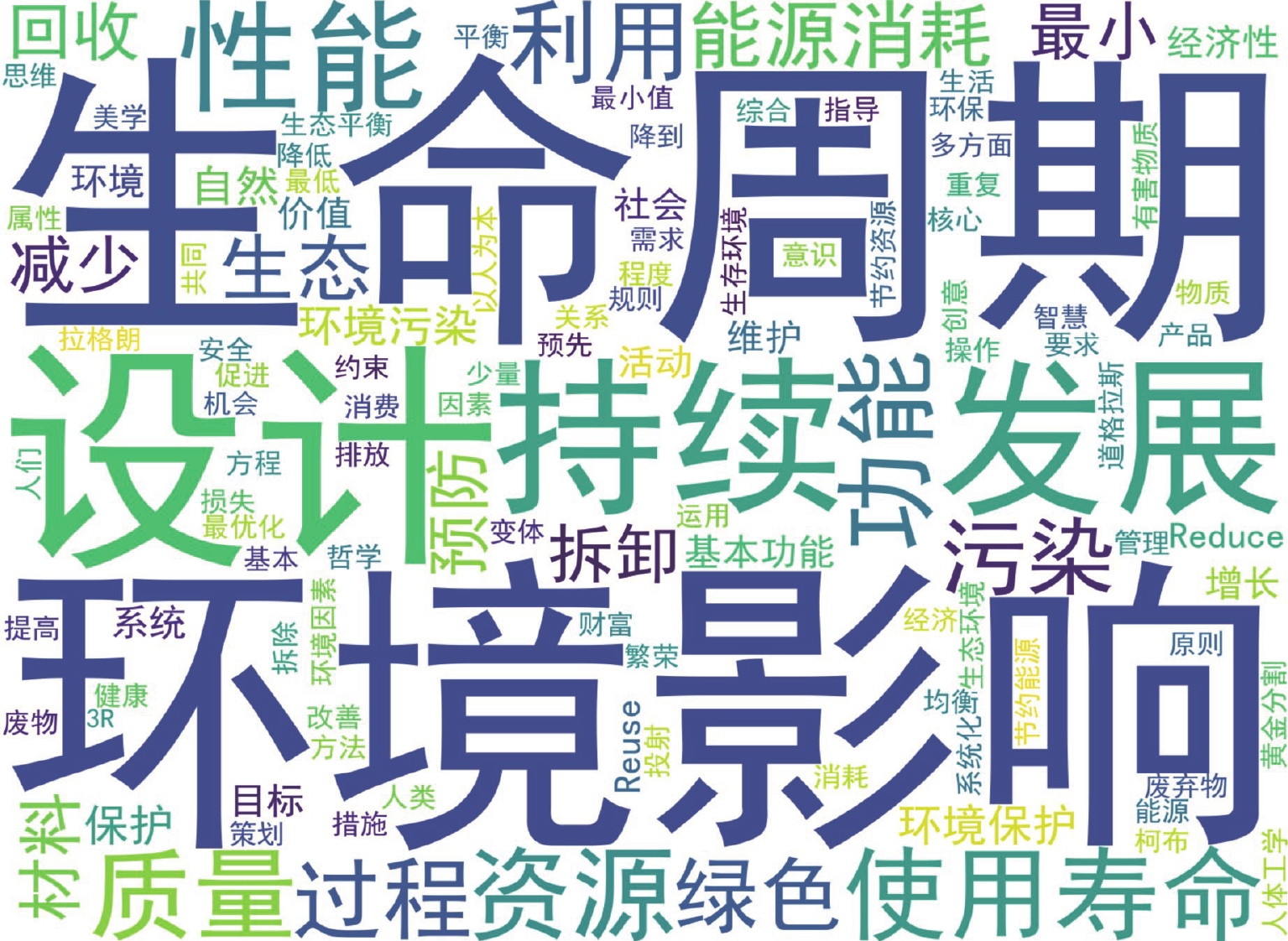
在国家全面倡导绿色交通建设的背景下,通过绿色设计推进绿色铁路工程,从源头实现铁路可持续发展已成为当前研究的重点. 为揭示铁路工程绿色设计内涵,首先通过系统梳理绿色设计相关定义,运用Python软件生成关键词云图,明晰绿色设计定义关键要义,进而结合绿色铁路工程实践特征界定铁路工程绿色设计定义;其次基于文献计量学和知识图谱方法,运用CiteSpace软件可视化分析铁路工程绿色设计研究内容的关键词结构特征和时序聚类特征,厘清该领域的主要研究主题;在此基础上,总结提炼铁路工程绿色设计基本内涵,基于“铁路工程-资源环境”双向耦合设计,从相容共生视角对铁路工程绿色设计内涵进行再释,以“铁路工程影响强度小于资源环境容量目标”为绿色设计准则,构建“铁路工程-资源环境”相容共生架构及其表征模型,量化工程影响强度与环境容量间的适配关系,实现绿色设计方案从定性比选向定量决策的转变;最后,从绿色设计要素、绿色设计要素耦合机理、绿色设计效果评估、绿色设计优化调控机制方面搭建绿色设计内涵解析逻辑框架,系统性解构铁路工程绿色设计内涵. 研究成果以期从设计角度为建设绿色铁路工程提供理论指导.
Abstract:With the national initiative for green transport development, it has become a key research focus to promote green railway engineering through green design and achieve sustainable railway development at the source. To reveal the connotation of green design in railway engineering, first, the relevant definitions of green design were systematically reviewed. A keyword cloud atlas was generated using Python to identify key elements of green design definitions. Based on practical features of green railway engineering, a definition was thus formulated for green design in railway engineering. Then, based on bibliometrics and knowledge mapping, CiteSpace was applied to visualize characteristics of keyword structures and temporal clusters in the research content of green design in railway engineering. On this basis, the fundamental connotation was summarized. Through a “railway engineering-resources & environment” bidirectional coupling, the connotation was reinterpreted from the perspective of compatible symbiosis. With a design criterion that engineering impact intensity must be less than environmental capacity, a “railway engineering-resources & environment” compatible symbiosis framework as well as its characterization model were constructed to quantify the compatibility between engineering impact intensity and environmental capacity. Therefore, green design schemes were allowed to shift from qualitative comparison to quantitative decision-making. Finally, a logical analytical framework was established for green design connotation from four aspects: green design elements, their coupling mechanisms, performance assessment, and optimization/regulation mechanisms, so as to systematically deconstruct the connotation. The results are expected to provide theoretical guidance for construction of green railway engineering.
-
Key words:
- railway engineering /
- green design /
- life cycle /
- green performance /
- compatible symbiosis
-
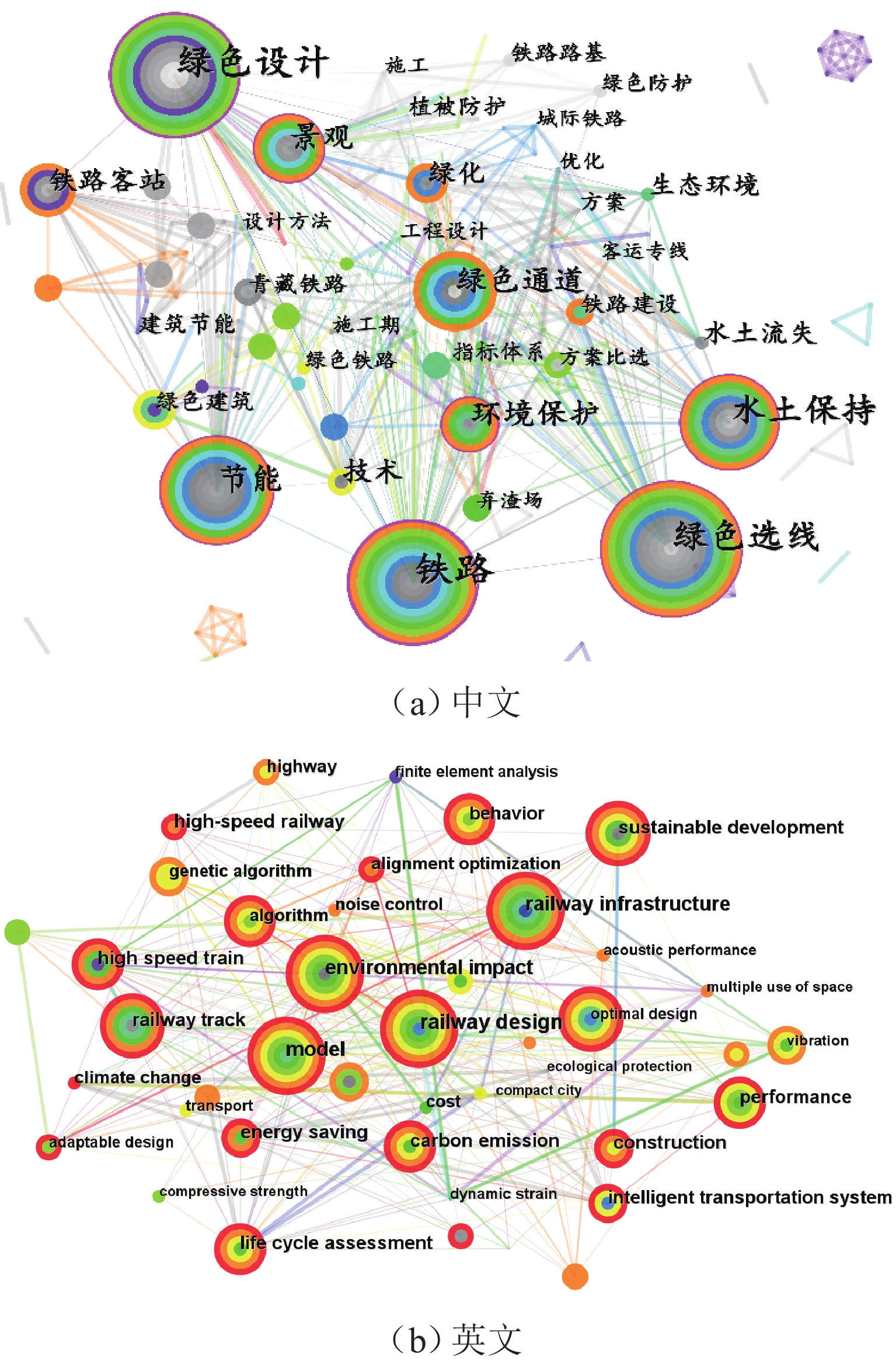
图 2 铁路工程绿色设计中、英文关键词共现图谱
Figure 2. Co-occurrence map of Chinese and English keywords for green design in railway engineering
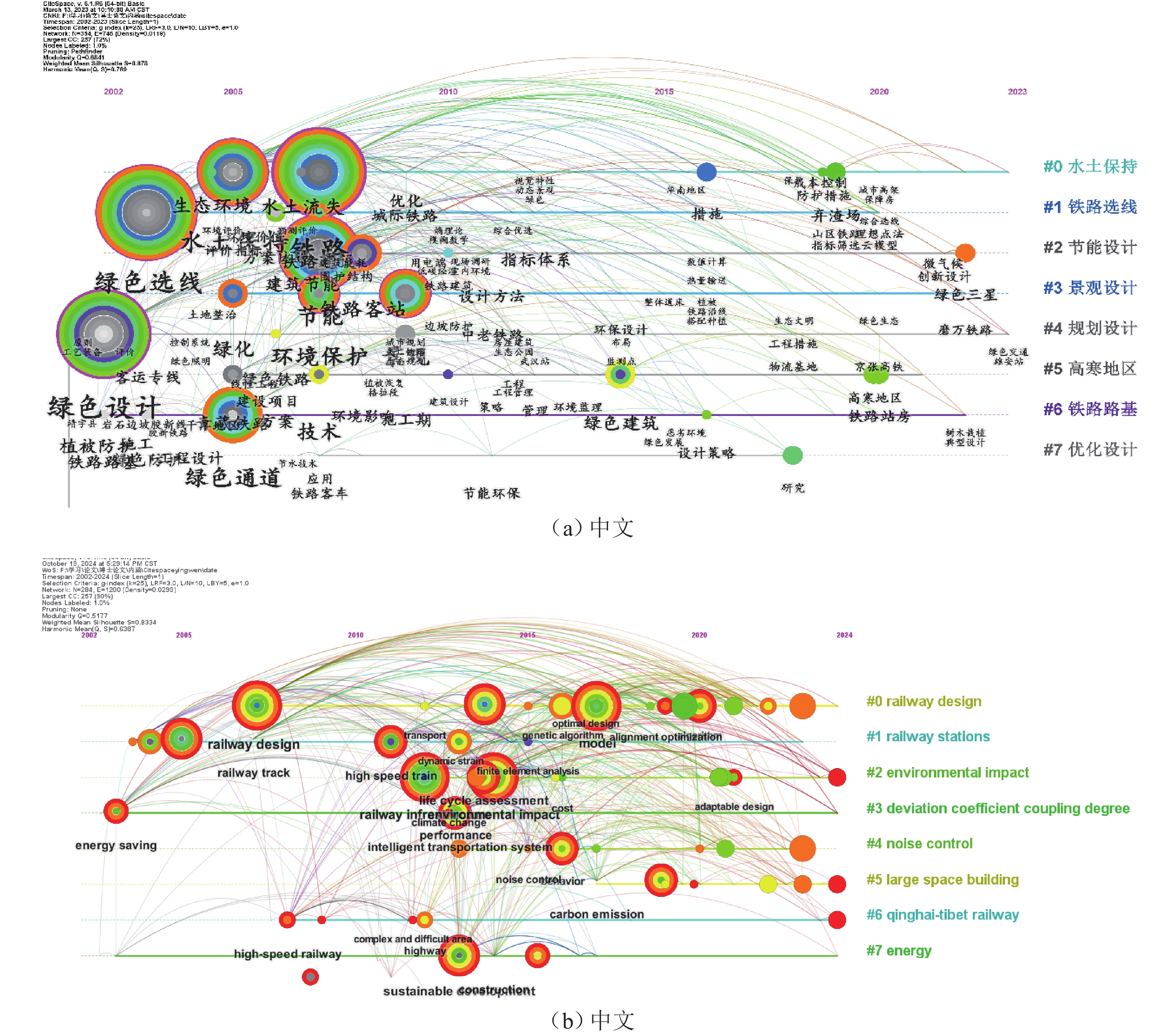
图 3 铁路工程绿色设计中、英文关键词聚类图谱
Figure 3. Clustering map of Chinese and English keywords for green design in railway engineering
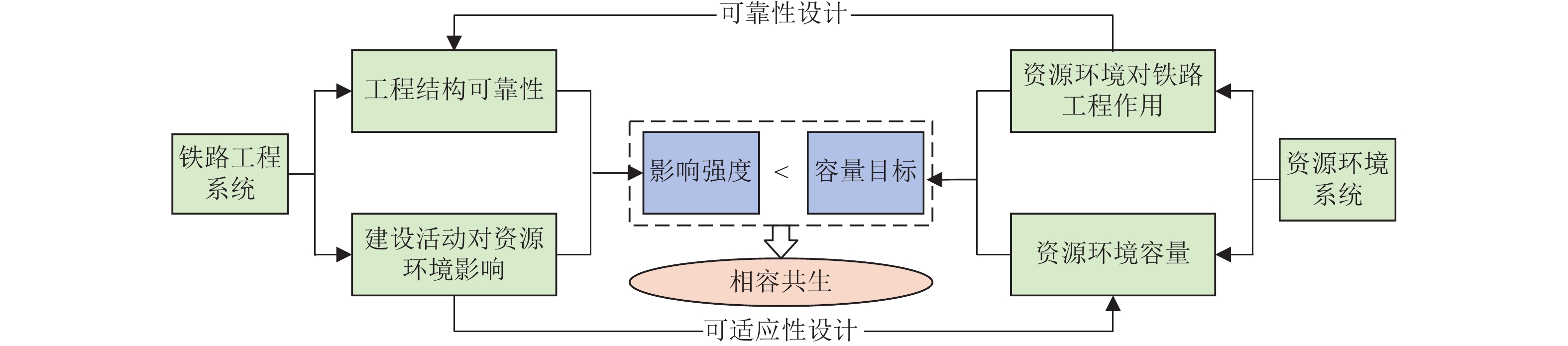
图 4 “铁路工程-资源环境”相容共生框架
Figure 4. “Railway Engineering‒Resources & Environment” compatible symbiosis framework
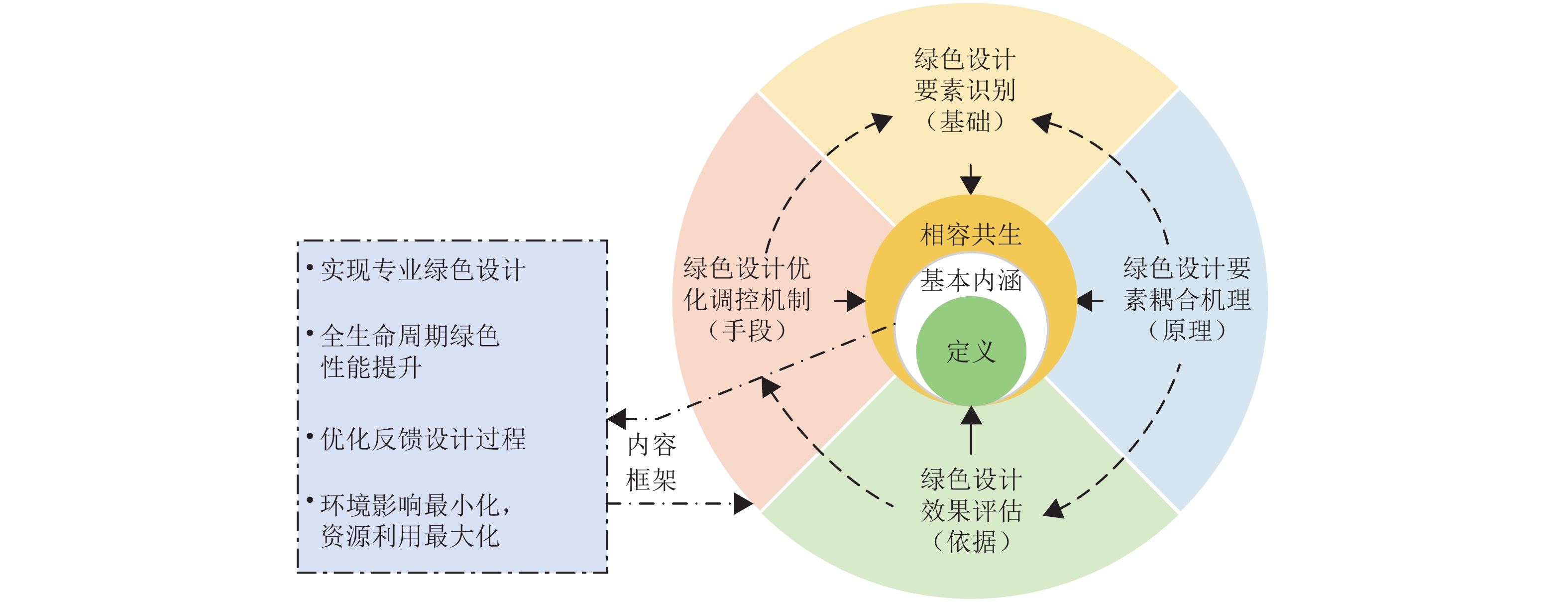
图 5 铁路工程绿色设计内涵解析架构
Figure 5. Analytical framework for connotation of green design in railway engineering
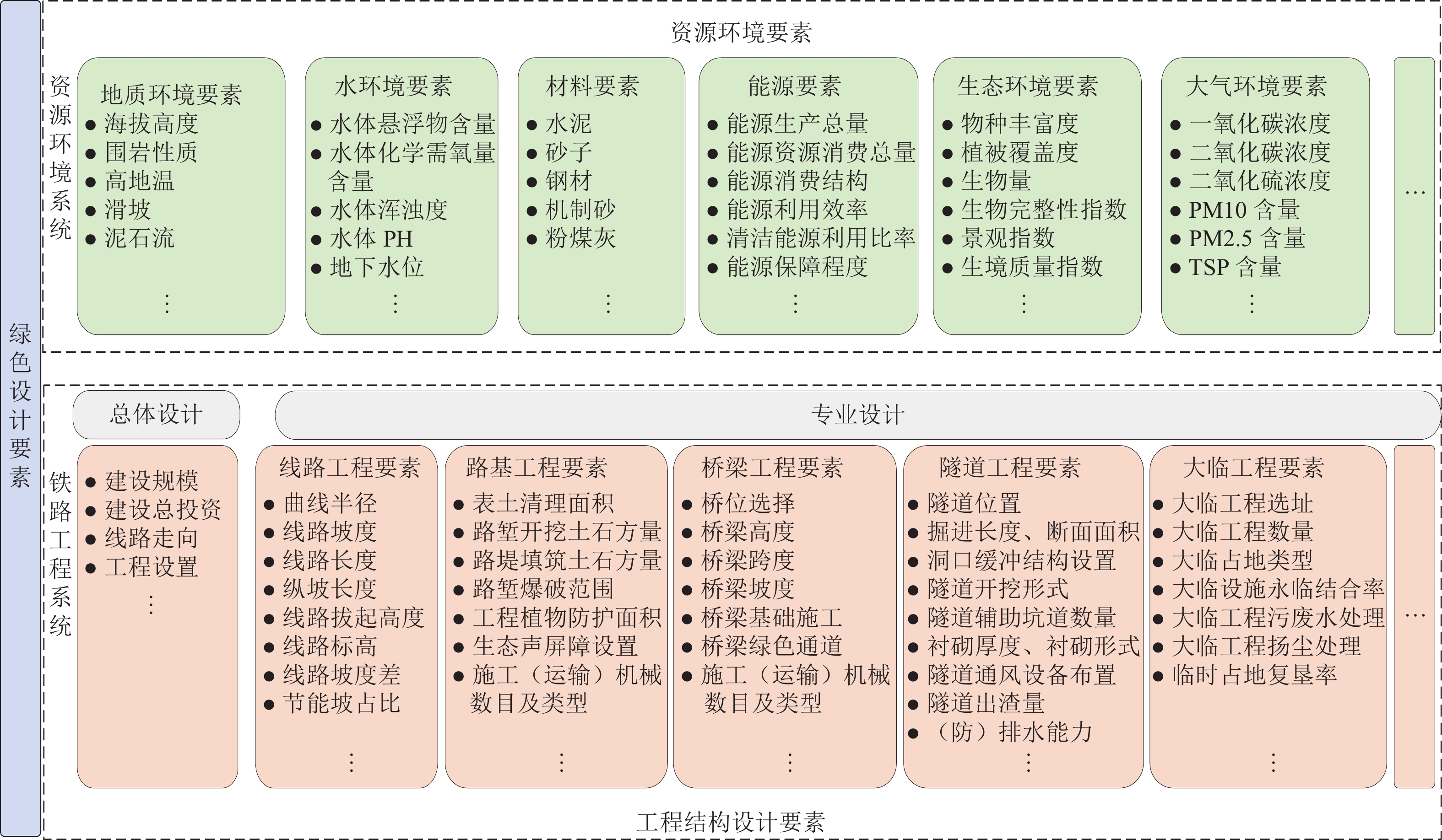
图 6 铁路工程绿色设计要素识别框架
Figure 6. Framework for identifying green design elements in railway engineering
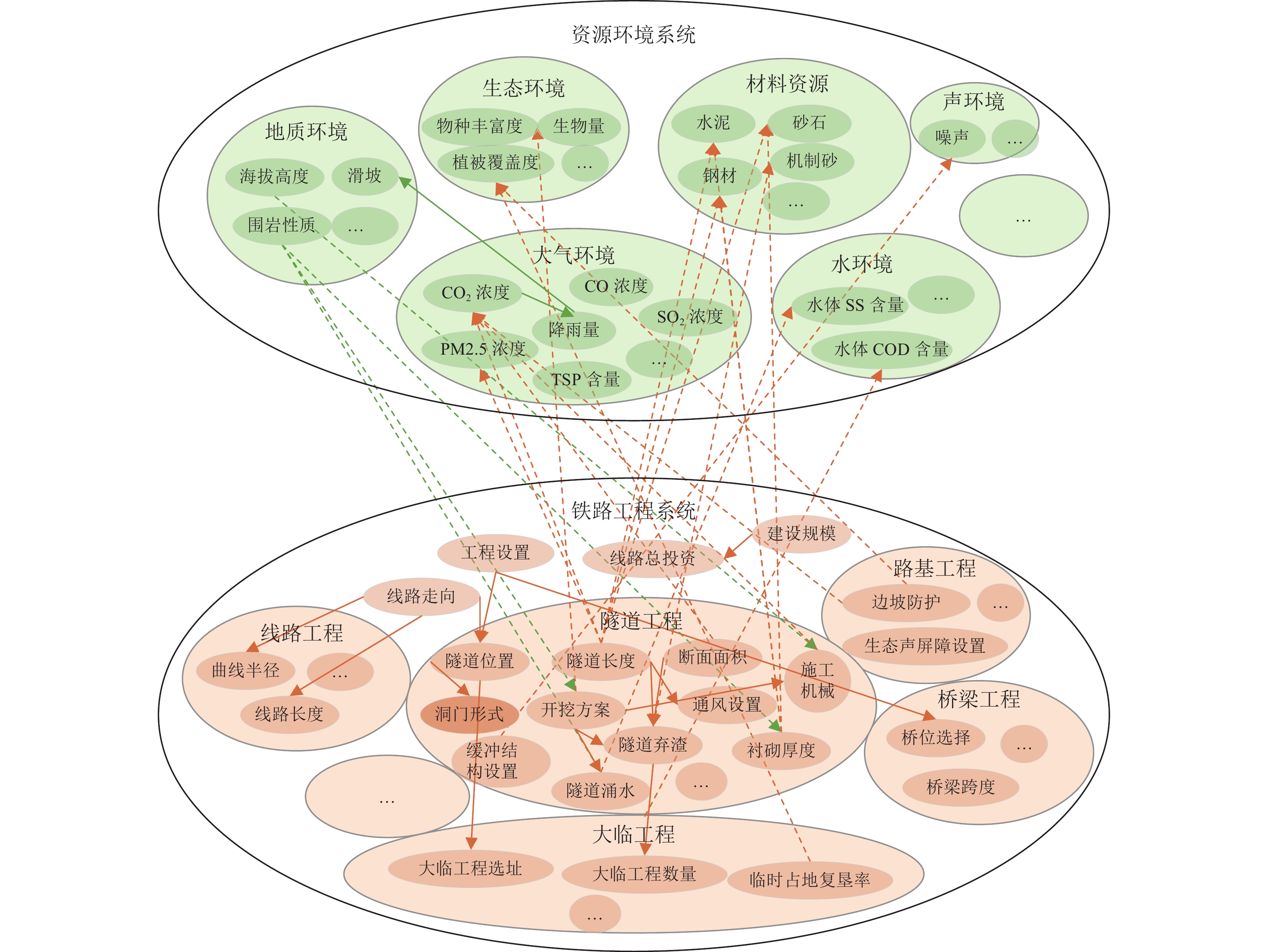
图 7 铁路工程绿色设计要素耦合机理框架
Figure 7. Coupling mechanism framework of green design elements in railway engineering
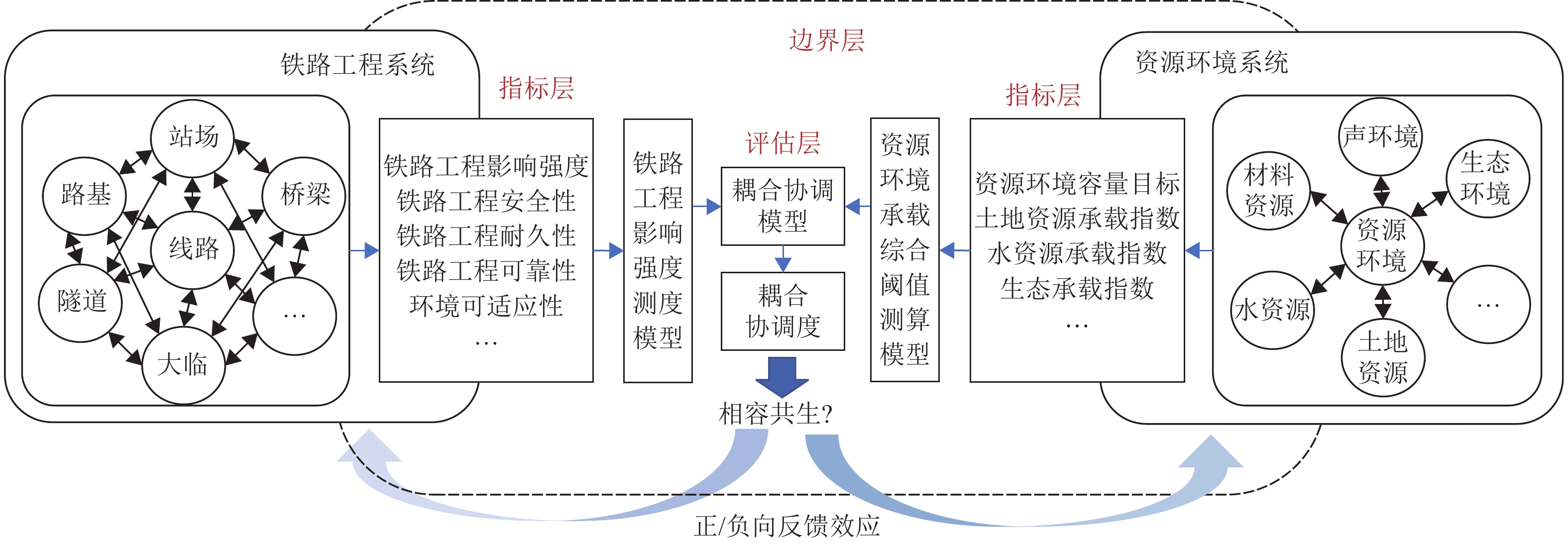
图 8 铁路工程绿色设计效果评估框架
Figure 8. Evaluation framework for performance of green design in railway engineering
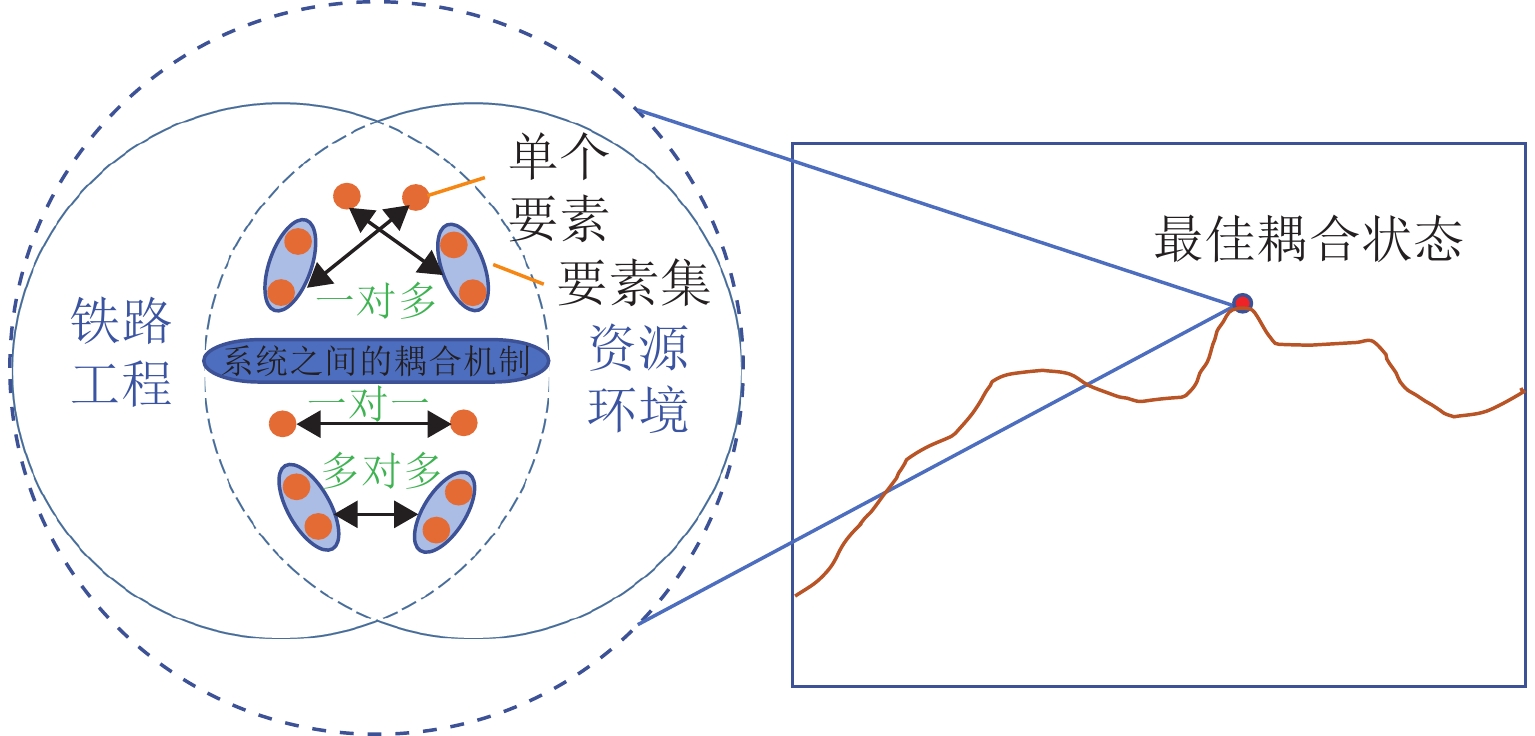
图 9 铁路工程绿色设计优化调控原理
Figure 9. Principles of optimization and regulation of green design in railway engineering
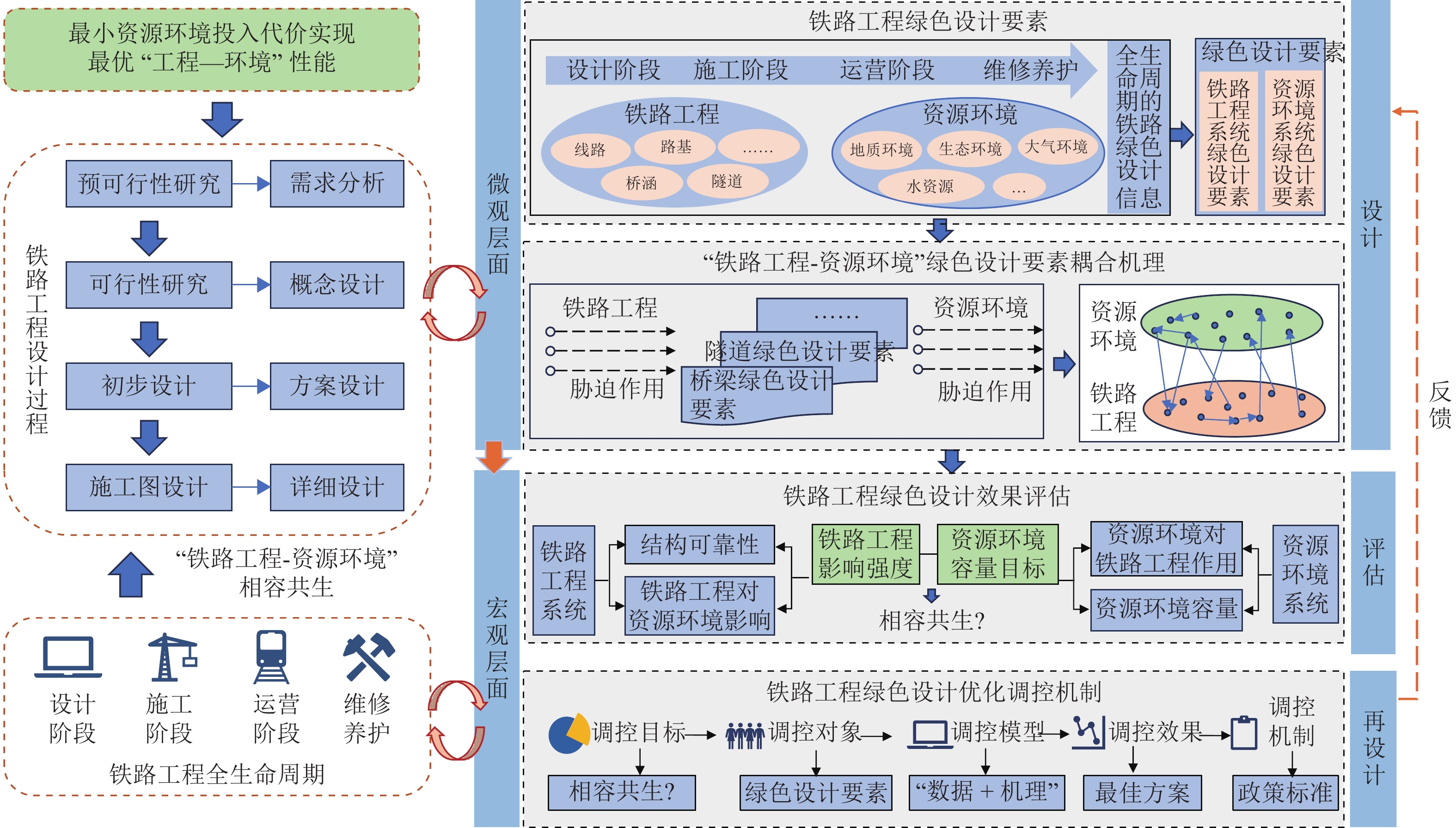
图 10 铁路工程绿色设计内涵解析内容
Figure 10. Analysis of connotation of green design in railway engineering
表 1 铁路工程绿色设计与传统设计对比
Table 1. Comparison between green design and traditional design in railway engineering
铁路工程传统设计 铁路工程绿色设计 范围 全专业、全要素、全过程 绿色关键专业、绿色要素、全过程 目标 工程安全、运能高效、运维可靠 增加“节约资源、保护环境、减少碳排放”绿色目标 观点 开放式线性思路为主 闭环式非线性思路为主 方法 微观结构设计为主 微观结构设计兼顾宏观规划 内容 选定主要技术标准、线路走向和建设方案,选定系统集成方案等工作内容 考虑铁路工程与资源环境之间交互影响关系,通过新技术、新工艺、新材料、新设备等手段提升绿色性能  下载: 导出CSV
表 2 基于标准规范的资源环境容量目标指标阈值
Table 2. Target indicator thresholds of resource and environment capacity based on standard specifications
标准 内容 《铁路边界噪声限值及其测量方法》
(GB 12525-90)[25]既有铁路边界铁路噪声限值:昼间≤70 dBA;夜间≤70 dBA;
新建铁路边界铁路噪声限值:昼间≤70 dBA;夜间≤60 dBA《地表水环境质量标准》
(GB 3838−2002)[26]规定了地表水环境质量标准基本项目标准限值 《大气污染物综合排放标准》
(GB 16297−1996)[27]规定了33种大气污染物的排放限值和执行要求 《电磁环境控制限值》
(GB 8702−2014)[28]规定了电磁环境中电场、磁场、电磁场(1 ~ 300 Hz)的场量限值,
如烟气排放限值、粉尘控制要求《铁路工程环境保护设计规范》
(TB 10501−2016)[29]涵盖噪声、振动、电磁、大气、水、固体废物等污染防治标准 《绿色铁路客站评价标准》
(TB/T 10429−2014)[30]对可再生能源利用、污水处理等提出绿色标准 《铁路工程节能设计规范》
(TB 10016−2016)[31]电力牵引系统能效标准(如单位能耗≤0.3 kW·h/(t·km));
车站、车辆设备节能要求(如LED照明覆盖率≥80%)
下载: 导出CSV
表 3 基于评估的资源环境容量目标指标阈值(示例)
Table 3. Target indicator thresholds of resource and environment capacity based on assessment (examples)
类别 指标/模型 计算公式 变量解释 资源环境承载限值指数评估:
$ {I}_{\text{RCI}}={W}_{\text{L}} {I}_{\text{LCI}} + {W}_{\text{W}} {I}_{\text{WCI}} + {W}_{\text{E}} {I}_{\text{ECI}} + \cdots $
(IRCI为资源环境承载限值指数,ILCI为土地资源承载指数,IWCI为水资源承载指数,IECI为生态承载指数,WL、WW、WE为各资源环境承载指数所占权重)土地资源承载指数[32] $ {I}_{\text{LCI}}={P}_{\text{a}} {E}_{\text{npc}} {E}_{\text{n}}{}^{-1} $ Pa为铁路修建所占面积,Enpc为铁路修建热量摄入标准,En为耕地资源产品转换为热量总量 水资源承载指数[33] $ {I}_{\text{WCI}}={P}_{\text{a}} {W}_{\text{pc}} {W}^{-1} $ Wpc为单位面积综合用水量,W为水资源可利用量 生态承载指数[34] $ {I}_{\text{ECI}}={P}_{\text{a}} ({C}_{\text{NPP}} 10000) {S}_{\text{NPP}}{}^{-1} $ CNPP为单位面积生态消耗量,SNPP为生态供给总量 $\vdots $ $\vdots $ $\vdots $ 资源环境容量模型 水体自净模型[35] $ {C}_{\text{W}}=31.536\left({C}_{\text{S}}{\text{e}}^{\theta \text{K}x {{(86.4 u)}^{-1}}}- $$ {C}_{0}{\text{e}}^{-\theta \text{K}x {{(86.4 u)}^{-1}}}\right)q $ CW为水环境容量,CS为水质目标浓度,$ \theta $为达标率,K为降解系数,x为沿程距离,86.4为计算单位换算的数值,u为水流流速,q为水流量 大气扩散模型[36] $ {C}_{\text{A}}=\dfrac{Q}{2\pi {\sigma }_{\text{x}}{\sigma }_{\text{y}}}g \text{exp}\left[\dfrac{-d_{\text{a}}^{2}}{(2\sigma _{\text{x}}^{2})}\right]\text{exp}\left[\dfrac{-d_{\text{c}}^{2}}{(2\sigma _{\text{y}}^{2})}\right] $ CA为大气环境容量,Q为污染源源强,σx为污染物在水平方向上高斯分布的标准差,σy为污染物在垂直方向上高斯分布的标准差,da为污染物中心到受体点在水平方向上的距离,dc为污染物中心到受体点在垂直方向上的距离 $\vdots $ $\vdots $ $\vdots $
下载: 导出CSV
-
[1] 中华人民共和国交通运输部. 2025 年铁道统计公报[R/OL]. (2025-05-30) [2026-07-09]. https://www.mot.gov.cn/shuju/fenxigongbao/hangyegongbao/202606/P020260612406813965401.pdf. [2] 王冠琪. 铁路工程设计践行绿色发展的实践[J]. 铁路节能环保与安全卫生, 2021, 11(2): 11-14. doi: 10.16374/j.cnki.issn2095-1671.2021.0016Wang Guanqi. Practice of green development in railway engineering design[J]. Railway Energy Saving & Environmental Protection & Occupational Safety and Health, 2021, 11(2): 11-14. doi: 10.16374/j.cnki.issn2095-1671.2021.0016 [3] 闫林君, 陈慧鑫, 鲍学英, 等. 山区铁路隧道工程资源环境影响效应评估研究[J]. 铁道科学与工程学报, 2024, 21(4): 1613-1623. doi: 10.19713/j.cnki.43-1423/u.T20230963Yan Linjun, Chen Huixin, Bao Xueying, et al. Evaluation and research on the resource and environmental impact effects of railway tunnel engineering in mountainous areas[J]. Journal of Railway Science and Engineering, 2024, 21(4): 1613-1623. doi: 10.19713/j.cnki.43-1423/u.T20230963 [4] 张明. 铁路绿色选线设计原则与方案比选方法研究[J]. 铁道工程学报, 2025, 42(6): 30-34. doi: 10.3969/j.issn.1006-2106.2025.06.006Zhang Ming. Research on the principles of green route selection design and scheme comparison methods for railways[J]. Journal of Railway Engineering Society, 2025, 42(6): 30-34. doi: 10.3969/j.issn.1006-2106.2025.06.006 [5] Chen W Y, Shi X Q, Fang X P, et al. Research context and prospect of green railways in China based on bibliometric analysis[J]. Sustainability, 2023, 15(7): 5773. doi: 10.3390/su15075773 [6] Yao S, Peralta-braz P, Alamdari M M, et al. Optimal design of piezoelectric energy harvesters for bridge infrastructure: Effects of location and traffic intensity on energy production[J]. Applied Energy, 2024, 355: 122285. doi: 10.1016/j.apenergy.2023.122285 [7] AVRIL F, ROBIN M. Green design: a guide to the environmental impact of building materials[M]. London: Architecture Design and Technology Press, 1989. [8] Fiksel J, Wapman K. How to design for environment and minimize life cycle cost[C]//Proceedings of 1994 IEEE International Symposium on Electronics and The Environment. Piscataway: IEEE, 1994: 75-80. [9] 许喜华. 绿色设计: 工业设计发展的必然选择[J]. 浙江大学学报(人文社会科学版), 1999, 29(4): 132-136.Xu Xihua. Ecological design: the inevitable chioce of the development of the industrial design[J]. Journal of Zhejiang University (Humanities and Social Sciences), 1999, 29(4): 132-136. [10] Xu Xihua. Ecological design: the inevitable choice of the development of the industrial design[J]. Journal of Zhejiang University (Humanities and Social Sciences), 1999(4): 132-136. [11] Zhan Y. Green design based on the concept of ecological holism[J]. Applied Mechanics and Materials, 2010, 44/45/46/47: 1598-1602. [12] Wang Q. A disquisition on the idea and approaches to green design based on sustainable development[J]. Advanced Materials Research, 2012, 538/539/540/541: 2978-2981. [13] 刘征, 顾新建, 潘凯, 等. 基于TRIZ的产品生态设计方法研究: 融合规则和案例推理[J]. 浙江大学学报(工学版), 2014, 48(3): 436-444.Liu Zhen, Gu Xinjian, Pan Kan, et al. Research on TRIZ-based product eco-design: integrating rule-based reasoning and case-based reasoning[J]. Journal of Zhejiang University (Engineering Science), 2014, 48(3): 436-444. [14] 牛文元. 绿色设计是启动绿色发展的第一杠杆[J]. 中国科学院院刊, 2016, 31(5): 491-498. doi: 10.16418/j.issn.1000-3045.2016.05.001Niu Wenyuan. Green design: the hand of sustainability[J]. Bulletin of Chinese Academy of Sciences, 2016, 31(5): 491-498. doi: 10.16418/j.issn.1000-3045.2016.05.001 [15] 刘怡君, 陈思佳, 黄远. 拟定中国绿色设计标准通则[J]. 中国科学院院刊, 2016, 31(5): 499-507. doi: 10.16418/j.issn.1000-3045.2016.05.002Liu Yijun, Chen Sijia, Huang Yuan. Preparation of general rules for green design standard[J]. Bulletin of Chinese Academy of Sciences, 2016, 31(5): 499-507. doi: 10.16418/j.issn.1000-3045.2016.05.002 [16] 王光辉, 王红兵. 绿色设计贡献率函数及其实证分析[J]. 中国科学院院刊, 2016, 31(5): 508-516. doi: 10.16418/j.issn.1000-3045.2016.05.003Wang Guanghui, Wang Hongbing. Green design contribution rate function and its empirical analysis[J]. Bulletin of Chinese Academy of Sciences, 2016, 31(5): 508-516. doi: 10.16418/j.issn.1000-3045.2016.05.003 [17] 李春花, 孙振清. 碳达峰目标下区域绿色设计能力评价研究[J]. 科技管理研究, 2021, 41(19): 177-183. doi: 10.3969/j.issn.1000-7695.2021.19.024Li Chunhua, Sun Zhenqing. Research on evaluation of regional green design capability under the target of carbon peak[J]. Science and Technology Management Research, 2021, 41(19): 177-183. doi: 10.3969/j.issn.1000-7695.2021.19.024 [18] TB 10621—2014 高速铁路设计规范(2024、2026年局部修订)[S]. [19] Lv Y X, Jiang Y J, Hu W, et al. A review of the effects of tunnel excavation on the hydrology, ecology, and environment in karst areas: Current status, challenges, and perspectives[J]. Journal of Hydrology, 2020, 586: 124891. doi: 10.1016/j.jhydrol.2020.124891 [20] Wu F, Geng Y, Tian X, et al. Responding climate change: a bibliometric review on urban environmental governance[J]. Journal of Cleaner Production, 2018, 204: 344-354. doi: 10.1016/j.jclepro.2018.09.067 [21] 李小兵. 鱼嘴车站岩石边坡绿色防护设计及施工[J]. 铁道标准设计, 2003(增刊1): 181-184. doi: 10.3969/j.issn.1004-2954.2003.z1.061Li Xiaobing. Design and construction of plant protection for side slope of Yuzui railway station[J]. Railway Standard Design, 2003(S1): 181-184. doi: 10.3969/j.issn.1004-2954.2003.z1.061 [22] Maidment G G, Missenden J F. Evaluation of an underground railway carriage operating with a sustainable groundwater cooling system[J]. International Journal of Refrigeration, 2002, 25(5): 569-574. doi: 10.1016/s0140-7007(01)00055-x [23] Stewart M G, Wang X M, Nguyen M N. Climate change impact and risks of concrete infrastructure deterioration[J]. Engineering Structures, 2011, 33(4): 1326-1337. doi: 10.1016/j.engstruct.2011.01.010 [24] 肖建庄, 夏冰, 肖绪文. 工程结构可持续性设计理论架构[J]. 土木工程学报, 2020, 53(6): 1-12.Xiao Jianzhuang, Xia Bing, Xiao Xuwen. Theoretical framework for sustainability design of engineering structures[J]. China Civil Engineering Journal, 2020, 53(6): 1-12. [25] GB 12525—1990 铁路边界噪声限值及其测量方法[S]. [26] GB 3838—2002 地表水环境质量标准[S]. [27] GB 16297—1996 大气污染物综合排放标准[S]. [28] GB 8702—2014 电磁环境控制限值[S]. [29] TB 10501—2016 铁路工程环境保护设计规范[S]. [30] TB/T 10429—2014 绿色铁路客站评价标准[S]. [31] TB 10016—2016 铁路工程节能设计规范[S]. [32] 全江涛, 杨永芳, 周嘉昕. 河南省土地资源承载力时空演变分析与预测[J]. 水土保持研究, 2020, 27(2): 315-322. doi: 10.13869/j.cnki.rswc.2020.02.044Quan Jiangtao, Yang Yongfang, Zhou Jiaxin. Analysis and prediction of spatial and temporal evolution of land resource carrying capacity in Henan Province[J]. Research of Soil and Water Conservation, 2020, 27(2): 315-322. doi: 10.13869/j.cnki.rswc.2020.02.044 [33] 封志明, 游珍, 杨艳昭, 等. 基于三维四面体模型的西藏资源环境承载力综合评价[J]. 地理学报, 2021, 76(3): 645-662. doi: 10.11821/dlxb202103011Feng Zhiming, You Zhen, Yang Yanzhao, et al. Comprehensive evaluation of resource and environment carrying capacity of Tibet based on a three-dimensional tetrahedron model[J]. Acta Geographica Sinica, 2021, 76(3): 645-662. doi: 10.11821/dlxb202103011 [34] 杜文鹏, 闫慧敏, 封志明, 等. 基于生态供给-消耗平衡关系的中尼廊道地区生态承载力研究[J]. 生态学报, 2020, 40(18): 6445-6458. doi: 10.5846/stxb201907141482Du Wenpeng, Yan Huimin, Feng Zhiming, et al. Ecological carrying capacity in the China-Nepal corridor based on supply-consumption relationship[J]. Acta Ecologica Sinica, 2020, 40(18): 6445-6458. doi: 10.5846/stxb201907141482 [35] 聂竹青. 龙宝河回水区水体自净特征及水环境容量研究[D]. 重庆: 重庆交通大学, 2020. [36] 向怡, 史学峰, 吴玉生. 大同盆地复杂地形下近场大气污染物扩散模型选取研究[J]. 环境污染与防治, 2022, 44(1): 45-50. doi: 10.15985/j.cnki.1001-3865.2022.01.008Xiang Yi, Shi Xuefeng, Wu Yusheng. Study on the selection of near-field air pollutants diffusion model in complex terrain of Datong Bason[J]. Environmental Pollution and Control, 2022, 44(1): 45-50. doi: 10.15985/j.cnki.1001-3865.2022.01.008 [37] 高岩, 刘高志, 洪英杰, 等. 高速磁浮铁路线形设计方法研究综述[J]. 西南交通大学学报, 2026, 61(4): 1230-1248.Gao Yan, Liu Gaozhi, Hong Yingjie, et al. A review of alignment design methodology for high-speed maglev railways[J]. Journal of Southwest Jiaotong University, 2026, 61(4): 1230-1248. [38] 鲍学英, 沈杜华, 郭海东, 等. 山区铁路工程 “路基-环境” 绿色关键要素识别研究[J]. 安全与环境学报, 2024, 24(2): 787-795. doi: 10.13637/j.issn.1009-6094.2022.2633Bao Xueying, Shen Duhua, Guo Haidong, et al. Study on the identification of “subgrade-environment” green key elements in mountain railway engineering[J]. Journal of Safety and Environment, 2024, 24(2): 787-795. doi: 10.13637/j.issn.1009-6094.2022.2633 [39] 崔学刚, 方创琳, 刘海猛, 等. 城镇化与生态环境耦合动态模拟理论及方法的研究进展[J]. 地理学报, 2019, 74(6): 1079-1096. doi: 10.11821/dlxb201906002Cui Xuegang, Fang Chuanglin, Liu Haimeng, et al. Dynamic simulation of urbanization and eco-environment coupling: a review on theory, methods and applications[J]. Acta Geographica Sinica, 2019, 74(6): 1079-1096. doi: 10.11821/dlxb201906002 [40] 晏大武, 彭其渊, 蔡涛, 等. 复杂山区铁路供电设施配置与通过能力利用协同优化方法[J/OL]. 西南交通大学学报, 2025-07-14. https://link.cnki.net/urlid/51.1277.u.20250711.1826.004.Yan Dawu, Peng Qiyuan, Cai Tao, et al. Collaborative optimization method for power supply facility configuration and capacity utilization in complex mountainous railways[J/OL]. Journal of Southwest Jiaotong University, 2025-07-14. https://link.cnki.net/urlid/51.1277.u.20250711.1826.004. [41] 罗文锋, 王宏林, 吴昱东, 等. 高速地铁隧道出口微压波噪声特性及降噪研究[J]. 西南交通大学学报, 2026, 61(2): 351-362. doi: 10.3969/j.issn.0258-2724.20240194Luo Wenfeng, Wang Honglin, Wu Yudong, et al. Characteristics of micro-pressure wave noise at high-speed metro tunnel exits and noise reduction[J]. Journal of Southwest Jiaotong University, 2026, 61(2): 351-362. doi: 10.3969/j.issn.0258-2724.20240194 [42] 鲍学英, 沈杜华, 李亚娟, 等. 山区铁路“路基-环境”的耦合优化调控[J]. 西南交通大学学报, 2025, 60(5): 1080-1089. doi: 10.3969/j.issn.0258-2724.20230340Bao Xueying, Shen Duhua, Li Yajuan, et al. Coupling optimization and regulation of roadbed and environment in mountainous railways[J]. Journal of Southwest Jiaotong University, 2025, 60(5): 1080-1089. doi: 10.3969/j.issn.0258-2724.20230340 [43] 闫林君, 陈慧鑫, 鲍学英, 等. 山区铁路隧道工程与区域环境耦合协调状态优化[J]. 北京交通大学学报, 2024, 48(6): 30-42. doi: 10.11860/j.issn.1673-0291.20230163Yan Linjun, Chen Huixin, Bao Xueying, et al. Optimization of coupling coordination state between tunnel engineering and regional environment in mountain railway[J]. Journal of Beijing Jiaotong University, 2024, 48(6): 30-42. doi: 10.11860/j.issn.1673-0291.20230163 [44] 鲍学英, 曹娅利, 李引红, 等. 山区铁路桥梁与区域环境耦合协调测度及优化调控[J]. 工程科学与技术, 2024, 56(3): 61-71. doi: 10.12454/j.jsuese.202300676Bao Xueying, Cao Yali, Li Yinhong, et al. Measuring and optimizing coupling coordination between railway bridges in mountainous regions and the regional environment[J]. Advanced Engineering Sciences, 2024, 56(3): 61-71. doi: 10.12454/j.jsuese.202300676 [45] 鲍学英, 肖岚月, 万炳彤, 等. 山区铁路桥隧工程关键节材要素均衡优化[J]. 中南大学学报(自然科学版), 2024, 55(3): 1146-1155. doi: 10.11817/j.issn.1672-7207.2024.03.026Bao Xueying, Xiao Lanyue, Wan Bingtong, et al. Equilibrium optimization of key material-saving elements of railway bridge-tunnel engineering in mountain areas[J]. Journal of Central South University (Science and Technology), 2024, 55(3): 1146-1155. doi: 10.11817/j.issn.1672-7207.2024.03.026 -

 下载:
下载:

 点击查看大图
计量
- 文章访问数: 161
- HTML全文浏览量: 122
- PDF下载量: 31
- 被引次数: 0