



Noise Reduction Performance of 3D Printed Special-Shaped Noise Barriers for High-Speed Railways
-
摘要:
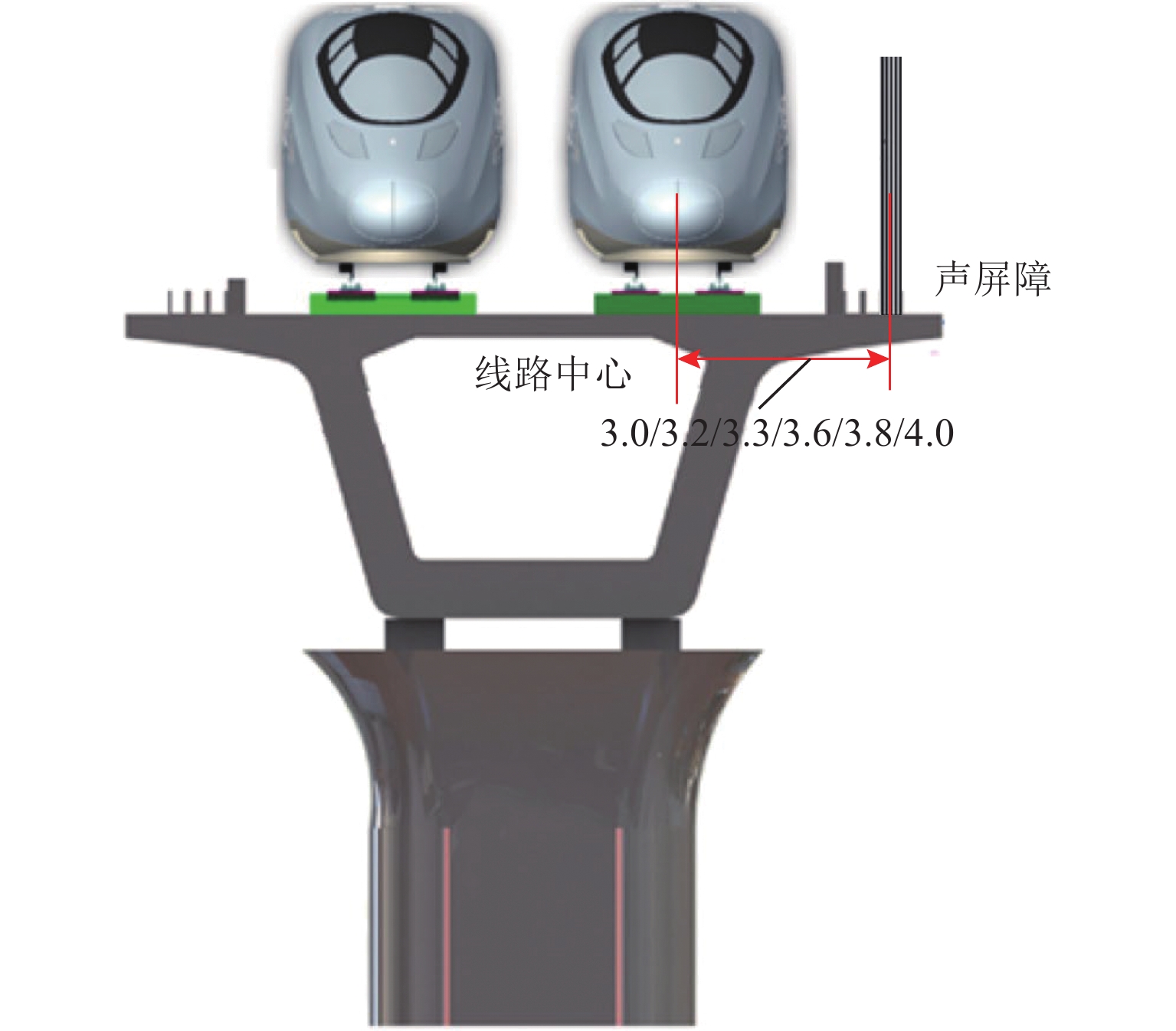
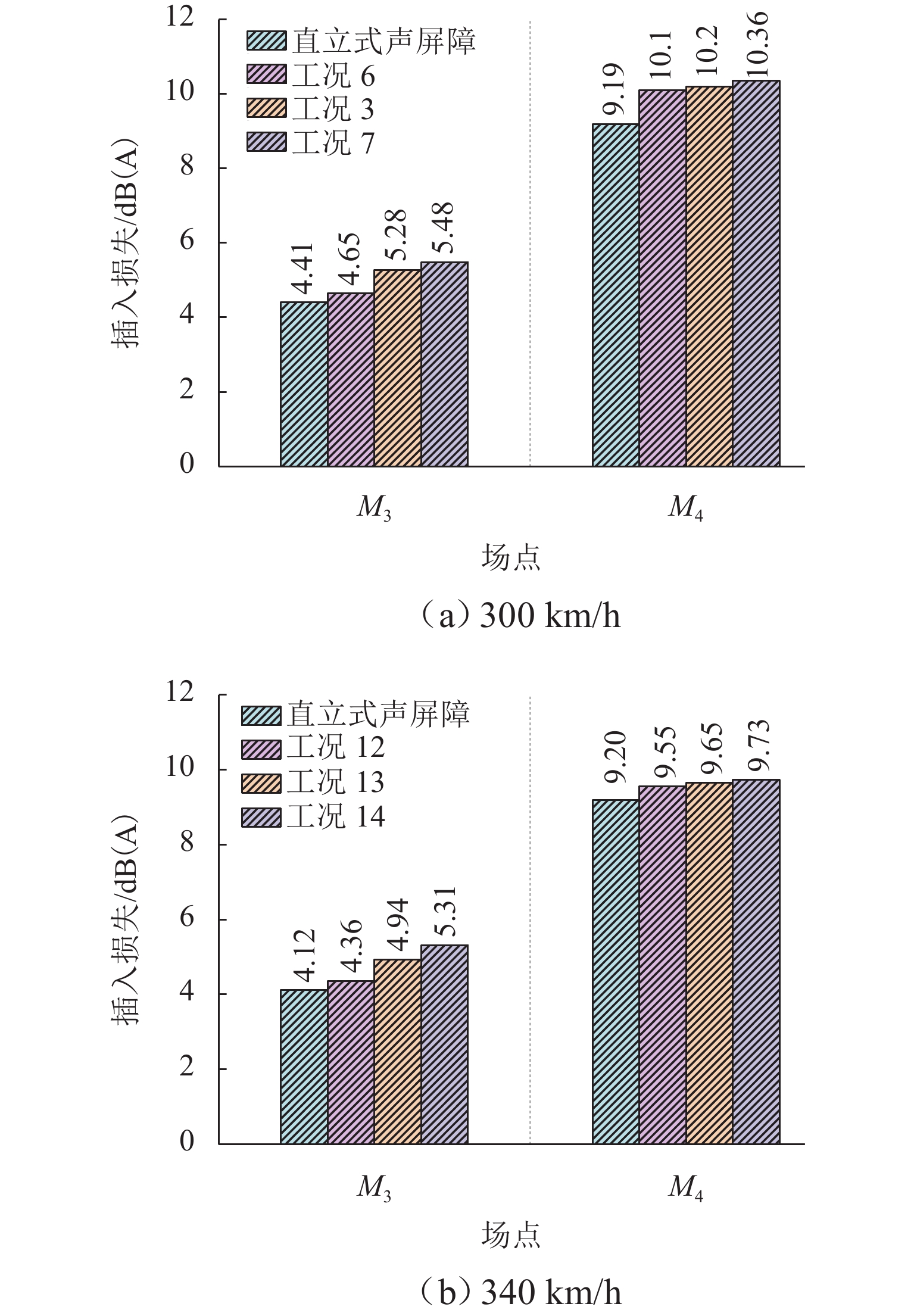
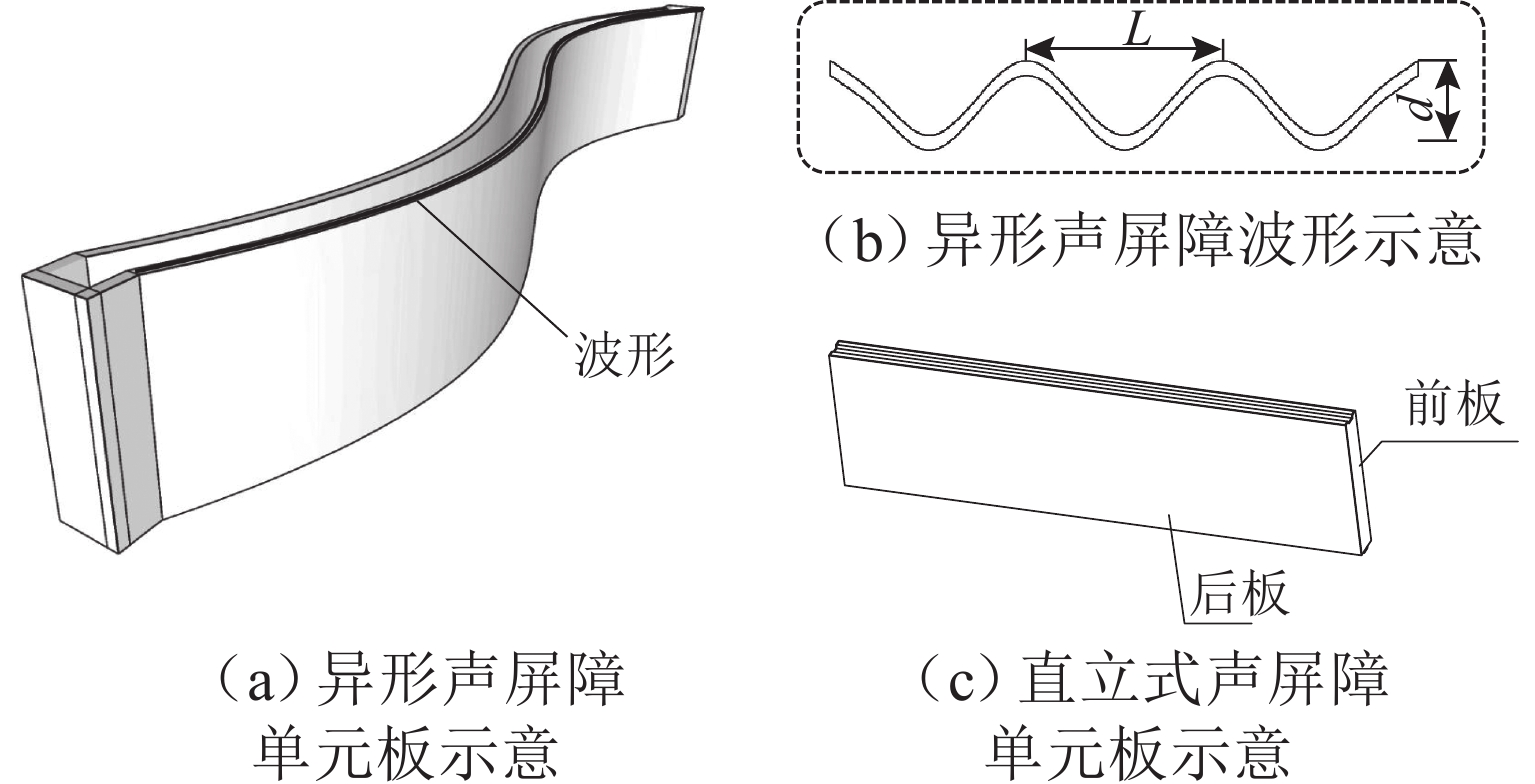
为研究3D打印高速铁路异形声屏障的降噪性能,采用三维建模软件构建声屏障几何模型,并建立三声源模式下的高速铁路异形声屏障降噪模型;基于声学间接边界元法,通过对比不同波距、波高和屏障高度下异形声屏障的降噪效果、声场分布、频谱特性及插入损失特性等,得到异形声屏障的最优设计参数;对比分析不同屏障-线路中心距离、列车速度对异形声屏障降噪效果的影响. 研究结果表明:异形声屏障对中远场点和声影区的场点及630 Hz以上的中高频噪声表现出显著降噪优势;与直立式声屏障相比,在优选波距3.2~4.0 m内可获得额外降噪增益,附加降噪效果可达1.7 dB(A);在波距一定的情况下,随着波高的增大,异形声屏障的降噪效果增强,最大能达到15~17 dB(A),异形声屏障取波距4 m、波高600 mm时附加插入损失达1.8 dB(A);异形声屏障高度增加1 m,4个标准场点的声压级降低1.6~4.8 dB(A),空间上主要作用于近屏障区域的5~10 m范围及高频截止区,附加降噪量沿该区域向两侧衰减;在3~4 m内,屏障-线路中心距离对异形声屏障降噪水平影响较小,推荐该参数取值为3.4~3.6 m;列车速度提升,异形声屏障插入损失降低,列车速度由300 km/h提升到340 km/h,不同工况下场点插入损失分别降低0.17~0.34 dB(A)和0.55~0.63 dB(A).
Abstract:To study the noise reduction performance of 3D printed special-shaped noise barrier for high-speed railways, the geometric models of the noise barrier were established by using three-dimensional modeling software, and the noise reduction model of a special-shaped noise barrier for high-speed railways under three sound source modes was established. Based on the acoustic indirect boundary element method, the optimal design parameters of a special-shaped noise barrier were obtained by comparing the noise reduction effect, sound field distribution, spectrum characters, and insertion loss characteristics of the special-shaped noise barrier under different wave distances, wave heights, and barrier heights. The effects of different barrier-line center distances and train speeds on the noise reduction effect of a special-shaped noise barrier were compared and analyzed. The results show that the special-shaped noise barrier has a significant noise reduction advantage for the middle and far field points, the field points in the sound shadow area, and the middle and high frequency noise above 630 Hz. Compared with that of the vertical noise barrier, the additional noise reduction gain of the special-shaped noise barrier can be obtained when the optimized wave distance is in the range of 3.2–4.0 m, and the additional noise reduction effect can reach 1.7 dB (A). In the case of a certain wave distance, with the increase of wave height, the noise reduction effect of the special-shaped noise barrier is enhanced, and the maximum can reach 15–17 dB (A). The additional insertion loss of the special-shaped noise barrier is 1.8 dB (A) when the wave distance is 4 m, and the wave height is 600 mm. When the special-shaped noise barrier height increases by 1 m, the sound pressure level of the four standard field points decreases by 1.6–4.8 dB (A), which mainly acts on the range of 5–10 m near the barrier area and the high frequency cut-off area in space. The additional noise reduction is attenuated from the area to both sides. In the range of 3–4 m, the barrier-line center distance has little effect on the noise reduction level of the special-shaped noise barrier, and the recommended value of the parameter is 3.4–3.6 m. As the train speed increases, the insertion loss of the special-shaped noise barrier decreases. When the train speed is increased from 300 km/h to 340 km/h, the insertion loss of the field point under different working conditions is reduced by 0.17–0.34 dB (A) and 0.55–0.63 dB (A), respectively.
-
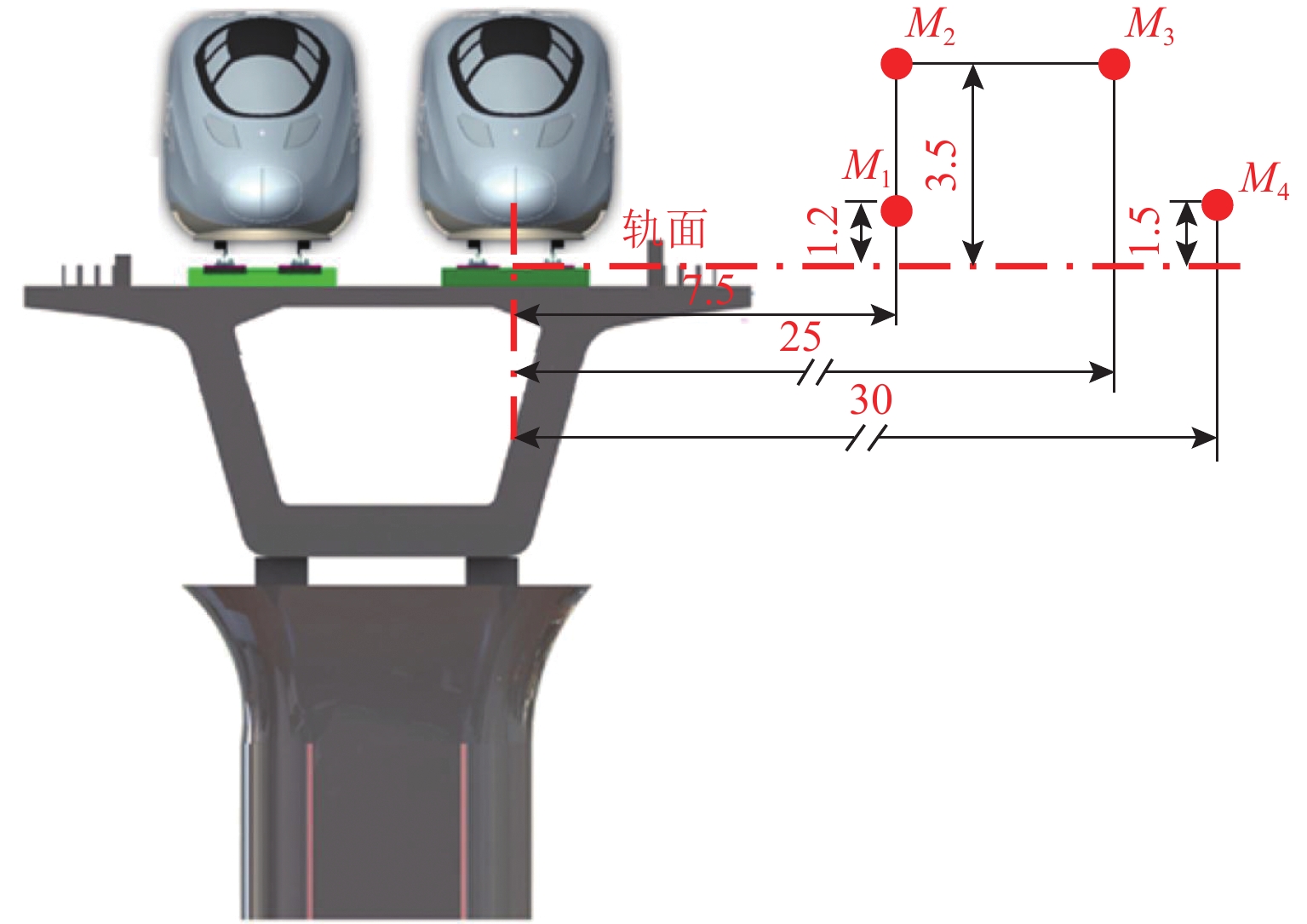
图 3 高速铁路噪声测点布置(单位:m)
Figure 3. Arrangement of noise measuring points of high-speed railway (unti: m)
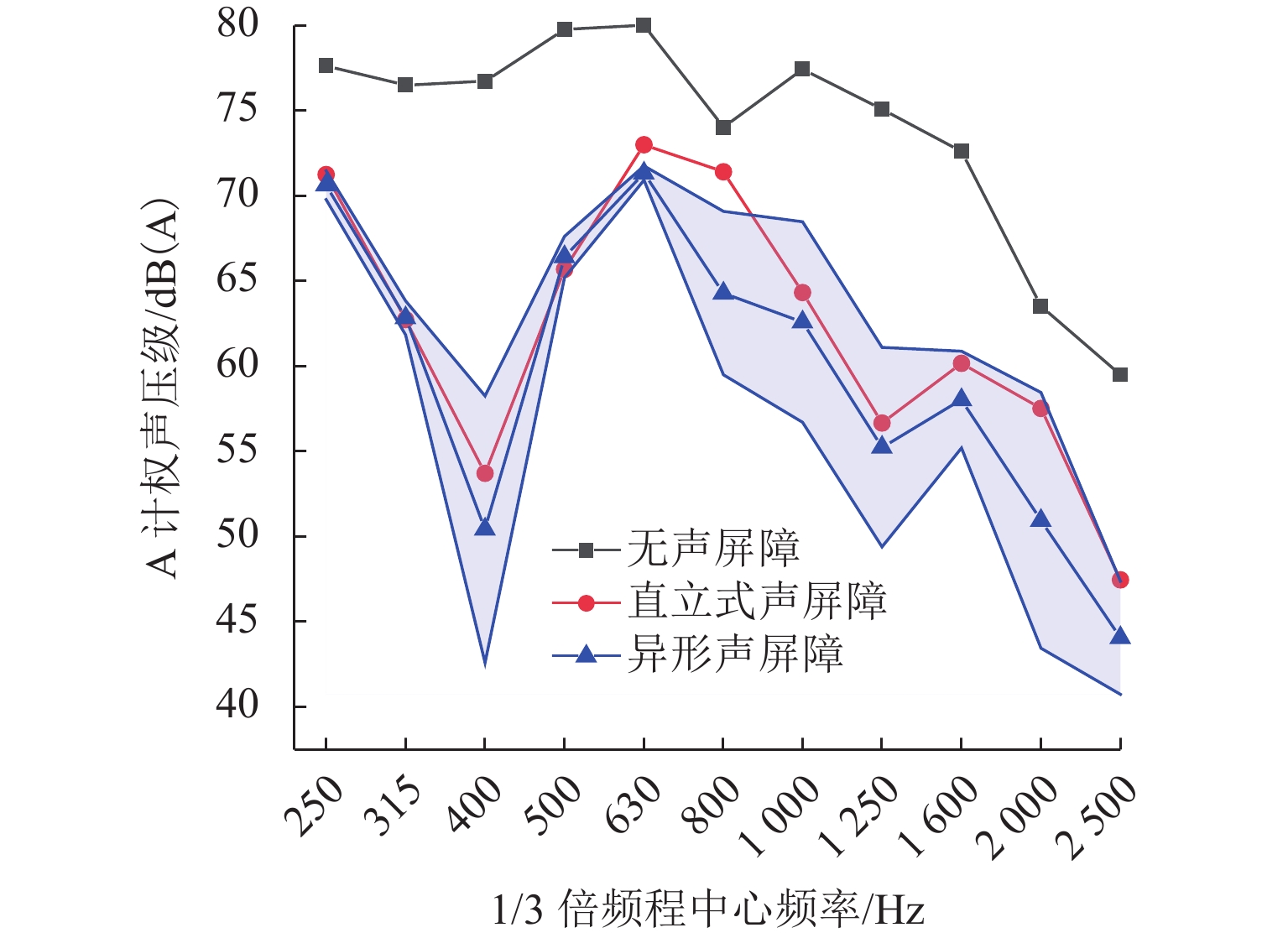
图 7 不同波距下场点(M4)声压级
Figure 7. Sound pressure levels of field point (M4) under different wave distances
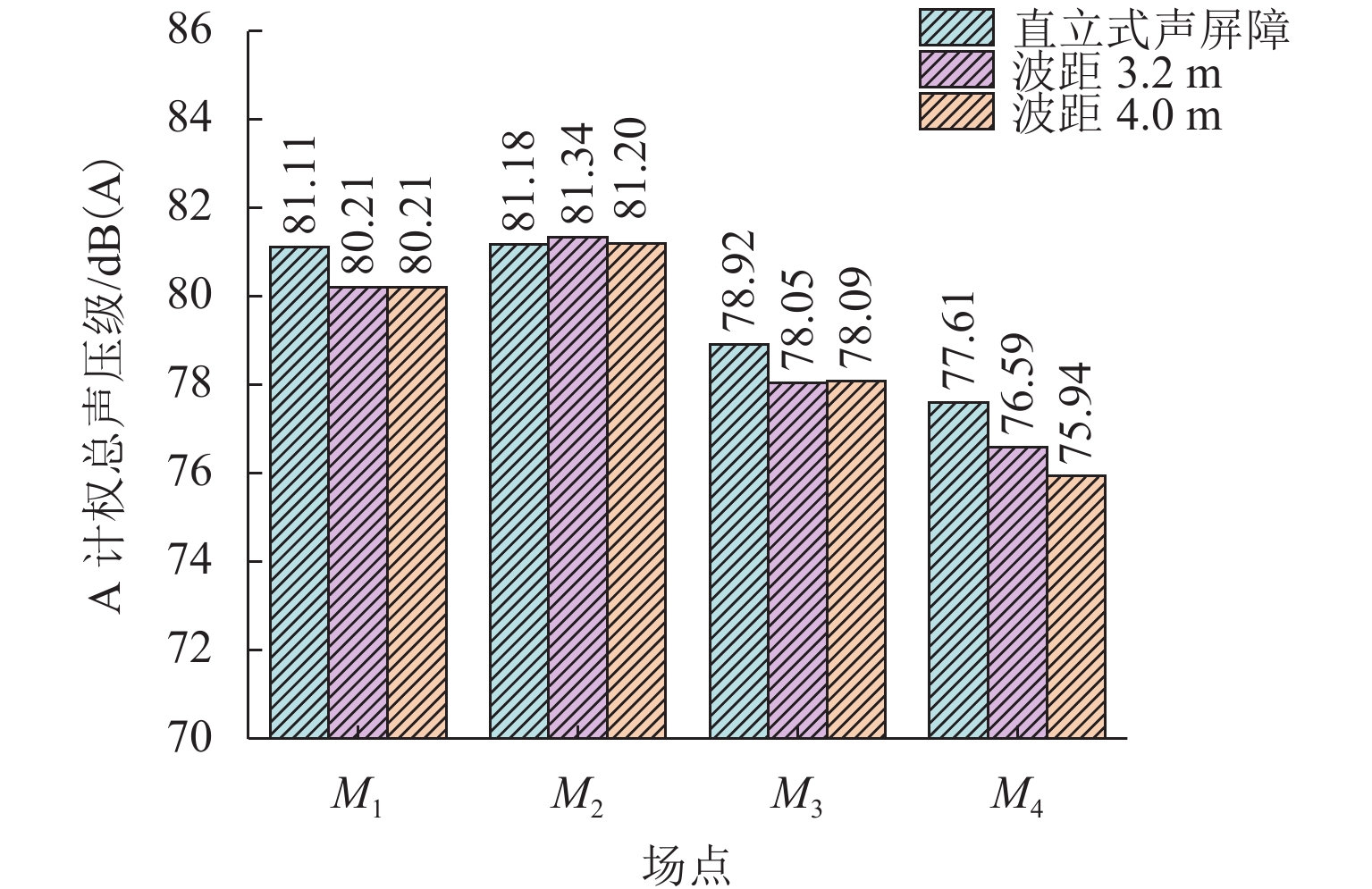
图 8 不同波距下场点总声压级
Figure 8. Total sound pressure levels of field point under different wave distances
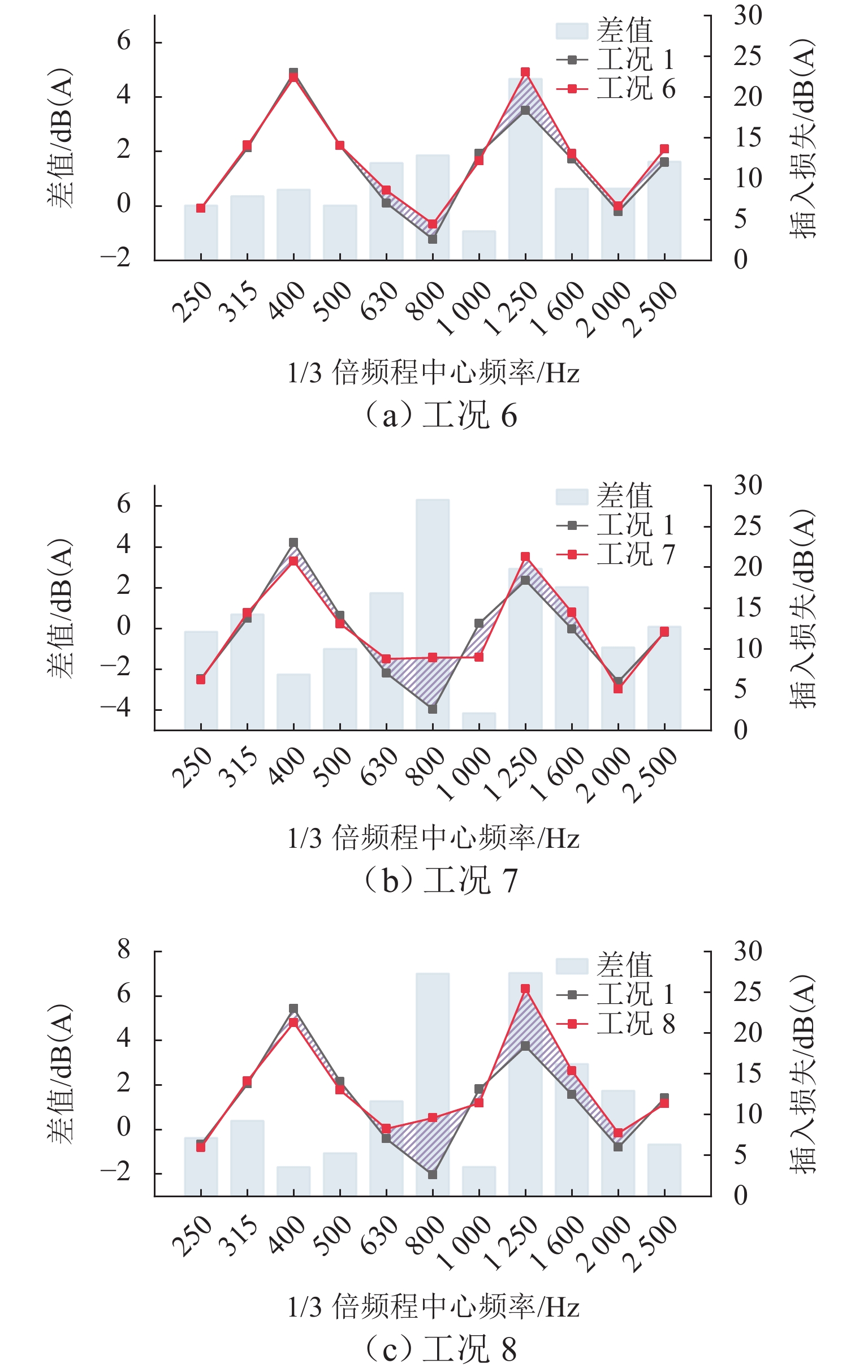
图 9 不同波高下异形声屏障的插入损失与直立式声屏障对比
Figure 9. Comparison of insertion loss between special-shaped noise barrier and vertical noise barrier under different wave heights
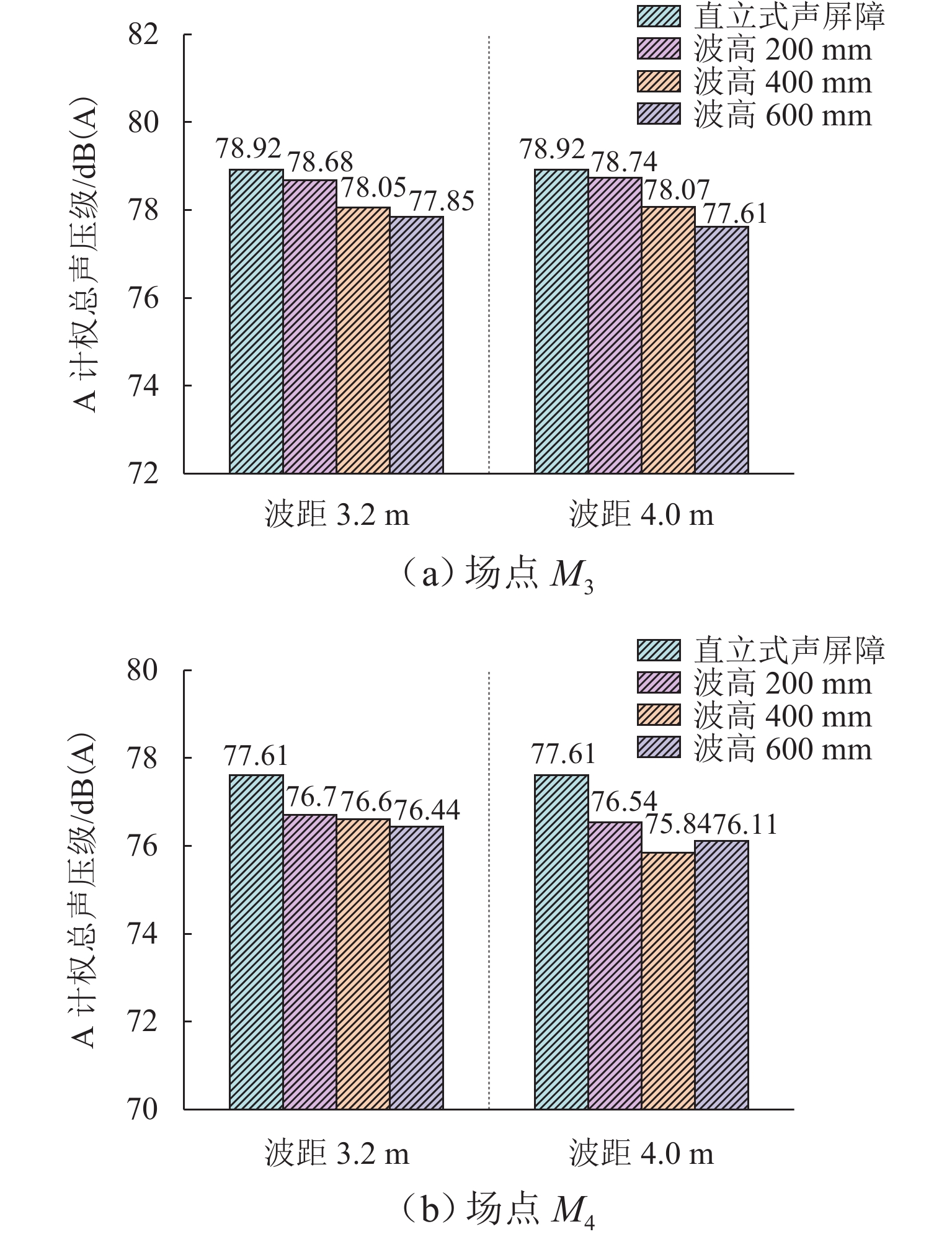
图 10 不同工况下异形声屏障总声压级对比
Figure 10. Comparison of total sound pressure level of special-shaped noise barrier under different working conditions
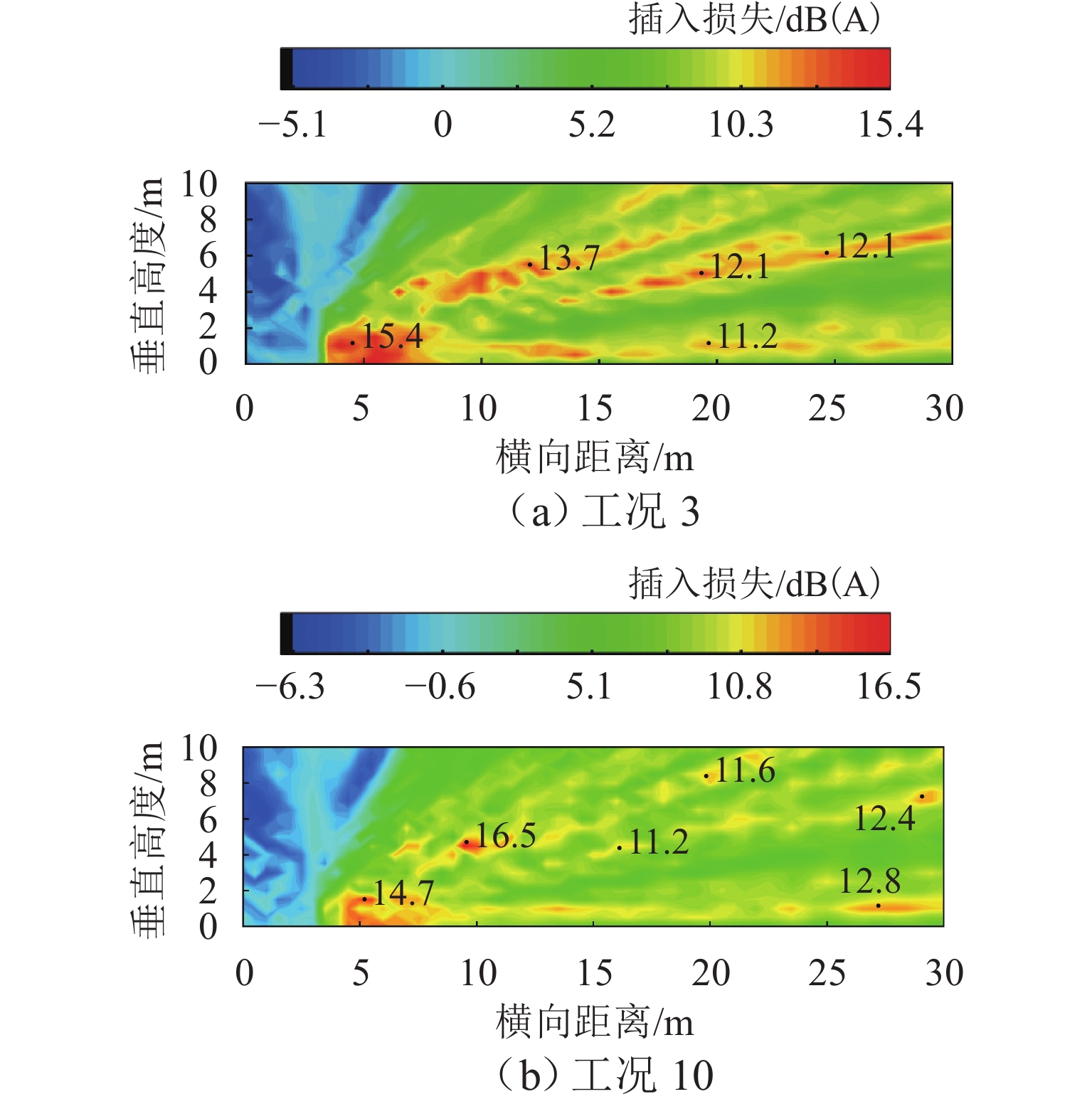
图 11 异形声屏障场点插入损失分布
Figure 11. Distribution of field point insertion loss of special-shaped noise barrier
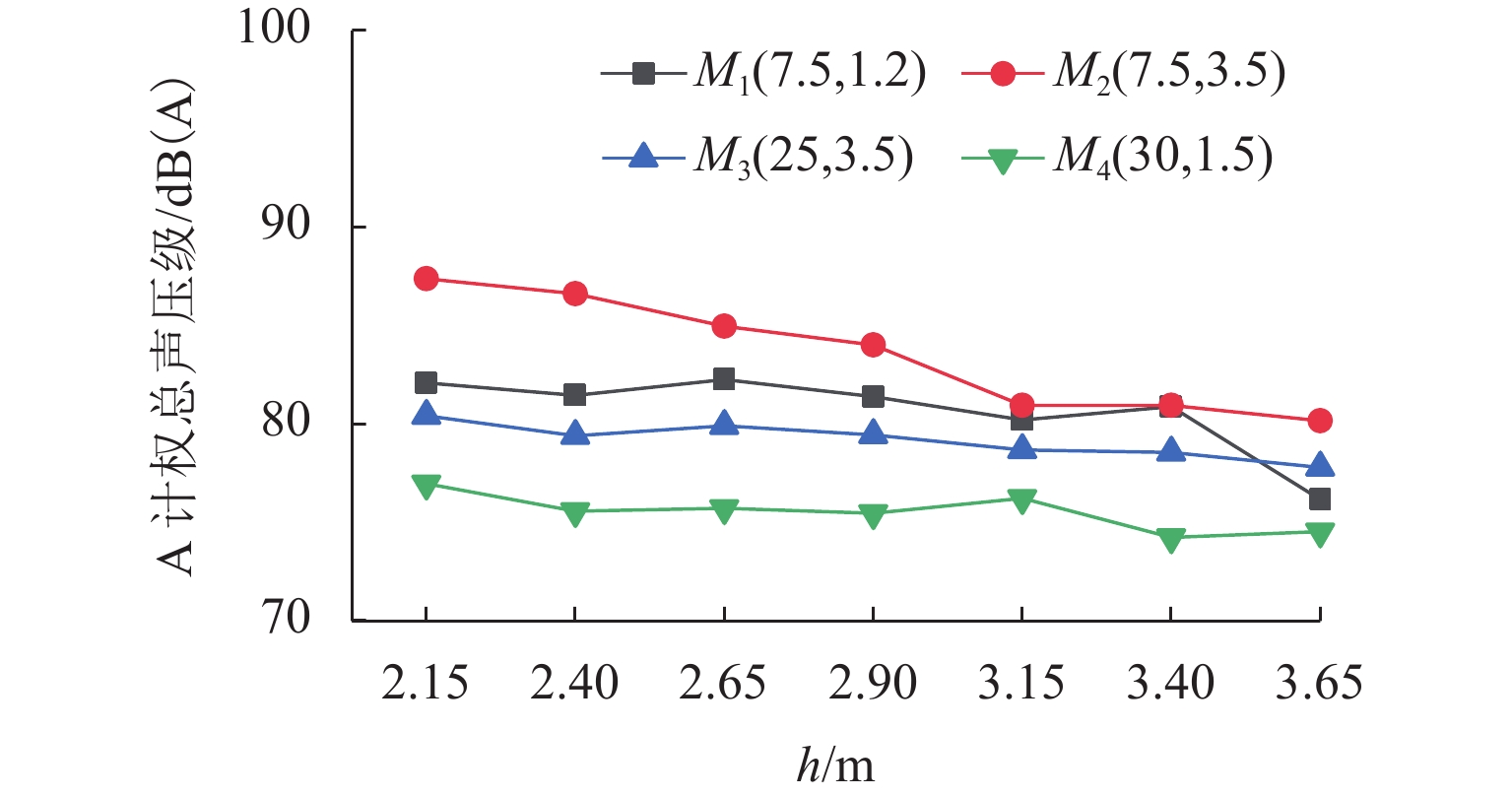
图 12 场点声压级与异形声屏障高度的关系
Figure 12. Relationship between sound pressure level of field point and special-shaped noise barrier height
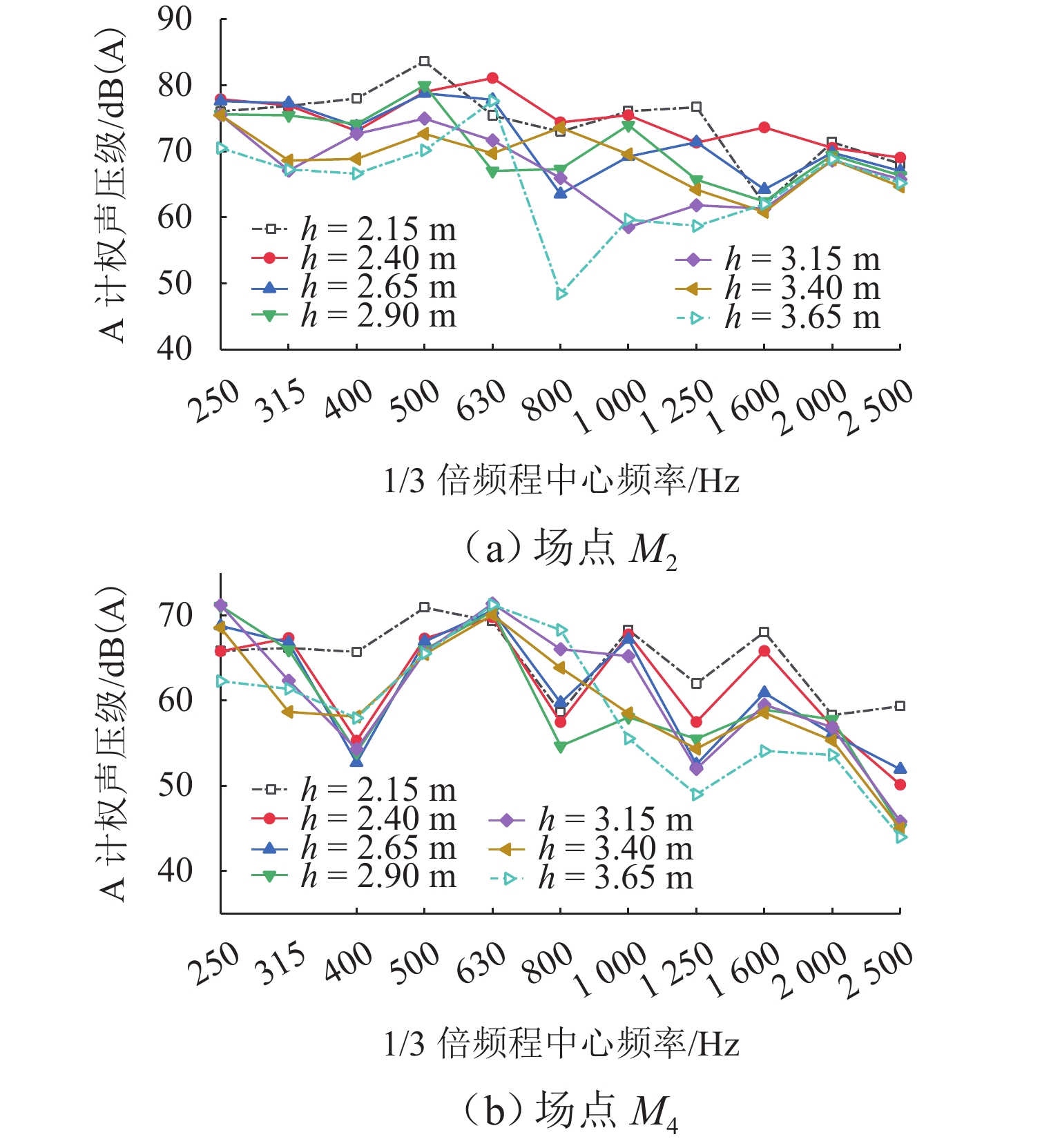
图 13 异形声屏障高度对场点频谱特性的影响
Figure 13. Influence of special-shaped noise barrier height on spectrum character of field point
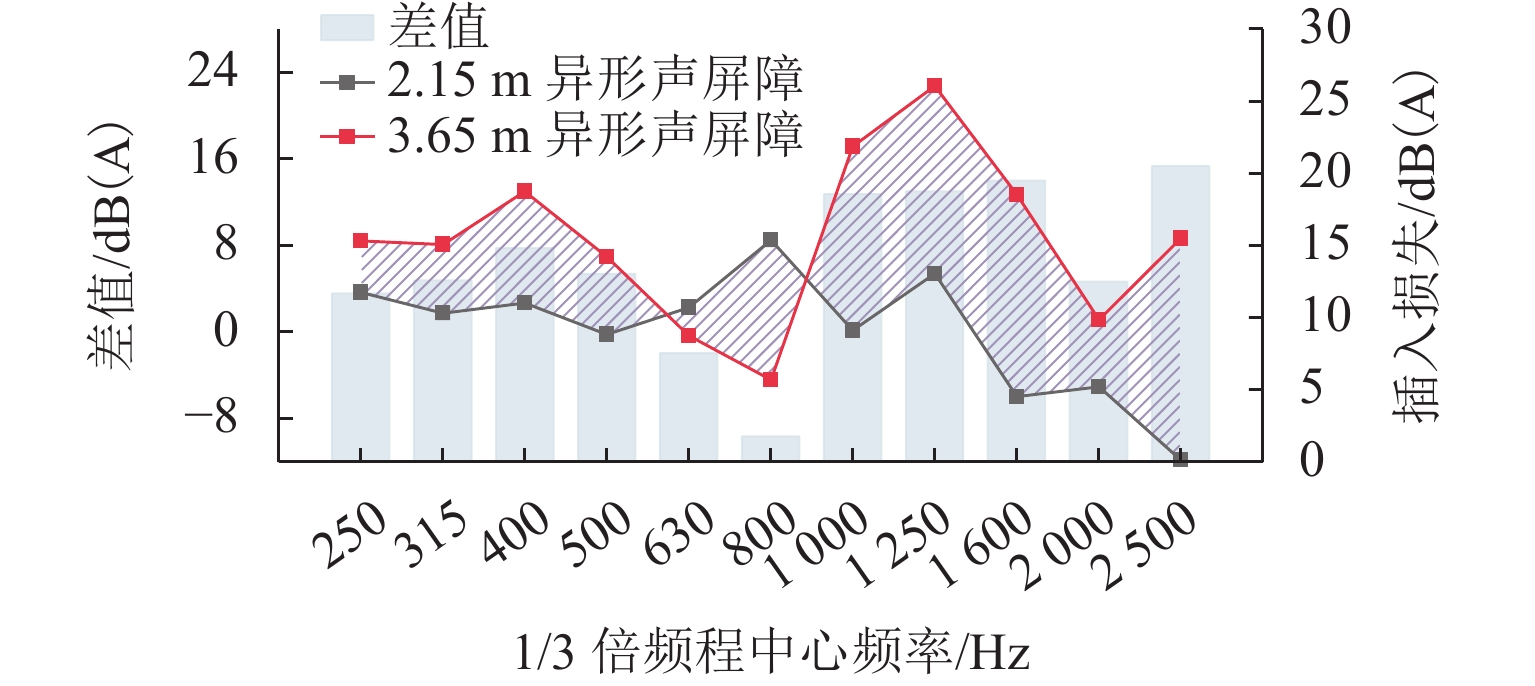
图 14 不同异形声屏障高度对场点M4插入损失的影响
Figure 14. Influence of different special-shaped noise barrier heights on insertion loss of field point M4
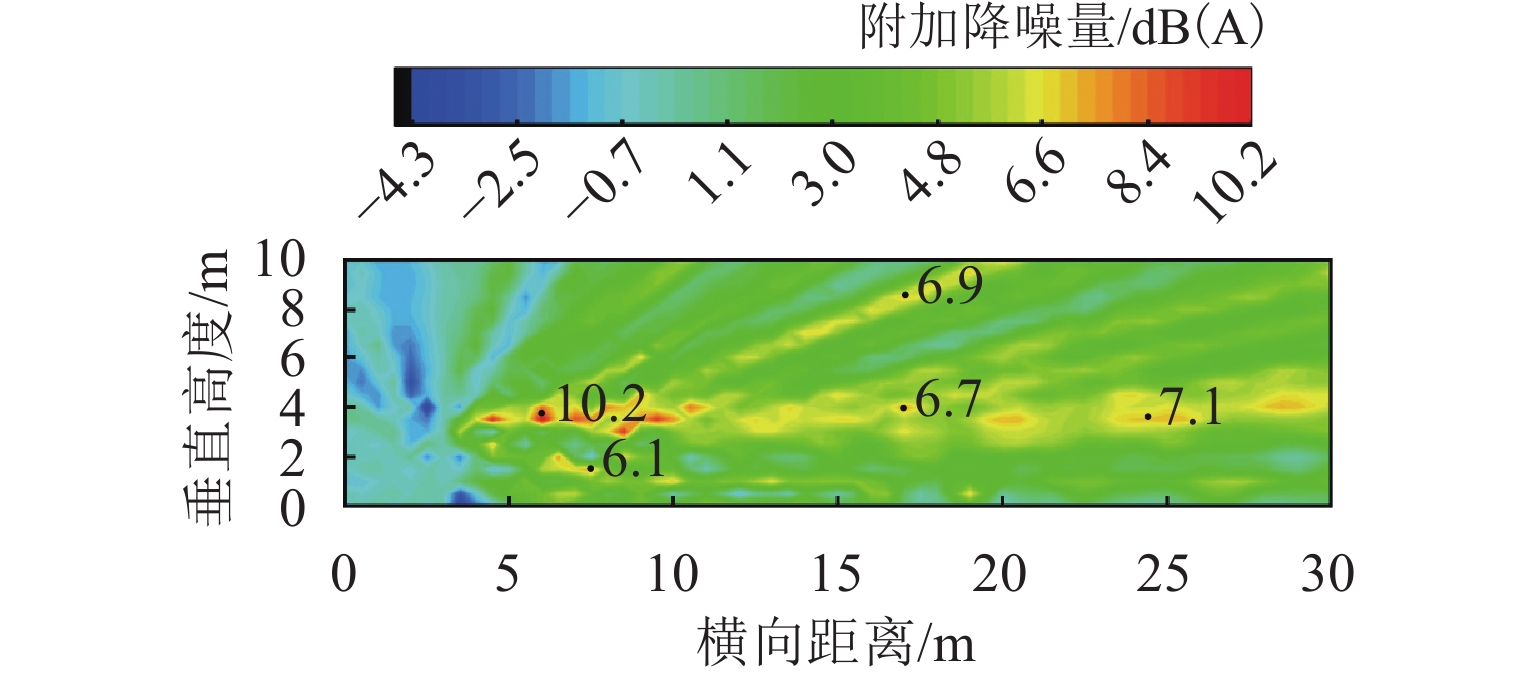
图 15 异形声屏障高度对场点声压级的影响
Figure 15. Influence of special-shaped noise barrier height on sound pressure level of field point
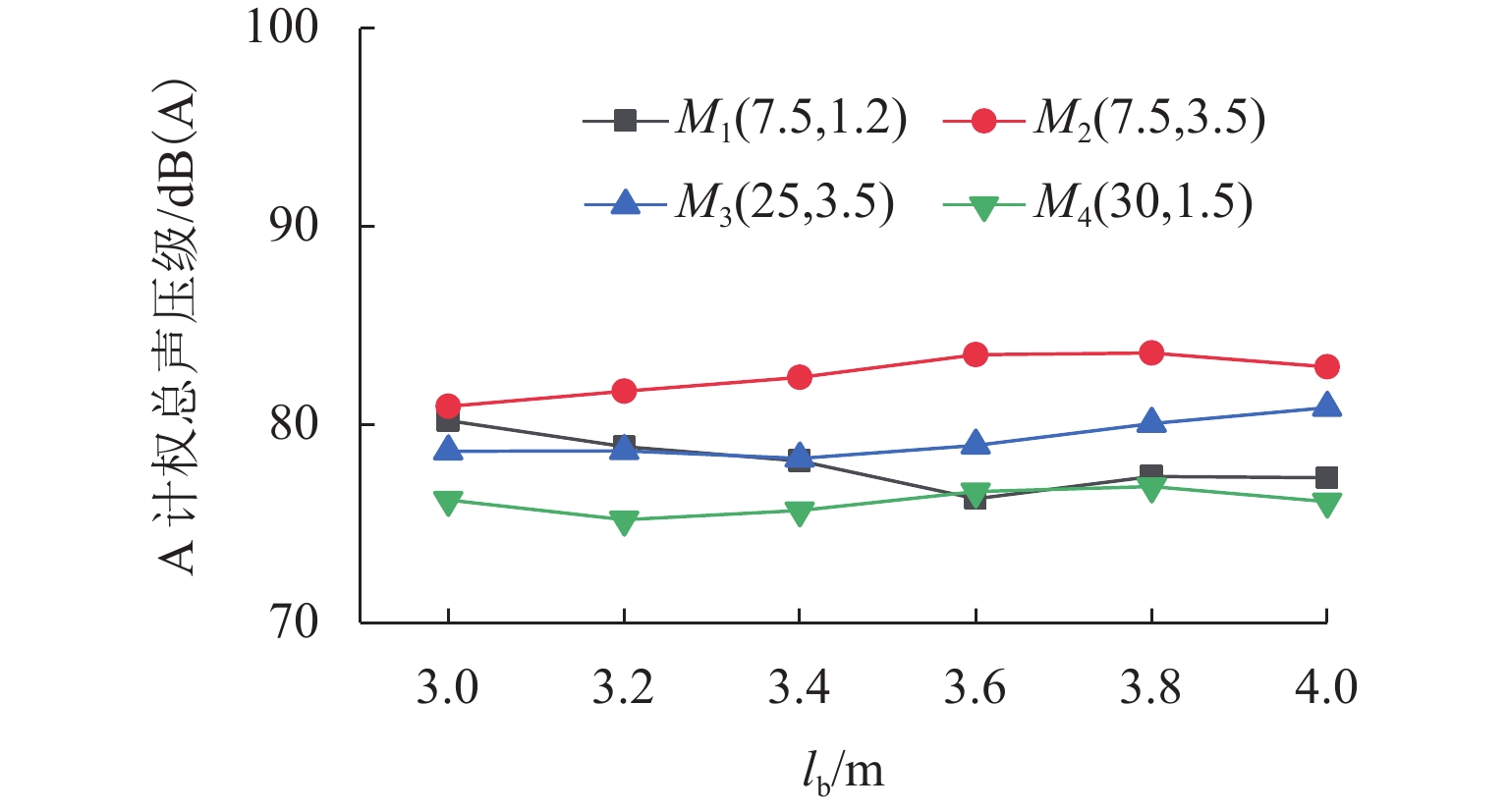
图 17 场点声压级与屏障-线路中心距离的关系
Figure 17. Relationship between sound pressure level of field point and barrier-line center distance
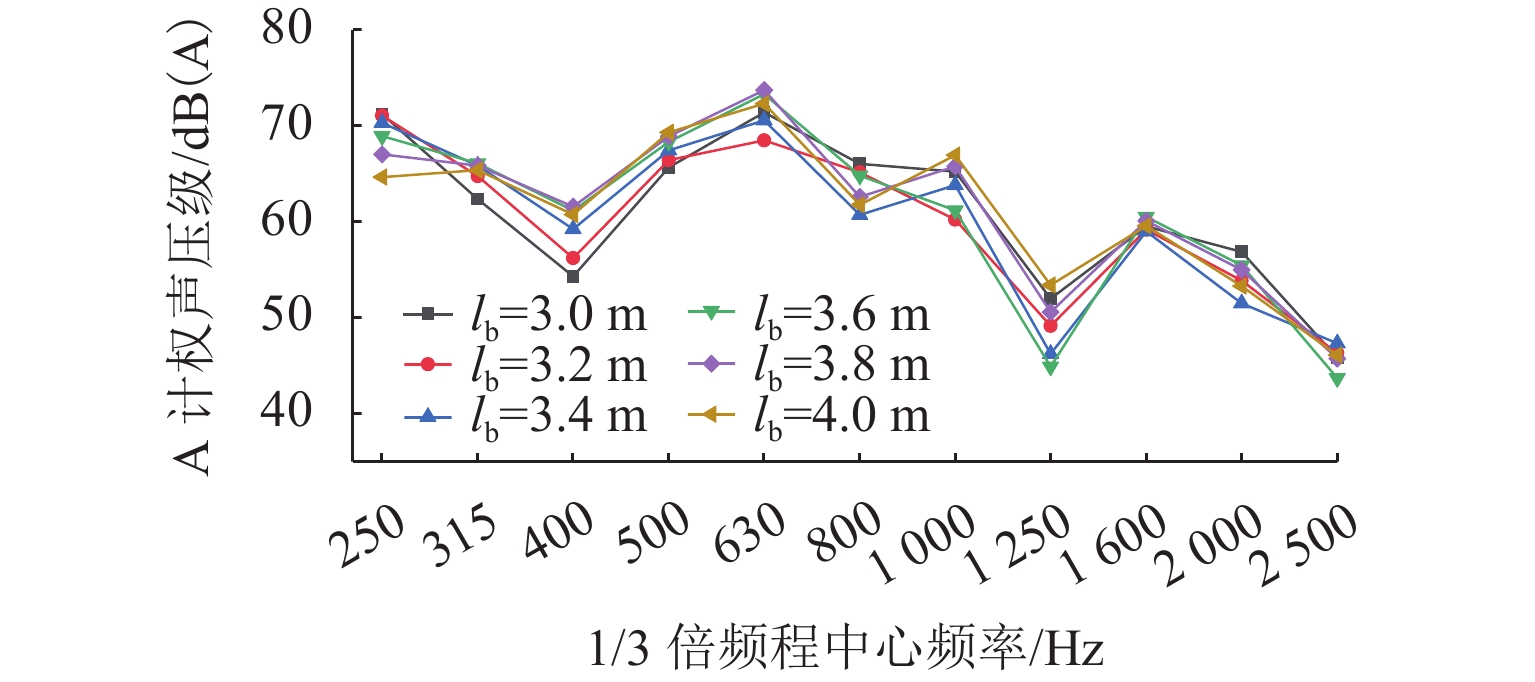
图 18 场点M4声压级与屏障-线路中心距离的关系
Figure 18. Relationship between sound pressure level of field point M4 and barrier-line center distance
表 1 工况参数表
Table 1. Working condition parameters
工况 波高/mm 波距/m 速度/(km•h−1) 1 0 ∞ 300 2 400 2.4 300 3 400 3.2 300 4 400 4.0 300 5 400 4.8 300 6 200 3.2 300 7 600 3.2 300 8 200 4.0 300 9 400 4.0 300 10 600 4.0 300 11 0 ∞ 340 12 200 3.2 340 13 400 3.2 340 14 600 3.2 340  下载: 导出CSV
-
[1] 乔小龙. 交通声屏障应用现状与发展趋势分析[J]. 中国公路, 2022(24): 118-120.QIAO Xiaolong. Analysis of application status and development trend of traffic noise barrier[J]. China Highway, 2022(24): 118-120. [2] 谭文, 俞泉瑜, 曹明华, 等. 城轨交通高架线噪声控制指标及限值探讨[J]. 都市快轨交通, 2023, 36(1): 120-124.TAN Wen, YU Quanyu, CAO Minghua, et al. Controlling target and limit of viaduct noise in urban rail transit[J]. Urban Rapid Rail Transit, 2023, 36(1): 120-124. [3] 李小珍, 张效邦, 郑净, 等. 400 km/h高铁桥上直立式声屏障的列车风致振动[J]. 西南交通大学学报, 2024, 59(6): 1415-1422.LI Xiaozhen, ZHANG Xiaobang, ZHENG Jing, et al. Wind-induced vibration of 400 km/h trains with vertical sound barrier on highspeed railway bridge[J]. Journal of Southwest Jiaotong University, 2024, 59(6): 1415-1422. [4] 卫星, 汪蓉蓉, 温宗意, 等. 高铁声屏障连接螺栓松弛对疲劳寿命的影响[J]. 西南交通大学学报, 2023, 58(2): 373-380.WEI Xing, WANG Rongrong, WEN Zongyi, et al. Influence of bolt relaxation of high-speed railway sound barrier on fatigue life[J]. Journal of Southwest Jiaotong University, 2023, 58(2): 373-380. [5] 何宾, 肖新标, 周信, 等. 高速铁路声屏障几何形状声学性能数值模拟[J]. 机械工程学报, 2016, 52(2): 99-107.HE Bin, XIAO Xinbiao, ZHOU Xin, et al. Numerical study on acoustic performance of high-speed railway noise barriers with different geometric shape[J]. Journal of Mechanical Engineering, 2016, 52(2): 99-107. [6] 何宾, 肖新标, 周信, 等. 声屏障插入损失影响因素及降噪机理研究[J]. 浙江大学学报(工学版), 2017, 51(4): 761-770, 783.HE Bin, XIAO Xinbiao, ZHOU Xin, et al. Influence factors of insertion loss and their noise reduction mechanism for noise barrier[J]. Journal of Zhejiang University (Engineering Science), 2017, 51(4): 761-770, 783. [7] 陆维姗. 基于声场分布特性的高速铁路声屏障降噪效果研究[D]. 北京: 中国铁道科学研究院, 2019. [8] 黄鹏, 吴项君, 秦佳贺, 等. 干涉型声屏障隔声性能分析及其性能优化[J]. 噪声与振动控制, 2025, 45(2): 267-272.HUANG Peng, WU Xiangjun, QIN Jiahe, et al. Analysis of sound insulation performance of interference barriers and their performance optimization[J]. Noise and Vibration Control, 2025, 45(2): 267-272. [9] 从依云. 城市高架道路声屏障顶部降噪性能优化设计研究[D]. 杭州: 浙江大学, 2023. [10] OLDHAM D J, EGAN C A. A parametric investigation of the performance of T-profiled highway noise barriers and the identification of a potential predictive approach[J]. Applied Acoustics, 2011, 72(11): 803-813. [11] 于征磊, 张超磊, 陈立新, 等. 高速公路声屏障板仿生结构设计及声学力学性能[J]. 吉林大学学报(工学版), 2025, 55(9): 3079-3088.YU Zhenglei, ZHANG Chaolei, CHEN Lixin, et al. Bionic structure design and acoustic and mechanical properties of expressway sound barrier panels[J]. Journal of Jilin University (Engineering and Technology Edition), 2025, 55(9): 3079-3088. [12] CHEN Y H, GE J M, LIU S. Aerodynamic noise simulation of a high-speed maglev train operating inside a fully enclosed sound barrier[J]. Journal of Applied Fluid Mechanics, 2023, 16(3): 413-427. [13] 张荣敬, 汪益敏, 杨光睿, 等. 城市主干道高架桥梁段封闭式声屏障降噪效果测试与分析[J/OL]. 噪声与振动控制, 1-7(2025-09-19). https://link.cnki.net/urlid/31.1346.TB.20250918.1608.004. [14] 郑聪, 江理超, 罗锟, 等. 吸声材料布局对铁路声屏障降噪效果影响研究[J]. 铁道标准设计, 2023, 67(1): 197-202.ZHENG Cong, JIANG Lichao, LUO Kun, et al. Study on the influence of sound absorbing material layout on the noise reduction effect of railway sound barrier[J]. Railway Standard Design, 2023, 67(1): 197-202. [15] 梁进学, 张良涛, 朱红丽, 等. 轨道交通桥面板轻质吸声铺层降噪效果分析[J]. 噪声与振动控制, 2025, 45(5): 247-252.LIANG Jinxue, ZHANG Liangtao, ZHU Hongli, et al. Noise reduction analysis of lightweight sound-absorbing layers on rail transit bridge decks[J]. Noise and Vibration Control, 2025, 45(5): 247-252. [16] 朱彬荣. 3D打印高延性水泥基复合材料的设计及跨尺度力学行为研究[D]. 南京: 东南大学, 2022. [17] LI V C. Engineered Cementitious Composites (ECC): bendable concrete for sustainable and resilient infrastructure[M]. Cham: Springer, 2019. [18] GHAHSAREH F M, GUO P W, WANG Y H, et al. Review on material specification, characterization, and quality control of engineered cementitious composite (ECC)[J]. Construction and Building Materials, 2024, 442: 137699. [19] ZHU H, WANG T Y, WANG Y C, et al. Trenchless rehabilitation for concrete pipelines of water infrastructure: a review from the structural perspective[J]. Cement and Concrete Composites, 2021, 123: 104193. [20] HU Z H, ELCHALAKANI M, YEHIA S, et al. Engineered cementitious composite (ECC) strengthening of reinforced concrete structures: a state-of-the-art review[J]. Journal of Building Engineering, 2024, 86: 108941. [21] 周强, 张迅, 郝晨曦, 等. 高速铁路半封闭声屏障声学性能的现场实测及预测模型[J]. 铁道学报, 2020, 42(9): 127-133.ZHOU Qiang, ZHANG Xun, HAO Chenxi, et al. Acoustic performance of high-speed railway semi-closed sound barriers based on field test and prediction model[J]. Journal of the China Railway Society, 2020, 42(9): 127-133. [22] 吴小萍, 费广海, 廖晨彦. 双声源模式下高铁声屏障降噪效果仿真分析[J]. 铁道工程学报, 2015, 32(1): 49-54.WU Xiaoping, FEI Guanghai, LIAO Chenyan. Simulation analysis on the noise reduction effect of high-speed railway sound barrier[J]. Journal of Railway Engineering Society, 2015, 32(1): 49-54. [23] 费广海, 吴小萍, 廖晨彦. 声屏障高度对高铁(客运专线)降噪效果的影响[J]. 中国环境科学, 2015, 35(8): 2539-2545.FEI Guanghai, WU Xiaoping, LIAO Chenyan. The influence of sound barriers with different heights on the noise reduction effect of high-speed railway[J]. China Environmental Science, 2015, 35(8): 2539-2545. [24] ISO 3095—2013 Railway application-acoustics-measurement of noise emitted by railbound vehicles[S]. [25] 伍向阳. 铁路全封闭声屏障降噪效果试验研究[J]. 铁道标准设计, 2019, 63(12): 177-181.WU Xiangyang. Experimental study on noise reduction effect of fully enclosed sound barrier on railway[J]. Railway Standard Design, 2019, 63(12): 177-181. [26] 周铁军, 李志强, 王晨歌, 等. 高铁下部区域噪声源设置对噪声预测影响分析[J]. 中国铁路, 2024(11): 14-19, 27.ZHOU Tiejun, LI Zhiqiang, WANG Chenge, et al. Analysis on impact of noise source setting in underfloor area of high speed railway on noise prediction[J]. China Railway, 2024(11): 14-19, 27. [27] 盛峰, 姜在秀, 贺银芝, 等. 高速铁路声屏障宽频穿孔吸声降噪结构[J]. 同济大学学报(自然科学版), 2024, 52(9): 1469-1473.SHENG Feng, JIANG Zaixiu, HE Yinzhi, et al. Multi-layer micro-perforated panels with broadband absorption for reduction of high-speed railway noise[J]. Journal of Tongji University (Natural Science), 2024, 52(9): 1469-1473. [28] ZHANG J, XIAO X B, SHENG X Z, et al. Sound source localisation for a high-speed train and its transfer path to interior noise[J]. Chinese Journal of Mechanical Engineering, 2019, 32(1): 59. [29] 刘兰华, 孙捷, 李志强, 等. 基于三等效声源模型的高速铁路声屏障降噪效果计算方法研究[J]. 铁道运输与经济, 2018, 40(10): 81-87.LIU Lanhua, SUN Jie, LI Zhiqiang, et al. A research on the calculation method of noise reduction effect of high-speed railway noise barriers based on 3 equivalent noise source model[J]. Railway Transport and Economy, 2018, 40(10): 81-87. [30] 郭萍, 文桂林, 王艳广, 等. 三维有限长声屏障声压简化算法[J]. 公路交通科技, 2012, 29(8): 153-158.GUO Ping, WEN Guilin, WANG Yanguang, et al. A simplified method for calculating acoustic pressure of 3D finite length noise barriers[J]. Journal of Highway and Transportation Research and Development, 2012, 29(8): 153-158. -

 下载:
下载:

 点击查看大图
计量
- 文章访问数: 211
- HTML全文浏览量: 138
- PDF下载量: 75
- 被引次数: 0