



Study on Multi-Factor Coupling Analysis of Temperature Field and Freezing Radius Prediction for Cold-Region Tunnels
-
摘要:
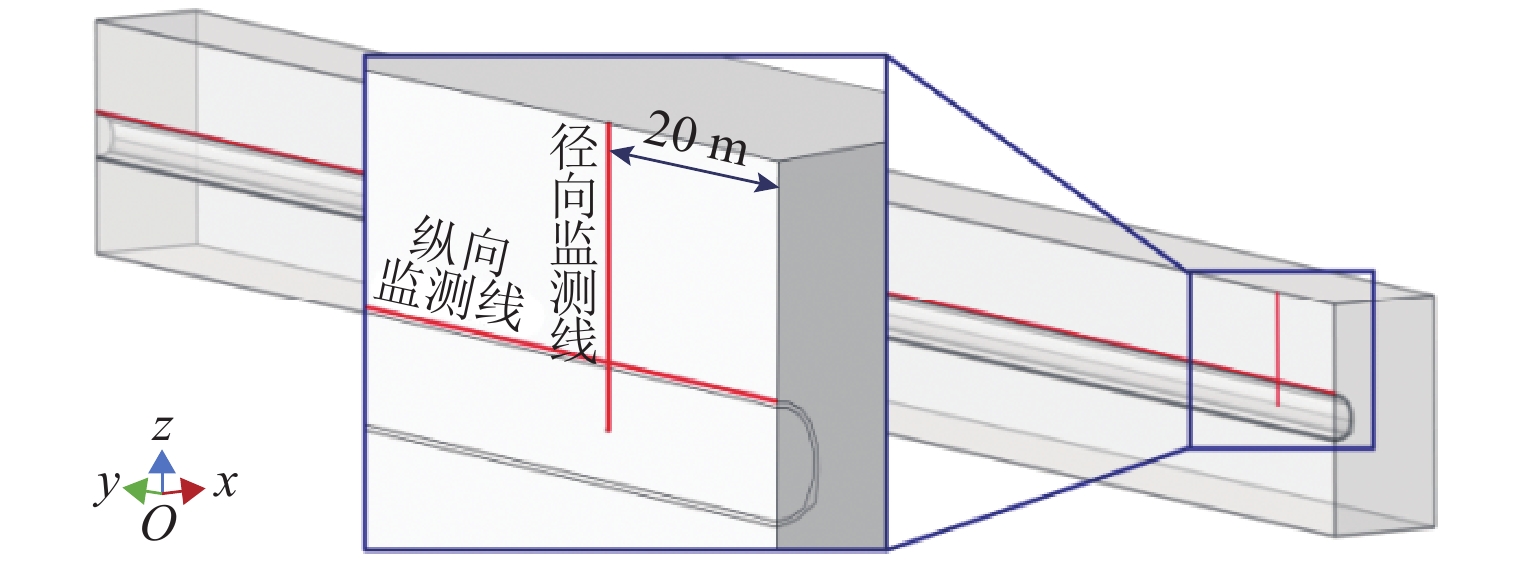
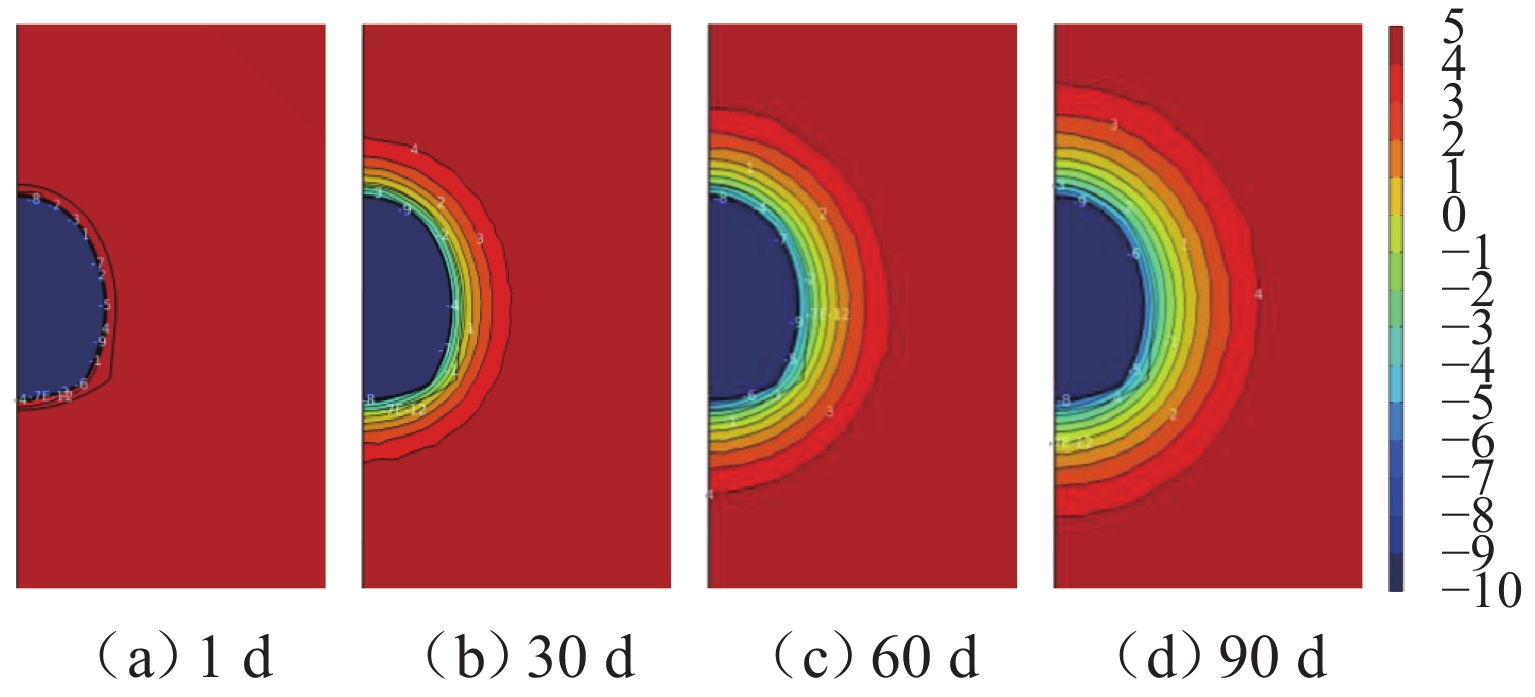
为明确自然风与列车活塞风共同作用下寒区隧道围岩温度场演化及冻结半径变化规律,提高冻害风险快速评估能力,以果拉山隧道为工程背景开展数值模拟与机器学习联合研究. 基于现场参数建立空气、初期支护、二次衬砌和围岩组成的三维瞬态传热模型,采用非等温流动耦合空气流动与衬砌围岩传热过程,并以等效风速法表征列车活塞风及余风作用;通过控制变量法分析自然风风速、风温、风向、隧道断面尺寸、初始岩温、列车速度和运行频次7类因素,提取纵向、径向温度分布及90 d冻结半径,并基于658组正交样本建立随机森林、支持向量机和XGBoost预测模型. 结果表明:洞口段调温圈随冷空气作用时间增加而扩大,围岩纵向温度呈快速上升和稳定增长两阶段特征,径向温度逐渐趋近初始岩温;自然风风温、风向和初始岩温为主导因素,敏感性系数分别为0.22、0.21和0.21;XGBoost模型预测精度最优,均方根误差为0.118,工程算例冻结半径预测值为1.85 m,相对误差为1.1%. 外界低温空气条件和围岩初始热状态是寒区隧道冻害风险控制的关键因素,所建模型可为冻结半径快速估算和防冻设计参数优化提供依据.
Abstract:To clarify the evolution laws of surrounding-rock temperature field and freezing radius in cold-region tunnels under the combined action of natural wind and train piston wind, and to improve the capability of rapid frost-damage risk assessment, a joint study of numerical simulation and machine learning was conducted using the Guolashan Tunnel as an engineering background. Based on field parameters, a three-dimensional transient heat transfer model consisting of air, primary support, secondary lining, and surrounding rock was established. Non-isothermal flow was used to couple the airflow with the heat transfer process of the lining and surrounding rock, and an equivalent wind speed method was adopted to characterize the effects of train piston wind and residual wind. Seven types of factors, including natural wind speed, natural wind temperature, natural wind direction, tunnel cross-section size, initial rock temperature, train speed, and train operation frequency, were analyzed through the control variable method. The longitudinal and radial temperature distributions and the freezing radius after 90 days were extracted, and random forest, support vector machine, and XGBoost prediction models were established based on 658 sets of orthogonal samples. The results indicate that the temperature-adjustment zone at the tunnel portal expands with the increase of cold-air action time; the longitudinal temperature of the surrounding rock presents two-stage characteristics of rapid rise and stable growth, and the radial temperature gradually approaches the initial rock temperature. Natural wind temperature, natural wind direction, and initial rock temperature are the dominant factors, with sensitivity coefficients of 0.22, 0.21, and 0.21, respectively. The XGBoost model has the optimal prediction accuracy with a root mean square error of 0.118; the predicted freezing radius for the engineering case is 1.85 m, with a relative error of 1.1%. External low-temperature air conditions and the initial thermal state of the surrounding rock are the key factors for frost-damage risk control in cold-region tunnels. The established models can provide a basis for rapid estimation of the freezing radius and optimization of anti-freezing design parameters.
-
Key words:
- cold-region tunnel /
- temperature field /
- multi-factor coupling /
- freezing radius /
- machine learning
-
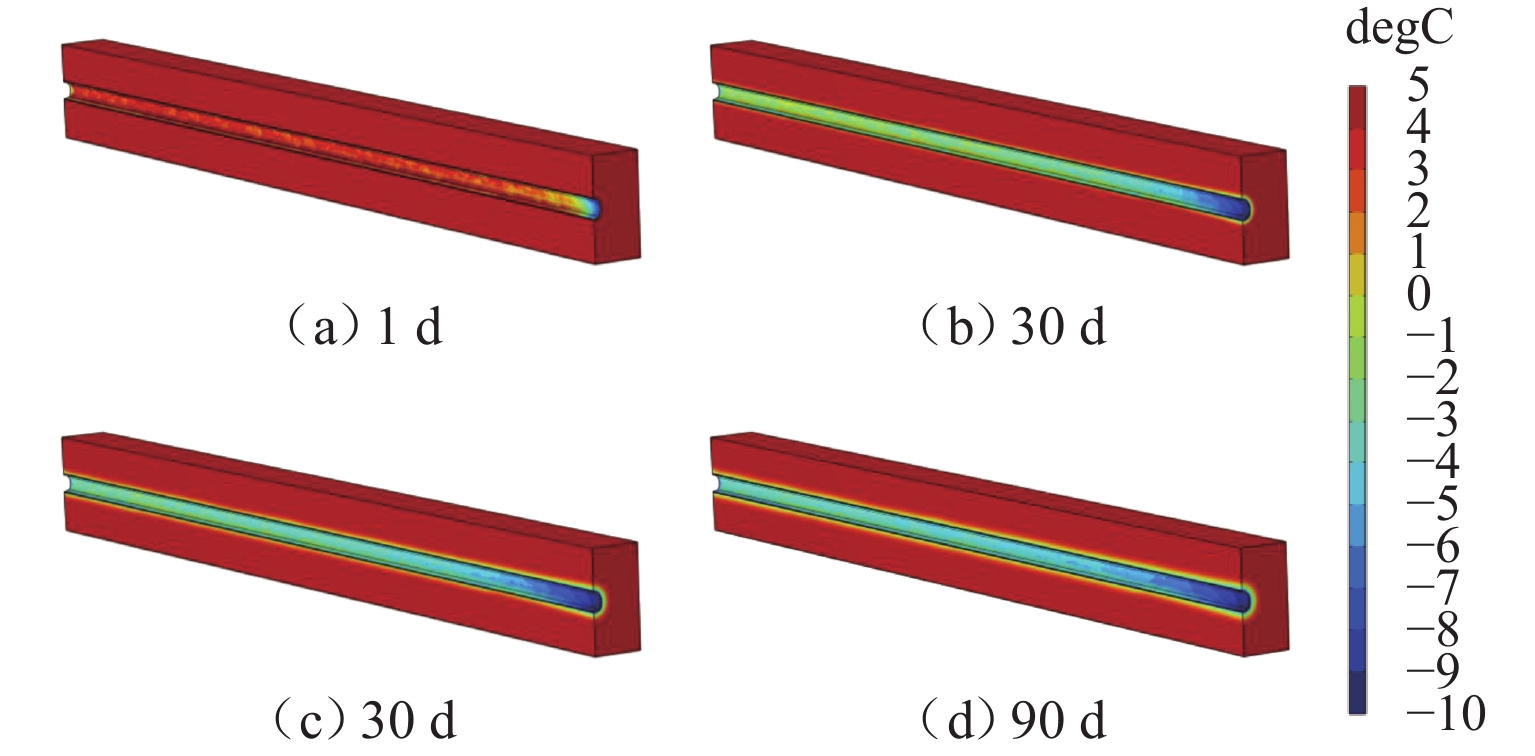
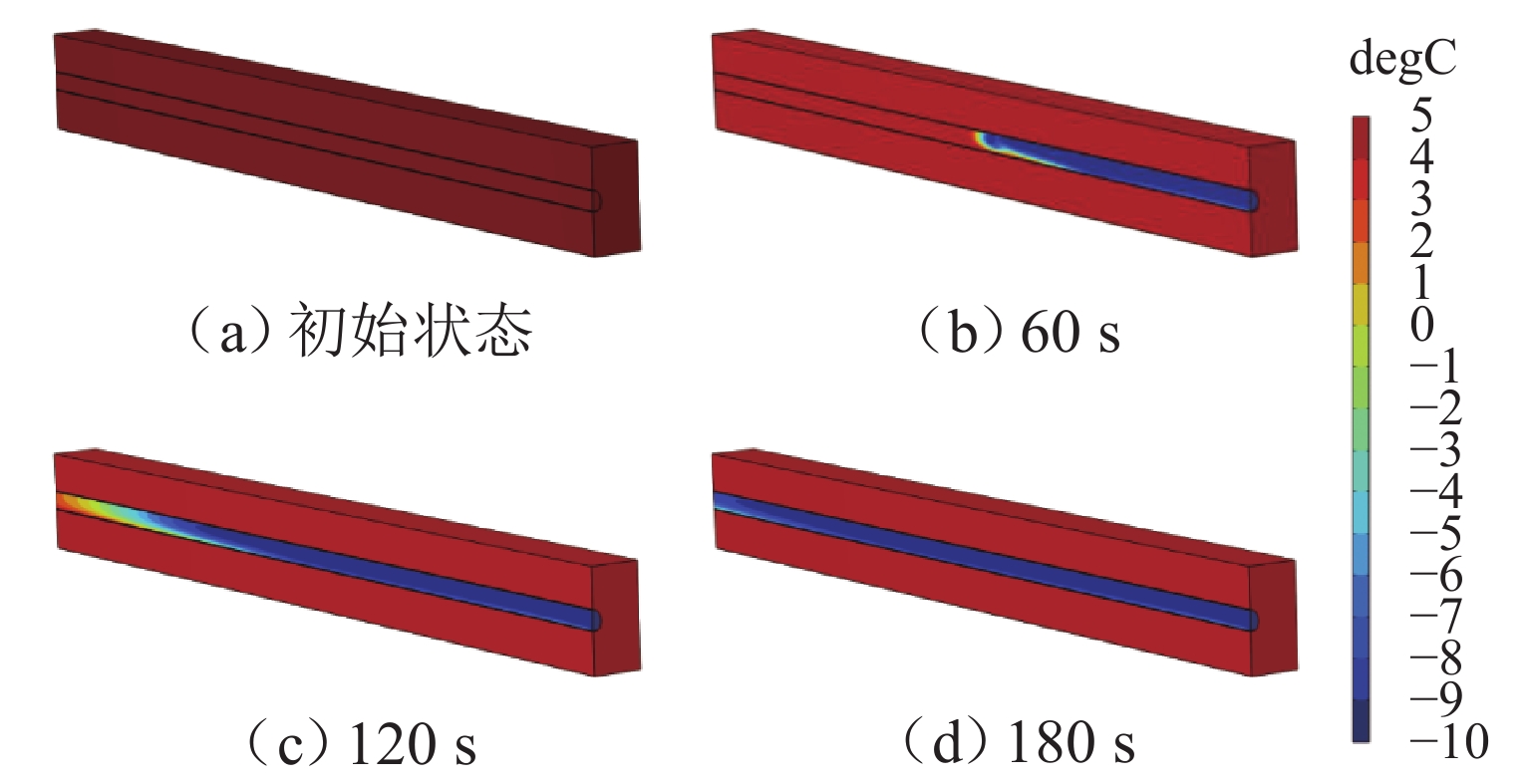
图 5 隧道二衬温度纵向变化云图
Figure 5. Cloud map of longitudinal temperature variation in tunnel secondary lining
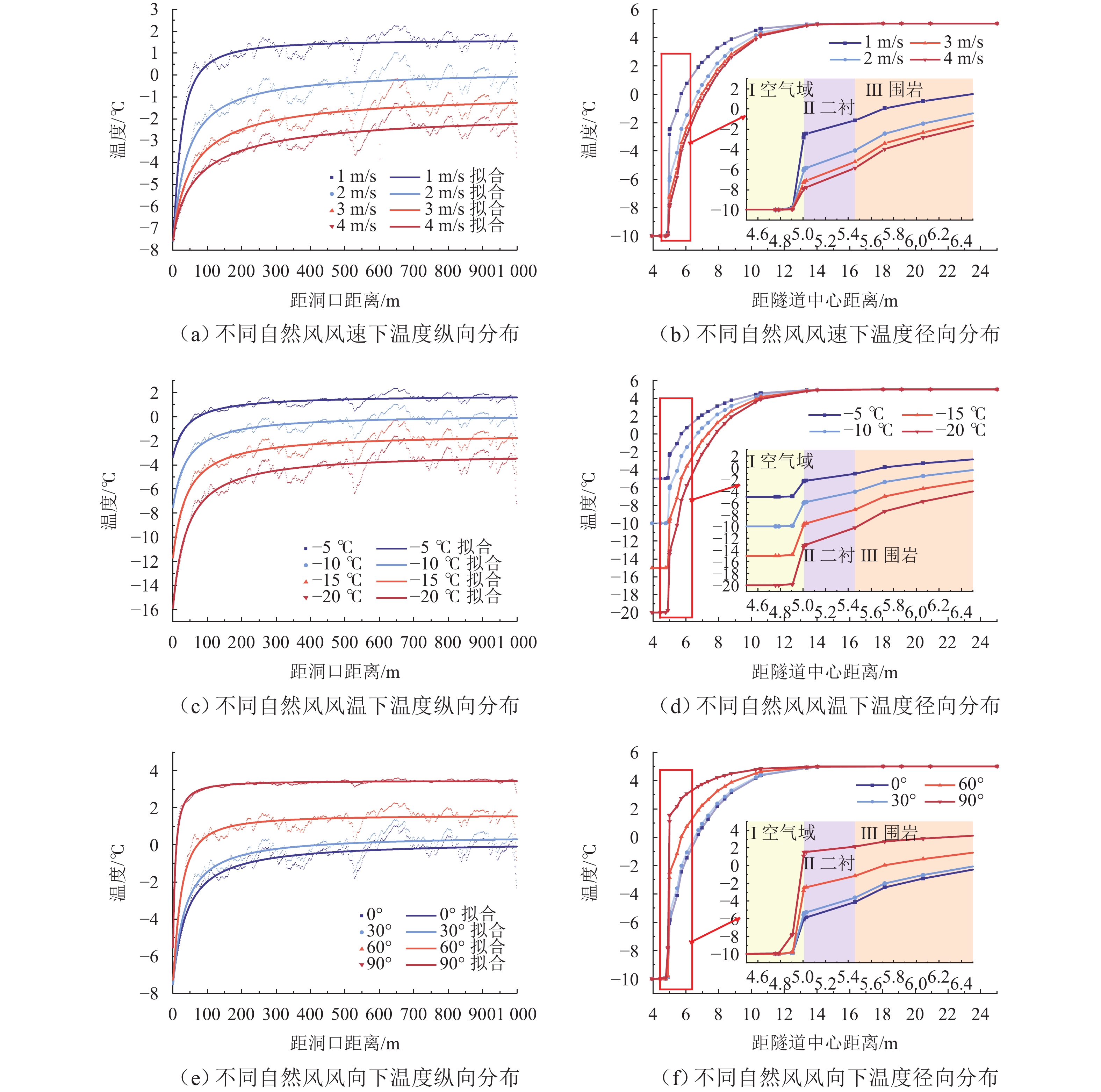
图 6 不同自然风因素对围岩温度影响对比
Figure 6. Comparison of effects of different natural wind factors on surrounding-rock temperature
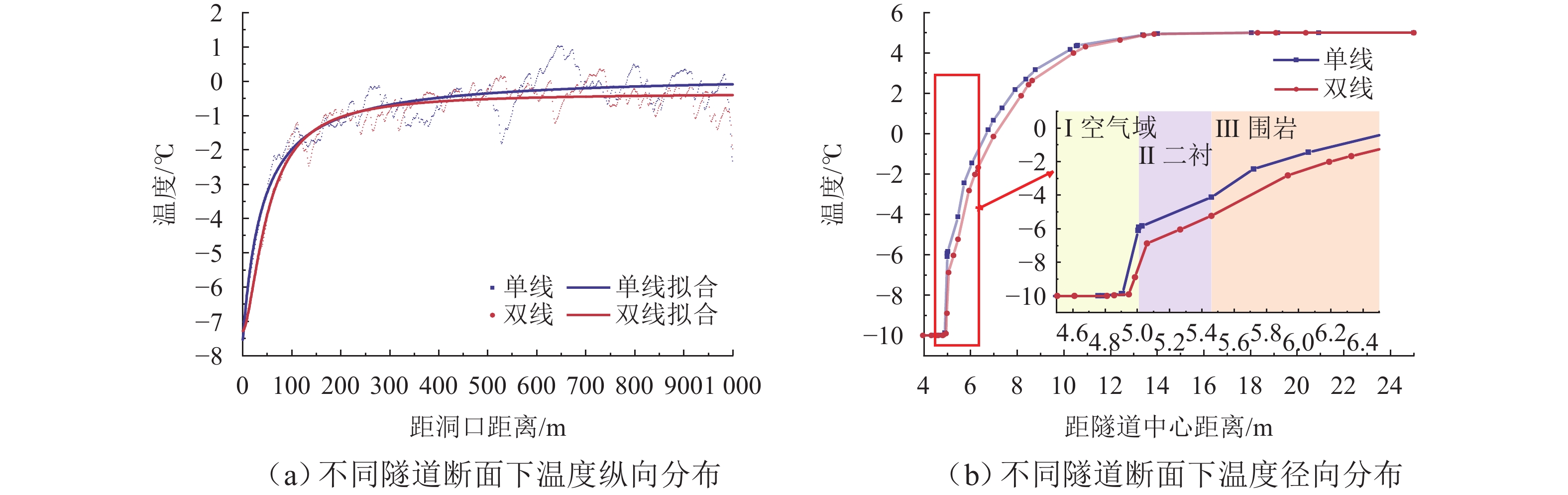
图 7 隧道断面对围岩温度影响对比
Figure 7. Comparison of effects of tunnel cross-section on surrounding-rock temperature
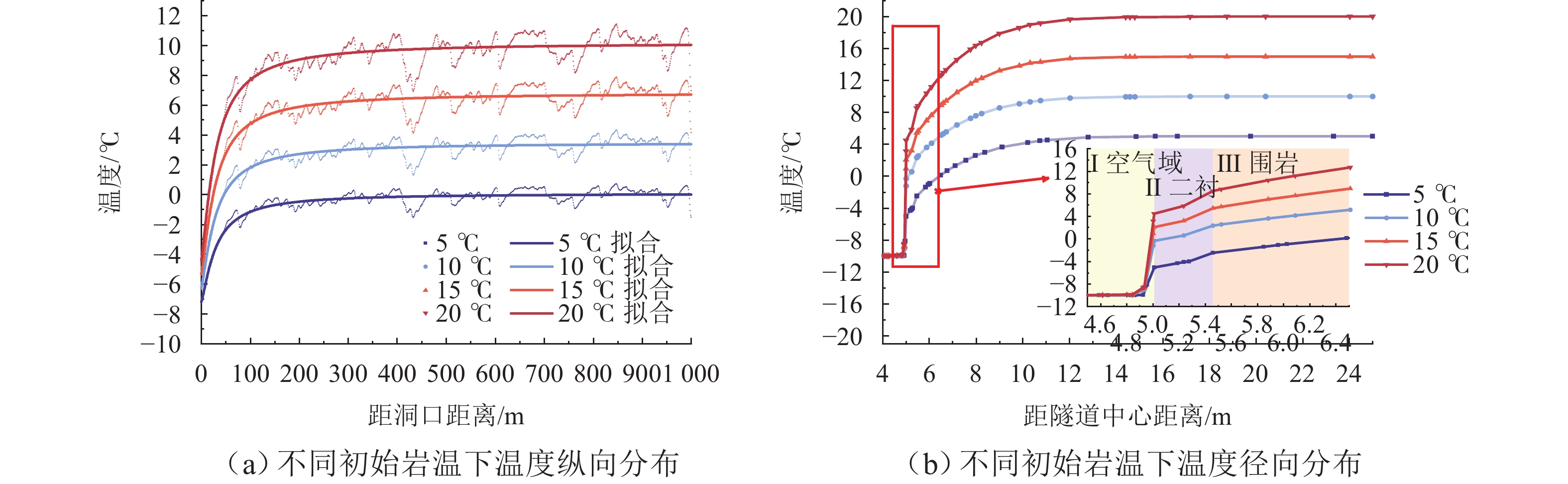
图 8 初始岩温对围岩温度影响对比
Figure 8. Comparison of effects of initial rock temperature on surrounding-rock temperature
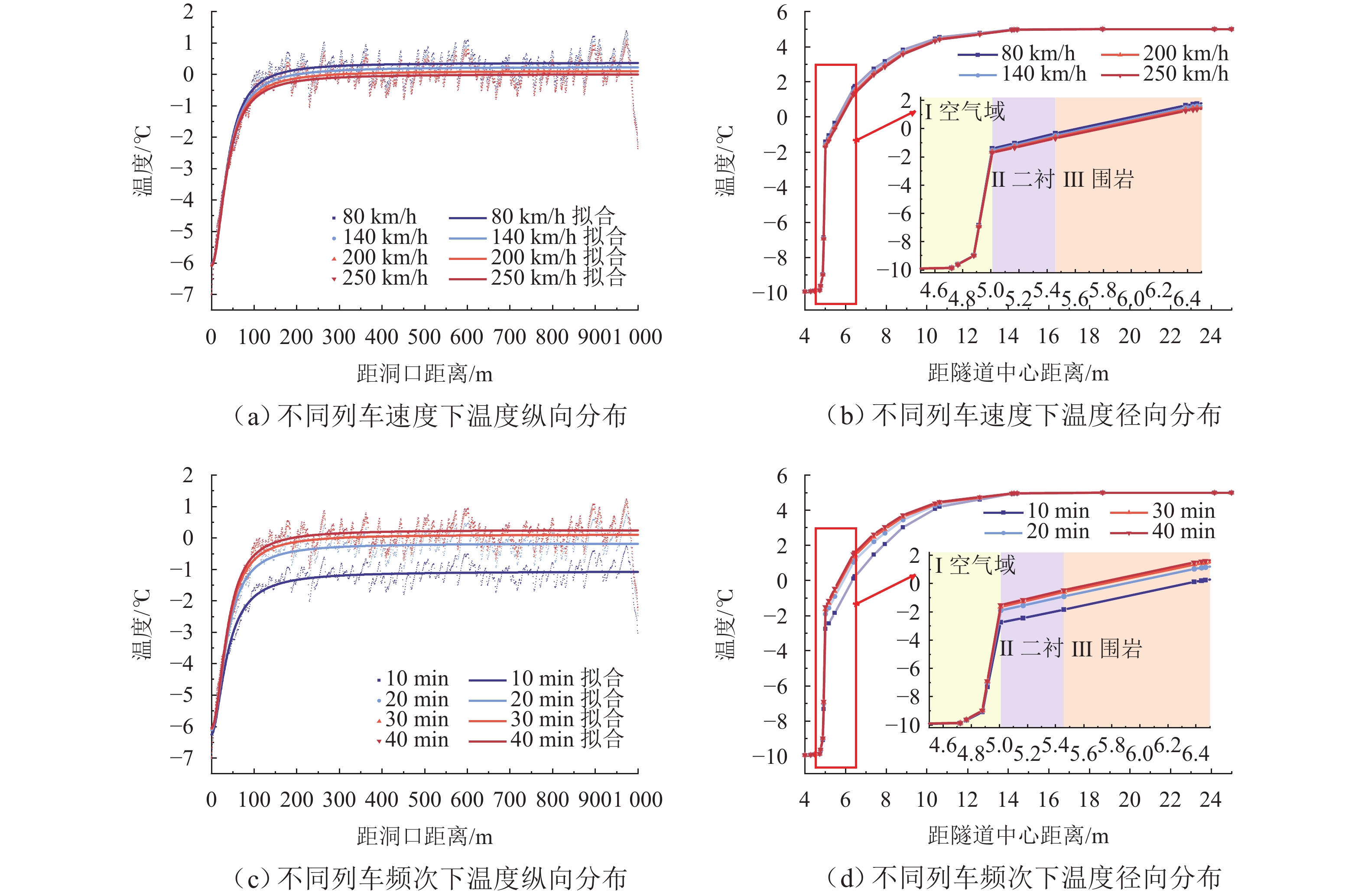
图 9 活塞风对围岩温度影响对比
Figure 9. Comparison of effects of piston wind on surrounding-rock temperature
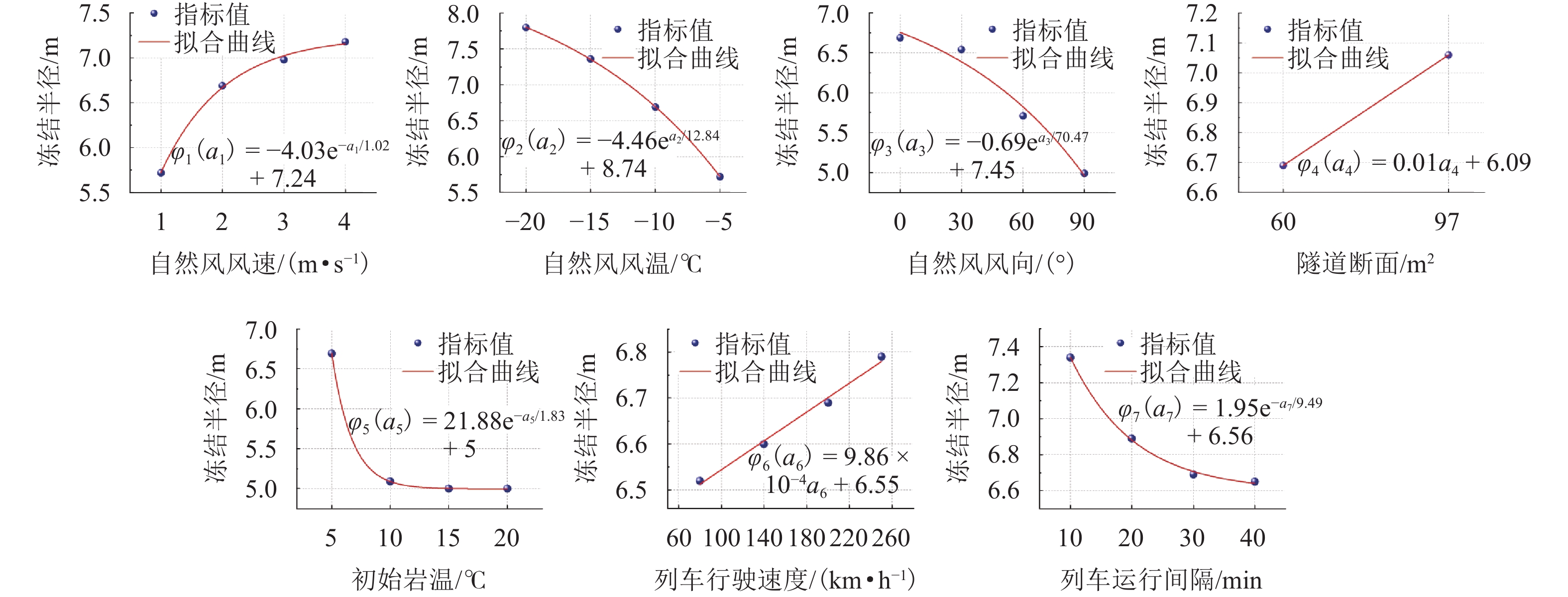
图 10 不同影响因素的指标值变化曲线
Figure 10. Variation curves of index values under different influencing factors
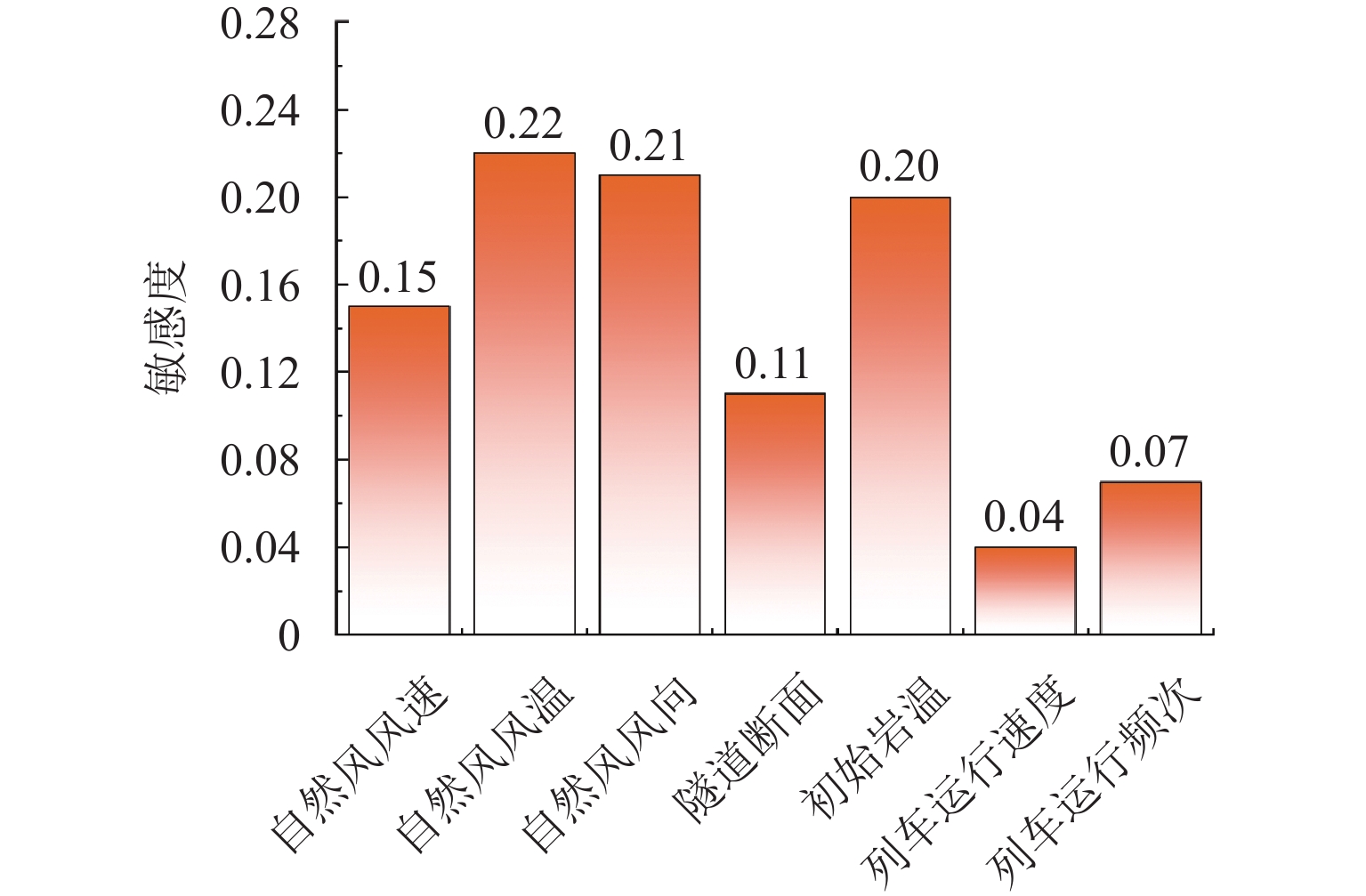
图 11 不同影响因素敏感因子排序
Figure 11. Ranking chart of sensitivity factors under different influencing factors
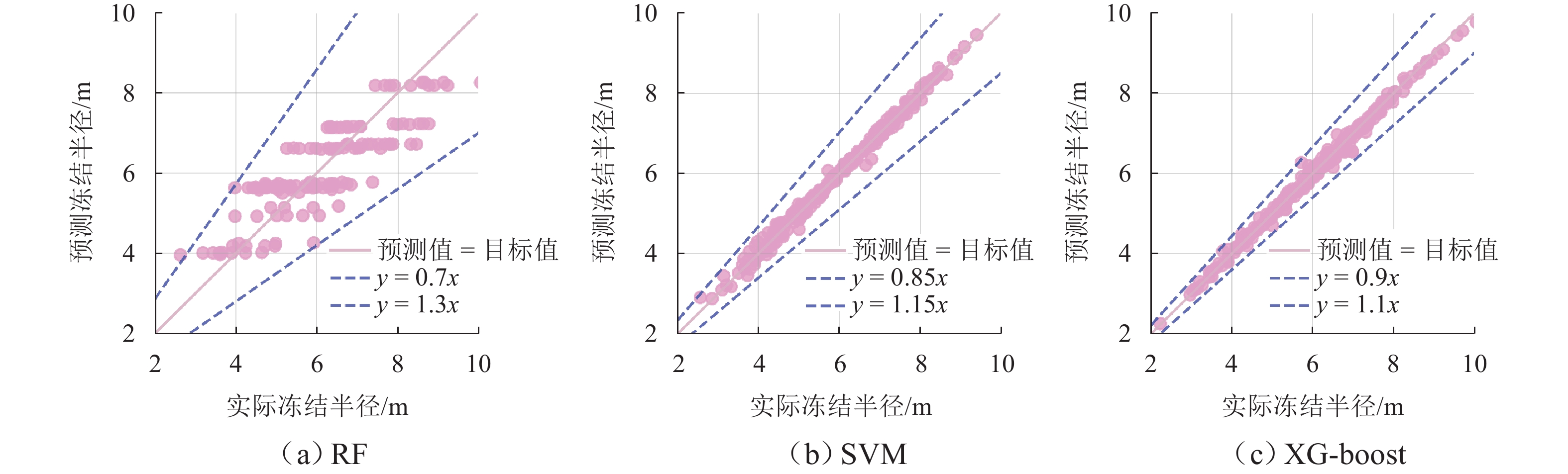
图 12 不同模型目标值与预测值对比图
Figure 12. Comparison chart between target values and predicted values of different models
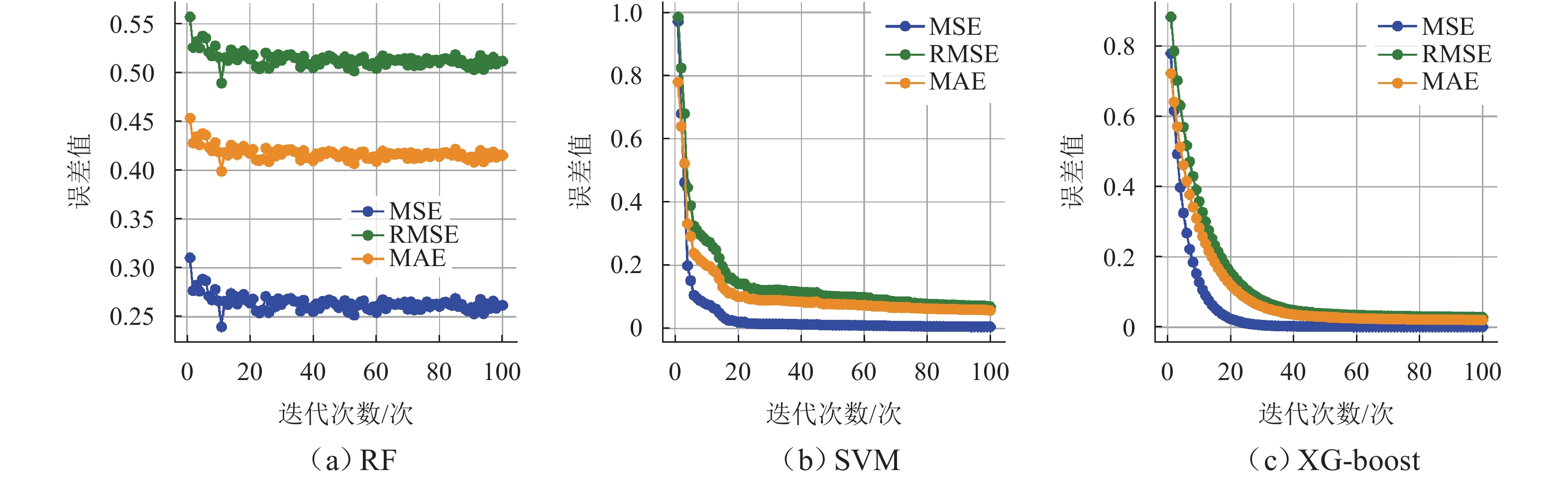
图 13 不同模型随迭代次数增加误差变化图
Figure 13. Variation chart of errors of different models with increasing iterations
表 1 模型材料热力学参数
Table 1. Thermodynamic parameters of model materials
材料 导热系数/
(W•m−1•K−1)比热容/
(J•kg−1•K−1)密度/
(kg•m−3)动力粘度/
(Pa•s)空气 0.026 1005 ρa(T) μa(T) 初支 1.801 900 2450 二砌 1.742 920 2450 围岩 1.911 800 2500  下载: 导出CSV
表 2 计算工况
Table 2. Calculation case settings
工况 1 2 3 4 5 6 7 自然风
风速/(m•s−1)自然风
风温/℃自然风
风向/°隧道断面
大小/m2围岩
岩温/℃列车运行
速度/(km•h−1)列车运行
频次/min1 −5 0 60 (单线) 5 80 10 2 −10 30 10 140 20 3 −15 60 97 (双线) 15 200 30 4 −20 90 20 250 40 注:加粗数字表示该影响因素的基准值.
下载: 导出CSV
表 3 不同列车速度下计算工况
Table 3. Calculation case settings under different train speeds
列车运行速度/(km•h−1) 活塞风作用时间/s 活塞风峰值速度/(m•s−1) 余风作用时间/s 列车频次/min 80 45 12.8 300 30 140 26 22.1 316 200 18 31.4 324 250 15 39.4 327
下载: 导出CSV
表 4 不同模型结果评价参数
Table 4. Evaluation parameters for results of different models
模型 RF SVM Xgboost MSE 0.580 0.018 0.014 RMSE 0.762 0.155 0.118 MAE 0.602 0.108 0.086 R2 0.757 0.903 0.973
下载: 导出CSV
-
[1] 苑郁林, 赖远明. 寒区隧道围岩冻融冻结环境识别和类别划分研究[J]. 现代隧道技术, 2016, 53(3): 19-25, 41. doi: 10.13807/j.cnki.mtt.2016.03.003Yuan Yulin, Lai Yuanming. The identification and classification of freezing-thawing and frozen environments for the surrounding rocks of tunnels in cold regions[J]. Modern Tunnelling Technology, 2016, 53(3): 19-25,41. doi: 10.13807/j.cnki.mtt.2016.03.003 [2] 田四明, 王伟, 刘建友, 等. 寒区铁路隧道防寒抗冻关键技术研究与展望[J]. 隧道建设(中英文), 2024, 44(1): 21-34.Tian Siming, Wang Wei, Liu Jianyou, et al. Research on and prospect of key technologies of frost-proofing and anti-freezing for railway tunnels in cold regions[J]. Tunnel Construction, 2024, 44(1): 21-34. [3] 张亚琴, 王道远, 袁金秀, 等. 基于群组决策的寒区隧道冻害风险评价研究[J]. 铁道工程学报, 2024, 41(3): 91-99. doi: 10.3969/j.issn.1006-2106.2024.03.014Zhang Yaqin, Wang Daoyuan, Yuan Jinxiu, et al. Study on risk assessment of tunnel freezing damage in cold region based on group decision[J]. Journal of Railway Engineering Society, 2024, 41(3): 91-99. doi: 10.3969/j.issn.1006-2106.2024.03.014 [4] 严晓东, 伍毅敏, 许鹏, 等. 寒区隧道衬砌挂冰病害成因及预测预警技术[J]. 中国安全科学学报, 2019, 29(增刊2): 174-180.Yan Xiaodong, Wu Yimin, Xu Peng, et al. Study on causes of frost damage of ice covering on lining in cold region tunnelsand forecast and early warning technology[J]. China Safety Science Journal, 2019, 29(S2): 174-180. [5] 袁明, 李汉军, 郭瑞, 等. 严寒区公路隧道冻害机理及温度场影响因素分析[J]. 现代隧道技术, 2024, 61(增刊1): 873-883.Yuan Ming, Li Hanjun, Guo Rui, et al. Analysis of frost damage mechanism and influencing factors of temperature field in highway tunnels in cold regions[J]. Modern Tunnelling Technology, 2024, 61(S1): 873-883. [6] 高焱, 耿纪莹, 贾超, 等. 寒区隧道温度场变化规律及空气幕保温效果[J]. 西南交通大学学报, 2019, 54(5): 1047-1054. doi: 10.3969/j.issn.0258-2724.20170295Gao Yan, Geng Jiying, Jia Chao, et al. Temperature field law in cold region tunnels and insulation effect of air curtain[J]. Journal of Southwest Jiaotong University, 2019, 54(5): 1047-1054. doi: 10.3969/j.issn.0258-2724.20170295 [7] 孙克国, 李思, 许炜萍, 等. 导热系数对寒区隧道温度场时空分布的影响[J]. 西南交通大学学报, 2020, 55(2): 256-264, 289.Sun Keguo, Li Si, Xu Weiping, et al. Influence of thermal conductivity on temporal and spatial distributions of temperature filed in cold region tunnel[J]. Journal of Southwest Jiaotong University, 2020, 55(2): 256-264,289. [8] Tan X J, Chen W Z, Yang D S, et al. Study on the influence of airflow on the temperature of the surrounding rock in a cold region tunnel and its application to insulation layer design[J]. Applied Thermal Engineering, 2014, 67(1/2): 320-334. doi: 10.1016/j.applthermaleng.2014.03.016 [9] Lu T S, Zhang G Z, Liu S Y, et al. Numerical investigation of the temperature field and thermal insulation design of cold-region tunnels considering airflow effect[J]. Applied Thermal Engineering, 2021, 191: 116923. doi: 10.1016/j.applthermaleng.2021.116923 [10] 蒋新政. 季冻区公路隧道温度场分布规律及保温防冻措施研究[D]. 成都: 西南交通大学, 2021. [11] 孙克国, 刘建正, 于铭钊, 等. 气象要素对寒区隧道径向温度场影响规律研究[J]. 土木工程学报, 2021, 54(增刊1): 140-148.Sun Keguo, Liu Jianzheng, Yu Mingzhao, et al. Influence law of meteorological elements on radial temperature field of tunnel in a cold region[J]. China Civil Engineering Journal, 2021, 54(S1): 140-148. [12] Wu H, Zhong Y J, Xu W, et al. Experimental investigation of ground and air temperature fields of a cold-region road tunnel in NW China[J]. Advances in Civil Engineering, 2020, 2020: 4732490. doi: 10.1155/2020/4732490 [13] 谭贤君, 陈卫忠, 于洪丹, 等. 考虑通风影响的寒区隧道围岩温度场及防寒保温材料敷设长度研究[J]. 岩石力学与工程学报, 2013, 32(7): 1400-1409. doi: 10.3969/j.issn.1000-6915.2013.07.015Tan Xianjun, Chen Weizhong, Yu Hongdan, et al. Study of temperature field of tunnel surrounding rock in cold regions considering effect of ventilation and length design of insulation material[J]. Chinese Journal of Rock Mechanics and Engineering, 2013, 32(7): 1400-1409. doi: 10.3969/j.issn.1000-6915.2013.07.015 [14] 赵希望, 马勤国, 姜海强, 等. 自然风条件下寒区高速铁路隧道温度分布及防冻保温长度研究[J]. 铁道标准设计, 2021, 65(9): 140-147. doi: 10.13238/j.issn.1004-2954.202009010004Zhao Xiwang, Ma Qinguo, Jiang Haiqiang, et al. Study on the temperature field and anti-freezing length of high-speed railway tunnel in cold regions under natural wind conditions[J]. Railway Standard Design, 2021, 65(9): 140-147. doi: 10.13238/j.issn.1004-2954.202009010004 [15] 姜海强, 牛富俊, 汪恩良, 等. 活塞风对寒区高铁隧道衬砌结构传热影响分析[J]. 哈尔滨工程大学学报, 2025, 46(2): 243-251. doi: 10.11990/jheu.202210015Jiang Haiqiang, Niu Fujun, Wang Enliang, et al. Effects of piston action on heat transfer in lining structures of high-speed railway tunnels in cold regions[J]. Journal of Harbin Engineering University, 2025, 46(2): 243-251. doi: 10.11990/jheu.202210015 [16] 周小涵, 曾艳华, 范磊, 等. 基于正交试验的寒区隧道温度场影响因素敏感度研究[J]. 湖南大学学报(自然科学版), 2016, 43(11): 154-160. doi: 10.3969/j.issn.1674-2974.2016.11.021Zhou Xiaohan, Zeng Yanhua, Fan Lei, et al. Sensitivity analysis of influencing parameters on tunnel temperature field by orthogonal test technique[J]. Journal of Hunan University (Natural Sciences), 2016, 43(11): 154-160. doi: 10.3969/j.issn.1674-2974.2016.11.021 [17] 李刚, 钟小春. 寒区隧道围岩温度场分布特征及影响因素分析[J]. 建筑科学与工程学报, 2024, 41(2): 143-152. doi: 10.19815/j.jace.2022.08039Li Gang, Zhong Xiaochun. Temperature field distribution characteristics in cold region tunnels and surrounding rock and analysis of influencing factors[J]. Journal of Architecture and Civil Engineering, 2024, 41(2): 143-152. doi: 10.19815/j.jace.2022.08039 [18] 王仁远, 朱永全, 高焱, 等. 寒区隧道温度场模型试验及空气幕保温措施[J]. 中国铁道科学, 2021, 42(3): 70-82.Wang Renyuan, Zhu Yongquan, Gao Yan, et al. Model test of temperature field of tunnel in cold region and air curtain insulation measures[J]. China Railway Science, 2021, 42(3): 70-82. [19] Jiang H Q, Niu F J, Ma Q G, et al. Numerical analysis of heat transfer between air inside and outside the tunnel caused by piston action[J]. International Journal of Thermal Sciences, 2021, 170: 107164. doi: 10.1016/j.ijthermalsci.2021.107164 [20] Tao L L, Ren X C, Zhao D X, et al. Numerical study on effect of natural wind and piston wind on anti-freezing length of tunnels with high geo-temperature in cold region[J]. International Journal of Thermal Sciences, 2022, 172: 107372. doi: 10.1016/j.ijthermalsci.2021.107372 [21] 苏石川. 热能工程与先进能源技术仿真与设计[M]. 北京: 化学工业出版社, 2015. [22] 高焱. 寒区高速铁路隧道温度场理论与保温技术研究[D]. 成都: 西南交通大学, 2017. [23] 尚继科. 高速铁路寒区隧道围岩温度场及保温技术研究[D]. 石家庄: 石家庄铁道大学, 2015. [24] 中华人民共和国铁道部. 铁路隧道运营通风设计规范: TB 10068—2010[S]. 北京: 中国铁道出版社, 2010. [25] 金学易, 陈文英. 隧道通风及隧道空气动力学[M]. 北京: 中国铁道出版社, 1983. [26] 章光, 朱维申. 参数敏感性分析与试验方案优化[J]. 岩土力学, 1993, 14(1): 51-58.Zhang Guang, Zhu Weishen. Parameter sensitivity analysis and optimizing for test programs[J]. Rock and Soil Mechanics, 1993, 14(1): 51-58. [27] Hamby D M. A comparison of sensitivity analysis techniques[J]. Health Physics, 1995, 68(2): 195-204. doi: 10.2172/10127567 -

 下载:
下载:

 点击查看大图
计量
- 文章访问数: 110
- HTML全文浏览量: 70
- PDF下载量: 42
- 被引次数: 0