



Guideway Irregularity Spectrum of High-Temperature Superconducting Maglev Permanent Magnet Considering Structural Periodicity
-
摘要:
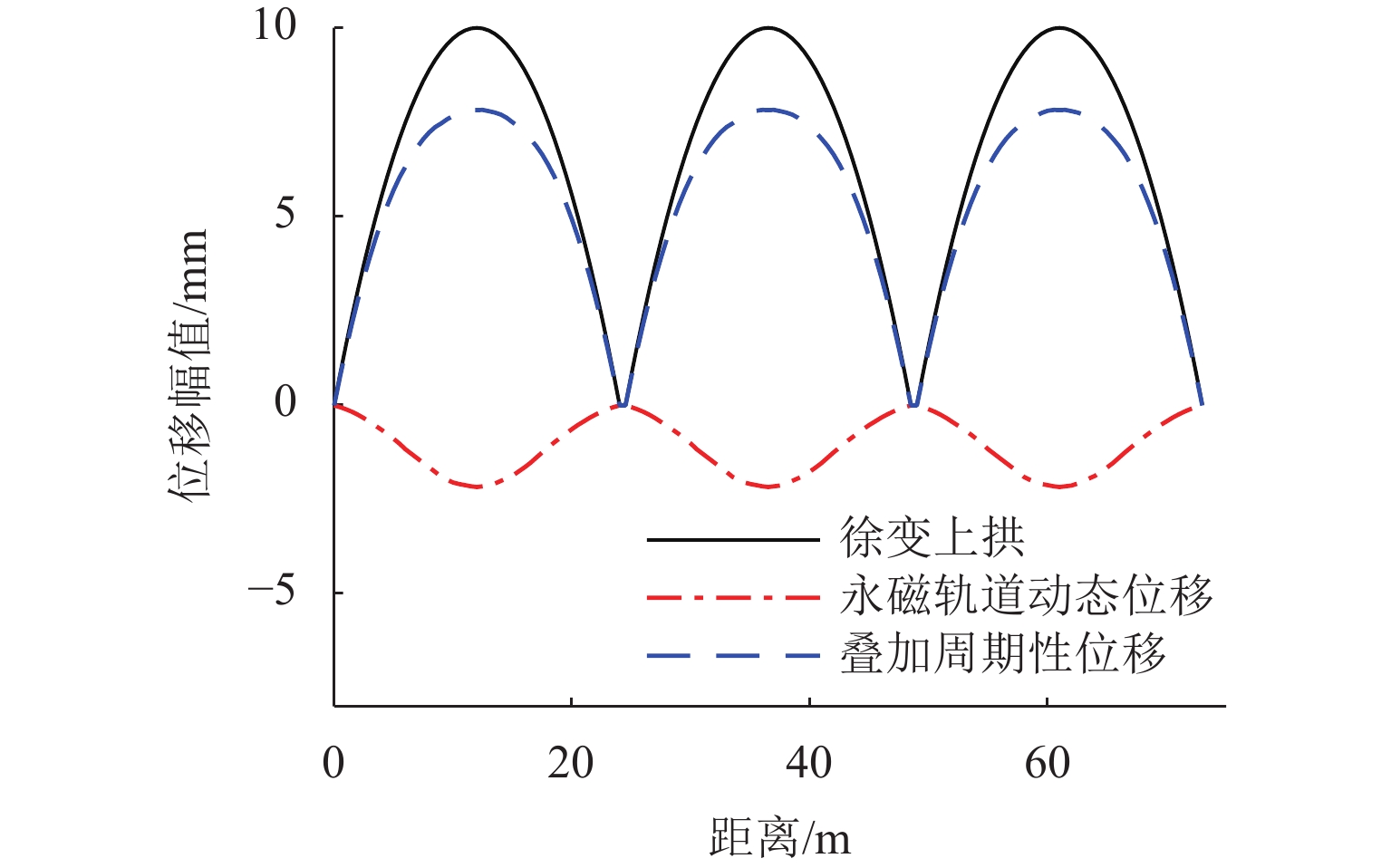
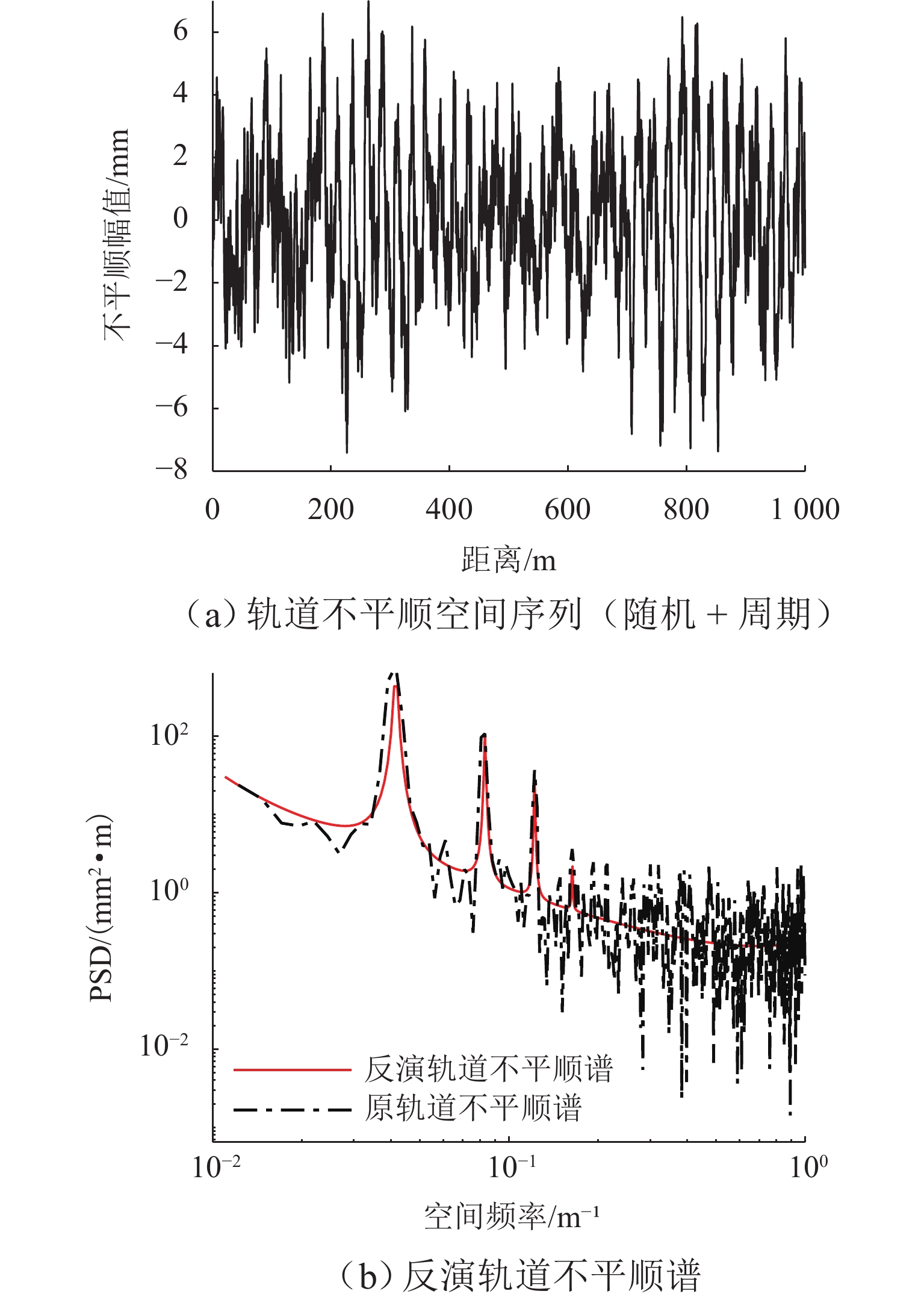
为给高温超导钉扎磁浮系统提供较为符合实际的几何不平顺轨道谱,开展考虑结构周期性的高温超导磁浮永磁轨道不平顺谱研究. 为实现包含结构周期性的永磁轨道不平顺谱表征和反演,首先建立高温超导磁浮桥梁、永磁轨道有限元模型,对其施加磁浮列车移动荷载,以获取最不利荷载作用位置,并提取该点位移作为动态不平顺;其次,考虑桥梁徐变上拱造成的永磁轨道变形,叠加列车荷载下周期性动态不平顺结果形成轨道周期性不平顺样本;进一步,考虑永磁轨道拼装随机误差,基于白噪声滤波法得到永磁轨道随机几何不平顺样本,与周期性不平顺叠加,形成永磁轨道不平顺谱;采用4阶多项式和洛伦兹函数对永磁轨道不平顺谱进行拟合,并基于逆傅里叶变换反演拟合谱,以检验拟合算法的有效性;最后,分析列车速度变化对永磁轨道不平顺拟合谱的影响. 结果表明:列车荷载速度变化对永磁轨道不平顺谱的影响主要集中在波长3~100 m内;当速度接近与桥梁共振的临界速度时,永磁轨道拟合谱反演不平顺幅值变化较为显著. 本文得到的不平顺谱可方便地应用于高温超导磁浮车辆动力学计算中,为不同速度等级高温超导磁浮列车动力学分析与设计优化提供输入.
Abstract:To provide a more realistic geometric irregularity spectrum for high-temperature superconducting (HTS) pinning-type maglev systems, the irregularity spectrum of permanent magnet (PM) guideways considering structural periodicity was investigated. To achieve the characterization and inversion of the PM guideway irregularity spectrum that incorporates structural periodicity, a finite element model of an HTS maglev bridge and its PM guideway was first built. Moving loads from a maglev train were then applied to the model to identify the most unfavorable loading position, and the displacement at this point was extracted as the dynamic irregularity. Next, by considering the deformation of the PM guideway caused by bridge creep camber and superimposing the periodic dynamic irregularity results from train loads, a sample of periodic guideway irregularity was formed. Furthermore, random assembly errors of the PM guideway were modeled using a white noise filtering method to obtain a sample of random geometric irregularity. This was then superimposed with the periodic irregularity to form the overall PM guideway irregularity spectrum. The irregularity spectrum was fitted using a 4th-order polynomial and a Lorentzian function, and the fitted spectrum was inversely transformed via the inverse Fourier transform to verify the effectiveness of the fitting method. Finally, the influence of train speed on the fitted irregularity spectrum was analyzed. The results show that train speed mainly affects the PM guideway irregularity spectrum in the wavelength range of 3–100 m; when the speed approaches the critical resonance speed of the bridge, the amplitude of the inverse-transformed irregularity becomes significantly larger. The irregularity spectrum obtained in this study can be readily applied in the dynamics calculations of HTS maglev vehicles, serving as input for the dynamic analysis and design optimization of HTS maglev trains operating at various speed levels.
-
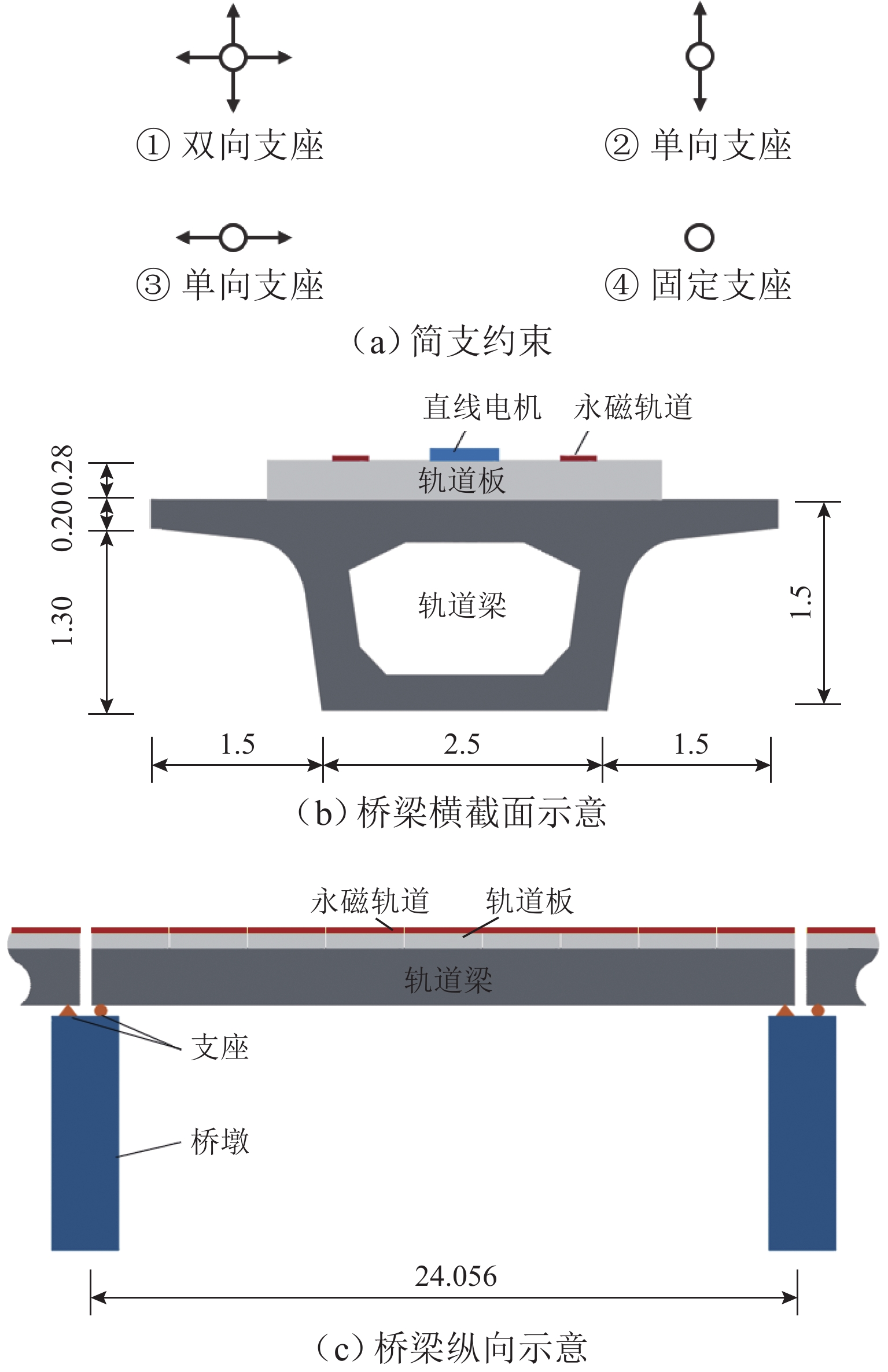
图 1 永磁轨道/桥梁有限元模型(单位:m)
Figure 1. Finite element model of permanent magnet (PM) guideway/bridge (unit: m)
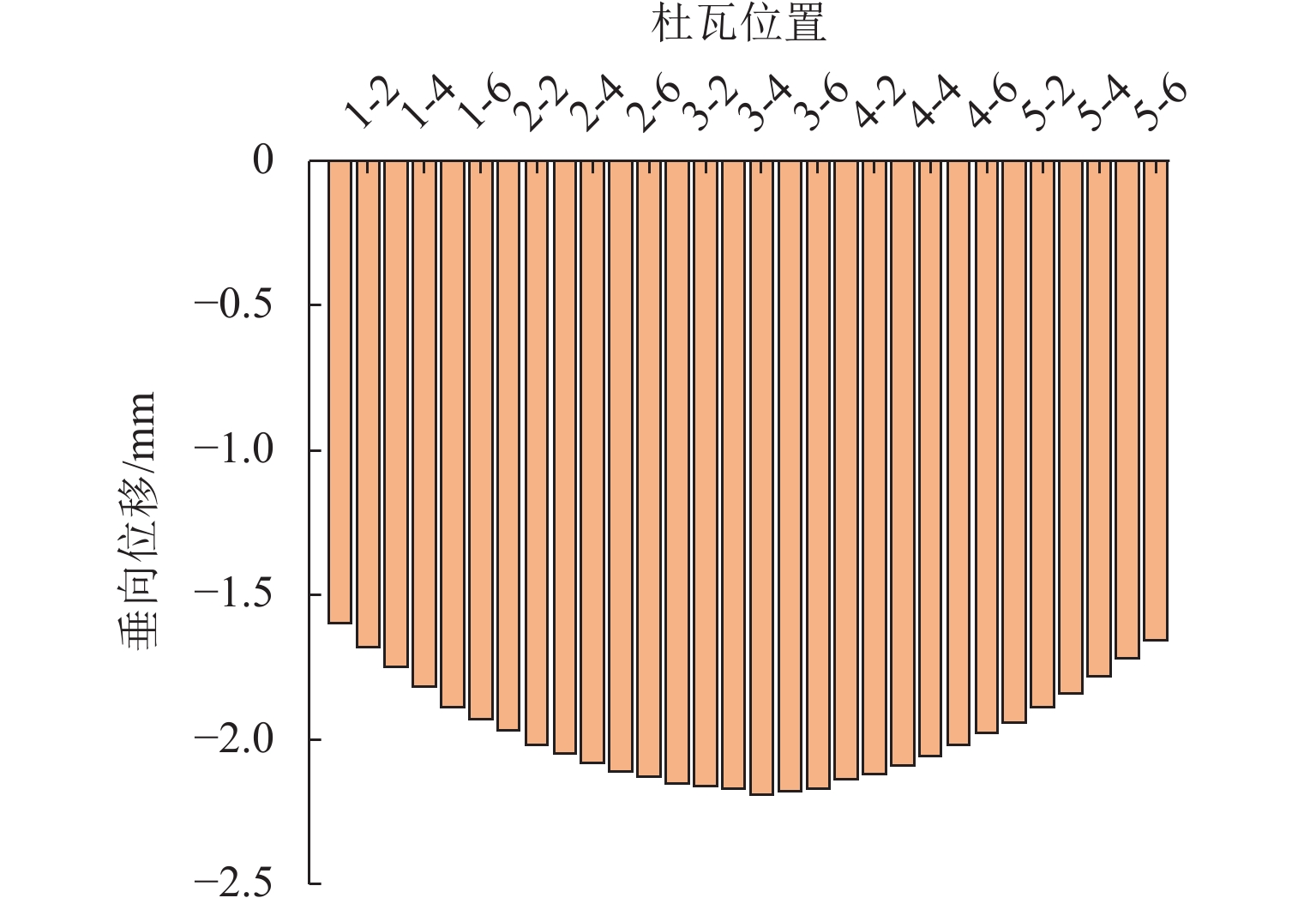
图 3 不同位置荷载作用点动态位移最大幅值
Figure 3. Maximum amplitude of dynamic displacement at different loading points
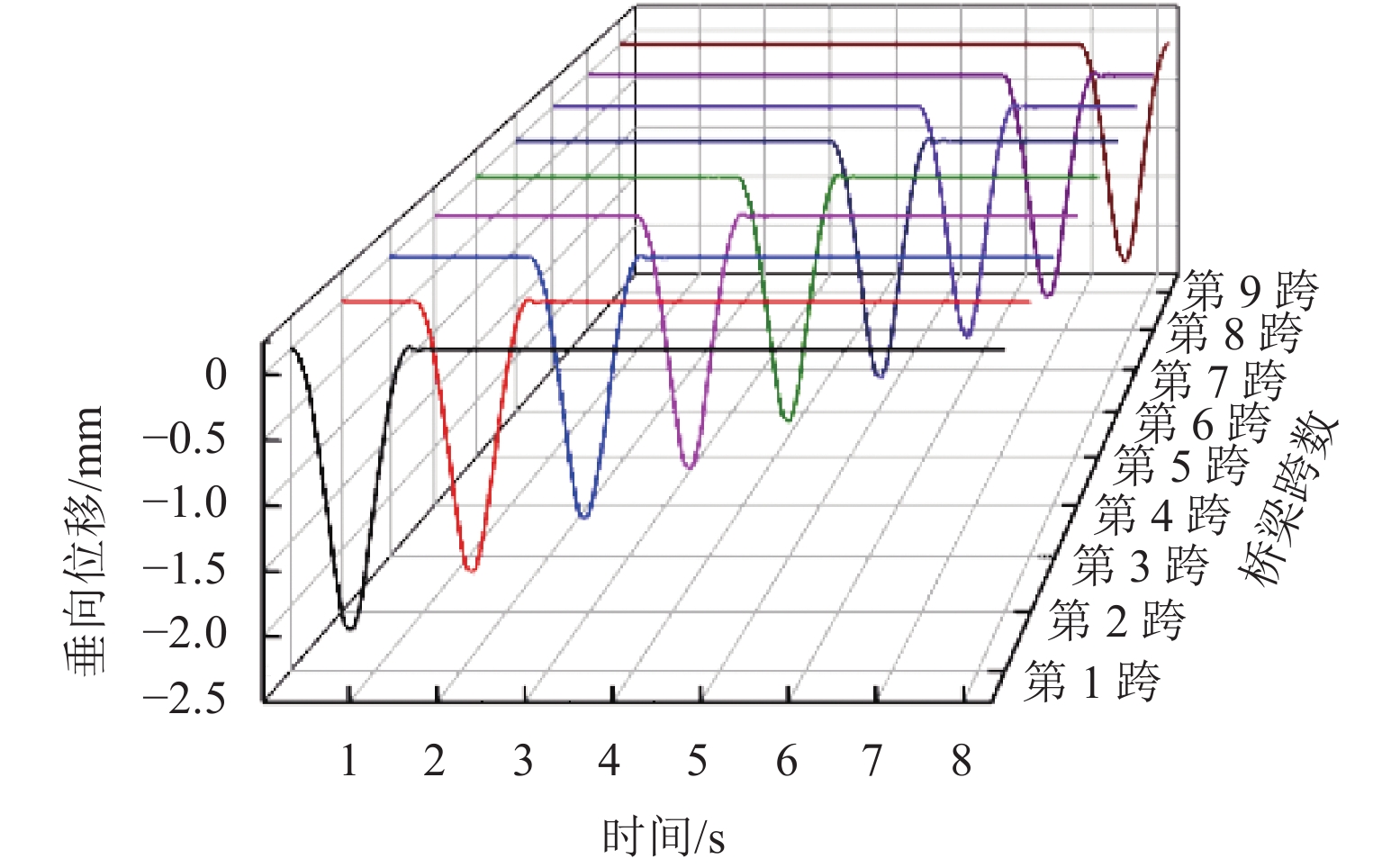
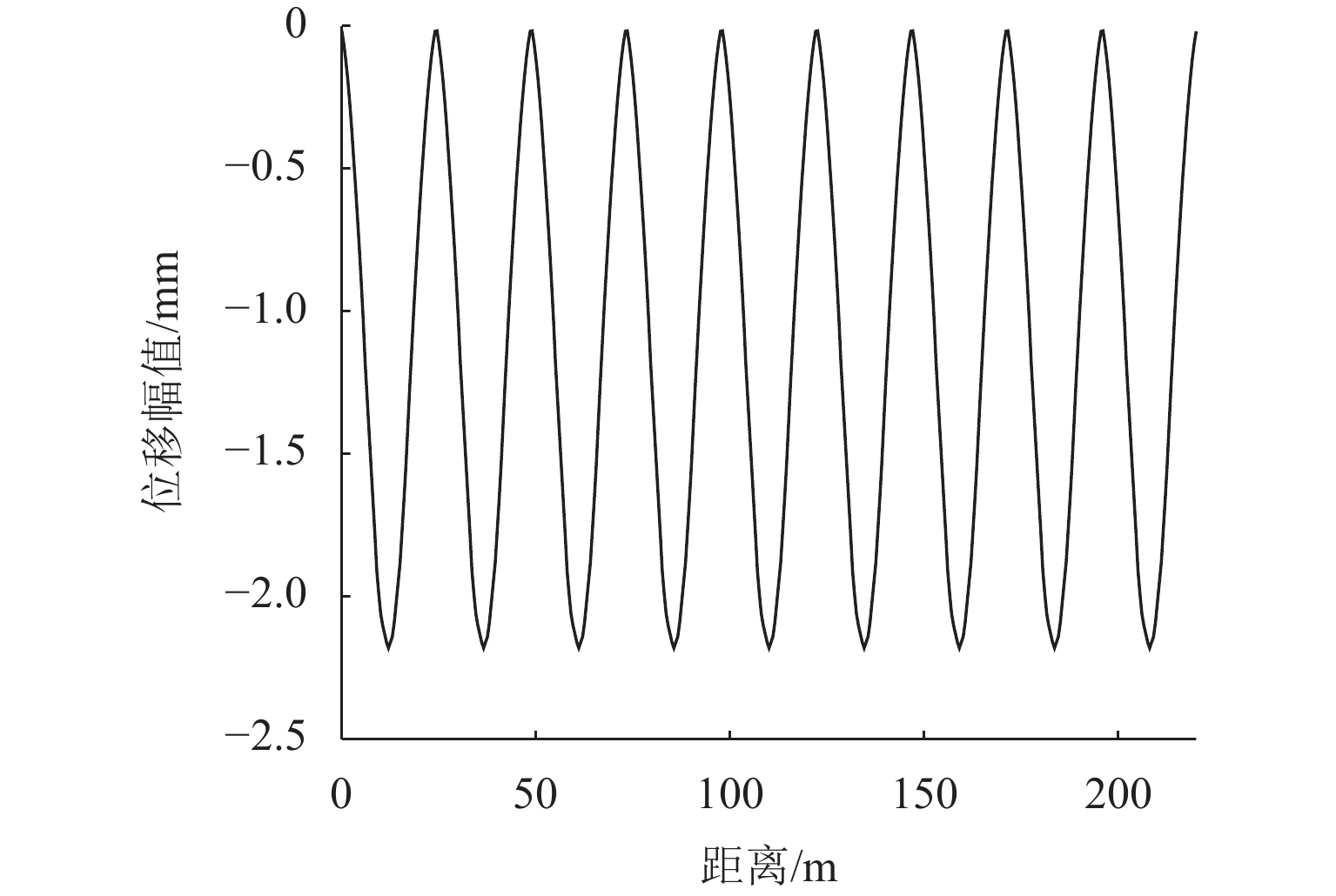
图 4 桥梁跨中竖向挠度曲线(9跨为例)
Figure 4. Vertical deflection curves of bridge mid span (with 9 spans as examples)
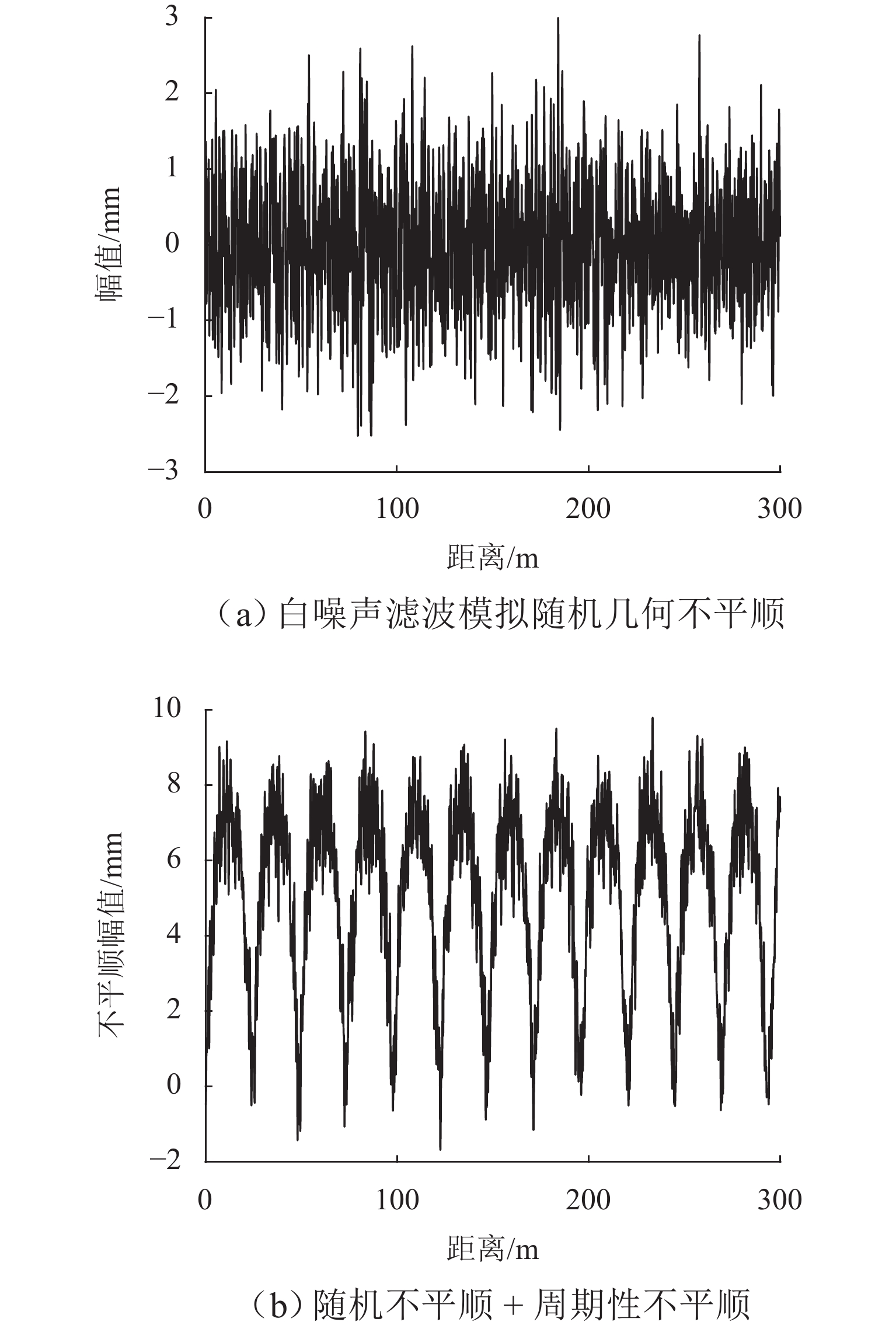
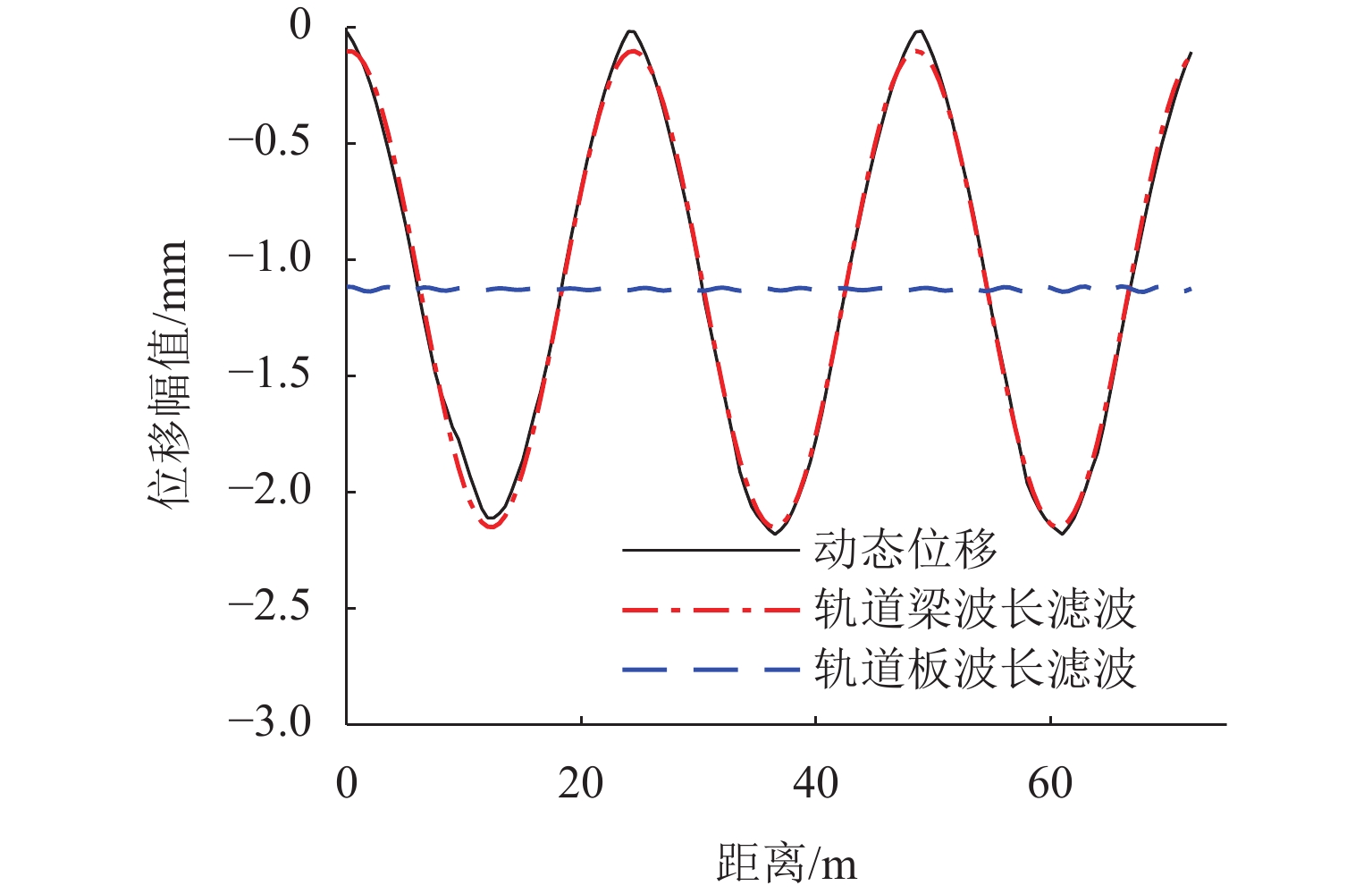
图 10 永磁轨道随机、周期不平顺样本
Figure 10. Random and periodic irregularity samples of PM guideway
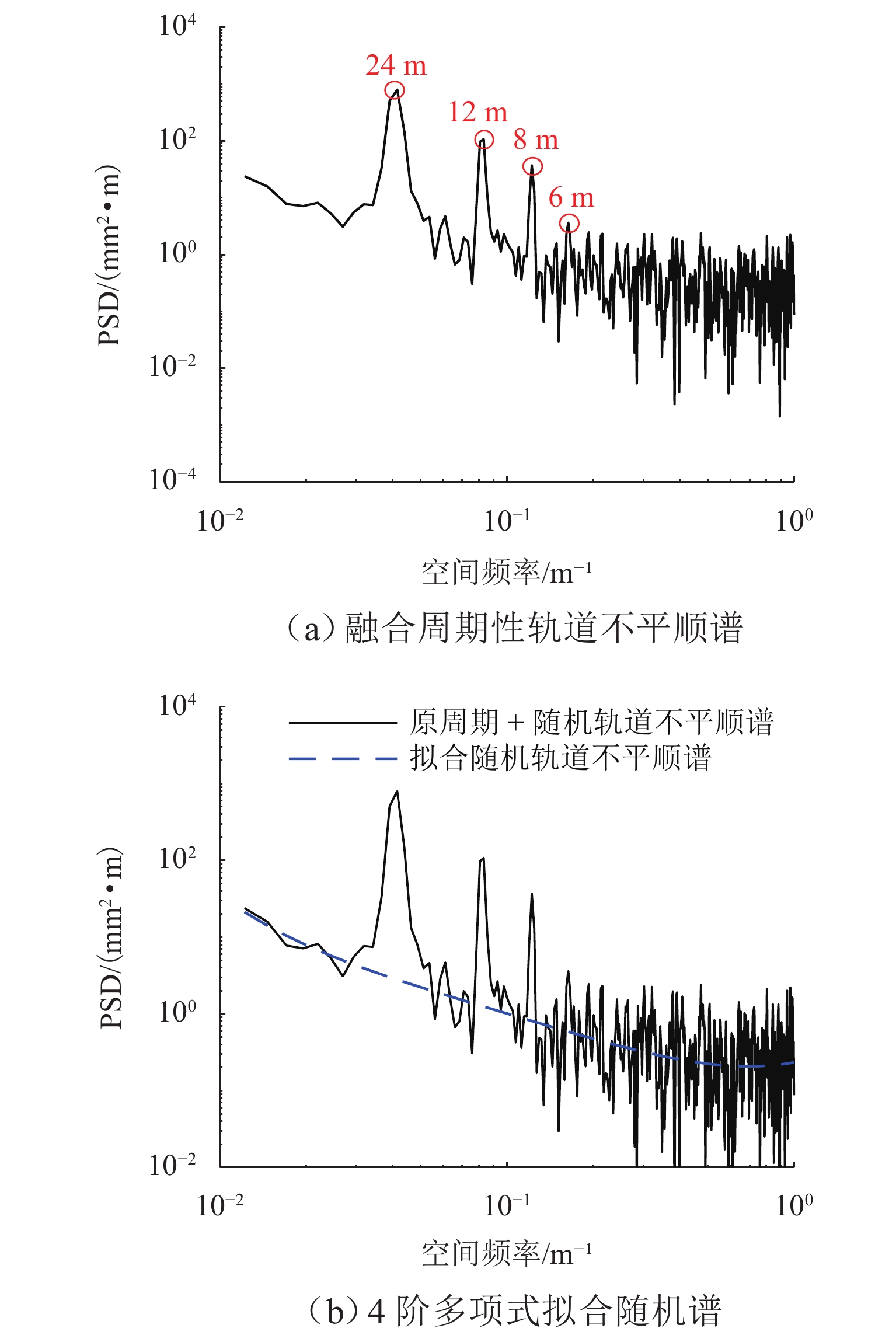
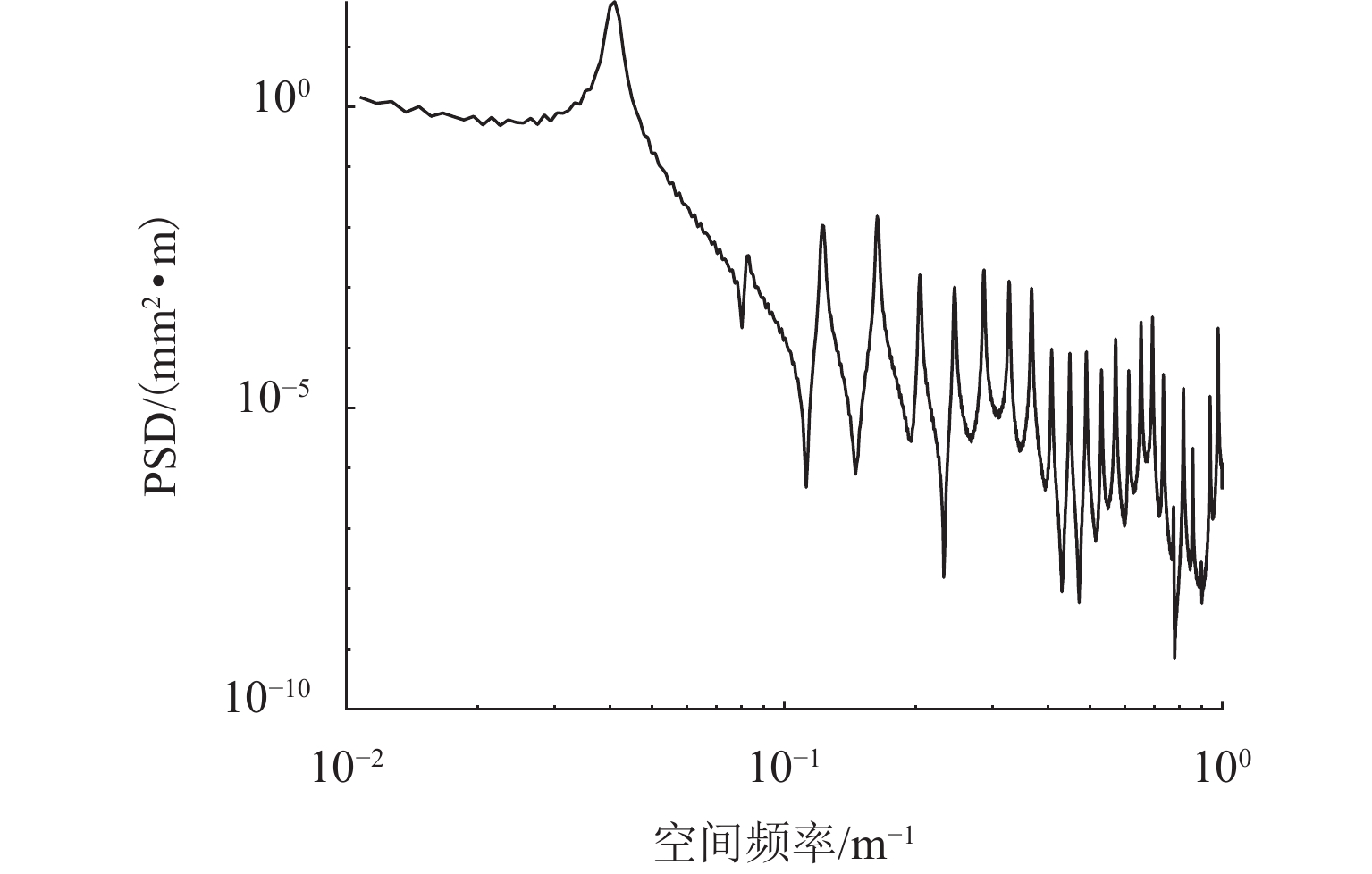
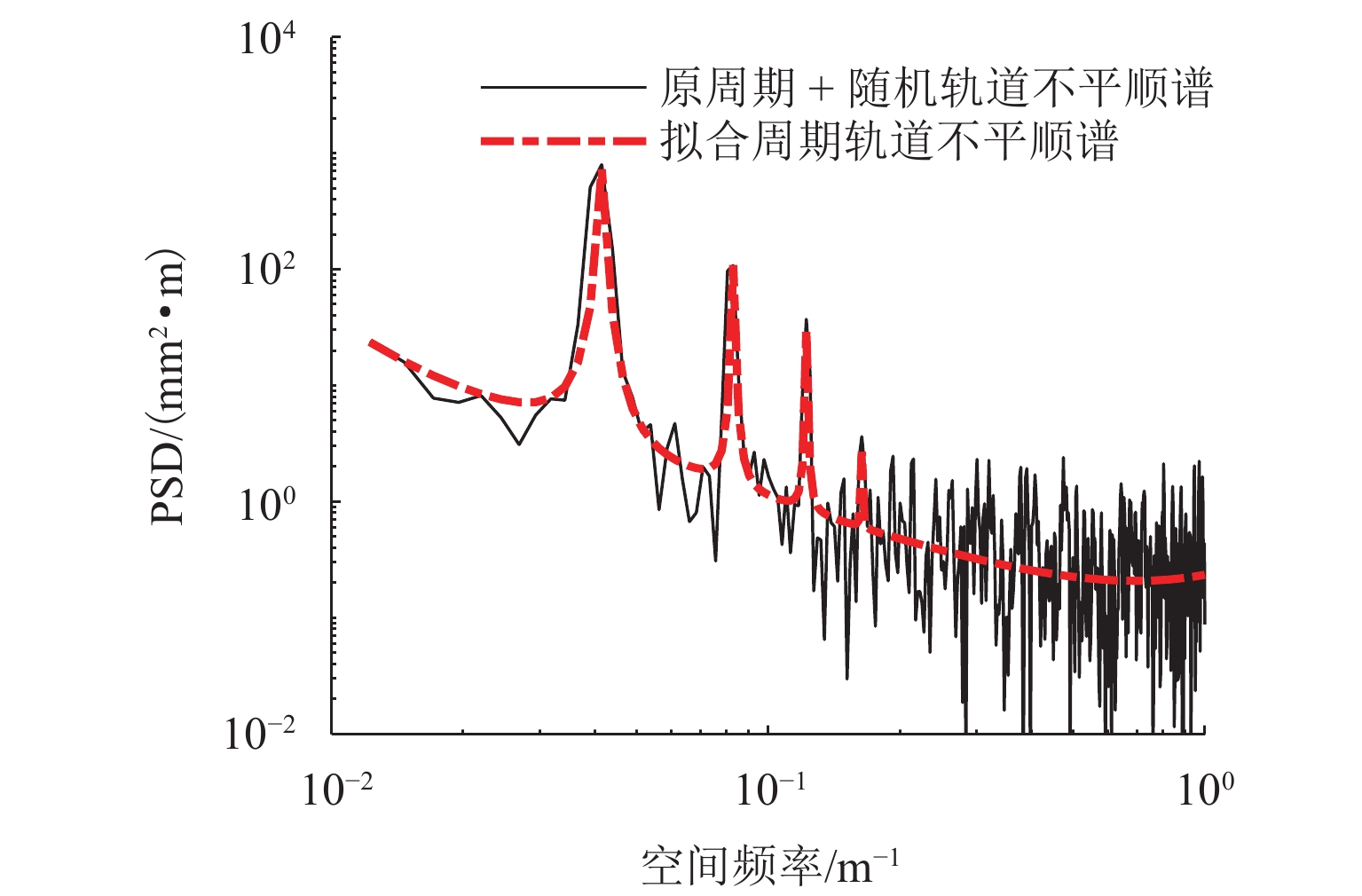
图 11 多项式拟合永磁轨道不平顺功率密度谱
Figure 11. Polynomial fitting of power density spectrum of PM guideway irregularity
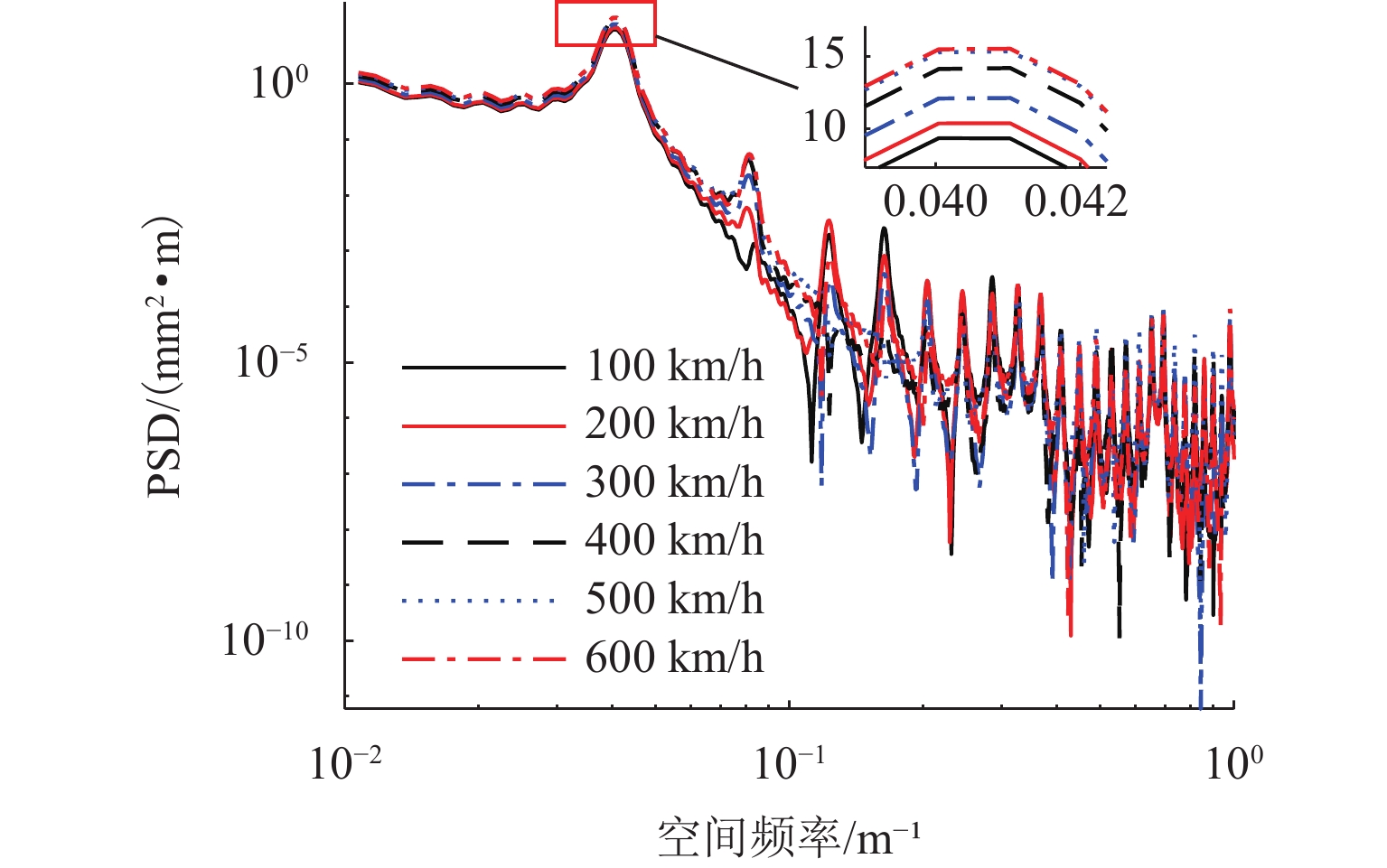
图 14 不同速度永磁轨道动态位移谱
Figure 14. Dynamic displacement spectrum of PM guideway at different speeds
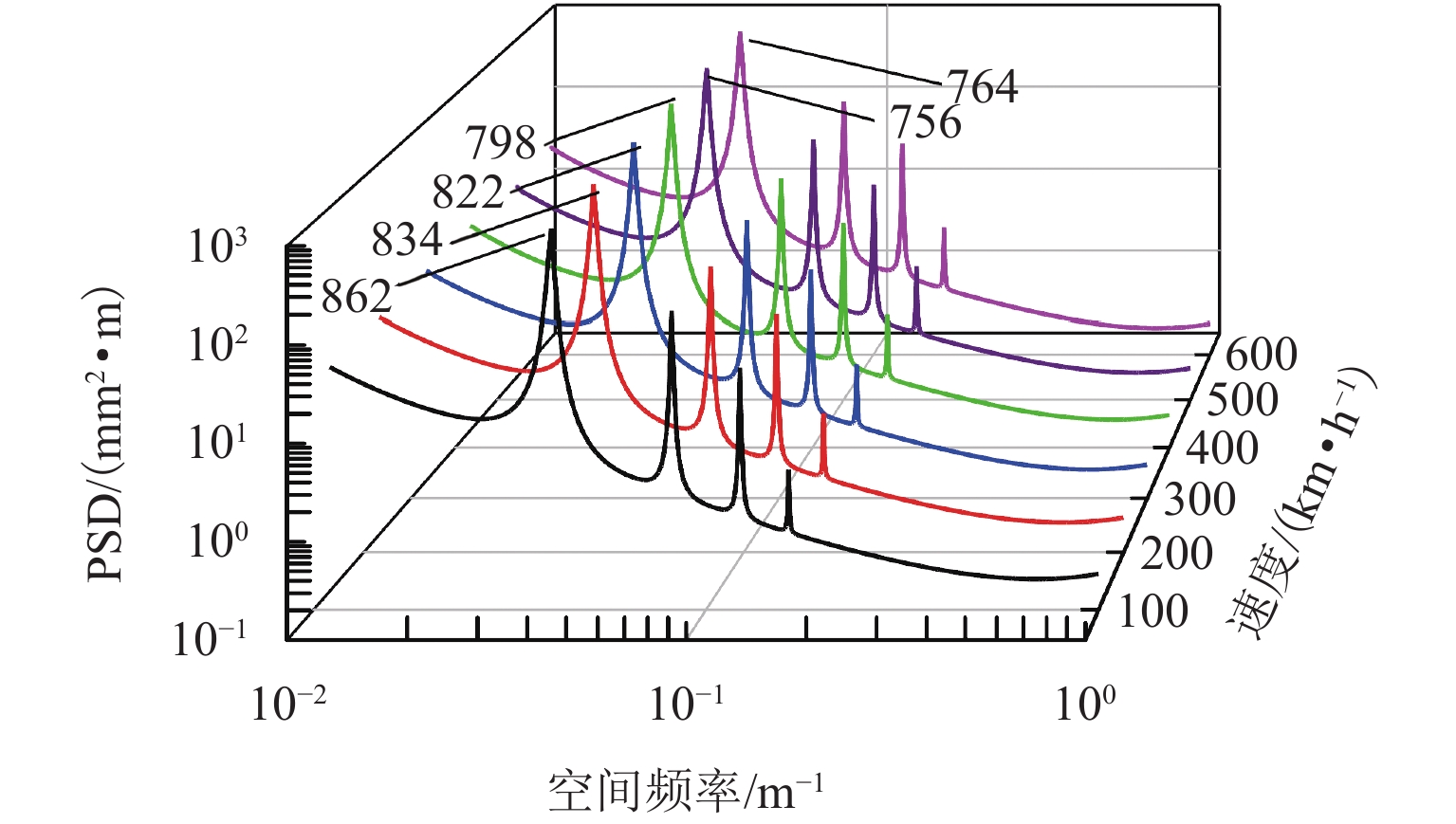
图 15 不同速度永磁轨道不平顺谱拟合结果
Figure 15. Fitting results of PM guideway irregularity spectrum at different speeds
表 1 模型材料参数取值
Table 1. Model material parameter values
构件名称 物理量 数值 永磁轨道 弹性模量/Pa 2×10¹¹ 密度/(kg•m−3) 7850 泊松比 0.3 轨道板 混凝土等级 C60 弹性模量/Pa 3.65×10¹⁰ 密度/(kg•m−3) 2500 泊松比 0.2 轨道梁 混凝土等级 C40 弹性模量/Pa 3.3×10¹⁰ 密度/(kg•m−3) 2500 泊松比 0.2 桥墩 混凝土等级 C40 弹性模量/Pa 3.3×10¹⁰ 密度/(kg•m−3) 2500 泊松比 0.2 支座 刚度/(N·m−1) 4×10¹⁰ 阻尼/(N·s·m−1) 1.2×10⁵  下载: 导出CSV
表 2 4阶多项式拟合参数
Table 2. The 4th order polynomial fitting parameters
参数 a0 a1 a2 a3 a4 拟合值 − 0.6289 0.6996 2.5598 1.5480 0.3580
下载: 导出CSV
表 3 周期性谱峰拟合参数值
Table 3. Periodic spectral peak fitting parameter values
谱峰 $\varphi $ $\gamma $ 1 300.0 0.00059 2 208.0 0.00058 3 88.0 0.00050 4 30.0 0.00040
下载: 导出CSV
表 4 不同速度谱峰拟合参数
Table 4. Fitting parameters of spectral peaks at different velocities
速度/(km•h−1) 谱峰 $ \varphi $ $\gamma $ 100 1 250.0 0.00060 2 80.0 0.00052 3 35.0 0.00051 4 3.5 0.00050 200 1 248.0 0.00060 2 75.0 0.00052 3 38.0 0.00051 4 4.0 0.00048 300 1 252.0 0.00059 2 78.0 0.00050 3 36.0 0.00049 4 3.8 0.00048 400 1 260.0 0.00059 2 80.0 0.00051 3 40.0 0.00050 4 4.2 0.00048 500 1 255.0 0.00060 2 81.0 0.00051 3 38.0 0.00050 4 5.0 0.00050 600 1 258.0 0.00061 2 80.0 0.00050 3 40.0 0.00050 4 4.6 0.00049
下载: 导出CSV
表 5 不同速度随机谱拟合参数
Table 5. Fitting parameters of random spectrum at different speeds
速度/(km•h−1) a0 a1 a2 a3 a4 100 − 0.6289 0.6996 2.5598 1.5480 0.3580 200 − 0.6287 0.6971 2.5462 1.5477 0.3610 300 − 0.6276 0.7239 2.6614 1.6748 0.3991 400 − 0.6286 0.7127 2.6354 1.6913 0.4134 500 − 0.6302 0.6893 2.5677 1.6524 0.4081 600 − 0.6287 0.7073 2.6156 1.6864 0.4140
下载: 导出CSV
-
[1] 邓自刚, 刘宗鑫, 李海涛, 等. 磁悬浮列车发展现状与展望[J]. 西南交通大学学报, 2022, 57(3): 455-474, 530. doi: 10.3969/j.issn.0258-2724.20220001Deng Zigang, Liu Zongxin, Li Haitao, et al. Development status and prospect of maglev train[J]. Journal of Southwest Jiaotong University, 2022, 57(3): 455-474, 530. doi: 10.3969/j.issn.0258-2724.20220001 [2] 刘士苋, 王磊, 王路忠, 等. 电动悬浮列车及车载超导磁体研究综述[J]. 西南交通大学学报, 2023, 58(4): 734-753.Liu Shixian, Wang Lei, Wang Luzhong, et al. Review on electrodynamic suspension trains and on-board superconducting magnets[J]. Journal of Southwest Jiaotong University, 2023, 58(4): 734-753. [3] Tsunashima H, Fujioka T, Abe M. Permanent magnet suspension for maglev transport vehicle: design of mechanical air gap control system[J]. Vehicle System Dynamics, 1996, 25(S1): 694-713. doi: 10.1080/00423119608969230 [4] Tsunashima H, Abe M. Static and dynamic performance of permanent magnet suspension for maglev transport vehicle[J]. Vehicle System Dynamics, 1998, 29(2): 83-111. doi: 10.1080/00423119808969368 [5] 赵春发. 磁悬浮车辆系统动力学研究[D]. 成都: 西南交通大学, 2002. [6] 郑树彬, 林建辉, 林国斌. 基于惯性法的磁浮轨道长波不平顺检测及其实现[J]. 电子测量与仪器学报, 2007, 21(1): 61-65.Zheng Shubin, Lin Jianhui, Lin Guobin. Implementation of detecting maglev track long wave irregularity based on inertial measurement principle[J]. Journal of Electronic Measurement and Instrument, 2007, 21(1): 61-65. [7] 张耿, 李杰, 杨子敬. 低速磁浮轨道不平顺功率谱研究[J]. 铁道学报, 2011, 33(10): 73-78. doi: 10.3969/j.issn.1001-8360.2011.10.014Zhang Geng, Li Jie, Yang Zijing. Estimation of power spectrum density track irregularities of low-speed maglev railway lines[J]. Journal of the China Railway Society, 2011, 33(10): 73-78. doi: 10.3969/j.issn.1001-8360.2011.10.014 [8] Shi J, Fang W S, Wang Y J, et al. Measurements and analysis of track irregularities on high speed maglev lines[J]. Journal of Zhejiang University: Science A, 2014, 15(6): 385-394. doi: 10.1631/jzus.A1300163 [9] 卜秀孟, 王力东, 黎清蓉, 等. 高速磁浮车-桥耦合振动控制参数影响分析[J]. 西南交通大学学报, 2024, 59(4): 848-857, 866.Bu Xiumeng, Wang Lidong, Li Qingrong, et al. Influence analysis of vibration control parameters for high-speed maglev train-bridge coupling[J]. Journal of Southwest Jiaotong University, 2024, 59(4): 848-857, 866. [10] 李梦雪, 张敏, 马卫华, 等. 中低速磁浮轨道不平顺功率谱研究[J]. 铁道标准设计, 2024, 68(9): 40-47. doi: 10.13238/j.issn.1004-2954.202303040002Li Mengxue, Zhang Min, Ma Weihua, et al. Study on the power spectrum of irregularities in medium and low speed maglev tracks[J]. Railway Standard Design, 2024, 68(9): 40-47. doi: 10.13238/j.issn.1004-2954.202303040002 [11] 刘伟, 赵春发, 娄会彬, 等. 基于虚拟激励法的磁浮车桥耦合系统随机振动分析[J]. 西南交通大学学报, 2024, 59(4): 823-831.Liu Wei, Zhao Chunfa, Lou Huibin, et al. Stochastic vibration analysis of maglev train-bridge coupling system based on pseudo excitation method[J]. Journal of Southwest Jiaotong University, 2024, 59(4): 823-831. [12] 张宝安, 虞大联, 李海涛, 等. 高速磁浮悬浮架柔性特征对曲线通过性能的影响[J]. 西南交通大学学报, 2022, 57(3): 475-482.Zhang Baoan, Yu Dalian, Li Haitao, et al. Influence of flexibility characteristics of levitation chassis on curve negotiation performance of high-speed maglev vehicle[J]. Journal of Southwest Jiaotong University, 2022, 57(3): 475-482. [13] Deng Z G, Wang L, Li H T, et al. Dynamic studies of the HTS maglev transit system[J]. IEEE Transactions on Applied Superconductivity, 2021, 31(5): 3600805. [14] Wang Z L, Xu Y L, Li G Q, et al. Modelling and validation of coupled high-speed maglev train-and-viaduct systems considering support flexibility[J]. Vehicle System Dynamics, 2019, 57(2): 161-191. doi: 10.1080/00423114.2018.1450517 [15] Wang L, Deng Z G, Wang H D, et al. Dynamic responses of HTS maglev system under track random irregularity[J]. IEEE Transactions on Applied Superconductivity, 2020, 30(4): 3602007. doi: 10.1109/tasc.2020.2976995 [16] Deng Z G, Li J P, Wang H D, et al. Dynamic simulation of the vehicle/bridge coupled system in high-temperature superconducting maglev[J]. Computing in Science & Engineering, 2019, 21(3): 60-71. doi: 10.1109/MCSE.2019.2902452 [17] Wang L, Zhou X C, Li H T, et al. Magnetic irregularity measurement and signal processing of permanent magnet guideway for superconducting pinning maglev train[J]. Mechanical Systems and Signal Processing, 2024, 212: 111305. doi: 10.1016/j.ymssp.2024.111305 [18] Luo Y, Yuan Y H, Zeng P Y, et al. Permanent magnet guideway irregularity measurement and characterization by single dewar HTS pinning maglev system[J]. IEEE Transactions on Instrumentation and Measurement, 2023, 72: 6009511. doi: 10.1109/tim.2023.3308222 [19] Deng Z G, Zhou X C, Huang H, et al. Measurement and characterization method of permanent magnetic guideway irregularity in HTS maglev system[J]. IEEE Transactions on Applied Superconductivity, 2022, 32(2): 3600307. [20] 李海涛. 磁轨不平顺激扰下高温超导钉扎高速磁浮车—轨耦合动力学研究[D]. 成都: 西南交通大学, 2021. [21] 王洪帝. 基于悬浮力特性的高温超导磁悬浮车-桥系统垂向振动响应研究[D]. 成都: 西南交通大学, 2019. [22] 何燕, 吴兴文, 杨浚纲, 等. 基于列车-桥梁耦合振动模型的高温超导磁浮车辆悬挂参数优化[J]. 城市轨道交通研究, 2023, 26(6): 24-32. doi: 10.16037/j.1007-869x.2023.06.005He Yan, Wu Xingwen, Yang Jungang, et al. Optimization of high-temperature superconducting maglev vehicle suspension parameters based on train-bridge coupling vibration[J]. Urban Mass Transit, 2023, 26(6): 24-32. doi: 10.16037/j.1007-869x.2023.06.005 [23] CJJ/T 262—2017 中低速磁浮交通设计规范[S]. [24] 周爽. 徐变上拱和温度旁弯对高速铁路桥梁动力性能的影响研究[D]. 北京: 北京交通大学, 2014. [25] 时瑾, 魏庆朝. 线路不平顺对高速磁浮铁路动力响应特性的影响[J]. 工程力学, 2006, 23(1): 154-159, 86.Shi Jin, Wei Qingchao. The effect of guideway irregularity on the dynamic characteristics of high-speed maglev railway[J]. Engineering Mechanics, 2006, 23(1): 154-159, 86. [26] TB 10630—2019 磁浮铁路技术标准(试行)[S]. [27] Xin L F, Xu L, Zhang J X, et al. Research on characterization methods for track irregularities[J]. Railway Engineering Science, 2026, 34(1): 25-39. doi: 10.1007/s40534-024-00367-z [28] 杨飞, 孙宪夫, 尤明熙, 等. 考虑周期性不平顺的高速铁路各型无砟轨道谱拟合与反演方法[J]. 铁道学报, 2023, 45(9): 114-122.Yang Fei, Sun Xianfu, You Mingxi, et al. Track spectrum fitting and inversion method of various types of high-speed railway ballastless track considering periodic irregularity[J]. Journal of the China Railway Society, 2023, 45(9): 114-122. [29] 熊嘉阳, 沈志云, 池茂儒, 等. 高速磁悬浮列车技术综述[J]. 交通运输工程学报, 2025, 25(2): 1-23. doi: 10.19818/j.cnki.1671-1637.2025.02.001Xiong Jiayang, Shen Zhiyun, Chi Maoru, et al. Review on high-speed maglev train technology[J]. Journal of Traffic and Transportation Engineering, 2025, 25(2): 1-23. doi: 10.19818/j.cnki.1671-1637.2025.02.001 -

 下载:
下载:

 点击查看大图
计量
- 文章访问数: 375
- HTML全文浏览量: 206
- PDF下载量: 102
- 被引次数: 0