



Green Power Utilization and Zero-Carbon Feed-Through Power Supply Technology for Electrified Railways
-
摘要:
电气化铁路用能高度依赖以化石能源为主的公共电网,积极开展轨道交通可再生能源开发利用是达成国家“双碳”目标重要举措之一. 为大量、全面使用绿电建设“零碳”排放电气化铁路,提出一种零碳贯通供电技术方案及其零碳运行控制策略. 首先,分析电气化铁路新能源接入的基本方式,明确可再生能源在牵引供电系统中的接入点与能量流动路径. 在此基础上,构建基于贯通供电的绿电利用技术构架,利用贯通牵引网实现列车牵引与再生功率的自然流通,降低绿电、储能设备容量及其投资. 其次,提出涵盖绿电、牵引与储能的三元功率平衡控制策略:绿电按最大功率点跟踪控制,就地最大化发电;牵引变电所内储能装置按与电网购/售绿电协议规定的有功功率充放电控制,实现零碳运行. 最后,以实际线路为例对所提方案的有效性和经济性进行验证. 结果表明:零碳贯通不从电网获取化石电能,不对电网造成影响;当与电网之间交换的有功功率为0时,负序和穿越功率也为0. 贯通供电牵引网取消电分相,再生制动能量和绿电得到充分利用,所验证案例中,牵引变电所总的再生制动能量仅占牵引能量的0.6%,且全部被有效利用,光伏弃光率低于10%. 绿电和储能采用就地独立控制,显著降低了通信与潮流控制的复杂度. 结合重载铁路实际数据进行容量配置与经济性分析,采用充放电倍率为0.5 C的磷酸铁锂电池,储能配置容量为145 MW•h时即可满足零碳供电要求;依据年平均辐照与极端天气条件下的辐照度,全线光伏装机容量分别需配置45 MWp与83 MWp,成本回收年限分别约为5.9年与6.8年.
Abstract:Electrified railways rely heavily on public power grids dominated by fossil fuels, and actively carrying out the development and utilization of renewable energy in rail transit is one of the important measures to achieve China’s “carbon peaking and carbon neutrality” goals. To extensively and comprehensively use green power to construct electrified railways with zero-carbon emission, a technical scheme of zero-carbon feed-through power supply and its zero-carbon operation control strategy were proposed. First, the basic methods of new energy connection in electrified railways were analyzed, and the connection points and energy flow paths of renewable energy in the traction power supply system were clarified. On this basis, a technical framework for green power utilization based on feed-through power supply was constructed, and the natural flow of train traction and regenerative power was realized by using the feed-through traction network, thereby reducing the capacities and investment of green power and energy storage equipment. Second, a three-component power balance control strategy covering green power, traction, and energy storage was proposed. Green power was controlled according to maximum power point tracking to maximize on-site power generation; the energy storage devices in the traction substation were controlled for charging and discharging according to the active power specified in the green power purchase/sale agreement with the power grid, thereby achieving zero-carbon operation. Finally, by taking an actual railway line as an example, the effectiveness and economy of the proposed scheme were verified. The results indicate that the zero-carbon feed-through power supply system does not obtain fossil power from the power grid and causes no impact on the power grid; when the active power exchanged with the power grid is zero, the negative-sequence power and through power are also zero. The feed-through power supply traction network eliminates electrical phase separation, and the regenerative braking energy and green power are fully utilized. In the verified case, the total regenerative braking energy of the traction substation accounts for only 0.6% of the traction energy and is all effectively utilized, with a photovoltaic curtailment rate of less than 10%. Green power and energy storage adopt local independent control, which significantly reduces the complexity of communication and power flow control. Based on capacity configuration and economic analysis using actual data of heavy-haul railways, the zero-carbon power supply requirements are met when lithium iron phosphate batteries with a charge/discharge rate of 0.5 C and an energy storage configuration capacity of 145 MW•h are adopted. According to the annual average irradiance and the irradiance under extreme weather conditions, the installed photovoltaic capacities of the entire line need to be configured as 45 MWp and 83 MWp, respectively, with cost recovery periods of about 5.9 years and 6.8 years, respectively.
-
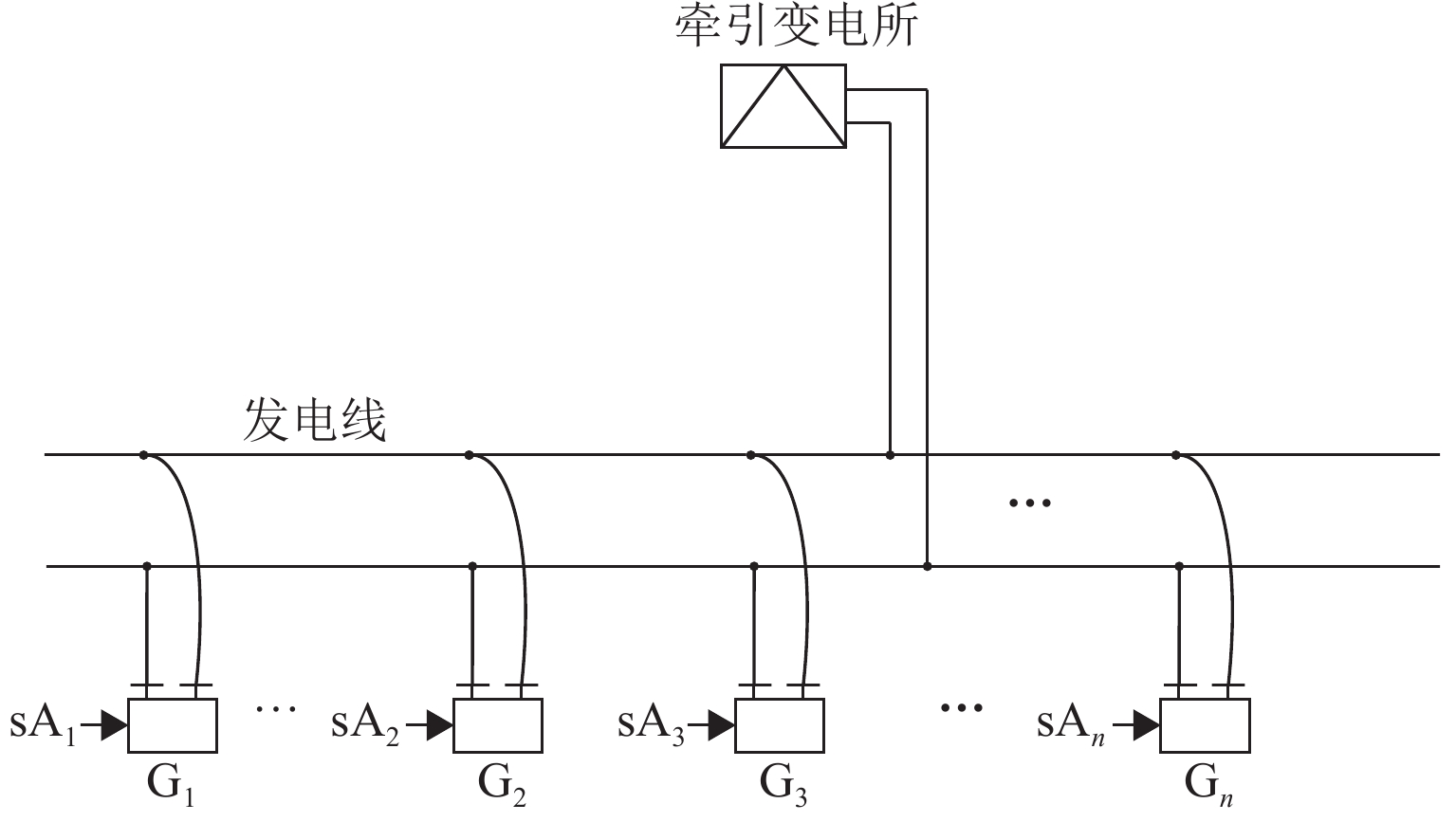
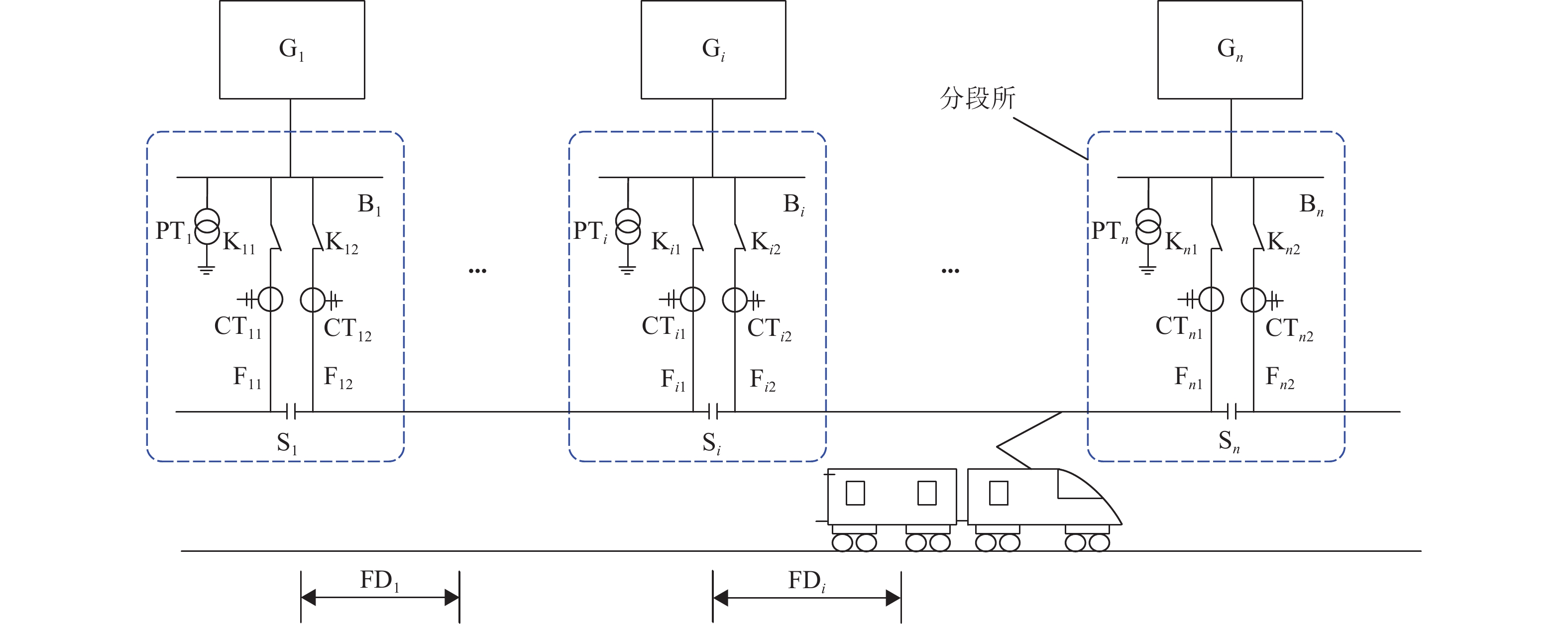
图 1 沿线分布式绿电经配电线接入牵引变电所
Figure 1. Distributed green power along line connecting to traction substation via distribution line
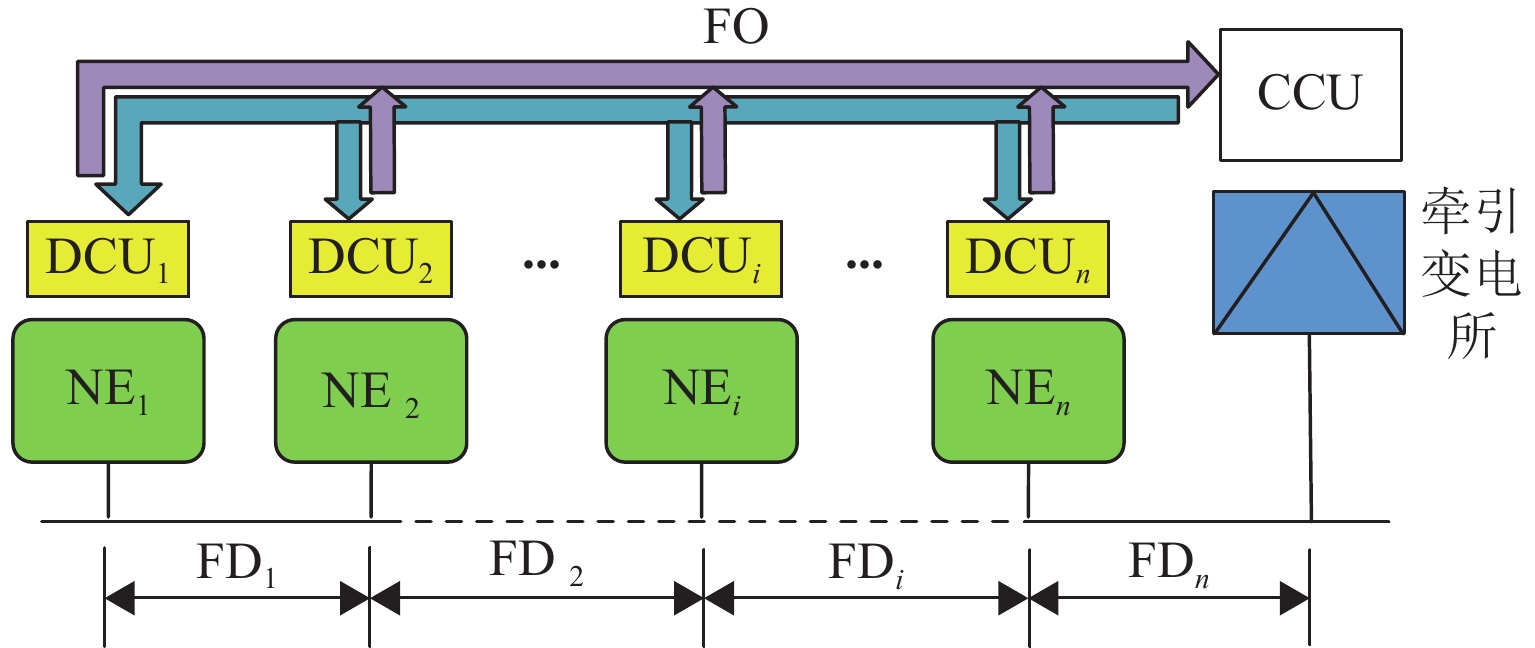
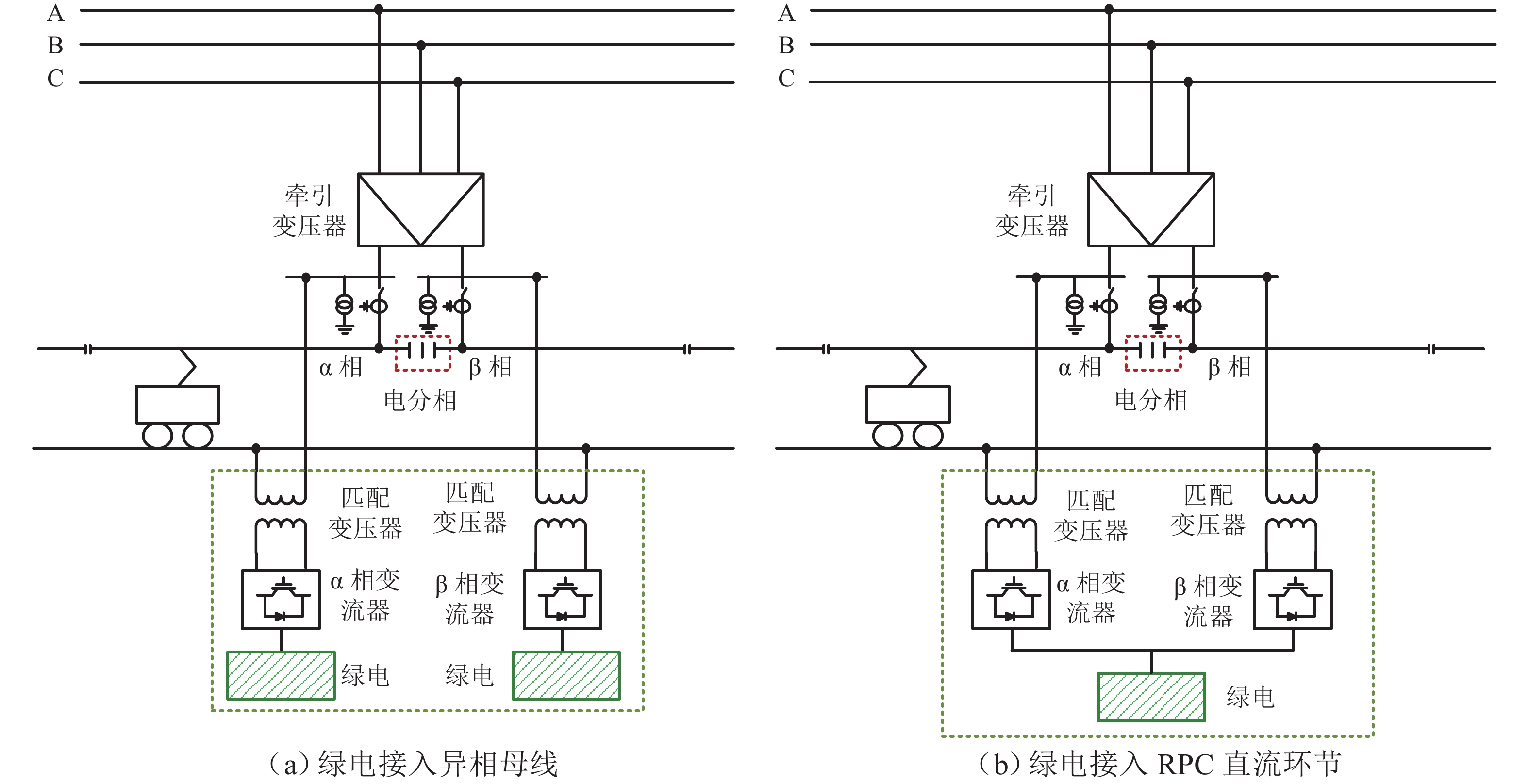
图 3 绿电分布式接入和集中控制框图
Figure 3. Block diagram of distributed connection and centralized control of green power
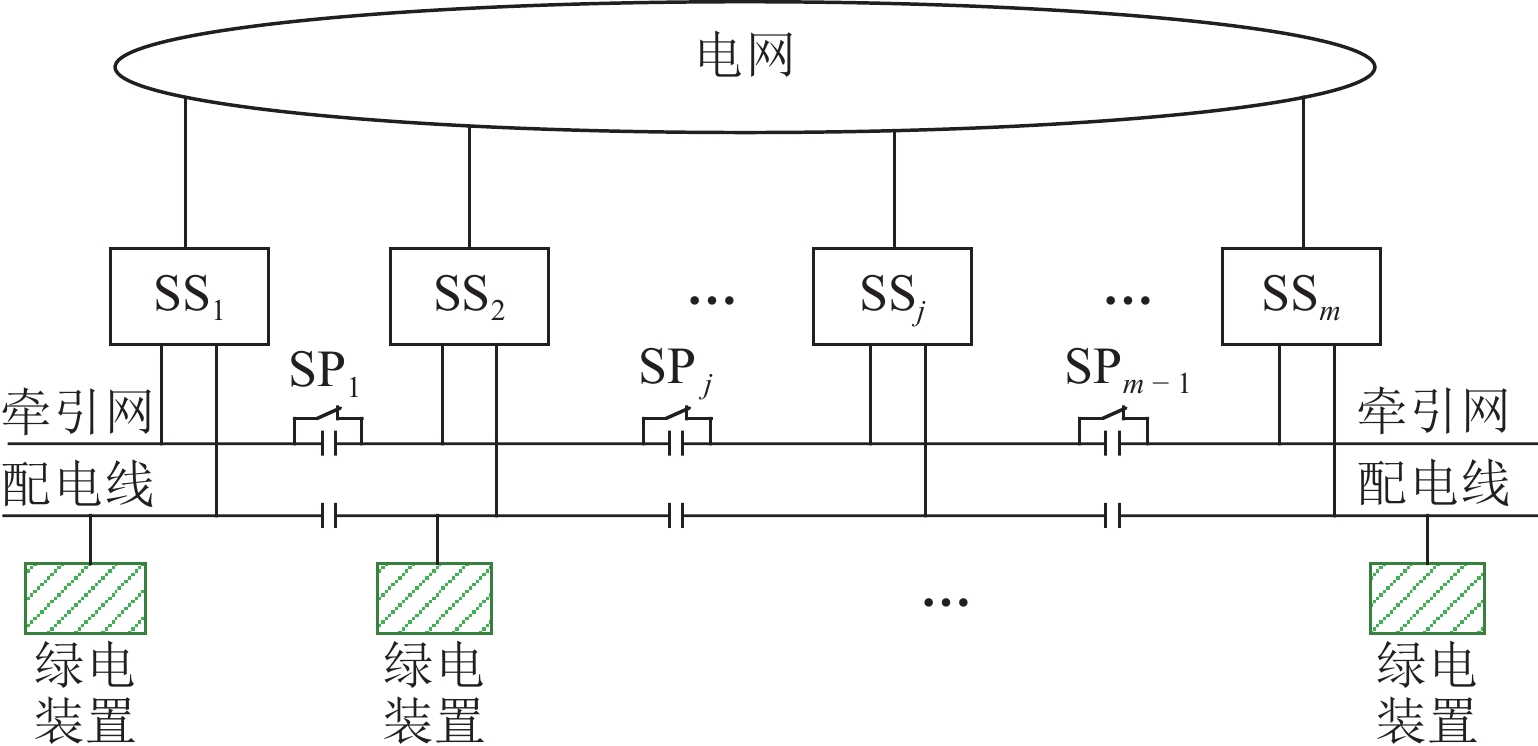
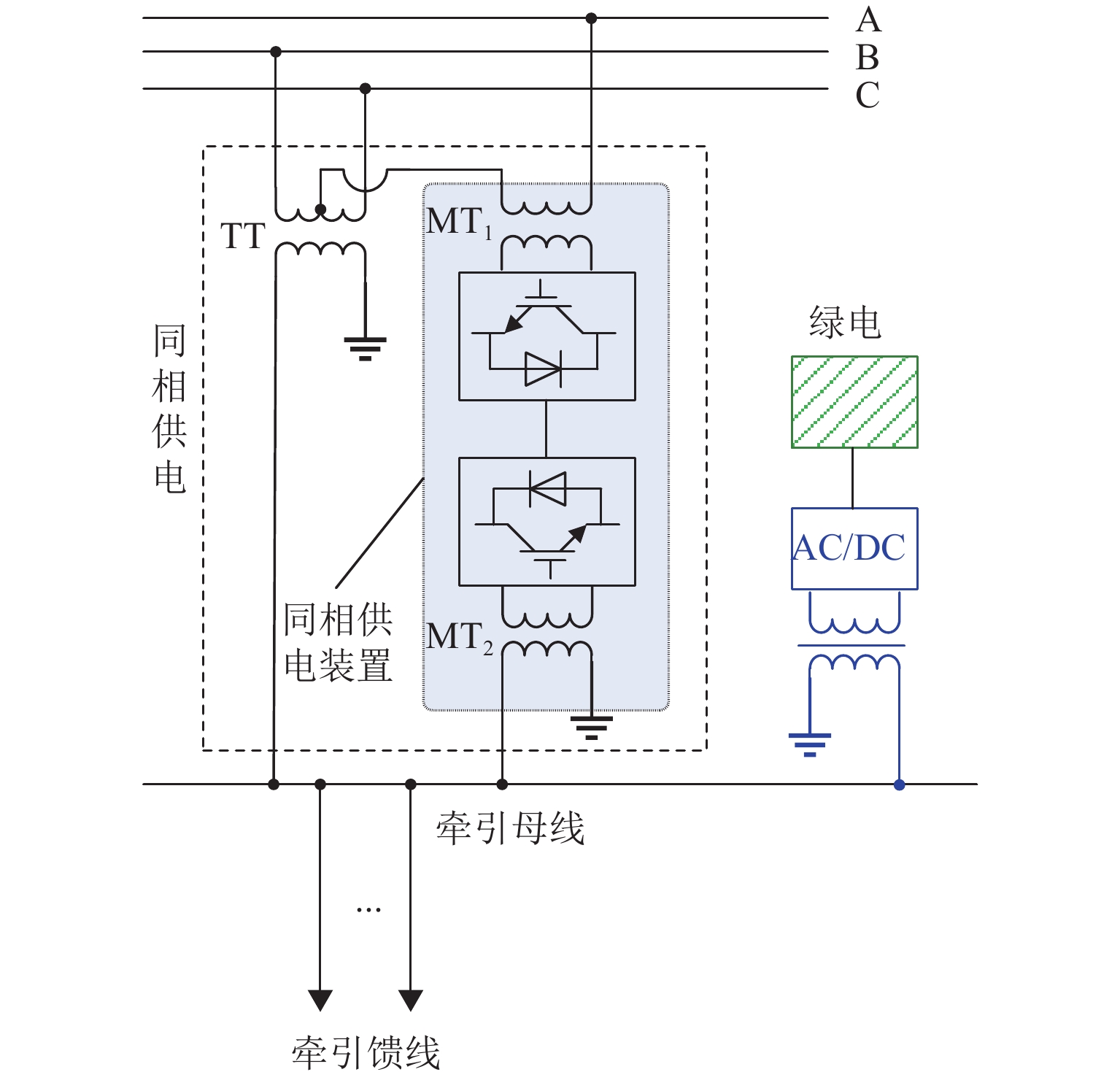
图 6 绿电接入电气化铁路贯通供电系统
Figure 6. Green power connection to feed-through power supply system of electrified railway
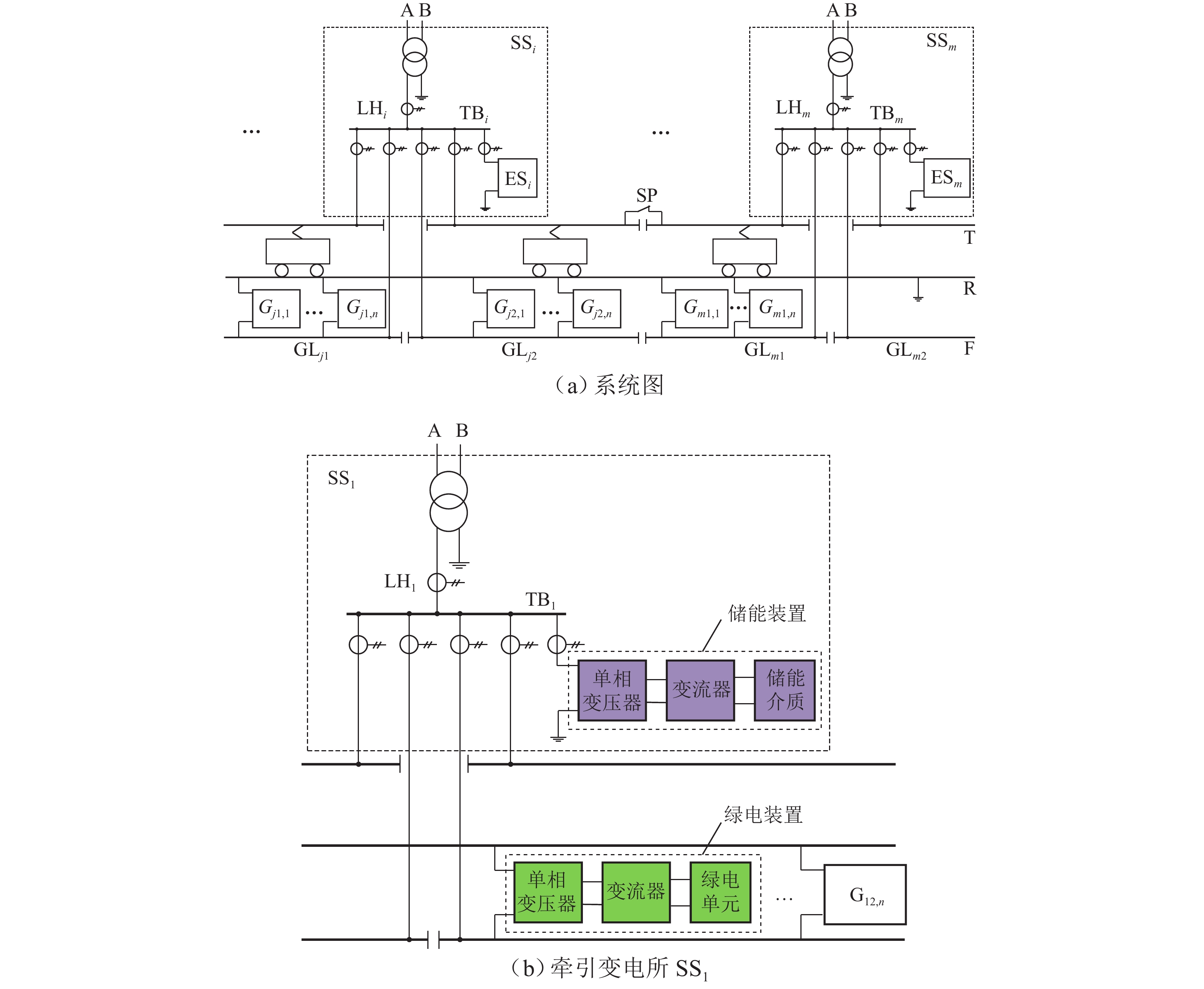
图 7 直供方式绿电贯通供电系统
Figure 7. Green power feed-through power supply system under direct supply mode
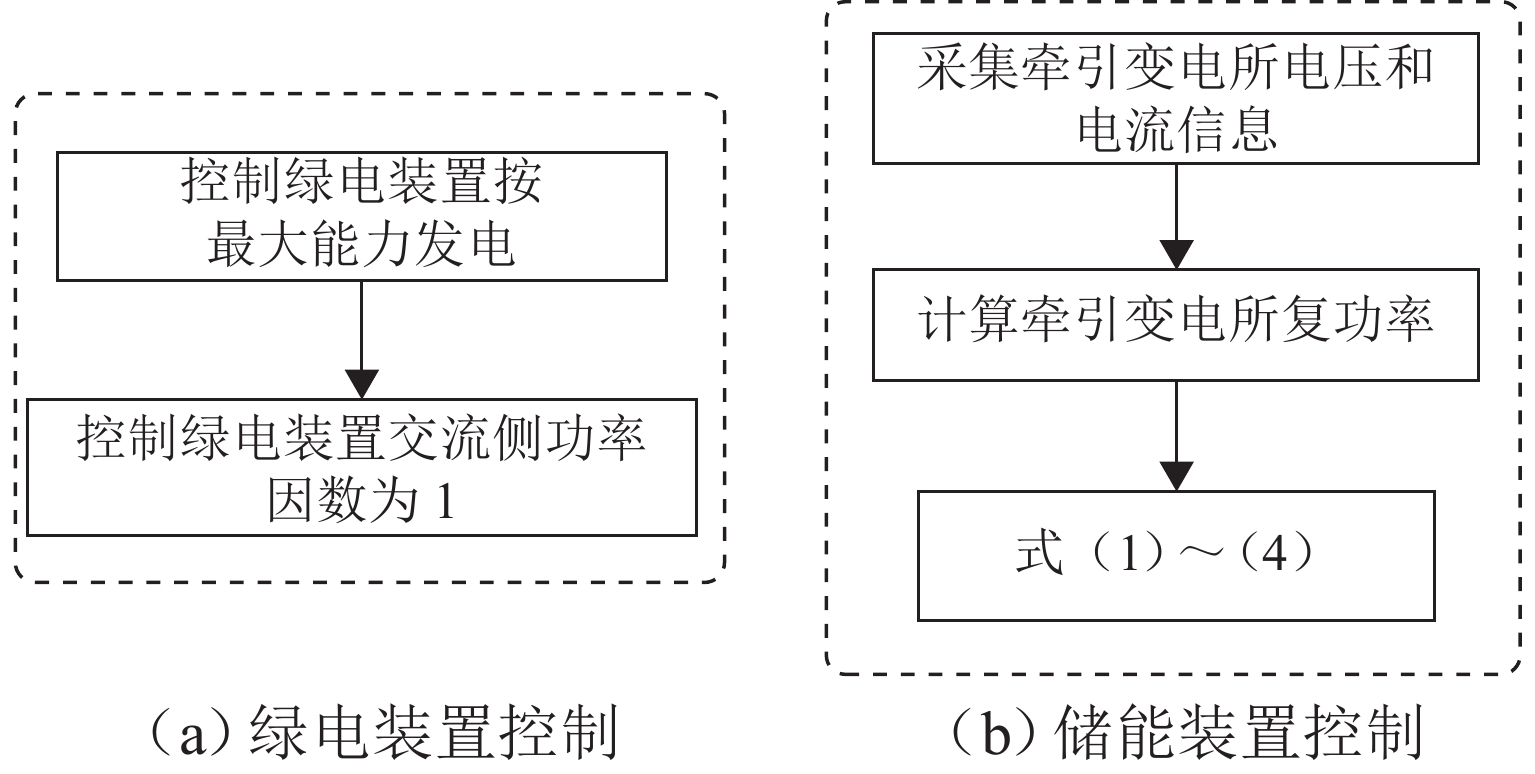
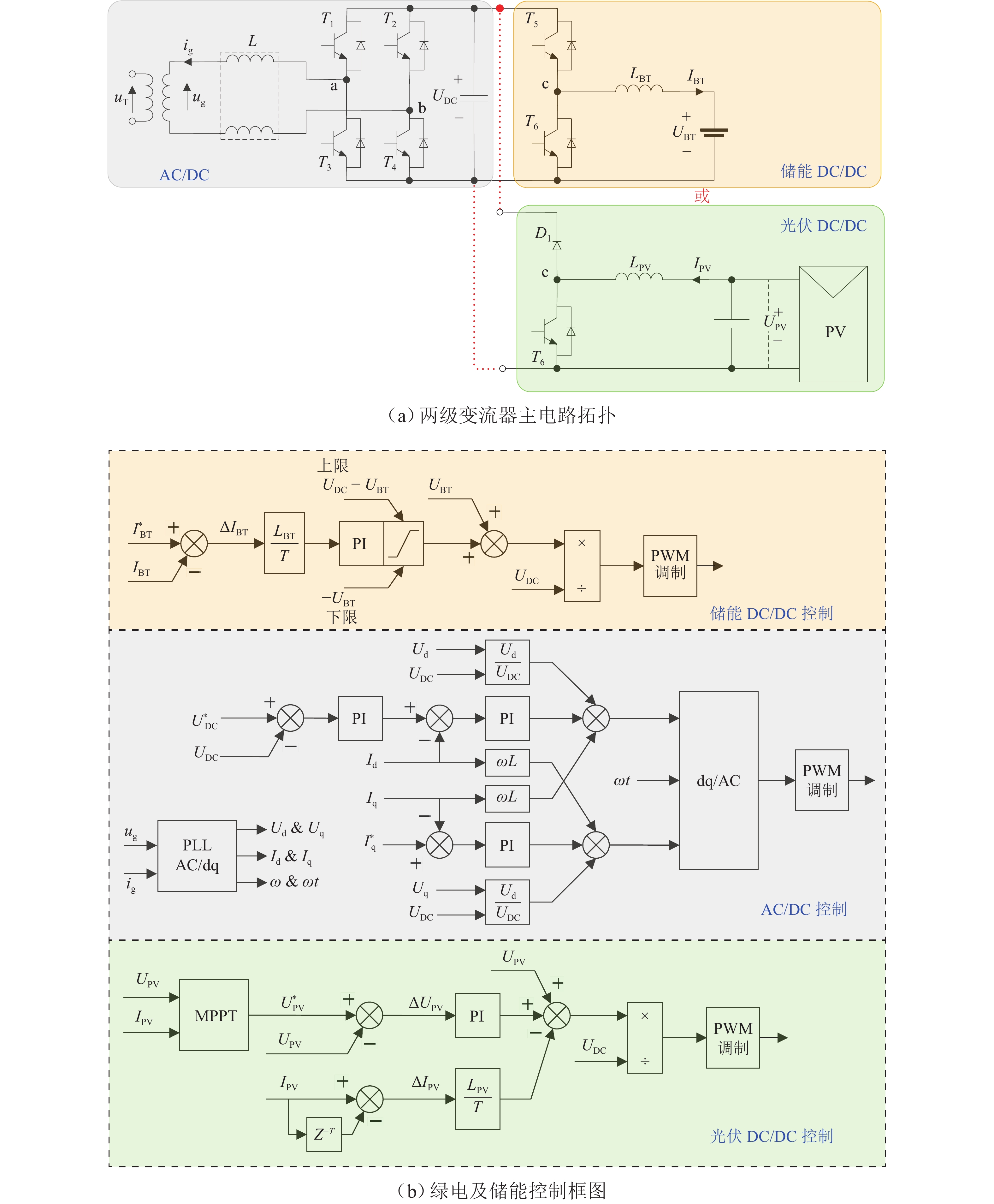
图 8 零碳贯通供电系统运行控制策略
Figure 8. Operation control strategy of zero-carbon feed-through power supply system
表 1 光伏和储能推荐配置
Table 1. Recommended configuration for photovoltaic and energy storage
牵引
变电所光伏 储能 弃光
率/%功率/
MWp功率需
求/MW容量需
求/(MW•h)循环次
数/年充放电
倍率a 13 14 39 240.0 0.5C 3.3 b 12 15 38 232.3 0.5C 6.3 c 12 15 38 232.3 0.5C 6.3 d 8 14 30 240.0 0.5C 0.4  下载: 导出CSV
表 2 极端情况光伏和储能推荐配置
Table 2. Recommended configuration for photovoltaic and energy storage under extreme conditions
牵引
变电所光伏 储能 弃光
率/%功率/
MWp功率需
求/MW容量需
求/(MW•h)循环次
数/年充放电
倍率a 24 14 39 234.3 0.5C 2.0 b 22 15 38 223.2 0.5C 4.3 c 22 15 38 223.2 0.5C 4.3 d 15 14 30 234.5 0.5C 0.6
下载: 导出CSV
表 3 牵引变电所牵引功率
Table 3. Traction power of traction substation
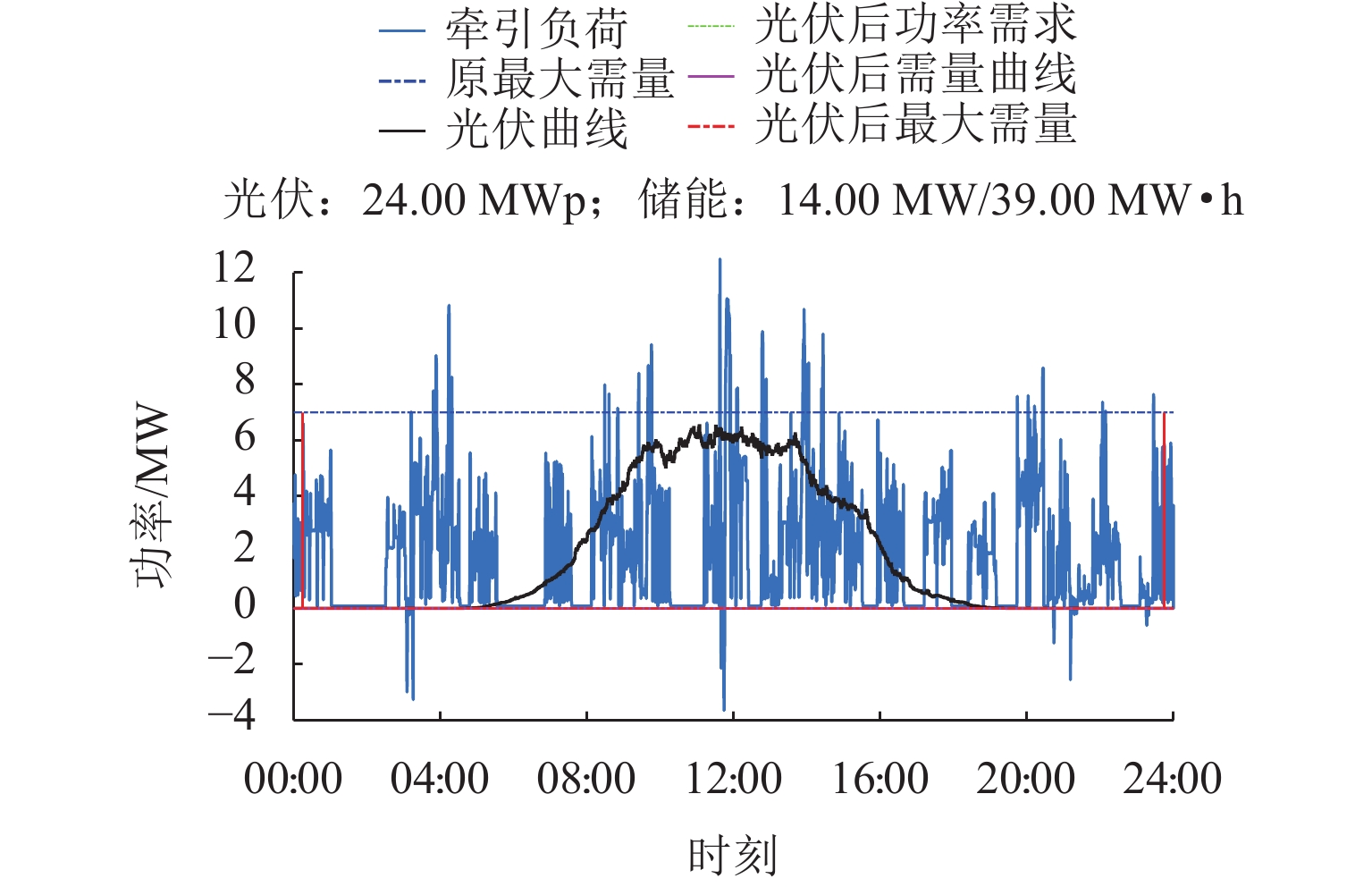
项目 数值 3 s 功率最大值/MW 12.5 24 h 功率平均值/MW 1.8 15 min 最大需量值/MW 7.0 折合年耗电量/(万kW•h) 1584.4
下载: 导出CSV
-
[1] 李群湛. 牵引供电系统分析[M]. 4版. 成都: 西南交通大学出版社, 2024. [2] 中国国家铁路集团有限公司. 中国国家铁路集团有限公司2023 年统计公报[R/OL]. 2024-03-01. https://www.nra.gov.cn/xwzx/zlzx/hytj/202406/P020240628556175674080.pdf. [3] D’Arco S, Piegari L, Tricoli P. Comparative analysis of topologies to integrate photovoltaic sources in the feeder stations of AC railways[J]. IEEE Transactions on Transportation Electrification, 2018, 4(4): 951-960. doi: 10.1109/TTE.2018.2867279 [4] Huang Y, Hu H T, Ge Y B, et al. Joint sizing optimization method of PVs, hybrid energy storage systems, and power flow controllers for flexible traction substations in electric railways[J]. IEEE Transactions on Sustainable Energy, 2024, 15(2): 1210-1223. doi: 10.1109/TSTE.2023.3331346 [5] 陈维荣, 王小雨, 韩莹, 等. 基于RPC的光储接入牵引供电系统协调控制方法[J]. 西南交通大学学报, 2024, 59(1): 1-10. doi: 10.3969/j.issn.0258-2724.20211058Chen Weirong, Wang Xiaoyu, Han Ying, et al. Coordinated control method of photovoltaic and battery system connected to traction power supply system based on railway power conditioner[J]. Journal of Southwest Jiaotong University, 2024, 59(1): 1-10. doi: 10.3969/j.issn.0258-2724.20211058 [6] Dong H Z, Tian Z B, Spencer J W, et al. Coordinated control strategy of railway multisource traction system with energy storage and renewable energy[J]. IEEE Transactions on Intelligent Transportation Systems, 2023, 24(12): 15702-15713. doi: 10.1109/TITS.2023.3271464 [7] Cheng P, Kong H W, Wu C, et al. Integrated configuration and control strategy for PV generation in railway traction power supply systems[J]. CSEE Journal of Power and Energy Systems, 2022, 8(6): 1603-1612. doi: 10.17775/cseejpes.2020.03480 [8] 黄小红, 赵艺, 李群湛, 等. 电气化铁路同相储能供电技术[J]. 西南交通大学学报, 2020, 55(4): 856-864. doi: 10.3969/j.issn.0258-2724.20181083Huang Xiaohong, Zhao Yi, Li Qunzhan, et al. Co-phase traction power supply and energy storage technology for electrified railway[J]. Journal of Southwest Jiaotong University, 2020, 55(4): 856-864. doi: 10.3969/j.issn.0258-2724.20181083 [9] Liu Y L, Chen M W, Cheng Z, et al. Robust energy management of high-speed railway co-phase traction substation with uncertain PV generation and traction load[J]. IEEE Transactions on Intelligent Transportation Systems, 2022, 23(6): 5079-5091. doi: 10.1109/TITS.2020.3046696 [10] 张丽艳, 贾瑛, 韩笃硕, 等. 电气化铁路同相储能供电系统能量管理及容量配置策略[J]. 西南交通大学学报, 2023, 58(1): 22-29. doi: 10.3969/j.issn.0258-2724.20210247Zhang Liyan, Jia Ying, Han Dushuo, et al. Energy management and capacity allocation scheme for co-phase traction power supply and energy storage system in electrified railways[J]. Journal of Southwest Jiaotong University, 2023, 58(1): 22-29. doi: 10.3969/j.issn.0258-2724.20210247 [11] Tao H D, Lu W Q, Hu H T, et al. Stability enhancement method based on adaptive virtual impedance control for a PV-integrated electrified railway system[J]. IEEE Transactions on Vehicular Technology, 2025, 74(1): 524-536. doi: 10.1109/TVT.2024.3458054 [12] 贾利民. 中国陆路交通能源融合的形态、模式与解决方案[M]. 北京: 科学出版社, 2020. [13] 陈冲, 贾利民, 赵天宇, 等. 去碳化导向的轨道交通与新能源融合发展: 形态模式、解决方案和使/赋能技术[J]. 电工技术学报, 2023, 38(12): 3321-3337. doi: 10.19595/j.cnki.1000-6753.tces.220755Chen Chong, Jia Limin, Zhao Tianyu, et al. Decarbonization-oriented rail transportation and renewable energy integration development: configurations, solutions, and enabling/empowering technologies[J]. Transactions of China Electrotechnical Society, 2023, 38(12): 3321-3337. doi: 10.19595/j.cnki.1000-6753.tces.220755 [14] 李群湛, 彭友, 黄小红, 等. 电气化铁路贯通供电系统穿越功率的治理措施[J]. 西南交通大学学报, 2024, 59(6): 1245-1255. doi: 10.3969/j.issn.0258-2724.20220887Li Qunzhan, Peng You, Huang Xiaohong, et al. Crossing power governance approach of continuous power supply system in electrified railway[J]. Journal of Southwest Jiaotong University, 2024, 59(6): 1245-1255. doi: 10.3969/j.issn.0258-2724.20220887 [15] Mochinaga Y, Hisamizu Y, Takeda M, et al. Static power conditioner using GTO converters for AC electric railway[C]//Conference Record of the Power Conversion Conference-Yokohama 1993. Piscataway: IEEE, 1993: 641-646. [16] 黄足平. 轨道交通采用25 kV交流制的电分相影响分析及处理对策[J]. 铁道标准设计, 2016, 60(11): 119-121.Huang Zuping. The influence of 25 kV AC neutral section of urban rail transit and treatment measures[J]. Railway Standard Design, 2016, 60(11): 119-121. [17] 徐平, 李东阳. 货运铁路接触网分相掉车问题浅析[J]. 电气化铁道, 2021, 32(6): 87-90.Xu Ping, Li Dongyang. Discussion on issues of train halting within OCS phase break on freight track[J]. Electric Railway, 2021, 32(6): 87-90. [18] 黄小红, 李群湛, 吴波. 一种接入牵引变电所的分布式发电系统及控制方法: CN202111046355.0[P]. 2021-11-30. [19] 李群湛, 黄小红, 马庆安, 等. 一种牵引网分布式发电供电系统及控制方法: CN202111046377.7[P]. 2021-10-12. [20] 李群湛, 黄小红, 马庆安, 等. 一种AT牵引网分布式发电供电系统及控制方法: CN202111046376.2[P]. 2021-10-12. [21] 李群湛, 王帅, 黄小红, 等. 一种分布式发电牵引网列车运行状态辨识系统及辨识方法: CN202111046340.4[P]. 2021-10-08. [22] 李群湛. 论新一代牵引供电系统及其关键技术[J]. 西南交通大学学报, 2014, 49(4): 559-568. doi: 10.3969/j.issn.0258-2724.2014.04.001Li Qunzhan. On new generation traction power supply system and its key technologies for electrification railway[J]. Journal of Southwest Jiaotong University, 2014, 49(4): 559-568. doi: 10.3969/j.issn.0258-2724.2014.04.001 [23] 李群湛, 张进思, 贺威俊. 适于重载电力牵引的新型供电系统的研究[J]. 铁道学报, 1988, 10(4): 23-31.Li Qunzhan, Zhang Jinsi, He Weijun. Study of a new power supply system for heavy haul electric traction[J]. Journal of the China Railway Society, 1988, 10(4): 23-31. [24] National Renewable Energy Laboratory (NREL). Metered instrumentation data center (MIDC) [DS/OL]. [2024-11-22]. https://midcdmz.nrel.gov/. [25] Razali N M M, Hashim A H. Backward reduction application for minimizing wind power scenarios in stochastic programming[C]//2010 4th International Power Engineering and Optimization Conference (PEOCO). Piscataway: IEEE, 2010: 430-434. -

 下载:
下载:

 点击查看大图
计量
- 文章访问数: 106
- HTML全文浏览量: 97
- PDF下载量: 60
- 被引次数: 0