



Completed Bridge Alignment Control Technology of Continuous Steel Truss Railway Girder Bridge Based on Driving Performance
-
摘要:
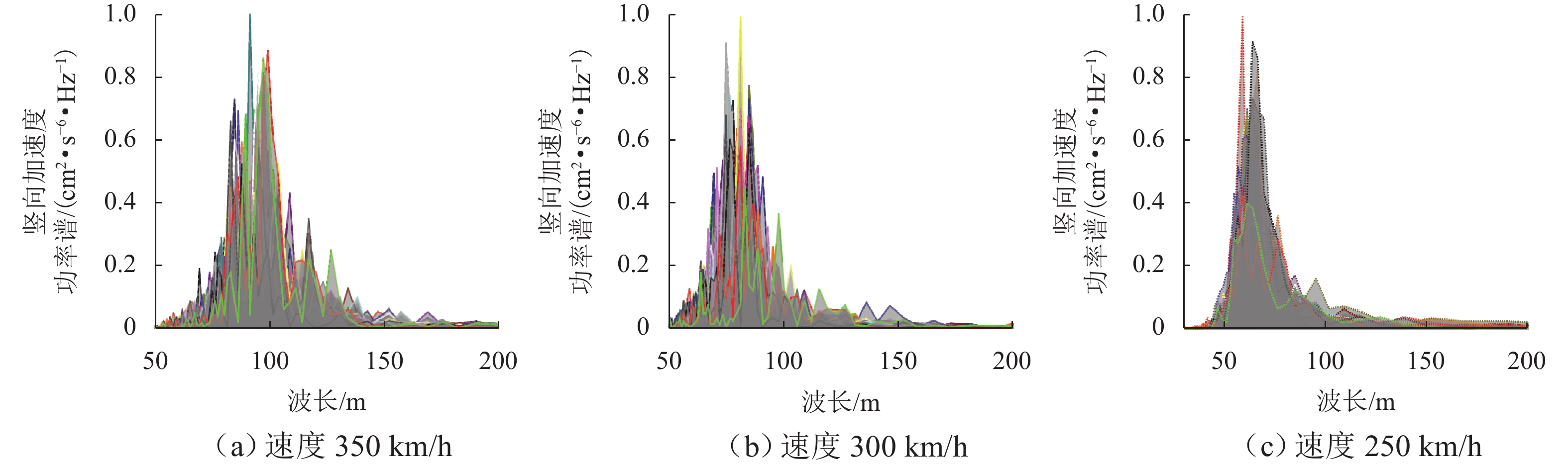
为了满足铁路桥梁行车性能的需求,需要控制其成桥线形的平顺性. 基于行车平稳性分析,确定车体敏感波长的范围,并将其成桥线形幅值作为评价指标;从保证行车性能角度出发,结合无砟轨道自身调节能力、轨面线形与成桥线形的关系,推导出成桥线形不平顺限值表达式;以某7跨连续钢桁梁桥为研究对象,根据推导的表达式控制车体敏感波长范围内的成桥线形不平顺幅值;组合Akima样条曲线和主梁拼装曲线,提出一种基于成桥目标线形的主梁拼装线形平顺性控制方法. 研究结果表明:列车行驶速度250~350 km/h时,车体敏感波长均小于200 m;以某7跨连续钢桁梁桥为例,速度350、300、250 km/h对应车体敏感波长范围内,成桥线形不平顺限值分别为24、26、29 mm;通过提出的控制主梁拼装线形平顺性方法,能够对主梁拼装线形中0~200 m波长范围内的不平顺幅值进行评价和控制.
Abstract:In order to meet the requirements for driving performance of railway bridges, it is necessary to control the smoothness of the bridge alignment. Based on the analysis of driving stability, the sensitive wavelength range of the vehicle body was determined. The amplitude of the completed bridge alignment within the range was adopted as the evaluation criterion. From the perspective of ensuring driving performance, by considering the self-adjustment capability of ballastless tracks and the relationship between the track surface alignment and the completed bridge alignment, the expression of the irregularity limit value for the completed bridge alignment was derived. A seven-span continuous steel truss girder bridge was taken as the research object. The irregularity amplitude of the completed bridge alignment within the sensitive wavelength range of the vehicle body was controlled according to the derived expression. A method for controlling the smoothness of the girder assembly alignment based on the target alignment of the completed bridge was proposed by combining Akima spline curve with the girder assembly curve. The research results show that the sensitive wavelength of the vehicle body is less than 200 m at driving speeds of trains ranging from 250 km/h to 350 km/h. If a seven-span continuous steel truss girder bridge is taken as an example, the irregularity limit values for the completed bridge alignment within the sensitive wavelength ranges of the vehicle body corresponding to speeds of 350 km/h, 300 km/h, and 250 km/h are 24, 26 mm, and 29 mm, respectively. The irregularity amplitude within a 0–200 m wavelength range of the girder assembly alignment can be evaluated and controlled through the proposed method for controlling the smoothness of the girder assembly alignment.
-
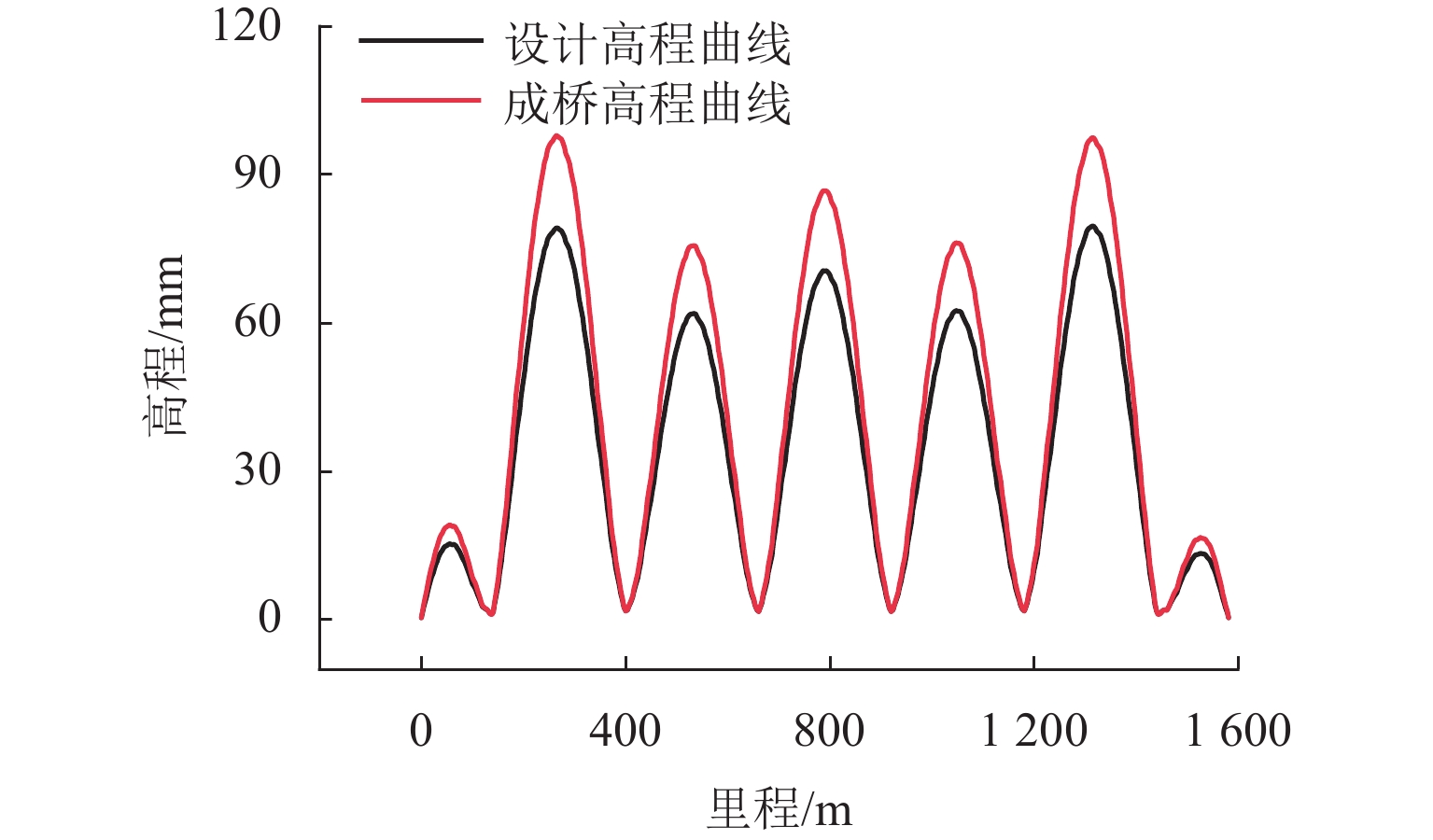
图 1 7跨连续梁桥成桥与设计高程曲线
Figure 1. Elevation curves of completed bridge and design for seven-span continuous girder bridge
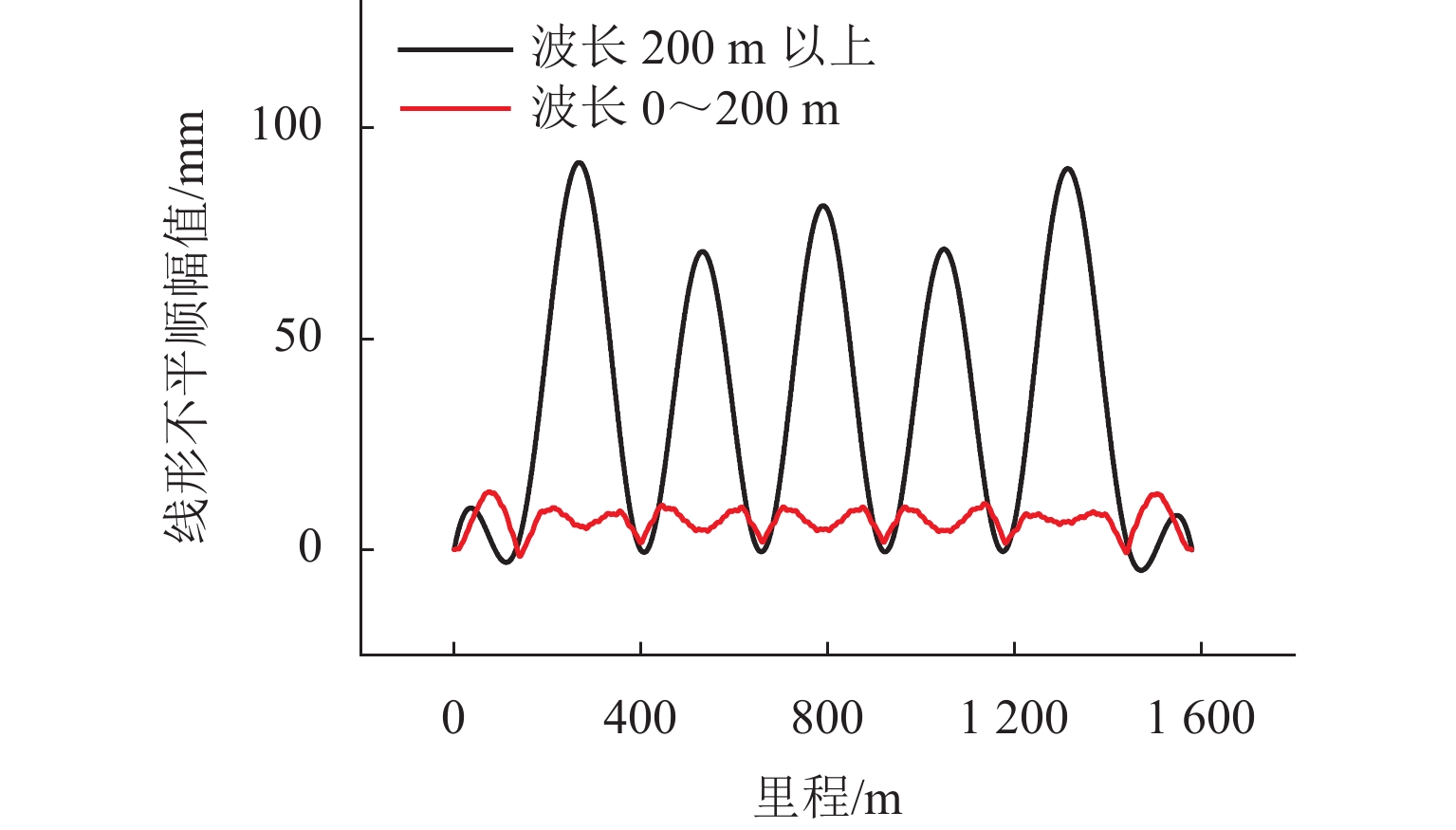
图 4 不同波长范围内成桥线形成分
Figure 4. Compositions of completed bridge alignment in different wavelength ranges
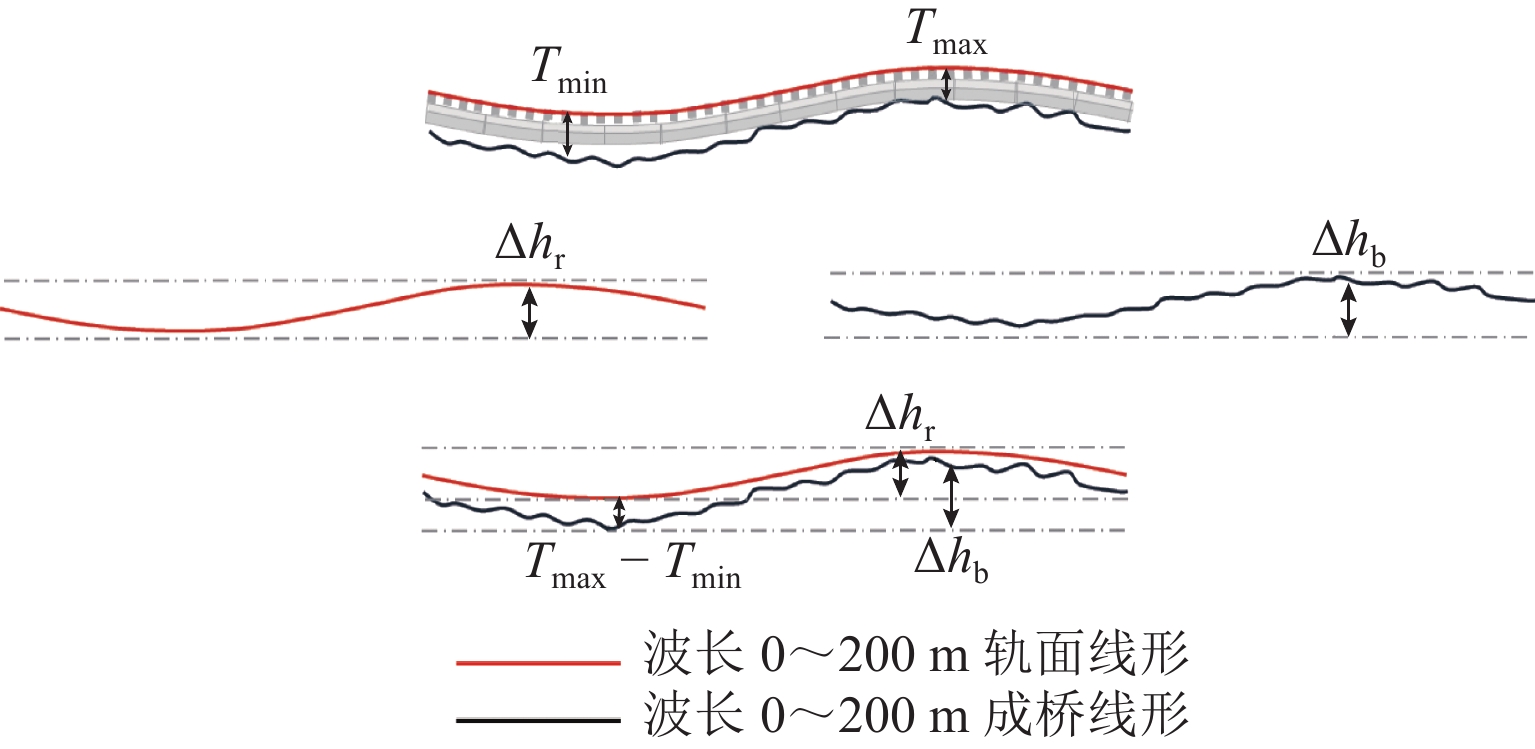
图 6 允许的成桥线形幅值和轨面线形幅值对应关系
Figure 6. Corresponding relationship between permissible completed bridge alignment amplitudes and track surface alignment amplitudes
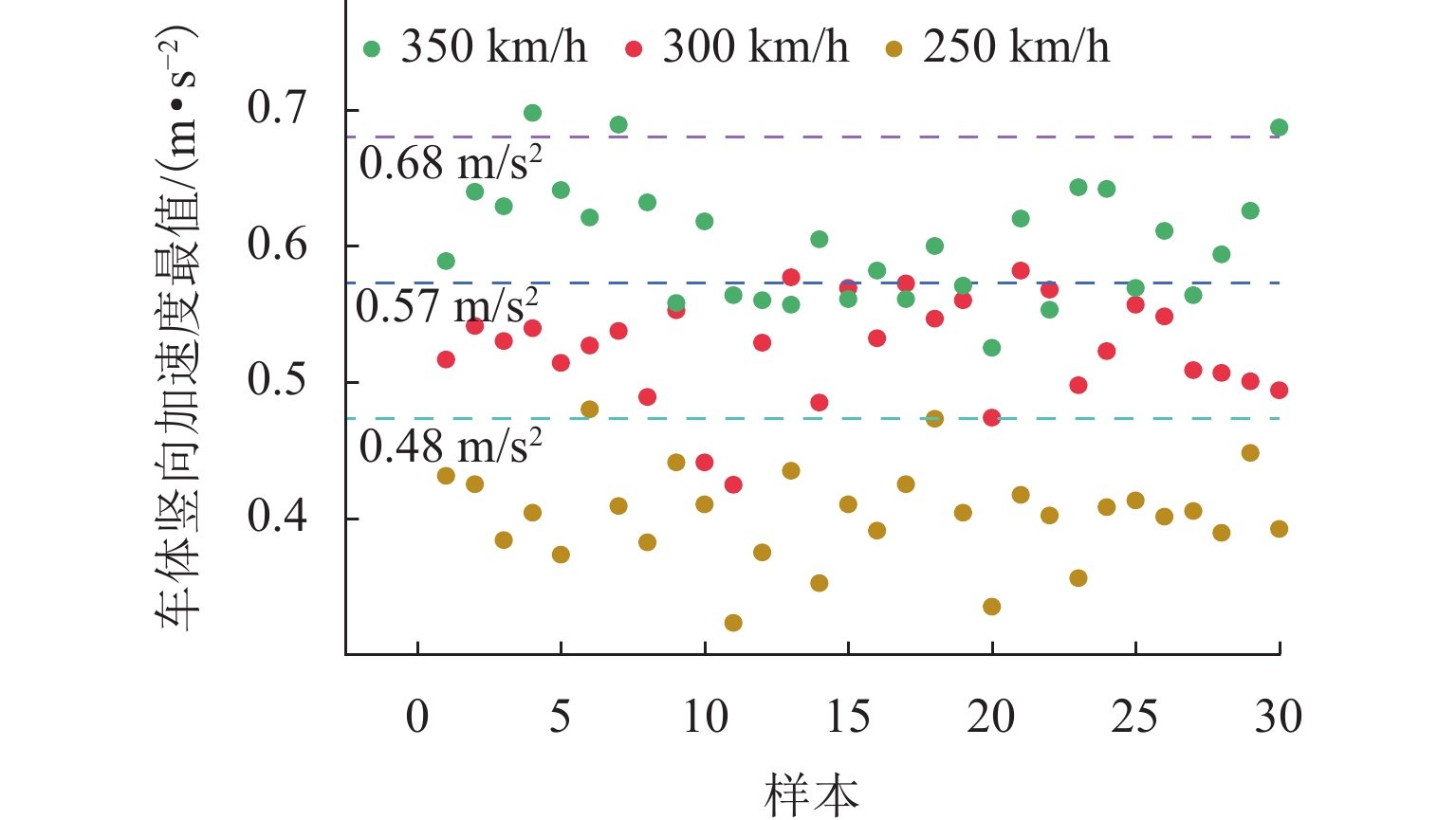
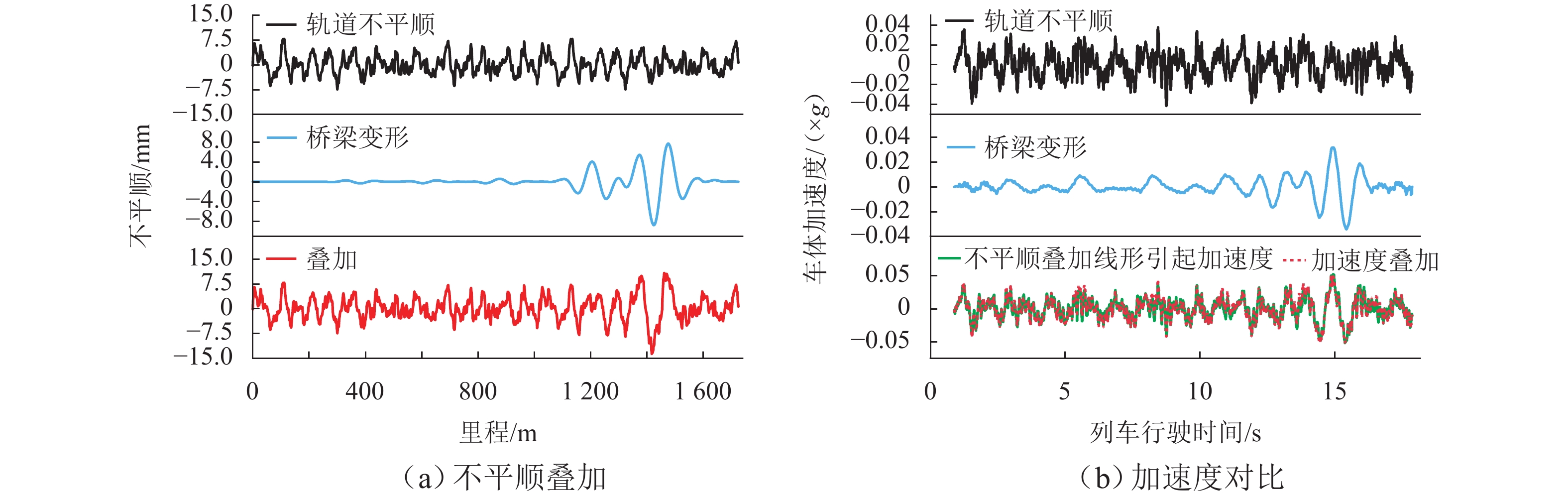
图 7 无砟轨道谱激励下车体垂向加速度
Figure 7. Vertical acceleration of vehicle body under excitation of ballastless track spectrum
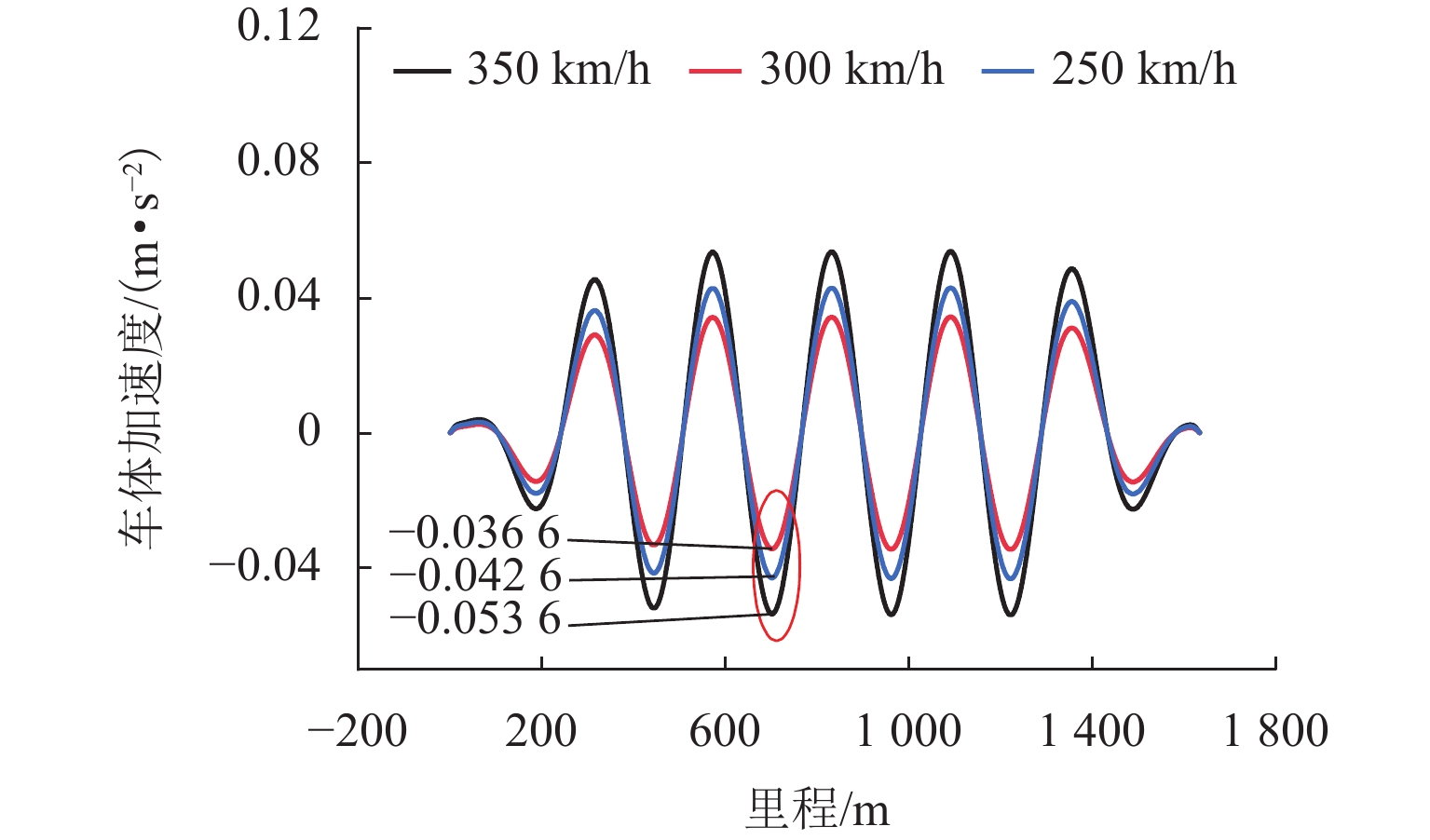
图 8 不同车速下长波变形引起的车体垂向加速度
Figure 8. Vertical acceleration of vehicle body due to long-wave deformation at different vehicle speeds
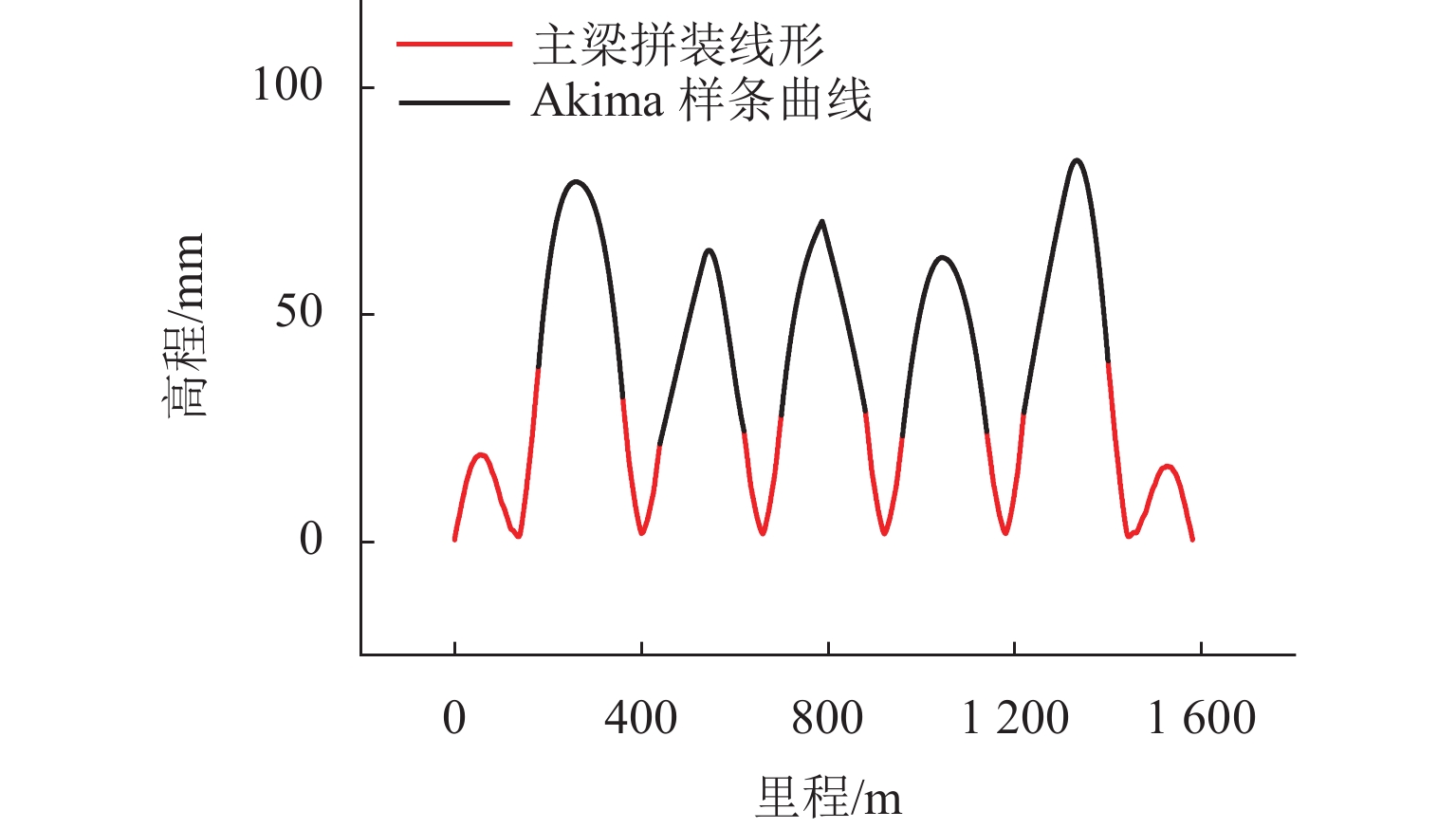
图 10 主梁拼装区段40 m时虚拟成桥曲线
Figure 10. Virtual completed bridge curves at 40 m of girder assembly section
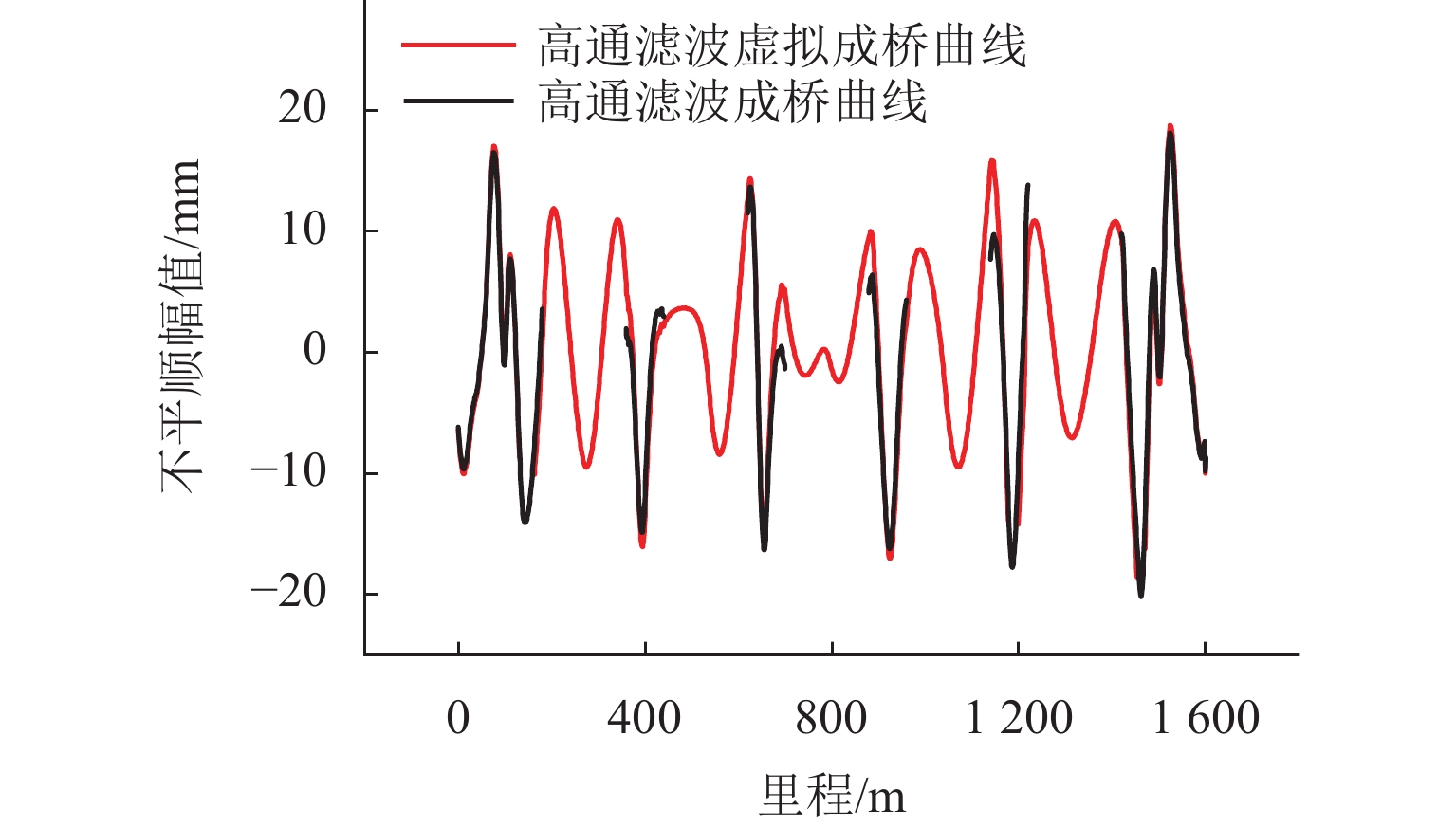
图 11 第1次评估时200 m滤波后的不平顺幅值
Figure 11. Irregularity amplitudes after 200 m filtering at the first evaluation
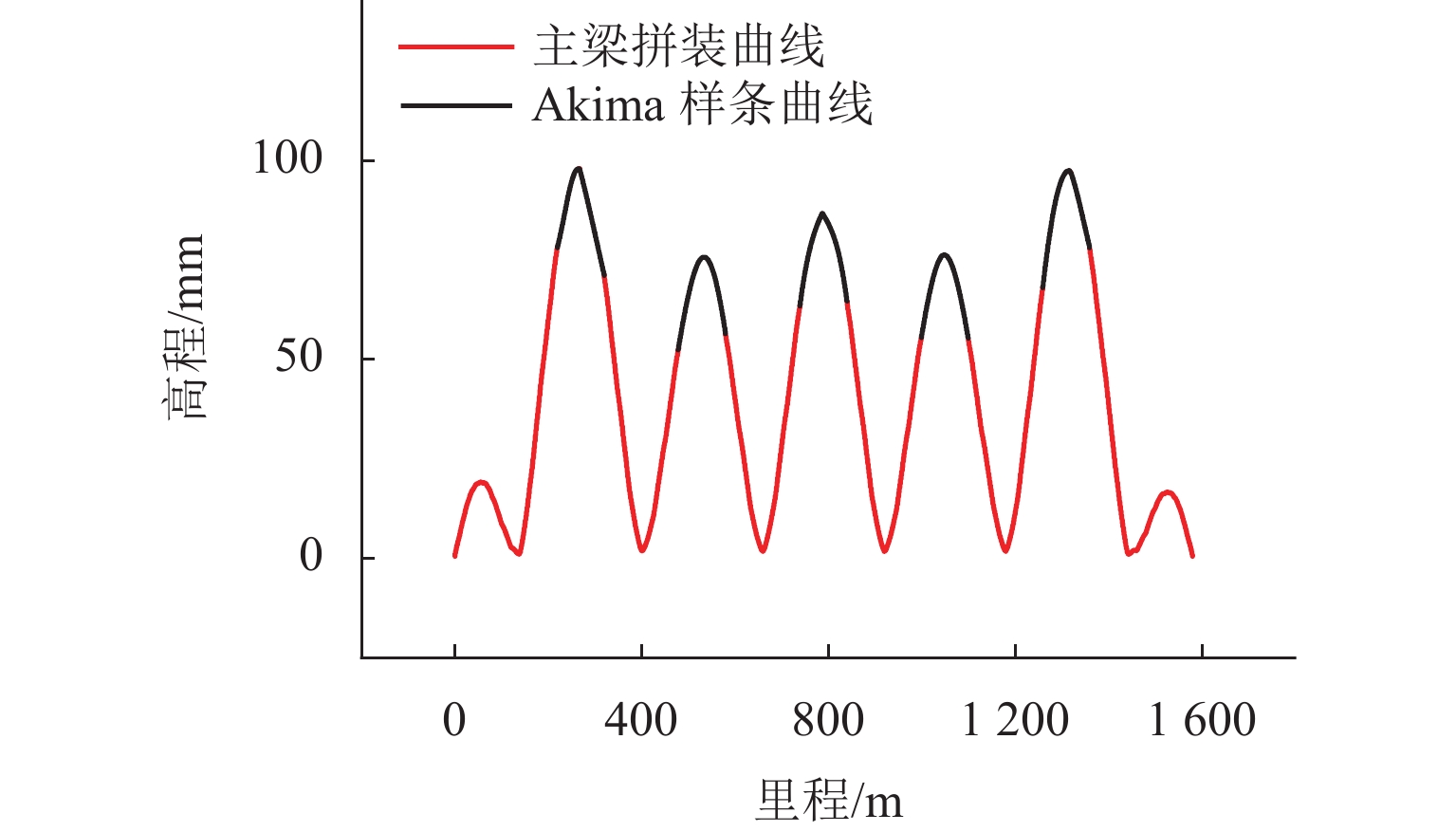
图 12 主梁拼装区段80 m时虚拟成桥曲线
Figure 12. Virtual completed bridge curves at 80 m of girder assembly section
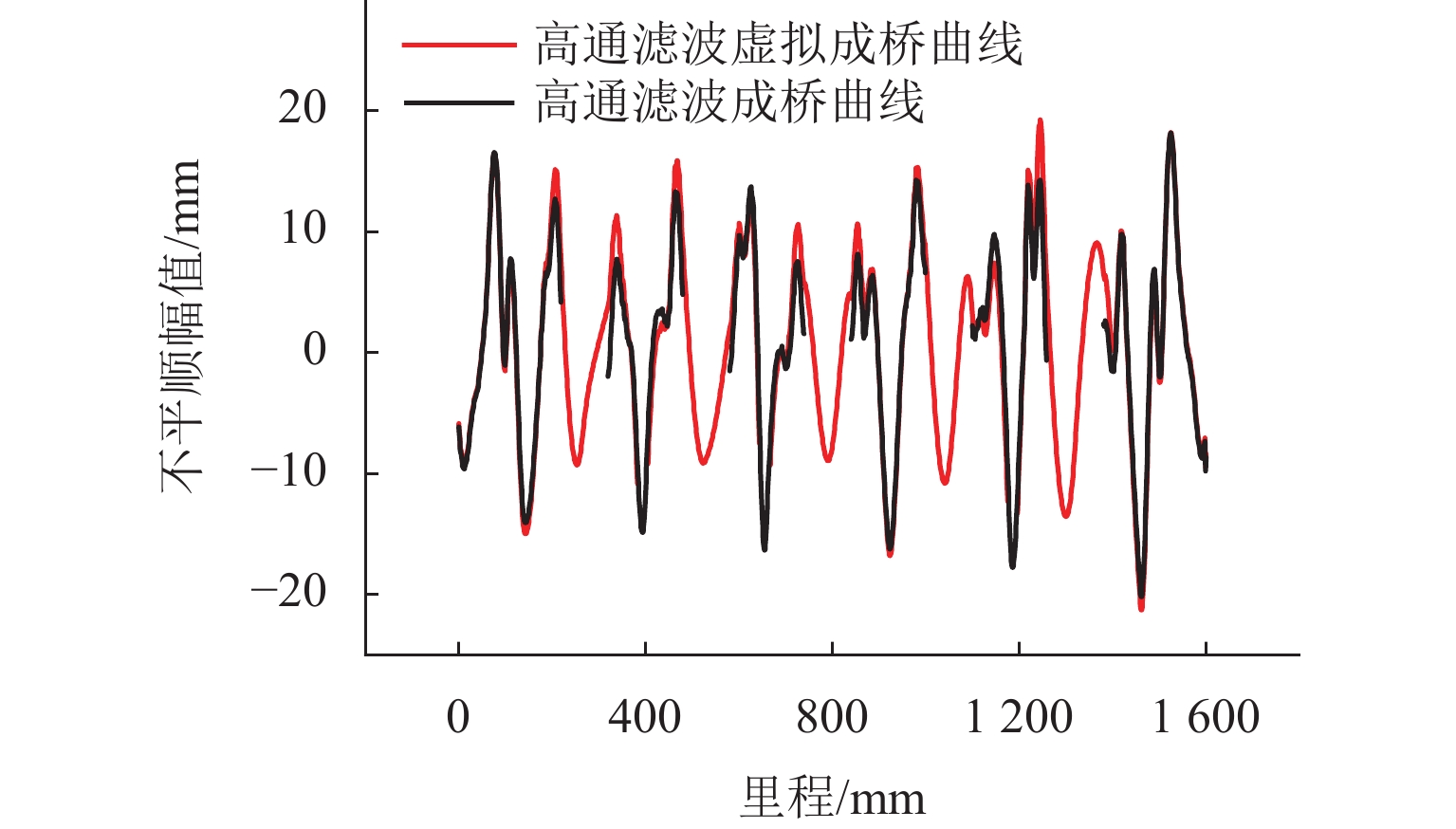
图 13 第2次评估时200 m滤波后不平顺幅值
Figure 13. Irregularity amplitudes after 200 m filtering at the second evaluation
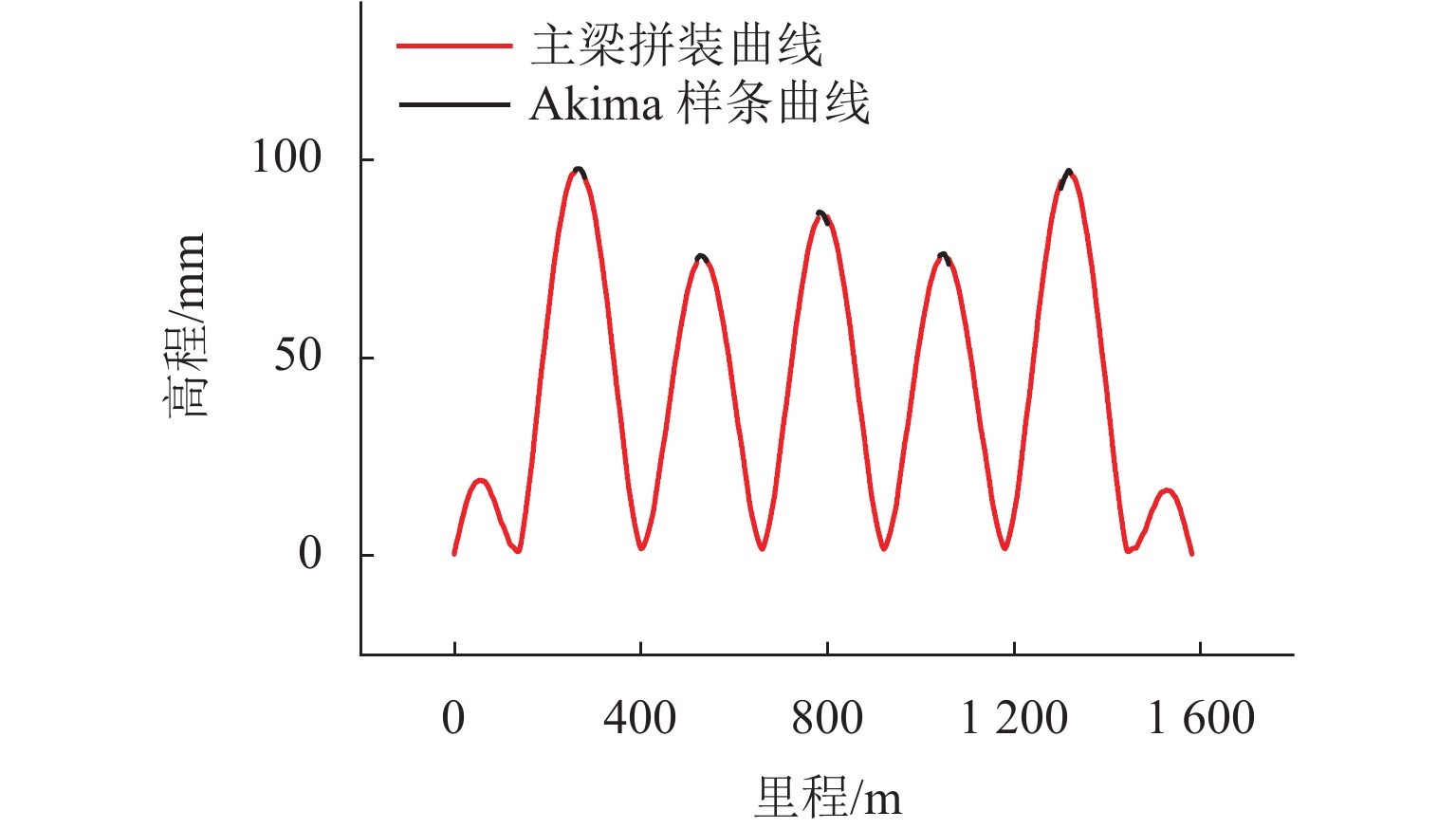
图 14 主梁拼装区段120 m时虚拟成桥曲线
Figure 14. Virtual completed bridge curves at 120 m of girder assembly section
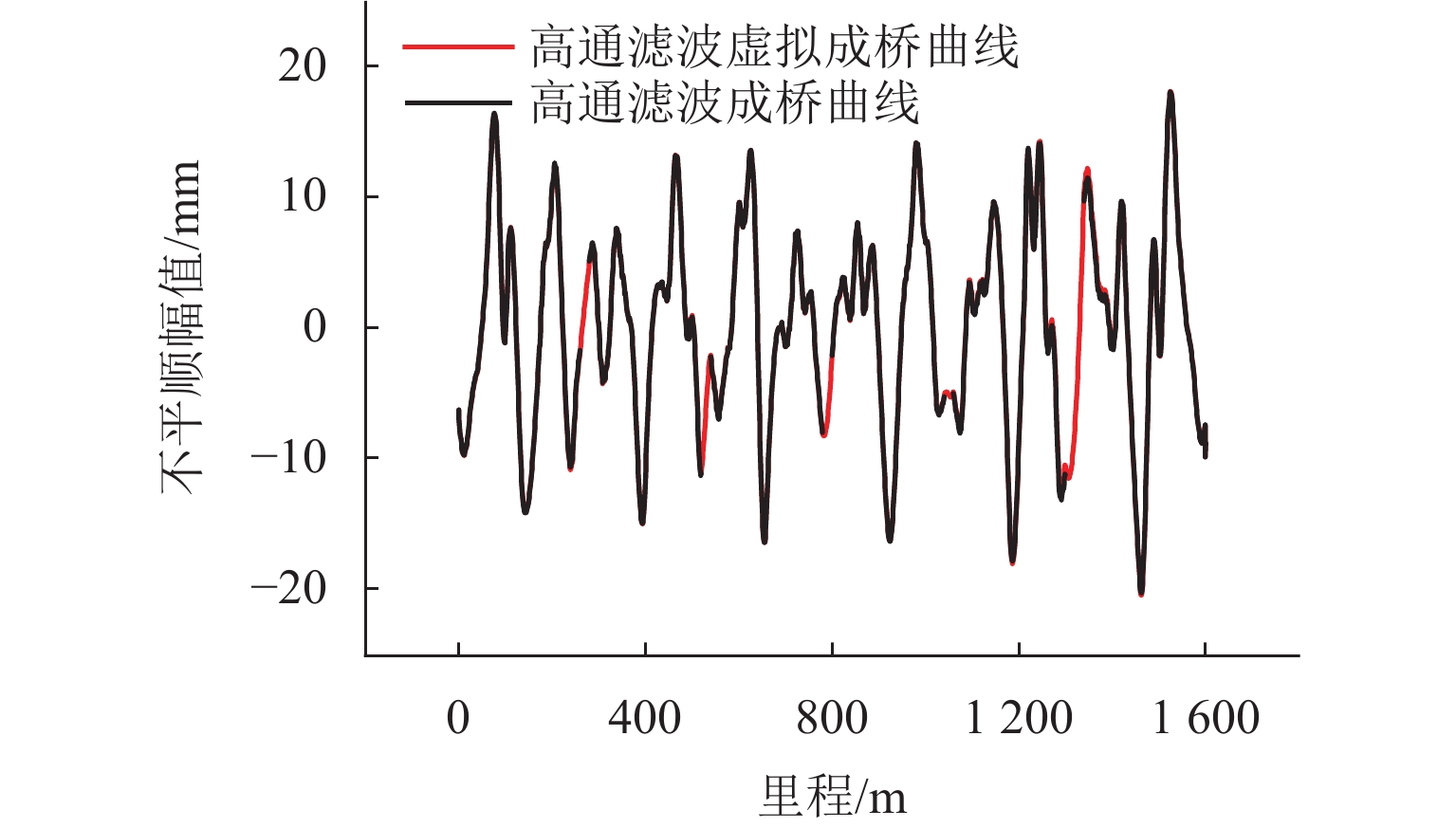
图 15 第3次评估时200 m滤波后不平顺幅值
Figure 15. Irregularity amplitudes after 200 m filtering at the third evaluation
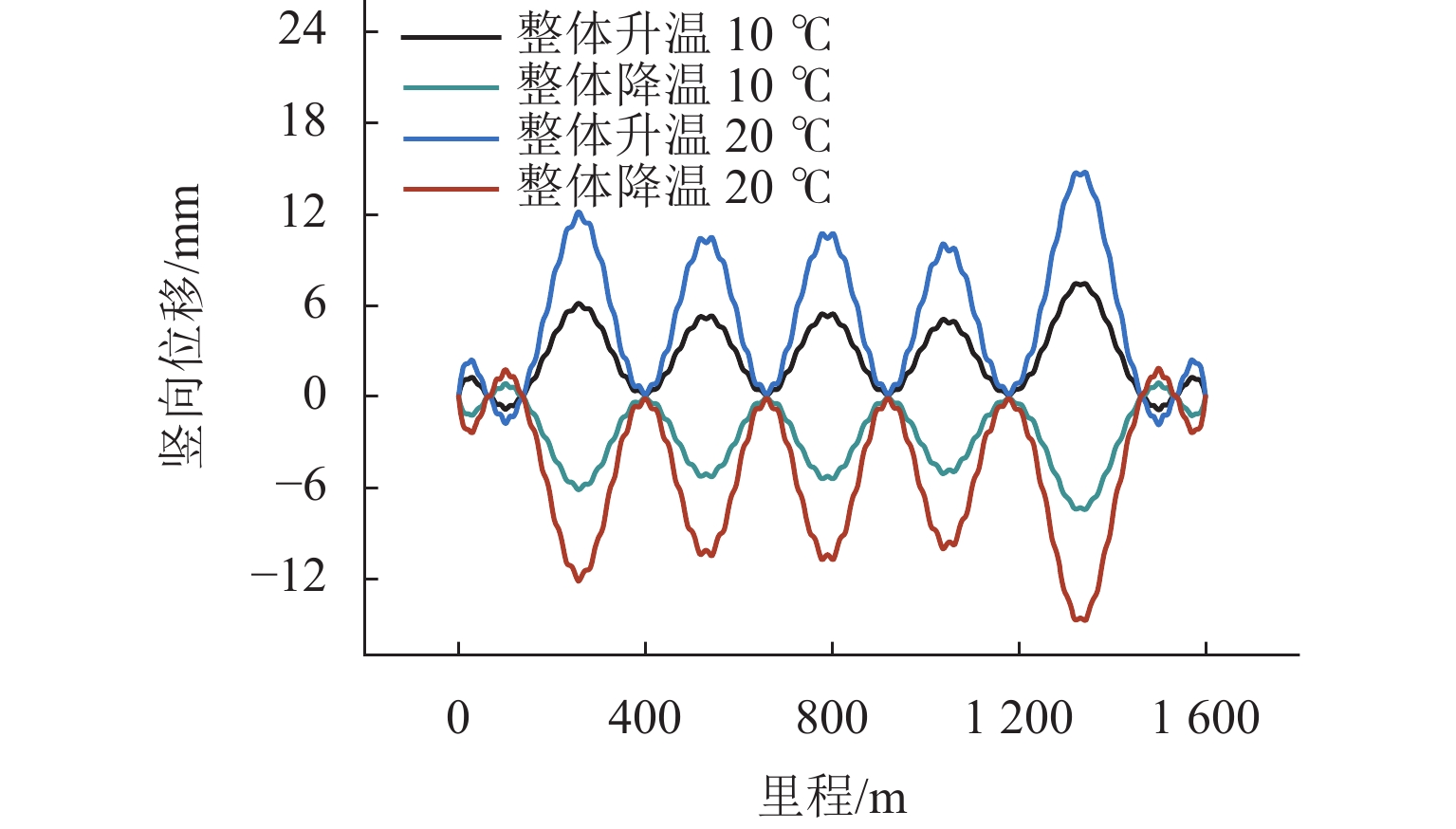
表 1 不同工况下CRH3列车车体竖向加速度
Table 1. Vertical acceleration of CRH3 train in different working conditions
m/s2 工况 350 km/h 300 km/h 250 km/h 整体升温 20 ℃ 0.89 0.79 0.68 整体降温 20 ℃ 0.88 0.78 0.67 整体升温 10 ℃ 0.84 0.74 0.63 整体降温 10 ℃ 0.84 0.74 0.64 原始 0.76 0.67 0.57  下载: 导出CSV
表 2 各项竖向车体加速度汇总
Table 2. Summary of various vertical acceleration of vehicle body
车速/(km·h−1) a1 a2 a3 a 350 0.68 0.0536 0.13 0.4364 300 0.56 0.0426 0.12 0.5774 250 0.48 0.0336 0.11 0.6764
下载: 导出CSV
表 3 主梁拼装区段40 m时实测线形不平顺与虚拟线形不平顺绝对最大值
Table 3. Absolute maximum values of measured alignment irregularities and virtual alignment irregularities at 40 m of girder assembly section
不平顺
位置成桥曲线/mm 虚拟成桥曲线/mm 误差/% 2# 墩 −13.6 −14.0 2.8 3# 墩 −14.9 −15.9 6.2 4# 墩 −16.6 −15.8 4.8 5# 墩 −16.2 −17.0 4.7 6# 墩 −17.8 −17.3 2.8 7# 墩 −20.3 −20.9 2.4
下载: 导出CSV
表 4 主梁拼装区段80 m时实测线形不平顺与虚拟线形不平顺绝对最大值
Table 4. Absolute maximum values of measured alignment irregularities and virtual alignment irregularities at 80 m of girder assembly section
不平顺
位置成桥曲线/mm 虚拟成桥曲线/mm 误差/% 2# 墩 −13.6 −14.1 3.5 3# 墩 −14.9 −14.9 0 4# 墩 −16.6 −16.3 1.8 5# 墩 −16.2 −16.2 0.0 6# 墩 −17.8 −17.3 2.9 7# 墩 −20.3 −20.2 0.5
下载: 导出CSV
表 5 主梁拼装区段120 m时实测线形不平顺与虚拟线形不平顺绝对最大值
Table 5. Absolute maximum values of measured alignment irregularities and virtual alignment irregularities at 120 m of girder assembly section
不平顺
位置成桥曲线/mm 虚拟成桥曲线/mm 误差/% 2# 墩 −13.6 −13.9 2.2 3# 墩 −14.9 −14.9 0 4# 墩 −16.6 −16.3 1.8 5# 墩 −16.2 −16.0 1.3 6# 墩 −17.8 −17.6 1.1 7# 墩 −20.3 −20.2 0.5
下载: 导出CSV
-
[1] 李铭伟, 刘凯, 张上, 等. 高铁大跨度长联连续钢桥铺设无砟轨道的适应性[J]. 铁道建筑, 2024, 64(8): 84-88. doi: 10.3969/j.issn.1003-1995.2024.08.16LI Mingwei, LIU Kai, ZHANG Shang, et al. Adaptability of laying ballastless track on long-span continuous steel bridge of high speed railway[J]. Railway Engineering, 2024, 64(8): 84-88. doi: 10.3969/j.issn.1003-1995.2024.08.16 [2] 王同军, 蒋辉, 尤明熙, 等. 基于模数驱动的高速铁路线路设备状态检测评估技术与实践[J]. 铁道运输与经济, 2024, 46(9): 1-14. doi: 10.16668/j.cnki.issn.1003-1421.2024.09.01WANG Tongjun, JIANG Hui, YOU Mingxi, et al. Practice of high speed railway line equipment state detection and assessment technology driven by modulus[J]. Railway Transport and Economy, 2024, 46(9): 1-14. doi: 10.16668/j.cnki.issn.1003-1421.2024.09.01 [3] 王平, 高天赐, 汪鑫, 等. 基于拟合平纵断面的铁路特大桥梁线路平顺性评估[J]. 西南交通大学学报, 2020, 55(2): 231-237, 272. doi: 10.3969/j.issn.0258-2724.20180295WANG Ping, GAO Tianci, WANG Xin, et al. Smoothness estimation of super-large bridges in railway line based on fitting railway plane and profile[J]. Journal of Southwest Jiaotong University, 2020, 55(2): 231-237, 272. doi: 10.3969/j.issn.0258-2724.20180295 [4] 孙宗磊, 张上, 刘凯, 等. 雄商高铁黄河特大桥主桥桥型方案比选[J]. 桥梁建设, 2023, 53(5): 118-124. doi: 10.20051/j.issn.1003-4722.2023.05.016SUN Zonglei, ZHANG Shang, LIU Kai, et al. Main bridge type selection for a Huanghe River bridge of Xiongan-Shangqiu high-speed railway[J]. Bridge Construction, 2023, 53(5): 118-124. doi: 10.20051/j.issn.1003-4722.2023.05.016 [5] 杨东. 考虑施工不确定性的大跨高速铁路桥梁线形控制研究[J]. 铁道建筑技术, 2024(4): 145-147, 186. doi: 10.3969/j.issn.1009-4539.2024.04.033YANG Dong. Research on alignment control of long-span high-speed railway bridge considering construction uncertainty[J]. Railway Construction Technology, 2024(4): 145-147, 186. doi: 10.3969/j.issn.1009-4539.2024.04.033 [6] 杨玉龙. 跨铁路悬灌预应力混凝土T构转体关键技术研究[D]. 成都: 西南交通大学, 2021. [7] 禹壮壮, 舒英杰, 陆粤, 等. 基于成桥施工偏差的大跨度铁路桥梁线路纵断面设计适应性分析[J]. 铁道标准设计, 2023, 67(3): 61-67, 73. doi: 10.13238/j.issn.1004-2954.202110110004YU Zhuangzhuang, SHU Yingjie, LU Yue, et al. Design adaptability analysis of the route longitudinal section on long-span railway bridge based on construction deviation[J]. Railway Standard Design, 2023, 67(3): 61-67, 73. doi: 10.13238/j.issn.1004-2954.202110110004 [8] 陈增顺. 大跨轨道斜拉桥合理线形控制关键技术研究[D]. 重庆: 重庆交通大学, 2014. [9] 苑仁安, 张明金, 郑清刚, 等. 超大跨斜拉桥横桥向恒载非对称力学行为[J]. 西南交通大学学报, 2023, 58(3): 527-534. doi: 10.3969/j.issn.0258-2724.20210279YUAN Ren’an ZHANG Mingjin, ZHENG Qinggang, et al. Mechanical characteristics of super-long-span cable-stayed bridge with transverse asymmetrical load[J]. Journal of Southwest Jiaotong University, 2023, 58(3): 527-534. doi: 10.3969/j.issn.0258-2724.20210279 [10] 刘来君, 贺拴海, 宋一凡. 大跨径桥梁施工控制温度应力分析[J]. 中国公路学报, 2004, 17(1): 53-56. doi: 10.3321/j.issn:1001-7372.2004.01.012LIU Laijun, HE Shuanhai, SONG Yifan. Analysis of temperature stress in control of long-span bridge construction[J]. China Journal of Highway and Transport, 2004, 17(1): 53-56. doi: 10.3321/j.issn:1001-7372.2004.01.012 [11] 陆粤, 王铭, 陈嵘, 等. 基于行车平稳性的大跨度铁路桥梁成桥线形评价方法研究[J]. 铁道标准设计, 2024, 68(6): 44-51. doi: 10.13238/j.issn.1004-2954.202210180008LU Yue, WANG Ming, CHEN Rong, et al. Research on evaluation method of completed bridge alignment of long-span railway bridges based on riding quality[J]. Railway Standard Design, 2024, 68(6): 44-51. doi: 10.13238/j.issn.1004-2954.202210180008 [12] 单德山, 董皓, 顾晓宇. 大跨度斜拉桥施工控制的多元统计敏感性分析[J]. 中国公路学报, 2021, 34(12): 68-79. doi: 10.3969/j.issn.1001-7372.2021.12.006SHAN Deshan, DONG Hao, GU Xiaoyu. Multivariate statistical sensitivity analysis for construction control of long-span cable-stayed bridges[J]. China Journal of Highway and Transport, 2021, 34(12): 68-79. doi: 10.3969/j.issn.1001-7372.2021.12.006 [13] LI Q F, XIE J H. Bridge alignment prediction based on combination of grey model and BP neural network[J]. Applied Sciences, 2024, 14(17): 7955. doi: 10.3390/app14177955 [14] LI X G, HUANG X S, DING P, et al. Study on the effect of temperature on the alignment of a long-span steel–concrete composite beam track cable-stayed bridge[J]. Applied Sciences, 2024, 14(22): 10688. doi: 10.3390/app142210688 [15] 李国龙, 孙宪夫, 高彦嵩, 等. 基于实车试验的大跨度桥梁轨道静态长波高低不平顺验收标准验证[J]. 铁道学报, 2024, 46(1): 120-128.LI Guolong, SUN Xianfu, GAO Yansong, et al. Verification on acceptance standard for track static long-wave longitudinal level irregularity on long-span bridge based on real train test[J]. Journal of the China Railway Society, 2024, 46(1): 120-128. [16] 陈林峰. 大跨度变截面曲线钢箱梁悬拼施工线形控制方法研究[D]. 重庆: 重庆交通大学, 2024. [17] 舒英杰. 大跨度桥上轨道长波不平顺评价及线形优化方法研究[D]. 成都: 西南交通大学, 2023. [18] 杨飞, 郝晓莉, 杨建, 等. 基于多车型CNN-GRU性能预测模型的轨道状态评价[J]. 西南交通大学学报, 2023, 58(2): 322-331. doi: 10.3969/j.issn.0258-2724.20211030YANG Fei, HAO Xiaoli, YANG Jian, et al. Track condition evaluation for multi-vehicle performance prediction model based on convolutional neural network and gated recurrent unit[J]. Journal of Southwest Jiaotong University, 2023, 58(2): 322-331. doi: 10.3969/j.issn.0258-2724.20211030 [19] 王铭, 李星星, 李小珍. 基于频域分析的高速列车侧风倾覆机理[J]. 西南交通大学学报, 2024, 59(2): 315-322, 342. doi: 10.3969/j.issn.0258-2724.20210571WANG Ming, LI Xingxing, LI Xiaozhen. Mechanism of high-speed train crosswind overturning stability based on frequency domain analysis[J]. Journal of Southwest Jiaotong University, 2024, 59(2): 315-322, 342. doi: 10.3969/j.issn.0258-2724.20210571 [20] ZHANG J F, ZHU Z X, ZHU X Y, et al. Study on the influence of uneven settlement and small curve radius on metro train running safety and riding comfort[J]. Structures, 2023, 51: 1806-1820. doi: 10.1016/j.istruc.2023.03.094 [21] 马卓然. 基于轨道几何和车辆响应检测数据的无砟轨道上拱识别评估方法[D]. 北京: 北京交通大学, 2023. [22] 国家铁路局. 铁路轨道设计规范: TB 10082—2017[S]. 北京: 中国铁道出版社, 2017. [23] 国家铁路局. 铁路桥涵设计规范: TB 10002—2017[S]. 北京: 中国铁道出版社, 2017. [24] LI X Z, HE H N, WANG M, et al. Influence of long-span bridge deformation on driving quality of high-speed trains[J]. International Journal of Rail Transportation, 2024, 12(4): 690-708. doi: 10.1080/23248378.2023.2198532 [25] 王心怡. 基于行车性能的大跨度铁路悬索桥局部刚度限值研究[D]. 成都: 西南交通大学, 2023. [26] 孟令强, 郭传臣, 姜永彪. 大跨长联公铁两用连续钢桁梁桥成桥阶段温度效应研究[J]. 世界桥梁, 2023, 51(4): 77-84. doi: 10.20052/j.issn.1671-7767.2023.04.012MENG Lingqiang, GUO Chuanchen, JIANG Yongbiao. Thermal effect on continuous steel truss girder rail-cum-road bridge with long spans and units after completion[J]. World Bridges, 2023, 51(4): 77-84. doi: 10.20052/j.issn.1671-7767.2023.04.012 [27] 中华人民共和国铁道部. 高速铁路无砟轨道线路维修规则(试行): TG/GW 115—2012[S]. 北京: 中国铁道出版社, 2012. -

 下载:
下载:


 点击查看大图
计量
- 文章访问数: 362
- HTML全文浏览量: 168
- PDF下载量: 50
- 被引次数: 0