



Multi-Physical Field Coupling Calculation of Gas-Insulated Switchgear Bus Temperature Distribution Based on Radiative Cooling Technology
-
摘要:
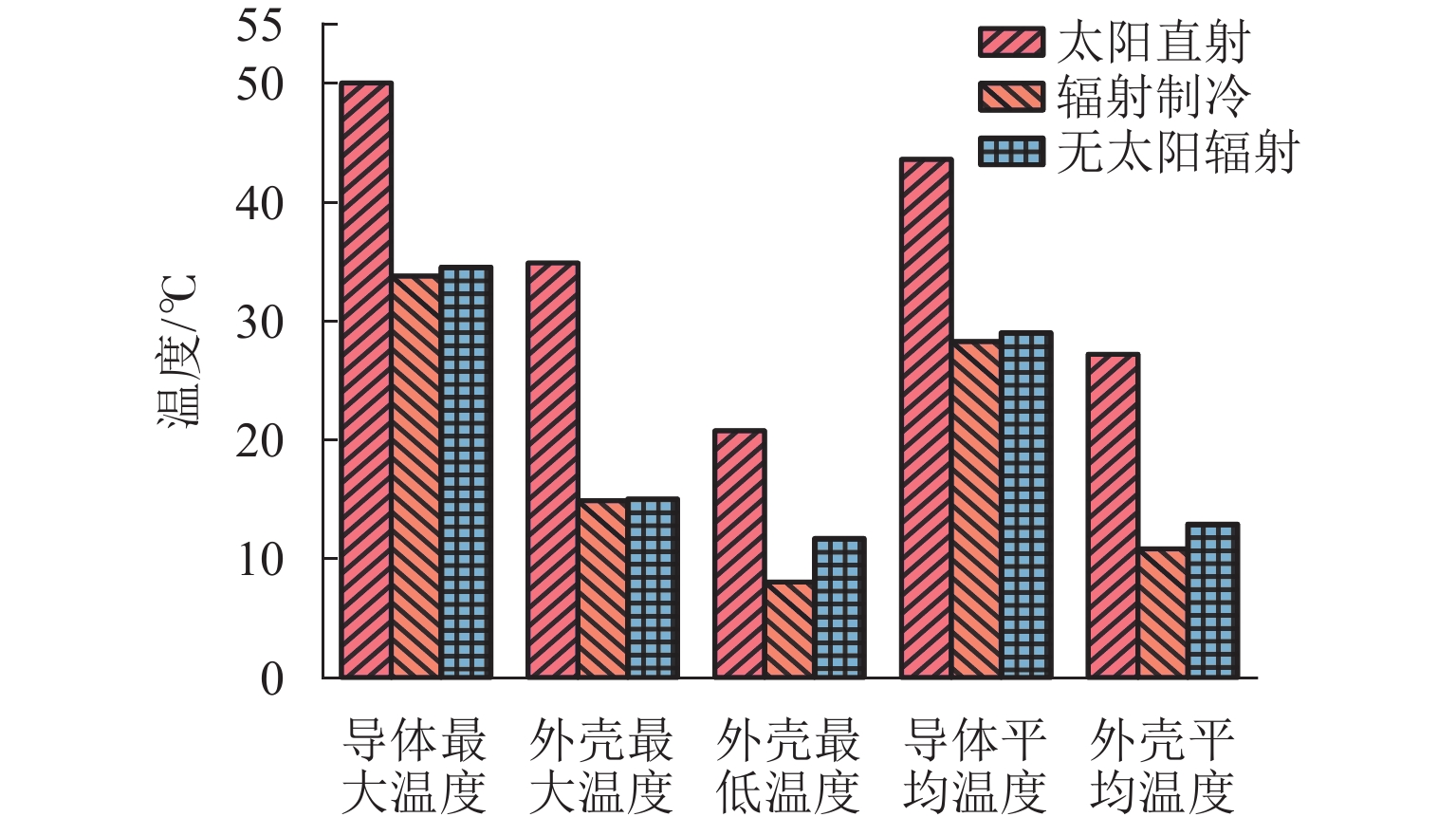
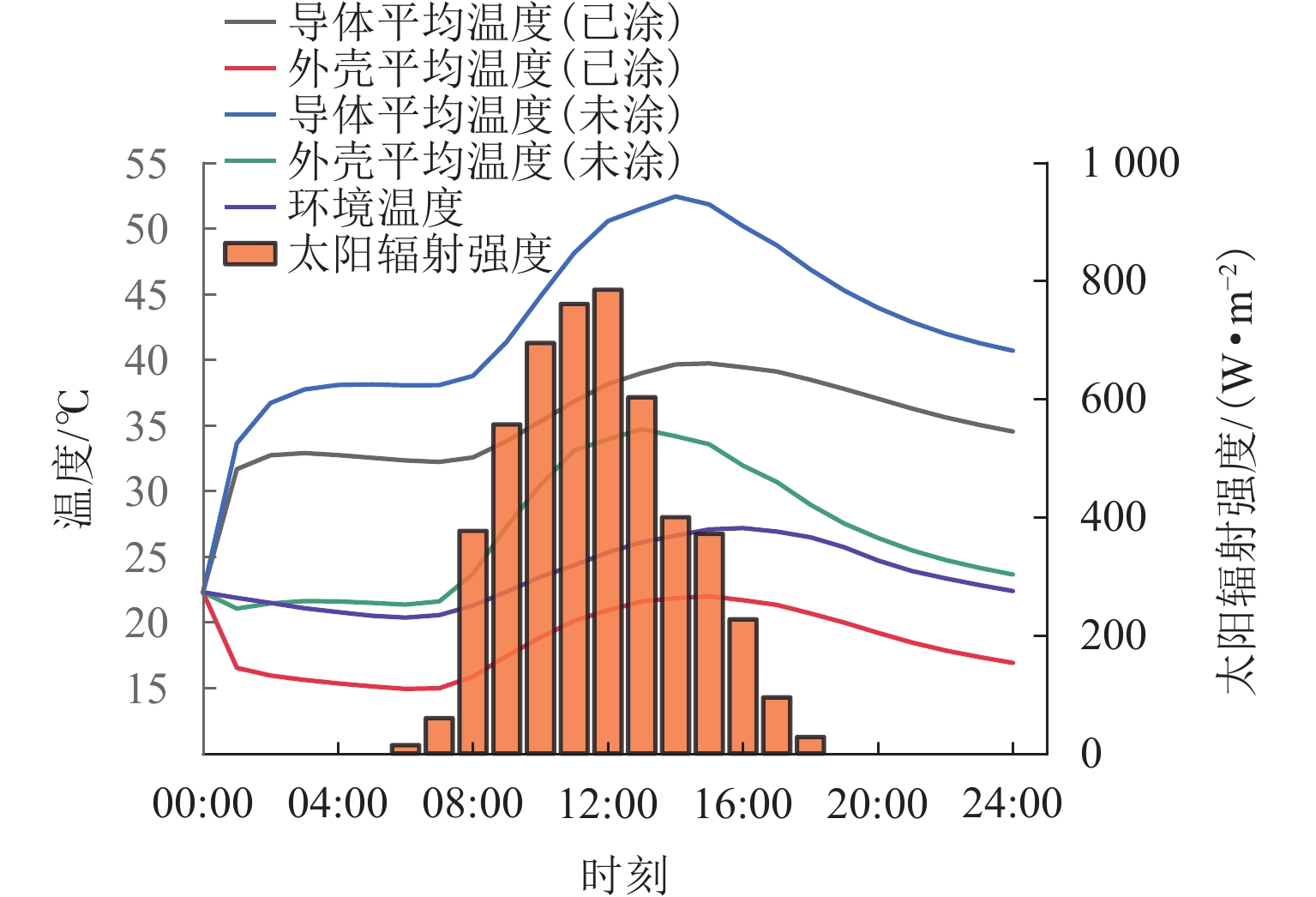
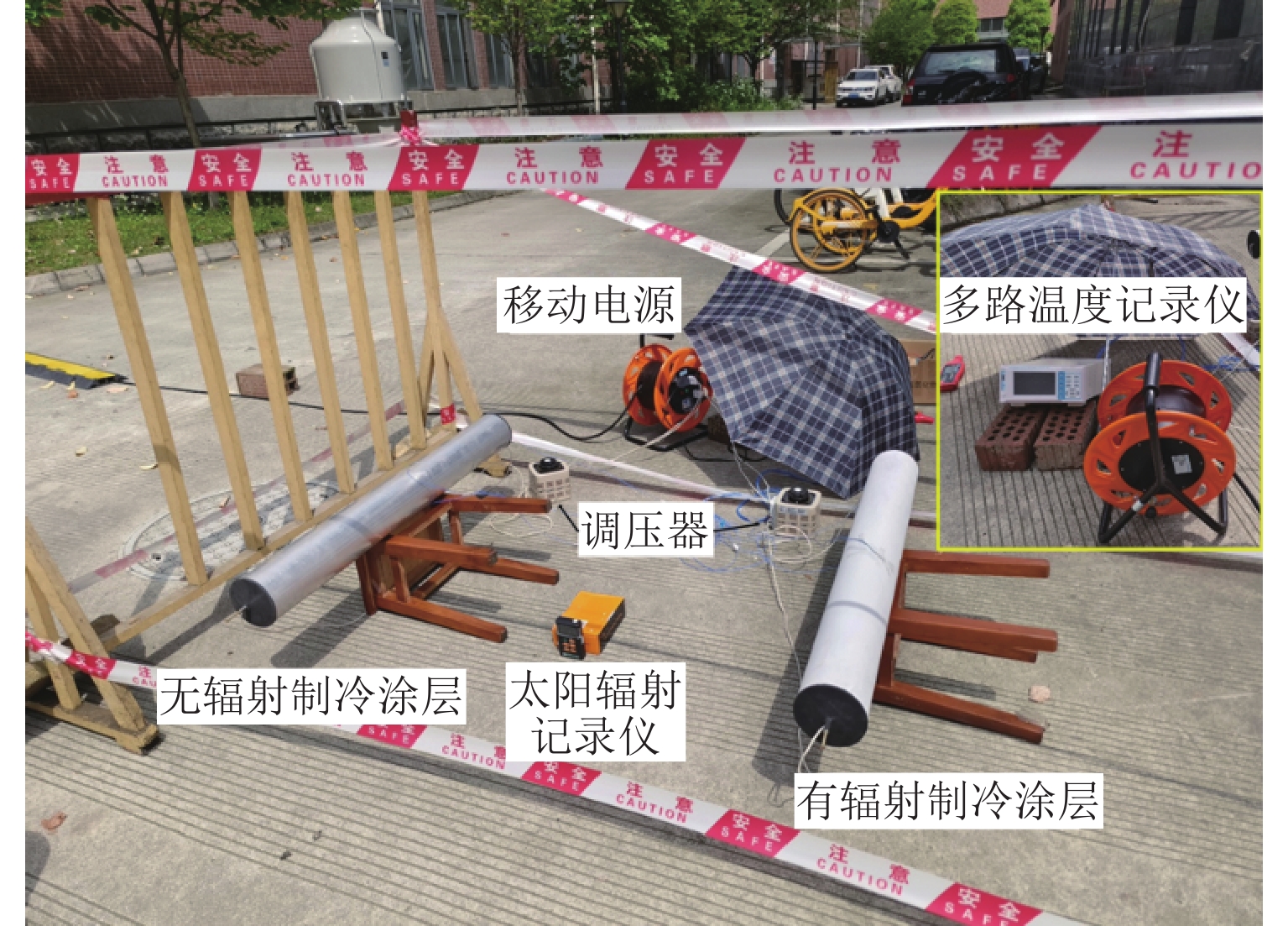
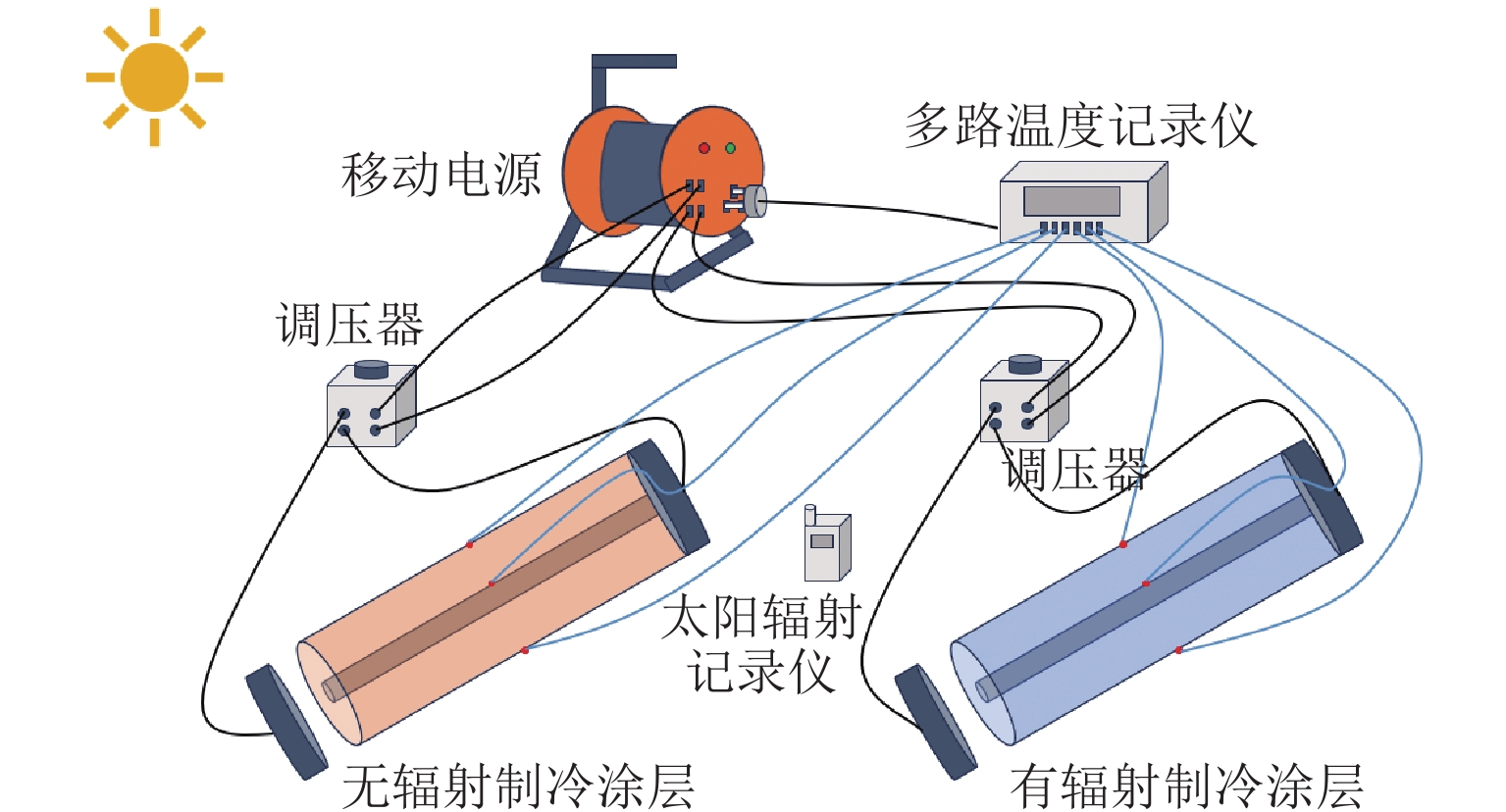
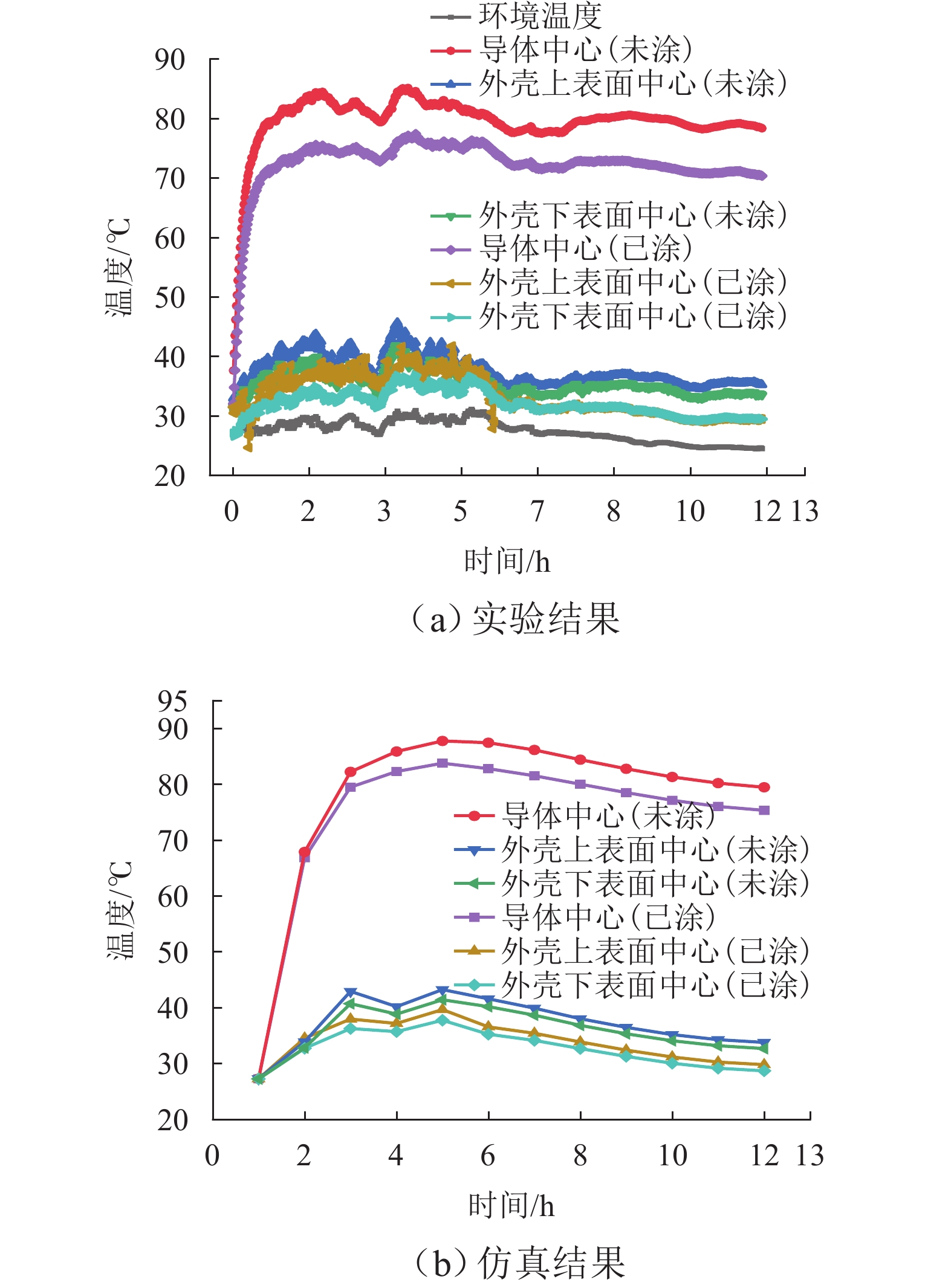
为了研究辐射制冷技术对解决户外高太阳辐射度环境下GIS(gas-insulated switchgear)母线筒温度分布不均的影响,首先,建立了GIS母线的三维电磁-热-流-辐射场的多物理场耦合模型,对比分析了GIS母线在有无太阳辐射和有无辐射制冷工况下的温度分布;其次,通过搭建简化实验平台验证了多物理场仿真模型的准确性;最后,通过仿真计算和理论推导,分析了环境温度、太阳辐射强度和太阳辐射角度对GIS母线降温效果的影响. 研究结果表明:在太阳辐射影响下,GIS外壳上下表面的最大温差为14.12 ℃,整体温度相较未考虑太阳辐射时上升了10~15 ℃,采用辐射制冷材料可使外壳上下表面最大温差减少51.56%;在一天中,辐射制冷材料的最大降温效果为14.6 ℃,平均降温效果为7.42 ℃,外壳表面上下侧的平均温差由10 ℃降低至5.16 ℃,均热性能提高48.4%;仿真模型的最大误差为7.9%;辐射制冷材料的制冷功率与太阳辐射强度和太阳辐射角度成反比,与环境温度成正比.
Abstract:Objective In the outdoor environment of high solar irradiance, the long-term operation of gas-insulated switchgear (GIS) equipment will lead to uneven distribution of bus tube surface temperature, which will cause cracking at the fixed support of GIS. Radiative cooling technology has a good application prospect in the aspects of energy saving, cooling, and temperature uniformity, but there are few reports in the electrical field. Therefore, it is very important to study the radiative cooling technology to solve the influence of the uneven temperature distribution of the GIS bus barrel in an outdoor high solar irradiance environment.
Method In this paper, the influence of gas axial flow and solar radiation in GIS was considered, and a multi-physical field coupling calculation method of GIS bus temperature distribution based on radiative cooling technology was proposed. Firstly, a multi-physical coupling model of the three-dimensional electromagnetic, thermal, and flow-radiation field of the GIS bus was established, and the electromagnetic loss of the conductor and the shell was calculated in the electromagnetic field; then, the electromagnetic loss was introduced into the subsequent three physical fields. The subsequent multi-physical field calculation results in turn affected the conductivity and changed the electromagnetic loss, so as to carry out the coupling. The electromagnetic field and thermal field were bidirectional coupling through the resistance effect of electrical conductivity; the flow field and thermal field were bidirectional coupling through the gas density and other parameters, and the radiation field and thermal field were unidirectional coupling through the temperature change caused by solar radiation, and the emissivity of the object did not change with the thermal field. Secondly, the temperature distribution of the GIS bus was compared and analyzed under the conditions with or without solar radiation and cooling with or without radiation, and a study on the all-day cooling effect of radiative cooling materials on the GIS bus when the external parameters such as solar radiation intensity, solar radiation angle, and ambient temperature change with time in a day was carried out. Then, the accuracy of the multi-physics simulation was verified by a simplified experimental model. Finally, the effects of ambient temperature, solar radiation intensity, and solar radiation angle on GIS, bus temperature, and the cooling effect of radiative cooling materials were discussed through simulation calculation and theoretical derivation.
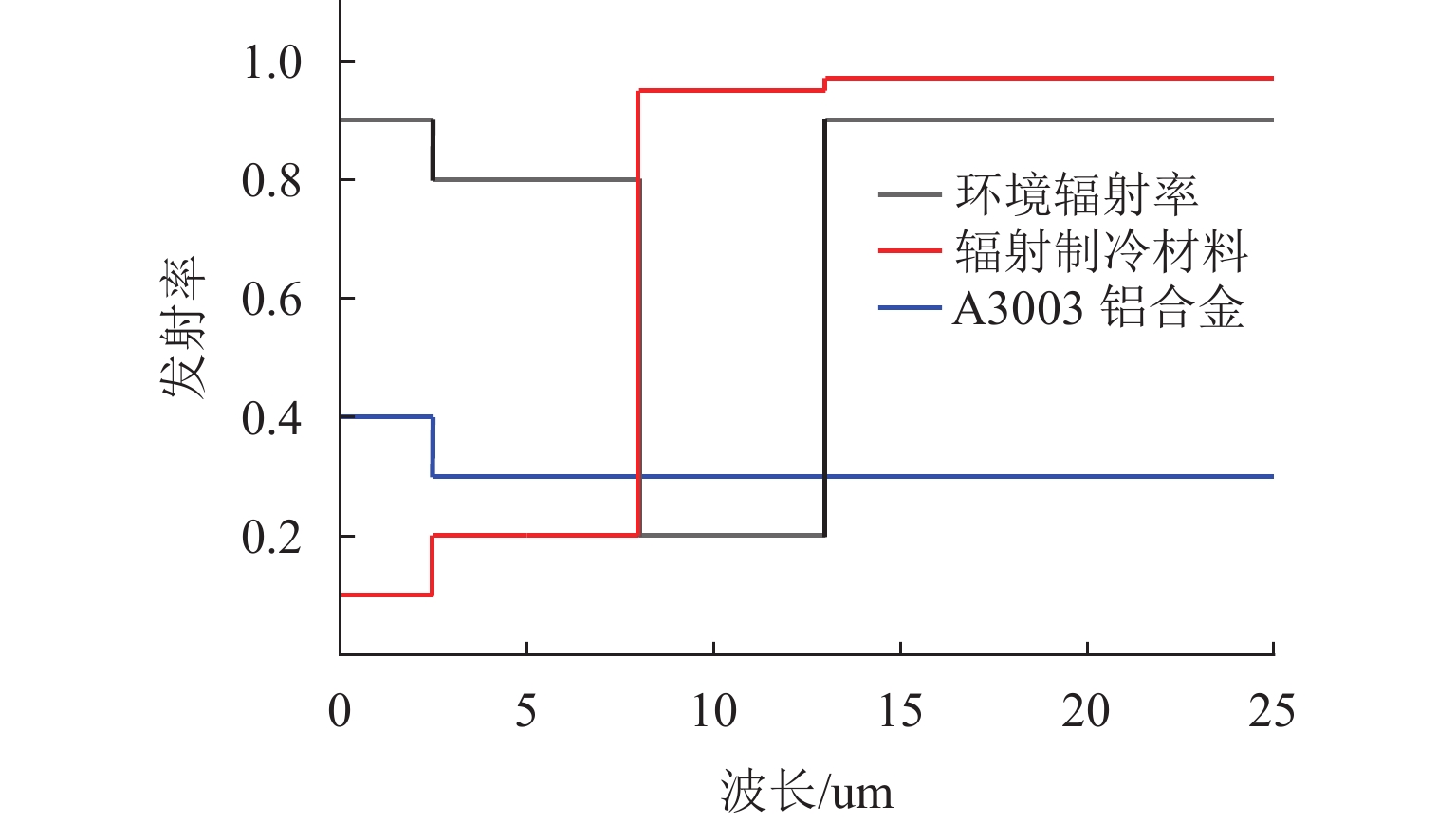
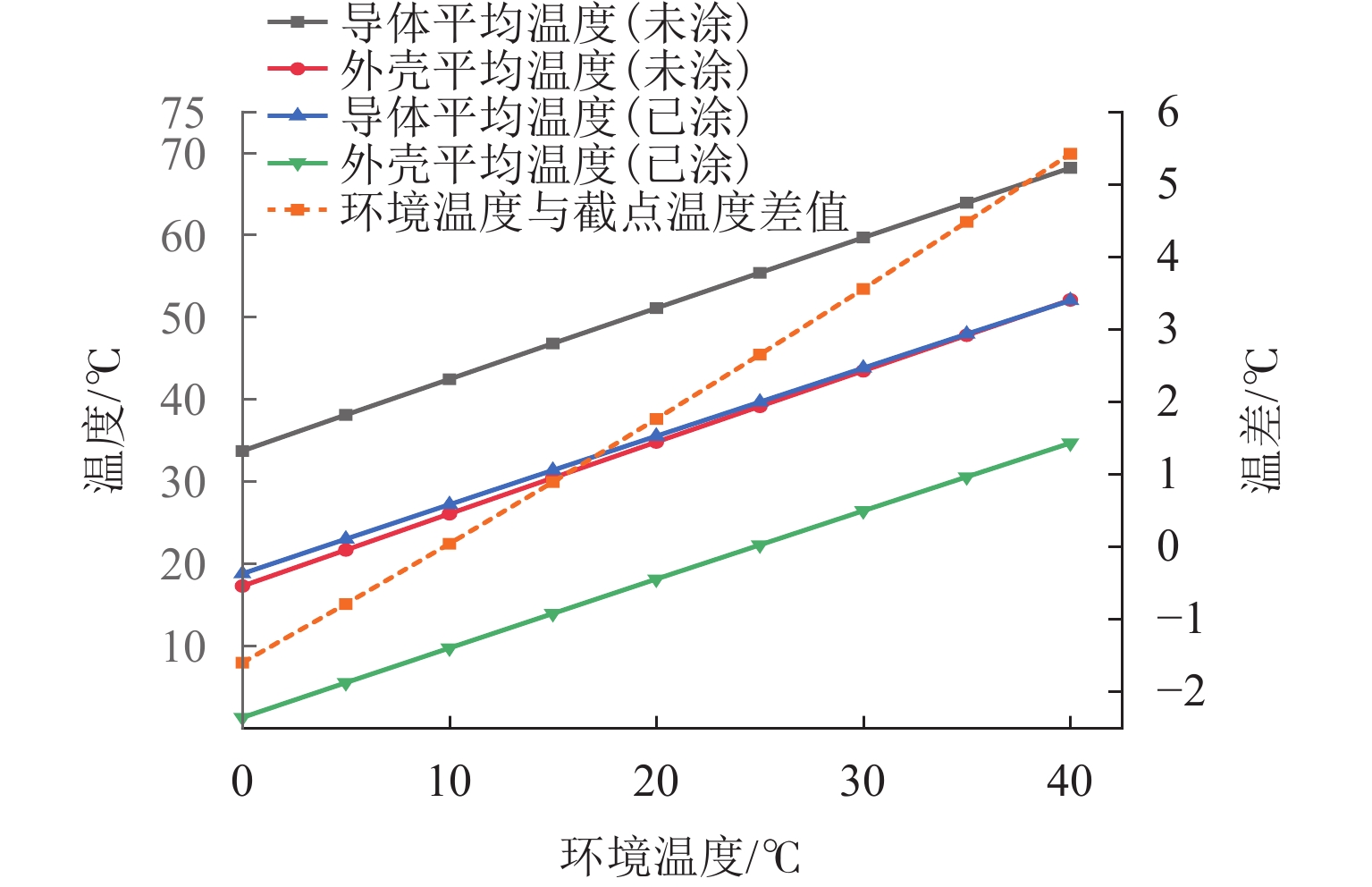
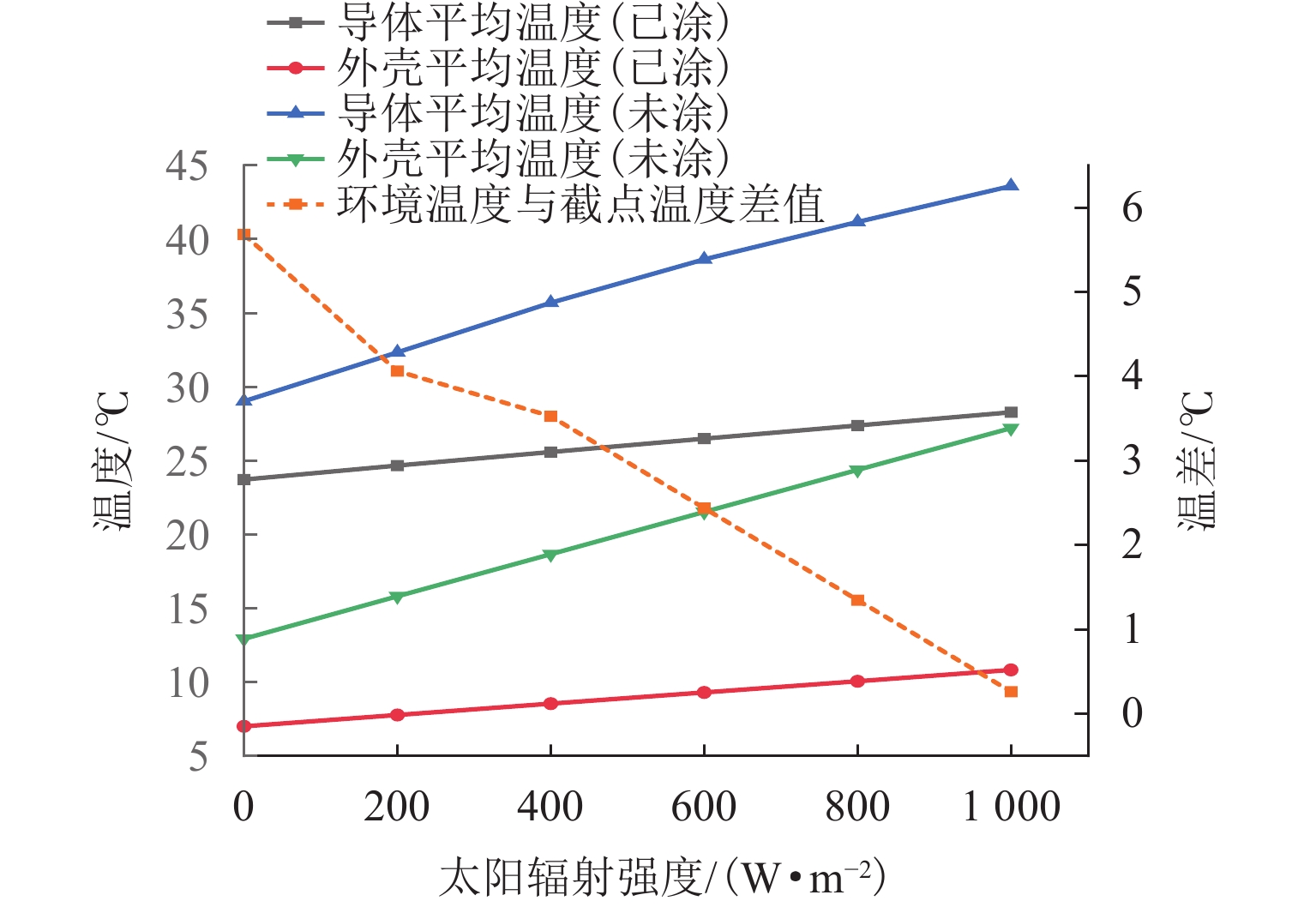
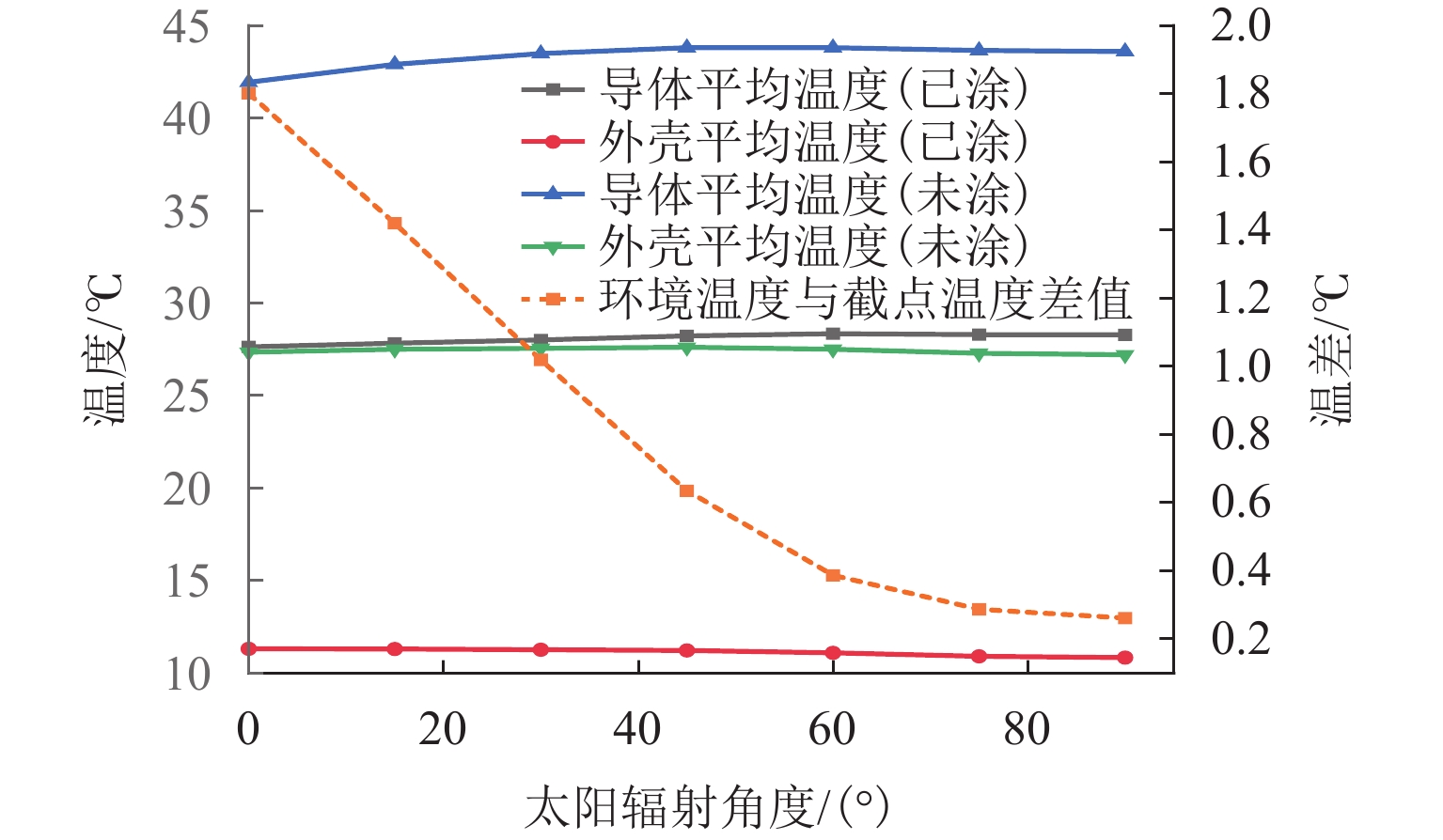
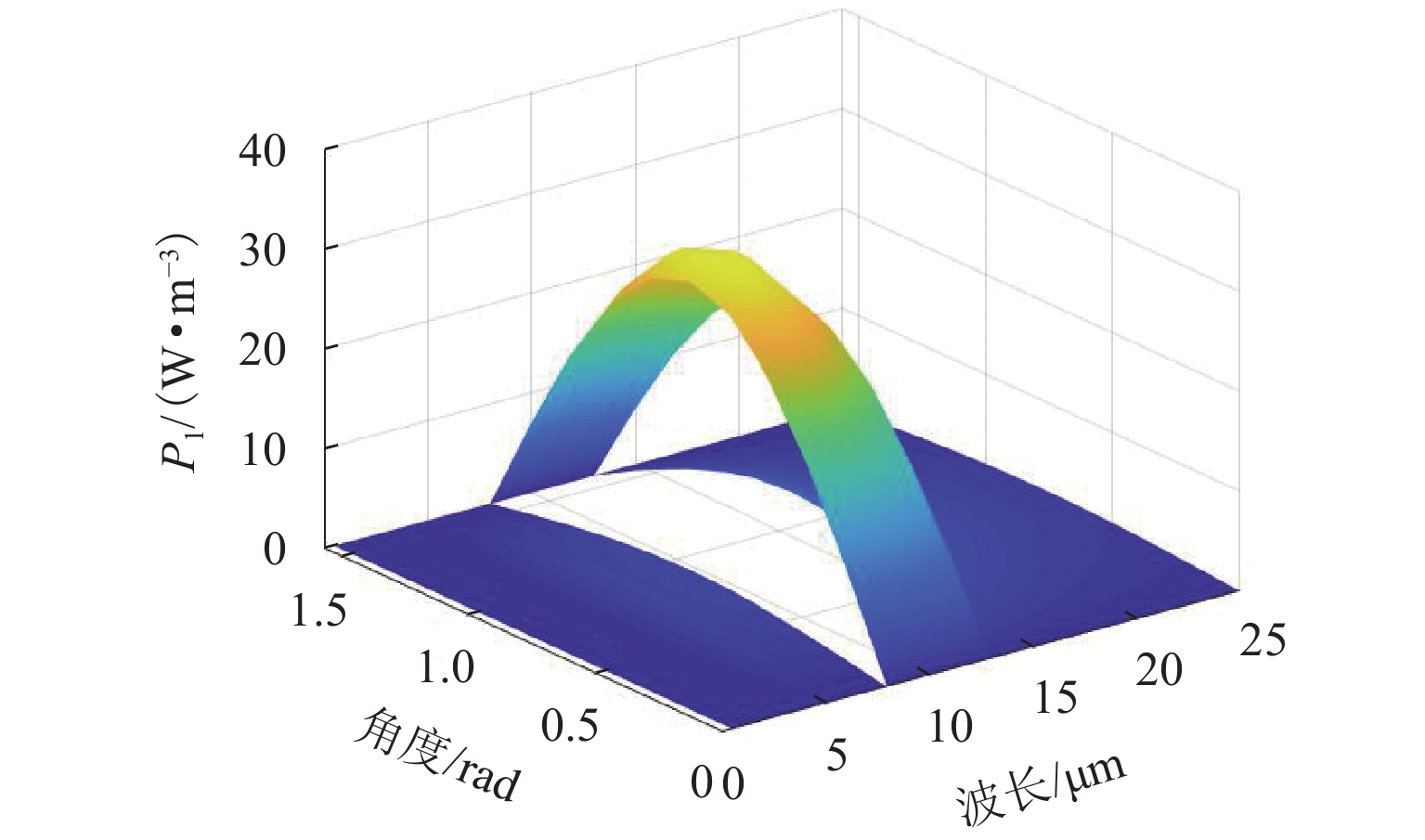
Result Under the influence of solar radiation, the maximum temperature difference between the upper and lower surfaces of the outer shell of outdoor GIS is 14.12 ℃, and the overall temperature of GIS increases by 10–15 ℃ compared with that without considering solar radiation. The temperature distribution of GIS after using radiative cooling materials is roughly the same as that without considering solar radiation, or in other words, the effect of solar radiation can be offset by using radiative cooling materials, reducing the maximum temperature difference between the upper and lower surfaces of the shell surface by 51.56%. In one day, the maximum cooling effect of radiative cooling materials is 14.6 ℃; the average cooling effect is 7.42 ℃; the average temperature difference between the upper and lower sides of the shell surface is reduced from 10 ℃ to 5.16 ℃, and the soaking performance is increased by 48.4%. The experimental and simulation errors of the conductor and shell are less than 10% through the simplified GIS model. The temperature of the GIS conductor and the outer shell increases approximately linearly with the increase of ambient temperature and light intensity. The slope of the curve of the conductor and shell temperature changing with the light intensity is smaller than that of the uncoated conductor and shell. In other words, the use of radiative cooling materials can reduce the average temperature rise of the conductor and shell so that the temperature distribution is more uniform. At the same time, the radiative cooling material can reduce the temperature between the conductor and the shell and the average temperature difference between the conductor and the shell. The solar radiation angle has little influence on the overall temperature distribution of GIS. The reason is that the bus bar of GIS is cylindrical, and the area exposed by the sun in each direction is roughly the same, but it has a significant influence on the temperature at the intercept point. The temperature at the intercept point is the highest at the vertical incidence and decreases at the bilateral incidence.The cooling power of radiative cooling materials mainly depends on the emissivity of 8–13 um band, and the power amplitude caused by other bands is very small. In order to improve the size of the cooling power, the emissivity of the material in the 8–13 um band can be appropriately increased, so as to improve its cooling effect. When the ambient temperature is constant, the cooling power decreases with the increase of solar radiation intensity. When the solar radiation intensity is constant, the cooling power increases with the increase of the ambient temperature. In the process of the change of the solar radiation angle of 0°–90°, a greater solar radiation angle means lower cooling power, and the size of the cooling power is proportional to the cooling difference; a greater cooling power indicates a greater temperature than the ambient temperature reduction amplitude.
Conclusion After the application of radiative cooling material on the GIS bus barrel, the temperature of the GIS bus bar decreases, and the soaking performance of the bus barrel improves, which is of great significance for the calculation of outdoor GIS bus bar temperature and the improvement of temperature heterogeneity. However, the current research only applies the ideal condition that the emissivity of the radiative cooling material does not decrease with time. In practice, there will be some problems of contamination attached to the surface of the material or the service life of the material itself, so it is necessary to conduct more research on the application test on the physical GIS and the test of material emissivity change after long-term operation in the future.
-
Key words:
- GIS bus /
- temperature distribution /
- multi-physical field coupling /
- radiative cooling /
- cooling power
-
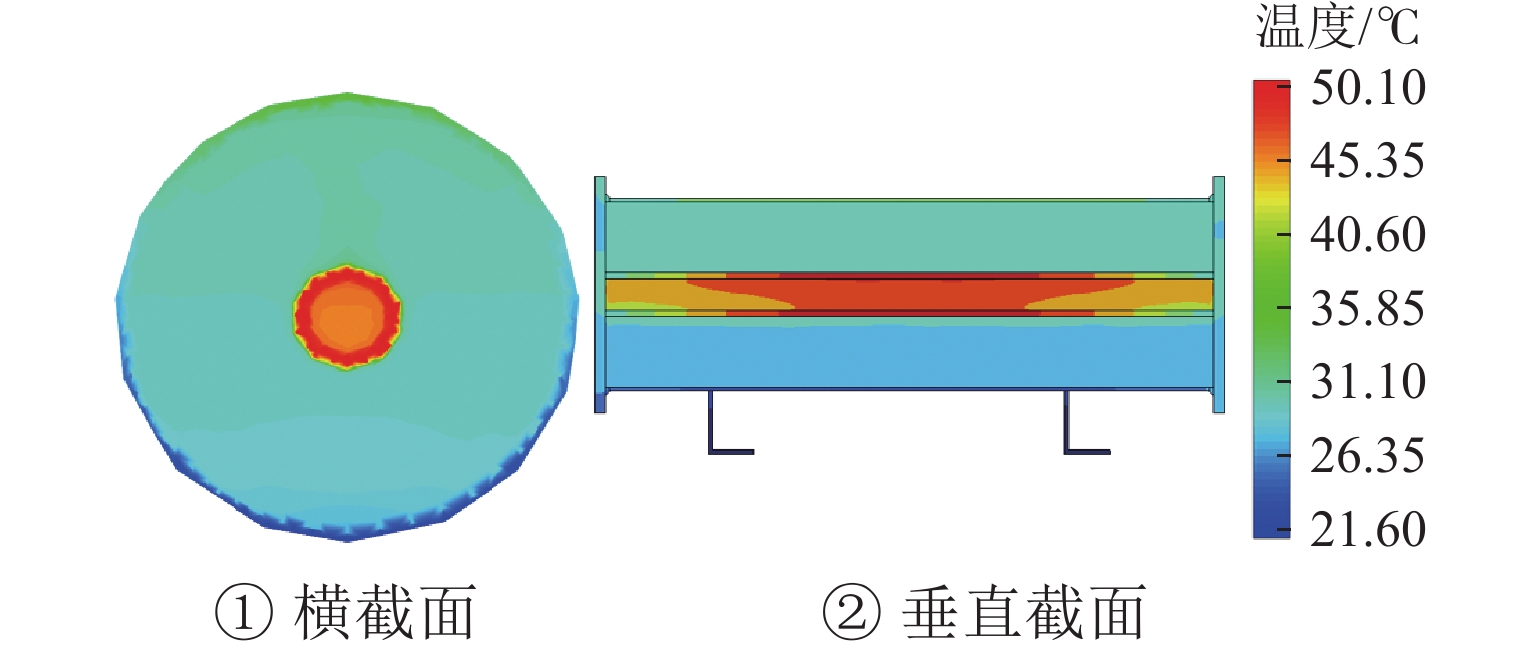
图 4 GIS截面温度分布(太阳垂直入射)
Figure 4. GIS cross-section temperature distribution (vertical sun incidence)
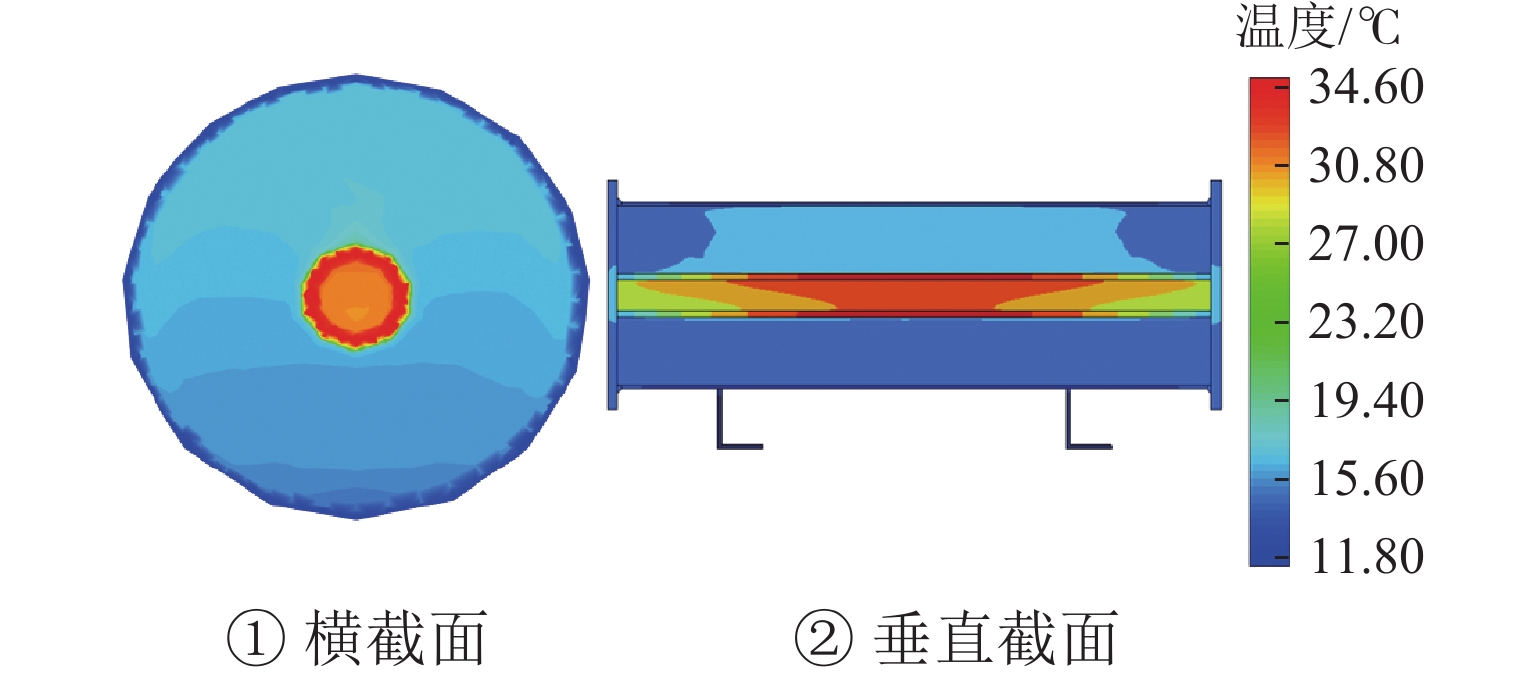
图 5 GIS截面温度分布(未考虑太阳辐射)
Figure 5. GIS cross-section temperature distribution (without solar radiation)
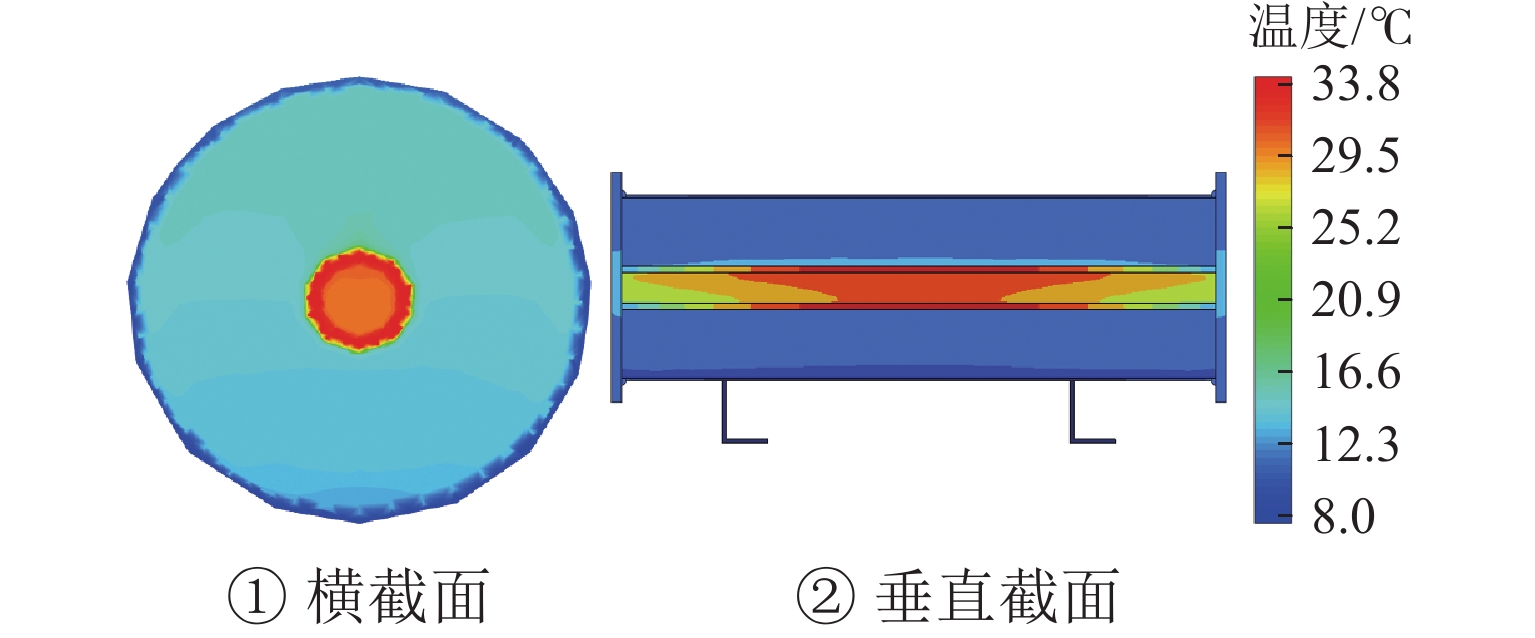
图 8 辐射制冷时GIS截面温度分布
Figure 8. GIS cross-section temperature distribution (radiative cooling)
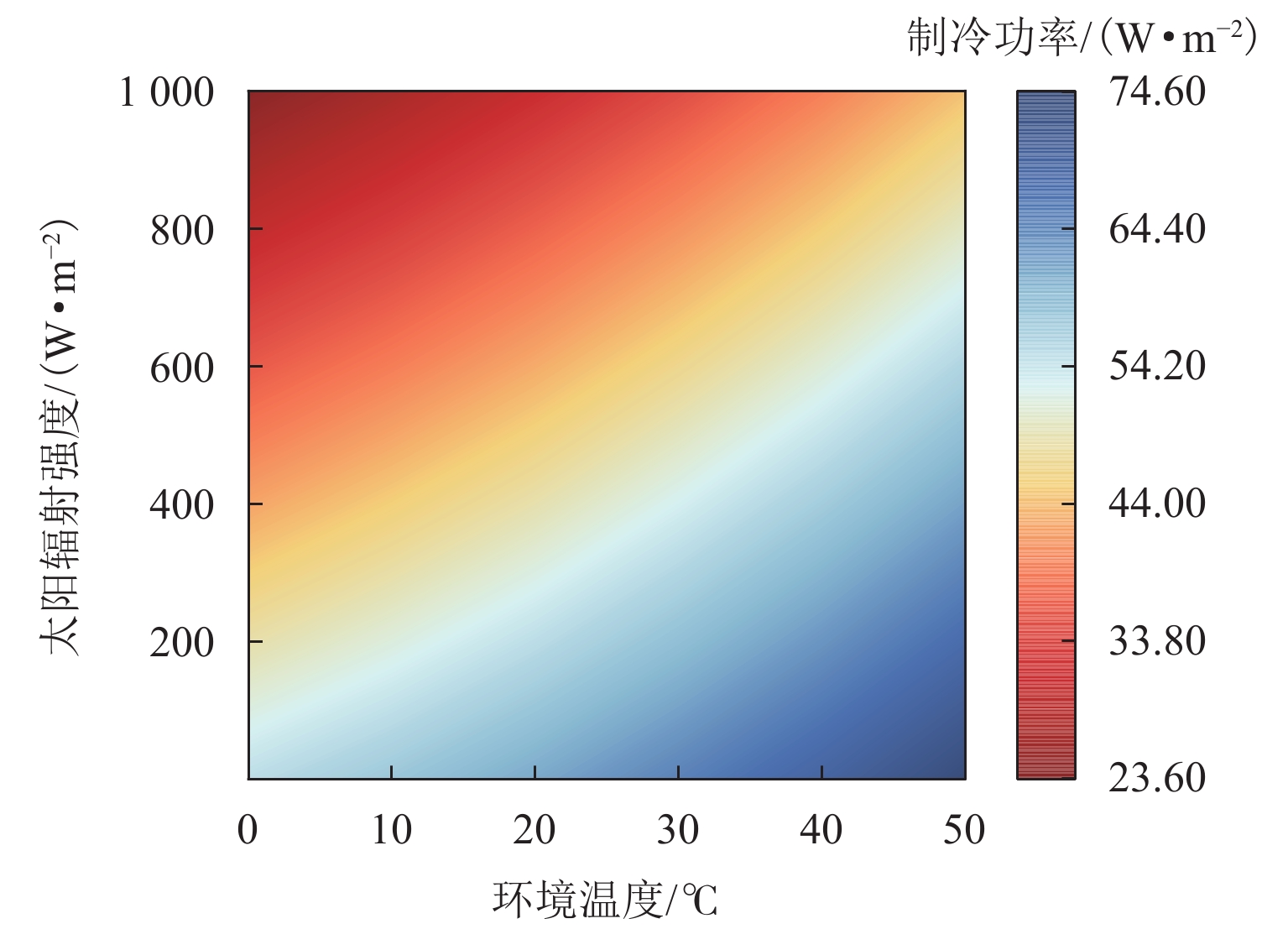
图 18 太阳辐射强度和环境温度与制冷功率的关系
Figure 18. Relationship between solar radiation intensity and ambient temperature and cooling power
表 1 单相GIS母线基本参数
Table 1. Basic parameters of single-phase GIS bus
参数 数值 外壳外径/mm 460 外壳内径/mm 444 导体外径/mm 110 导体内径/mm 76 放置方式 水平 导体电导率/(S•m−1) 2.33 × 10⁷ 外壳电导率/(S•m−1) 3.03 × 10⁷  下载: 导出CSV
表 2 模型参数
Table 2. Model parameters
材料 密度/
(kg•m−3)动力黏度/
(×10−5 Pa•s)导热系数/
(×10−2 W•(m•K)−1)恒压热容/
(J•(kg•K)−1)SF6 29.446 1.487 1.070 655.73 导体 2730 15500 893 外壳 2700 20100 900
下载: 导出CSV
表 3 各测量点位置的误差率
Table 3. Error rate of each measuring point position
测量点位置 误差/% 导体(已涂) 7.90 导体(未涂) 4.42 外壳上表面中心(已涂) 3.34 外壳上表面中心(未涂) 5.91 外壳下表面中心(已涂) 4.82 外壳下表面中心(未涂) 6.80
下载: 导出CSV
-
[1] 张丽艳, 王凡, 李澳, 等. 高压专线贯通供电系统建模及运行特性分析[J]. 西南交通大学学报, 2025, 60(5): 1303-1314.Zhang Liyan, Wang Fan, Li Ao, et al. Modeling and operational characteristic analysis of high-voltage dedicated line continuous power supply system[J]. Journal of Southwest Jiaotong University, 2025, 60(5): 1303-1314. [2] 张丽艳, 王凡, 李澳, 等. 基于混合线路的高压专线贯通供电系统性能分析与优化[J]. 西南交通大学学报, 2026, 61(1): 178-188.Zhang Liyan, Wang Fan, Li Ao, et al. Performance analysis and optimization of high-voltage dedicated line continuous power supply system based on hybrid lines[J]. Journal of Southwest Jiaotong University, 2026, 61(1): 178-188. [3] 董昱, 周劼英, 张晓, 等. 新型电力系统信息物理安全防护体系研究[J]. 中国电机工程学报, 2025, 45(15): 5738-5752.Dong Yu, Zhou Jieying, Zhang Xiao, et al. Research on cyber-physical security protection of new power system[J]. Proceedings of the CSEE, 2025, 45(15): 5738-5752. [4] 闻立飞. 变电站GIS设备的运行维护与管理[J]. 现代工业经济和信息化, 2021, 11(11): 248-250.Wen Lifei. Operation, maintenance and management of GIS equipment in substations[J]. Modern Industrial Economy and Informationization, 2021, 11(11): 248-250. [5] 吕寻浩, 秦晓宇, 苏戈, 等. GIS设备在高海拔环境应用的适应性研究[J]. 电气开关, 2021, 59(6): 7-12. doi: 10.3969/j.issn.1004-289X.2021.06.003Lv Xunhao, Qin Xiaoyu, Su Ge, et al. Study on adaptability of GIS equipment in high altitude environment[J]. Electric Switchgear, 2021, 59(6): 7-12. doi: 10.3969/j.issn.1004-289X.2021.06.003 [6] 何喜梅, 王志惠, 陈文强, 等. 110kV GIS母线筒体焊缝开裂机理研究及整改措施的监测[J]. 青海电力, 2016, 35(2): 37-40, 44. doi: 10.15919/j.cnki.qhep.2016.02.010He Ximei, Wang Zhihui, Chen Wenqiang, et al. Research on the cracking mechanism of weld seam on the 110 kV GIS bus tube and monitoring on the improving measures[J]. Qinghai Electric Power, 2016, 35(2): 37-40,44. doi: 10.15919/j.cnki.qhep.2016.02.010 [7] 杨桢, 任玲玲, 王凯, 等. 基于混合绝缘气体的GIS母线温升多物理场耦合分析[J]. 高压电器, 2021, 57(1): 48-54.Yang Zhen, Ren Lingling, Wang Kai, et al. Multiphysics-field coupling analysis of GIS bus bar temperature rise based on mixed insulating gas[J]. High Voltage Apparatus, 2021, 57(1): 48-54. [8] 侯国斌, 傅明利, 邓晓峰, 等. GIS温升的多物理场仿真与实验及热通量分布特性[J]. 高电压技术, 2019, 45(7): 2322-2328. doi: 10.13336/j.1003-6520.hve.20190628018Hou Guobin, Fu Mingli, Deng Xiaofeng, et al. Multi-physics coupling simulation and experiment of temperature rise in GIS and heat flux distribution characteristics[J]. High Voltage Engineering, 2019, 45(7): 2322-2328. doi: 10.13336/j.1003-6520.hve.20190628018 [9] 沈小军, 许海伟, 杜勇, 等. GIS波纹管温度补偿能力影响因素研究[J]. 高压电器, 2021, 57(5): 58-66.Shen Xiaojun, Xu Haiwei, Du Yong, et al. Study on the factors influencing the temperature compensation ability of GIS bellows[J]. High Voltage Apparatus, 2021, 57(5): 58-66. [10] 海文清, 宗雨欣, 玛力瓦•革命加纳, 等. 辐射制冷降温针织面料的制备及性能研究[J]. 纺织导报, 2025(1): 45-50. doi: 10.3969/j.issn.1003-3025.2025.01.007Hai Wenqing, Zong Yuxin, et al. Preparation and performance study of knitted fabrics with radiative cooling[J]. China Textile Leader, 2025(1): 45-50. doi: 10.3969/j.issn.1003-3025.2025.01.007 [11] 张观山, 李天华, 侯加林. 考虑动态吸收率的玻璃温室覆盖层温度预测模型[J]. 农业工程学报, 2020, 36(5): 201-211.Zhang Guanshan, Li Tianhua, Hou Jialin. Model for predicting the temperature of glass greenhouse cover considering dynamic absorptivity[J]. Transactions of the Chinese Society of Agricultural Engineering, 2020, 36(5): 201-211. [12] 费键丽, 杨剑, 吕银燕, 等. 辐射制冷对汽车热舒适性和能耗影响研究[J]. 节能技术, 2021, 39(3): 274-280. doi: 10.3969/j.issn.1002-6339.2021.03.017Fei Jianli, Yang Jian, LV Yinyan, et al. Research on the influence of radiative sky cooling on cabin thermal comfort and air-conditioning system energy consumption[J]. Energy Conservation Technology, 2021, 39(3): 274-280. doi: 10.3969/j.issn.1002-6339.2021.03.017 [13] Guo H Y, Niu T Y, Yu J Y, et al. Tailoring photonic-engineered textiles with butterfly-mimetic tertiary micro/nano architectures for superior passive radiative cooling[J]. Engineering, 2023, 31: 120-126. doi: 10.1016/j.eng.2023.07.019 [14] Liu J W, Zhou Z H, Zhang D B, et al. Research on the performance of radiative cooling and solar heating coupling module to direct control indoor temperature[J]. Energy Conversion and Management, 2020, 205: 112395. doi: 10.1016/j.enconman.2019.112395 [15] 刘广海, 李庆庭, 谢如鹤, 等. 基于辐射制冷技术的冷链保温箱隔热性能测试与能耗分析[J]. 农业工程学报, 2022, 38(11): 318-325. doi: 10.11975/j.issn.1002-6819.2022.11.035Liu Guanghai, Li Qingting, Xie Ruhe, et al. Thermal insulation performance test and energy consumption of the cold chain incubator with radiative cooling[J]. Transactions of the Chinese Society of Agricultural Engineering, 2022, 38(11): 318-325. doi: 10.11975/j.issn.1002-6819.2022.11.035 [16] 汪沨, 康添慧, 饶夏锦, 等. 高压同轴GIS母线三维磁-热耦合场的计算与分析[J]. 湖南大学学报(自然科学版), 2014, 41(8): 73-77.Wang Feng, Kang Tianhui, Rao Xiajin, et al. Analysis and calculation of magnetic-thermal coupled field for high-voltage coaxial GIS busbar[J]. Journal of Hunan University (Natural Sciences), 2014, 41(8): 73-77. [17] 陈强, 李庆民, 丛浩熹, 等. 引入多重边界条件的GIS母线温度分布多场耦合计算及影响因素分析[J]. 电工技术学报, 2016, 31(17): 187-195.Chen Qiang, Li Qingmin, Cong Haoxi, et al. Numerical calculation and correlative factors analysis on temperature distribution of GIS bus bar based on coupled multi-physics methodology combined with multiple boundary conditions[J]. Transactions of China Electrotechnical Society, 2016, 31(17): 187-195. [18] Li P L, Wang A, Fan J J, et al. Thermo-optically designed scalable photonic films with high thermal conductivity for subambient and above-ambient radiative cooling[J]. Advanced Functional Materials, 2022, 32(5): 2109542. doi: 10.1002/adfm.202109542 [19] 劳卫伦, 蒋亚旻. 数碳融合助力企业绿色低碳转型发展[J]. 中国资源综合利用, 2024, 42(11): 236-239. doi: 10.3969/j.issn.1008-9500.2024.11.068Lao Weilun, Jiang Yamin. Integration of data and carbon supports the green and low-carbon transformation and development of enterprises[J]. China Resources Comprehensive Utilization, 2024, 42(11): 236-239. doi: 10.3969/j.issn.1008-9500.2024.11.068 [20] 居来提•阿力甫. 供应链管理中的人工智能: 促进绿色能源电力行业的低碳发展[J]. 现代工业经济和信息化, 2024, 14(12): 259-261. doi: 10.16525/j.cnki.14-1362/n.2024.12.082JULAITI Alifu. Artificial intelligence in supply chain management: promoting low carbon development in green energy power sector[J]. Modern Industrial Economy and Informationization, 2024, 14(12): 259-261. doi: 10.16525/j.cnki.14-1362/n.2024.12.082 [21] 郭文凯, 王果, 闵永智. 计及阶梯式碳交易的牵引供电系统混合储能容量配置[J]. 西南交通大学学报, 2025, 60(3): 550-560.Guo Wenkai, Wang Guo, Min Yongzhi. Hybrid energy storage capacity configuration for traction power supply systems considering ladder-type carbon trading mechanism[J]. Journal of Southwest Jiaotong University, 2025, 60(3): 550-560. [22] 片思杰, 夏林骁, 田哲源, 等. 辐射制冷技术的物理基础与研究进展[J]. 量子电子学报, 2023, 40(1): 1-21. doi: 10.3969/j.issn.1007-5461.2023.01.001Pian Sijie, Xia Linxiao, Tian Zheyuan, et al. Fundamentals and research progress of radiative cooling technology[J]. Chinese Journal of Quantum Electronics, 2023, 40(1): 1-21. doi: 10.3969/j.issn.1007-5461.2023.01.001 [23] 万中伊欣, 刘东青, 余金山. 日间辐射制冷材料研究进展[J]. 材料导报, 2022, 36(3): 214-222. doi: 10.13801/j.cnki.fhclxb.20240509.001Wan Zhongyixin, Liu Dongqing, Yu Jinshan. Research progress of daytime radiative cooling materials[J]. Materials Review, 2022, 36(3): 214-222. doi: 10.13801/j.cnki.fhclxb.20240509.001 [24] 翟强, 邱昌煜, 郭园园, 等. 亚热带气候下天空辐射制冷性能的影响因素研究[J]. 制冷, 2024, 43(6): 28-34. doi: 10.3969/J.ISSN.1005-9180.2024.06.0008Zhai Qiang, Qiu Changyu, Guo Yuanyuan, et al. Study on performance influencing factors of radiative sky cooling under subtropical climates[J]. Refrigeration, 2024, 43(6): 28-34. doi: 10.3969/J.ISSN.1005-9180.2024.06.0008 [25] 周玉晟, 朱虹雨, 陈犇, 等. 基于模糊控制的光子辐射制冷功率测量系统[J]. 光学学报, 2024, 44(2): 178-187.Zhou Yusheng, Zhu Hongyu, Chen Ben, et al. Photonic radiative cooling power measurement system based on fuzzy control[J]. Acta Optica Sinica, 2024, 44(2): 178-187. -

 下载:
下载:

 点击查看大图
计量
- 文章访问数: 167
- HTML全文浏览量: 140
- PDF下载量: 64
- 被引次数: 0