



Intelligent and Interpretable Detection of Electromagnetic Leakage Sources Based on Active Feature Excitation
-
摘要:
为解决多源头、多谐波、多干扰下电磁泄漏信号检测与泄漏源安全评估问题,提出一种融合主动激励与智能检测、具备较强解释能力的电磁泄漏源安全评估方案. 首先,建立"主动激发-特征智能识别"关联模型,将复杂的泄漏源检测问题转化为可量化的通信特征识别任务,通过软件程序主动调用设备接口构建具有调制特征的测试信号,以增强泄漏信号的可检测性与可解释性;进而,采用卷积神经网络(CNN)进行一级分类以滤除明显无关信号,并利用YOLOv5s模型进行二级分类,结合高分辨率时频联合特征呈现,实现目标信号的自动框选与提取. 实验结果表明:该方法适用于串口与显示线缆电磁泄漏等典型场景,基于协作模式的主动激发使识别准确率较被动检测提升6%;在正常条件、多背景信号及弱目标信号等不同场景下均能有效检测出目标信号,其中针对显示线缆主动激发的谐波信号检出率达到100%. 所提方法弥补了传统被动电磁泄漏检测泛化性差、检测效率低、可解释性不足的短板,可为电子设备电磁信息泄漏风险筛查和设备安全测评提供新的技术手段,为网络安全检测与防护的工程落地提供重要参考.
Abstract:To address the challenges of detecting electromagnetic leakage signals and assessing the security of leakage sources in the presence of multiple sources, harmonics, and interference, a highly interpretable security assessment scheme integrating active excitation and intelligent detection was proposed. First, an association model featuring active excitation and intelligent feature recognition was established to transform complex leakage source detection problems into quantifiable communication feature recognition tasks. Software programs actively called device interfaces to construct test signals with modulation features, thus enhancing the detectability and interpretability of leakage signals. Next, a convolutional neural network (CNN) was used for first-level classification to filter out clearly irrelevant signals, while the YOLOv5s model was employed for second-level classification in conjunction with high-resolution joint time-frequency feature representations to automatically select bounding boxes and extract target signals. The experimental results show that this method is suitable for typical scenarios such as electromagnetic leakage from serial ports and display cables. Active excitation based on a collaborative mode improves recognition accuracy by 6% compared with passive detection. The method effectively detects target signals in different scenarios, including normal conditions, the presence of multiple background signals, and weak target signals. In particular, the detection rate of harmonic signals generated by active excitation of display cables reaches 100%. The proposed method addresses the shortcomings of traditional passive electromagnetic leakage detection, such as poor generalization, low detection efficiency, and insufficient interpretability. This method provides a new technical approach to screening electronic devices for electromagnetic information leakage risks and evaluating device security, while also serving as an important reference for the practical implementation of cybersecurity detection and protection.
-
Key words:
- electromagnetic leakage /
- active detection /
- intelligent recognition /
- harmonic signal
-
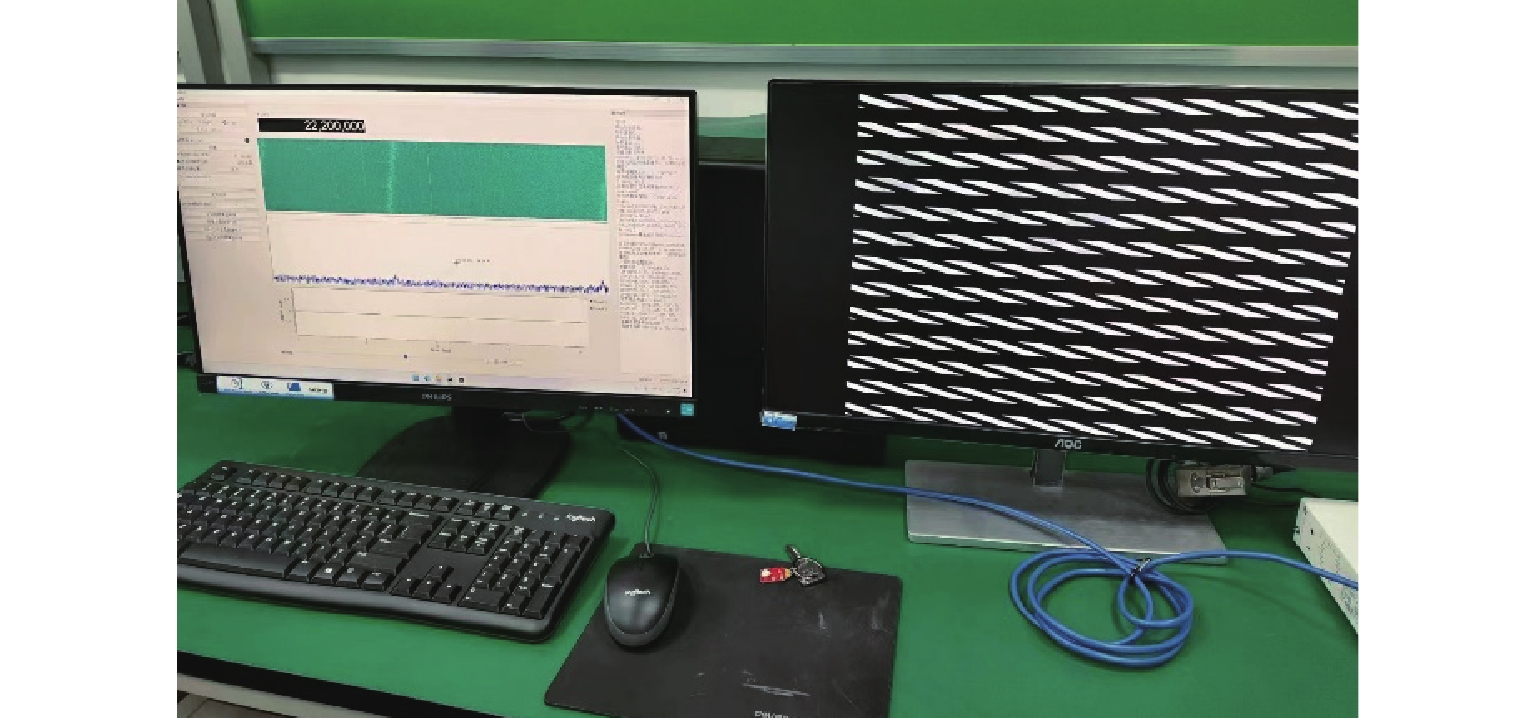
图 4 VGA显示主动泄漏检测场景
Figure 4. Active electromagnetic leakage detection scenario for VGA display
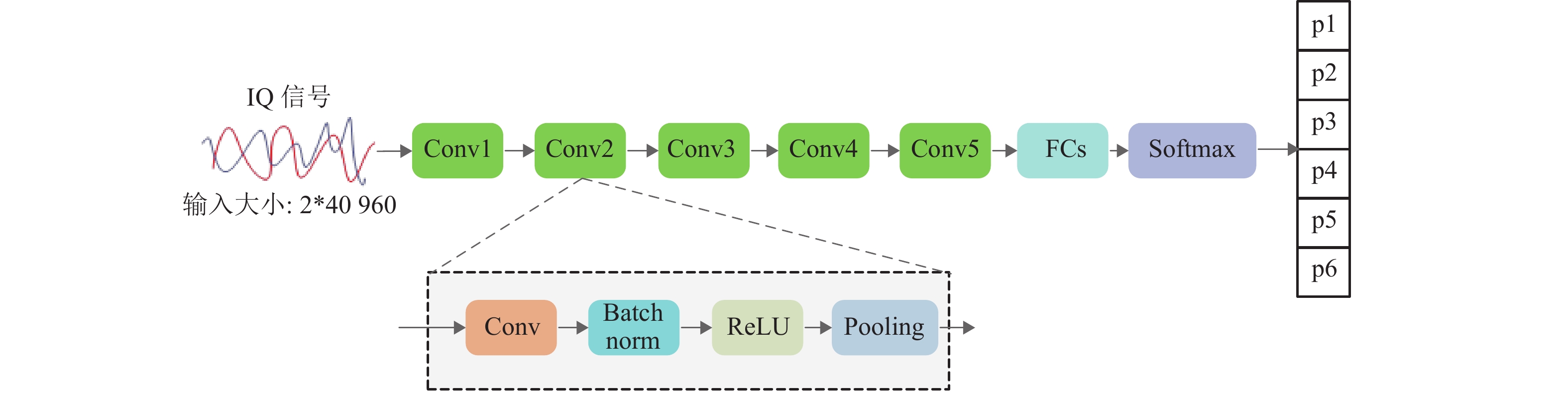
表 2 一级分类网络参数
Table 2. First-level classification network parameters
层 输入通道数 输出通道数 卷积核 步长 Conv1 2 128 (1,8) (1,4) Conv2 128 64 (1,4) (1,2) Conv3 64 64 (1,4) (1,2) Conv4 64 32 (1,4) (1,2) Conv5 32 32 (2,3) (1,1) Fc1 1248 24 Fc2 24 6  下载: 导出CSV
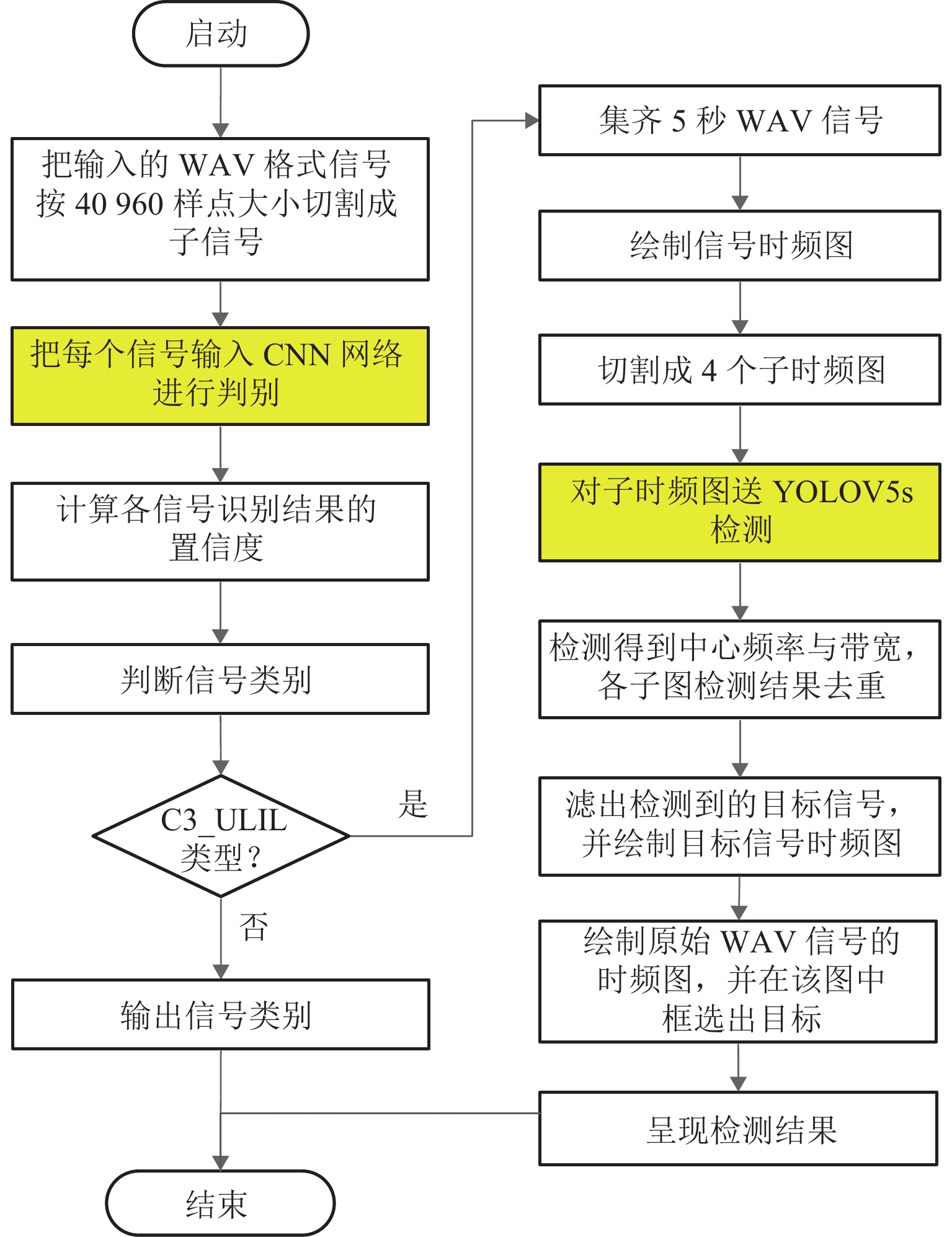
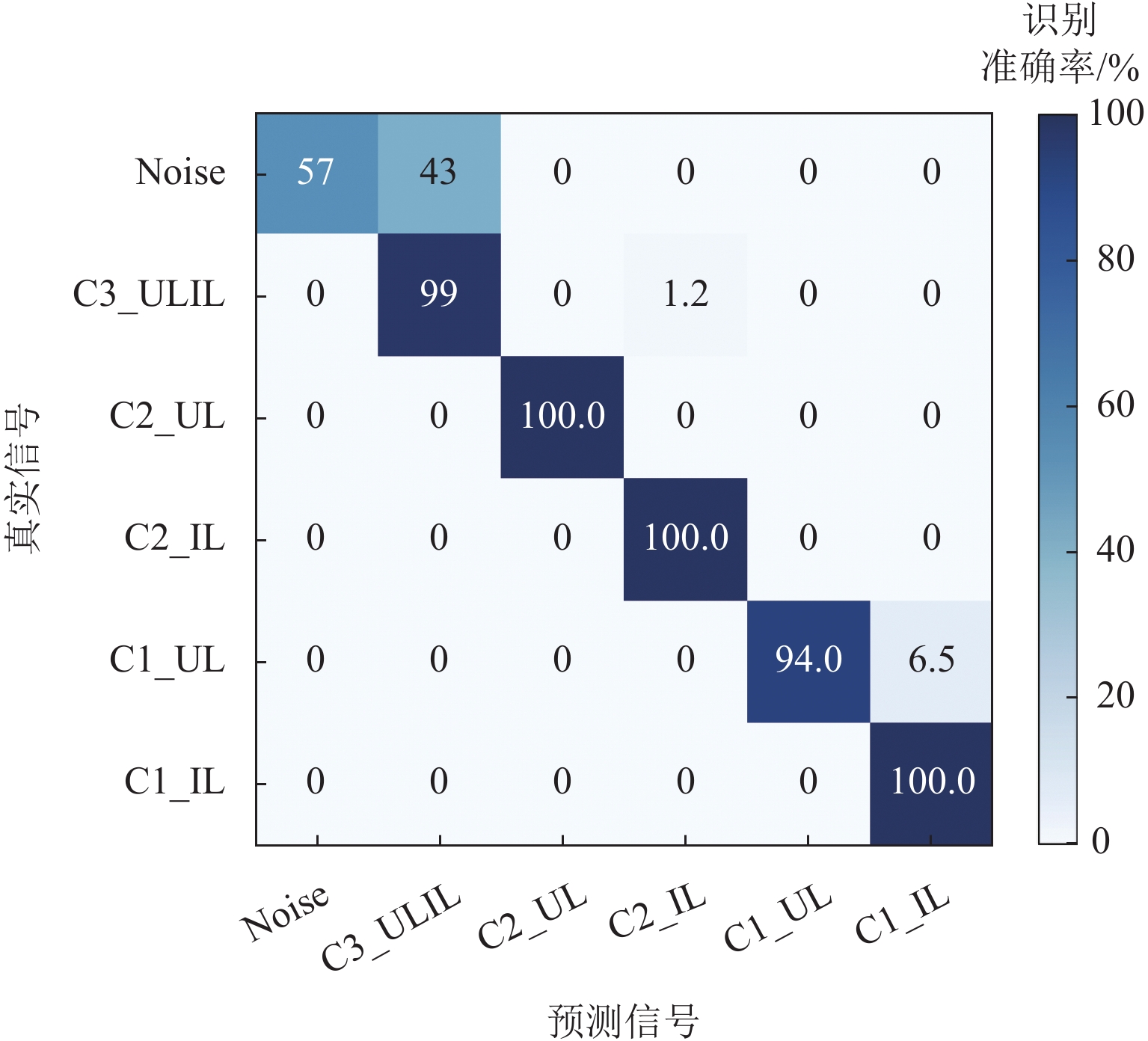
表 3 信号数据集类型
Table 3. Signal dataset types
序号 泄漏信号名称 英文名称与缩写 1 RS232串口主动
激发泄漏信号Case1 intentional leakage
signal, C1_IL2 RS232串口
无意泄漏信号Case1 unintentional leakage
signal, C1_UL3 QPSK与方波耦合
调制信号Case2 intentional leakage
signal, C2_IL4 QPSK无线发射
调制信号Case2 unintentional leakage
signal, C2_UL5 VGA显示接口泄漏信号
(含VGA无意泄漏与
主动泄漏信号)Case3 unintentional leakage
and intentional leakage
signal, C3_ULIL6 未知信号/不明信号 7 背景噪声信号/
无明显信号Noise
下载: 导出CSV
表 4 目标谐波信号检测结果
Table 4. Target harmonic signal detection results
中心频率/
MHzTP/
次FP/
次FN/
次Precision /
%Recall /
%3.92 2 0 0 100 100 5.35 2 1 0 67 100 5.48 2 0 0 100 100 5.69 8 0 0 100 100 7.06 2 0 0 100 100 13.38 2 1 0 67 100 14.93 2 0 0 100 100 合计 20 2 0 91 100
下载: 导出CSV
-
[1] Mao J, Liu J M, Zhang J M, et al. A method for detecting image information leakage risk from electromagnetic emission of computer monitors[J]. Journal of Intelligent & Fuzzy Systems, 2021, 40(2): 2981-2991. doi: 10.3233/jifs-189337 [2] Kubiak I, Przybysz A, Grzesiak K. Number of lines of image reconstructed from a revealing emission signal as an important parameter of rasterization and coherent summation processes[J]. Applied Sciences, 2023, 13(1): 447. doi: 10.3390/app13010447 [3] Kubiak I, Przybysz A. Measurements and correctness criteria for determining the line length of the data image obtained in the process of electromagnetic infiltration[J]. Applied Sciences, 2022, 12(20): 10384. doi: 10.3390/app122010384 [4] Miao C W. Mechanism analysis and research of computer electromagnetic leakage[C]//2021 IEEE 5th Information Technology, Networking, Electronic and Automation Control Conference (ITNEC). Piscataway: IEEE, 2021: 1081-1084. [5] Kuhn M G, Anderson R J. Soft tempest: hidden data transmission using electromagnetic emanations[M]// Heidelberg: Springer, 1998: 124-142. [6] Guri M, Zadov B, Elovici Y. ODINI: escaping sensitive data from faraday-caged, air-gapped computers via magnetic fields[J]. IEEE Transactions on Information Forensics and Security, 2020, 15: 1190-1203. doi: 10.1109/TIFS.2019.2938404 [7] Guri M, Zadov B, Bykhovsky D, et al. PowerHammer: exfiltrating data from air-gapped computers through power lines[J]. IEEE Transactions on Information Forensics and Security, 2020, 15: 1879-1890. doi: 10.1109/TIFS.2019.2952257 [8] Guri M. Air-gap electromagnetic covert channel[J]. IEEE Transactions on Dependable and Secure Computing, 2024, 21(4): 2127-2144. doi: 10.1109/TDSC.2023.3300035 [9] Prvulovic M, Zajić A, Callan R L, et al. A method for finding frequency-modulated and amplitude-modulated electromagnetic emanations in computer systems[J]. IEEE Transactions on Electromagnetic Compatibility, 2017, 59(1): 34-42. doi: 10.1109/TEMC.2016.2603847 [10] Yilmaz B B, Callan R L, Prvulovic M, et al. Capacity of the EM covert/side-channel created by the execution of instructions in a processor[J]. IEEE Transactions on Information Forensics and Security, 2018, 13(3): 605-620. doi: 10.1109/TIFS.2017.2762826 [11] Yilmaz B B, Prvulovic M, Zajić A. Electromagnetic side channel information leakage created by execution of series of instructions in a computer processor[J]. IEEE Transactions on Information Forensics and Security, 2020, 15: 776-789. doi: 10.1109/TIFS.2019.2929018 [12] Yilmaz B B, Ugurlu E M, Prvulovic M, et al. Detecting cellphone camera status at distance by exploiting electromagnetic emanations[C]//MILCOM 2019 - 2019 IEEE Military Communications Conference (MILCOM). Piscataway: IEEE, 2019: 1-6. [13] Werner F T, Yilmaz B B, Prvulovic M, et al. Leveraging EM side-channels for recognizing components on a motherboard[J]. IEEE Transactions on Electromagnetic Compatibility, 2021, 63(2): 502-515. doi: 10.1109/TEMC.2020.3016892 [14] Dey M, Yilmaz B B, Prvulovic M, et al. PRIMER: profiling interrupts using electromagnetic side-channel for embedded devices[J]. IEEE Transactions on Computers, 2022, 71(8): 1824-1838. doi: 10.1109/tc.2021.3109457 [15] Sehatbakhsh N, Nazari A, Alam M, et al. REMOTE: robust external malware detection framework by using electromagnetic signals[J]. IEEE Transactions on Computers, 2020, 69(3): 312-326. doi: 10.1109/TC.2019.2945767 [16] Kaji S, Fujimoto D, Kinugawa M, et al. Echo TEMPEST: EM information leakage induced by IEMI for electronic devices[J]. IEEE Transactions on Electromagnetic Compatibility, 2023, 65(3): 655-666. doi: 10.1109/TEMC.2023.3252636 [17] Nguyen L N, Cheng C L, Werner F T, et al. A comparison of backscattering, EM, and power side-channels and their performance in detecting software and hardware intrusions[J]. Journal of Hardware and Systems Security, 2020, 4(2): 150-165. doi: 10.1007/s41635-020-00093-y [18] Adibelli S, Juyal P, Nguyen L N, et al. Near-field backscattering-based sensing for hardware Trojan detection[J]. IEEE Transactions on Antennas and Propagation, 2020, 68(12): 8082-8090. doi: 10.1109/TAP.2020.3000562 [19] Adibelli S, Juyal P, Prvulovic M, et al. THz bistatic backscatter side-channel sensing at a distance[J]. IEEE Transactions on Antennas and Propagation, 2022, 70(2): 1440-1450. doi: 10.1109/TAP.2021.3111165 [20] Camurati G, Francillon A. Noise-SDR: arbitrary modulation of electromagnetic noise from unprivileged software and its impact on emission security[C]//2022 IEEE Symposium on Security and Privacy (SP). Piscataway: IEEE, 2022: 1193-1210. [21] Fernández S, Martínez E, Varela G, et al. Deep-TEMPEST: using deep learning to eavesdrop on HDMI from its unintended electromagnetic emanations[PP/OL]. V1. arXiv (2024-07-12)[2025-08-30]. https://doi.org/10.48550/arXiv.2407.09717. [22] 茅剑, 唐妮, 刘晋明, 等. 计算机线缆的电磁信息泄漏智能分析方法[J]. 电波科学学报, 2022, 37(4): 710-718. doi: 10.12265/j.cjors.2021196Mao Jian, Tang Ni, Liu Jinming, et al. Intelligent analysis of electromagnetic information leakage from computer cable[J]. Chinese Journal of Radio Science, 2022, 37(4): 710-718. doi: 10.12265/j.cjors.2021196 [23] Yan Y Q, Chen X Y, Dai F, et al. Information entropy-enhanced CNN-LSTM model for detecting electromagnetic information leakage[C]//2025 6th International Conference on Communications, Information, Electronic and Energy Systems (CIEES). Piscataway: IEEE, 2025: 1-4. [24] Cui M M, Mao J, Liu J M. Noise suppression method based on CBAM-DnCNN in EM leakage signals[C]//2023 IEEE 5th International Conference on Power, Intelligent Computing and Systems (ICPICS). Piscataway: IEEE, 2023: 135-139. [25] Nam T, Choi D H, Lee E, et al. Data generation and augmentation method for deep learning-based VDU leakage signal restoration algorithm[J]. IEEE Transactions on Information Forensics and Security, 2024, 19: 5220-5234. doi: 10.1109/TIFS.2024.3393748 [26] Jorgensen E J, Werner F T, Prvulovic M, et al. Deep learning classification of motherboard components by leveraging EM side-channel signals[J]. Journal of Hardware and Systems Security, 2021, 5(2): 114-126. doi: 10.1007/s41635-021-00116-2 [27] Yilmaz B B, Mert Ugurlu E, Zajic A, et al. Cell-phone classification: a convolutional neural network approach exploiting electromagnetic emanations[C]//ICASSP 2020 - 2020 IEEE International Conference on Acoustics, Speech and Signal Processing (ICASSP). Piscataway: IEEE, 2020: 2862-2866. [28] Yilmaz B B, Werner F, Park S Y, et al. MarCNNet: a Markovian convolutional neural network for malware detection and monitoring multi-core systems[J]. IEEE Transactions on Computers, 2023, 72(4): 1122-1135. doi: 10.1109/TC.2022.3184520 [29] Leghari M A, Pralle S M, Peik S F, et al. Classification of PC baseband signals from wireless egress[C]//WSA & SCC 2023; 26th International ITG Workshop on Smart Antennas and 13th Conference on Systems, Communications, and Coding. Braunschweig: VDE, 2023: 1-6. [30] 梁先明, 倪帆, 陈文洁, 等. 基于时频Grad-CAM的调制识别网络可解释分析[J]. 西南交通大学学报, 2024, 59(5): 1215-1224. doi: 10.3969/j.issn.0258-2724.20210791Liang Xianming, Ni Fan, Chen Wenjie, et al. Interpretability of modulation recognition network based on time-frequency gradient-weighted class activation mapping[J]. Journal of Southwest Jiaotong University, 2024, 59(5): 1215-1224. doi: 10.3969/j.issn.0258-2724.20210791 [31] 倪帆. 基于可解释深度学习的通信信号调制识别算法研究[D]. 成都: 西南交通大学, 2022. [32] West N, O’Shea T, Roy T. A wideband signal recognition dataset[C]//2021 IEEE 22nd International Workshop on Signal Processing Advances in Wireless Communications (SPAWC). Piscataway: IEEE, 2021: 6-10. [33] Vedros K A, Kolias C, Ivans R C. Do programs dream of electromagnetic signals? towards GAN-based code-to-signal synthesis[C]//MILCOM 2023 - 2023 IEEE Military Communications Conference (MILCOM). Piscataway: IEEE, 2023: 716-721. [34] Jha S K, Jha S, Ewetz R, et al. Neural SDEs for robust and explainable analysis of electromagnetic unintended radiated emissions[C]//MILCOM 2023 - 2023 IEEE Military Communications Conference (MILCOM). Piscataway: IEEE, 2023: 655-660. [35] 严迎建, 李茂桓, 刘燕江, 等. 基于CNN和交叉注意力机制的密码芯片跨模态侧信道攻击方法[J]. 北京理工大学学报, 2026, 46(6): 660-669. doi: 10.15918/j.tbit1001-0645.2025.173Yan Yingjian, Li Maohuan, Liu Yanjiang, et al. CNN and bidirectional cross-attention based cross-modal side-channel attack method for cryptographic chips[J]. Transactions of Beijing Institute of Technology, 2026, 46(6): 660-669. doi: 10.15918/j.tbit1001-0645.2025.173 [36] Werner F T, Prvulovic M, Zajić A. Detection of recycled ICs using backscattering side-channel analysis[J]. IEEE Transactions on Very Large Scale Integration (VLSI) Systems, 2022, 30(9): 1244-1255. doi: 10.1109/TVLSI.2022.3190236 [37] Kolias C, Barbara D, Rieger C, et al. EM fingerprints: towards identifying unauthorized hardware substitutions in the supply chain jungle[C]//2020 IEEE Security and Privacy Workshops (SPW). Piscataway: IEEE, 2020: 144-151. [38] Singh R P, Chatterjee B, Sen S, et al. From the two-capacitor paradox to electromagnetic side-channel mitigation in digital circuits[PP/OL]. V1. arXiv (2025-12-23)[2026-05-06]. https://doi.org/10.48550/arXiv.2512.20303. [39] Narkthong N, Luo Y K, Xu X L. ShuffleV: a microarchitectural defense strategy against electromagnetic side-channel attacks in microprocessors[PP/OL]. V1. arXiv (2025-10-15)[2026-05-06]. https://doi.org/10.48550/arXiv.2510.13111. [40] Navanesan L, Le-khac N A, Oren Y, et al. Cross-device portability of machine learning models in electromagnetic side-channel analysis for forensics[J]. JUCS - Journal of Universal Computer Science, 2024, 30(10): 1389-1422. doi: 10.3897/jucs.109788 [41] 徐文渊, 冀晓宇, 周歆妍. 物联网安全[M]. 北京: 高等教育出版社, 2022: 206-207. [42] 闫连山, 谢小军, 陈建平, 等. 光电融合集成与通信感知技术[J]. 西南交通大学学报, 2026, 61(3): 806-832. doi: 10.3969/j.issn.0258-2724.20260117Yan Lianshan, Xie Xiaojun, Chen Jianping, et al. Multiplex integration of photonics & electronics and applications in communication & sensing[J]. Journal of Southwest Jiaotong University, 2026, 61(3): 806-832. doi: 10.3969/j.issn.0258-2724.20260117 [43] Liu W B, Fan P Z, Wang M H, et al. Optical, acoustic and electromagnetic vulnerability detection for information security[J]. Journal of Physics: Conference Series, 2021, 1775(1): 012001. doi: 10.1088/1742-6596/1775/1/012001 [44] 张海宾, 魏洪基, 王超, 等. 基于改进YOLOv5s干扰跳频信号调制识别[J]. 郑州大学学报(工学版), 2025, 46(5): 43-50. doi: 10.13705/j.issn.1671-6833.2025.05.008Zhang Haibin, Wei Hongji, Wang Chao, et al. Modulation recognition of frequency hopping signal under interference based on improved YOLOv5s[J]. Journal of Zhengzhou University (Engineering Science), 2025, 46(5): 43-50. doi: 10.13705/j.issn.1671-6833.2025.05.008 [45] 胡欣, 邵良彬, 周运强, 等. 改进YOLOv5s-CSC和Deep-Sort的远端小目标车辆检测跟踪算法[J/OL]. 西南交通大学学报, 2025-03-12. https://link.cnki.net/urlid/51.1277.u.20250311.1634.012.Hu Xin, Shao Liangbin, Zhou Yunqiang, et al. Improved YOLOv5s-CSC and Deep-Sort algorithm for remote small target vehicle detection and tracking[J/OL]. China Industrial Economics, 2025-03-12. https://link.cnki.net/urlid/51.1277.u.20250311.1634.012. -

 下载:

 点击查看大图

计量
- 文章访问数: 1
- HTML全文浏览量: 1
- PDF下载量: 0
- 被引次数: 0