- ISSN 0258-2724
- CN 51-1277/U
- EI Compendex
- Scopus
- Indexed by Core Journals of China, Chinese S&T Journal Citation Reports
- Chinese S&T Journal Citation Reports
- Chinese Science Citation Database

| Citation: | WANG Pangwei, XU Jinghui, HE Xinze, WANG Simiao, WANG Li. Urban Autonomous Traffic System Situation Evolution Modeling Based on Multimodal Semantic Cognition[J]. Journal of Southwest Jiaotong University, 2026, 61(5): 1743-1756. doi: 10.3969/j.issn.0258-2724.20250294

|
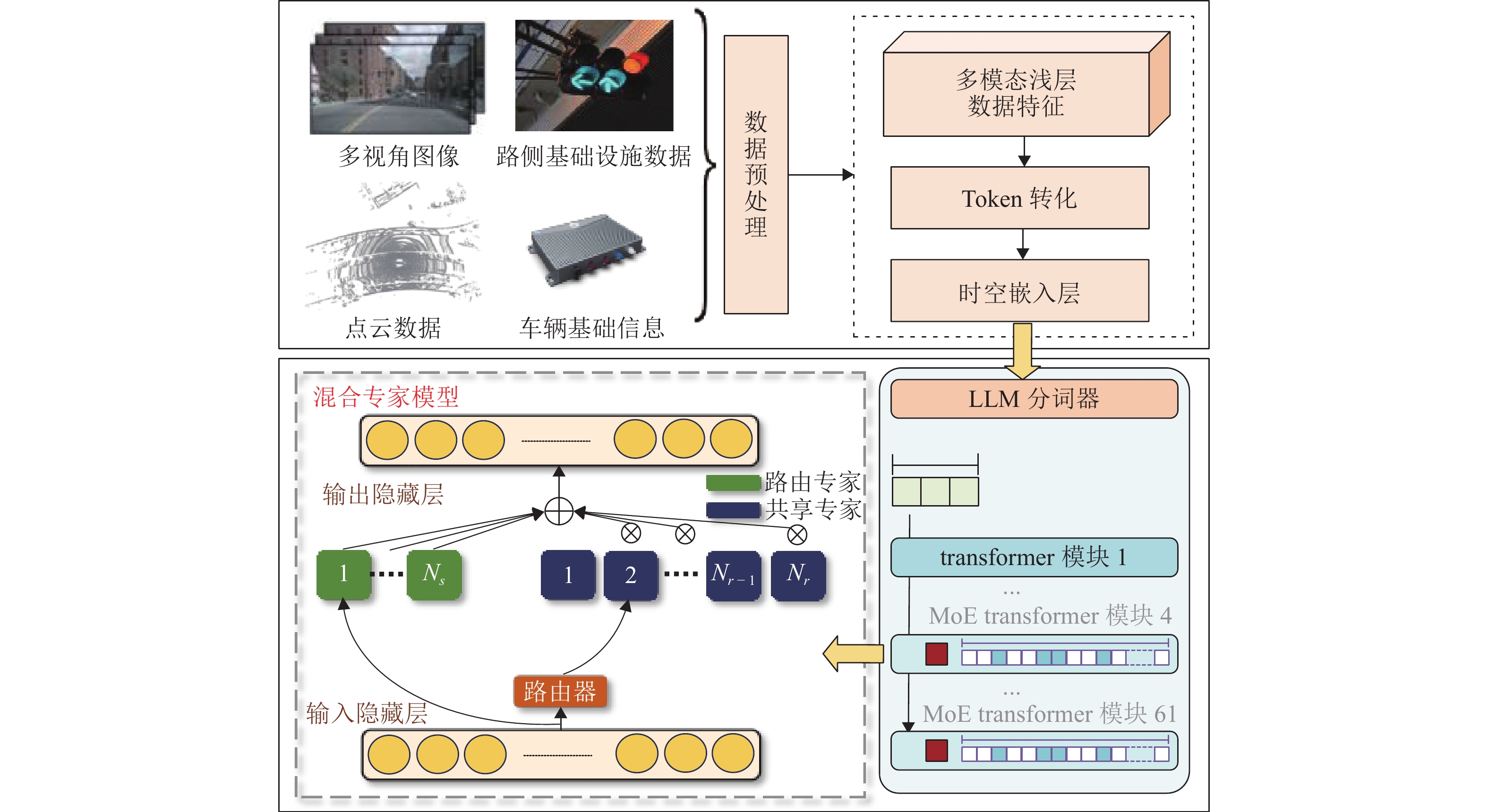
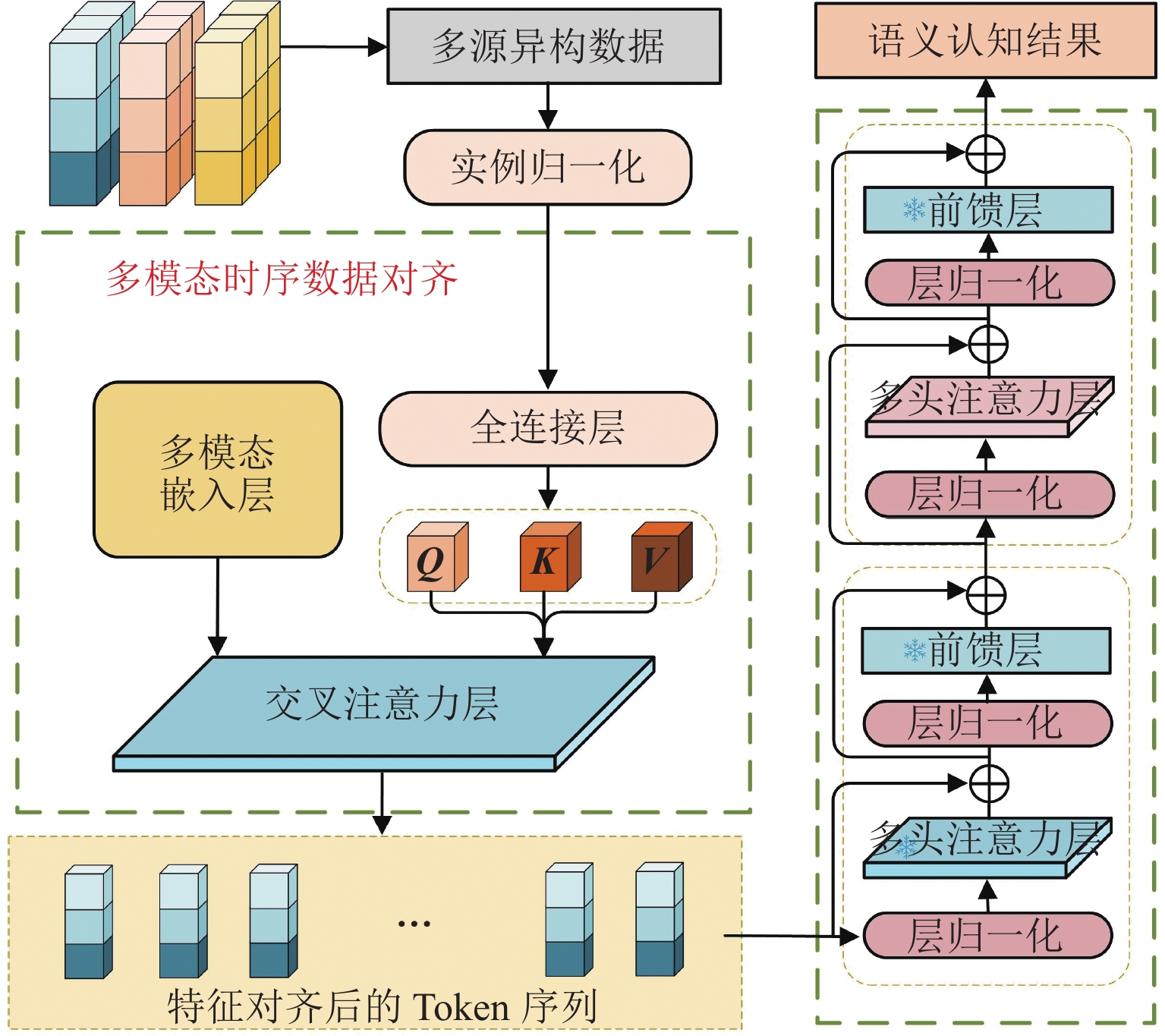
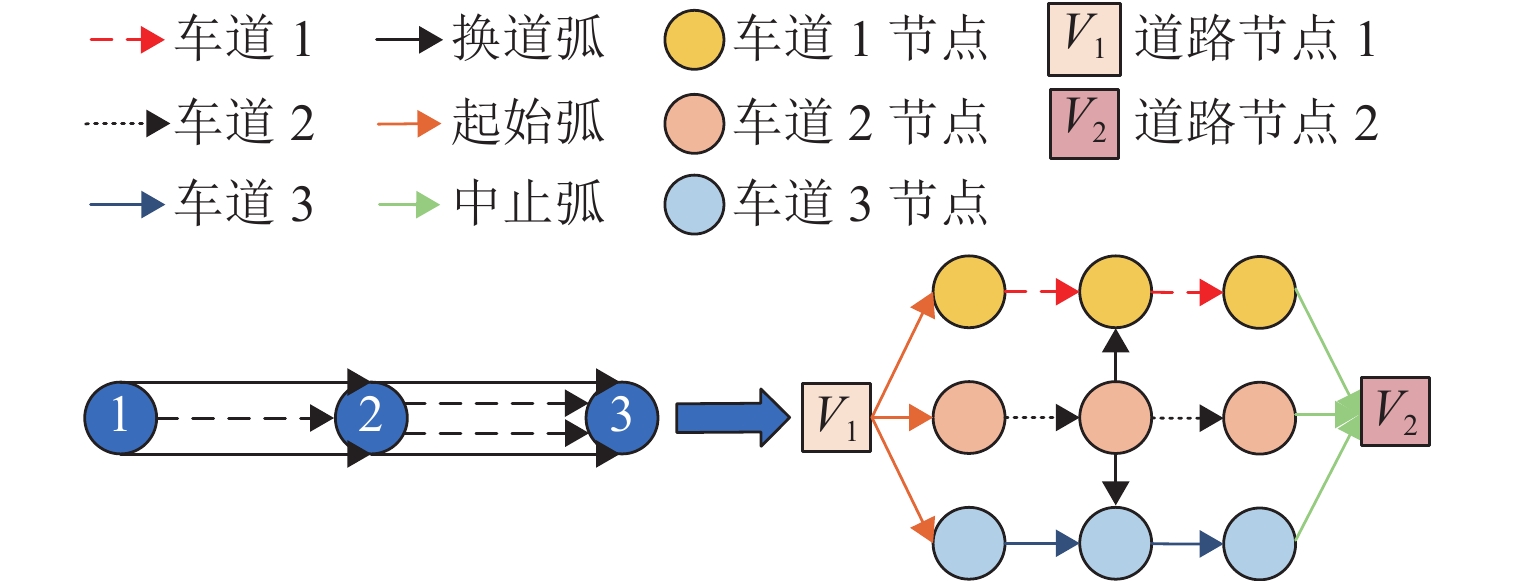
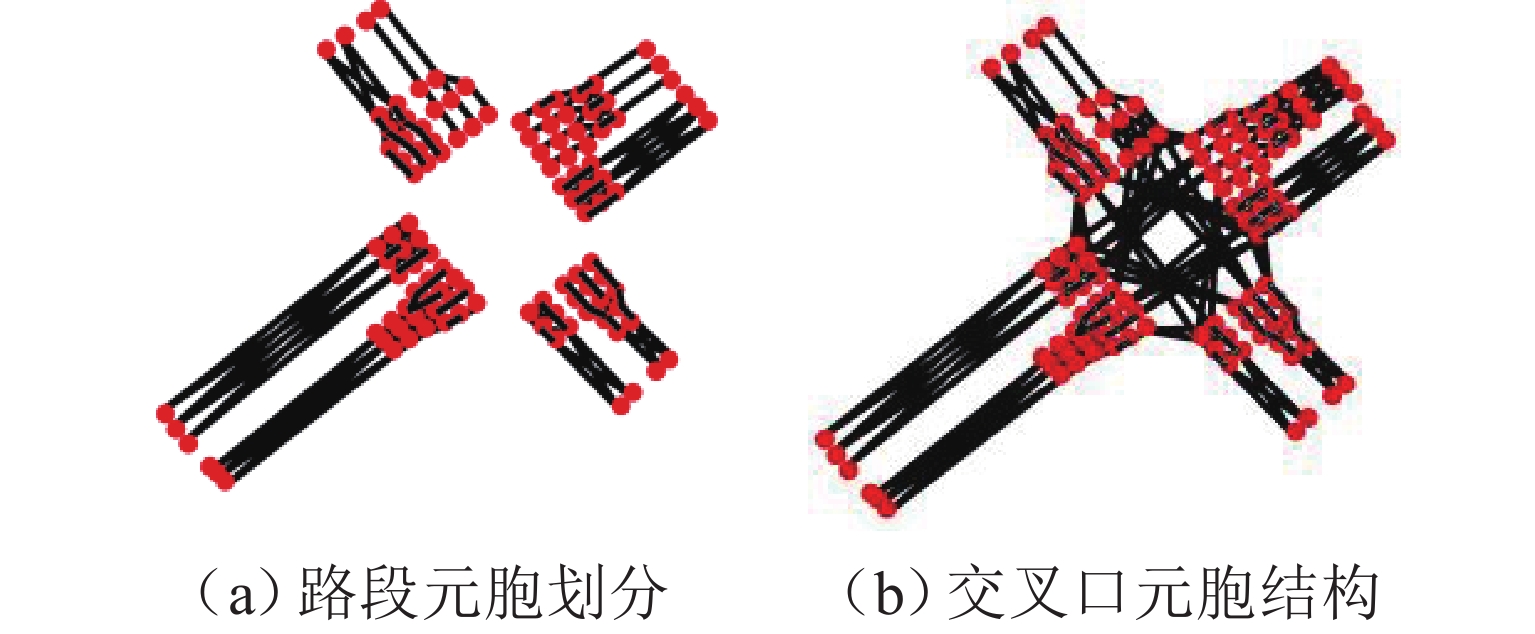
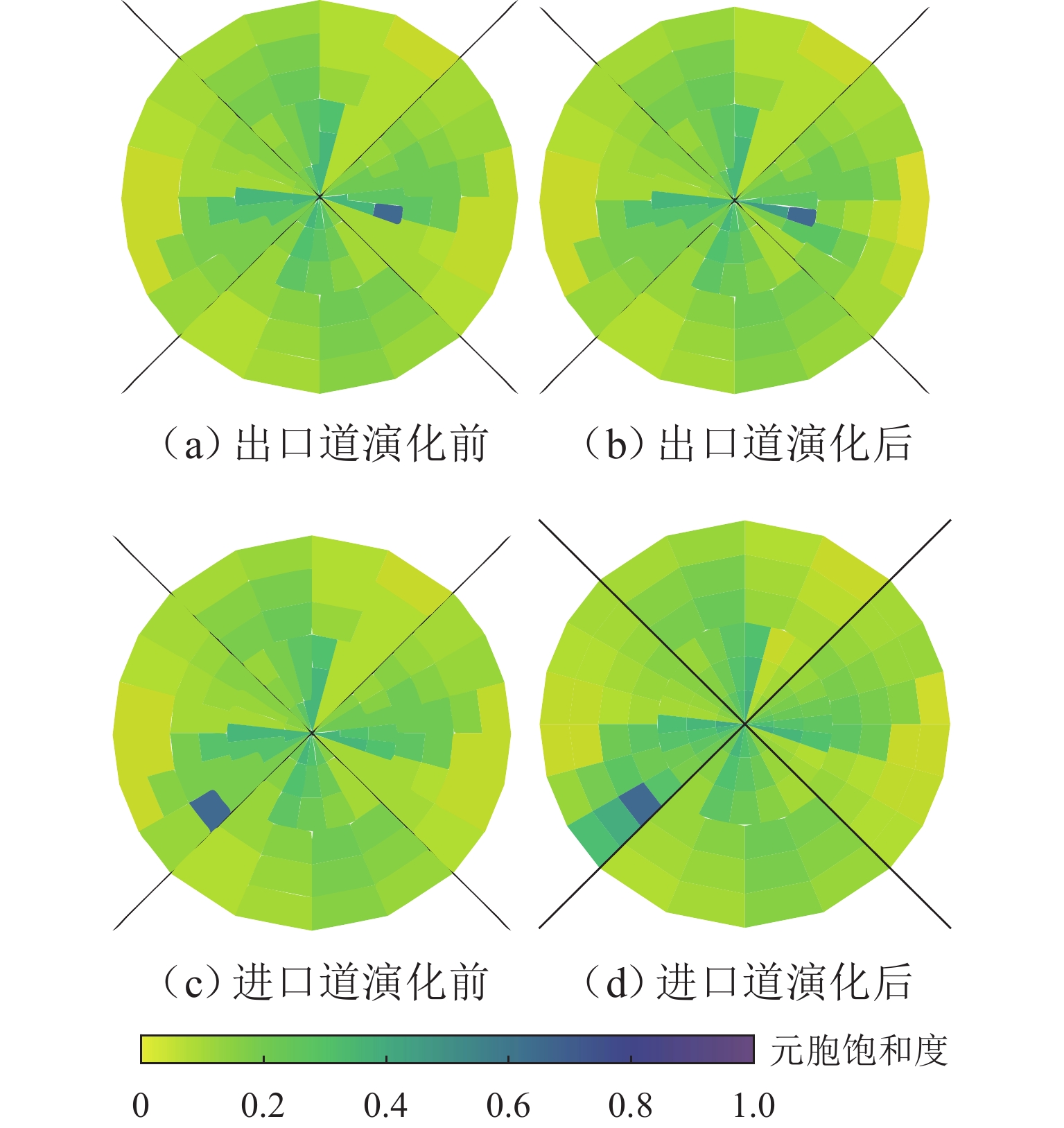
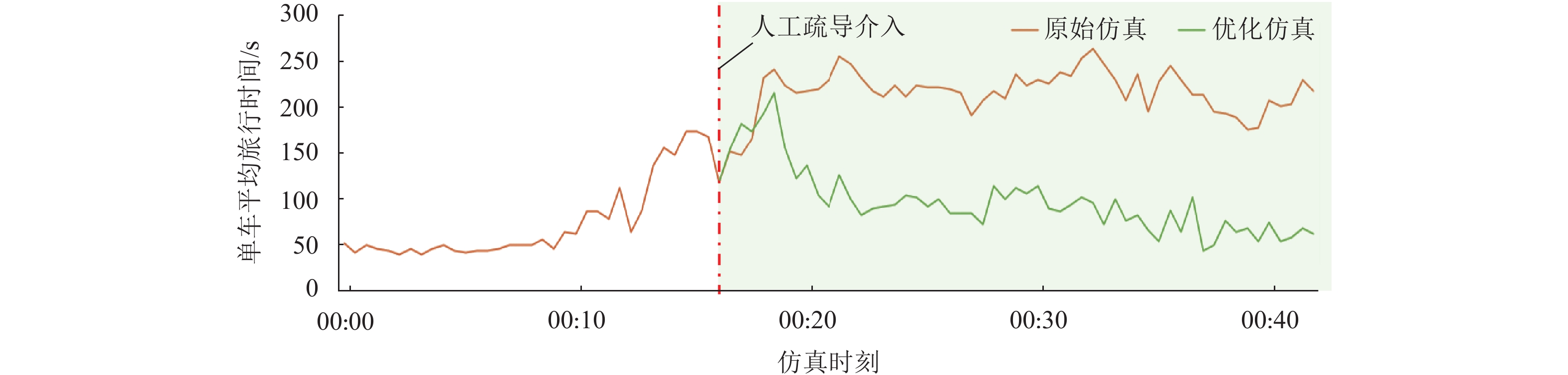
To address urban traffic congestion propagation, a lane-level Micro Cell Transmission Model (Micro-CTM) was proposed from a microscopic perspective. By leveraging the multimodal semantic cognition capabilities of a large language model (LLM), a lane-level traffic congestion evolution model, the coupled map lattice-driven lane congestion evolution model (CML-LCEM), was constructed. First, a traffic flow feature recognition framework was constructed by integrating an LLM with a mixture-of-experts (MoE) architecture, enabling multimodal semantic cognition of urban traffic through cross-modal semantic alignment and model fine-tuning. Secondly, transfer entropy was employed to analyze the causal relationships between lane-level cells, based on which a lane-level traffic congestion evolution model was constructed to predict key cells in traffic congestion situations. Finally, experiments were conducted on a local road network within the Beijing High-level Autonomous Driving Demonstration Zone, and multiple types of cells were classified to validate the model’s ability to characterize lane-level saturation and congestion propagation. The results show that the proposed method significantly improves lane-level prediction accuracy during peak hours compared to traditional models. Early intervention on key cells can reduce average vehicle travel time by 28.3%, providing a data-driven large-model solution for real-time congestion warning, mitigation strategy formulation, and integrated vehicle-road-cloud applications in intelligent transportation systems.

| [1] |
卢春房, 马成贤, 江媛, 等. 中国车路协同产业研究与发展对策建议[J]. 中国公路学报, 2023, 36(3): 225-233.
Lu Chunfang, Ma Chengxian, Jiang Yuan, et al. Countermeasure suggestions of development and research for vehicle infrastructure cooperation industry in China[J]. China Journal of Highway and Transport, 2023, 36(3): 225-233.
|
| [2] |
肖建力, 邱雪, 张扬, 等. 交通大模型综述[J]. 交通运输工程学报, 2025, 25(1): 8-28.
Xiao Jianli, Qiu Xue, Zhang Yang, et al. Review of traffic foundation model[J]. Journal of Traffic and Transportation Engineering, 2025, 25(1): 8-28.
|
| [3] |
潘磊, 袁鸿霄, 钟准, 等. 基于大模型构建图网络的事件因果关系识别[J/OL]. 西南交通大学学报, 2025-04-08. https://link.cnki.net/urlid/51.1277.u.20250408.1541.004.
|
| [4] |
童旭东, 周强, 顾晶晶, 等. 基于预训练时空自注意力大模型的交通流量预测[J]. 小型微型计算机系统, 2026, 47(5): 1099-1107.
Tong Xudong, Zhou Qiang, Gu Jingjing, et al. Pre-trained spatio-temporal attention model for traffic flow prediction[J]. Journal of Chinese Computer Systems, 2026, 47(5): 1099-1107.
|
| [5] |
冯婷薇, 杨达, 刘家威, 等. 融合多源时序数据的车辆换道全过程检测方法研究[J/OL]. 西南交通大学学报, 2025-04-17. https://link.cnki.net/urlid/51.1277.u.20250417.1012.002.
|
| [6] |
王庞伟, 何昕泽, 张龙, 等. 智能网联环境下城市道路多源交通数据补全方法[J]. 中国公路学报, 2025, 38(1): 281-293.
Wang Pangwei, He Xinze, Zhang Long, et al. Multisource traffic data completion method for urban roads in intelligent connected scenarios[J]. China Journal of Highway and Transport, 2025, 38(1): 281-293.
|
| [7] |
Wang P W, Liu C, Zhang J, et al. DS-UKF-based positioning method for intelligent connected vehicles in urban intersection scenarios[J]. IEEE Transactions on Intelligent Transportation Systems, 2023, 25(6): 6118-6132. doi: 10.1109/tits.2023.3336770
|
| [8] |
Zuo Z Q, Liu Z X, Wang Y J. A survey of optimal control for mixed traffic system with vehicle-roadcloud integration[J]. Control and Decision, 2023, 38(3): 577-594
|
| [9] |
Zhang S Y, Fu D C, Liang W Z, et al. Trafficgpt: viewing, processing and interacting with traffic foundation models[J]. Transport Policy, 2024, 150: 95-105. doi: 10.1016/j.tranpol.2024.03.006
|
| [10] |
Cui Y D, Huang S C, Zhong J M, et al. Drivellm: charting the path toward full autonomous driving with large language models[J]. IEEE Transactions on Intelligent Vehicles, 2024, 9(1): 1450-1464.
|
| [11] |
Tang Y H, Wang Z K, Qu A, et al. Synergizing spatial optimization with large language models for open-domain urban itinerary planning[EB/OL]. [2024-03-11]. https://arxiv.org/abs/2402.07204.
|
| [12] |
Tian Y L, Li X, Zhang H, et al. VistaGPT: generative parallel transformers for vehicles with intelligent systems for transport automation[J]. IEEE Transactions on Intelligent Vehicles, 2023, 8(9): 4198-4207.
|
| [13] |
Li X, Liu E L, Shen T Y, et al. ChatGPT-based scenario engineer: a new framework on scenario generation for trajectory prediction[J]. IEEE Transactions on Intelligent Vehicles, 2024, 9(3): 4422-4431.
|
| [14] |
吴精乙, 景峻, 贺熠凡, 等. 基于多模态大模型的高速公路场景交通异常事件分析方法[J]. 图学学报, 2024, 45(6): 1266-1276.
Wu Jingyi, Jing Jun, He Yifan, et al. Analysis method for traffic abnormal events in highway scenarios based on multimodal foundation model[J]. Journal of Graphics, 2024, 45(6): 1266-1276.
|
| [15] |
王祥, 任浩, 谭国真, 等. 大语言模型协同强化学习的自动驾驶决策方法[J]. 交通运输系统工程与信息, 2025, 25(4): 137-146, 161.
Wang Xiang, Ren Hao, Tan Guozhen, et al. Autonomous driving decision-making method based on large language model collaborative reinforcement learning[J]. Journal of Transportation Systems Engineering and Information Technology, 2025, 25(4): 137-146, 161.
|
| [16] |
Wang M N, Pang A Y, Kan Y H, et al. LLM-assisted light: leveraging large language model capabilities for human-mimetic traffic signal control in complex urban environments[EB/OL]. [2024-03-13]. https://arxiv.org/abs/2403.08337.
|
| [17] |
周臻, 顾子渊, 曲小波, 等. 城市多模式交通大模型MT-GPT: 点线面的分层技术与应用场景[J]. 中国公路学报, 2024, 37(2): 253-274. doi: 10.19721/j.cnki.1001-7372.2024.02.020
Zhou Zhen, Gu Ziyuan, Qu Xiaobo, et al. Urban multimodal transportation generative pretrained transformer foundation model: hierarchical techniques and application scenarios of spot-corridor-network decomposition[J]. China Journal of Highway and Transport, 2024, 37(2): 253-274. doi: 10.19721/j.cnki.1001-7372.2024.02.020
|
| [18] |
Liu C X, Yang S, Xu Q X, et al. Spatial-temporal large language model for traffic prediction[C]//2024 25th IEEE International Conference on Mobile Data Management (MDM). Piscataway: IEEE, 2024: 31-40.
|
| [19] |
Kumar S V, Vanajakshi L. Short-term traffic flow prediction using seasonal ARIMA model with limited input data[J]. European Transport Research Review, 2015, 7(3): 21. doi: 10.1007/s12544-015-0170-8
|
| [20] |
Nikolaos L B, Claudio R, Markos P. Highway traffic state estimation with mixed connected and conventional vehicles[J]. IEEE Transactions on Intelligent Transportation Systems, 2016, 17(12): 3484-3497.
|
| [21] |
Chang S Y, Wu H C, Kao Y C. Tensor extended Kalman filter and its application to traffic prediction[J]. IEEE Transactions on Intelligent Transportation Systems, 2023, 24(12): 13813-13829. doi: 10.1109/TITS.2023.3299557
|
| [22] |
李珣, 程硕, 吴丹丹, 等. 车路协同下基于元胞自动机的精细交通流模型[J]. 西南交通大学学报, 2025, 60(1): 225-232. doi: 10.3969/j.issn.0258-2724.20220830
Li Xun, Cheng Shuo, Wu Dandan, et al. Refined traffic flow model based on cellular automaton under cooperative vehicle infrastructure system[J]. Journal of Southwest Jiaotong University, 2025, 60(1): 225-232. doi: 10.3969/j.issn.0258-2724.20220830
|
| [23] |
Zhai C, Wu W T, Xiao Y P. The jamming transition of multi-lane lattice hydrodynamic model with passing effect[J]. Chaos, Solitons & Fractals, 2023, 171: 113515.
|
| [24] |
Akopov A S, Beklaryan L A. Traffic improvement in manhattan road networks with the use of parallel hybrid biobjective genetic algorithm[J]. IEEE Access, 2024, 12: 19532-19552. doi: 10.1109/ACCESS.2024.3361399
|
| [25] |
Li R N, Qin Y, Liu J, et al. Multipath based congestion propagation via information network interaction in IIoT[J]. IEEE Transactions on Industrial Informatics, 2024, 20(6): 8512-8523. doi: 10.1109/TII.2024.3354306
|
| [26] |
Ye H N, Luo X, Ye H N, et al. Cascading failure analysis on Shanghai metro networks: an improved coupled map lattices model based on graph attention networks[J]. International Journal of Environmental Research and Public Health, 2021, 19(1): 204. doi: 10.3390/ijerph19010204
|
| [27] |
Chen S Q, Lü X. Adaptive network traffic control with approximate dynamic programming based on a non-homogeneous poisson demand model[J]. Transportmetrica B: Transport Dynamics, 2024, 12(1): 2336029. doi: 10.1080/21680566.2024.2336029
|
| [28] |
Chen T, Wang Z W, Xiang J, et al. Analysis of mixed traffic flow characteristics based on cellular automata model under lane management measures[J]. Physica A: Statistical Mechanics and Its Applications, 2024, 654: 130177. doi: 10.1016/j.physa.2024.130177
|
Figures(11) / Tables(4)


 DownLoad: