- ISSN 0258-2724
- CN 51-1277/U
- EI Compendex
- Scopus
- Indexed by Core Journals of China, Chinese S&T Journal Citation Reports
- Chinese S&T Journal Citation Reports
- Chinese Science Citation Database

| Citation: | LYU Tao, WANG Jinxin, TAN Shehui, WANG Weiqin, XU Weichang, CHEN Rong, WANG Ping. Demonstration of Equivalent Grade Sections for Track Longitudinal Profile on Kilometer-Scale High-Speed Railway Bridges During Operation[J]. Journal of Southwest Jiaotong University. doi: 10.3969/j.issn.0258-2724.20250281

|
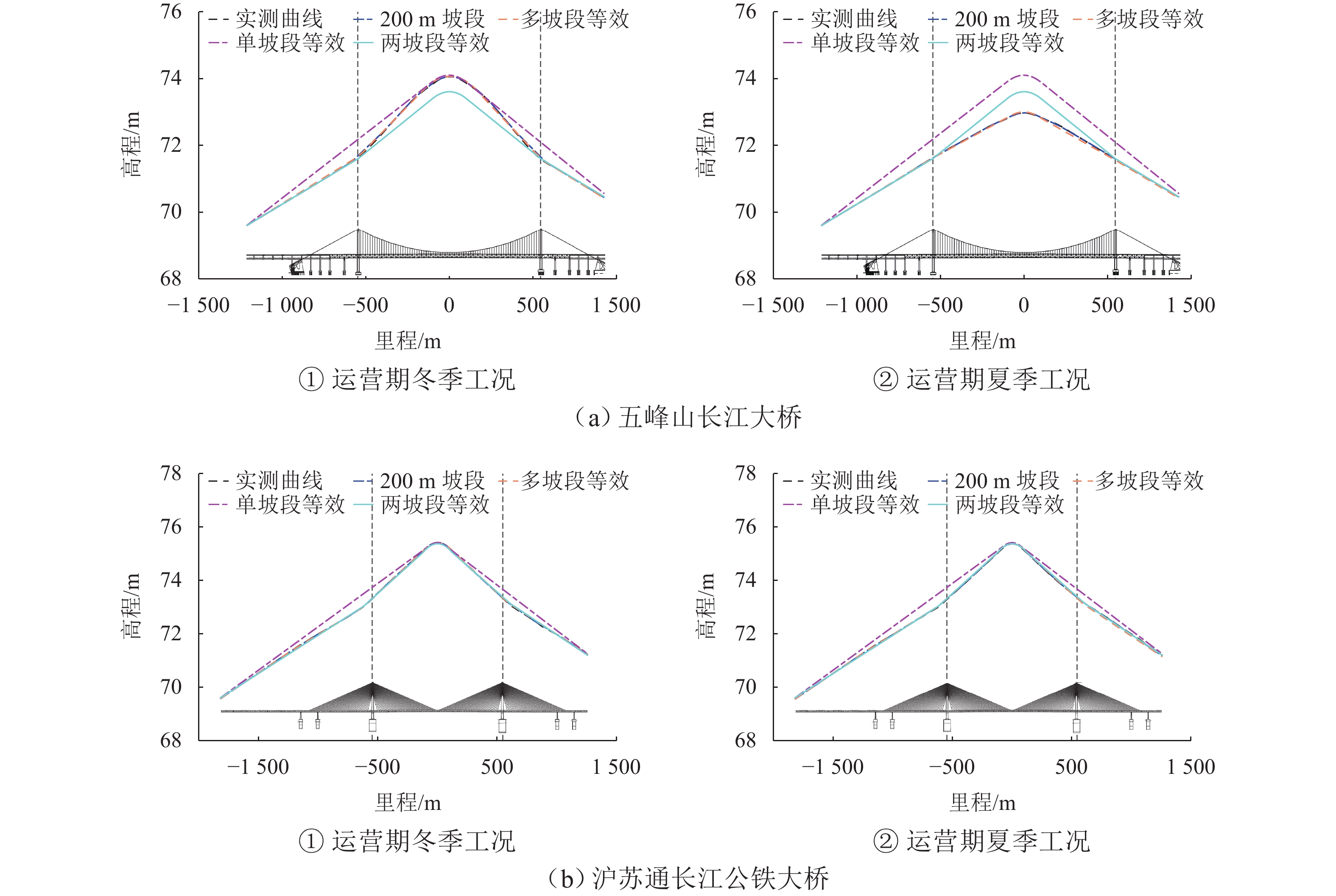
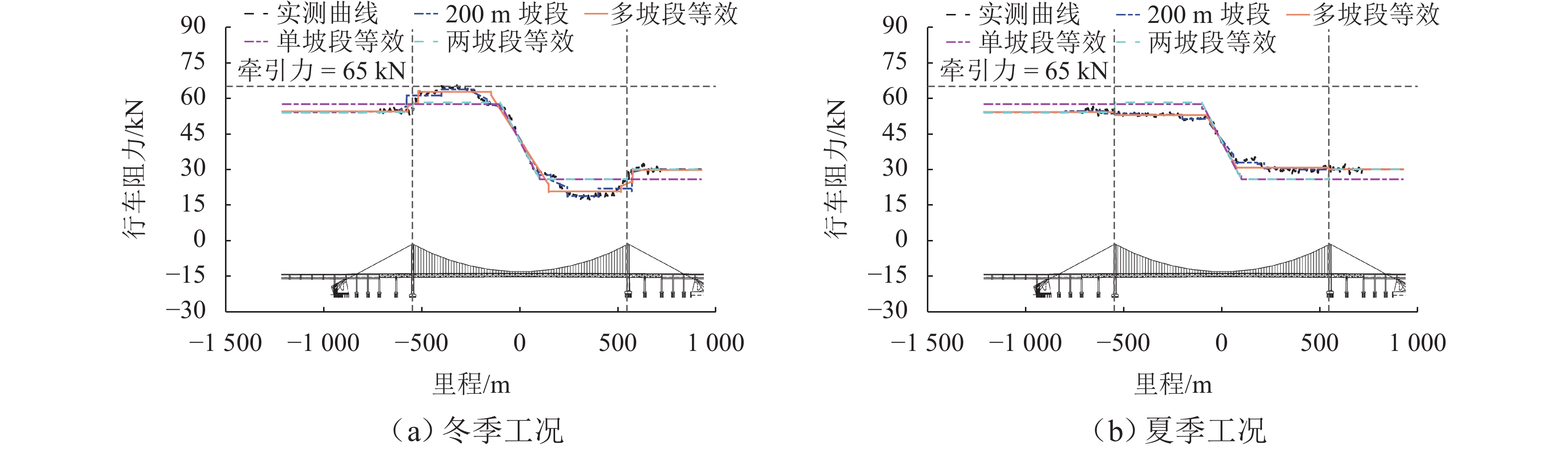
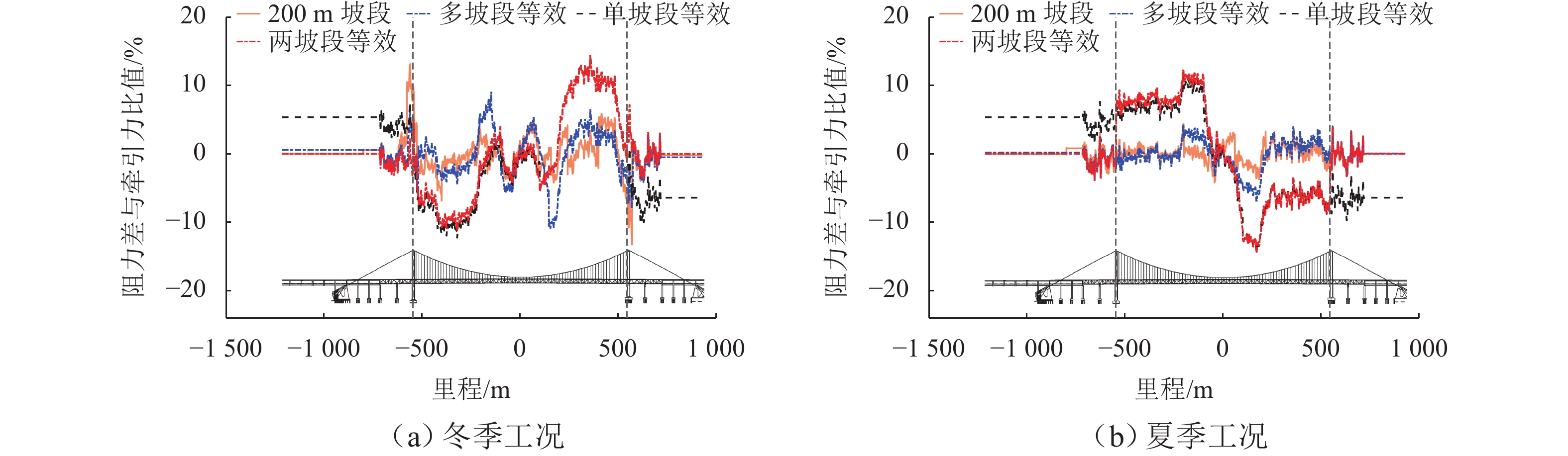
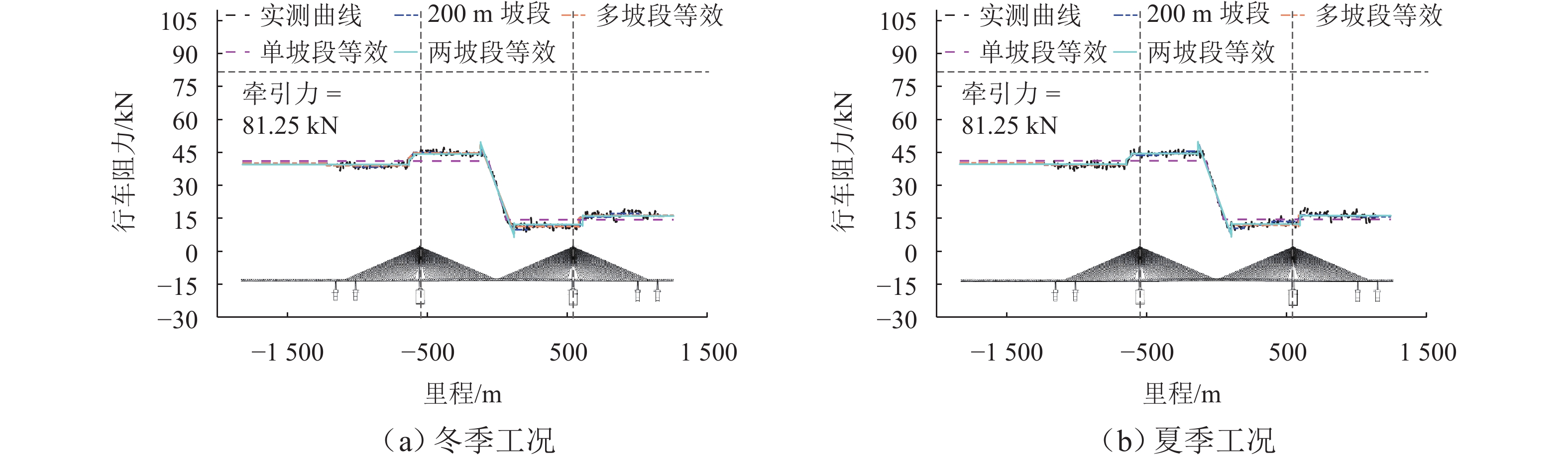
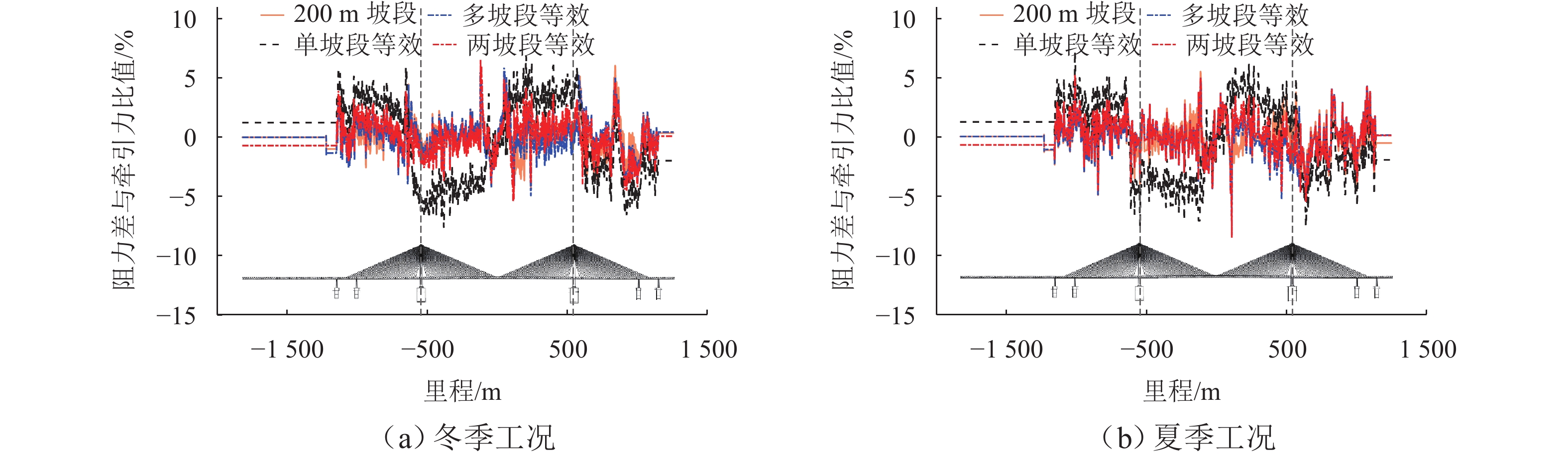
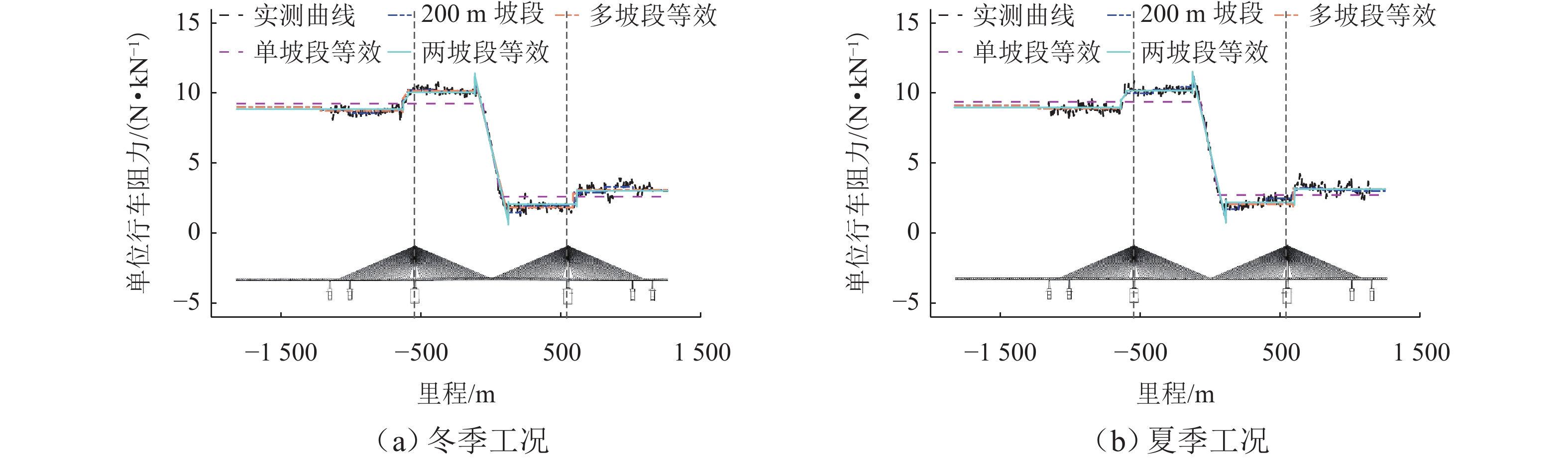
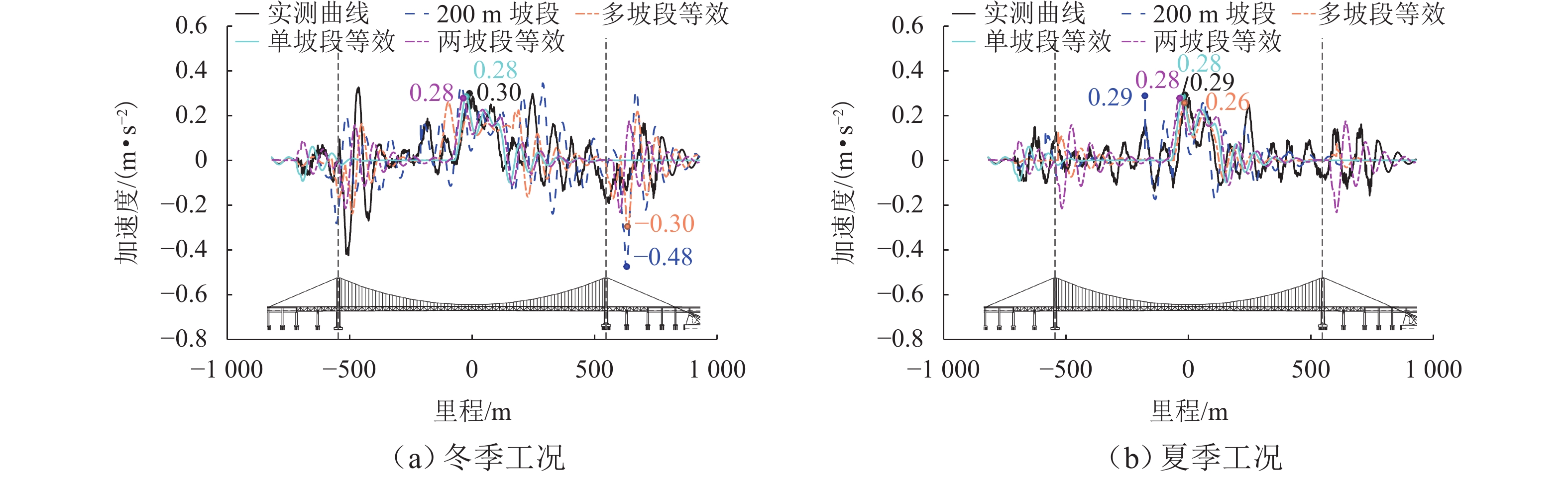
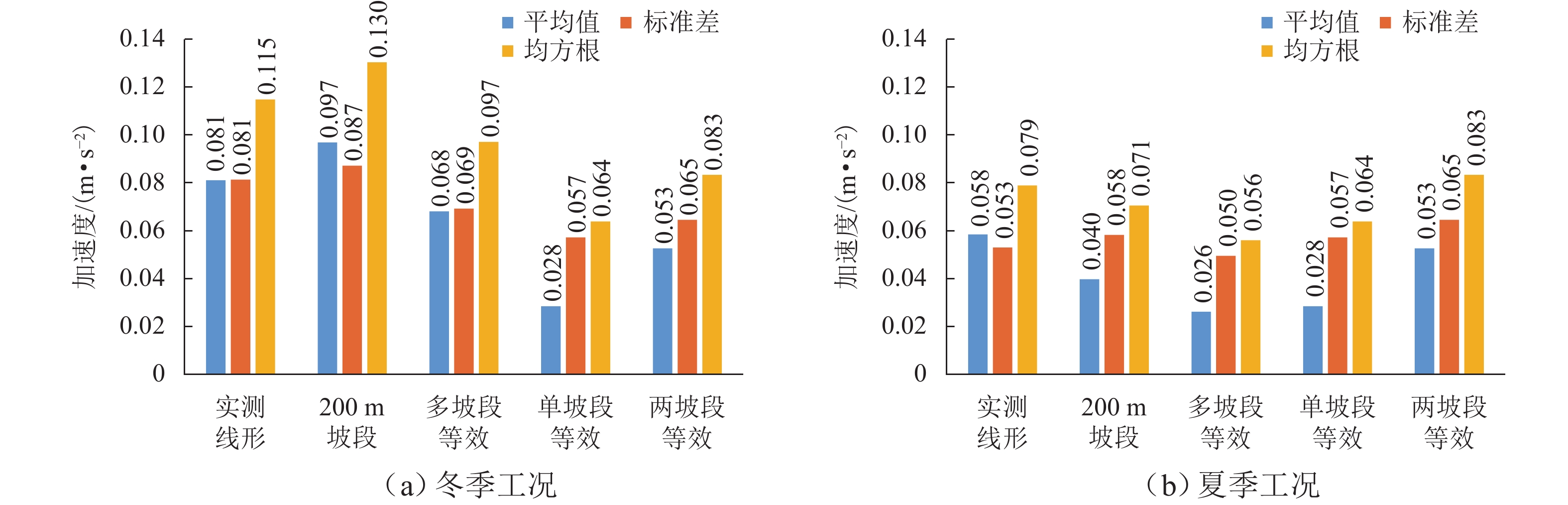
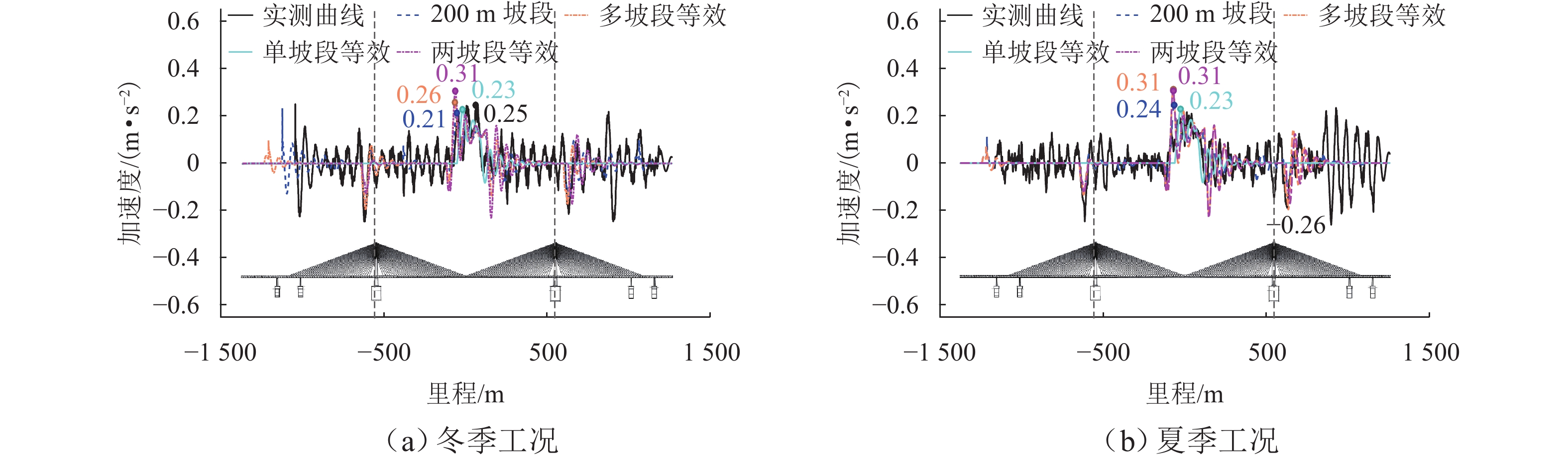
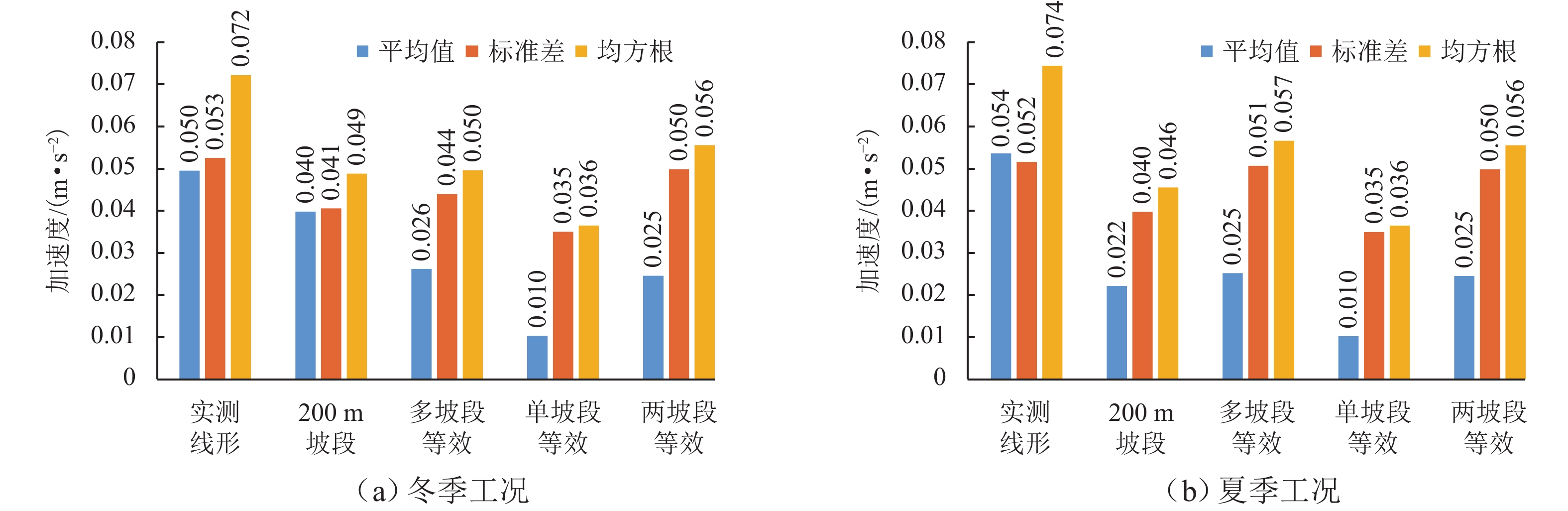
The concept of equivalent grade sections was proposed and its reasonable equivalent method was investigated to facilitate the representation and maintenance management of track longitudinal profiles on kilometer-scale high-speed railway bridges during operation. Additionally, the objective includes addressing following problems. There is large deviation between actual and designed longitudinal profiles caused by manufacturing deviations, construction errors, and limited ballast adjustment capacity, which necessitates modification to a continuous short-slope configuration. Temperature loads during operation induce bridge deflections larger at mid-span and smaller at both ends. The actual longitudinal profile evolves into a high-order spatial curve, posing challenges to track maintenance management. By taking the tracks on two in-service kilometer-scale high-speed railway bridges as examples, four equivalent grade sections—the single-grade section, two-grade section, multi-grade section, and 200 m continuous grade section—were first established by comparing grade section lengths and mid-span elevations, simplifying the actual high-order spatial curve profile into a conventional combination of grade sections and vertical curves. Then, key indicators such as acceleration and ride comfort in actual and equivalent longitudinal profile conditions were calculated and compared. Finally, considering the need for simplified track management, the reasonable equivalent method was determined. The results show that for the Wufengshan Yangtze River Bridge, the maximum acceleration deviation between the single-grade equivalent and measured profiles is no more than 0.2 m/s2, and the ratio of resistance difference to tractive force is no more than 15%. For the Husutong Yangtze River Bridge, the maximum acceleration deviation is no more than 0.1 m/s2, and the ratio of resistance difference to tractive force is no more than 8%. The single-grade equivalent for both bridges is basically equivalent to the measured profile and provides a more intuitive representation. Considering train traction capacity, ride comfort, and the need for simplified on-site management, the single-grade equivalent is recommended as the basis for track management during operation.

| [1] |
Qin S Q, Gao Z Y. Developments and prospects of long-span high-speed railway bridge technologies in China[J]. Engineering, 2017, 3(6): 787-794. doi: 10.1016/j.eng.2017.11.001
|
| [2] |
Su M, Dai G L, Marx S, et al. A brief review of developments and challenges for high-speed rail bridges in China and Germany[J]. Structural Engineering International, 2019, 29(1): 160-166. doi: 10.1080/10168664.2018.1456892
|
| [3] |
陈良江, 阎武通. 我国铁路超千米跨度桥梁的实践与发展[J]. 中国铁路, 2021(9): 26-31. doi: 10.19549/j.issn.1001-683x.2021.09.026
Chen Liangjiang, Yan Wutong. Practice and development of over 1000 m-span railway bridges in China[J]. China Railway, 2021(9): 26-31. doi: 10.19549/j.issn.1001-683x.2021.09.026
|
| [4] |
陈良江, 阎武通. 我国铁路桥梁建造技术的成就与展望[J]. 高速铁路技术, 2022, 13(4): 1-7. doi: 10.12098/j.issn.1674-8247.2022.04.001
Chen Liangjiang, Yan Wutong. Achievements and prospects of railway bridge construction technology in China[J]. High Speed Railway Technology, 2022, 13(4): 1-7. doi: 10.12098/j.issn.1674-8247.2022.04.001
|
| [5] |
肖海珠, 高宗余, 刘俊锋. 西堠门公铁两用大桥主桥结构设计[J]. 桥梁建设, 2020, 50(增刊2): 1-8.
Xiao Haizhu, Gao Zongyu, Liu Junfeng. Design of main bridge of xihoumen rail-cum-road bridge[J]. Bridge Construction, 2020, 50(Sup 2): 1-8.
|
| [6] |
高宗余, 梅新咏, 徐伟, 等. 沪通长江大桥总体设计[J]. 桥梁建设, 2015, 45(6): 1-6.
Gao Zongyu, Mei Xinyong, Xu Wei, et al. Overall design of hutong Changjiang River bridge[J]. Bridge Construction, 2015, 45(6): 1-6.
|
| [7] |
Zhu Y, Sun D Q, Shuang M. Investigation of temperature-induced effect on rail-road suspension bridges during operation[J]. Journal of Constructional Steel Research, 2024, 215: 108542. doi: 10.1016/j.jcsr.2024.108542
|
| [8] |
谭社会, 张雨潇, 周丽, 等. 基于温度变形的五峰山长江大桥轨道线形调控方法[J]. 铁道科学与工程学报, 2024, 21(10): 4076-4088. doi: 10.19713/j.cnki.43-1423/u.T20232103
Tan Shehui, Zhang Yuxiao, Zhou Li, et al. Temperature deformation-based track alignment control method for Wufengshan Yangtze River Bridge[J]. Journal of Railway Science and Engineering, 2024, 21(10): 4076-4088. doi: 10.19713/j.cnki.43-1423/u.T20232103
|
| [9] |
王平, 高天赐, 汪鑫, 等. 基于拟合平纵断面的铁路特大桥梁线路平顺性评估[J]. 西南交通大学学报, 2020, 55(2): 231-237, 272. doi: 10.3969/j.issn.0258-2724.20180295
Wang Ping, Gao Tianci, Wang Xin, et al. Smoothness estimation of super-large bridges in railway line based on fitting railway plane and profile[J]. Journal of Southwest Jiaotong University, 2020, 55(2): 231-237,272. doi: 10.3969/j.issn.0258-2724.20180295
|
| [10] |
谭社会, 李再帏, 时瑾, 等. 线路纵断面设置对千米级高铁悬索桥动力学行为的影响[J]. 中国铁道科学, 2021, 42(6): 58-67. doi: 10.3969/j.issn.1001-4632.2021.06.07
Tan Shehui, Li Zaiwei, Shi Jin, et al. Influence of track profile setting on dynamic behavior of high-speed railway suspension bridge with kilometer span[J]. China Railway Science, 2021, 42(6): 58-67. doi: 10.3969/j.issn.1001-4632.2021.06.07
|
| [11] |
庄丽媛, 肖杰灵, 何东升, 等. 超大跨度协作体系桥上轨道几何状态分析[J]. 铁道标准设计, 2022, 66(9): 15-21. doi: 10.13238/j.issn.1004-2954.202105250003
Zhuang Liyuan, Xiao Jieling, He Dongsheng, et al. Geometrical state analysis of track on super large span cooperative system bridge[J]. Railway Standard Design, 2022, 66(9): 15-21. doi: 10.13238/j.issn.1004-2954.202105250003
|
| [12] |
禹壮壮, 舒英杰, 陆粤, 等. 基于成桥施工偏差的大跨度铁路桥梁线路纵断面设计适应性分析[J]. 铁道标准设计, 2023, 67(3): 61-67, 73. doi: 10.13238/j.issn.1004-2954.202110110004
Yu Zhuangzhuang, Shu Yingjie, Lu Yue, et al. Design adaptability analysis of the route longitudinal section on long-span railway bridge based on construction deviation[J]. Railway Standard Design, 2023, 67(3): 61-67,73. doi: 10.13238/j.issn.1004-2954.202110110004
|
| [13] |
王巍钦, 谭社会, 吕涛, 等. 基于傅里叶级数的高铁大跨度桥上有砟线路纵断面设计与调整方法[J]. 铁道科学与工程学报, 2025, 22(6): 2393-2406. doi: 10.19713/j.cnki.43-1423/u.T20241288
Wang Weiqin, Tan Shehui, LüTao, et al. Design and adjustment method for the longitudinal profile of ballasted tracks on high-speed railway long-span bridges based on Fourier series[J]. Journal of Railway Science and Engineering, 2025, 22(6): 2393-2406. doi: 10.19713/j.cnki.43-1423/u.T20241288
|
| [14] |
李小珍, 张竞元, 黄文泰, 等. 基于行车性能的铁路连续钢桁梁桥成桥线形控制技术研究[J/OL]. 西南交通大学学报, 2025-05-06. https://link.cnki.net/urlid/51.1277.U.20250506.1109.006.
|
| [15] |
Liu X, Shi J, Dai J, et al. Correspondence between Alignment Wavelength and Vehicle Response Wavelength of High-Speed Rails[J]. International Journal of Structural Stability and Dynamics, 2025, 25(7): 2650119. doi: 10.1142/S0219455426501191
|
| [16] |
Xiao J H, Han R F, Wan H Y, et al. Multi-dimensional characteristics investigation of track geometry on kilometer-level span high-speed railway suspension bridge[J]. Structures, 2024, 70: 107808. doi: 10.1016/j.istruc.2024.107808
|
| [17] |
谭社会, 张雨潇, 周丽, 等. 多基准线与高通滤波方法的大跨度桥上轨道精调方案论证[J]. 铁道科学与工程学报, 2025, 22(2): 613-624. doi: 10.19713/j.cnki.43-1423/u.T20240675
Tan Shehui, Zhang Yuxiao, Zhou Li, et al. Demonstration of track precise adjustment scheme on long-span bridge with the methods of multiple baselines and high-pass filtering[J]. Journal of Railway Science and Engineering, 2025, 22(2): 613-624. doi: 10.19713/j.cnki.43-1423/u.T20240675
|
| [18] |
禹壮壮. 基于级数拟合的大跨度高速铁路桥上线路纵断面线形优化分析[D]. 成都: 西南交通大学, 2022.
|
| [19] |
国家铁路局. 铁路线路设计规范: TB 10098—2017[S]. 北京: 中国铁道出版社, 2018.
|
| [20] |
朱颖, 吕希奎, 许佑顶. 动车组牵引计算与仿真系统[M]. 北京: 中国铁道出版社, 2015.
|
| [21] |
王波, 罗世辉, 王晨, 等. 青藏线双源动车组黏着适应性研究[J]. 西南交通大学学报, 2025, 60(1): 214-224. doi: 10.3969/j.issn.0258-2724.20220843
Wang Bo, Luo Shihui, Wang Chen, et al. Adhesion adaptability of dual-source-powered electric multiple unit on Qinghai-Xizang line[J]. Journal of Southwest Jiaotong University, 2025, 60(1): 214-224. doi: 10.3969/j.issn.0258-2724.20220843
|
| [22] |
陆阳, 贾冰. 浅谈动车组牵引计算[J]. 铁道机车车辆, 2016, 36(3): 103-106. doi: 10.3969/j.issn.1008-7842.2016.03.22
Lu Yang, Jia Bing. Discussion on EMU traction calculation[J]. Railway Locomotive & Car, 2016, 36(3): 103-106. doi: 10.3969/j.issn.1008-7842.2016.03.22
|
| [23] |
李俊岭, 任志强, 周正文. 铁路线路坡度对列车运行能耗的影响分析[J]. 铁路节能环保与安全卫生, 2021, 11(1): 22-26. doi: 10.16374/j.cnki.issn2095-1671.2021.0005
Li Junling, Ren Zhiqiang, Zhou Zhengwen. Analysis of influence of railway line gradient on energy consumption of train operation[J]. Railway Energy Saving & Environmental Protection & Occupational Safety and Health, 2021, 11(1): 22-26. doi: 10.16374/j.cnki.issn2095-1671.2021.0005
|
| [24] |
陈慧民. 高速动车组牵引特性分析[J]. 城市轨道交通研究, 2008, 11(7): 21-24. doi: 10.16037/j.1007-869x.2008.07.014
Chen Huimin. On the traction characteristics of high-speed motor train[J]. Urban Mass Transit, 2008, 11(7): 21-24. doi: 10.16037/j.1007-869x.2008.07.014
|
| [25] |
王铭, 李星星, 李小珍. 基于频域分析的高速列车侧风倾覆机理[J]. 西南交通大学学报, 2024, 59(2): 315-322, 342. doi: 10.3969/j.issn.0258-2724.20210571
Wang Ming, Li Xingxing, Li Xiaozhen. Mechanism of high-speed train crosswind overturning stability based on frequency domain analysis[J]. Journal of Southwest Jiaotong University, 2024, 59(2): 315-322,342. doi: 10.3969/j.issn.0258-2724.20210571
|
Figures(12) / Tables(5)


 DownLoad: