- ISSN 0258-2724
- CN 51-1277/U
- EI Compendex
- Scopus
- Indexed by Core Journals of China, Chinese S&T Journal Citation Reports
- Chinese S&T Journal Citation Reports
- Chinese Science Citation Database

| Citation: | LI Xinran, CHUN Qing, YUAN Yu. Flood Resistance Performance and Measures of Traditional Timber Corridor Bridges with Cantilevered Beams[J]. Journal of Southwest Jiaotong University, 2026, 61(2): 604-615. doi: 10.3969/j.issn.0258-2724.20250144

|
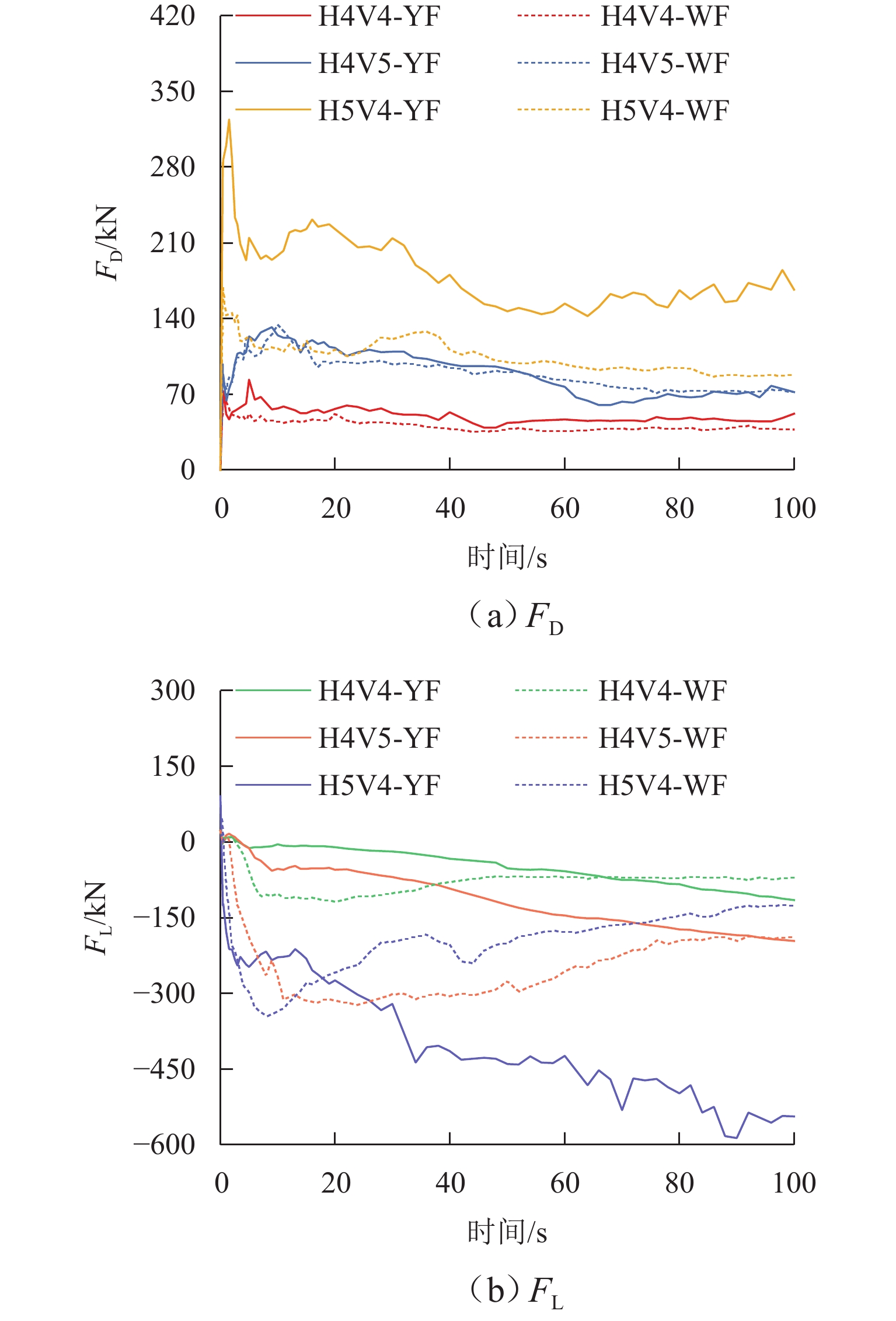
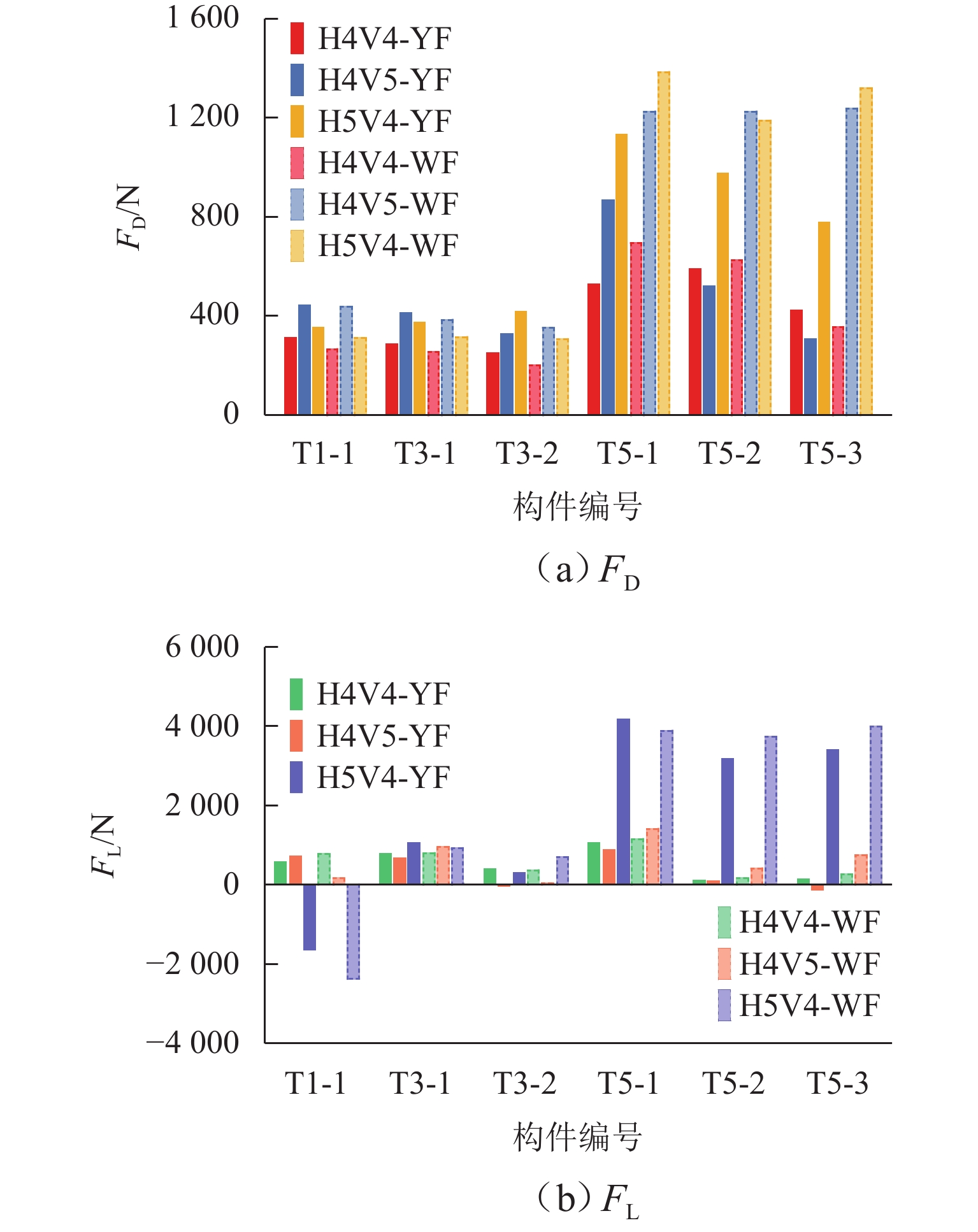
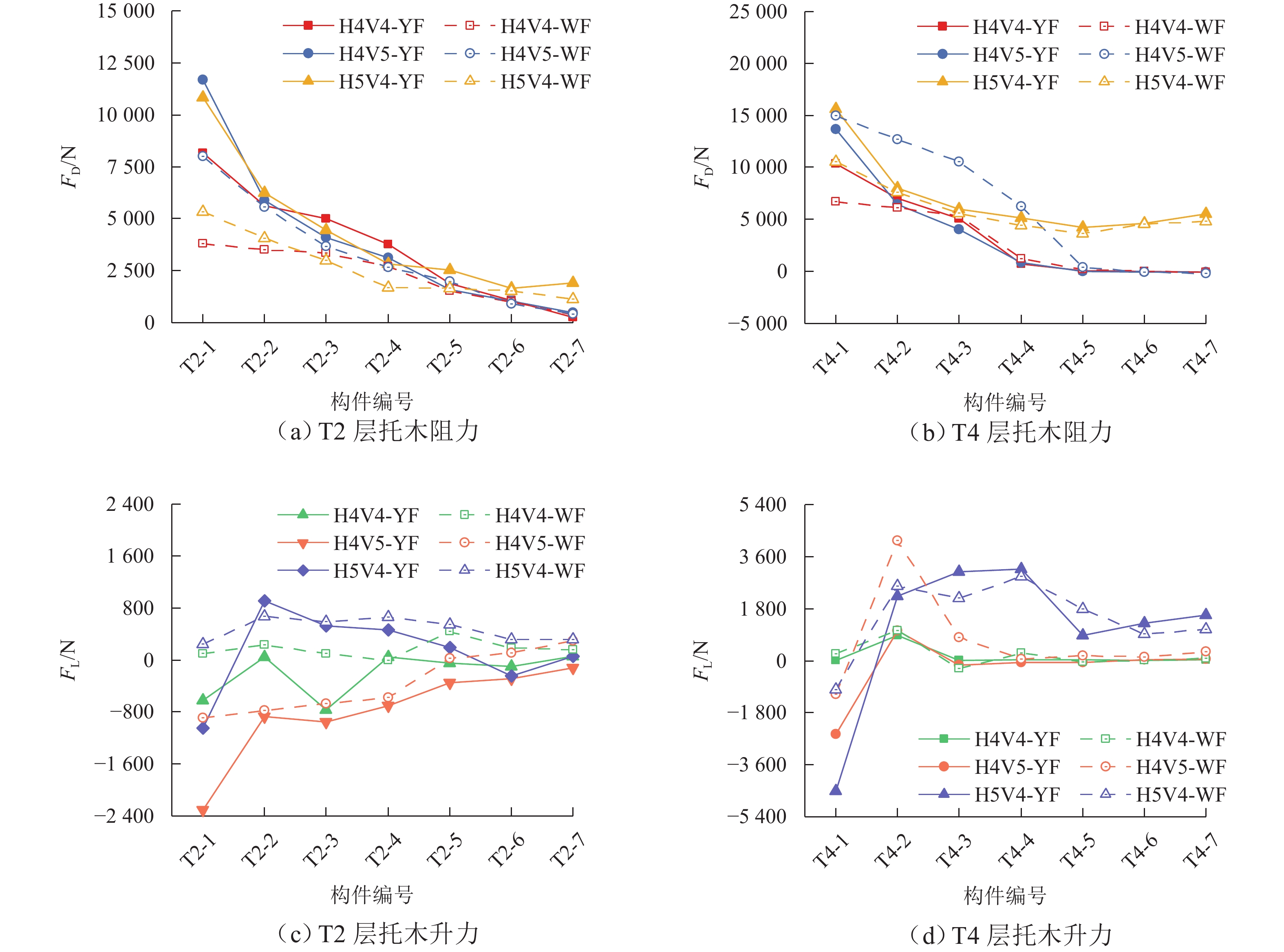
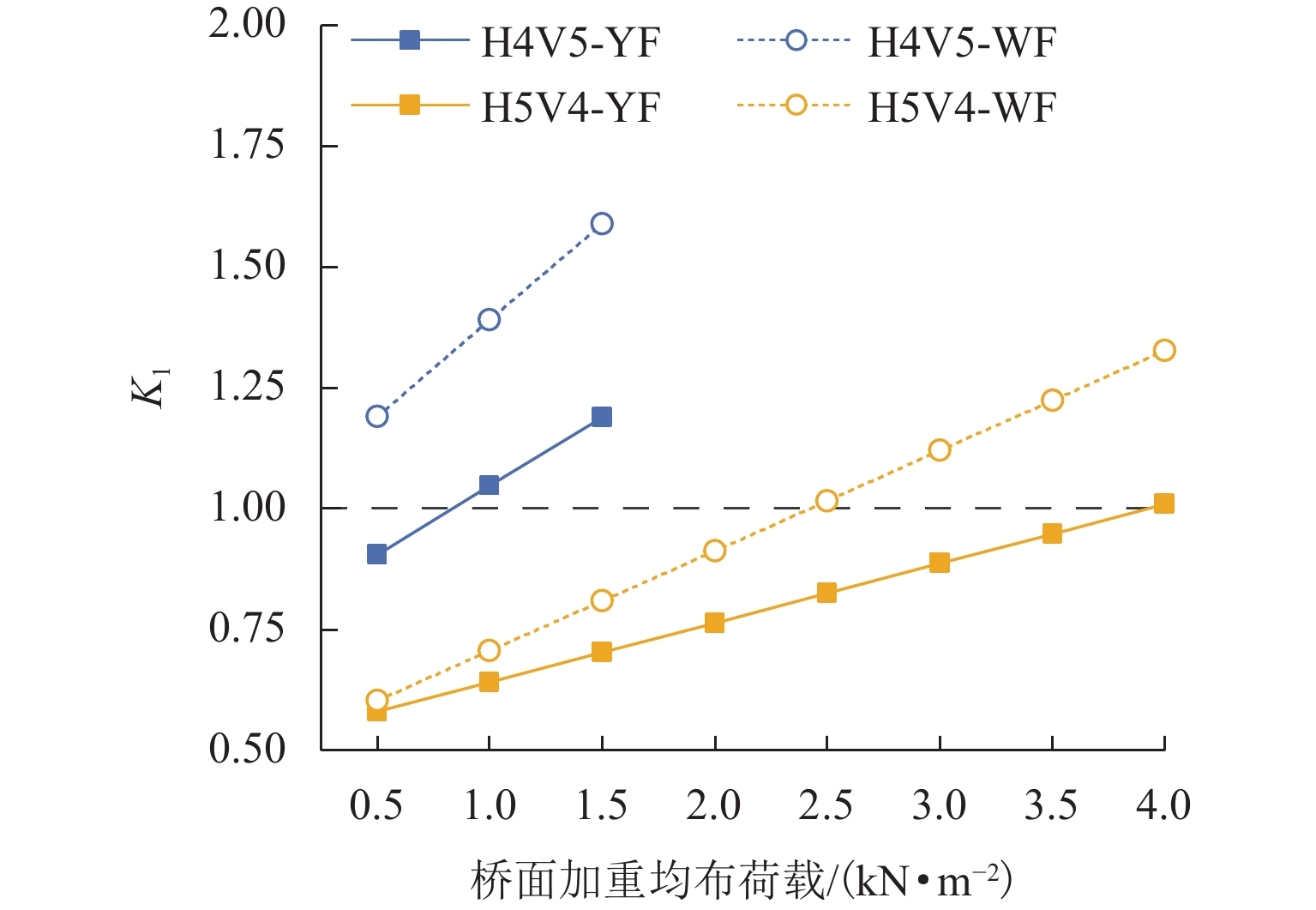
To investigate the flood resistance performance of traditional timber corridor bridges with cantilevered beams and the effectiveness of flood resistance measures, a quantitative analysis of flood loads and flood resistance performance was conducted under various flood conditions and flood resistance measures. First, flood loads on the superstructure of the corridor bridge were obtained using computational fluid dynamics (CFD) simulations, and the effects of water levels, flow velocities, and weatherboard removal were investigated. Next, the distribution of flood loads on main components was analyzed at the moment of maximum drag force of the superstructure. Finally, the flood resistance performance of the corridor bridge was assessed by calculating the sliding and overturning risks of the superstructure, and the enhancement effects of weatherboard removal and deck weighting on flood resistance performance were quantitatively evaluated. The results show that the drag force on the superstructure increases by 145.38% and 95.71% with the increase of water level and flow velocity, respectively. In the presence of weatherboards, the drag force is primarily distributed on the upstream weatherboard and the cantilever beams along the longitudinal axis of the bridge. After removing weatherboards, the drag force is mainly distributed on the cantilever beams along the longitudinal axis and the main beams. Under baseline flood conditions, the maximum drag force on the superstructure decreases by 17.79%; the reduction reaches 48.08% under high water level conditions; while an increase of 1.51% is observed under high flow velocity conditions. As the water level rises, the lift force acting on the superstructure increases rapidly and then stabilizes. Removing weatherboards can reduce the maximum lift force but leads to an earlier occurrence of the peak lift. The corridor bridge faces sliding failure risks under both high flow velocity and high water level conditions. When the uniformly distributed load added to the bridge deck reaches 4.0 kN/m2, the stability of the corridor bridge under the most unfavorable conditions can be ensured. If weatherboards are simultaneously removed, the required uniformly distributed load on the bridge deck can be reduced to 0.5 kN/m2 and 2.5 kN/m2 under high flow velocity and high water level conditions, respectively.

| [1] |
唐寰澄. 中国木拱桥[M]. 北京: 中国建筑工业出版社, 2010: 2.
|
| [2] |
唐寰澄. 中国古代桥梁[M]. 北京: 中国建筑工业出版社, 2011: 64.
|
| [3] |
唐寰澄, 唐浩. 中国桥梁技术史 古代篇(上)[M]. 1卷. 北京: 北京交通大学出版社, 2017: 161.
|
| [4] |
LIU Y. Building Woven arch bridges in southeast China[J]. Construction History, 2019, 34(2): 17-34.
|
| [5] |
陈晓悦, 姚李燕, 陈进燎, 等. 闽浙木拱廊桥文化遗产的时空布局与演变[J]. 中国园林, 2021, 37(5): 139-144.
CHEN Xiaoyue, YAO Liyan, CHEN Jinliao, et al. Temporal and spatial layout and evolution of cultural heritage of timber arch lounge bridges in Fujian and Zhejiang provinces[J]. Chinese Landscape Architecture, 2021, 37(5): 139-144.
|
| [6] |
KNAPP R G, MILLER T E, LIU J. China’s corridor bridges: heritage buildings over water[J]. Built Heritage, 2020, 4(1): 10. doi: 10.1186/s43238-020-00010-w
|
| [7] |
DENG H. Application of BIM technology in the seismic performance of “Wood Weaving” structure of wooden arcade bridges[J]. Shock and Vibration, 2022, 2022(1): 8033059. doi: 10.1155/2022/8033059
|
| [8] |
YE L P, WANG B S, ZHANG L, et al. Experimental studies and vulnerability assessment of timber-arched lounge bridges[J]. International Journal of Architectural Heritage, 2020, 14(6): 917-930. doi: 10.1080/15583058.2019.1587039
|
| [9] |
DENG H, YANG S L. Geometric construction and static analysis on timber-arched structural system of Shouning timber-arched lounge bridge[C]//IOP Conference Series: Earth and Environmental Science. [S.L.]: IOP Publishing, 2019: 022049.
|
| [10] |
YANG Y, NAKAMURA S, CHEN B C, et al. Mechanical behavior of Chinese woven timber arch bridges[J]. Engineering Structures, 2019, 195: 340-357. doi: 10.1016/j.engstruct.2019.05.068
|
| [11] |
CHEN Q, CHUN Q, ZHANG C W. Quantitative evaluation method of structural safety status of timber lounge bridge with cantilever beams: a case study of the Yongqing bridge[J]. International Journal of Architectural Heritage, 2024, 18(8): 1185-1203. doi: 10.1080/15583058.2023.2217130
|
| [12] |
YE L P, WANG B S, SHAO P J. Structural safety assessment method for ancient chinese timber arch lounge bridges[J]. International Journal of Architectural Heritage, 2024, 18(2): 177-193. doi: 10.1080/15583058.2022.2134063
|
| [13] |
HAN Y D, CHUN Q, WANG H Y. Quantitative safety evaluation of ancient Chinese timber arch lounge bridges[J]. Journal of Wood Science, 2022, 68(1): 4. doi: 10.1186/s10086-022-02011-y
|
| [14] |
郑益锋, 王宇航, 林睿睿, 等. 应力波和超声波检测在木拱廊桥安全评估中的应用[J]. 哈尔滨商业大学学报(自然科学版), 2024, 40(1): 64-70.
ZHENG Yifeng, WANG Yuhang, LIN Ruirui, et al. Application of stress wave and ultrasonic testing for safety evaluation of timber arch bridges[J]. Journal of Harbin University of Commerce (Natural Sciences Edition), 2024, 40(1): 64-70.
|
| [15] |
YE L P, WANG B S, SHAO P J, et al. Experimental and numerical analysis of a non-dismantling repair method for ancient timber arch lounge bridges[J]. Case Studies in Construction Materials, 2022, 17: e01469. doi: 10.1016/j.cscm.2022.e01469
|
| [16] |
LI L P, WANG Y, ZHANG Y F, et al. Study on increasing load capacity of wooden arch bridge by CFRP strengthening: experimental and numerical Verification[J]. Frontiers in Materials, 2024, 11: 1486225. doi: 10.3389/fmats.2024.1486225
|
| [17] |
CHUN Q, VAN BALEN K, PAN J W, et al. Structural performance and repair methodology of the Wenxing lounge bridge in China[J]. International Journal of Architectural Heritage, 2015, 9(6): 730-743. doi: 10.1080/15583058.2015.1041191
|
| [18] |
花全均, 淳庆, 李可镜. 基于三原则的卢沟桥预防性保护监测系统构建方法[J]. 西南交通大学学报2026, 61(2), 583-594.
HUA Quanjun, CHUN Qing, LI Kejing. Construction method of monitoring system of preventive conservation for Lugou Bridge based on three principles[J]. Journal of Southwest Jiaotong University, 226, 61(2): 583-594.
|
| [19] |
GAO X Y, CHUN Q, HAN Y D. Wind pressure distribution characteristics of ancient Chinese timber lounge bridges based on the wind tunnel test[J]. Journal of Wood Science, 2025, 71(1): 9-9. doi: 10.1186/s10086-025-02182-4
|
| [20] |
范冰辉, 宋震雯, 王黎园, 等. 闽浙木拱廊桥基于数字重建的防火策略研究[J]. 西南交通大学学报, 2026, 61(2): 551-560, 625.
FAN Binghui, SONG Zhenwen, WANG Liyuan, et al. Fire prevention strategies for Min-Zhe timber arch lounge bridges based on digital reconstruction[J]. Journal of Southwest Jiaotong University, 2026, 61(2): 551-560, 625.
|
| [21] |
缪小龙. 风起水涌廊桥遗殇——闽浙木拱廊桥抗风防洪研究[J]. 华中建筑, 2012, 30(10): 174-179.
MIU Xiaolong. The wind and water surged, wounds left of the gallery bridge: study on the wood arcades bridges resisting flood and wind in Fujian and Zhejiang provinces[J]. Huazhong Architecture, 2012, 30(10): 174-179.
|
| [22] |
张鹰. 闽浙木拱廊桥的建构技术解析[J]. 福州大学学报(自然科学版), 2011, 39(6): 917-922.
ZHANG Ying. Analyze the construction technologies of the wooden-arched corridor bridges in the junction area of Fujian and Zhejiang[J]. Journal of Fuzhou University (Natural Science Edition), 2011, 39(6): 917-922.
|
| [23] |
张璇. 基于数值模拟的木拱廊桥抗洪性能研究[D]. 杭州: 浙江大学, 2020.
|
| [24] |
张璇, 王柏生. 基于数值模拟的木拱廊桥洪水响应分析[J]. 城市道桥与防洪, 2020(5): 29, 243-248.
ZHANG Xuan, WANG Baisheng. Analysis of flood response to timber arch lounge bridge based on numerical simulation[J]. Urban Roads Bridges & Flood Control, 2020(5): 29, 243-248.
|
| [25] |
任天乐. 中国传统木伸臂梁桥支撑体系类型研究[D]. 上海: 上海大学, 2024.
|
| [26] |
杨万理, 秦军武, 侯海林, 等. 竹巴龙金沙江大桥水毁破坏机理[J]. 西南交通大学学报, 2022, 57(1): 120-128.
YANG Wanli, QIN Junwu, HOU Hailin, et al. Failure mechanism of flood damage to Jinsha river bridge at Zhubalong[J]. Journal of Southwest Jiaotong University, 2022, 57(1): 120-128
|
| [27] |
邓绍云. 圆柱桩群阻力特性及其对底床冲淤影响的研究[D]. 南京: 南京水利科学研究院, 2007.
|
| [28] |
HAN Y D, CHUN Q, GAO X Y. Flood-induced forces and collapse mechanism of historical multi-span masonry arch bridges: the Putang bridge case[J]. Engineering Failure Analysis, 2023, 153: 107564. doi: 10.1016/j.engfailanal.2023.107564
|
| [29] |
罗双双, 杨翊仁, 孙建伟, 等. 复杂两相流动的动态网格自适应连续表面力方法[J/OL]. 西南交通大学学报, 1-10[2026-01-22]. https://link.cnki.net/urlid/51.1277.u.20250115.1435.011.
|
| [30] |
王忠铖. 藏青杨古建木材力学性质试验研究及预测方法[D]. 北京: 北京交通大学, 2022.
|
| [31] |
中华人民共和国住房和城乡建设部. 砌体结构通用规范: GB 50003—2011[S]. 北京: 中国建筑工业出版社, 2012.
|
| [32] |
张鹏程. 中国古代木构建筑结构及其抗震发展研究[D]. 西安: 西安建筑科技大学, 2003.
|
| [33] |
余汉谋, 陈波, 刘伟, 等. 侗族木鼓楼底层构架拟静力试验研究[J/OL]. 建筑结构, 1-10[2025-12-10]. https://link.cnki.net/urlid/11.2833.TU.20240329.1359.002.
|
Figures(16) / Tables(4)


 DownLoad: