- ISSN 0258-2724
- CN 51-1277/U
- EI Compendex
- Scopus
- Indexed by Core Journals of China, Chinese S&T Journal Citation Reports
- Chinese S&T Journal Citation Reports
- Chinese Science Citation Database


| Citation: | XU Changjie, YAO Jianan, CHI Minliang, TONG Jianjun, WANG Yongzheng, ZHANG Xiaolong, YANG Kaifang, FENG Guohui. Theoretical Study on Non-Limit Active Earth Pressure of Sand under Rotational and Translational Coupling Mode Based on Particle Flow Simulation[J]. Journal of Southwest Jiaotong University. doi: 10.3969/j.issn.0258-2724.20240527

|
Retaining structures are crucial for preventing the collapse of soil and maintaining soil stability. The accurate determination of lateral earth pressure exerted by the soil is essential to the safety and economic feasibility of foundation pit engineering. Traditional earth pressure theories, however, overlook the displacement mode and displacement magnitude of the wall, wall-soil interaction, and soil arching effect. As a result, the calculated lateral earth pressure is often inaccurate, posing risks to engineering design and construction. To address the problem of active earth pressure in sandy soil under a rigid retaining wall in the rotational and translational coupling (RTT) mode, a more accurate and reliable calculation formula for non-limit active earth pressure in this scenario is developed, considering the interlayer sliding of soil wedges.
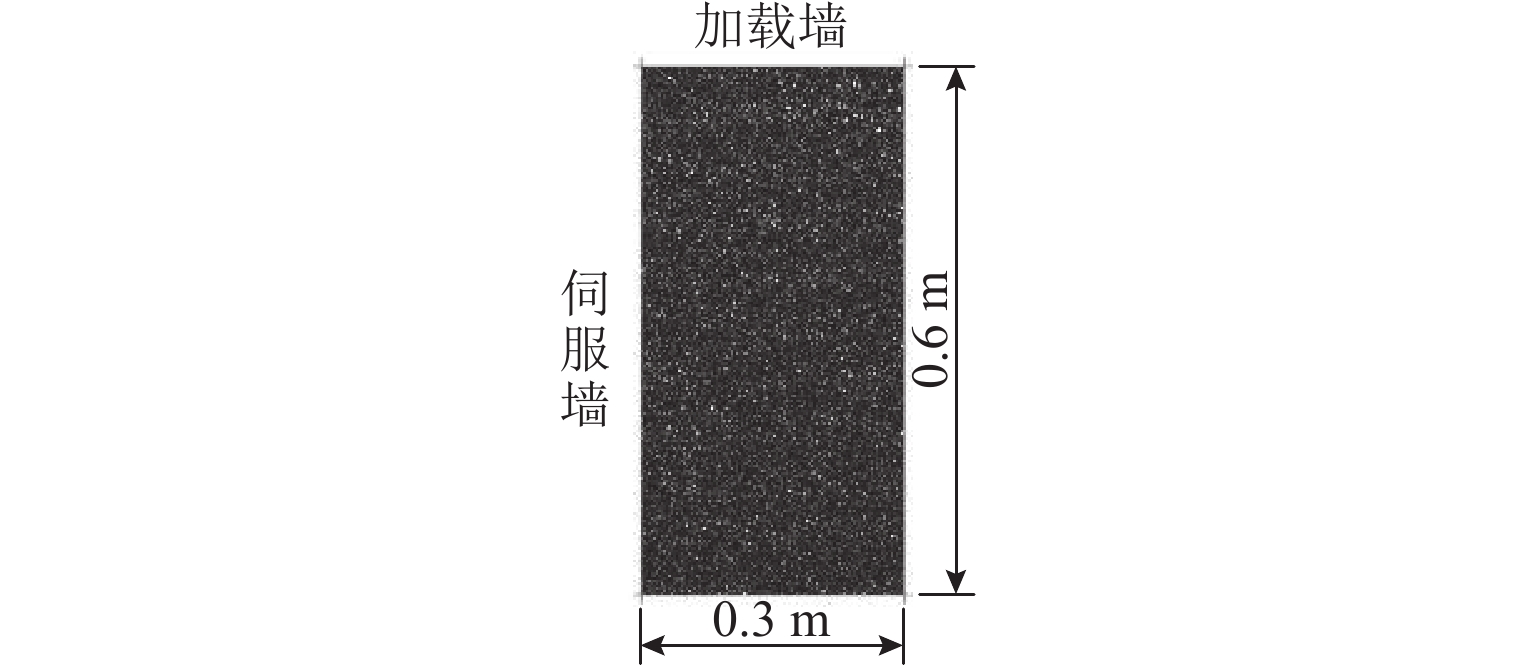
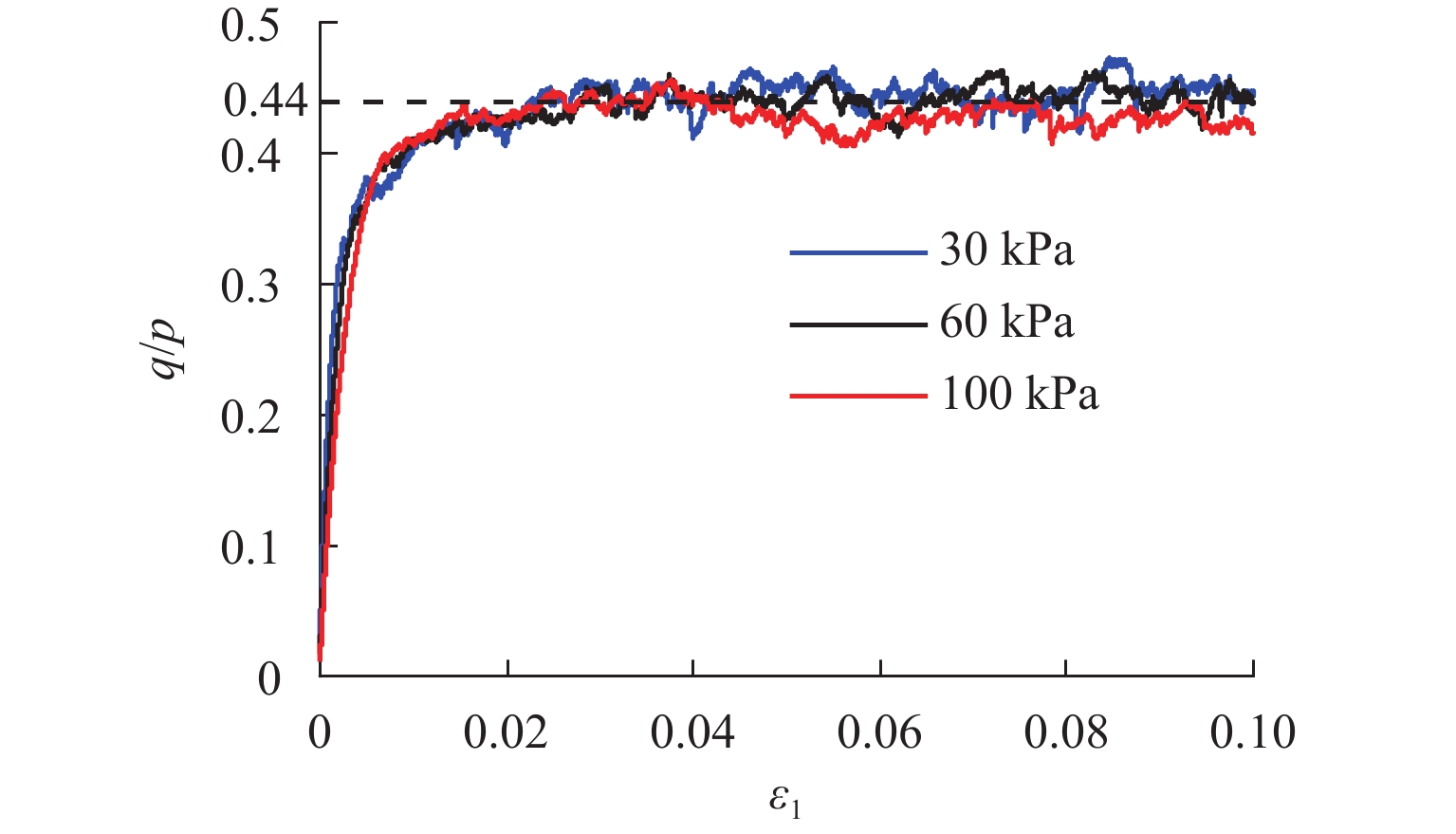
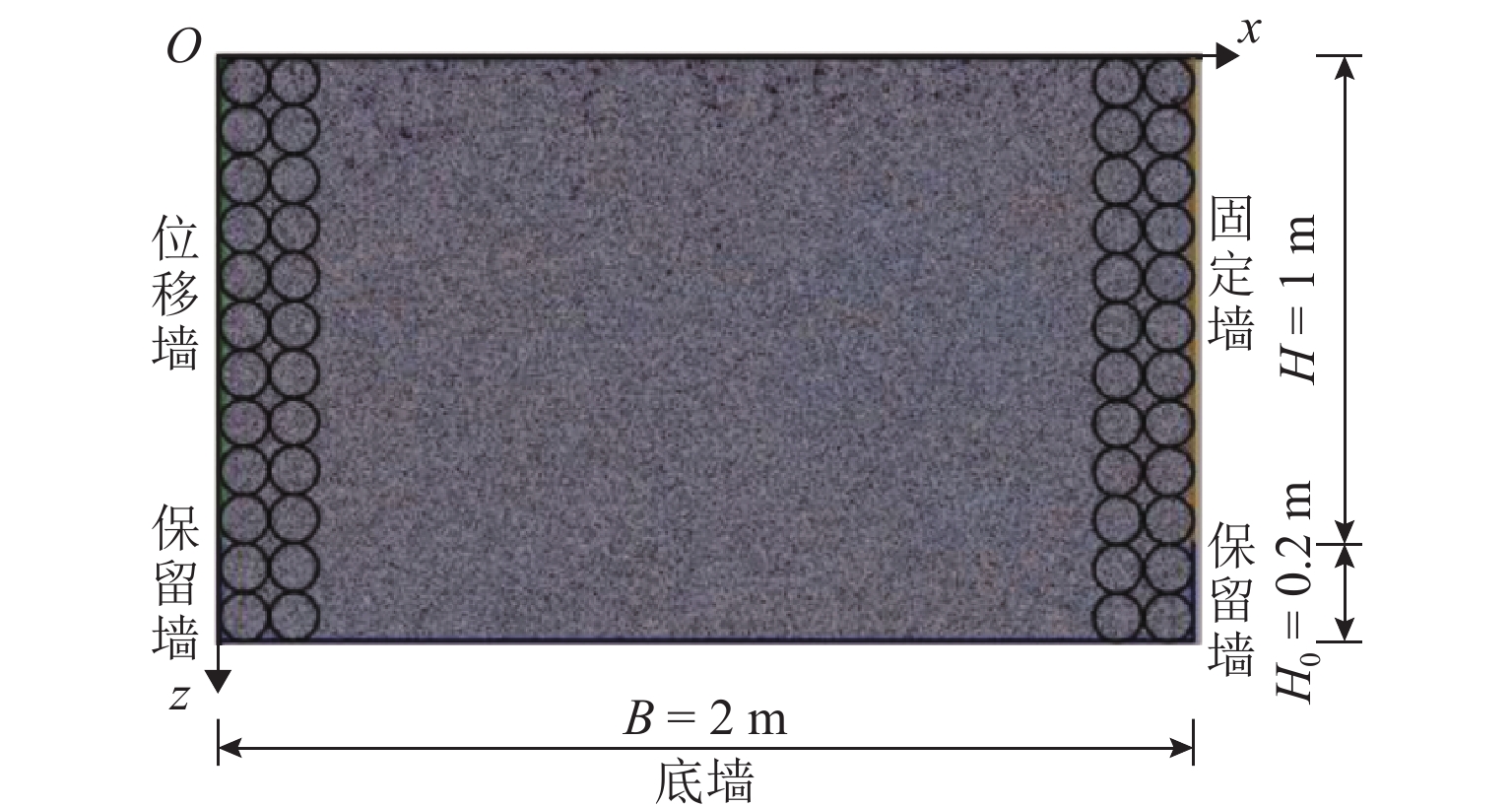
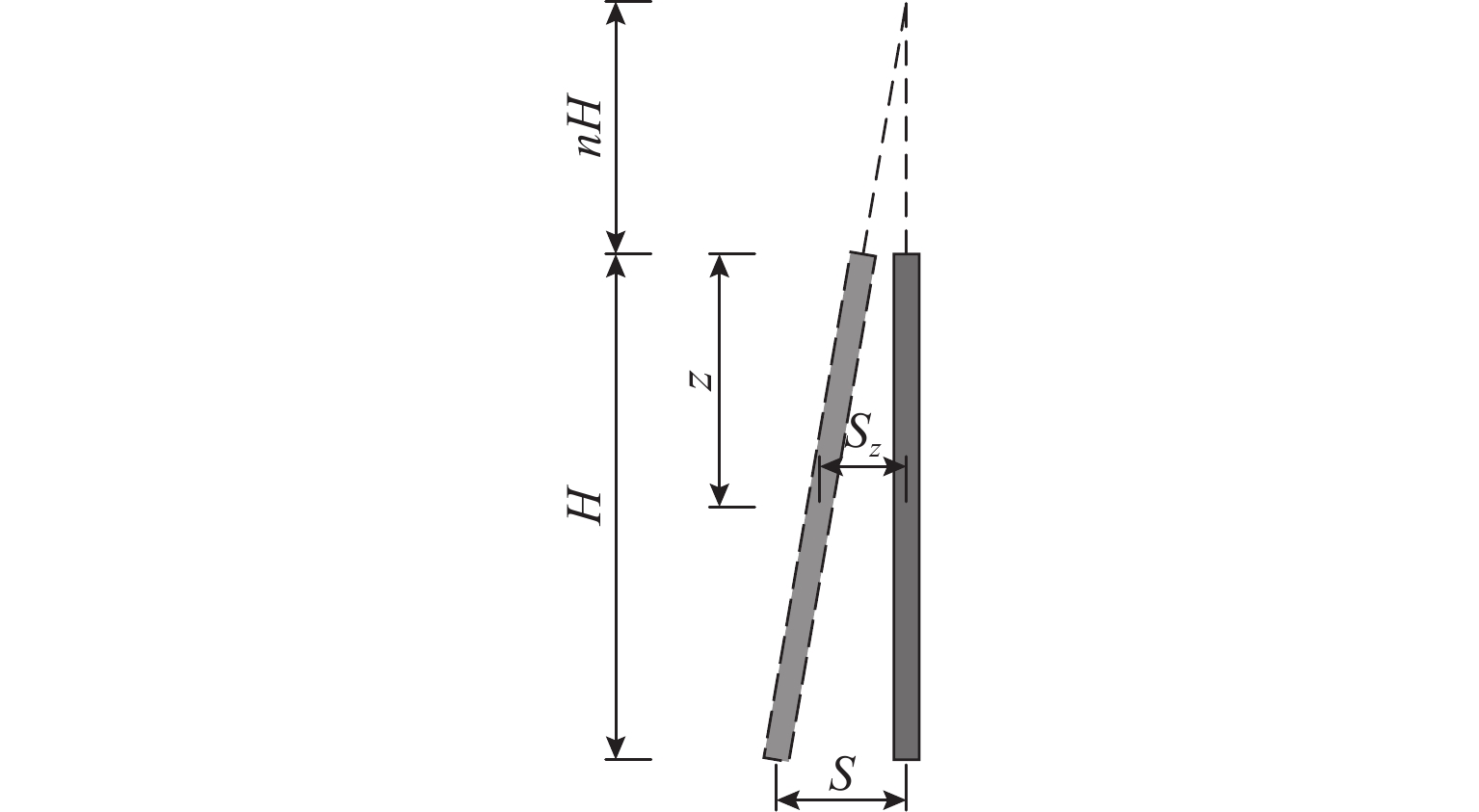
The non-limit active earth pressure was investigated under the RTT mode with a combination of discrete element simulations and theoretical derivation. The primary goal was to understand the impact of various factors such as wall displacement, friction angles, and rotation center position on earth pressure. To simulate the physical properties of soil particles accurately, and minimize the influence of resisting rotational moments, an elliptical particle cluster composed of three disks was chosen as the basic particle. The model parameters were selected based on previous research, ensuring the reliability and relevance of the simulation results. The PFC2D software was used to create a soil model, and three different confining pressures (30 kPa, 60 kPa, and 100 kPa) were applied in a biaxial test setup. The internal friction angle of the soil was found to be 26.1°. To generate the soil model, a gravity deposition method was employed, layering the soil into six distinct layers with a controlled porosity of 0.22. A series of measurement circles were set up to obtain the internal stress and rotation angle of the soil. After the sample was formed, the horizontal displacement speed of the wall was 6 × 10⁻⁴ m/s when the control displacement wall rotated outward. The maximum horizontal displacement of the wall was set to 0.012
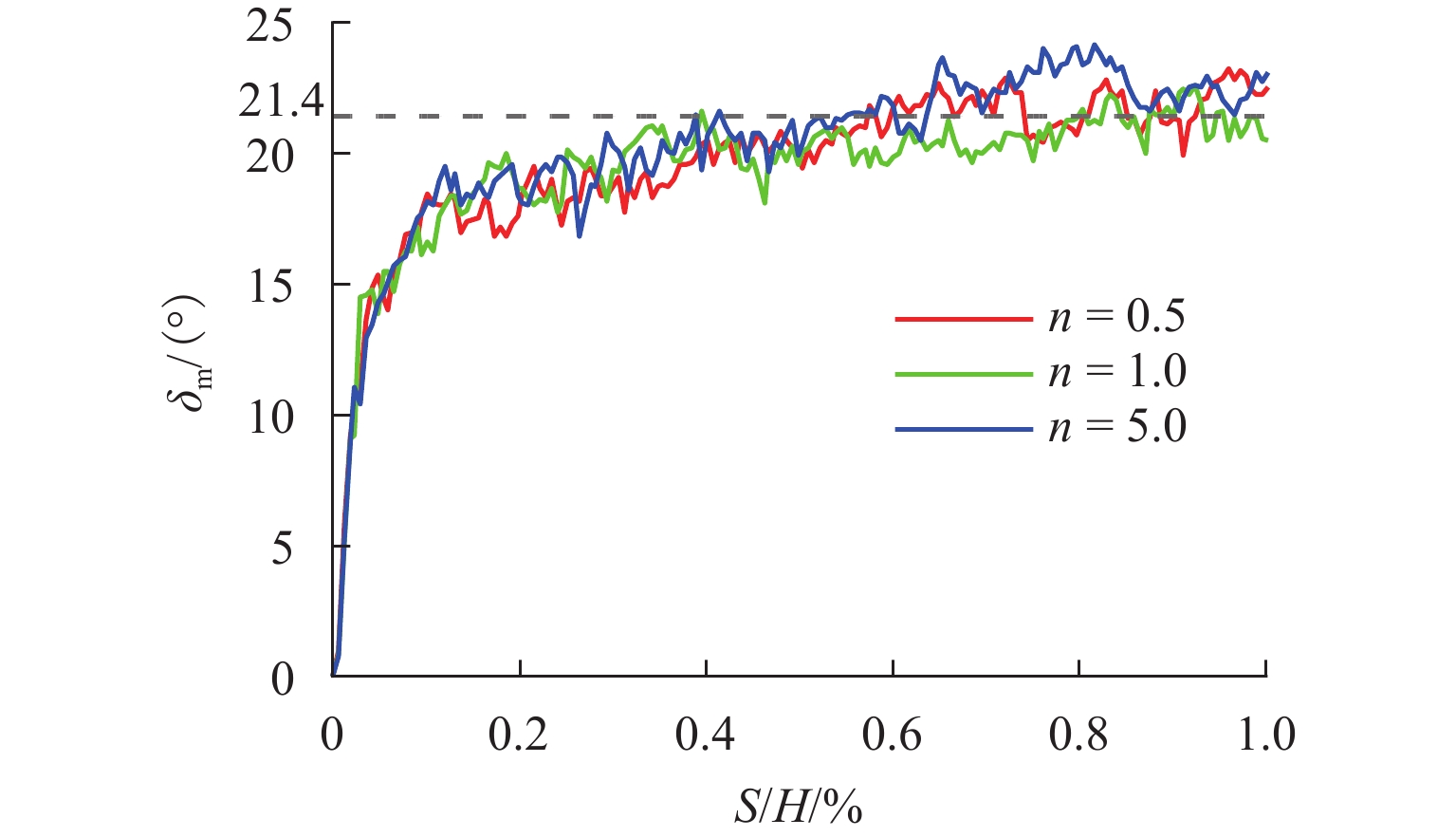
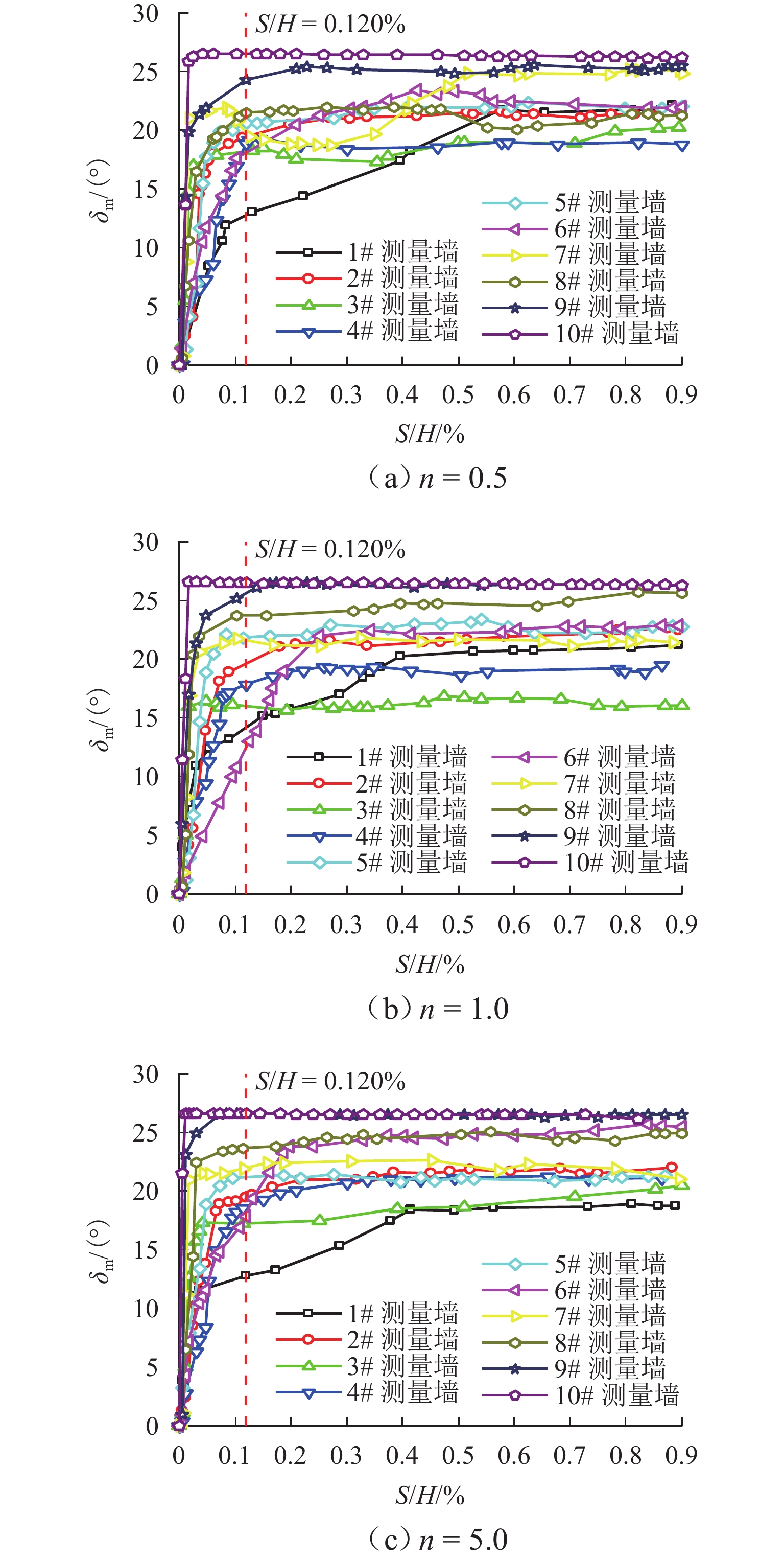
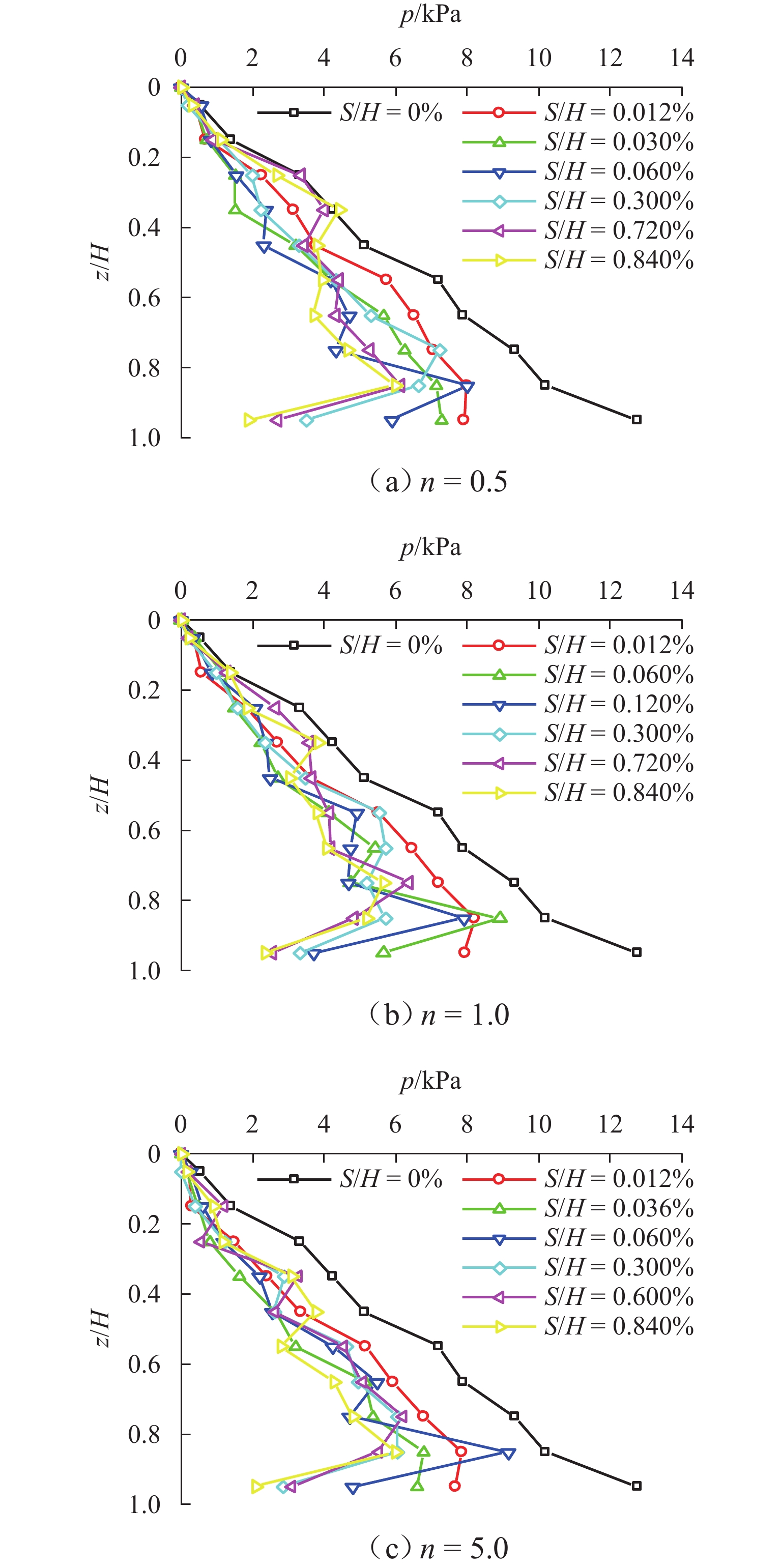
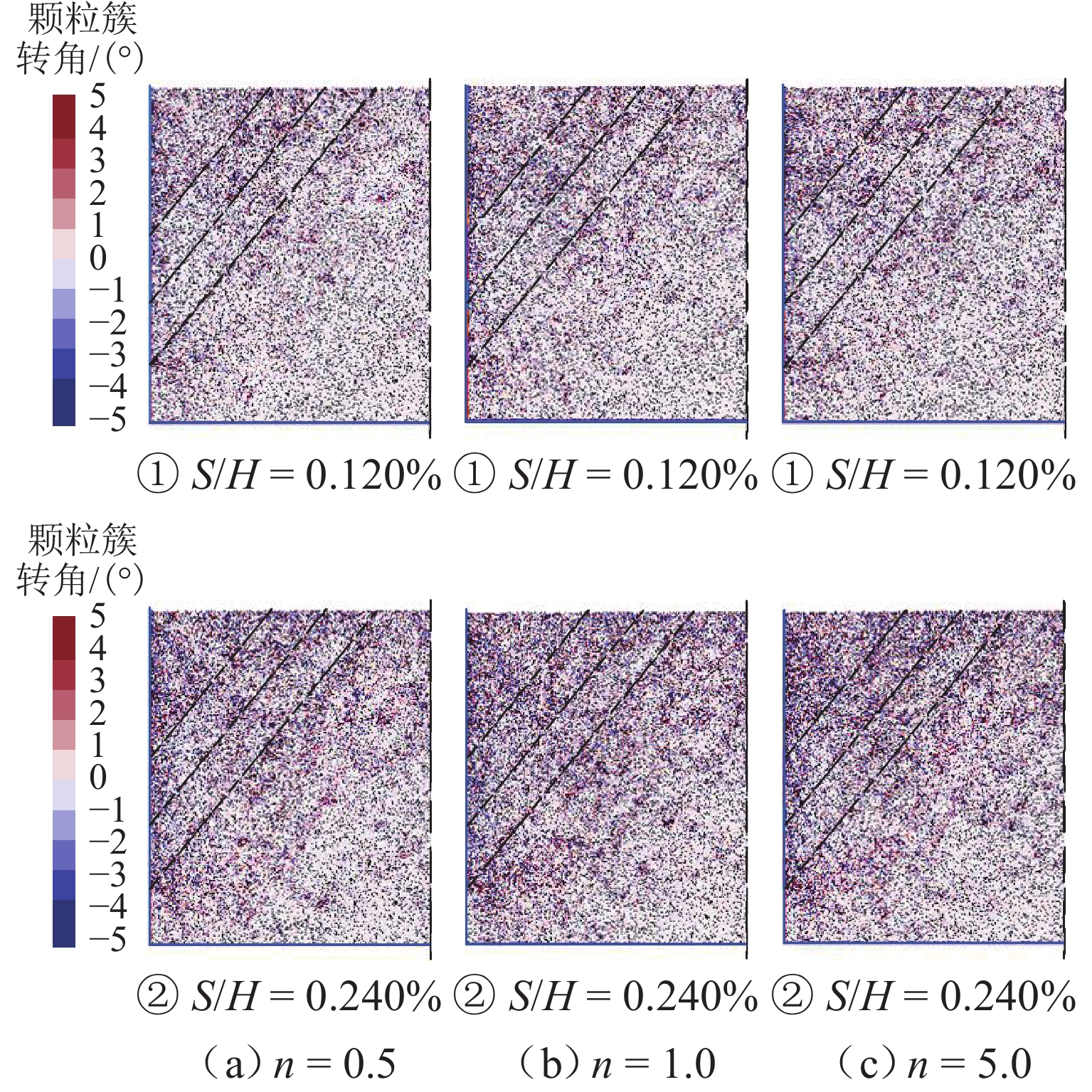
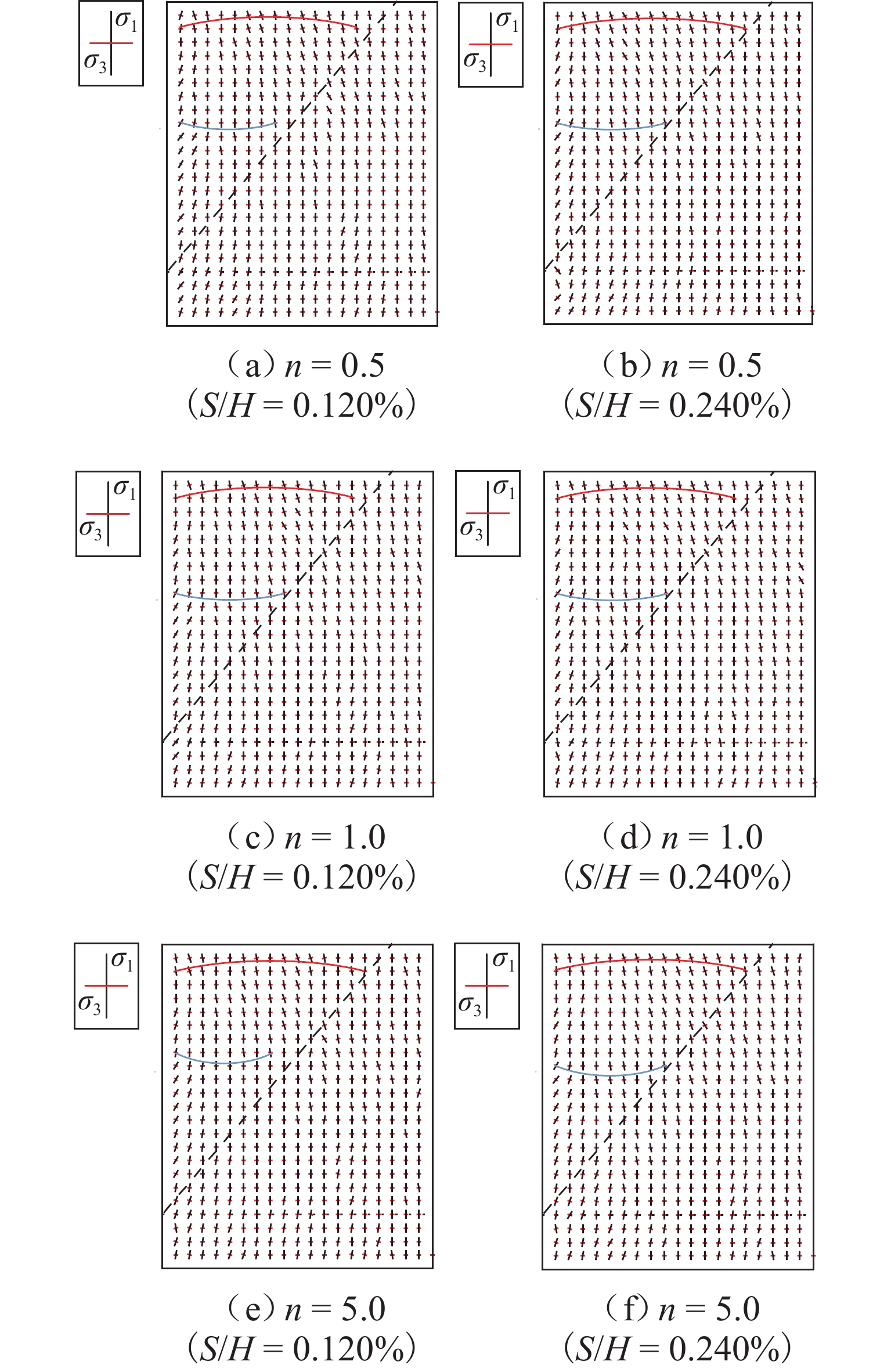
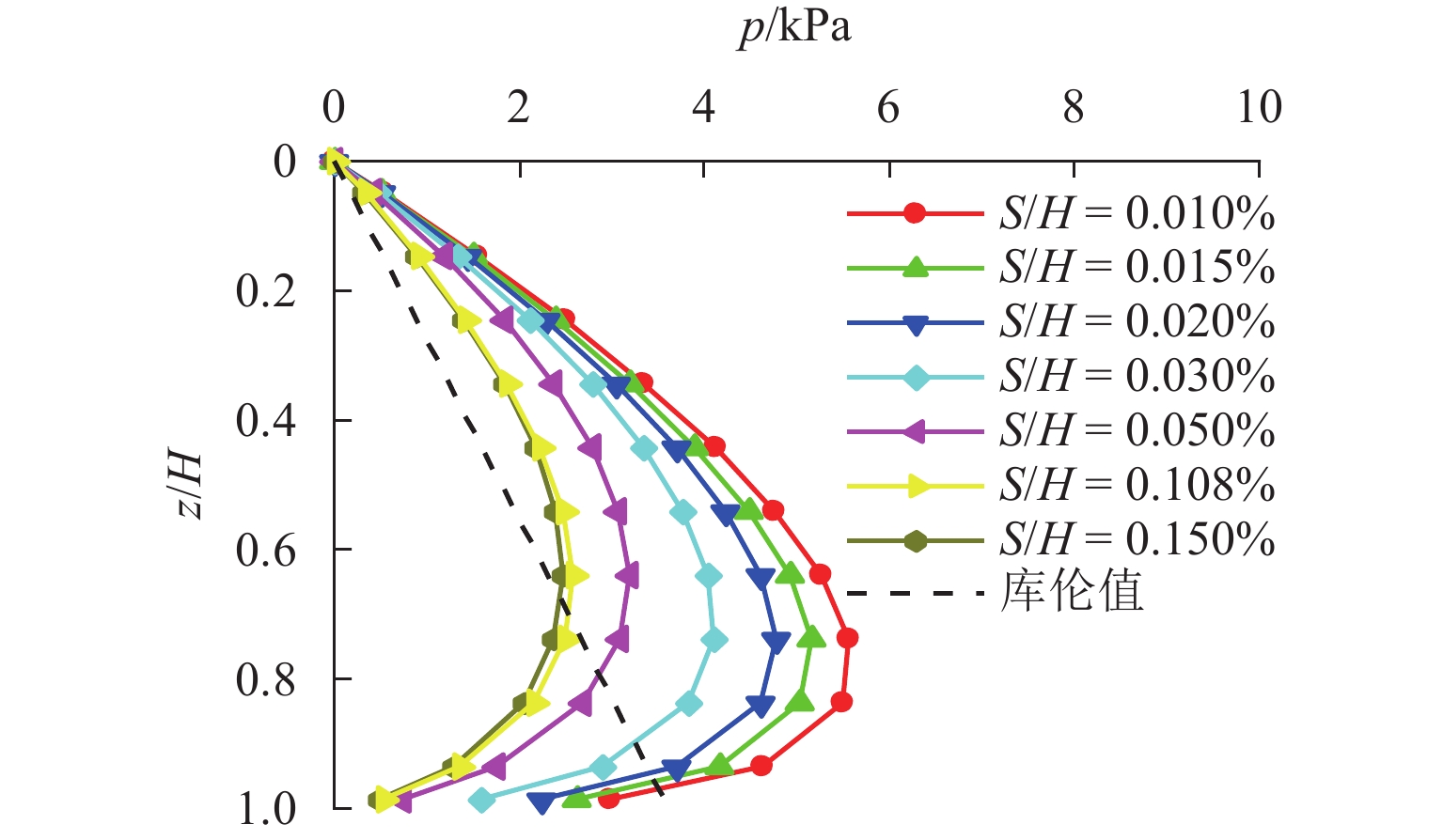
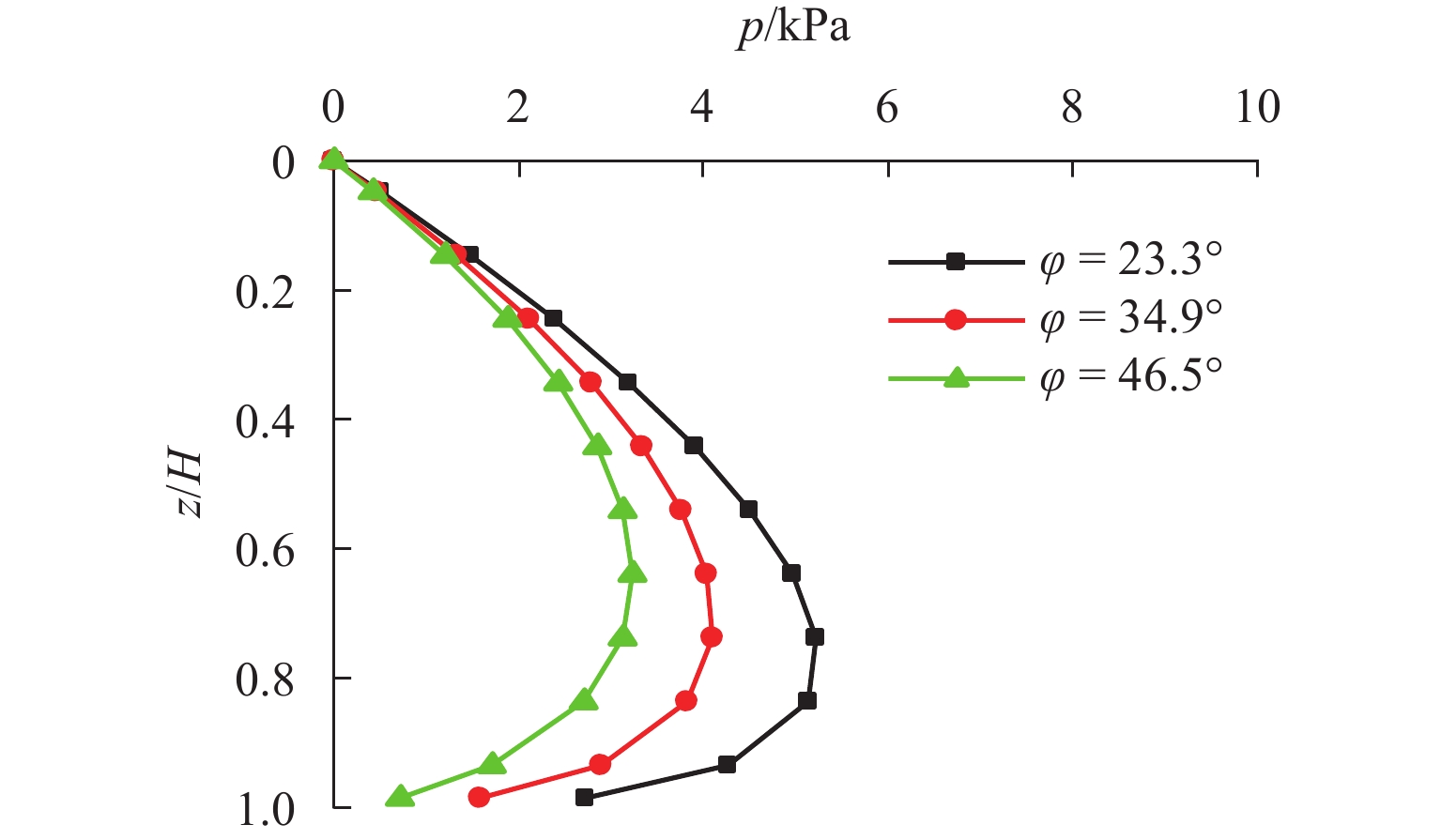
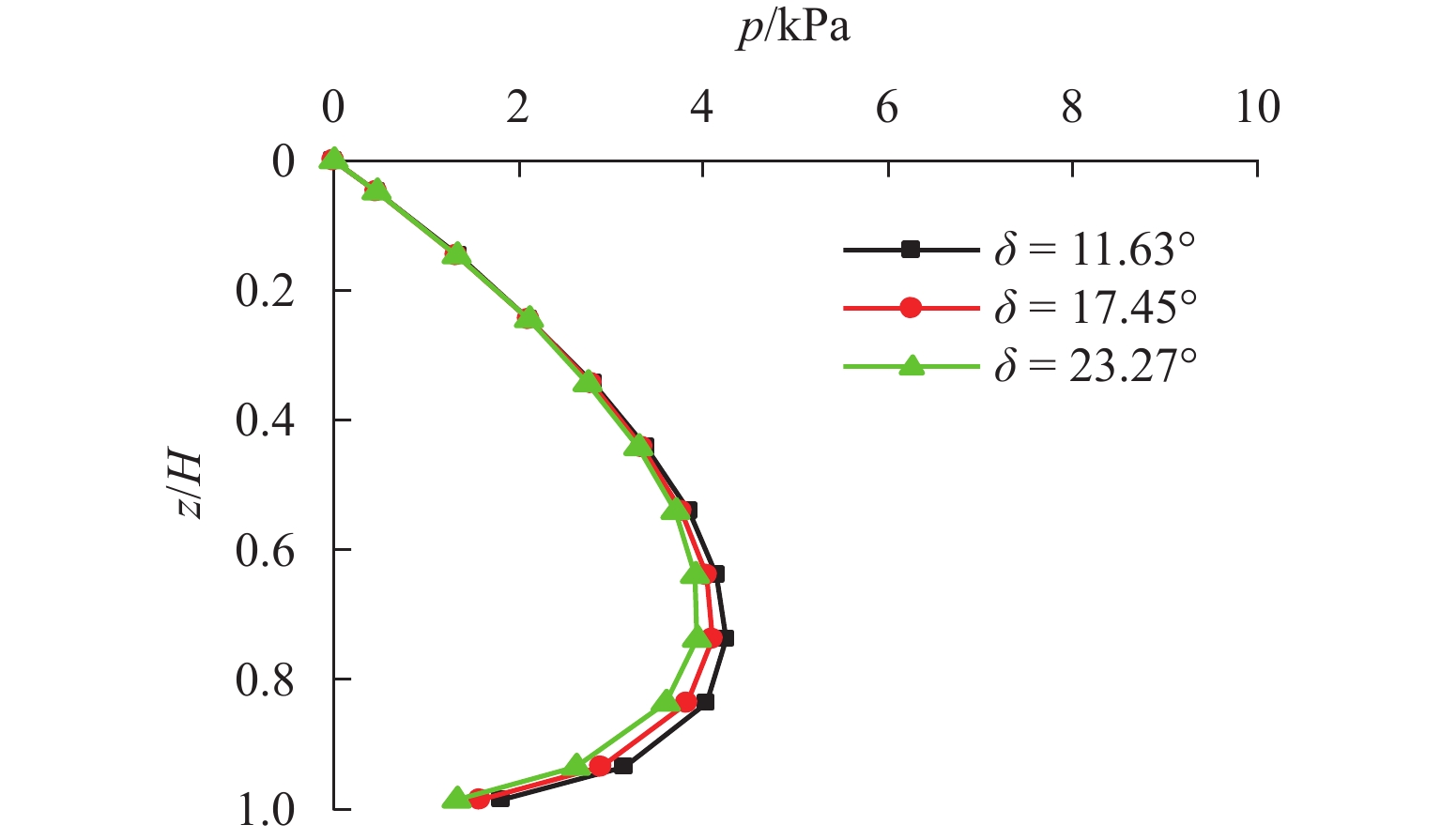
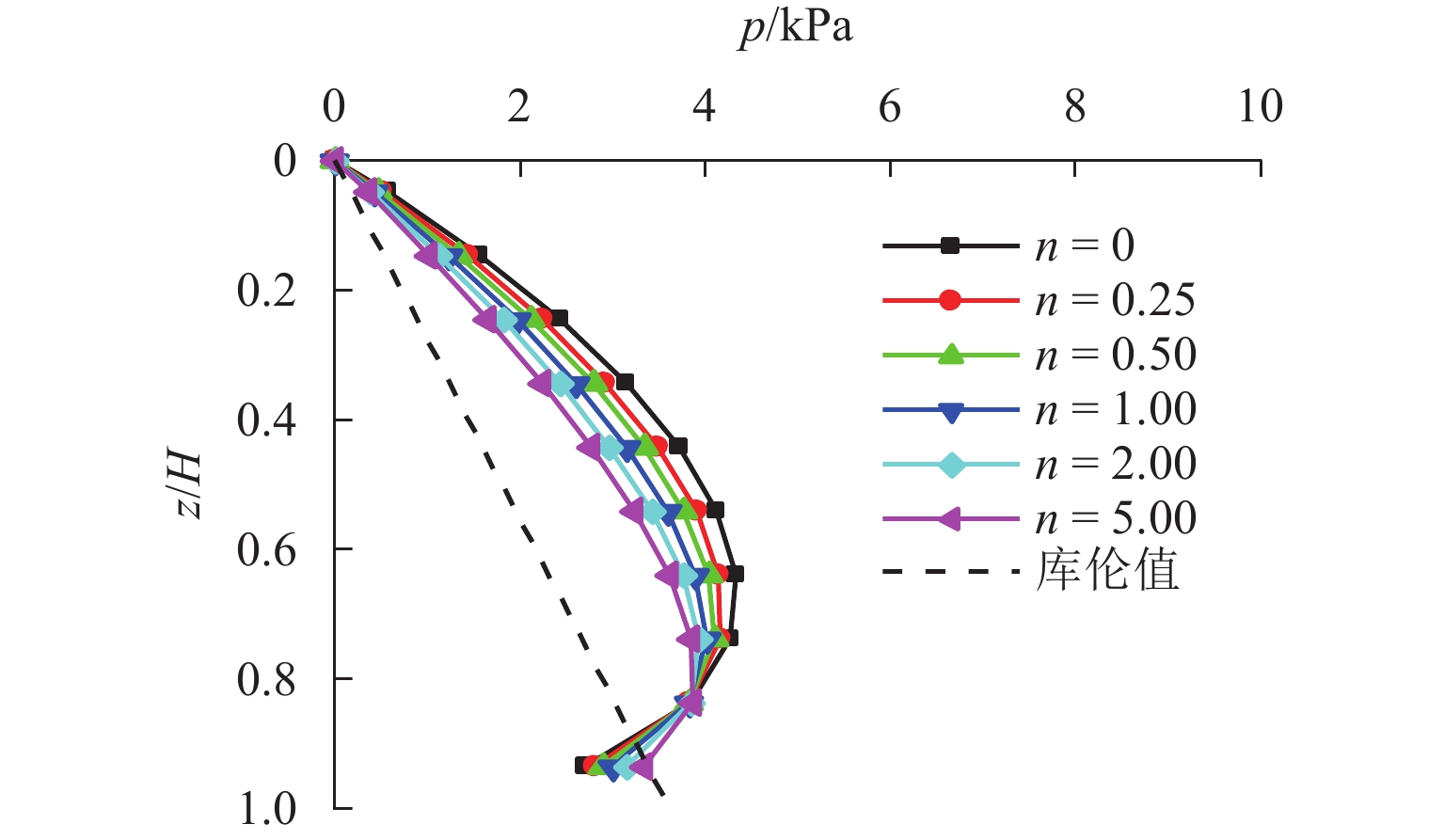
The results of discrete element simulation, simulation verification, and parameter analysis are summarized. The simulation results are as follows: 1) The performance of the wall-earth friction angles of soil samples with different rotating center positions in the RTT mode is basically the same. The average wall-soil friction angle of the three groups of models is approximately 21.4°. As wall displacement increases, the wall-soil friction angle gradually mobilizes and reaches its limit value. 2) The distribution of active earth pressure in the RTT mode exhibits characteristics of both translational mode and rotational mode. As wall displacement increases, the pressure distribution transitions from linear to parabolic. A larger
The findings enhance the theoretical understanding of non-limit active earth pressure under RTT displacement and provide practical guidance for the design and construction of retaining structures. Future studies could explore the application of this model to scenarios of more complex retaining wall systems, displacement modes, and soil conditions.

| [1] |
Park B S, Lee J, Lee S D. Experimental investigation of three-dimensional earth pressure according to aspect ratio of retaining wall[J]. Marine Georesources & Geotechnology, 2018, 36(2): 181-189. doi: 10.1080/1064119X.2017.1292334
|
| [2] |
Fang Y S, Ishibashi I. Static earth pressures with various wall movements[J]. Journal of Geotechnical Engineering, 1986, 112(3): 317-333. doi: 10.1061/(ASCE)0733-9410(1986)112:3(317)
|
| [3] |
芮瑞, 叶雨秋, 陈成, 等. 考虑墙壁摩擦影响的挡土墙主动土压力非线性分布研究[J]. 岩土力学, 2019, 40(5): 1797-1804. doi: 10.16285/j.rsm.2018.0261
Rui Rui, Ye Yuqiu, Chen Cheng, et al. Nonlinear distribution of active earth pressure on retaining wall considering wall-soil friction[J]. Rock and Soil Mechanics, 2019, 40(5): 1797-1804. doi: 10.16285/j.rsm.2018.0261
|
| [4] |
Rui R, Ye Y Q, Han J, et al. Experimental and theoretical investigations on active earth pressure distributions behind rigid retaining walls with narrow backfill under a translational mode[J]. International Journal of Geomechanics, 2020, 20(10): 4020178.1-4020178.12. doi: 10.1061/(asce)gm.1943-5622.0001832
|
| [5] |
Fan X Z, Xu C J, Liang L J. Experimental and theoretical study for a displacement-controlled design method of embedded cantilever retaining walls (piles)[J]. Sustainability, 2023, 15(12): 9831.1-9831.17. doi: 10.3390/su15129831
|
| [6] |
崔兵兵. 不同位移模式下土拱效应及土压力分布规律研究[D]. 济南: 山东大学, 2018.
|
| [7] |
范晓真. 非对称开挖内撑式支护受力变形机理及变形控制设计理论[D]. 杭州: 浙江大学, 2021.
|
| [8] |
孙佳政. 不同位移模式下挡土墙非极限主动土压力研究[D]. 杭州: 浙江大学, 2023.
|
| [9] |
Iskander M, Chen Z B, Omidvar M, et al. Active static and seismic earth pressure for c–φ soils[J]. Soils and Foundations, 2013, 53(5): 639-652. doi: 10.1016/j.sandf.2013.08.003
|
| [10] |
Bang S. Active earth pressure behind retaining walls[J]. Journal of Geotechnical Engineering, 1985, 111(3): 407-412. doi: 10.1061/(ASCE)0733-9410(1985)111:3(407)
|
| [11] |
Ni P P, Mangalathu S, Song L H, et al. Displacement-dependent lateral earth pressure models[J]. Journal of Engineering Mechanics, 2018, 144(6): 4018032.1-4018032.12. doi: 10.1061/(asce)em.1943-7889.0001451
|
| [12] |
Mei G X, Chen Q M, Song L H. Model for predicting displacement-dependent lateral earth pressure[J]. Canadian Geotechnical Journal, 2009, 46(8): 969-975. doi: 10.1139/T09-040
|
| [13] |
徐日庆, 龚慈, 魏纲, 等. 考虑平动位移效应的刚性挡土墙土压力理论[J]. 浙江大学学报(工学版), 2005, 39(1): 119-122.
Xu Riqing, Gong Ci, Wei Gang, et al. Theory of earth pressure against rigid retaining walls considering translational movement effect[J]. Journal of Zhejiang University (Engineering Science), 2005, 39(1): 119-122.
|
| [14] |
卢坤林, 杨扬. 非极限主动土压力计算方法初探[J]. 岩土力学, 2010, 31(2): 615-619. doi: 10.3969/j.issn.1000-7598.2010.02.047
Lu Kunlin, Yang Yang. Preliminary study of active earth pressure under nonlimit state[J]. Rock and Soil Mechanics, 2010, 31(2): 615-619. doi: 10.3969/j.issn.1000-7598.2010.02.047
|
| [15] |
Matsuzawa H, Hazarika H. Analyses of active earth pressure against rigid retaining wall subjected to different modes of movement[J]. Soils and Foundations, 1996, 36(3): 51-65. doi: 10.3208/sandf.36.3_51
|
| [16] |
陈建旭, 钱波, 郭宁, 等. 组合位移模式下刚性挡土墙非极限主动土压力[J]. 公路, 2021, 66(6): 25-31.
Chen Jianxu, Qian Bo, Guo Ning, et al. Non-limit active earth pressure for rigid retaining wall with combined displacement modes[J]. Highway, 2021, 66(6): 25-31.
|
| [17] |
Dang F N, Wang X, Cao X S, et al. Calculation method of earth pressure considering wall displacement and axial stress variations[J]. Applied Sciences, 2023, 13(16): 9352. doi: 10.3390/app13169352
|
| [18] |
He Z M, Liu Z F, Liu X H, et al. Improved method for determining active earth pressure considering arching effect and actual slip surface[J]. Journal of Central South University, 2020, 27(7): 2032-2042. doi: 10.1007/s11771-020-4428-5
|
| [19] |
Liang L J, Xu C J, Chen Q Z, et al. Experimental and theoretical investigations on evolution of soil-arching effect in 2D trapdoor problem[J]. International Journal of Geomechanics, 2020, 20(6): 1643.1-1643.8. doi: 10.1061/(asce)gm.1943-5622.0001643
|
| [20] |
George T I, Dasaka S M. Numerical investigation of soil arching in dense sand[J]. International Journal of Geomechanics, 2021, 21(5): 4021051.1-4021051.16. doi: 10.1061/(asce)gm.1943-5622.0001971
|
| [21] |
Yang B, Shi Q Y, Zhou H X, et al. Study on distribution of sidewall earth pressure on open caissons considering soil arching effect[J]. Scientific Reports, 2023, 13(1): 10657.1-10657.12. doi: 10.1038/s41598-023-37865-9
|
| [22] |
Chen R P, Liu M C, Meng F Y, et al. Soil arching effect associated with ground movement and stress transfer adjacent to braced excavation in clayey ground[J]. Journal of Geotechnical and Geoenvironmental Engineering, 2023, 149(12): 04023113.1-04023113.17. doi: 10.1061/jggefk.gteng-11236
|
| [23] |
Paik K H, Salgado R. Estimation of active earth pressure against rigid retaining walls considering arching effects[J]. Géotechnique, 2003, 53(7): 643-653. doi: 10.1680/geot.53.7.643.37385
|
| [24] |
Goel S, Patra N R. Effect of arching on active earth pressure for rigid retaining walls considering translation mode[J]. International Journal of Geomechanics, 2008, 8(2): 123-133. doi: 10.1061/(ASCE)1532-3641(2008)8:2(123)
|
| [25] |
Xu M, Guo J W. DEM study on the development of the Earth pressure of granular materials subjected to lateral cyclic loading[J]. Computers and Geotechnics, 2021, 130: 103915.1-103915.12. doi: 10.1016/j.compgeo.2020.103915
|
| [26] |
张恒志, 徐长节, 何寨兵, 等. 基于离散元方法的不同挡墙变位模式下有限土体主动土压力研究[J]. 岩土力学, 2022, 43(1): 257-267. doi: 10.16285/j.rsm.2021.0708
Zhang Hengzhi, Xu Changjie, He Zhaibing, et al. Study of active earth pressure of finite soils under different retaining wall movement modes based on discrete element method[J]. Rock and Soil Mechanics, 2022, 43(1): 257-267. doi: 10.16285/j.rsm.2021.0708
|
| [27] |
Zhang R X, Su D, Lin X T, et al. DEM analysis of passive arching in a shallow trapdoor under eccentric loading[J]. Particuology, 2023, 77: 14-28. doi: 10.1016/j.partic.2022.08.004
|
| [28] |
孙佳政, 傅翼, 仇雅诗, 等. RB模式下砂土非极限主动土压力的离散元模拟与理论研究[J]. 岩土力学, 2023, 44(2): 603-614. doi: 10.16285/j.rsm.2022.0406
Sun Jiazheng, Fu Yi, Qiu Yashi, et al. Discrete element simulation and theoretical study on non-limit active earth pressure of sand under RB mode[J]. Rock and Soil Mechanics, 2023, 44(2): 603-614. doi: 10.16285/j.rsm.2022.0406
|
| [29] |
Goldenberg C, Goldhirsch I. Friction enhances elasticity in granular solids[J]. Nature, 2005, 435: 188-191. doi: 10.1038/nature03497
|
| [30] |
申志福, 蒋明镜, 朱方园, 等. 离散元微观参数对砂土宏观参数的影响[J]. 西北地震学报, 2011, 33(增1): 160-165. doi: 10.3969/j.issn.1000-0844.2011.z1.034
Shen Zhifu, Jiang Mingjing, Zhu Fangyuan, et al. Influence of micro parameters of discrete element on macro parameters of sandy soil[J]. China Earthquake Engineering Journal, 2011, 33(S1): 160-165. doi: 10.3969/j.issn.1000-0844.2011.z1.034
|
| [31] |
Jiang M J, Konrad J M, Leroueil S. An efficient technique for generating homogeneous specimens for DEM studies[J]. Computers and Geotechnics, 2003, 30(7): 579-597. doi: 10.1016/S0266-352X(03)00064-8
|
| [32] |
Khosravi M H, Pipatpongsa T, Takemura J. Theoretical analysis of earth pressure against rigid retaining walls under translation mode[J]. Soils and Foundations, 2016, 56(4): 664-675. doi: 10.1016/j.sandf.2016.07.007
|
| [33] |
Liu F Q. Lateral earth pressures acting on circular retaining walls[J]. International Journal of Geomechanics, 2014, 14(3): 4014002.1-4014002.12. doi: 10.1061/(asce)gm.1943-5622.0000291
|
| [34] |
Chang M F. Lateral earth pressures behind rotating walls[J]. Canadian Geotechnical Journal, 1997, 34(4): 498-509. doi: 10.1139/t97-016
|
| [35] |
胡俊强, 张永兴, 陈林, 等. 非极限状态挡土墙主动土压力研究[J]. 岩土工程学报, 2013, 35(2): 381-387. doi: 10.7666/d.D01008971
Hu Junqiang, Zhang Yongxing, Chen Lin, et al. Active earth pressure on retaining wall under non-limit state[J]. Chinese Journal of Geotechnical Engineering, 2013, 35(2): 381-387. doi: 10.7666/d.D01008971
|
| [36] |
江文放, 周亦涛, 俞缙, 等. 基于土拱效应的墙背非极限主动土压力[J]. 地下空间与工程学报, 2016, 12(6): 1676-1681. doi: 10.20174/j.juse.2016.06.036
Jiang Wenfang, Zhou Yitao, Yu Jin, et al. Non-limit active earth pressure for rigid retaining wall based on soil arching effect[J]. Chinese Journal of Underground Space and Engineering, 2016, 12(6): 1676-1681. doi: 10.20174/j.juse.2016.06.036
|
Figures(20) / Tables(2)


 DownLoad: