- ISSN 0258-2724
- CN 51-1277/U
- EI Compendex
- Scopus
- Indexed by Core Journals of China, Chinese S&T Journal Citation Reports
- Chinese S&T Journal Citation Reports
- Chinese Science Citation Database


| Citation: | WANG Fanyu, WANG Dongwei, DENG Qiang, ZHAO Yang, YAN Hao, CHEN Qi. Temperature Prediction of Key Chips in Nuclear Power Instrumentation and Control System Based on Machine Learning[J]. Journal of Southwest Jiaotong University. doi: 10.3969/j.issn.0258-2724.20240332

|
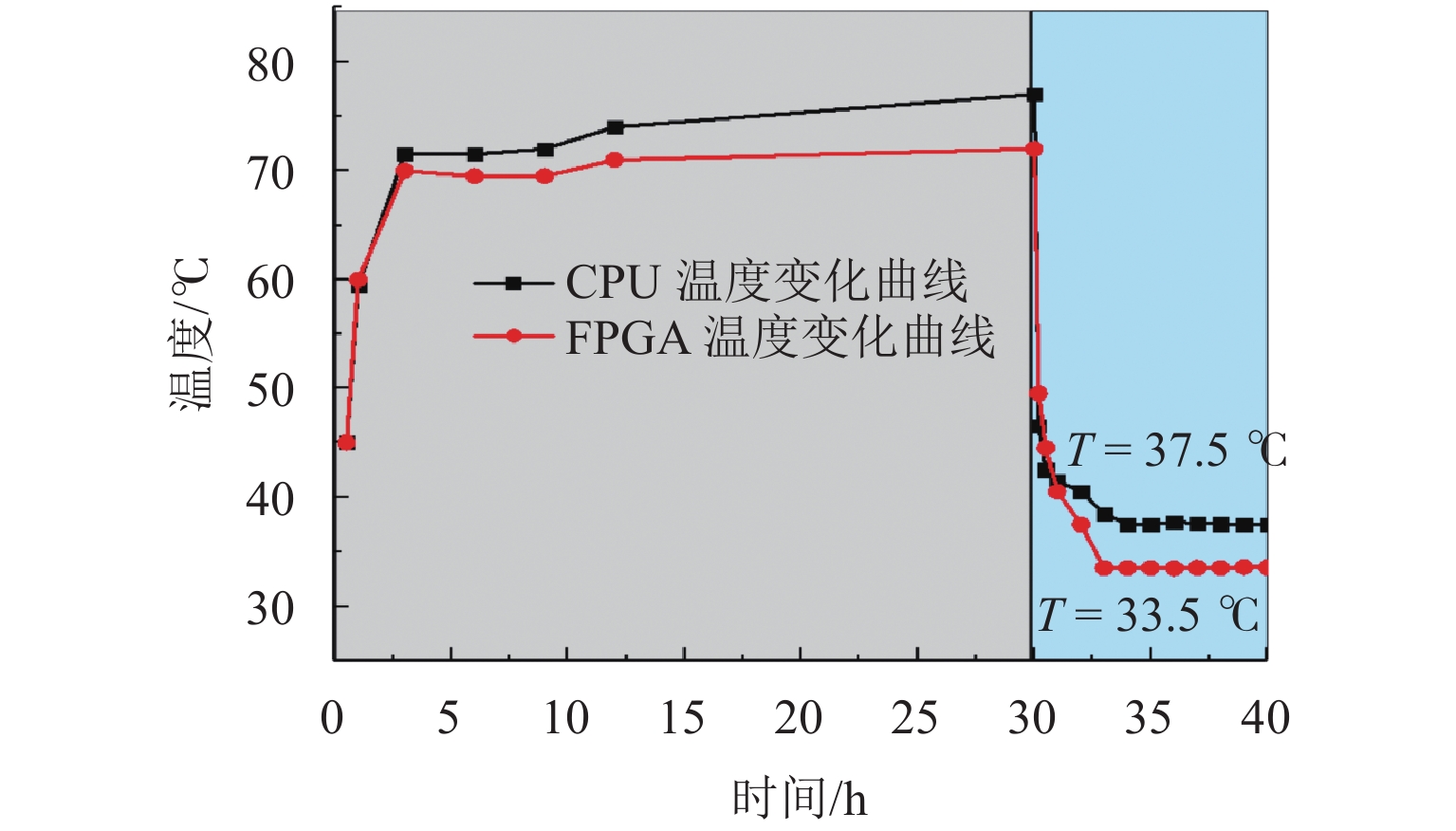
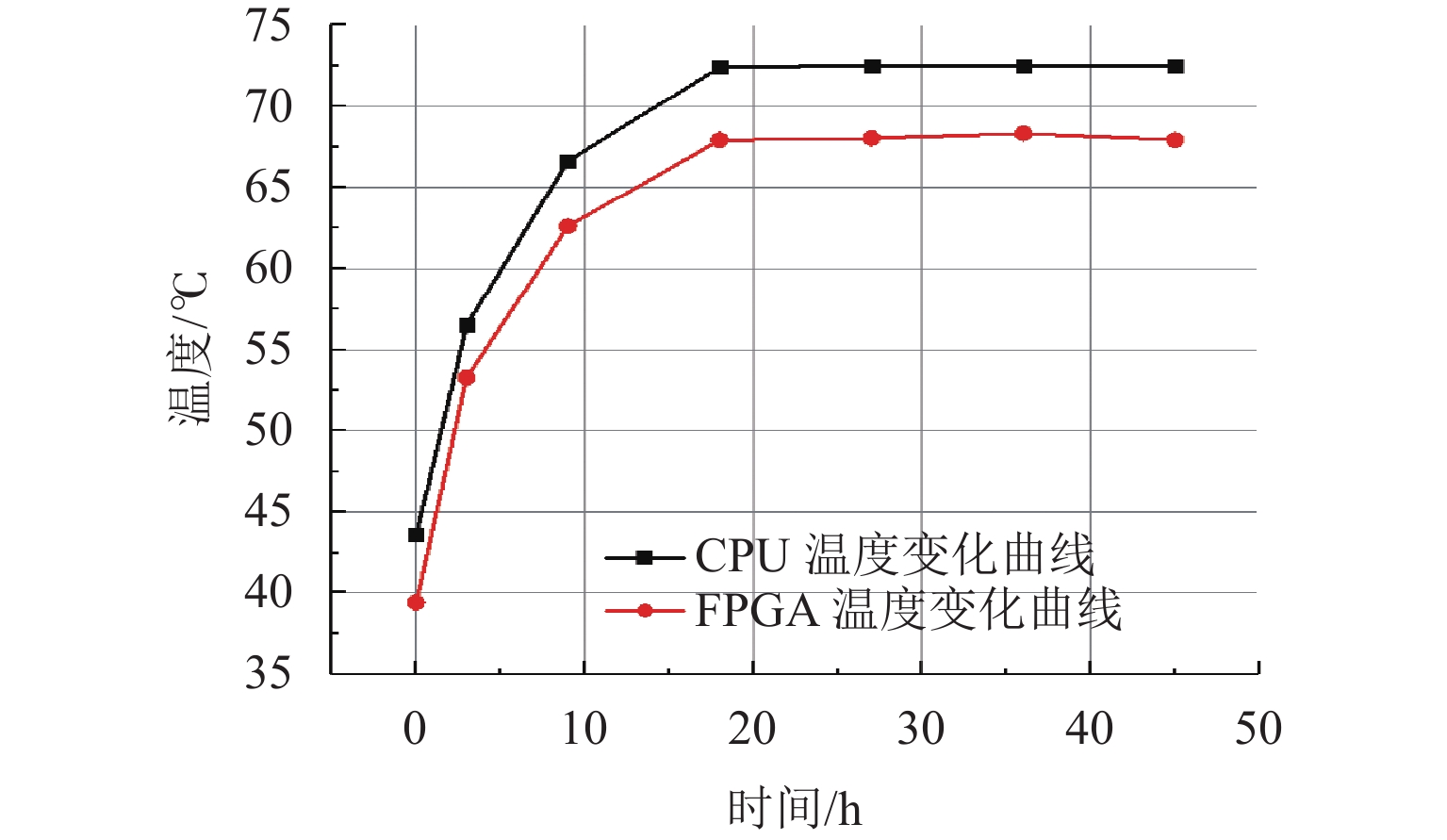
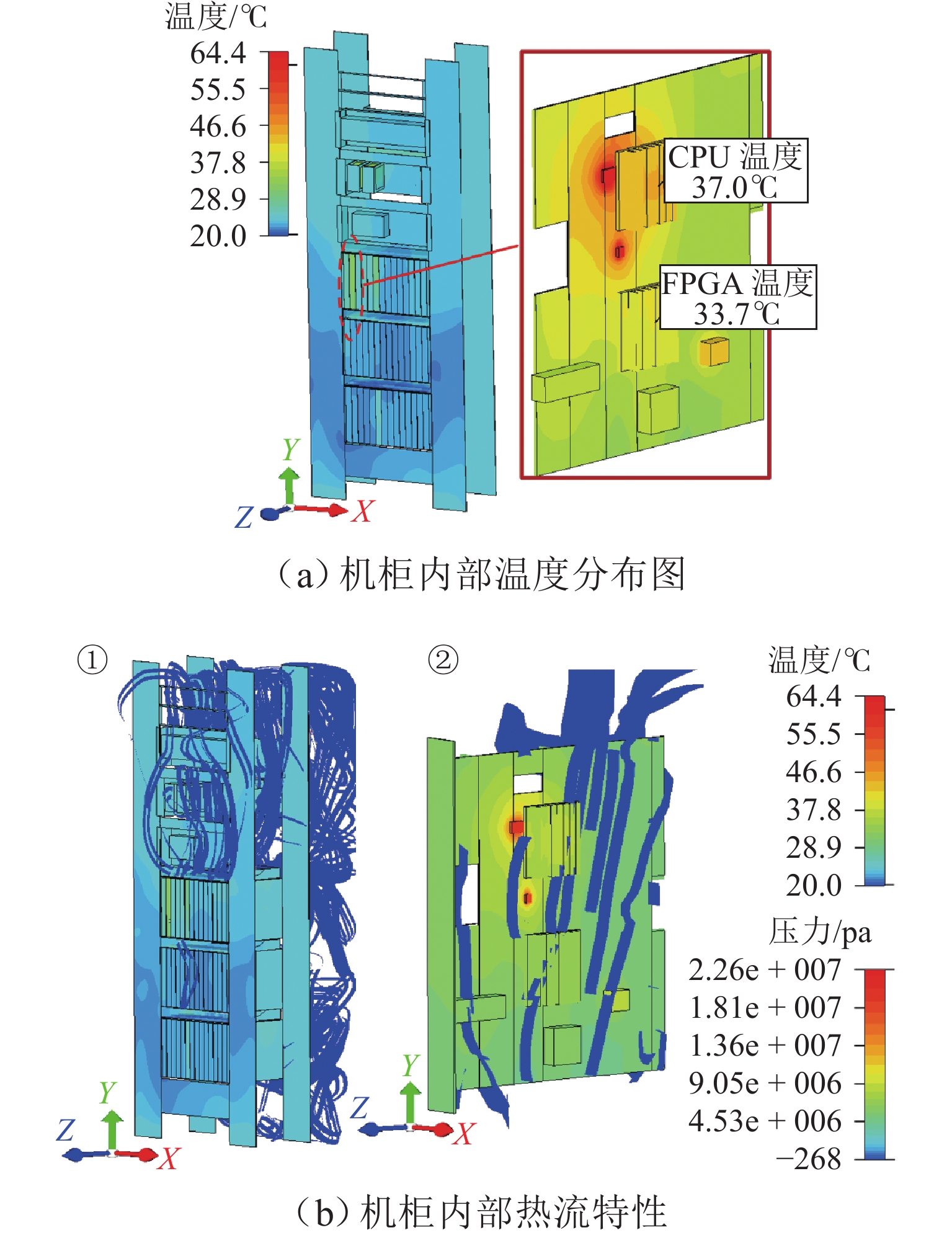
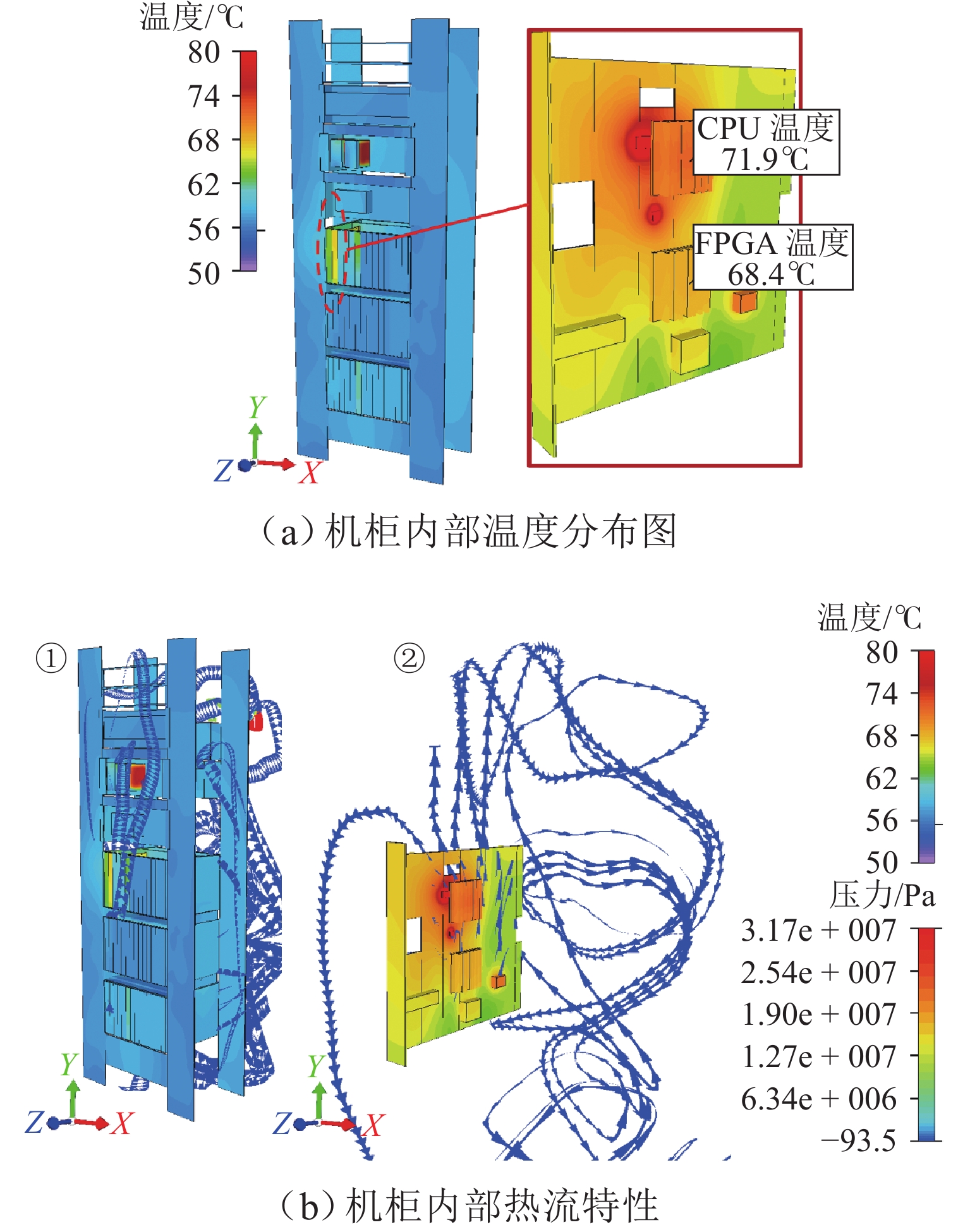
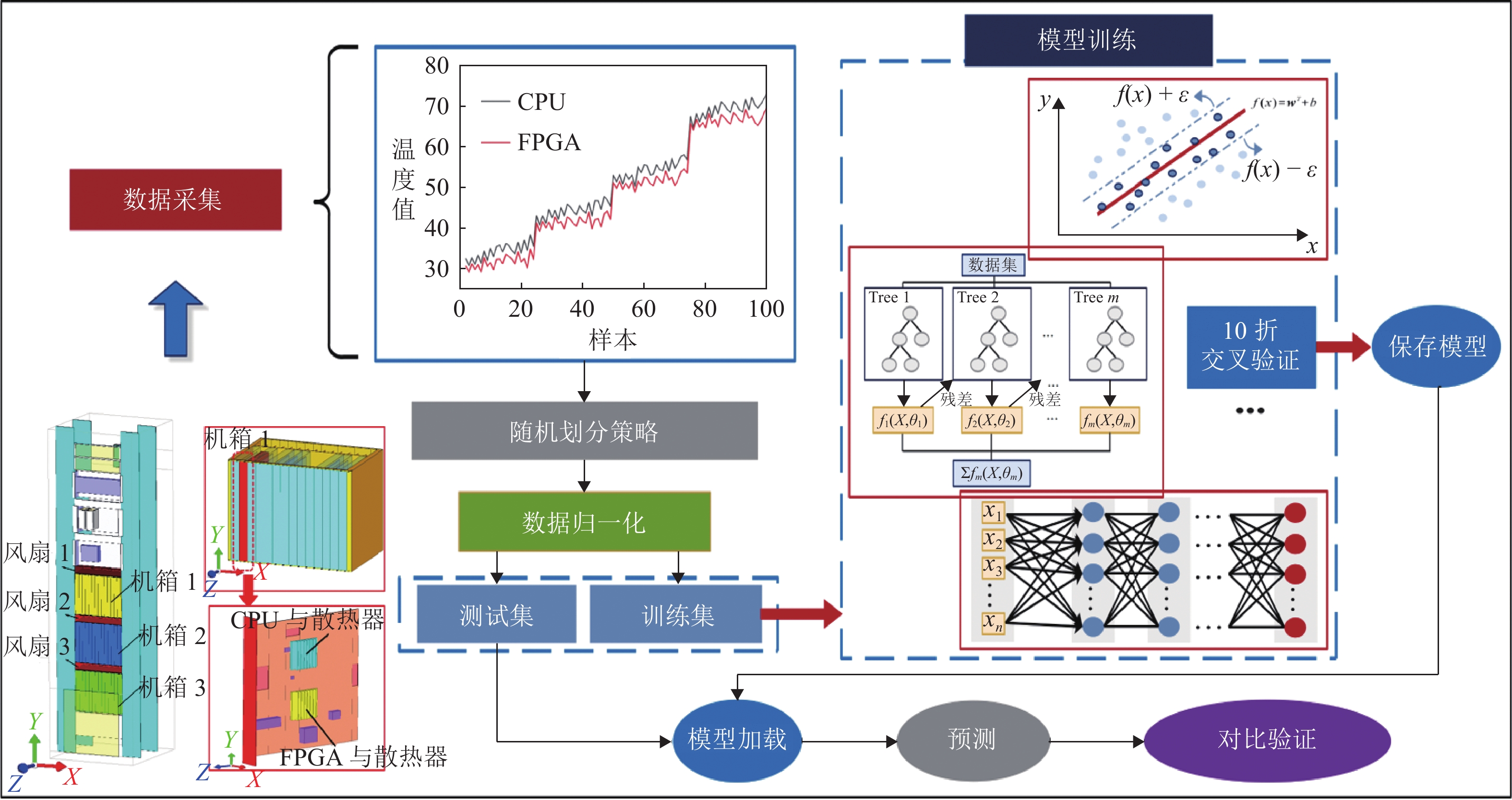
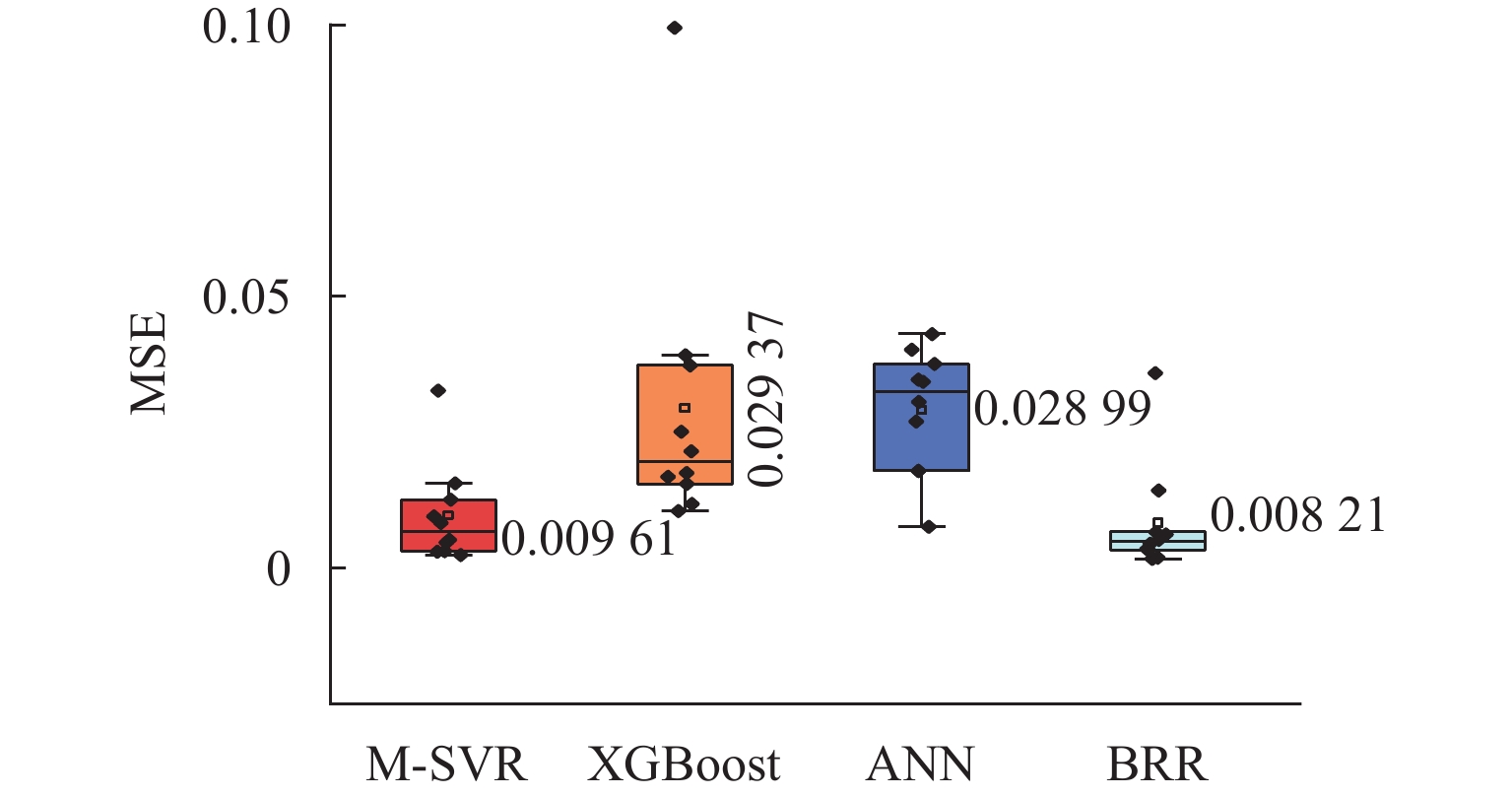
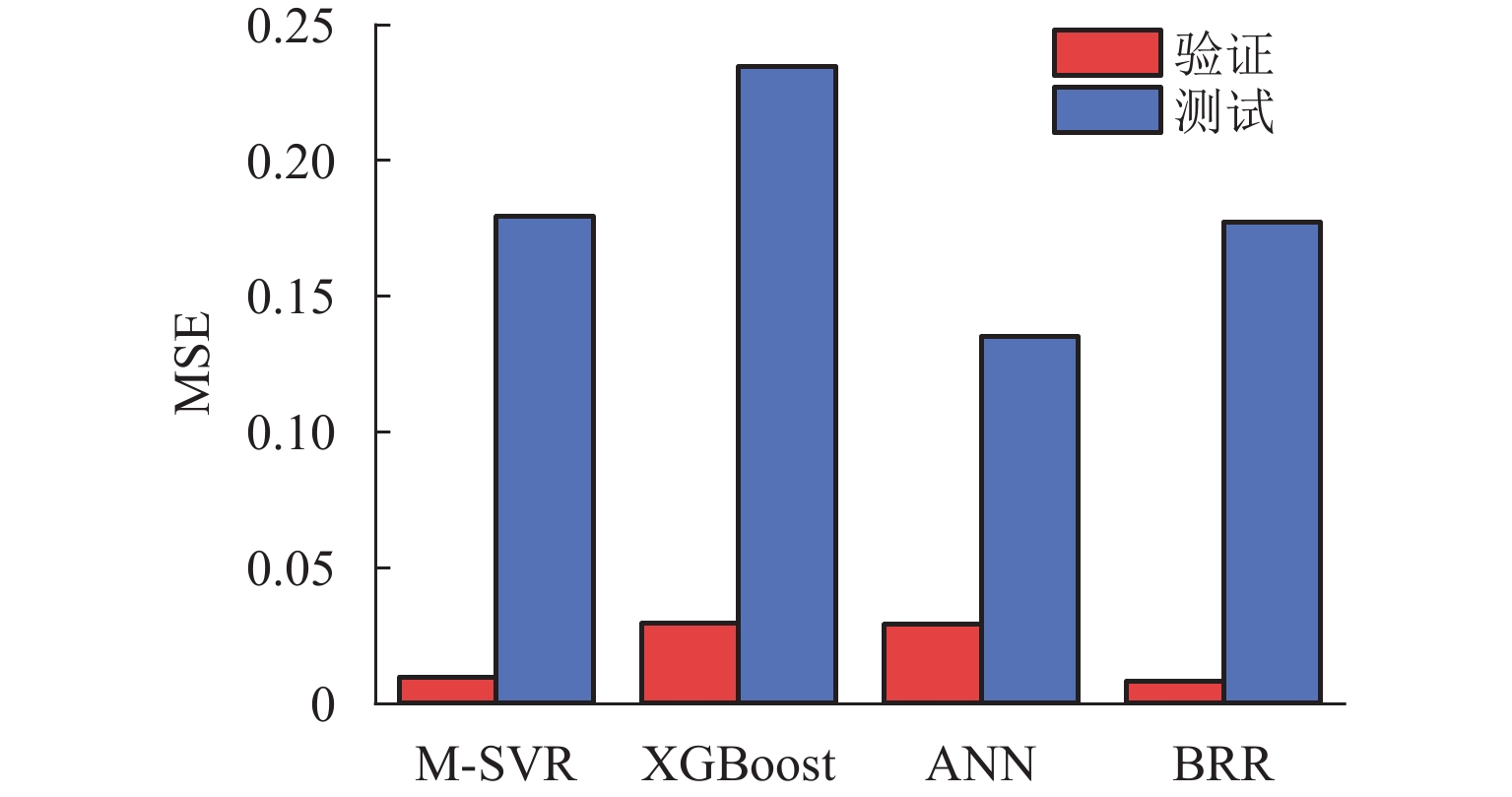
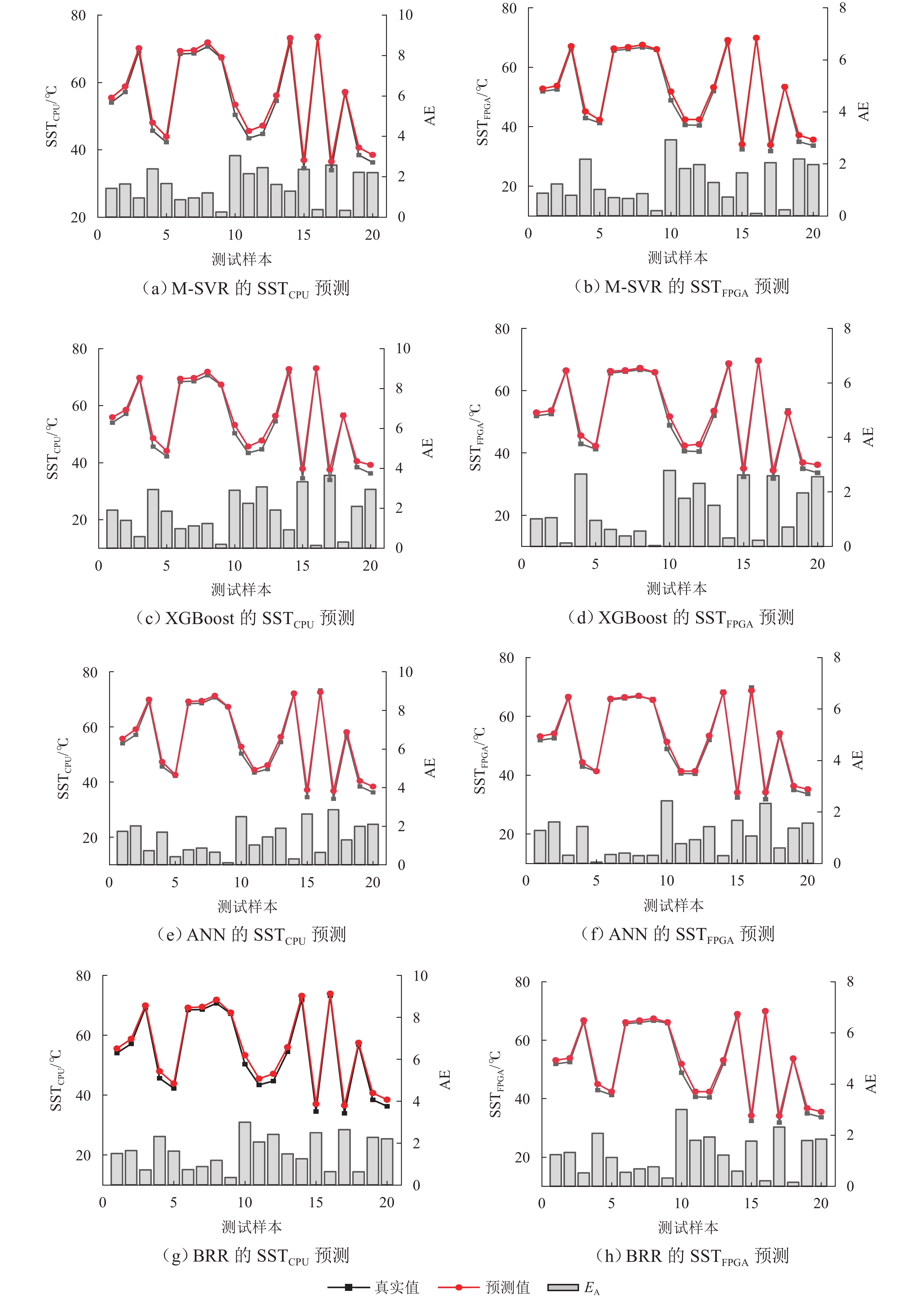
To investigate the thermal characteristics inside the control and protection cabinet of nuclear safety-class instrumentation and control (I&C) systems and the variation patterns of the steady-state temperature (SST) of key chips (CPU and field programmable gate array (FPGA)), experimental studies were conducted on the cabinet under different ambient temperatures. The finite element method was employed to simulate the experimental process, and the accuracy of the numerical model was validated by comparing the experimental results. Furthermore, the SST values of CPU and FPGA under 100 sets of random working conditions were calculated by the finite element model, and the SST values of CPU and FPGA under different working conditions were learned and predicted using four algorithms of multi-output support vector regression (M-SVR), extreme gradient boosting (XGBoost), artificial neural network (ANN), and Bayesian ridge regression (BRR). Results show that when the ambient temperature is 20 ℃, the SST of CPU and FPGA is 37.5 ℃ and 33.5 ℃, respectively. When the ambient temperature is 55 ℃, the SST of the CPU and FPGA rises to 72 ℃ and 68 ℃, respectively. Finite element analysis can well simulate the test phenomenon, and the calculated chip SSTs are in good agreement with the experimental results. All the four algorithm models can be used to predict chip SST, among which the ANN algorithm exhibits the best prediction performance on the test set. It has a mean squared error (MSE) less than 0.15% and an

| [1] |
王丛林, 柴晓明, 杨博, 等. 先进核能技术发展及展望[J]. 核动力工程, 2023, 44(5): 1-5.
Wang Conglin, Cai Xiaoming, Yang Bo, et al. Development and prospect of advanced nuclear energy technology[J]. Nuclear Power Engineering, 2023, 44(5): 1-5.
|
| [2] |
张军, 张犁, 成瑜. IGBT模块寿命评估研究综述[J]. 电工技术学报, 2021, 36(12): 2560-2575.
Zhang Jun, Zhang Li, Cheng Yu. Review of the lifetime evaluation for the IGBT module[J]. Transactions of China Electrotechnical Society, 2021, 36(12): 2560-2575.
|
| [3] |
Ding B, Zhang Z H, Gong L, et al. A novel thermal management scheme for 3D-IC chips with multi-cores and high power density[J]. Applied Thermal Engineering, 2020, 168: 114832. doi: 10.1016/j.applthermaleng.2019.114832
|
| [4] |
薛志虎, 艾邦成, 曲伟. 基于LHP的数据中心服务器芯片级散热技术[J/OL]. 华中科技大学学报(自然科学版), https://doi.org/10.13245/j.hust.240339.
|
| [5] |
李宇婷, 徐超, 陆规. 极高热流密度的降级散热及耦合优化[J]. 工程热物理学报, 2022, 43(6): 1580-1587.
Li Yuting, Xu Chao, Lu Gui. Degraded heat dissipation and coupling optimization with extremely high heat flux density[J]. Journal of Engineering Thermophysics, 2022, 43(6): 1580-1587.
|
| [6] |
Alshehry A H, Alshahry S M, Alhazmi A K, et al. A study on the effect of temperature variations on FPGA-based multi-channel time-to-digital converters[J]. Sensors, 2023, 23(18): 7672. doi: 10.3390/s23187672
|
| [7] |
盘朝奉, 刘兵, 陈龙, 等. 锂离子电池温升特性分析及液冷结构设计[J]. 西南交通大学学报, 2020, 55(1): 68-75.
Pan Chaofeng, Liu Bing, Chen Long, et al. Temperature rise characteristic analysis and liquid cooling structure design of lithium battery[J]. Journal of Southwest Jiaotong University, 2020, 55(1): 68-75.
|
| [8] |
赵泽宇, 杜明星. 多数据驱动人工神经网络的IGBT结温在线估计方法[J]. 电子测量与仪器学报, 2022, 36(7): 223-229.
Zhao Zeyu, Du Mingxing. On line estimation of IGBT junction temperature based on multi data driven artificial neural network[J]. Journal of Electronic Measurement and Instrumentation, 2022, 36(7): 223-229.
|
| [9] |
Bhatasana M, Marconnet A. Deep learning for real-time chip temperature and power predictions[C]//2023 22nd IEEE Intersociety Conference on Thermal and Thermomechanical Phenomena in Electronic Systems (ITherm). Orlando: IEEE, 2023: 1-7.
|
| [10] |
Wang C, Vafai K. Heat transfer enhancement for 3D chip thermal simulation and prediction[J]. Applied Thermal Engineering, 2024, 236: 121499. doi: 10.1016/j.applthermaleng.2023.121499
|
| [11] |
Sadiqbatcha S I, Zhang J W, Amrouch H, et al. Real-time full-chip thermal tracking: a post-silicon, machine learning perspective[J]. IEEE Transactions on Computers, 2021, 71(6): 1411-1424.
|
| [12] |
Rajput D, Wang W J, Chen C C. Evaluation of a decided sample size in machine learning applications[J]. BMC Bioinformatics, 2023, 24(1): 48. doi: 10.1186/s12859-023-05156-9
|
| [13] |
Dou B Z, Zhu Z L, Merkurjev E, et al. Machine learning methods for small data challenges in molecular science[J]. Chemical Reviews, 2023, 123(13): 8736-8780. doi: 10.1021/acs.chemrev.3c00189
|
| [14] |
Bao Y K, Xiong T, Hu Z Y. Multi-step-ahead time series prediction using multiple-output support vector regression[J]. Neurocomputing, 2014, 129: 482-493. doi: 10.1016/j.neucom.2013.09.010
|
| [15] |
Johnstone C, Sulungu E D. Application of neural network in prediction of temperature: a review[J]. Neural Computing and Applications, 2021, 33(18): 11487-11498. doi: 10.1007/s00521-020-05582-3
|
| [16] |
Asselman A, Khaldi M, Aammou S. Enhancing the prediction of student performance based on the machine learning XGBoost algorithm[J]. Interactive Learning Environments, 2023, 31(6): 3360-3379. doi: 10.1080/10494820.2021.1928235
|
| [17] |
Massaoudi M, Refaat S S, Abu-rub H, et al. A hybrid Bayesian ridge regression-CWT-catboost model for PV power forecasting[C]//2020 IEEE Kansas Power and Energy Conference (KPEC). Manhattan: IEEE, 2020: 1-5.
|
Figures(11) / Tables(7)


 DownLoad: