- ISSN 0258-2724
- CN 51-1277/U
- EI Compendex
- Scopus
- Indexed by Core Journals of China, Chinese S&T Journal Citation Reports
- Chinese S&T Journal Citation Reports
- Chinese Science Citation Database

| Citation: | LUO Wenfeng, WANG Honglin, WU Yudong, BI Haiquan, DING Weiping. Characteristics of Micro-Pressure Wave Noise at High-Speed Metro Tunnel Exits and Noise Reduction[J]. Journal of Southwest Jiaotong University, 2026, 61(2): 351-362. doi: 10.3969/j.issn.0258-2724.20240194

|
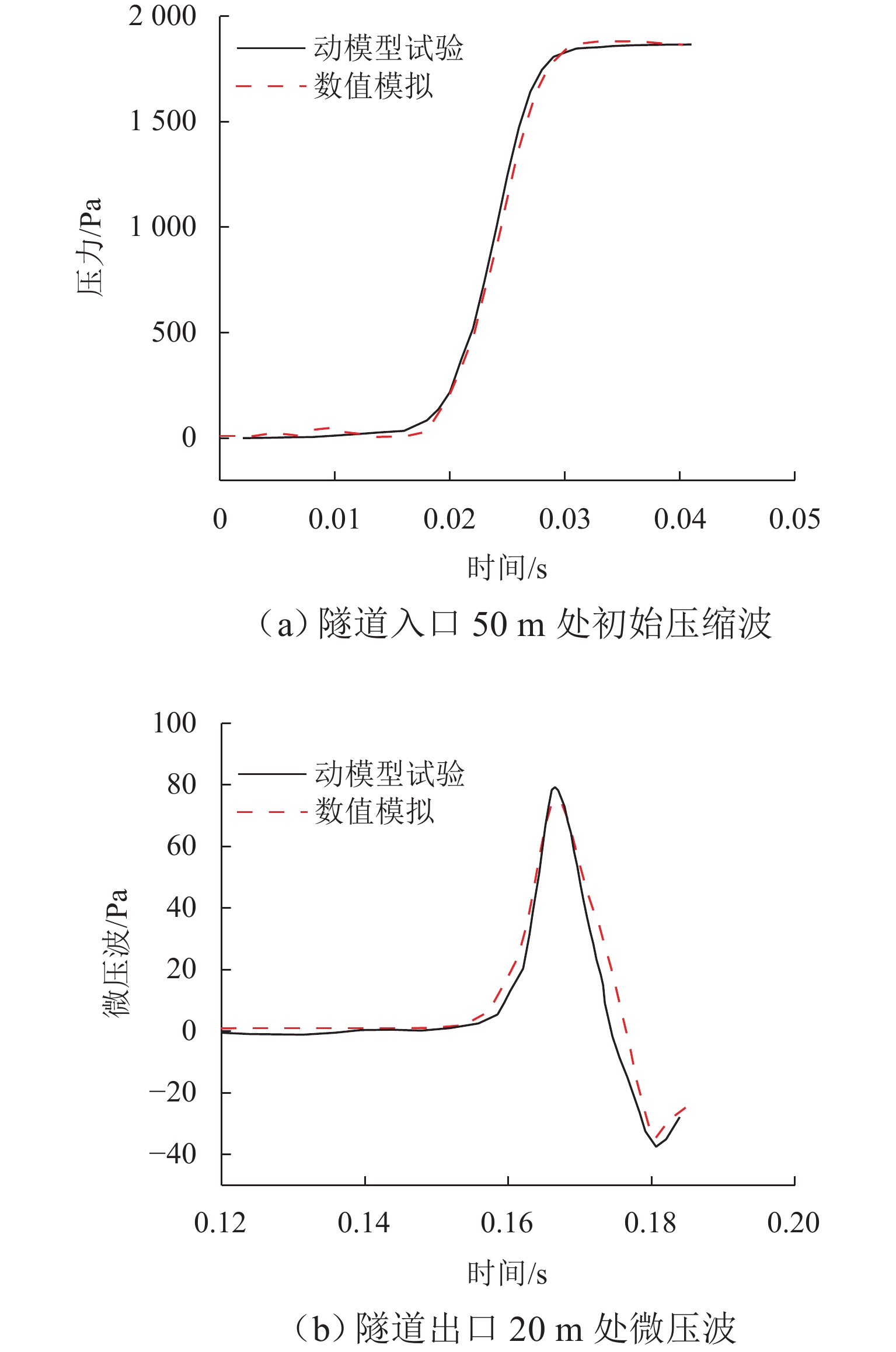
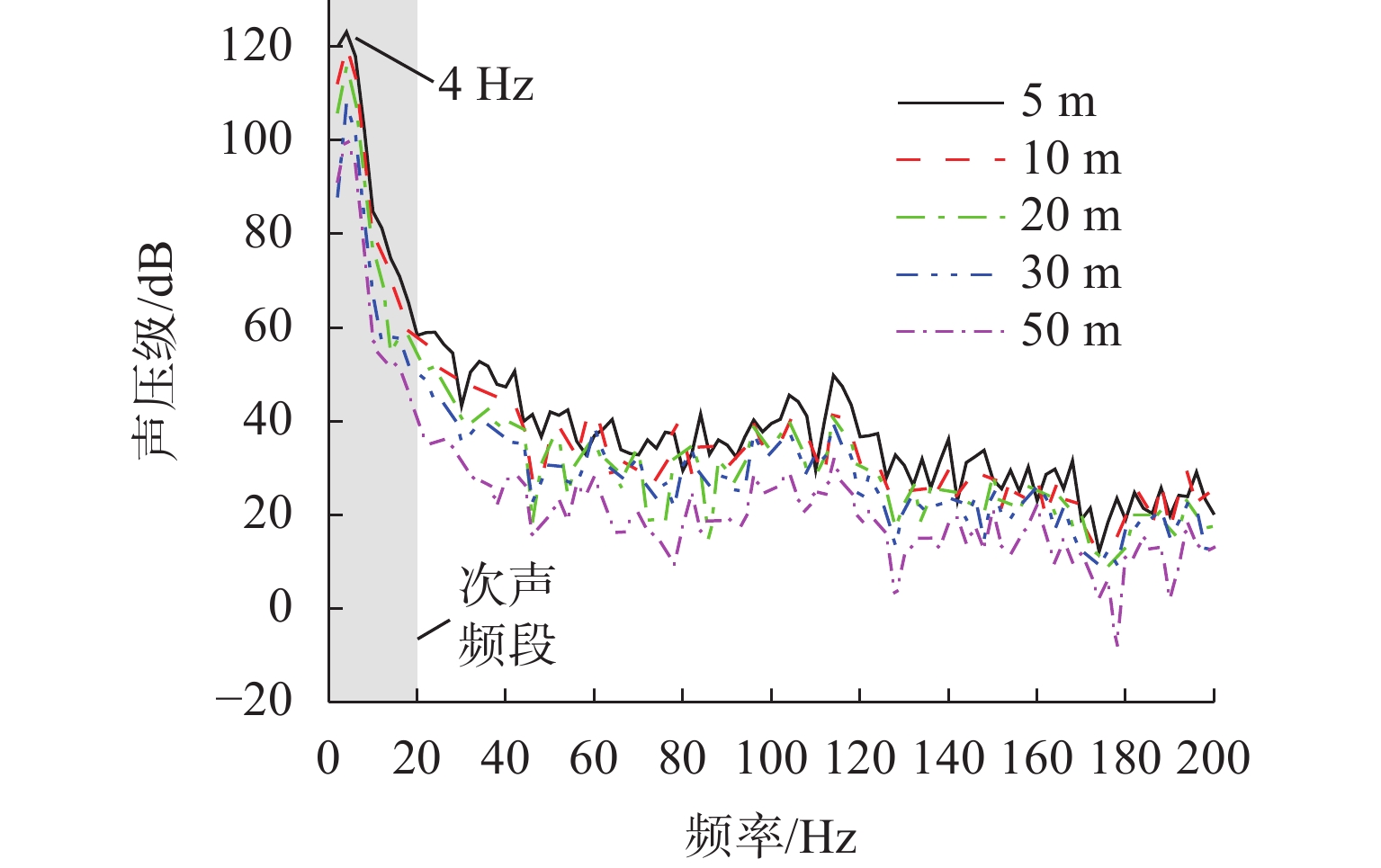
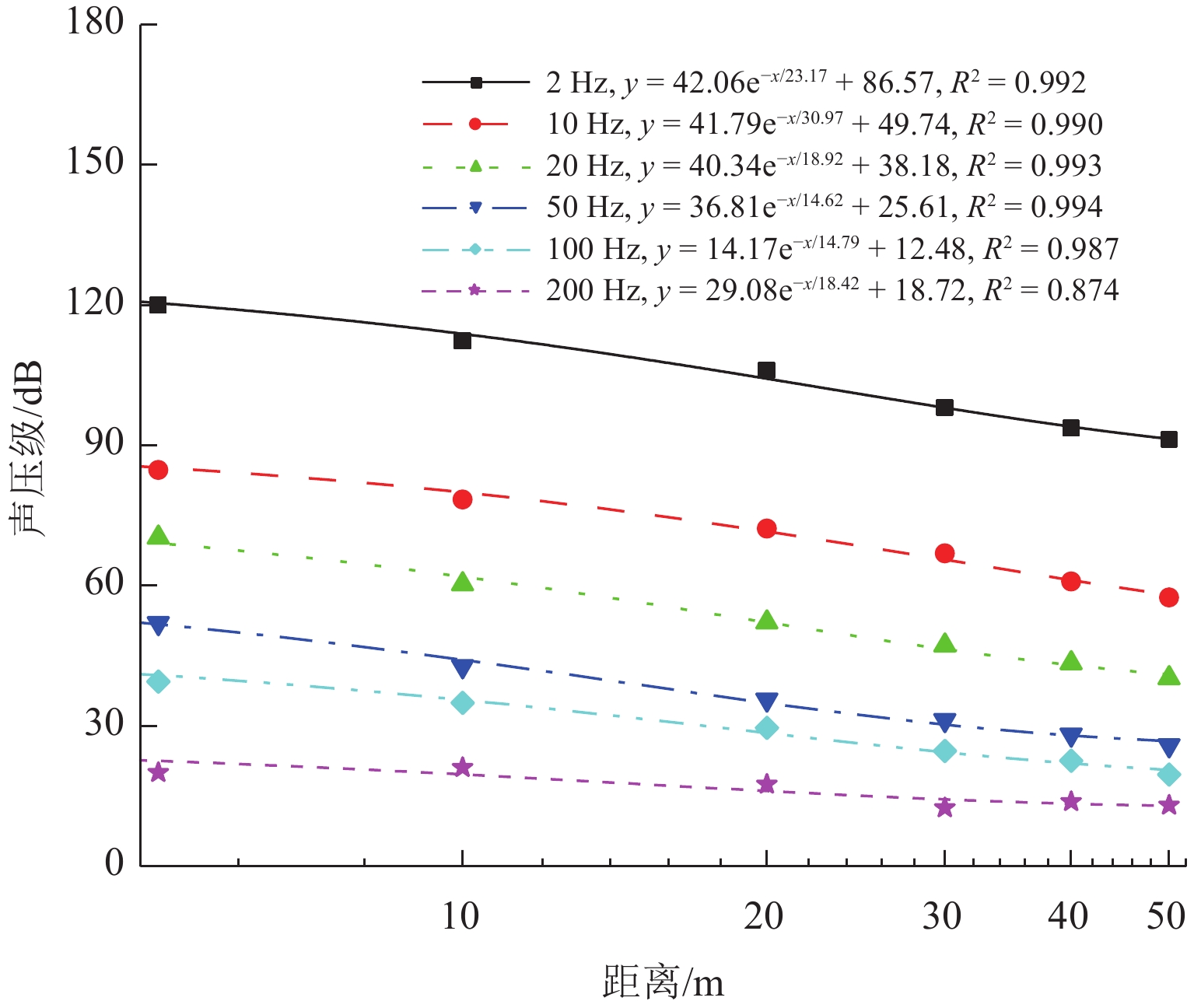
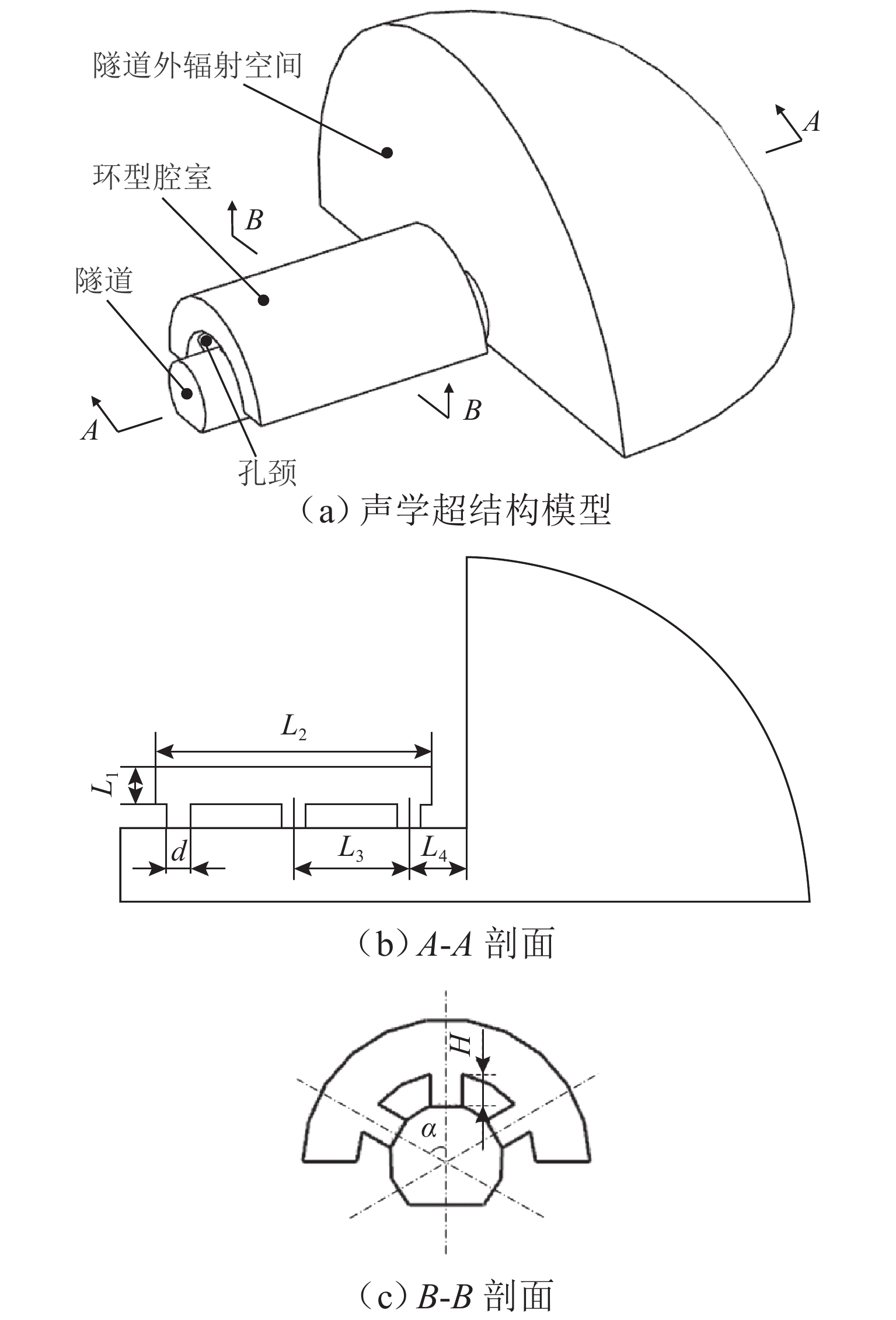
Micro-pressure waves are generated and noise is induced when the initial compression wave generated during the entry of a high-speed metro train into a tunnel propagates to the tunnel exit. In some cases, sonic booms may also occur, resulting in serious environmental problems for residents. To effectively control the micro-pressure wave noise at tunnel exits, numerical simulation studies on the acoustic characteristics of micro-pressure wave noise were conducted, and an acoustic suppression structure targeting low-frequency micro-pressure wave noise was proposed. Firstly, large eddy simulation (LES) was employed to obtain near-field unsteady flow field data at the tunnel exit, using the Ffowcs Williams-Hawkings (FW-H) acoustic analogy to predict the type of micro-pressure wave noise sources. Secondly, based on the unsteady flow field data, the acoustic finite element method (AFEM) was utilized to compute the far-field radiation of micro-pressure wave noise and analyze the mitigating effect of acoustic structures of the tunnel exit on micro-pressure wave noise. Finally, the accuracy of the numerical methods was validated through a moving model test. The results indicate that at a train speed of 160 km/h, dipole noise predominates in the micro-pressure wave noise at the tunnel exit. Dipole noise radiates outward in a semi-ellipsoidal shape, with its energy mainly concentrated below 20 Hz and a peak frequency being 4 Hz. The attenuation of dipole noise in the tunnel exit direction follows an exponential decay law. Adding acoustic structures at the tunnel exit significantly reduces micro-pressure wave noise. Specifically, the sound pressure levels (SPLs) outside the tunnel exit across various longitudinal planes decrease by approximately 3.00 dB. At the designated measurement points, located at 20 m and 50 m, the SPLs are reduced by 3.54 dB and 2.62 dB, respectively.

| [1] |
MIYACHI T. Non-linear acoustic analysis of the pressure rise of the compression wave generated by a train entering a tunnel[J]. Journal of Sound and Vibration, 2019, 458: 365-375. doi: 10.1016/j.jsv.2019.06.033
|
| [2] |
WANG H L, VARDY A E, BI H Q. Characteristics of pressure waves radiated from tunnel portals in cuttings[J]. Journal of Sound and Vibration, 2022, 521: 116664. doi: 10.1016/j.jsv.2021.116664
|
| [3] |
WANG H L, VARDY A E, BI H Q. Micro-pressure wave radiation from tunnel portals in deep cuttings[J]. Proceedings of the Institution of Mechanical Engineers, Part F: Journal of Rail and Rapid Transit, 2023, 237(2): 166-178. doi: 10.1177/09544097221099393
|
| [4] |
赵有明, 马伟斌, 程爱君, 等. 高速铁路隧道气动效应[M]. 北京: 中国铁道出版社, 2012.
|
| [5] |
AOKI T, MATSUO K, HIDAKA H, et al. Attenuation and distorsion of propagating compression waves in a high-speed railway model and in real tunnels[M]//Shock Waves @ Marseille Ⅲ. Berlin: Springer Berlin Heidelberg, 1995: 347-352.
|
| [6] |
YOON T S, S L, J H H, et al. Prediction and validation on the sonic boom by a high-speed train entering a tunnel[J]. Journal of Sound and Vibration, 2001, 247(2): 195-211. doi: 10.1006/jsvi.2000.3482
|
| [7] |
RIVERO J M, GONZÁLEZ-MARTÍNEZ E, RODRÍGUEZ-FERNÁNDEZ M. A methodology for the prediction of the sonic boom in tunnels of high-speed trains[J]. Journal of Sound and Vibration, 2019, 446: 37-56. doi: 10.1016/j.jsv.2019.01.016
|
| [8] |
刘金通. 高铁隧道内压缩波传播规律及微气压波声学特性初步分析[D]. 成都: 西南交通大学, 2018.
|
| [9] |
KIKUCHI, LIDA, TAKASAKI, et al. Field measurement of wayside low-frequency noise emitted from tunnel portals and trains of high-speed railway[J]. Noise Notes, 2006, 5(3): 5-18. doi: 10.1260/147547306781539550
|
| [10] |
OZAWA S, MAEDA T. Tunnel entrance hoods for reduction of micro-pressure wave[J]. Quarterly Reports of Rtri, 1988, 29(3): 134-139.
|
| [11] |
廖欣, 王东镇, 孙召进, 等. 高速列车进出隧道噪声问题及控制[C]//2010中国西部声学学术交流会论文集. 腾冲: [出版者不详], 2010: 58-61.
|
| [12] |
杜麒麟. 遂渝铁路隧道洞口噪声特性分析[D]. 成都: 西南交通大学, 2015.
|
| [13] |
THOMPSON D J, LATORRE IGLESIAS E, LIU X W, et al. Recent developments in the prediction and control of aerodynamic noise from high-speed trains[J]. International Journal of Rail Transportation, 2015, 3(3): 119-150. doi: 10.1080/23248378.2015.1052996
|
| [14] |
ZHANG Y D, ZHANG J Y, LI T, et al. Investigation of the aeroacoustic behavior and aerodynamic noise of a high-speed train pantograph[J]. Science China Technological Sciences, 2017, 60(4): 561-575. doi: 10.1007/s11431-016-0649-6
|
| [15] |
VASILYEV O V, LUND T S, MOIN P. A general class of commutative filters for LES in complex geometries[J]. Journal of Computational Physics, 1998, 146(1): 82-104. doi: 10.1006/jcph.1998.6060
|
| [16] |
DI MARE L, JONES W P. LES of turbulent flow past a swept fence[J]. International Journal of Heat and Fluid Flow, 2003, 24(4): 606-615. doi: 10.1016/S0142-727X(03)00054-7
|
| [17] |
FFOWCS-WILLIAMS J E, HAWKINGS D L. Sound generation by turbulence and surfaces in arbitrary motion[J]. Philosophical Transactions of the Royal Society of London Series A: Mathematical and Physical Sciences, 1969, 264(1151): 321-342. doi: 10.1098/rsta.1969.0031
|
| [18] |
陈羽, 柳壹明, 毛懋, 等. 高速列车底部结构参数对气动噪声影响规律[J]. 西南交通大学学报, 2023, 58(5): 1171-1179.
CHEN Yu, LIU Yiming, MAO Mao, et al. Influence of underbody parameters of high-speed trains on aerodynamic noise[J]. Journal of Southwest Jiaotong University, 2023, 58(5): 1171-1179.
|
| [19] |
刘加利, 于梦阁, 陈大伟, 等. 考虑四极子声源的高速磁浮列车气动噪声数值模拟方法[J]. 西南交通大学学报, 2024, 59(1): 54-61.
LIU Jiali, YU Mengge, CHEN Dawei, et al. Numerical simulation method of aerodynamic noise of high-speed maglev train considering quadrupole noise source[J]. Journal of Southwest Jiaotong University, 2024, 59(1): 54-61.
|
| [20] |
李增刚, 詹福良. Virtual. Lab Acoustics声学仿真计算高级应用实例[M]. 北京: 国防工业出版社, 2010.
|
| [21] |
BERENGER J P. A perfectly matched layer for the absorption of electromagnetic waves[J]. Journal of Computational Physics, 1994, 114(2): 185-200. doi: 10.1006/jcph.1994.1159
|
| [22] |
李田, 秦登, 张继业, 等. 基于半模型的高速列车远场气动噪声计算方法[J]. 西南交通大学学报, 2023, 58(2): 272-279, 286.
LI Tian, QIN Deng, ZHANG Jiye, et al. Numerical approach for far-field aerodynamic noise of high-speed trains based on half model[J]. Journal of Southwest Jiaotong University, 2023, 58(2): 272-279, 286.
|
| [23] |
ZHANG L, THUROW K, STOLL N, et al. Influence of the geometry of equal-transect oblique tunnel portal on compression wave and micro-pressure wave generated by high-speed trains entering tunnels[J]. Journal of Wind Engineering and Industrial Aerodynamics, 2018, 178: 1-17. doi: 10.1016/j.jweia.2018.05.003
|
Figures(20) / Tables(3)


 DownLoad: