



Effect of Phase Change Materials on Thermal Properties of Ceramsite Foam Concrete
-
摘要:
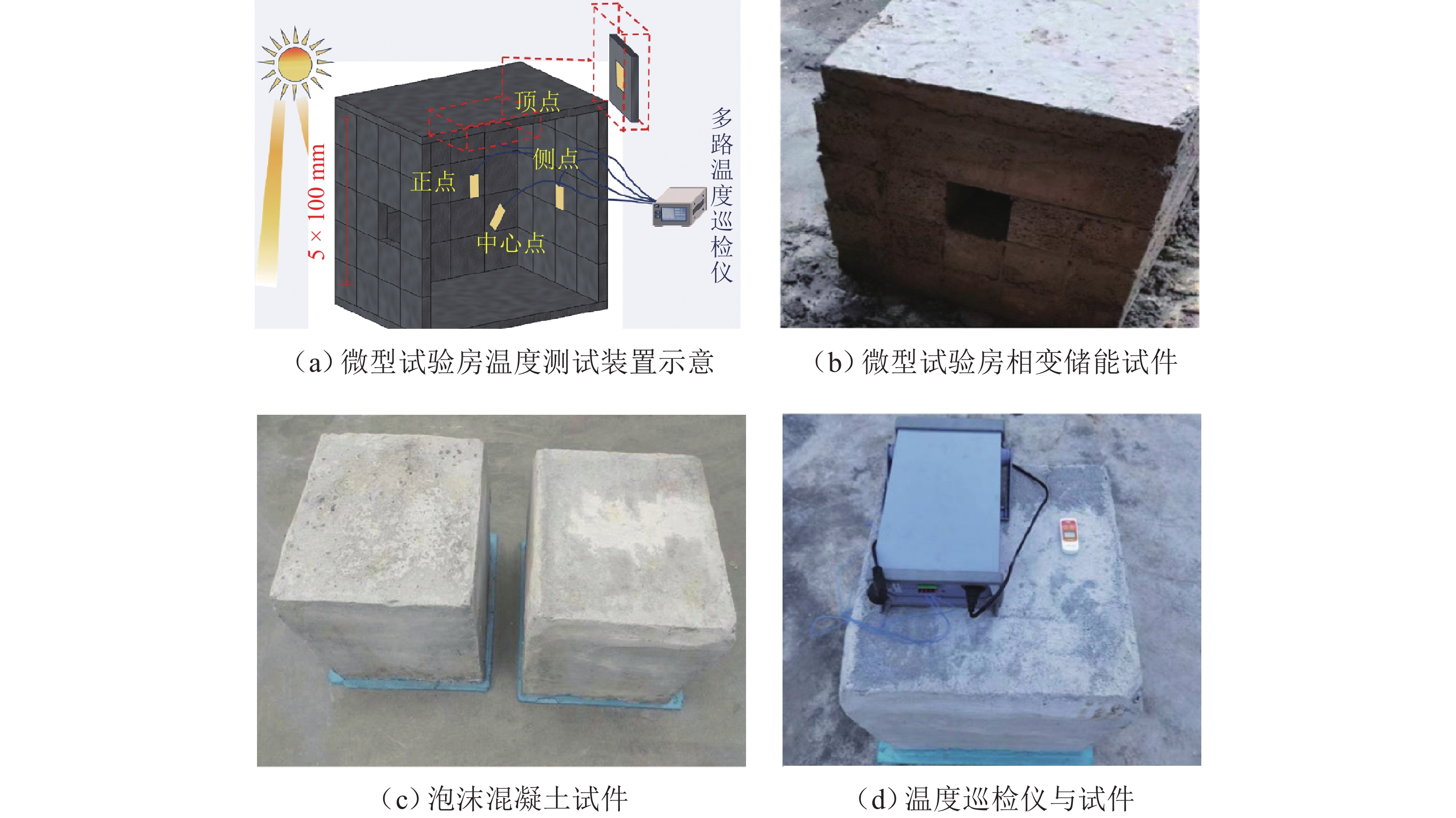
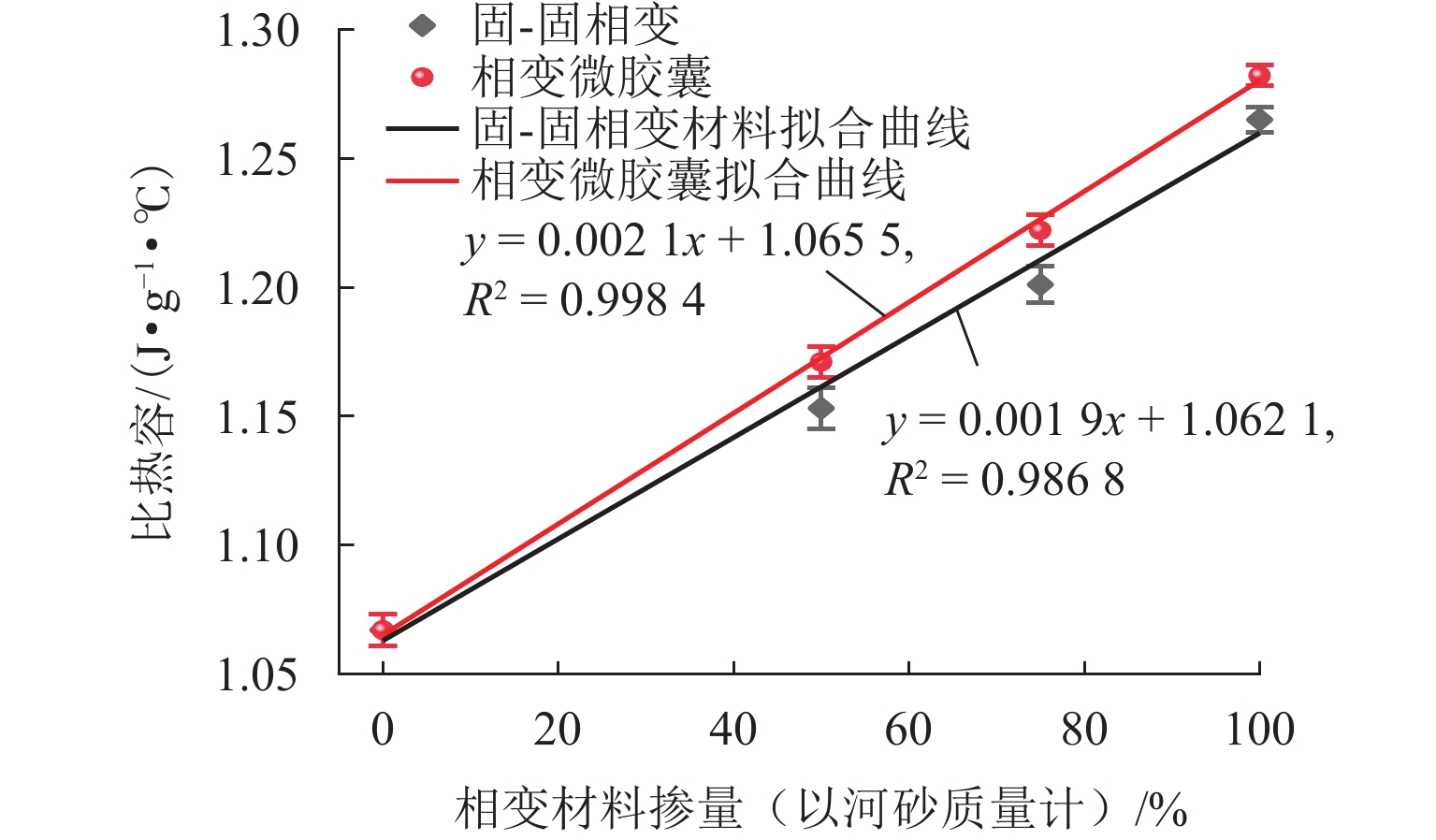
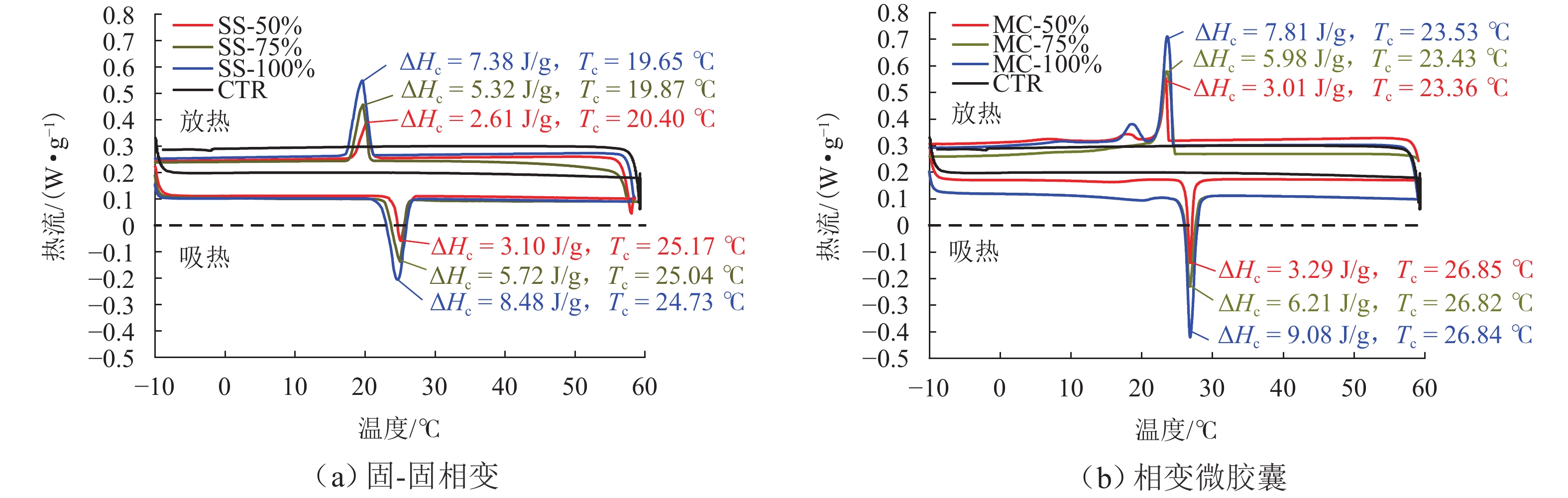
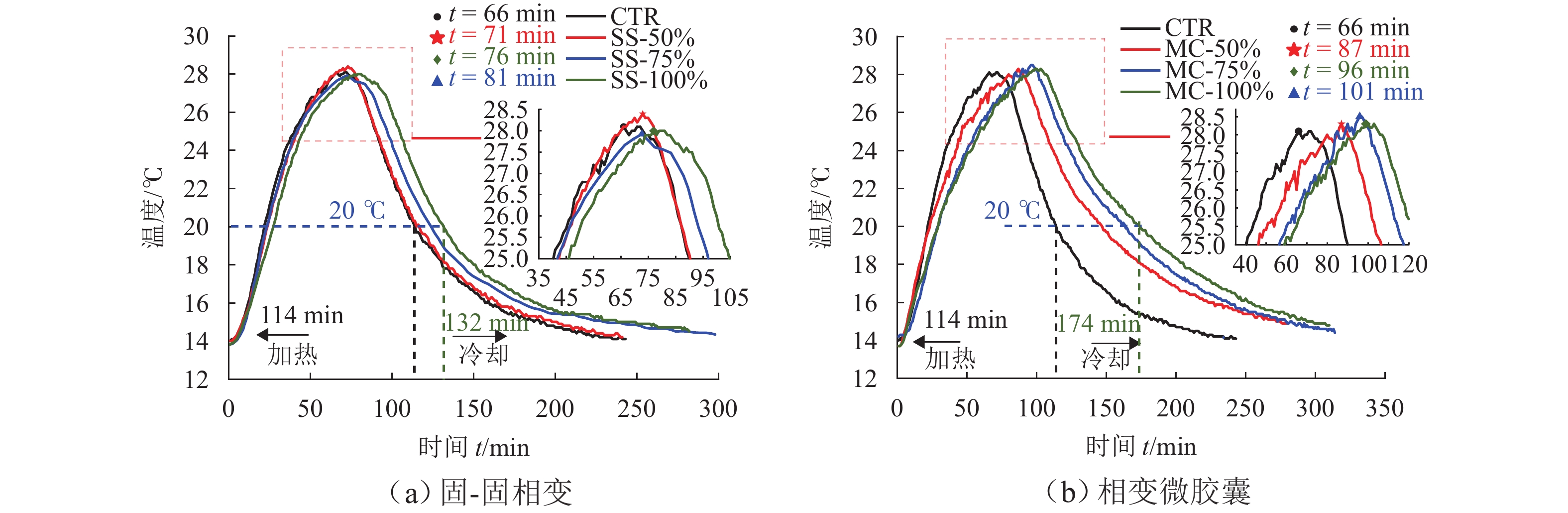
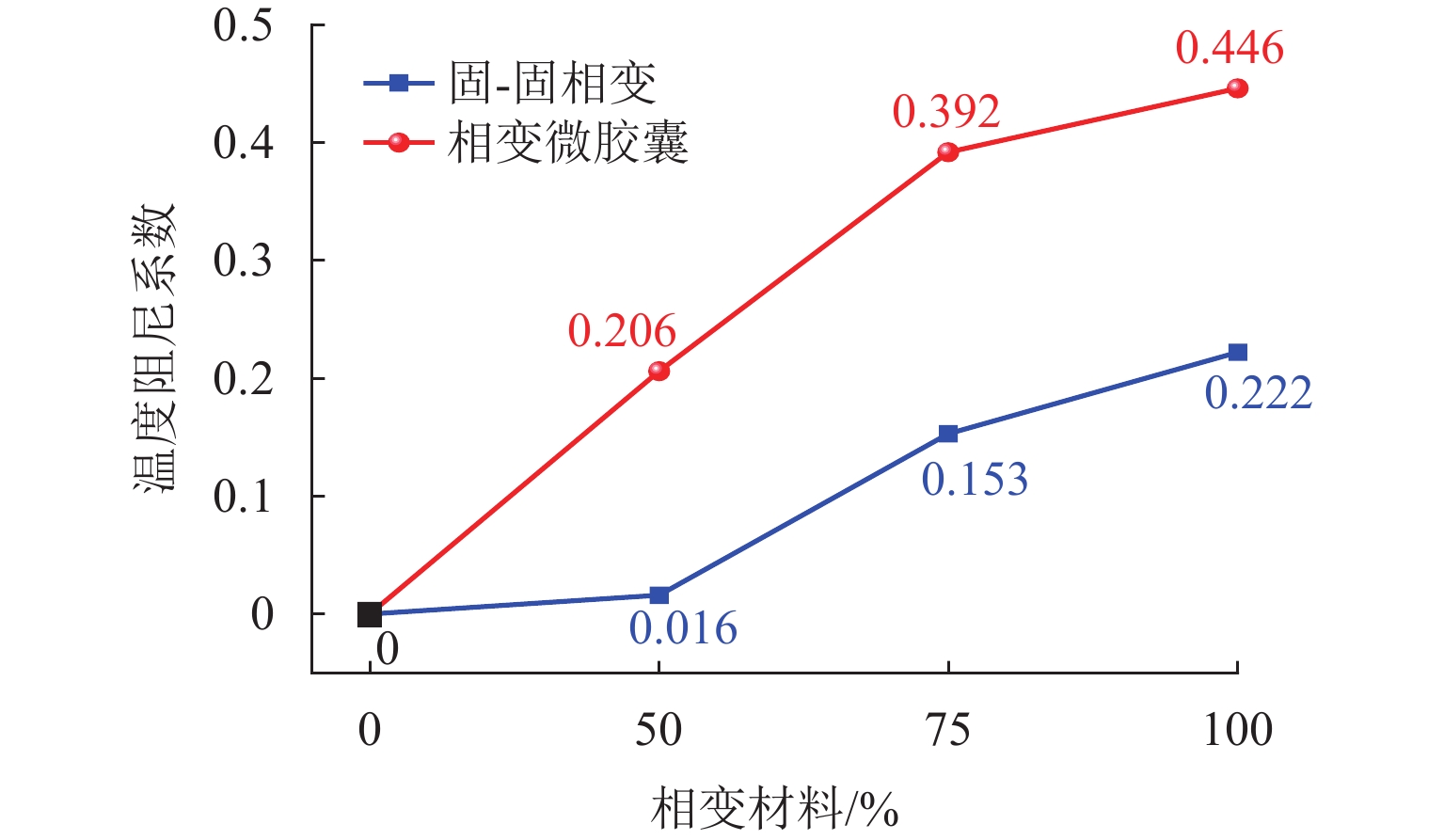
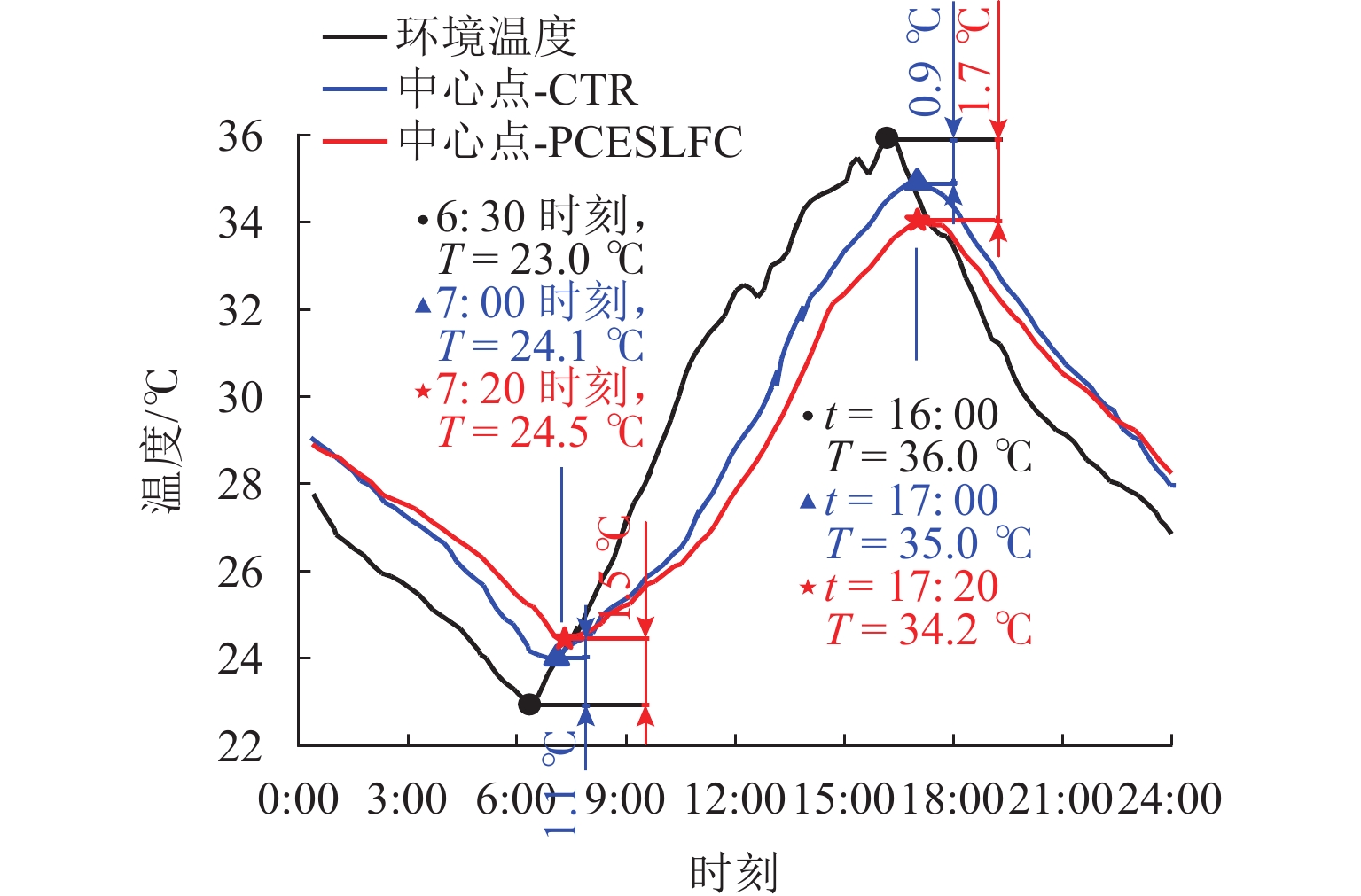
为探究相变材料对陶粒泡沫混凝土热工性能的影响,选用固-固相变材料(SS)和相变微胶囊(MC)制备相变储能陶粒泡沫混凝土(PCESLFC),研究不同相变材料(PCM)掺量对陶粒泡沫混凝土导热系数、比热容、相变温度和相变潜热的影响;通过混凝土板传热试验分析PCESLFC的保温隔热性能,并搭建微型试验房,评估其在自然环境下的温控性能. 研究结果表明,掺入相变微胶囊有效降低了陶粒泡沫混凝土的导热系数,并提高了比热容,MC-100%组的导热系数较对照组降低18.16%,比热容增加21.1%;而固-固相变材料对陶粒泡沫混凝土的热工性能提升作用有限;通过差式扫描量热仪(DSC)发现相变微胶囊陶粒泡沫混凝土具有更高的相变潜热,其中,MC-100%组的相变潜热为9.08 J/g,较SS-100%提升7.32%;温度阻尼系数计算显示,加入固-固相变材料对陶粒泡沫混凝土的保温隔热效果远小于加入相变微胶囊组;通过监测微型试验房温度,PCESLFC试验房最高温出现时间较CTR组延迟20 min,峰值温度降低0.8 ℃,最低温出现时间同样延迟20 min,谷值温度提高0.4 ℃. 相变微胶囊陶粒泡沫混凝土具有优异的温控性能,可用于建筑的围护体系.
Abstract:To investigate the effect of phase change materials (PCMs) on the thermal properties of ceramsite foam concrete, phase change energy storage ceramsite lightweight foam concrete, namely PCESLFC was prepared by using solid–solid phase change material (SS) and phase change microencapsule (MC). The effects of different PCM dosages on the thermal conductivity, specific heat capacity, phase change temperature, and phase change enthalpy of the ceramsite foam concrete were studied. A concrete panel heat transfer test was conducted to evaluate the thermal insulation property of PCESLFC, and a miniature test house was constructed to assess its thermal regulation property under natural environments. The results show that the incorporation of MC effectively reduces the thermal conductivity and increases the specific heat capacity of the ceramsite foam concrete. The MC-100% group exhibits a reduction of 18.16% in thermal conductivity and an increase of 21.1% in specific heat capacity compared to the control group. In contrast, the SS has limited enhancement effects on the thermal properties of the ceramsite foam concrete. Differential scanning calorimetry (DSC) analysis reveals that the MC has a higher phase change enthalpy, with the MC-100% group achieving a phase change enthalpy of 9.08 J/g, which is 7.32% higher than that of the SS-100% group. Temperature damping coefficient calculations indicate that the thermal insulation property improvement of the ceramsite foam concrete in the SS group is significantly lower than that in the MC group. Temperature monitoring in the miniature test house shows that the occurrence time of peak temperature in the PCESLFC test house is delayed by 20 min, and the peak temperature reduces by 0.8 ℃ compared to that of the control group. The occurrence time of minimum temperature is delayed by 20 min, and the valley temperature increases by 0.4 ℃. MC shows excellent thermal regulation properties to ceramsite foam concrete, making it suitable for building envelope systems.
-
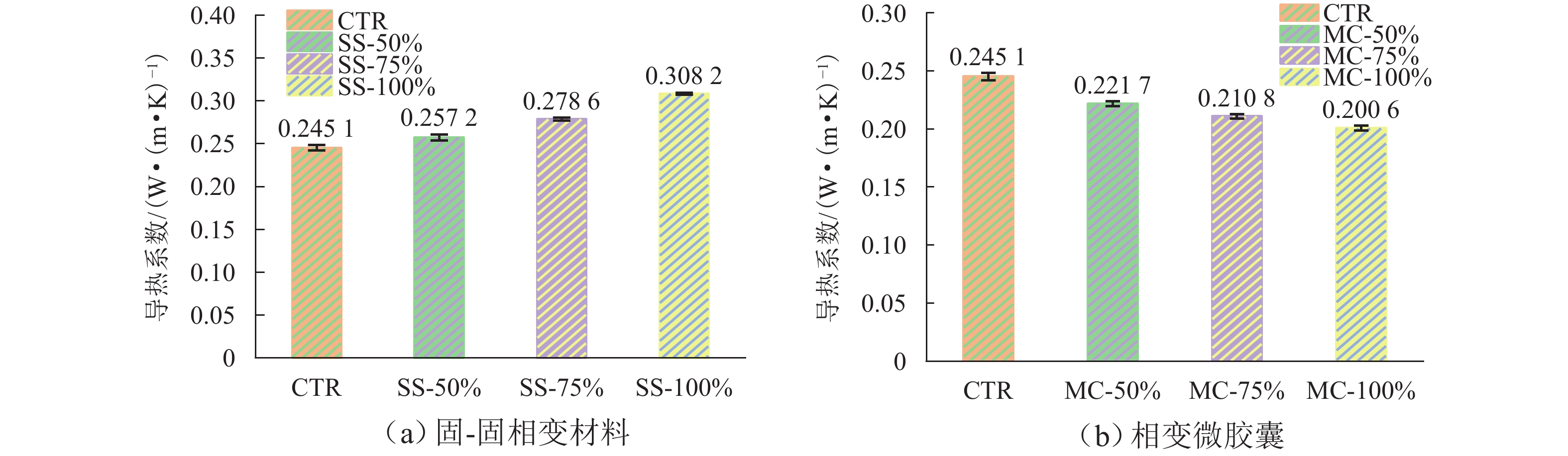
图 5 相变材料对陶粒泡沫混凝土导热系数的影响
Figure 5. Effect of PCMs on thermal conductivity of ceramsite foam concrete
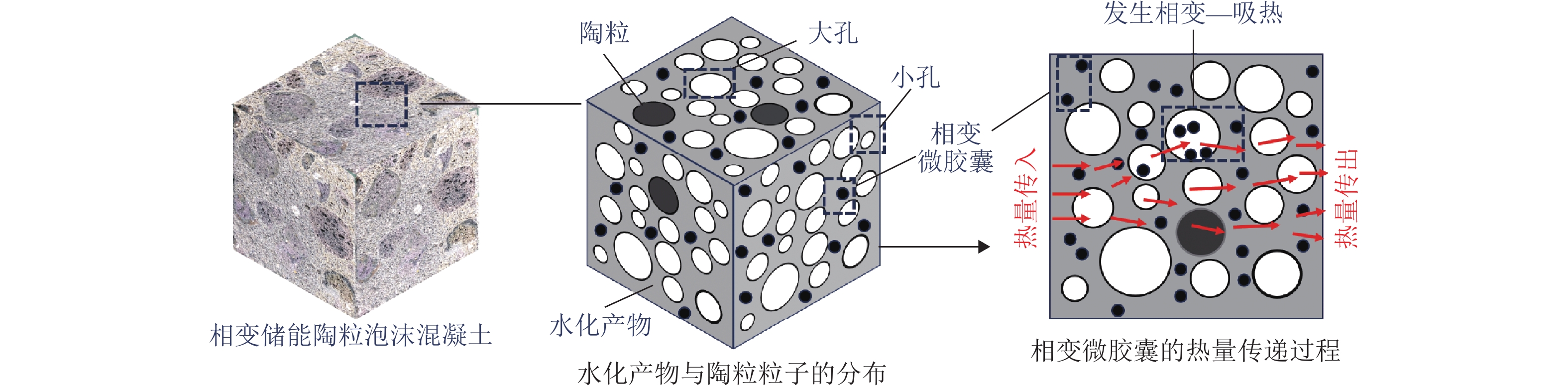
图 11 相变微胶囊陶粒泡沫混凝土传热机理
Figure 11. Heat transfer mechanism of ceramsite foam concrete with MC
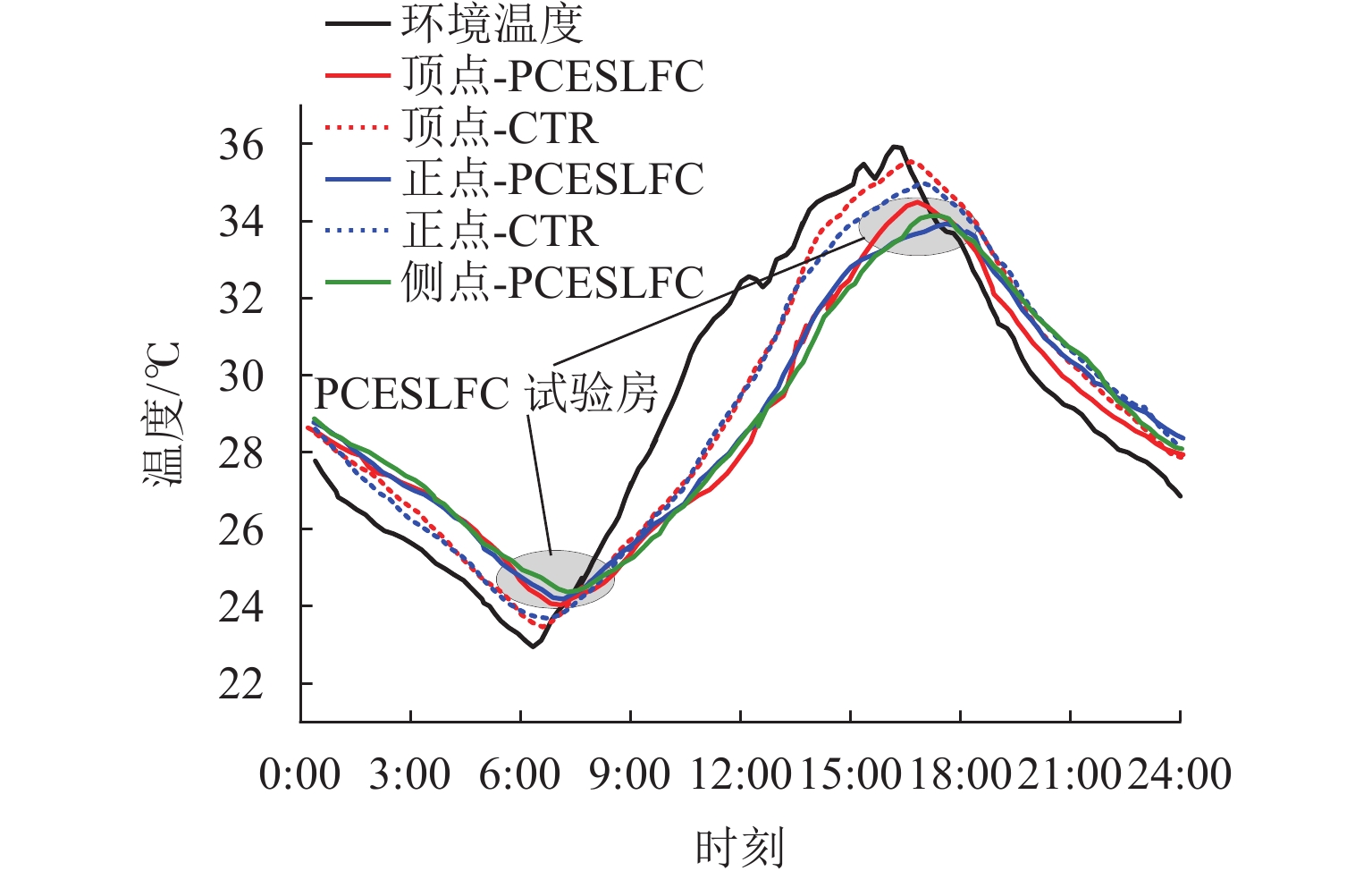
图 12 试验房墙面中心点温度变化
Figure 12. Temperature variation at center point of wall surface in test house
表 1 微米蛋白发泡剂性能
Table 1. Properties of micron-scale protein-based foaming agent
密度/
(kg·m−3)含固量/% PH 值 发泡倍数 导热系数/
(W·( m·K)−1)1.10 39.6 7 30 0.068  下载: 导出CSV
表 2 相变材料基本性能
Table 2. Basic properties of PCMs
相变材料类型 相变温度/℃ 相变潜热/(J·g−1) 导热系数/(W·(m·K)−1) 比热容/(J·(g·K)−1) 密度/(g·cm−3) 固-固相变材料 25 178 3.00 2.0 0.5 相变微胶囊 28 185 0.18 2.4 0.8
下载: 导出CSV
表 3 相变储能陶粒泡沫混凝土试验工况
Table 3. Experimental conditions of PCESLFC
编号 水泥/(kg·m−3) 河砂/(kg·m−3) 陶粒/(L·m−3) 发泡剂/(kg·m−3) 水/(kg·m−3) 固-固相变/(kg·m−3) 相变微胶囊/(kg·m−3) CTR 345.0 38.0 500.0 43.3 96 0 0 SS-50 345.0 38.0 500.0 43.3 98.3 19.0 0 SS-75 345.0 38.0 500.0 43.3 101.8 28.5 0 SS-100 345.0 38.0 500.0 43.3 106.9 38.0 0 MC-50 345.0 38.0 500.0 43.3 103.5 0 19.0 MC-75 345.0 38.0 500.0 43.3 108.7 0 28.5 MC-100 345.0 38.0 500.0 43.3 115.6 0 38.0
下载: 导出CSV
表 4 试件干密度与导热系数对照
Table 4. Comparison of dry density and thermal conductivity of specimens
编号 干密度 (kg·m−3) 密度等级 自然状态λ/(W·(m·K)−1) λ6% = 1.25λ/(W·(m·K)−1) A10 限值 (λ≤0.27) 判定 CTR 1000 A10 0.2451 0.306 0.27 不符合 SS-50 1006 A10 0.2572 0.322 0.27 不符合 SS-75 1010 A10 0.2786 0.348 0.27 不符合 SS-100 1014 A10 0.3082 0.385 0.27 不符合 MC-50 994 A10 0.2217 0.277 0.27 临界 MC-75 988 A10 0.2108 0.264 0.27 符合 MC-100 982 A10 0.2006 0.251 0.27 符合
下载: 导出CSV
表 5 陶粒泡沫混凝DSC测试结果
Table 5. DSC test result of ceramsite foam concrete
组别 吸热 放热 起始
温度/℃结束
温度/℃峰值
温度/℃相变潜热/
(J·g−1)起始
温度/℃结束
温度/℃峰值
温度/℃相变潜热/
(J·g−1)SS-50% 22.74 27.24 25.17 3.10 21.91 17.74 20.40 2.61 SS-75% 22.20 27.01 25.04 5.72 21.44 17.20 19.87 5.32 SS-100% 21.31 27.23 24.73 8.48 21.23 17.06 19.65 7.38 MC-50% 24.93 28.52 25.87 3.29 23.87 21.34 23.36 3.01 MC-75% 24.89 28.89 26.93 6.21 24.70 21.29 23.43 5.98 MC-100% 24.59 29.15 26.84 9.08 24.41 21.29 23.53 7.51
下载: 导出CSV
-
[1] 蔡伟光, 于艳辉, 刘源. 中国城乡建设领域碳排放研究报告(2024年)[J]. 建筑, 2025(2): 56-63. [2] Wang P C, Liu Z B, Xi S T, et al. Experiment and numerical simulation of an adaptive building roof combining variable transparency shape-stabilized PCM[J]. Energy and Buildings, 2022, 263: 112030. doi: 10.1016/j.enbuild.2022.112030 [3] 俞金江, 盛臻磊. 注浆法陶粒泡沫混凝土的制备及其性能研究[J]. 建筑结构, 2023, 53(增刊2): 1381-1384.Yu Jinjiang, Sheng Zhenlei. Preparation and properties of ceramsite foam concrete by grouting method[J]. Building Structure, 2023, 53(S2): 1381-1384. [4] 陈柏琪, 李振宝, 石南南, 等. 掺合料对陶粒泡沫混凝土流动性及强度影响[J]. 混凝土, 2024(10): 69-73.Chen Baiqi, Li Zhenbao, Shi Nannan, et al. Effects of admixtures on fluidity and strength of ceramsite foam concrete[J]. Concrete, 2024(10): 69-73. [5] 陈国权. 粉煤灰复合膨胀珍珠岩对泡沫混凝土性能影响研究[J]. 福建建设科技, 2023(5): 59-62.Chen Guoquan. Study on the influence of fly ash composite expanded perlite on the performance of foam concrete[J]. Fujian Construction Science & Technology, 2023(5): 59-62. [6] 穆龙飞, 冯竟竟, 杨进波, 等. 页岩陶粒粒径对混凝土强度及热工性能影响研究[J]. 混凝土, 2020(11): 52-56.Mu Longfei, Feng Jingjing, Yang Jinbo, et al. Experimental study on the influence of shale ceramsite size on strength and thermal properties of concrete[J]. Concrete, 2020(11): 52-56. [7] 石锦炎, 韩丹, 刘嫄春, 等. 不同温度下泡沫混凝土热物理性能的研究[J]. 工程热物理学报, 2020, 41(7): 1719-1727.Shi Jinyan, Han Dan, Liu Yuanchun, et al. Investigation on thermophysical properties of foamed concrete at different temperatures[J]. Journal of Engineering Thermophysics, 2020, 41(7): 1719-1727. [8] Xie Y, Li J, Lu Z Y, et al. Effects of bentonite slurry on air-void structure and properties of foamed concrete[J]. Construction and Building Materials, 2018, 179: 207-219. [9] Shi J Y, Zhang M H, Zhu X Z, et al. Evaluation of thermal insulation capacity and mechanical performance of a novel low-carbon thermal insulating foam concrete[J]. Energy and Buildings, 2024, 323: 114744. [10] Qi X Q, Bao Y F, Wang W R, et al. Superior performance foamed concrete fabricated with amphiphilic and hydrophilic particles stabilized ultra-stable foam[J]. Cement and Concrete Composites, 2024, 152: 105613. [11] GB 55015—2021建筑节能与可再生能源利用通用规范[S]. [12] 黄英豪, 陈永, 朱洵, 等. 相变材料改良膨胀土冻融性能试验研究及微观机理分析[J]. 岩土工程学报, 2021, 43(11): 1994-2002.Huang Yinghao, Chen Yong, Zhu Xun, et al. Experimental study and micro-mechanism analysis of freeze-thaw performance of expansive soils improved by phase-change materials[J]. Chinese Journal of Geotechnical Engineering, 2021, 43(11): 1994-2002. [13] Zeng C, Yuan Y P, Cao H X, et al. Stability and durability of microencapsulated phase change materials (MePCMs) in building applications: a state of the review[J]. Journal of Energy Storage, 2024, 80: 110249. [14] 李婷. 粉煤灰漂珠相变储能密肋复合墙体力学性能及建筑能耗研究[D]. 北京: 北京交通大学, 2023. [15] 马芹永, 白梅. 相变储能混凝土的制备与性能[J]. 复合材料学报, 2018, 35(3): 676-683.Ma Qinyong, Bai Mei. Preparation and properties of phase-changing energy-storing concrete[J]. Acta Materiae Compositae Sinica, 2018, 35(3): 676-683. [16] Cao V D, Pilehvar S, Salas-bringas C, et al. Microencapsulated phase change materials for enhancing the thermal performance of Portland cement concrete and geopolymer concrete for passive building applications[J]. Energy Conversion and Management, 2017, 133: 56-66. [17] Zhang Y K, Sang G C, Guo T, et al. Study of a novel polyethylene glycol/ceramic phase change aggregate to develop alkali-activated slag-based phase change concrete for thermal energy storage[J]. Applied Thermal Engineering, 2025, 268: 125851. [18] Du Y F, Liu P S, Quan X K, et al. Characterization and cooling effect of a novel cement-based composite phase change material[J]. Solar Energy, 2020, 208: 573-582. [19] GB 175—2023通用硅酸盐水泥[S]. [20] GB/T 20472—2006 硫铝酸盐水泥[S]. [21] 尹冠生, 张锦涛, 史明辉, 等. 相变蓄热泡沫混凝土热性能[J]. 复合材料学报, 2023, 40(7): 4246-4259.Yin Guansheng, Zhang Jintao, Shi Minghui, et al. Thermal properties of phase change thermal storage foam concrete[J]. Acta Materiae Compositae Sinica, 2023, 40(7): 4246-4259. [22] 蒋才永, 叶家天, 陈于文, 等. 建筑用新型相变储能泡沫混凝土保温隔墙板材料的性能研究[J]. 新型建筑材料, 2024, 51(2): 112-117.Jiang Caiyong, Ye Jiatian, Chen Yuwen, et al. Study on properties of new phase change energy storage foam concrete thermal insulation partition board materials for buildings[J]. New Building Materials, 2024, 51(2): 112-117. [23] GB/T 23451—2023建筑用轻质隔墙条板[S]. [24] GB/T 30100—2013 建筑墙板试验方法[S]. [25] Klarsfeld S. Guarded hot plate method for thermal conductivity measurements[M]//Compendium of Thermophysical Property Measurement Methods. Boston: Springer, 1984: 169-230. [26] GB/T 10294—2008 绝热材料稳态热阻及有关特性的测定 防护热板法[S]. [27] Gencel O, Subasi S, Ustaoglu A, et al. Development, characterization and thermo-regulative performance of microencapsulated phase change material included-glass fiber reinforced foam concrete as novel thermal energy effective-building material[J]. Energy, 2022, 257: 124786. [28] GB 50021—2001 岩土工程勘察规范[S] [29] GB/T 4111—2013 混凝土砌块和砖试验方法[S]. [30] GB/T 36534—2018 陶粒发泡混凝土砌块[S]. [31] 郭思瑶, 王坤, 王文蕊, 等. 二元低共熔复合相变微胶囊材料的制备及其应用[J]. 复合材料学报, 2025, 42(10): 5875-5882.Guo Siyao, Wang Kun, Wang Wenrui, et al. Preparation of binary low eutectic composite phase change microcapsule materials and their applications[J]. Acta Materiae Compositae Sinica, 2025, 42(10): 5875-5882. [32] Gencel O, Nodehi M, HekimoĞlu G, et al. Foam concrete produced with recycled concrete powder and phase change materials[J]. Sustainability, 2022, 14(12): 7458. [33] Sukontasukkul P, Uthaichotirat P, Sangpet T, et al. Thermal properties of lightweight concrete incorporating high contents of phase change materials[J]. Construction and Building Materials, 2019, 207: 431-439. [34] JGJ/T 341—2014泡沫混凝土应用技术规程[S]. [35] 龙勇, 王宇, 刘天乐, 等. 相变微胶囊保温砂浆的制备及性能[J]. 材料导报, 2024, 38(9): 72-277.Long Yong, Wang Yu, Liu Tianle, et al. Preparation and properties of thermal insulation mortar incorporated with phase change microcapsules[J]. Materials Reports, 2024, 38(9): 72-277. [36] Dehdezi P K, Hall M R, Dawson A R, et al. Thermal, mechanical and microstructural analysis of concrete containing microencapsulated phase change materials[J]. International Journal of Pavement Engineering, 2013, 14(5): 449-462. [37] Jayalath A, San NICOLAS R, Sofi M, et al. Properties of cementitious mortar and concrete containing micro-encapsulated phase change materials[J]. Construction and Building Materials, 2016, 120: 408-417. [38] 白梅. 相变储能混凝土制备及其性能试验研究[D]. 淮南: 安徽理工大学, 2018. [39] Hong N H, Sakai J, Prellier W, et al. Room temperature ferromagnetism in laser ablated transition-metal-doped TiO2 thin films on various types of substrates[J]. Journal of Physics D: Applied Physics, 2005, 38(6): 816-821. [40] Pereira J, Souza R, Oliveira J, et al. Phase change materials in residential buildings: challenges, opportunities, and performance[J]. Materials, 2025, 18(9): 2063. -

 下载:
下载:

 点击查看大图
计量
- 文章访问数: 28
- HTML全文浏览量: 25
- PDF下载量: 11
- 被引次数: 0